Want more images or videos?
Request additional images or videos from the seller
1 of 13
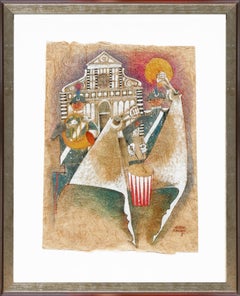
Alvar Sunol Munoz-RamosModern Red and Blue Toned Abstract Embossed Lithograph of Two Figures20th Century
20th Century
$900List Price
About the Item
- Creator:Alvar Sunol Munoz-Ramos (1935, Spanish)
- Creation Year:20th Century
- Dimensions:Height: 36 in (91.44 cm)Width: 28 in (71.12 cm)Depth: 1 in (2.54 cm)
- Medium:
- Movement Style:
- Period:
- Condition:Wear consistent with age.
- Gallery Location:Houston, TX
- Reference Number:Seller: A2021.0614.27891stDibs: LU55138302882
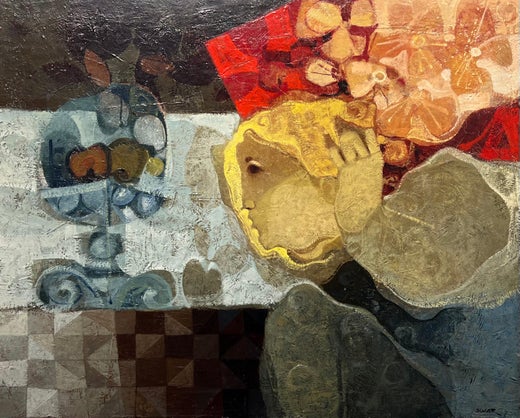
Alvar Sunol Munoz-Ramos
Alvar Suñol Alvar Suñol Munoz-Ramos, commonly known as Alvar, was born in 1935 in Montgat, Spain, a Catalan fishing village on the Mediterranean coast near Barcelona. By the age of 17, he was accepted into the Escuela Superior de Bellas Artes de San Jorge in Barcelona. In 1960, he moved to Paris and exhibited with other major Spanish artists including Picasso, Miró, and Dalí. Today, Alvar is recognized on an international platform for his exploration of the psychological and historical complexities of art-making and creation in relation to one’s environment and experiences. The examination of both interiors and exterior spaces place a significant role in all of Alvar’s works. Alvar strengthens his artistic vision through the use of various mediums including oil paintings, lithographs, watercolors, drawings, bronzes, and ceramic bas relief sculptures. His works can be found in the permanent collection of over fourteen museums worldwide and he has several public commissions around the world, including his most recent bronze sculpture created in honor of Catalan cellist Pablo Casals that is located in Paris, France. Additionally, Alvar has had three consecutive retrospectives since 2014. His first was hosted at Las Casa de Cultura (The Cultural Center) of Girona, Catalonia, Spain. One year later, Alvar had a second retrospective at the Castell de Benedormiens, in Castell d'Aro, Girona, Spain. Most recently, the Castell de Calonge in Girona, Spain recognized Alvar’s lengthy career from 1954 to 2016 with a retrospective titled, Una Vida Pintant (A Life of Painting). Retrospectives 2016 Una Vida Pintant, 1954-2016, Castell de Calonge, Girona, Spain 2015 Passat i Present,1954-2015, Castell de Benedormiens, Girona, Spain Interiors, Museu de la Mediterrània, Torroella de Montgrí
2014 Alvar Suñol: Una antològica des del 1954-2014, Casa de Cultura de la Diputació de Girona, Girona Spain Museum Shows 2009 Persistències: Exposicio de Dibuixos, Museo de Dibujo Julio Gabin, Castillo de Larrés, Huesca, Spain
2008 Inauguració de l’Escultura, “A Pau Casals” al carrer Pau Casals, Boulogne-Villencourt, Paris, France
2007 Alvar Suñol: Retrospectiva 1954-2008, Museu de Badalona, Barcelona, Spain
The Georgia Center, University of Georgia, Athens, GA Alvar: Contemporary Renaissance, A Retrospective, Albany Museum of Art, Albany, GA Alvar Suñol: A Retrospective, Appleton Museum of Art, Ocala, FL 2003 Realizació de l’escultura “Mediterrània” situada a la Plaça de les Mallorquines, Montgat, Montgat, Spain
2001 Alvar: Huellas en el tiempo, A Retrospective, Instituto Cervantes, Toulouse
Bordeaux, France Lithographs by Alvar, Retrospective, Georgia Museum of Art, Athens, GA 2000 Alvar: Empremptes en el temps, Abadia de Sant Miquel del Fai, Barcelona, Spain 1999 Heullas en el Timpo, Retrospective, Sala Moneo, Ayuntamiento de Logroño Heullas en el Timpo, Retrospective, Centro Cultural Ibercaja, Guadalajara 1997 Empremptes en el temps, Retrospective, Castell de Benedormiens, Castell d’Aro, Girona, Spain
1983 Wichita Museum of Art, Wichita, Kansas
1982 Utah Museum of Fine Art, Salt Lake City
1978 Musée Hyacinthe Rigaud, Perpinyà
About the Seller
5.0
Gold Seller
Premium sellers maintaining a 4.3+ rating and 24-hour response times
Established in 1969
1stDibs seller since 2014
888 sales on 1stDibs
Typical response time: 11 hours
Authenticity Guarantee
In the unlikely event there’s an issue with an item’s authenticity, contact us within 1 year for a full refund. DetailsMoney-Back Guarantee
If your item is not as described, is damaged in transit, or does not arrive, contact us within 7 days for a full refund. Details24-Hour Cancellation
You have a 24-hour grace period in which to reconsider your purchase, with no questions asked.Vetted Professional Sellers
Our world-class sellers must adhere to strict standards for service and quality, maintaining the integrity of our listings.Price-Match Guarantee
If you find that a seller listed the same item for a lower price elsewhere, we’ll match it.Trusted Global Delivery
Our best-in-class carrier network provides specialized shipping options worldwide, including custom delivery.You May Also Like
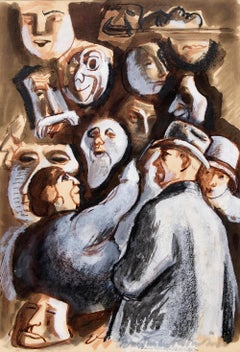
Vendor of Masks, 1930s Original Modernist Gouache Painting of Carnival Scene
By Boardman Robinson
Located in Denver, CO
This captivating 1930s modernist gouache painting by Boardman Robinson (1876–1952), titled The Vendor of Masks, depicts a striking mask vendor’s display with male and female figures,...
Category
1930s American Modern Figurative Paintings
Materials
Gouache
$1,195 Sale Price
20% Off
H 20.25 in W 15.25 in D 0.5 in
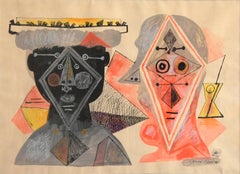
Two Heads -- 1947
By Byron Browne
Located in Mc Lean, VA
Byron Browne was an important American modernist painter.
Ink, tempera, and crayon on paper
Signed and dated lower right.
Category
1940s American Modern Abstract Paintings
Materials
Paper, Mixed Media
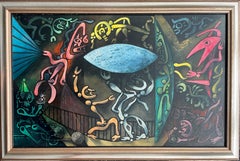
Inevitable Day – Birth of the Atom oil and tempera painting by Julio De Diego
By Julio de Diego
Located in Hudson, NY
Julio De Diego’s Atomic Series paintings made an extraordinary statement regarding the shock and fear that accompanied the dawn of the nuclear age. In the artist’s own words, “Scientists were working secretly to develop formidable powers taken from the mysterious depths of the earth - with the power to make the earth useless! Then, the EXPLOSION! . . . we entered the Atomic Age, and from there the neo-Atomic war begins. Explosions fell everywhere and man kept on fighting, discovering he could fight without flesh.”
To execute these works, De Diego developed a technique of using tempera underpainting before applying layer upon layer of pigmented oil glazes. The result is paintings with surfaces which were described as “bonelike” in quality. The forms seem to float freely, creating a three-dimensional visual effect. In the 1954 book The Modern Renaissance in American Art, author Ralph Pearson summarizes the series as “a fantastic interpretation of a weighty theme. Perhaps it is well to let fantasy and irony appear to lighten the devastating impact. By inverse action, they may in fact increase its weight.”
Bibliography
Art in America, April 1951, p.78
About this artists: Julio De Diego crafted a formidable persona within the artistic developments and political struggles of his time. The artist characterized his own work as “lyrical,” explaining, “through the years, the surrealists, the social-conscious painters and the others tried to adopt me, but I went my own way, good, bad or indifferent.” [1] His independence manifested early in life when de Diego left his parent’s home in Madrid, Spain, in adolescence following his father’s attempts to curtail his artistic aspirations. At the age of fifteen he held his first exhibition, set up within a gambling casino. He managed to acquire an apprenticeship in a studio producing scenery for Madrid’s operas, but moved from behind the curtains to the stage, trying his hand at acting and performing as an extra in the Ballet Russes’ Petrouchka with Nijinsky. He spent several years in the Spanish army, including a six-month stretch in the Rif War of 1920 in Northern Africa. His artistic career pushed ahead as he set off for Paris and became familiar with modernism’s forays into abstraction, surrealism, and cubism.
The artist arrived in the U.S. in 1924 and settled in Chicago two years later. He established himself with a commission for the decoration of two chapels in St. Gregory’s Church. He also worked in fashion illustration, designed magazine covers and developed a popular laundry bag for the Hotel Sherman. De Diego began exhibiting through the Art Institute of Chicago in 1929, and participated in the annual Chicago Artists Exhibitions, Annual American Exhibitions, and International Water Color Exhibitions. He held a solo exhibition at the Art Institute of Chicago in the summer of 1935. Though the artist’s career was advancing, his family life had deteriorated. In 1932 his first marriage dissolved, and the couple’s young daughter Kiriki was sent to live with friend Paul Hoffman.
De Diego continued to develop his artistic vocabulary with a growing interest in Mexican art. He traveled throughout the country acquainting himself with the works of muralists such as Carlos Merida, and also began a collection of small native artifacts...
Category
1940s American Modern Abstract Paintings
Materials
Masonite, Oil, Tempera
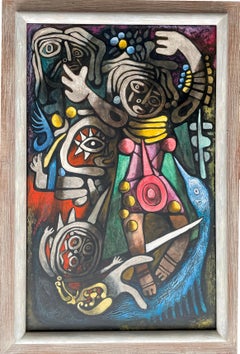
Ceremonial Dancers oil and tempera painting by Julio De Diego
By Julio de Diego
Located in Hudson, NY
Artwork measures 48" x 30" and framed 56 ¼" x 38 ¼" x 3"
Provenance:
John Heller Gallery, NYC, circa 1975 (label verso)
The artist's daughter
Corbino Galleries, Sarasota, FL (1990)...
Category
1940s Modern Abstract Paintings
Materials
Masonite, Oil, Tempera
$26,000
H 48 in W 30 in
The Magician oil and tempera painting by Julio de Diego
By Julio de Diego
Located in Hudson, NY
Julio De Diego’s Atomic Series paintings made an extraordinary statement regarding the shock and fear that accompanied the dawn of the nuclear age. In the artist’s own words, “Scientists were working secretly to develop formidable powers taken from the mysterious depths of the earth - with the power to make the earth useless! Then, the EXPLOSION! . . . we entered the Atomic Age, and from there the neo-Atomic war begins. Explosions fell everywhere and man kept on fighting, discovering he could fight without flesh.”
To execute these works, De Diego developed a technique of using tempera underpainting before applying layer upon layer of pigmented oil glazes. The result is paintings with surfaces which were described as “bonelike” in quality. The forms seem to float freely, creating a three-dimensional visual effect. In the 1954 book The Modern Renaissance in American Art, author Ralph Pearson summarizes the series as “a fantastic interpretation of a weighty theme. Perhaps it is well to let fantasy and irony appear to lighten the devastating impact. By inverse action, they may in fact increase its weight.”
Exhibited
1964 Marion Koogler McNay Art Institute, San Antonio, Texas
This work retains its original frame which measures 54" x 42" x 2"
About this artist: Julio De Diego crafted a formidable persona within the artistic developments and political struggles of his time. The artist characterized his own work as “lyrical,” explaining, “through the years, the surrealists, the social-conscious painters and the others tried to adopt me, but I went my own way, good, bad or indifferent.” [1] His independence manifested early in life when de Diego left his parent’s home in Madrid, Spain, in adolescence following his father’s attempts to curtail his artistic aspirations. At the age of fifteen he held his first exhibition, set up within a gambling casino. He managed to acquire an apprenticeship in a studio producing scenery for Madrid’s operas, but moved from behind the curtains to the stage, trying his hand at acting and performing as an extra in the Ballet Russes’ Petrouchka with Nijinsky. He spent several years in the Spanish army, including a six-month stretch in the Rif War of 1920 in Northern Africa. His artistic career pushed ahead as he set off for Paris and became familiar with modernism’s forays into abstraction, surrealism, and cubism.
The artist arrived in the U.S. in 1924 and settled in Chicago two years later. He established himself with a commission for the decoration of two chapels in St. Gregory’s Church. He also worked in fashion illustration, designed magazine covers and developed a popular laundry bag for the Hotel Sherman. De Diego began exhibiting through the Art Institute of Chicago in 1929, and participated in the annual Chicago Artists Exhibitions, Annual American Exhibitions, and International Water Color Exhibitions. He held a solo exhibition at the Art Institute of Chicago in the summer of 1935. Though the artist’s career was advancing, his family life had deteriorated. In 1932 his first marriage dissolved, and the couple’s young daughter Kiriki was sent to live with friend Paul Hoffman.
De Diego continued to develop his artistic vocabulary with a growing interest in Mexican art. He traveled throughout the country acquainting himself with the works of muralists such as Carlos Merida, and also began a collection of small native artifacts...
Category
1940s American Modern Abstract Paintings
Materials
Masonite, Oil, Tempera
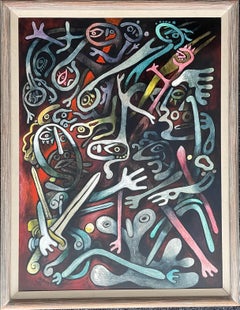
Meeting. Oil on canvas, 110x110 cm
Located in Riga, LV
Meeting. Oil on canvas, 110x110 cm
Category
Late 20th Century Modern Figurative Paintings
Materials
Canvas, Oil
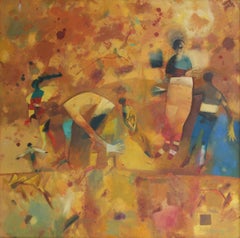
$4,168 Sale Price
20% Off
H 43.31 in W 43.31 in D 1.97 in
Dump. Oil on canvas, 28. 5 x 43 cm
Located in Riga, LV
Dump. Oil on canvas, 28.5x43 cm
Category
Late 20th Century Modern Figurative Paintings
Materials
Canvas, Oil
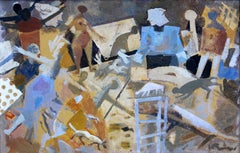
$1,686 Sale Price
20% Off
H 11.23 in W 16.93 in D 0.04 in
A dump. Oil on canvas, 100x100 cm
Located in Riga, LV
A dump
Oil on canvas, 100x100 cm
Category
Late 20th Century Modern Figurative Paintings
Materials
Canvas, Oil
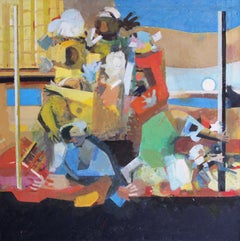
$5,116 Sale Price
20% Off
H 39.38 in W 39.38 in D 1.19 in
Game. Oil on canvas, 63 x 67 cm
Located in Riga, LV
Game
Oil on canvas, 63x67 cm
Category
Late 20th Century Modern Figurative Paintings
Materials
Canvas, Oil
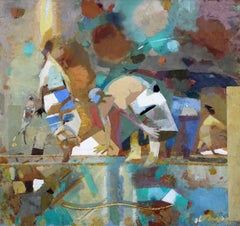
$3,600 Sale Price
20% Off
H 24.81 in W 26.38 in D 1.19 in
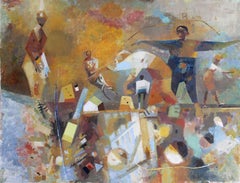
Walk in the city. Oil on canvas, 60x80 cm
Located in Riga, LV
Walk in the city
Oil on canvas, 60x80 cm
Category
Late 20th Century Modern Figurative Paintings
Materials
Canvas, Oil
$4,168 Sale Price
20% Off
H 23.63 in W 31.5 in D 0.99 in
More From This Seller
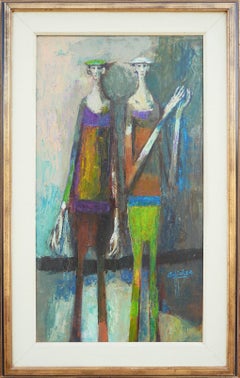
View All"Deux Harlequins" Abstract Figurative Portrait Painting
Located in Houston, TX
Blue and green-toned modern abstract figurative portrait painting by Houston, TX artist David Adickes. The work features two men figures standing side by s...
Category
1950s Modern Figurative Paintings
Materials
Oil, Canvas
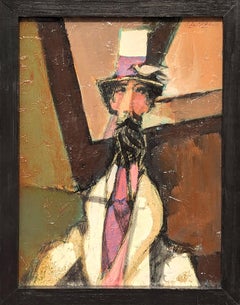
Modern Cubist Inspired Figurative Abstract of a Bearded Man with Top Hat
Bird
Located in Houston, TX
Modern Cubist inspired figurative painting by the iconic Houston based artist David Adickes. The work features a bearded man wearing a top hat with a bird perched on his head set aga...
Category
1990s Modern Figurative Paintings
Materials
Acrylic
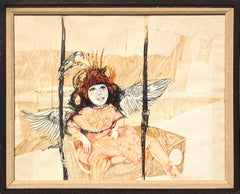
Modern Abstract Neutral Tone Figurative Drawing of a Woman with Wings
By Charles Pebworth
Located in Houston, TX
Modern abstract drawing by Houston-based artist Charles Pebworth. The work features a female figure seated in a basket with a pair of wings stretched out behind her. Signed by the artist in the front lower right corner. Currently hung in a black frame with a neutral linen matting.
Dimensions Without Frame: H 22.63 in. x W 28.25 in.
Artist Biography: Charles Pebworth is known for his metal art making. He attended the University of Houston...
Category
Late 20th Century Modern Figurative Paintings
Materials
Mixed Media
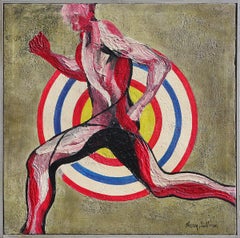
Green Toned Abstract Figurative Marathon Runner with Colorful Target Painting
Located in Houston, TX
Green toned abstract figurative painting by Houston, TX artist, Sherry Sullivan. Painting depicts an abstracted figure of a marathon runner with expose...
Category
21st Century and Contemporary Modern Figurative Paintings
Materials
Canvas, Oil
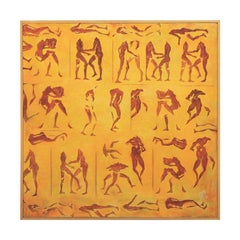
Abstract Yellow and Orange Toned Figurative Grid of Nude Bodies Painting
Located in Houston, TX
Yellow toned abstract figurative painting by French artist Christophe Stora depicting human bodies in a grid and in several postures and motions. This...
Category
20th Century Modern Abstract Paintings
Materials
Canvas, Oil
Modern Abstract Figure Painting Featuring the Basilica of Santa Maria Novella
By Adorno Bonciani
Located in Houston, TX
Modern abstract painting by Italian artist Adorno Bonciani. The work features two abstract figures on horseback playing musical instruments set against the Basilica of Santa Maria Novella...
Category
1970s Modern Figurative Paintings
Materials
Mixed Media