Want more images or videos?
Request additional images or videos from the seller
1 of 20
Anastassia SkoppTextured dark blue impressionistic Floral Artwork "Bohemian Morning II"2022
2022
$434.80List Price
About the Item
- Creator:Anastassia Skopp (1977, German)
- Creation Year:2022
- Dimensions:Height: 23.63 in (60 cm)Width: 23.63 in (60 cm)Depth: 0.79 in (2 cm)
- Medium:
- Movement Style:
- Period:
- Condition:
- Gallery Location:Zofingen, CH
- Reference Number:1stDibs: LU2203212247512

I’m Anastassia from Germany and I’m thrilled to share my passion for painting with you and to offer a glimpse into the inspiration and meaning behind my artworks. As a devoted student of Eckhart Tolle, I have found great wisdom and insight in his teachings on mindfulness and spirituality. In my paintings, I aim to convey the beauty and interconnectedness of the natural world, particularly through the symbolism of flowers. Using a technique influenced by abstract expressionism and modern art, I create textured and three-dimensional abstract paintings using a variety of mixed media. I use undiluted acrylic paint, ink, gel medium, and structure paste to build up layers of color and texture, often incorporating transparent paint to enhance the ethereal qualities of nature. My love of flowers is evident in many of my artworks, as I use spatulas, tubes for writing, and fruit knives to create intricate and delicate floral motifs. Through these meditative and expressive techniques, I seek to capture the essence of the natural world and invite viewers to immerse themselves in a colorful and serene world of impasto colors and floral magic. Whether you are a seasoned collector or a first-time buyer, I hope that my paintings will bring joy, inspiration, and a deeper connection to the beauty and interconnectedness of the world around us. Exhibitions international: 2023, August - International Art Fair, "Art Monaco", Monte-Carlo, Monaco 2023, April - Collins Avenue in Miami, "Just Summer On My Mind", Miami, USA 2023, March - VERNICE Art Fair, BIANCOSCURO Art Exhibition, Forli, Italy 2023, January - International Art Fair, Paris Art Salon, Paris, France 2022, Dezember - "Golden Duck" Gallery, Budapest, Hungary 2022, November - EOS Laboratorio delle Arti, Parma, Italy 2022, November -ARTBOX.PROJECT Miami 3.0 , Miami, USA 2022, October - ARTBOX.PROJECT Palma 1.0, Palma de Mallorca, Spain - Semi-Finalist 2022, August - ARTBOX.PROJECT Zürich 4.0, Zug, Switzerland 2022, May - The State Darwin Museum, "Why does Android need nature?" Moscow, Russia 2022, May - BIENNALE ART EXPO / ARTBOX.PROJECT World 1.0, Venice, Italy 2022, February - ARTBOX.PROJECT World 2.0, URBANSIDE Gallery Zurich, Switzerland 2021, December - The largest project in the history of NFT art, Nikas Safronov`s charity project "Artists for Artists" 2021, December - Luxemburger Art Prize organized by the Pinacotheque, Certificate as an official recognition from the Museum to artist participants whose merit and artistic talent have been specifically noted
About the Seller
5.0
Platinum Seller
Premium sellers with a 4.7+ rating and 24-hour response times
Established in 2019
1stDibs seller since 2022
701 sales on 1stDibs
Typical response time: 1 hour
Authenticity Guarantee
In the unlikely event there’s an issue with an item’s authenticity, contact us within 1 year for a full refund. DetailsMoney-Back Guarantee
If your item is not as described, is damaged in transit, or does not arrive, contact us within 7 days for a full refund. Details24-Hour Cancellation
You have a 24-hour grace period in which to reconsider your purchase, with no questions asked.Vetted Professional Sellers
Our world-class sellers must adhere to strict standards for service and quality, maintaining the integrity of our listings.Price-Match Guarantee
If you find that a seller listed the same item for a lower price elsewhere, we’ll match it.Trusted Global Delivery
Our best-in-class carrier network provides specialized shipping options worldwide, including custom delivery.You May Also Like
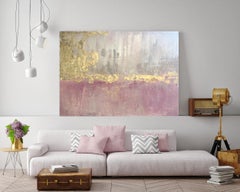
Gold Leaf Pink Silver Abstract Textured Art on Canvas 36 x 48" Pink Golden Fog
By Irena Orlov
Located in Los Angeles, CA
Gold Pink Silver Abstract Heavy Textured Painting on Canvas 36 x 48" Pink Golden Fog
Acrylic, Modeling Paste, Stucco, Glitter, Gold Leaf
- ...
Category
2010s Abstract Expressionist Abstract Paintings
Materials
Mixed Media, Acrylic
$6,000 Sale Price
20% Off
H 36 in W 48 in
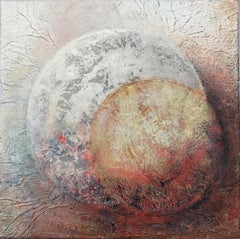
"Coveted spheres" abstract acrylic collage 50x50cm 2022
By Emmanuelle Vroelant
Located in Saint Pol de Léon, Bretagne
"Coveted spheres" abstract acrylic collage 50x50cm 2022
the moon and the earth are reduced to objects that we covet and want to appropriate
I worked as if it were porcelain objects...
Category
2010s Abstract Expressionist Abstract Paintings
Materials
Marble, Sandstone
$4,561 Sale Price
20% Off
H 19.69 in W 19.69 in D 1.19 in
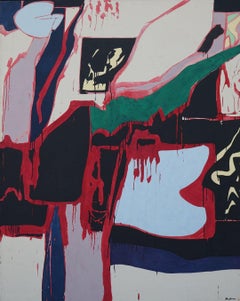
Shore V, large colorful red, black
blue mid-century abstract expressionist
By Richard Andres
Located in Beachwood, OH
Richard Andres (American, 1927-2013)
Shore V, c. 1964
acrylic on canvas
signed lower right, signed and titled verso
54 x 44 inches
Richard Andres was born in Buffalo, New York in 1927. A graduate of the Cleveland Institute of Art in 1950, he was immediately drafted and served for two years in the army as a mural painter. He received his Master of Arts from Kent State in 1961. A frequent exhibitor at galleries and museums and winner of multiple May Show prizes, Andres taught art in the Cleveland Public Schools for 28 years, as well as teaching the University of Buffalo, the Cleveland Institute of Art and the Western Reserve University.
Very little in Richard Andres’ childhood would have predicted his love of classical music, mid-century-modern architecture and certainly not his lifelong passion for art and in particular abstract art. Richard’s father, Raymond, had no more than a third-grade education, and his mother, Clara, was one of thirteen children – only three of whom lived into adulthood and none of whom attended high school.
They lived, when Richard was a boy, in a dingy area of Buffalo, NY in a walk-up apartment situated above a tavern. Raymond and Clara supplemented the income from their factory jobs in the bar downstairs with Raymond playing ragtime on the piano and Clara serving drinks. This often left Richard and his two older brothers at home alone to fend for themselves. The two older boys, Raymond and Russell, were - unlike Richard- rather rough and tumble and entertained themselves with stickball, boxing and the like. Richard, on the other hand, from a very young age liked to draw, or better yet even, to paint with the small set of watercolors he received for Christmas one year. Paper, however, at the height of the depression, was hard to come by. Luckily, Clara used paper doilies as decoration for the apartment and Richard would contentedly paint and then cut up doilies, gluing the pieces together to create collages.
At eight-years-old, he discovered the Albright-Knox Museum (then known as the Albright Art Gallery) and spent several hours a week there studying the paintings. He was particularly fond of Charles Burchfield‘s landscapes, enamored with their ‘messiness’ and thinking that they somehow captured more ‘feeling’ than works he was previously familiar with. For his tenth Christmas, he asked for and received a ‘how-to’ paint book by Elliot O’Hare. Through this self-teaching, he assembled the portfolio needed for acceptance to Buffalo Technical High School where he studied Advertising Arts. In his Junior year, he was encouraged to enter a watercolor painting, “Two Barns,” in the national 1944-45 Ingersoll Art Award Contest and was one of twelve grand prize winners – each one winning one hundred dollars. More importantly the painting was exhibited at the Carnegie Institute Galleries, which resulted in his winning a national scholarship to the Cleveland School of Art (The Cleveland Art Institute).
He flourished at the art school under the tutelage of faculty members such as Carl Gaertner, as well as that of visiting artists such as William Sommer and Henry George Keller. He would say in later years that Gaertner, in particular, influenced his attitude toward life as well as art. “Gaertner,” Andres said, “believed that there was no need to be a ‘tortured artist’, that an artist should rather enjoy beauty, family, and life in general.” Free to spend his days as he chose, he wandered the Cleveland Art Museum for most of the hours he was not attending classes or painting; the remaining time was spent drinking coffee at a local hangout with art school friends – which is where he met fellow Henry Keller scholarship winner, Avis Johnson. Richard was immediately smitten with Avis, but being rather shy, it took him the entire summer of 1948 to build up his courage to ask her out. Over that summer he ‘thought about Avis’ and worked in a diner to save money. He also used the hundred-dollar prize money won in High School to visit the first Max Beckmann retrospective in the United States at the City Art Museum in St. Louis. Over a half century later he spoke of that exhibit with a reverence usually reserved for spiritual matters, “I walked in and it was like nothing I had ever seen before... the color...It just glowed.”
Returning to campus in the Fall, the first thing he did was go to the coffee shop in hopes of finding Avis. He did, and she, upon seeing him, realized that she was also smitten with him. They quickly became known as ‘the couple’ on campus, and a year later, with Richard being drafted for the Korean war, they were quickly married by a Justice of the Peace, celebrating after with family at Avis’s Cleveland home. As a gift, faculty member John Paul Miller...
Category
1960s Abstract Expressionist Abstract Paintings
Materials
Acrylic
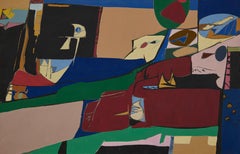
Erie Shore, Large Abstract Expressionist Mid-Century Modern geometric work
By Richard Andres
Located in Beachwood, OH
Richard Andres (American, 1927-2013)
Erie Shore, c. 1975
acrylic on canvas
signed lower right, signed and titled verso
50 x 72 inches
Richard Andres was born in Buffalo, New York in 1927. A graduate of the Cleveland Institute of Art in 1950, he was immediately drafted and served for two years in the army as a mural painter. He received his Master of Arts from Kent State in 1961. A frequent exhibitor at galleries and museums and winner of multiple May Show prizes, Andres taught art in the Cleveland Public Schools for 28 years, as well as teaching the University of Buffalo, the Cleveland Institute of Art and the Western Reserve University.
Very little in Richard Andres’ childhood would have predicted his love of classical music, mid-century-modern architecture and certainly not his lifelong passion for art and in particular abstract art. Richard’s father, Raymond, had no more than a third-grade education, and his mother, Clara, was one of thirteen children – only three of whom lived into adulthood and none of whom attended high school.
They lived, when Richard was a boy, in a dingy area of Buffalo, NY in a walk-up apartment situated above a tavern. Raymond and Clara supplemented the income from their factory jobs in the bar downstairs with Raymond playing ragtime on the piano and Clara serving drinks. This often left Richard and his two older brothers at home alone to fend for themselves. The two older boys, Raymond and Russell, were - unlike Richard- rather rough and tumble and entertained themselves with stickball, boxing and the like. Richard, on the other hand, from a very young age liked to draw, or better yet even, to paint with the small set of watercolors he received for Christmas one year. Paper, however, at the height of the depression, was hard to come by. Luckily, Clara used paper doilies as decoration for the apartment and Richard would contentedly paint and then cut up doilies, gluing the pieces together to create collages.
At eight-years-old, he discovered the Albright-Knox Museum (then known as the Albright Art Gallery) and spent several hours a week there studying the paintings. He was particularly fond of Charles Burchfield‘s landscapes, enamored with their ‘messiness’ and thinking that they somehow captured more ‘feeling’ than works he was previously familiar with. For his tenth Christmas, he asked for and received a ‘how-to’ paint book by Elliot O’Hare. Through this self-teaching, he assembled the portfolio needed for acceptance to Buffalo Technical High School where he studied Advertising Arts. In his Junior year, he was encouraged to enter a watercolor painting, “Two Barns,” in the national 1944-45 Ingersoll Art Award Contest and was one of twelve grand prize winners – each one winning one hundred dollars. More importantly the painting was exhibited at the Carnegie Institute Galleries, which resulted in his winning a national scholarship to the Cleveland School of Art (The Cleveland Art Institute).
He flourished at the art school under the tutelage of faculty members such as Carl Gaertner, as well as that of visiting artists such as William Sommer and Henry George Keller. He would say in later years that Gaertner, in particular, influenced his attitude toward life as well as art. “Gaertner,” Andres said, “believed that there was no need to be a ‘tortured artist’, that an artist should rather enjoy beauty, family, and life in general.” Free to spend his days as he chose, he wandered the Cleveland Art Museum for most of the hours he was not attending classes or painting; the remaining time was spent drinking coffee at a local hangout with art school friends – which is where he met fellow Henry Keller scholarship winner, Avis Johnson. Richard was immediately smitten with Avis, but being rather shy, it took him the entire summer of 1948 to build up his courage to ask her out. Over that summer he ‘thought about Avis’ and worked in a diner to save money. He also used the hundred-dollar prize money won in High School to visit the first Max Beckmann retrospective in the United States at the City Art Museum in St. Louis. Over a half century later he spoke of that exhibit with a reverence usually reserved for spiritual matters, “I walked in and it was like nothing I had ever seen before... the color...It just glowed.”
Returning to campus in the Fall, the first thing he did was go to the coffee shop in hopes of finding Avis. He did, and she, upon seeing him, realized that she was also smitten with him. They quickly became known as ‘the couple’ on campus, and a year later, with Richard being drafted for the Korean war, they were quickly married by a Justice of the Peace, celebrating after with family at Avis’s Cleveland home. As a gift, faculty member John Paul Miller...
Category
1970s Abstract Expressionist Abstract Paintings
Materials
Acrylic
Garden, Abstract Expressionist Mid-Century Modern geometric work
By Richard Andres
Located in Beachwood, OH
Richard Andres (American, 1927-2013)
Garden, 1972
acrylic on canvas
signed, dated and titled verso
59.5 x 50 inches
Richard Andres was born in Buffalo, New York in 1927. A graduate of the Cleveland Institute of Art in 1950, he was immediately drafted and served for two years in the army as a mural painter. He received his Master of Arts from Kent State in 1961. A frequent exhibitor at galleries and museums and winner of multiple May Show prizes, Andres taught art in the Cleveland Public Schools for 28 years, as well as teaching the University of Buffalo, the Cleveland Institute of Art and the Western Reserve University.
Very little in Richard Andres’ childhood would have predicted his love of classical music, mid-century-modern architecture and certainly not his lifelong passion for art and in particular abstract art. Richard’s father, Raymond, had no more than a third-grade education, and his mother, Clara, was one of thirteen children – only three of whom lived into adulthood and none of whom attended high school.
They lived, when Richard was a boy, in a dingy area of Buffalo, NY in a walk-up apartment situated above a tavern. Raymond and Clara supplemented the income from their factory jobs in the bar downstairs with Raymond playing ragtime on the piano and Clara serving drinks. This often left Richard and his two older brothers at home alone to fend for themselves. The two older boys, Raymond and Russell, were - unlike Richard- rather rough and tumble and entertained themselves with stickball, boxing and the like. Richard, on the other hand, from a very young age liked to draw, or better yet even, to paint with the small set of watercolors he received for Christmas one year. Paper, however, at the height of the depression, was hard to come by. Luckily, Clara used paper doilies as decoration for the apartment and Richard would contentedly paint and then cut up doilies, gluing the pieces together to create collages.
At eight-years-old, he discovered the Albright-Knox Museum (then known as the Albright Art Gallery) and spent several hours a week there studying the paintings. He was particularly fond of Charles Burchfield‘s landscapes, enamored with their ‘messiness’ and thinking that they somehow captured more ‘feeling’ than works he was previously familiar with. For his tenth Christmas, he asked for and received a ‘how-to’ paint book by Elliot O’Hare. Through this self-teaching, he assembled the portfolio needed for acceptance to Buffalo Technical High School where he studied Advertising Arts. In his Junior year, he was encouraged to enter a watercolor painting, “Two Barns,” in the national 1944-45 Ingersoll Art Award Contest and was one of twelve grand prize winners – each one winning one hundred dollars. More importantly the painting was exhibited at the Carnegie Institute Galleries, which resulted in his winning a national scholarship to the Cleveland School of Art (The Cleveland Art Institute).
He flourished at the art school under the tutelage of faculty members such as Carl Gaertner, as well as that of visiting artists such as William Sommer and Henry George Keller. He would say in later years that Gaertner, in particular, influenced his attitude toward life as well as art. “Gaertner,” Andres said, “believed that there was no need to be a ‘tortured artist’, that an artist should rather enjoy beauty, family, and life in general.” Free to spend his days as he chose, he wandered the Cleveland Art Museum for most of the hours he was not attending classes or painting; the remaining time was spent drinking coffee at a local hangout with art school friends – which is where he met fellow Henry Keller scholarship winner, Avis Johnson. Richard was immediately smitten with Avis, but being rather shy, it took him the entire summer of 1948 to build up his courage to ask her out. Over that summer he ‘thought about Avis’ and worked in a diner to save money. He also used the hundred-dollar prize money won in High School to visit the first Max Beckmann retrospective in the United States at the City Art Museum in St. Louis. Over a half century later he spoke of that exhibit with a reverence usually reserved for spiritual matters, “I walked in and it was like nothing I had ever seen before... the color...It just glowed.”
Returning to campus in the Fall, the first thing he did was go to the coffee shop in hopes of finding Avis. He did, and she, upon seeing him, realized that she was also smitten with him. They quickly became known as ‘the couple’ on campus, and a year later, with Richard being drafted for the Korean war, they were quickly married by a Justice of the Peace, celebrating after with family at Avis’s Cleveland home. As a gift, faculty member John Paul Miller...
Category
1970s Abstract Expressionist Abstract Paintings
Materials
Acrylic
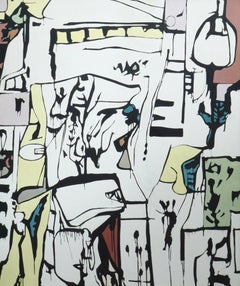
$20,000
H 60 in W 50 in
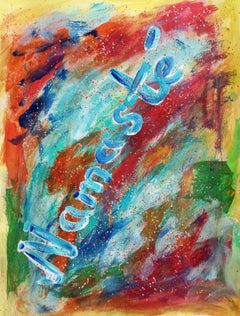
Abstract expressionist word art text-base mixed media painting paper "NAMASTE"
Located in VÉNISSIEUX, FR
"Namaste" is an expressive mixed-media work by French artist Natalya Mougenot, part of her Abstract Word Art series—a collection focused on the emotional power of language and its vi...
Category
2010s Abstract Expressionist Abstract Paintings
Materials
Acrylic, Watercolor
$534
Free Shipping
H 25.6 in W 19.69 in D 0.04 in
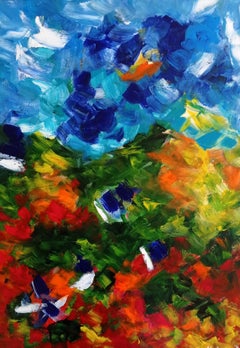
Contemporary abstract expressive colorful nature painting on canvas "Warmth"
Located in VÉNISSIEUX, FR
This contemporary expressive abstract nature painting, titled "Springtime", is a vibrant celebration of renewal and vitality by French artist Natalya Mougenot. Part of her ongoing ab...
Category
2010s Abstract Expressionist Abstract Paintings
Materials
Acrylic, Canvas
$1,122 Sale Price
30% Off
Free Shipping
H 27.56 in W 19.69 in D 1.38 in
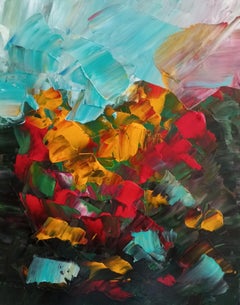
Contemporary Abstract Expressionist Vivid Painting acrylic on canvas "Peace 0.2"
Located in VÉNISSIEUX, FR
This contemporary abstract expressive vivid painting by French artist Natalya Mougenot is titled "Peace 0.2". It’s a bold and emotionally charged piece inspired by the subtle harmony...
Category
2010s Abstract Expressionist Abstract Paintings
Materials
Acrylic
$356
H 19.69 in W 15.75 in D 0.6 in
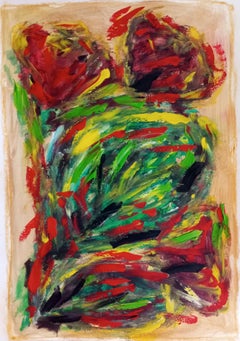
"Energy" (interior semi-abstract vibrant floral acrylic painting on paper)
Located in VÉNISSIEUX, FR
This expressive vibrant abstract floral painting is called "Energy" was done with acrylic paints on a professional heavy weight paper (300 gr).
Red, yellow and green are dominant ...
Category
2010s Abstract Expressionist Abstract Paintings
Materials
Acrylic, Paper
$451
Free Shipping
H 23.39 in W 16.54 in D 0.04 in
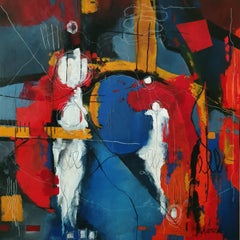
Interconnected Dance - Abstract Masculine Contemporary Grey Red Detail Texture
By Karnish Art
Located in Pretoria, Gauteng
Title: Interconnected Dance
Abstract Masculine Contemporary Grey Red Yellow Blue Detail Texture Bold Colors
This series expresses our unity and our interconnectedness. We are dancin...
Category
2010s Abstract Expressionist Abstract Paintings
Materials
Pastel, Oil, Acrylic, Pencil, Color Pencil
$1,400
H 35.83 in W 35.83 in D 0.79 in
More From This Seller
View AllTextured colorfull floral painting "Wild Garden"
Located in Zofingen, AG
Experience the beauty and interconnectedness of nature through my original artwork. This abstract textured acrylic painting on canvas measures 60x70x3,5 cm (23,6x27,5x1,4 inches) and...
Category
2010s Abstract Expressionist Abstract Paintings
Materials
Acrylic

$465 Sale Price
20% Off
Calm Down Darling Flowers Expression Abstraction Interior by Lana Ritter 80x120
Located in Zofingen, AG
This joyful floral abstraction expends love and energy and is dedicated to love and relationships.
Soaring beautiful strokes, stains and splashes on the canvas create a beautiful atm...
Category
2010s Abstract Expressionist Interior Paintings
Materials
Gesso, Charcoal, Varnish, Ink, Acrylic
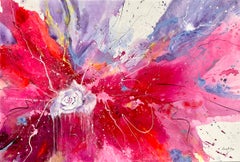
Textured colorfull floral painting "Toujours des fleurs"
Located in Zofingen, AG
Experience the beauty and interconnectedness of nature through my original artwork. This abstract textured acrylic painting on canvas measures 60x70x3,5 cm (23,6x27,5x1,7 inches) and...
Category
2010s Abstract Expressionist Abstract Paintings
Materials
Acrylic
$532 Sale Price
20% Off
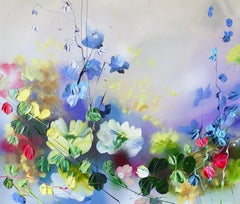
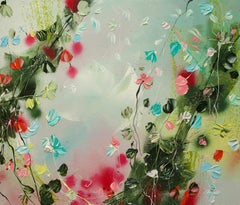
Textured colorfull floral painting "Beautiful Morning"
Located in Zofingen, AG
Experience the beauty and interconnectedness of nature through my original artwork. This abstract textured acrylic painting on canvas measures 60x70x3,5 cm (23,6x27,5x1,4 inches) and...
Category
2010s Abstract Expressionist Abstract Paintings
Materials
Acrylic
$532 Sale Price
20% Off
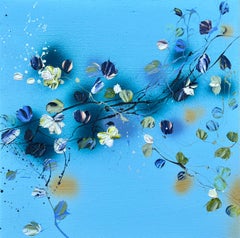
Floral Artwork "Blue, blue sky II"
Located in Zofingen, AG
Abstract textured acrylic painting on canvas 60x60x2 cm (23,6 x 23,6 x 0,8 inches). Mixed Media on gallery wrapped canvas. The work is ready to hang. No framing required. The sides o...
Category
2010s Abstract Expressionist Abstract Paintings
Materials
Acrylic
$434 Sale Price
25% Off
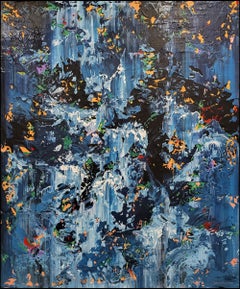
Abstract 2317
Located in Zofingen, AG
Artist : Alex Senchenko © 2023
Title: Abstract 2317
47" x 39" ( 120cm. x 100cm. )
Professional Gallery Canvas, Acrylic Paints
Original Painting on...
Category
2010s Abstract Expressionist Abstract Paintings
Materials
Acrylic
Recently Viewed
View AllMore Ways To Browse
Blue Impressionistic Painting
Abstract Boats Painting
Anastassia Skopp
Nashville Art
Paintings By King
Brecon Beacons
Christina Painting Canvas
Italian Abstract Artist
Vintage Art Collective
Coral Abstract Painting
Oil Painting Wolf
48x48 Oil
Abstract Girl Painting
Abstract Pond
Anne Frank
Mark Newman
Painting On Mirror
Unknown Drawing Oil And Pastel