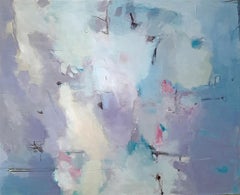
Items Similar to Winter Lights
Want more images or videos?
Request additional images or videos from the seller
1 of 9
Carl HoltyWinter Lights1966
1966
$65,000
£49,497.46
€56,522.94
CA$91,333.02
A$100,209.73
CHF 52,785.67
MX$1,192,100.45
NOK 676,178.12
SEK 617,442.95
DKK 422,280.74
About the Item
Waterline Fine Art, Austin, TX is pleased to present the following work:
Carl Holty
Winter Lights, 1966
Oil on canvas.
Signed lower right.
60 x 46 in.
62 x 48 in. (framed)
Custom framed in a solid hardwood floater, finished in matte white with hand-applied silver leafing to the face.
Provenance
Andrew Crispo Gallery, New York
Estate of Carl Holty, New York
Jody Klotz Fine Art, Abilene, TX
Carl Holty was born in Freiburg, Germany in 1900, to American parents who were abroad while his father pursued medical studies. The family returned to to the U.S. before Holty’s first birthday, initially living near Green Bay, WI, before ultimately settling in Milwaukee. Displaying early artistic inclination, Holty received private instruction from the German painter Friedrich Wilhelm Heine, and during high school, served as art editor and chief cover designer for the yearbook and newspaper. By the age of 16, he was contributing political cartoons to a local anti-war publication.
In 1919, Holty enrolled in pre-medical studies at Marquette University, and briefly entered the Students’ Army Training Corps, stationed at Camp Grant, IL. Electing to move in a different direction from medicine, he spent the following summer at the Ox-Bow School of Art in Saugatuck, MI, with an interest in poster design. He then moved to New York, studying at the National Academy of Design and Parsons School of Design. A transitional period followed in Chicago, where he began producing crayon portraits for affluent patrons, before returning home to Milwaukee in 1923, where he established himself as a portraitist. Financial independence arrived in 1925 via his grandfather’s bequest, allowing for continued art instruction at the Milwaukee Art Institute.
From 1924 through the subsequent decade, Holty lived abroad, traveling extensively. In 1926, he reached Munich with the intent to enroll at the Royal Academy, but after meeting the painter Vaclav Vytlacil, he opted to join Hans Hofmann’s private school instead. Hofmann’s emphasis on conceptual drawing integrating tactile and visual perception, along with his push-pull theory of spatial illusion through color and shape, profoundly reshaped Holty’s practice and influenced his career's work. Holty and his wife settled in Switzerland after her diagnosis of tuberculosis in 1927, and while his direct study with Hofmann ended, tutelage continued via correspondence.
Following his wife’s death in 1930, he relocated to Paris where Robert Delaunay sponsored his 1932 entry into Abstraction-Création, a collective countering surrealism and figuration that included Piet Mondrian, Josef Albers, and Alexander Calder (the only other American). Holty’s curvilinear abstractions appeared in the group’s 1933 journal, yet his alignment lay closer to Cubism - particularly Juan Gris’ methodical style and Picasso’s "synthetic Cubism" - than Neo-plasticism, prompting his withdrawal from the group after one year. Works from this period also reflect engagement with the biomorphic abstractions of Wassily Kandinsky and Joan Miró, the latter later occupying Holty’s New York studio during the 1940s.
By 1935, Holty was back in New York, reconnecting with Hofmann, Vytlacil, and Stuart Davis. Invited by Vytlacil, he participated in discussions that led to the formation of the American Abstract Artists (AAA) group in 1936. The organization aimed to cultivate public appreciation for nonobjective art, organizing an inaugural exhibition that drew 1,500 visitors, despite unfavorable press coverage. Possessing rhetorical skill and European modernist experience, Holty swiftly assumed leadership, later serving as chairman and president until 1944, when he deemed the group’s objectives fulfilled.
In 1939, Holty joined the faculty of the Art Students League faculty. Nine years later, Milwaukee colleague Howard Thomas secured him an artist-in-residence post at the University of Georgia, where his style shifted from crisp abstractions toward loose, luminous, and painterly compositions that deployed vivid color contrasts to veil forms and generate surface tension.
Further academic appointments included Washington University in St. Louis, the University of California, Berkeley, Brooklyn College, and an artist-in-residence post at the University of Wisconsin-Milwaukee. Throughout the 1950s and 1960s, his work grew more abstract and expressive, contours softening to near-feathery edges. He worked canvases horizontally with broad brushes to prevent drips, circulating to ensure color planes converged from all edges, rather than receding frontally. In 1969, he co-authored with Romare Bearden The Painter’s Mind: A Study of Structure and Space in Painting.
Carl Holty died in New York in 1973, at the age of 72. His work can be found in prestigious private and institutional collections worldwide, including the Brooklyn Museum, Metropolitan Museum of Art, Minneapolis Institute of Art, Museum of Modern Art (MoMA), Smithsonian American Art Museum, Solomon R. Guggenheim Museum, the Whitney Museum of American Art, and many others. In 2020, he was the subject of a major posthumous retrospective at the Georgia Museum of Art at the University of Georgia, entitled Carl Holty: Romantic Modernist.
Sources: Smithsonian American Art Museum and the Johnson Collection.
- Creator:Carl Holty (1900 - 1973, American)
- Creation Year:1966
- Dimensions:Height: 60 in (152.4 cm)Width: 46 in (116.84 cm)
- Medium:
- Movement Style:
- Period:
- Condition:Overall very good and stable condition. Sporadic drip accretions with halo effect, by the hand of the artist and inherent to the work. The canvas has been professionally lined, adding substantial weight to the picture. Not examined under UV light.
- Gallery Location:Austin, TX
- Reference Number:1stDibs: LU2287217198842
Carl Holty
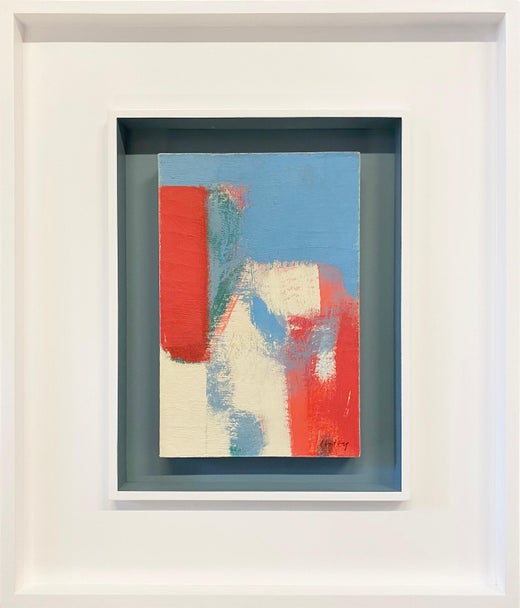
Born in Freiburg, Germany, Carl Holty moved with his parents to a Germain community in Milwaukee when he was an infant. He began studying art at the Milwaukee Normal School under instructors who had trained in Europe and later continued his studies at the Art Institute of Chicago. In 1919, following a summer at an artists' colony in Saugatuck, Michigan, Holty enrolled at Parsons School of Design and the National Academy of Design, both in New York. He briefly considering entering medical school, his father’s profession, though with the help of his grandfather, returned to Germany to continue his art education. It was at Hans Hofman’s school that Holty would be introduced to the principles of modernist composition and ideas in painting and drawing, an influence he would consider his main focus throughout his career. Hofmann "first opened my eyes to the plastic nature of drawing." Holty once recalled. Displaying no interest in the predominant style of expressionism, popular in Germany at the time, Holty focused on the tenants of Cubism, Fauvism, and Futurism which lead him, in 1928, to relocate to Paris. Holty quickly became part of the active artistic community in the nation’s capital associating with many of the major figures of international avant-garde art including Miro, Mondrian, Arp, and Delaunay, the latter of which sponsored Holty to become one of only two American members of the Abstraction-Creation group founded by Theo Van Doesburg. Holty returned to America in 1936 becoming a significant figure in the development of abstract art. He reconnected with his old mentor Hans Hofmann and developed friendships with many of the City’s rising artist’s including Vaclav Vytlacil whom he had known in Paris. It was this group that formed the American Abstract Artists association, where Holty would serve as chairman in 1938 and with whom he’d exhibit with through 1944. It was during this period Holty abandoned Cubism for Biomorphism, leaving behind edges to explore shapes and forms that ultimately lead to his color field paintings of the mid 1950s and through the remainder of his career.
About the Seller
5.0
Vetted Professional Seller
Every seller passes strict standards for authenticity and reliability
Established in 2020
1stDibs seller since 2023
6 sales on 1stDibs
- ShippingRetrieving quote...Shipping from: Austin, TX
- Return Policy
More From This Seller
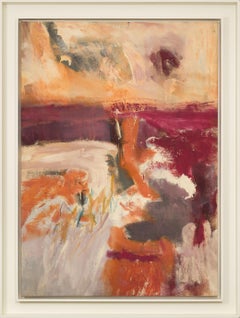
View AllUntitled
Located in Austin, TX
Waterline Fine Art, Austin, TX is pleased to present the following work:
Oil on canvas. Signed verso. Some scratched out, illegible writing in paint and graphite verso, which may ha...
Category
1960s Abstract Expressionist Abstract Paintings
Materials
Canvas, Oil
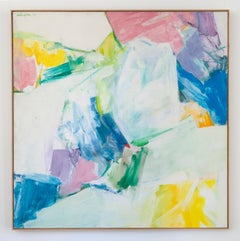
White Dawn
By John Little
Located in Austin, TX
Waterline Fine Art, Austin, TX is pleased to present the following work:
Egg emulsion on fiberglass. Signed and dated upper left and verso; titled verso.
49 x 48 in.
49.75 x 49 in. (framed)
Custom framed in hickory.
Provenance
Albright-Knox Art Gallery, Buffalo, NY
Born in Alabama, John Little attended the Buffalo (NY) Fine Arts Academy as a teenager, until 1927. Soon after, he moved to New York where he began operatic vocal training and opened what would become a very successful textile business designing fabric and wallpaper.
In 1933, he enrolled at the Art Students League under the tutelage of George Grosz. Little’s early work consisted predominantly of landscapes, until 1937, when he began studying under Hans Hofmann and his work naturally shifted toward abstraction. During his time with Hofmann, he with artists such as Lee Krasner, George McNeil, Gerome Kamrowski, Giorgio Cavallon...
Category
1960s Abstract Expressionist Abstract Paintings
Materials
Fiberglass, Egg Tempera
$30,000
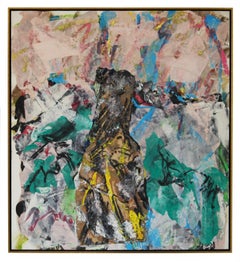
Untitled
By Michael Goldberg
Located in Austin, TX
Waterline Fine Art, Austin, TX is pleased to present the following work:
Oil, pastel, and paper collage on canvas. Signed and dated verso.
52.75 x 47.75 in.
54 x 49 in. (framed)
Gilded floater frame.
Provenance
Compass Rose, Chicago
Born Sylvan Irwin Goldberg in 1924 and raised in the Bronx, Michael Goldberg was an important figure in American Abstract Expressionism, who began taking art classes at the Art Students League in 1938. A gifted student, Goldberg finished high school at the age of 14 and enrolled in City College. He soon found New York’s jazz scene to be a more compelling environment, and he began skipping classes in favor of the Harlem jazz clubs near campus. Goldberg’s love of jazz would become a lifelong passion and a key component to his approach to composition in his paintings.
From 1940 to 1942, like many of the leading artists of the New York School, Goldberg studied with Hans Hofmann. In 1943, he put his pursuit of painting on hold and enlisted in the U.S. Army. Serving in North Africa, Burma, and India, Goldberg received a Purple Heart and a Bronze Star before being discharged in 1946. After his service, he traveled and worked in Venezuela before returning to the United States, settling back in New York and resuming studies with Hofmann and at the Art Students League.
Living downtown and frequenting the Cedar Bar, Goldberg befriended many of the artists of the New York School. In 1951, his work was included in the groundbreaking Ninth Street Show, co-organized by Leo Castelli, Conrad Marca-Relli, and the Eighth Street Club, and featuring the work of - among others - Hofmann, Jackson Pollock, Willem de Kooning, and Franz Kline. In 1953, the Tibor de Nagy...
Category
1980s Abstract Expressionist Abstract Paintings
Materials
Canvas, Pastel, Mixed Media, Oil, Handmade Paper
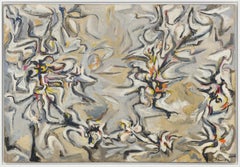
Untitled
By Paul Brach
Located in Austin, TX
Waterline Fine Art, Austin, TX is pleased to present the following work:
Oil on canvas. Signed and dated lower right.
41.75 x 61 in.
44 x 63 in. (framed)
Custom framed in a hardwo...
Category
1950s Abstract Expressionist Abstract Paintings
Materials
Canvas, Oil
$30,000
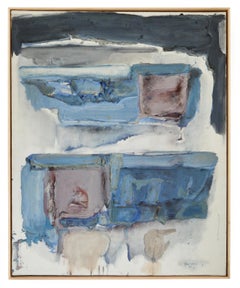
Blue Grey
By Philippe Hosiasson
Located in Austin, TX
Waterline Fine Art, Austin, TX is pleased to present the following work:
Oil on canvas. Signed and dated lower right and verso, titled verso.
39.25 x 31.75 in.
40.25 x 32.75 in. (f...
Category
1960s Abstract Expressionist Abstract Paintings
Materials
Canvas, Oil
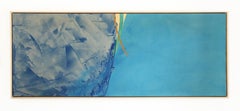
Danish Middle
By Joseph Drapell
Located in Austin, TX
Waterline Fine Art, Austin, TX is pleased to present the following work:
Acrylic on canvas. Signed, titled, and dated on verso.
34.25 x 87.5 in.
36 x 89.5 in. (framed)
Custom framed in in a natural cherry floater.
Provenance
Dunkelman Gallery, Toronto
Born Josef Drapell in German-occupied territory near Prague in the present-day Czech Republic, his interest in art was piqued as a young boy growing up in a country that traded one occupier for the next. Czechoslovakia - under communist Soviet control following the war - would never allow Drapell to enjoy true freedom of artistic expression. He eventually fled his homeland, first stopping in Vienna, before ultimately settling in Canada in 1966.
After a brief spell at the venerable Cranbrook Academy of Art in Bloomfield Hills, MI, Drapell returned to Canada in 1970, settling in Toronto - though he frequently traveled between the two countries in pursuit of exhibition opportunities in both Toronto and New York. Those opportunities arrived almost immediately, as he enjoyed solo exhibitions with both Robert Elkon Gallery in New York, and Dunkelman Gallery back home in Toronto.
Drapell splits time between his homes in Toronto and Georgian Bay on Lake Huron...
Category
1970s Abstract Expressionist Abstract Paintings
Materials
Canvas, Acrylic
You May Also Like
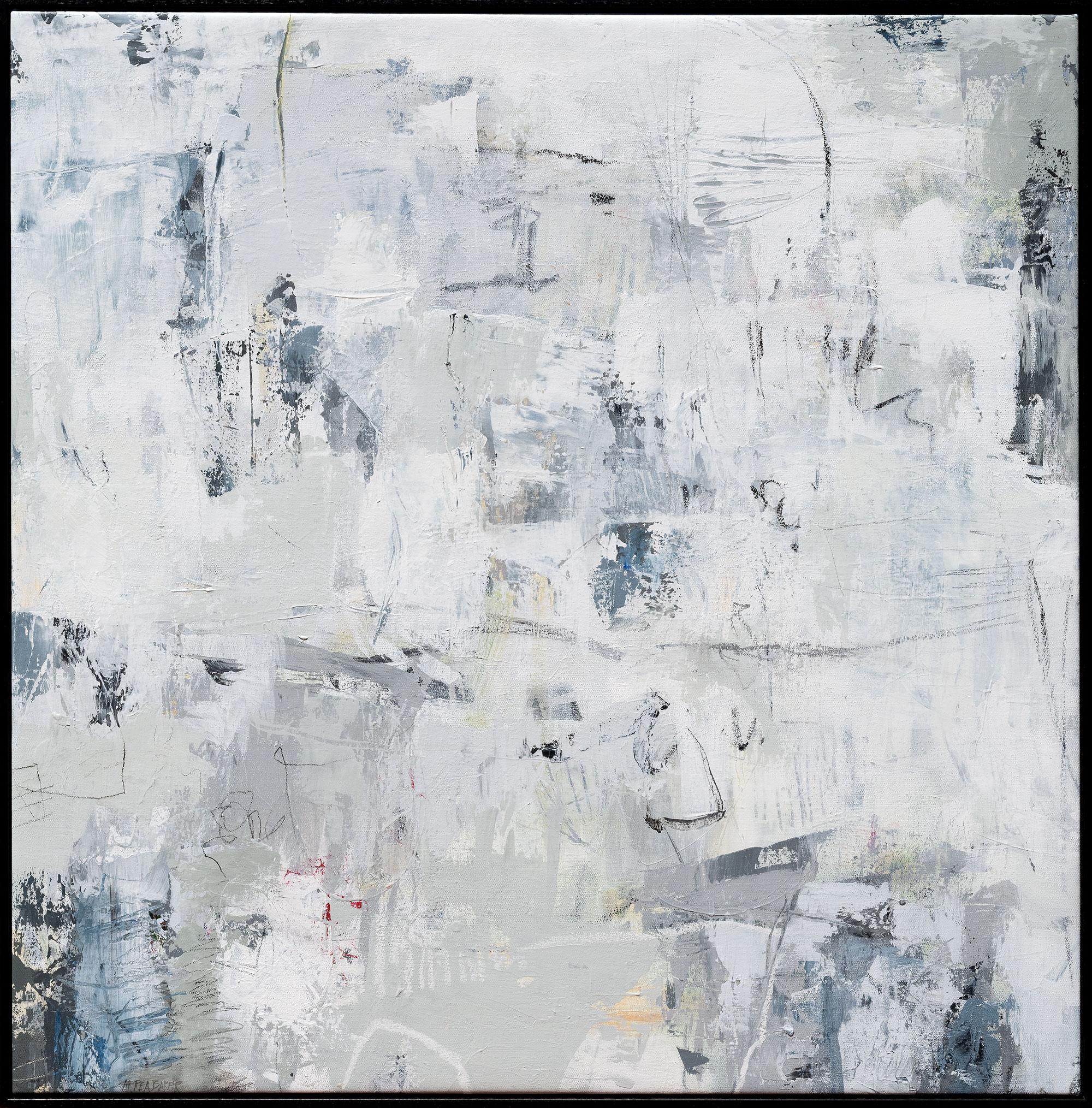
Winter
By Martha Rea Baker
Located in Santa Fe, NM
Blue white beige teal green khaki orange brown aqua
Martha Rea Baker’s technique of choice is driven by her selection of mediums. She has successfully moved between the unique pro...
Category
21st Century and Contemporary Abstract Abstract Paintings
Materials
Canvas, Acrylic
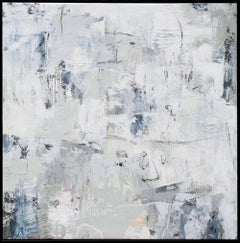
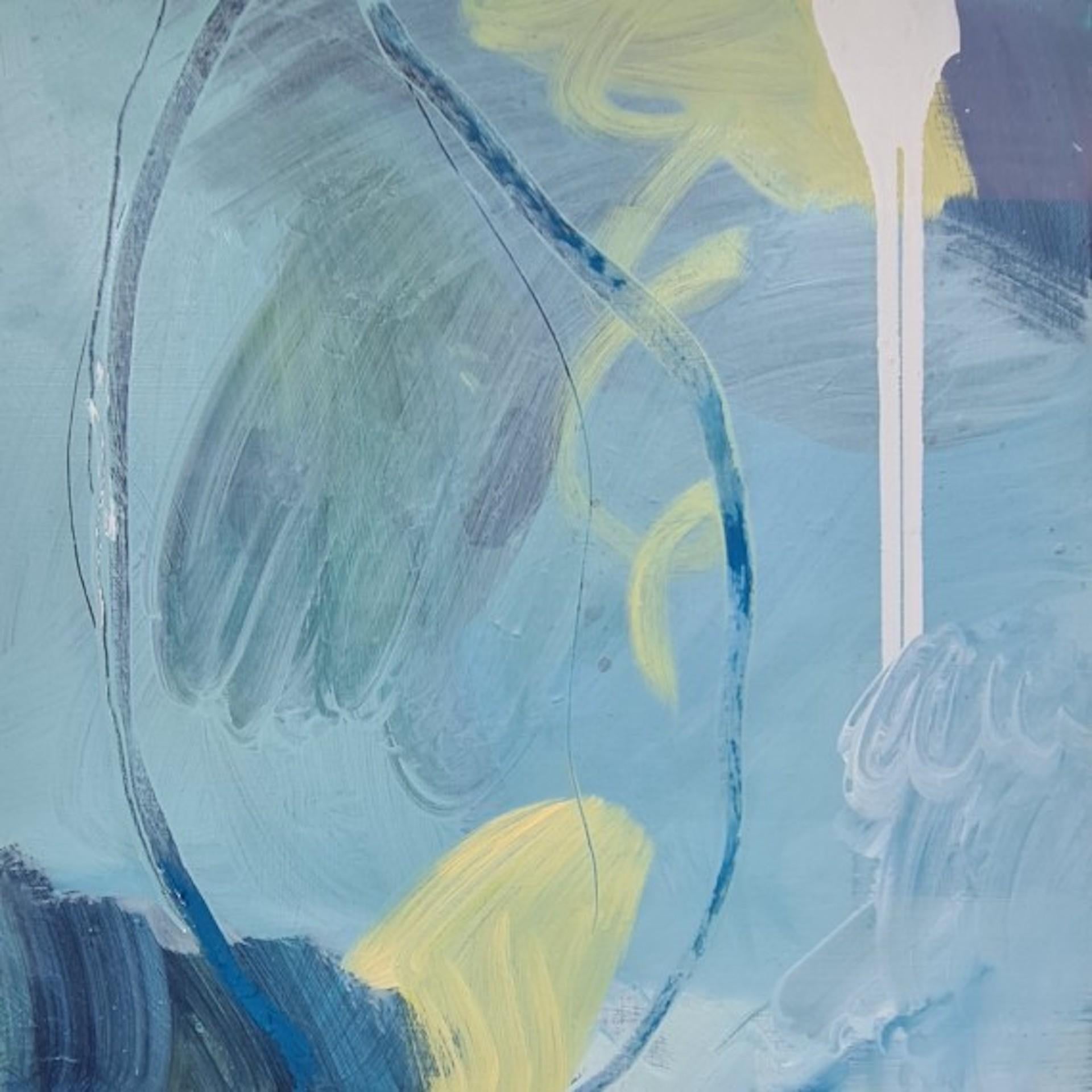
Claire Chandler, Cold Snap, Original Abstract Painting, Contemporary Art
Located in Deddington, GB
Cold Snap [2020-21]
Original
Abstract
Oil on canvas
Complete Size of Unframed Work: H:40 cm x W:40 cm x D:4cm
Sold Unframed
Please note that insitu images are purely an indication of how a piece may look
Cold Snap by Claire Chandler...
Category
21st Century and Contemporary Abstract Abstract Paintings
Materials
Canvas, Oil
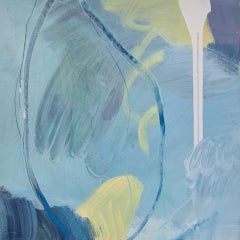
Bright Winter
By Curtis Ripley
Located in Santa Monica, CA
Curtis Ripley's paintings have always presented the viewer a space where images are as important as the depth of the atmosphere in which they exist. The images are more evocative tha...
Category
21st Century and Contemporary Abstract Abstract Paintings
Materials
Canvas, Oil
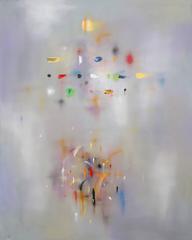
Winter, Painting, Acrylic on Canvas
By Christopher Limbrick
Located in Yardley, PA
"Winter" is the second painting in the "Seasons" collection of abstract landscapes. While the colors are representational, the boundaries of conventional thought for this particular...
Category
2010s Abstract Abstract Paintings
Materials
Acrylic
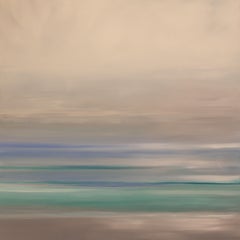
Winter Walk
Located in Washington, DC
Painting by Maryanne Pollock titled "Winter Walk". Signed and titled on reverse.
Maryanne Pollock received her BFA from Tyler School of Art in Philadelphia and Rome, Italy. She continued studying at the Pennsylvania Academy of Fine Arts, the Corcoran College of Art and Design and American University.
Maryanne Pollock represented the United States in a contextual exhibition at the 54th Venice Biennale, at the Arts Embassies Program in Egypt, and had solo exhibitions in Paris, Glasgow, Basel, and Cairo. Publications include Home and Design, Luxe, Traditional Home, Professional Artist (cover), and the Washington Post...
Category
21st Century and Contemporary Abstract Expressionist Abstract Paintings
Materials
Acrylic, Archival Paper
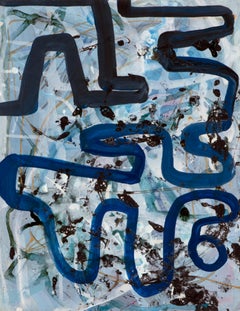
Frozen Logic, Abstract Painting
Located in San Francisco, CA
Artist Comments
Artist Dorothy Gaziano highlights shades of white with pastel undertones in this lightly textured abstract. Darker areas of blue, purple, and gray frame the lig...
Category
21st Century and Contemporary Abstract Abstract Paintings
Materials
Acrylic