Items Similar to Vintage 1960s Mid-Century Modern Abstract Painting – Blue, Gray
Black Art
Video Loading
Want more images or videos?
Request additional images or videos from the seller
1 of 15
Charles Ragland BunnellVintage 1960s Mid-Century Modern Abstract Painting – Blue, Gray
Black Art1963
1963
$4,400
$5,50020% Off
£3,352.88
£4,191.1020% Off
€3,866.80
€4,833.5020% Off
CA$6,249.32
CA$7,811.6420% Off
A$6,714.54
A$8,393.1820% Off
CHF 3,602.34
CHF 4,502.9220% Off
MX$79,105.04
MX$98,881.3020% Off
About the Item
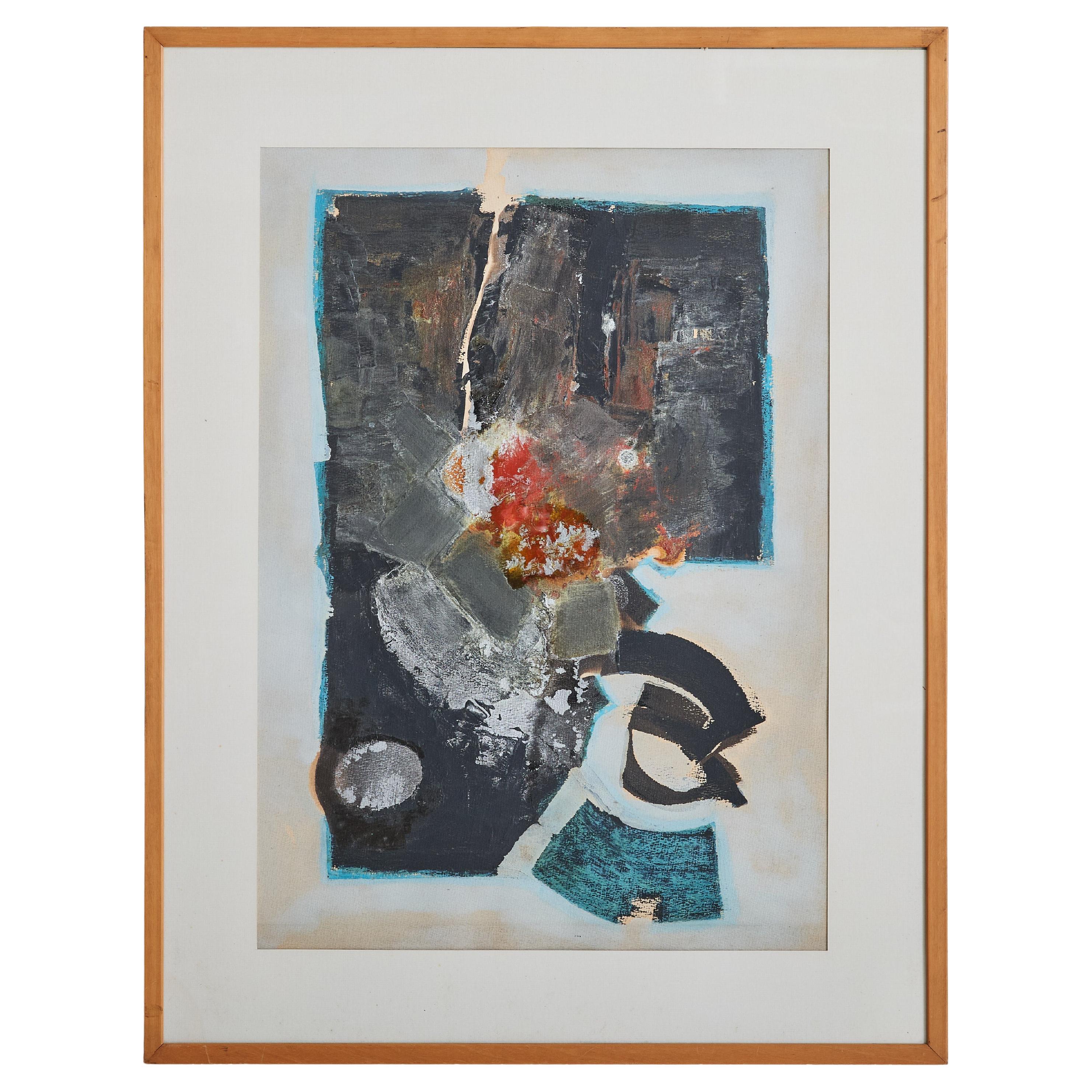
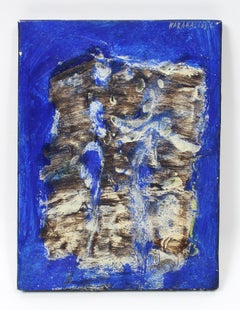
This original 1963 abstract painting is a stunning piece by Charles Ragland Bunnell (1897–1968), a prominent Colorado Springs artist known for his contributions to mid-century modern art. Created in the 1960s, this vibrant work features an expressive composition in blue, black, brown, gray, and white, capturing Bunnell’s signature abstract style. The piece is signed and dated by the artist in the lower right corner, further confirming its authenticity. The artwork is presented in a custom black float frame, with outer dimensions of 20 ⅜ x 16 ¼ inches, while the unframed size is 20 x 16 inches. This painting comes directly from the estate of Charles Ragland Bunnell, ensuring its provenance and connection to the artist.
Bunnell’s innovative work helped shape the abstract art movement in Colorado and beyond. This mid-century modern painting is a valuable addition to any collection, especially for those interested in Abstract Expressionism and the legacy of 20th-century American artists.
- Creator:Charles Ragland Bunnell (1897-1968, American)
- Creation Year:1963
- Dimensions:Height: 20.5 in (52.07 cm)Width: 16.25 in (41.28 cm)Depth: 1 in (2.54 cm)
- Medium:
- Movement Style:
- Period:
- Condition:
- Gallery Location:Denver, CO
- Reference Number:Seller: 98811stDibs: LU2739618832
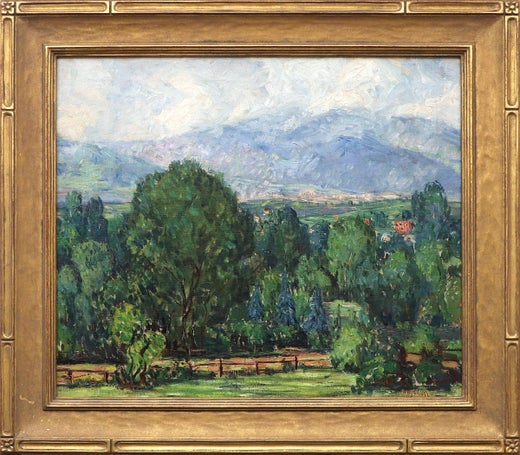
Charles Ragland Bunnell
Charles Bunnell developed a love for art at a very young age. As a child in Kansas City, Missouri, he spent much of his time drawing. When he was unable to find paper he drew on walls and in the margins of textbooks for which he was often fined. Around 1915, Bunnell moved with his family to Colorado Springs, Colorado. He served in World War I and later used his GI Training to study at the Broadmoor Art Academy (later renamed the Colorado Springs Fine Arts Center) during 1922 and 1923. In 1922, he married fellow student, Laura Palmer. He studied with Ernest Lawson in 1927-1928 and, in the winter of 1928-1929, he served as Lawson’s assistant. In the late 1920’s, the Bunnell’s settled just west of Colorado Springs and 1928, they welcomed the first of their three children. Their one-acre homesite, which they referred to as “Old Home Place”, was situated between two sets of railroad tracks at the foot of Pike’s Peak. Charlie converted an old railroad boxcar into his studio, where he later gave lessons. Beginning in 1931, Bunnell spent a year and a half studying under Boardman Robinson. The two men clashed constantly due to a generation gap and markedly different philosophies. Robinson encouraged his students not to stray from realism and though Bunnell mastered Robinson’s preferred style of American Scene painting, he regularly irritated his professor with his abstract sketches. Bunnell taught at the Kansas City Art Institute during the summers of 1929, 1930, 1940, and 1941. Between 1934 and 1941, he painted and taught under federal projects which included assisting Frank Mechau on murals for the Colorado Springs Post Office. However, he did not take to mural making and, after criticism from Boardman Robinson about his use of “heavy daubs which have no place in mural work,” he abandoned mural-making altogether. By the late 1930’s, Bunnell’s work departed from the American Scene/Modernist style he was trained in towards abstraction. This is marked by his “Black and Blue” series, consisting of 83 abstracted ink and watercolors. Affected by the Second World War and the loss of his 10-year old son, Bunnell’s work of the early 1940’s took on a Transcendental and Surrealist tone. The works from this period are moody and readily reflect the political and personal turmoil experienced by the artist. In the late 1940’s, Bunnell began experimenting with Abstract Expressionism. He alone is credited with introducing Colorado Springs to the new style as it was excluded from the Fine Art Center’s curriculum by Boardman Robinson. Bunnell excelled in Abstract Expressionism and continued to evolve in the style through the 1950’s continuing to his death in 1968. He was recently recognized as a premier American Abstract Expressionist by his inclusion in the book American Abstract Expressionism of the 1950’s: An Illustrated Survey. © David Cook Galleries, LLC
About the Seller
5.0
Gold Seller
Premium sellers maintaining a 4.3+ rating and 24-hour response times
Established in 1979
1stDibs seller since 2013
300 sales on 1stDibs
Typical response time: 1 hour
- ShippingRetrieving quote...Shipping from: Denver, CO
- Return Policy
More From This Seller
View All1950s Abstract Oil Painting, Mid-Century Modern Art in Blue, Black
White
By Paul Kauver Smith
Located in Denver, CO
This original 1950s abstract oil painting by acclaimed Mid-Century Modern artist Paul K. Smith (1893–1977) features a dynamic and refined composition in tones o...
Category
Mid-20th Century Abstract Expressionist Abstract Paintings
Materials
Oil
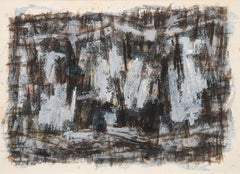
Pawel August Kontny Blue Gray Mauve Abstract Oil Painting, Contemporary Art
By Pawel Kontny
Located in Denver, CO
This original abstract painting by Pawel August Kontny features a refined and atmospheric composition rendered in harmonious shades of blue, gray, and mauve. Subtle tonal transitions...
Category
Mid-20th Century Abstract Expressionist Abstract Paintings
Materials
Fabric, Oil
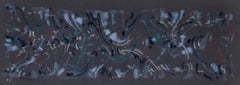
1970s Mid-Century Minimalist Black
White Abstract Oil by Edward Chavez
By Edward Chavez
Located in Denver, CO
This striking black and white abstract oil painting was created circa 1975 by celebrated American modernist Edward (Eduardo) Arcenio Chavez (1917–1995). Boldly rendered in shades of black, gray, and white, the composition exemplifies Chavez’s refined minimalist aesthetic, rooted in mid-century modern art. The painting’s image size is 24 x 48 inches, with custom framing bringing the overall dimensions to 25 ½ x 49 ½ inches.
A Powerful Example of American Minimalist Art
Executed in a confident, monochromatic palette, this work captures the balance, restraint, and visual rhythm that define Chavez’s approach to abstraction. Its elongated horizontal format and subtle tonal variation create a meditative yet dynamic presence—perfect for collectors of minimalist, modernist, or mid-century art.
About the Artist: Edward (Eduardo) Chavez
Born in Wagonmound, New Mexico, Chavez was a multifaceted American artist known for his work as a painter, sculptor, lithographer, illustrator, and muralist. He studied at the Colorado Springs Fine Arts Center under notable figures such as Boardman Robinson, Frank Mechau, Arnold Blanch, and Peppino Mangravite.
After serving in WWII, Chavez became part of the influential Woodstock, New York art colony—joining contemporaries like Bruce Currie and Mitchell Siporin...
Category
1970s Abstract Abstract Paintings
Materials
Oil
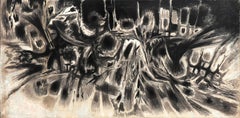
1950s Original Geometric Abstract Oil Painting, Vertical
Horizontal Art
By Paul Kauvar Smith
Located in Denver, CO
This vibrant and dynamic original abstract oil painting by Paul Kauvar Smith (1893–1977) showcases the artist’s bold use of color and modernist technique. Executed in oil on board, t...
Category
1950s Abstract Geometric Abstract Paintings
Materials
Oil, Board
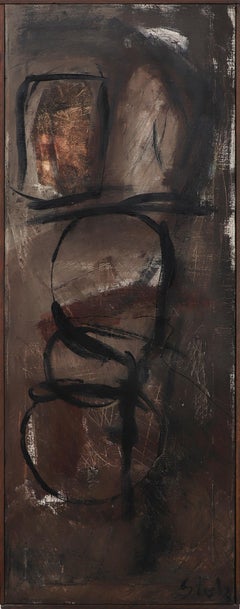
Henriette “Yetti” Stolz 1956 Abstract Oil – Mid-Century Modernist Painting
Located in Denver, CO
This exceptional 1956 abstract oil on canvas by Serbian-American artist Henriette “Yetti” Stolz (b. 1935) embodies the refined simplicity and emotional depth of mid-century modern art. Painted in a harmonious palette of brown, white, black, and gray, the work blends abstract and figurative elements with confident brushwork and balanced composition. Stolz’s modernist sensibility reflects her deep engagement with postwar abstraction and the evolving art movements of the 1950s.
Signed by the artist in the lower right corner, the piece is beautifully presented in its original vintage frame (overall dimensions: 42 ¾ x 16 ¾ inches; image: 42 ¼ x 16 ¼ inches). Provenance: Estate of the Artist, Henriette “Yetti” Stolz. The painting is in good condition—please contact us for a detailed condition report.
Born in Serbia and later based in Denver, Colorado, Stolz studied at Colorado College under influential modernists including Mary...
Category
1950s Abstract Abstract Paintings
Materials
Oil
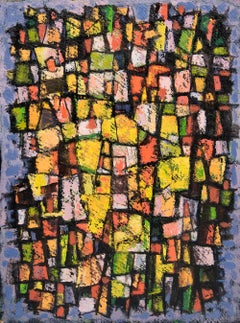
1960s Mid-Century Abstract Expressionist Oil Painting in Primary Colors
By Florence Graziano
Located in Denver, CO
This original 1960s oil on canvas by American artist Florence V. Mercolino Graziano exemplifies the dynamic energy of the Abstract Expressionist movement. The composition showcases b...
Category
1960s Abstract Expressionist Abstract Paintings
Materials
Oil
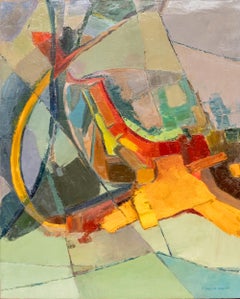
You May Also Like
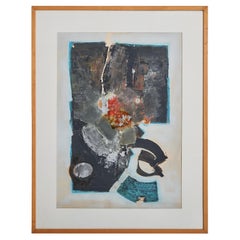
French Black + Blue Framed Abstract Painting, 1960s
Located in Chicago, IL
A 1960s French abstract painting that captures the dynamic interplay of texture and color. Layers of black, deep blue, and burnt orange interact with splashes of teal and white, form...
Category
Vintage 1960s French Mid-Century Modern Paintings
Materials
Wood, Paper
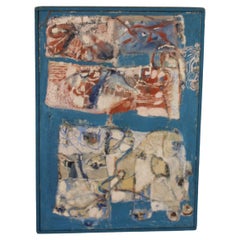
Midcentury Italian Abstract Blue Painting
Located in Seaford, GB
Midcentury Abstract Blue Painting Signed and dated 1972
Midcentury Abstract Blue Painting The Italian abstract art scene of the 1970s was transformativ...
Category
Vintage 1970s Spanish Mid-Century Modern Paintings
Materials
Acrylic
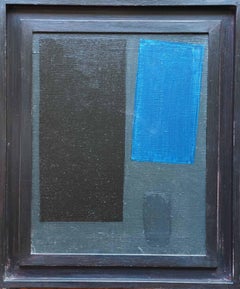
Abstract with Blue Oblong Right - British fifties abstract art oil painting
Located in Hagley, England
This superb British Abstract oil painting is by artist Peter Field. Painted circa 1955 on canvas and hung as a portrait, the composition is three geometric shapes - one blue the othe...
Category
1950s Abstract Abstract Paintings
Materials
Oil
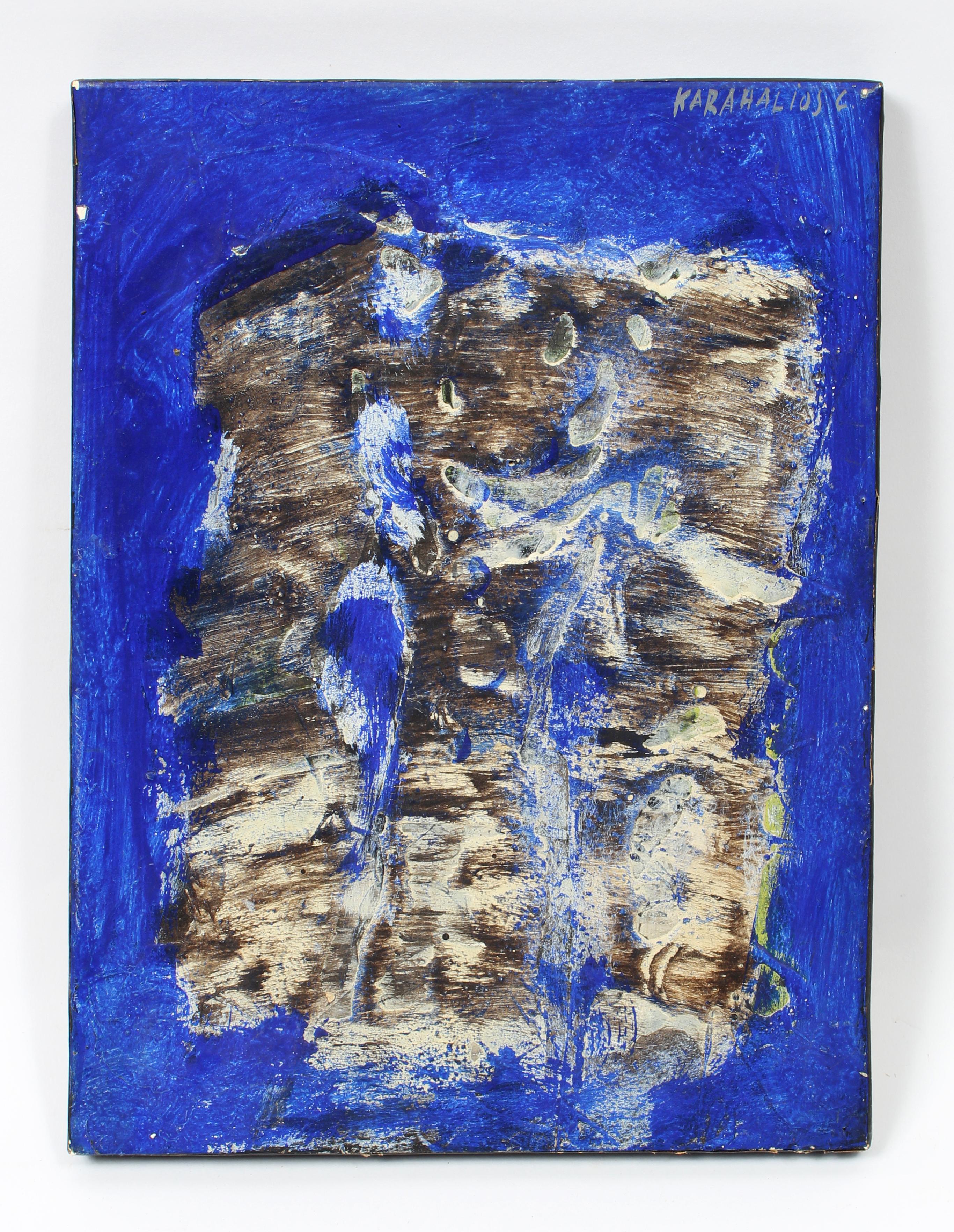
Constantin Karahalios Abstract Expressionist Oil Painting Blue 1960 Mid Century
Located in Buffalo, NY
A vibrant and captivating abstract painting by Greek artist Constantin Karahalios featuring incredible texture and color. A custom frame presentation would be included in the price....
Category
1960s Abstract Expressionist Abstract Paintings
Materials
Canvas, Oil
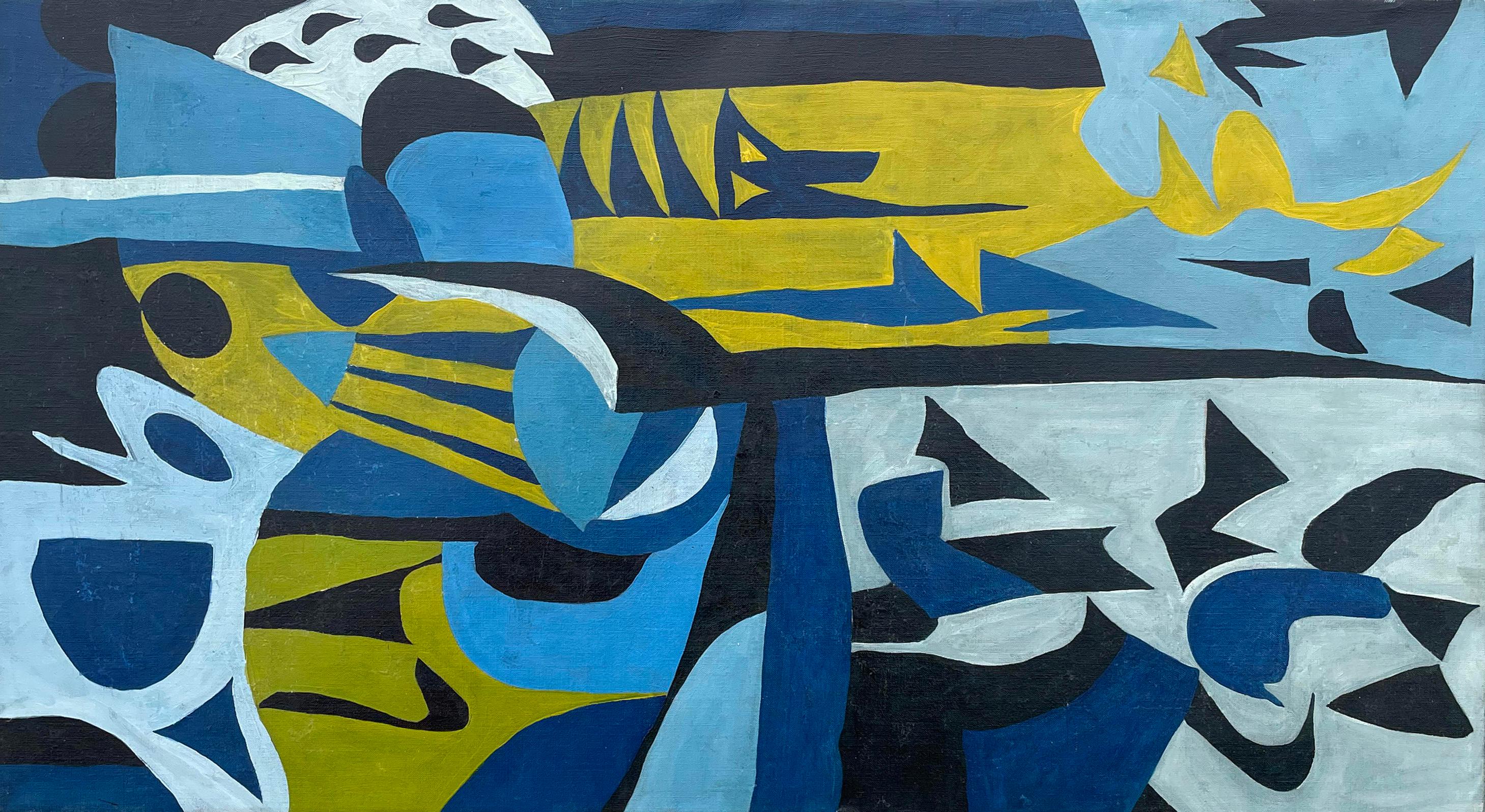
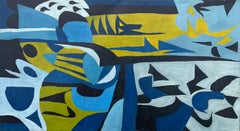
Abstract expressionist blue, black
green mid-century geometric painting
By Richard Andres
Located in Beachwood, OH
Richard Andres (American, 1927-2013)
Untitled, c. 1949
oil on canvas
18 x 32 inches
Richard Andres was born in Buffalo, New York in 1927. A graduate of the Cleveland Institute of Art in 1950, he was immediately drafted and served for two years in the army as a mural painter. He received his Master of Arts from Kent State in 1961. A frequent exhibitor at galleries and museums and winner of multiple May Show prizes, Andres taught art in the Cleveland Public Schools for 28 years, as well as teaching the University of Buffalo, the Cleveland Institute of Art and the Western Reserve University.
Very little in Richard Andres’ childhood would have predicted his love of classical music, mid-century-modern architecture and certainly not his lifelong passion for art and in particular abstract art. Richard’s father, Raymond, had no more than a third-grade education, and his mother, Clara, was one of thirteen children – only three of whom lived into adulthood and none of whom attended high school.
They lived, when Richard was a boy, in a dingy area of Buffalo, NY in a walk-up apartment situated above a tavern. Raymond and Clara supplemented the income from their factory jobs in the bar downstairs with Raymond playing ragtime on the piano and Clara serving drinks. This often left Richard and his two older brothers at home alone to fend for themselves. The two older boys, Raymond and Russell, were - unlike Richard- rather rough and tumble and entertained themselves with stickball, boxing and the like. Richard, on the other hand, from a very young age liked to draw, or better yet even, to paint with the small set of watercolors he received for Christmas one year. Paper, however, at the height of the depression, was hard to come by. Luckily, Clara used paper doilies as decoration for the apartment and Richard would contentedly paint and then cut up doilies, gluing the pieces together to create collages.
At eight-years-old, he discovered the Albright-Knox Museum (then known as the Albright Art Gallery) and spent several hours a week there studying the paintings. He was particularly fond of Charles Burchfield‘s landscapes, enamored with their ‘messiness’ and thinking that they somehow captured more ‘feeling’ than works he was previously familiar with. For his tenth Christmas, he asked for and received a ‘how-to’ paint book by Elliot O’Hare. Through this self-teaching, he assembled the portfolio needed for acceptance to Buffalo Technical High School where he studied Advertising Arts. In his Junior year, he was encouraged to enter a watercolor painting, “Two Barns,” in the national 1944-45 Ingersoll Art Award Contest and was one of twelve grand prize winners – each one winning one hundred dollars. More importantly the painting was exhibited at the Carnegie Institute Galleries, which resulted in his winning a national scholarship to the Cleveland School of Art (The Cleveland Art Institute).
He flourished at the art school under the tutelage of faculty members such as Carl Gaertner, as well as that of visiting artists such as William Sommer and Henry George Keller. He would say in later years that Gaertner, in particular, influenced his attitude toward life as well as art. “Gaertner,” Andres said, “believed that there was no need to be a ‘tortured artist’, that an artist should rather enjoy beauty, family, and life in general.” Free to spend his days as he chose, he wandered the Cleveland Art Museum for most of the hours he was not attending classes or painting; the remaining time was spent drinking coffee at a local hangout with art school friends – which is where he met fellow Henry Keller scholarship winner, Avis Johnson. Richard was immediately smitten with Avis, but being rather shy, it took him the entire summer of 1948 to build up his courage to ask her out. Over that summer he ‘thought about Avis’ and worked in a diner to save money. He also used the hundred-dollar prize money won in High School to visit the first Max Beckmann retrospective in the United States at the City Art Museum in St. Louis. Over a half century later he spoke of that exhibit with a reverence usually reserved for spiritual matters, “I walked in and it was like nothing I had ever seen before... the color...It just glowed.”
Returning to campus in the Fall, the first thing he did was go to the coffee shop in hopes of finding Avis. He did, and she, upon seeing him, realized that she was also smitten with him. They quickly became known as ‘the couple’ on campus, and a year later, with Richard being drafted for the Korean war, they were quickly married by a Justice of the Peace, celebrating after with family at Avis’s Cleveland home. As a gift, faculty member John Paul Miller designed and made the simple gold wedding ring Avis wore for their 65 years of marriage. During those 65 years neither wavered in their mutual love, nor in the respect they shared for one another’s art.
The couple lived in a converted chicken coop in Missouri while Richard was in boot camp. At the camp, he would volunteer for any job offered and one of those jobs ended up being painting road signs. His commander noticed how quickly and neatly he worked and gave him more painting work to do - eventually recommending him for a position painting murals for Army offices in Panama. Until her dying day, Avis remained angry that “The army got to keep those fabulous murals and they probably didn’t even know how wonderful they were.” In Panama, their first son, Mark, was born. After Richard’s discharge in 1953, they moved back to the Cleveland area and used the GI bill to attend Kent State gaining his BA in education. The small family then moved briefly to Buffalo, where Richard taught at the Albright Art School and the University of Buffalo – and their second son, Peter, was born. Richard had exhibited work in the Cleveland May Show and the Butler Art Museum during his art school years, and during the years in Buffalo, his work was exhibited at the gallery he had so loved as a child, the Albright Art Gallery.
In 1956, the family moved back to the Cleveland area and Richard began teaching art at Lincoln West High School during the day while working toward his MA in art at Kent State in the evenings. Avis and Richard, with the help of an architect, designed their first home - a saltbox style house in Hudson, Ohio, and in 1958, their third son, Max (after Max Beckmann) was born. Richard enjoyed the consistency of teaching high school as well as the time it gave him to paint on the weekends and during the summer months. In 1961, he received his MA and his daughter, Claire, was born. With a fourth child, the house was much too small, and Avis and Richard began designing their second home. An admirer of MCM architecture, Richard’s favorite example of the style was the Farnsworth house – he often spoke of how the concepts behind this architectural style, particularly that of Mies van der Rohe, influenced his painting.
Andres described himself as a 1950’s...
Category
1940s Abstract Expressionist Abstract Paintings
Materials
Oil
Clifford Ellis Abstract Painting Mid-Century Modern British Art Grey
Black
By Clifford Ellis
Located in London, GB
We acquired a series of paintings from Clifford and Rosemary Ellis's studio. To find more scroll down to "More from this Seller" and below ...
Category
Mid-20th Century Abstract Abstract Drawings and Watercolors
Materials
Gouache
More Ways To Browse
Mid Century Modern Abstract Art
1960s Modern Art
Mid Century Modern Art Purple
1960s Vintage Oil Paintings
Marc Chagall Mourlot
Shepard Fairey Screen Print
Slim Aarons Italy
18th Century Painting Of A Lady
Chagall Hand Signed Lithograph Signed
Henri Matisse Print 1950
Tulip Still Life
Black White Photography John Lennon
Jean Metzinger
Still Life With Pink Roses
Stone Lithograph Prints
1969 Original Lithograph By Joan Miro
The Crucifixion
Coney Island