Items Similar to Merne Anooralya - Delmore Gallery Cat No.95G004
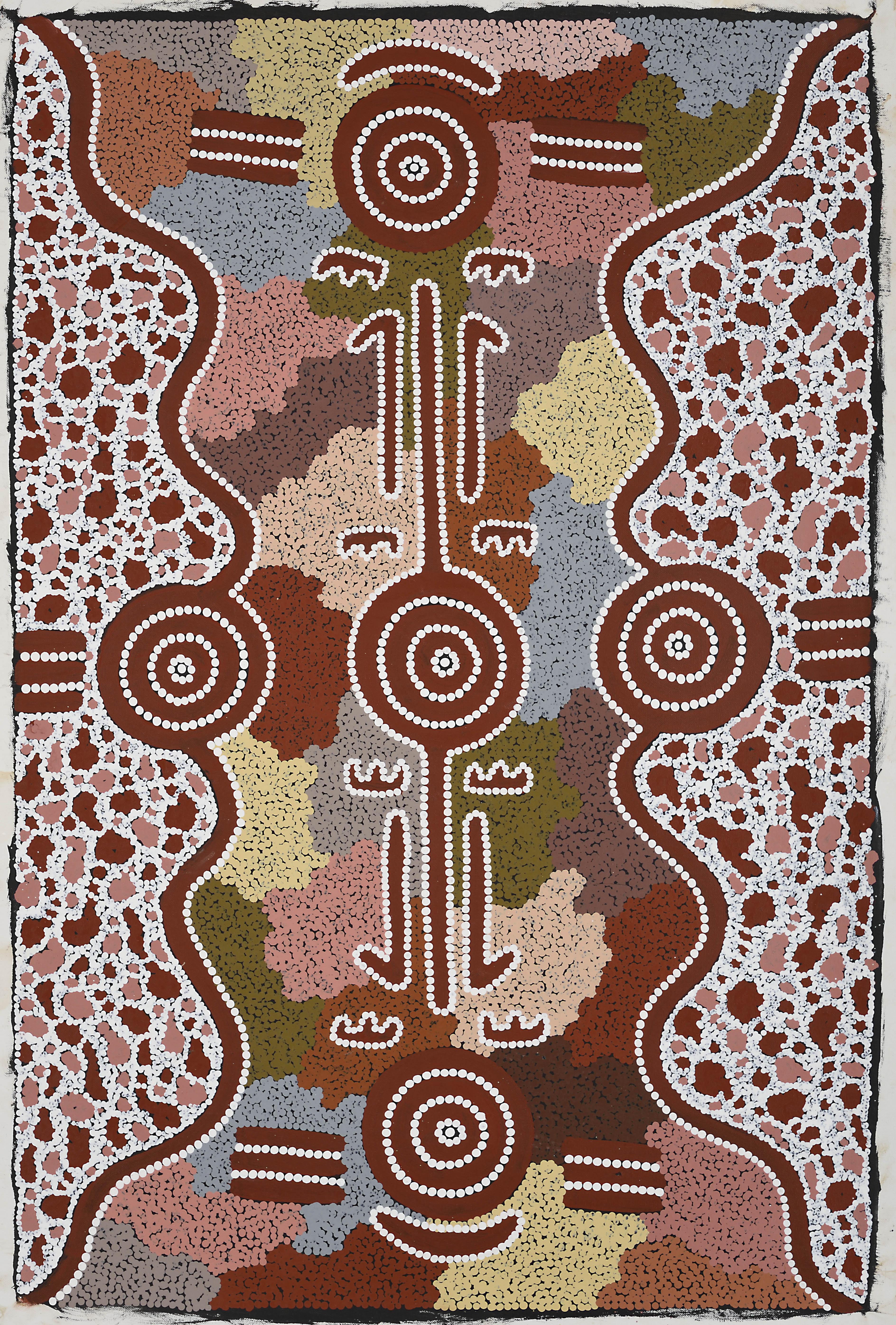
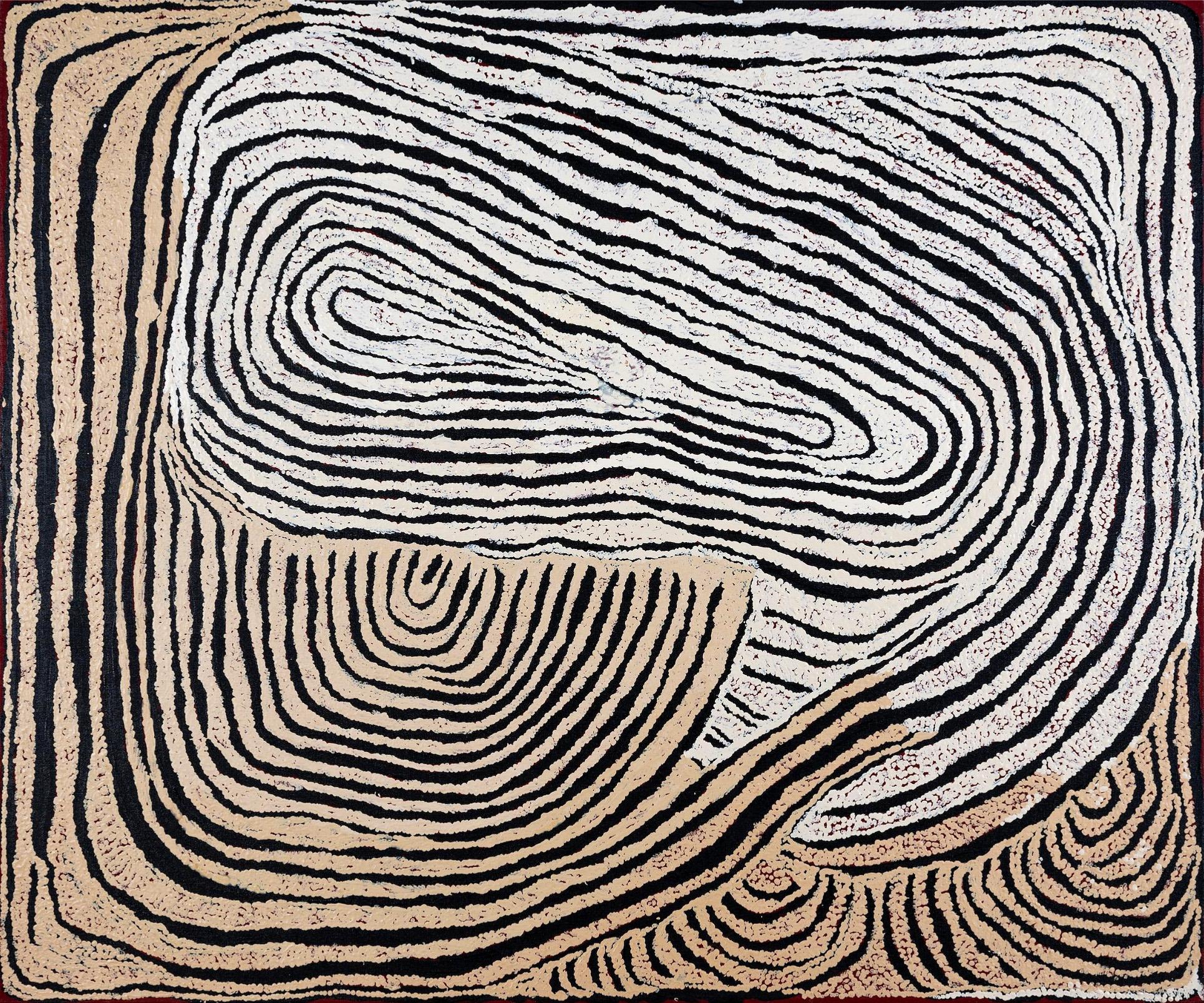
Video Loading
Want more images or videos?
Request additional images or videos from the seller
1 of 15
Emily Kame KngwarreyeMerne Anooralya - Delmore Gallery Cat No.95G0041995
1995
Price Upon Request
Price Upon Request
Price Upon Request
Price Upon Request
Price Upon Request
Price Upon Request
Price Upon Request
Price Upon Request
Price Upon Request
Price Upon Request
About the Item
EMILY KAME KNGWARREYE (1910 - 1996)
Country: Central/Eastern Desert, NT
Language: Anmatjerre
Community : Utopia, Soakage Bore/ Alhalkere
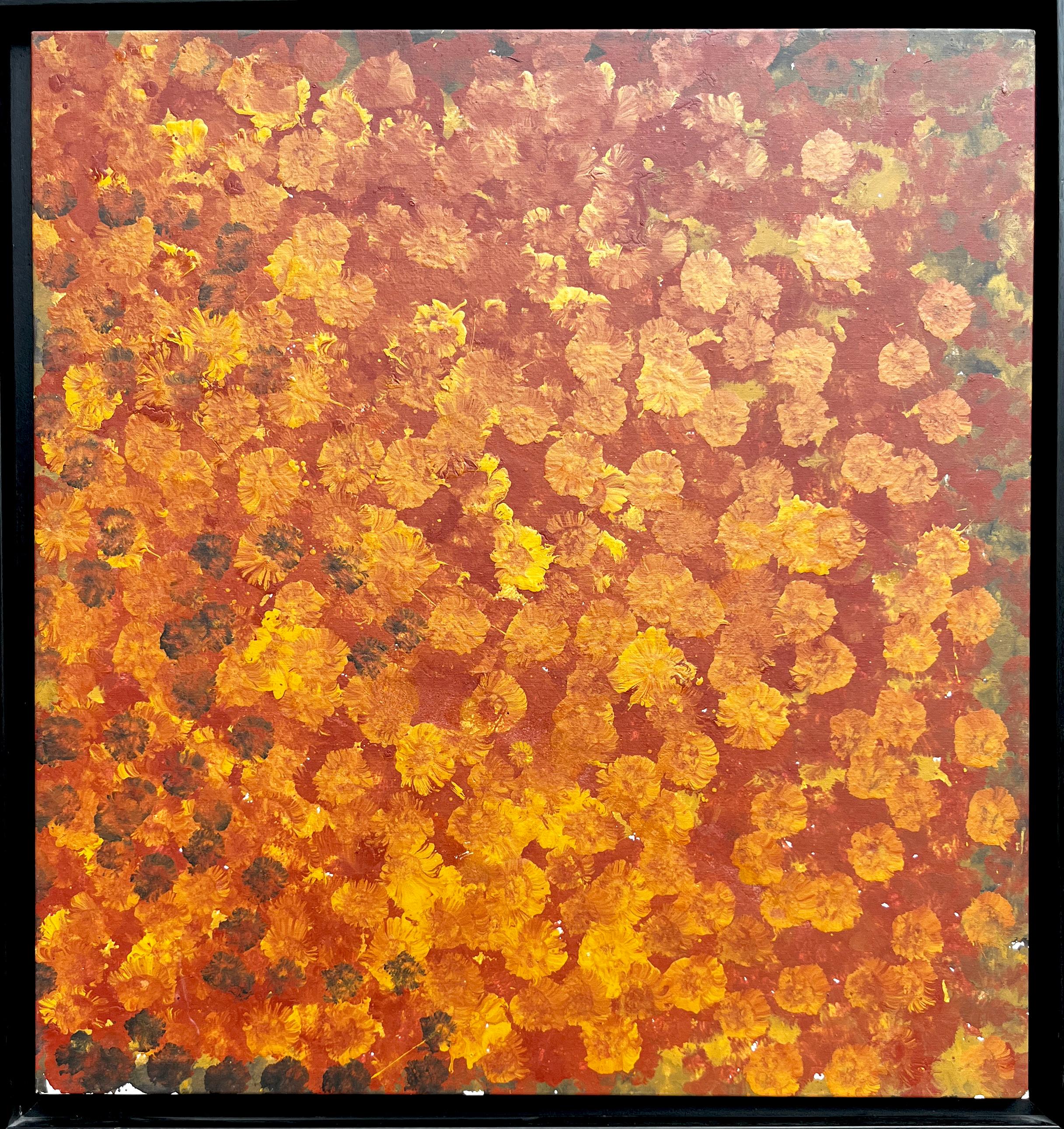
Merne Anooralya, 1995
Synthetic polymer paint on belgian linen.
Inscribed verso: artist’s name, signature, size and Delmore Gallery cat. 95G004
The work is ready to hang.
Provenance:
Delmore Gallery, Alice Springs
Private Collection
Sotheby’s Melbourne, 2002
Private Collection
Deutscher and Hackett, 2012
Private Collection
A work that bursts with desert fertility - a charged expression of her custodial yam plant and the interdependent linked life cycles of her ancestors and local flora and fauna.
This painting was produced within the first three months of her move into strident lined works. The consequence of working both styles over this time, allowed Emily a rich and robustly colored expression of her layered dotted style as is displayed here.
Octogenarian Emily Kame Kngwarreye painted for just 8 years between 1988 and 1996 during which she became Aboriginal Australia’s most successful living artist and carved an enduring presence in the history of Australian art. By the time she passed away, her fame had achieved mythic status.
Born circa 1910 at Alhalkere (on the northwest boundary of Utopia), her first attempts at making art outside of a ceremonial context was the result of her participation in making batiks (wax dyeing technique applied to fabric) as early as 1977.
Emily found that acrylic on canvas was more suited to her style than the laborious process of batik. Her early style featured visible linear tracings, following the tracks of the Kame (Yam) and animal prints as in Emu Dreamings, with fields of fine dots partially obscuring symbolic elements and playing across the canvas surface.
By 1992 her fine dotting and symbolic under-painting gave way to works in which symbols and tracks were increasingly concealed beneath a sea of dots until eventually they were no longer evident at all. She began using larger brushes to create lines of dots that ran across vibrantly colored, haptic surfaces. These works became progressively more cosmic and visually abstracted until, by the mid 1990’s she had developed a style of painting rather unfortunately and euphemistically referred to as ‘dump dump’ paintings, by double dipping brushes into pots of layered paint thereby creating floral impressions with alternately colored variegated outlines.
Confronted by the Emily phenomenon in the 1990’s, journalists and art writers seemed inadequate to the task of dealing with the ‘unexplored terrain between traditional Aboriginal art practice and the contemporary art scene’. Yet today, it is clear that if any single artist could be said to be the standard bearer for contemporary Indigenous painting, Emily must surely be the one. Following her magnificent retrospective exhibition at the National Art Centre in Tokyo during 2008 it has become impossible to dispute the fact that Emily Kame Kngwarreye’s legacy places her in the highest league of international artists of the 20th century.
Emily Kngwarreye Kame, a celebrated Aboriginal artist from Australia, is known for her abstract and dynamic works, but she typically did not sign her paintings. This practice is rooted in cultural and practical reasons rather than personal preference or neglect. For many Indigenous Australian artists, including Emily, the concept of individual ownership over art often differs from Western notions. Art in her community was deeply tied to ancestral stories, traditions, and collective identity rather than personal recognition. The focus was on storytelling and cultural preservation, not on personal authorship.
- Creator:Emily Kame Kngwarreye (1910 - 1996, Aboriginal Australian)
- Creation Year:1995
- Dimensions:Height: 59.26 in (150.5 cm)Width: 35.04 in (89 cm)
- Medium:
- Movement Style:
- Period:
- Condition:
- Gallery Location:Miami, FL
- Reference Number:1stDibs: LU13617454812
About the Seller
5.0
Vetted Professional Seller
Every seller passes strict standards for authenticity and reliability
Established in 2011
1stDibs seller since 2012
75 sales on 1stDibs
- ShippingRetrieving quote...Shipping from: Miami, FL
- Return Policy
More From This Seller
View AllMy Country - 1995
By Emily Kame Kngwarreye
Located in Miami, FL
EMILY KAM KNGWARRAY
1916 - 1996
Country: Central/Eastern Desert, NT
Language: Anmatjerre
Community : Utopia, Soakage Bore/ Alhalkere
Octogenarian Emily Kam Kngwarrey painted for jus...
Category
1990s Abstract Abstract Paintings
Materials
Cotton Canvas, Polymer, Raw Linen
Aboriginal Painting by Michael Nelson Tjakamarra
By Michael Nelson Tjakamarra
Located in Miami, FL
Michael Nelson Tjakamarra (also cited as: Michael Nelson Jagamarra, or Jakamara) is a Senior Warlpiri Tribesman and an Elder of the Papunya Community in central Australia. Born c. 1949 at Pikilyi, Vaughan Springs west of Yuendumu in the Northern Territory, he grew up ‘in the bush’. His father was an important tribal elder and medicine man at Yuendumu. It was therefore automatic that he would grow up with the traditional values and knowledge that now influences his paintings.
Michael lived at Haasts Bluff until his parents took him to Yuendumu for European education at the mission school. He left school at thirteen, after initiation, and worked at buffalo shooting, driving trucks, droving cattle and in the army, before returning to Yuendumu and then to Papunya to settle in 1976. He worked for a time in the Government store and for the Council.
Michael learned to paint at Papunya by observing the senior men such as Billy Stockman and Old Mick Tjakamarra. Although he was tutored by his uncle, Jack Tjupurrula, Michael developed his own style and began painting earnestly from 1983.
Michael is known as master desert painter for his depiction of several Dreamings in one painting. For him the understanding of the Dreaming stories that go with his paintings is all important – without the stories his paintings would ‘mean nothing’ as far as he is concerned. His Dreamings include the Possum, Snake, Two Kangaroos, Rock Wallaby, Bush Banana, Honey Ant and Yam.
In 1984 Michael won the National Aboriginal Art Award with his painting ‘Three Dreamings’. His reputation as a painter rose rapidly after this. He exhibited his work in the 1986 Biennale of Sydney and featured in ‘The State of the Art’, a British art documentary. In 1987 Michael had been asked to paint a major work (27’long) to decorate the foyer of Sydney’s Opera House and he chose to paint his ‘Possum Dreaming’ story. A great highlight in Michael’s career was in 1988 when he was commissioned to design a 196 sq-metre mosaic in the main forecourt of Australia’s new Parliament House in Canberra. The work was based on his ‘Kangaroo and Emu’ dreaming. Michael was presented to Her Majesty, Queen Elizabeth 11...
Category
2010s Contemporary Abstract Paintings
Materials
Linen, Acrylic
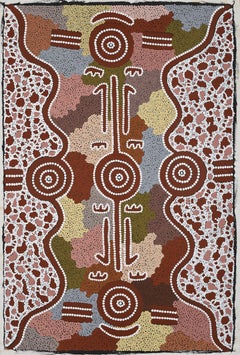
Tingari
By Ronnie Tjampitjinpa
Located in Miami, FL
Ronnie Tjampitjinpa was born around 1943 at Tjiturrunya, about 100km west of the Kintore ranges in Western Australia. Following an extended drought in the 1950s, Ronnie's family move...
Category
2010s Abstract Geometric Abstract Paintings
Materials
Cotton Canvas, Acrylic
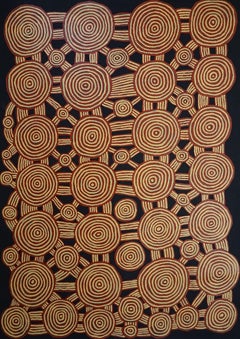
Aboriginal painting on canvas board by Johnny Warangkula
Located in Miami, FL
Johnny Warangkula Tjupurrula
1925 - 2001
Born : Mintjilpirri, Kintore, NT
Language group : Pintupi/Warlpiri
Community : Papunya, NT
Johnny Warangkula Tjupurrula was born in 1925 at ...
Category
1970s Abstract Abstract Paintings
Materials
Cotton Canvas, Polymer
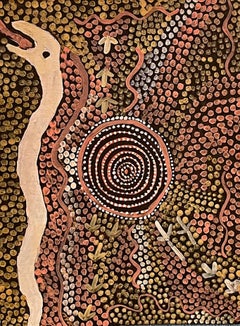
Medicine leaves
By Gloria Petyarre
Located in Miami, FL
Gloria Petyarre, sometimes referred to as Gloria Pitjara, was one of Australia's most successful and significant female artists. Her depiction of the K...
Category
2010s Abstract Abstract Paintings
Materials
Cotton Canvas, Acrylic
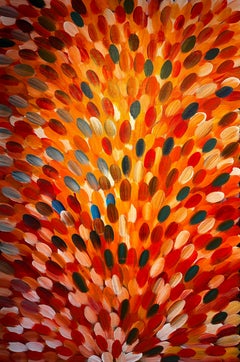
Tjintjintjin
By Walangkura Napanangka
Located in Miami, FL
As one of the last generation to remember a childhood lived in the desert hunting and gathering with her family, Walangkura Napanangka's paintings recall the stories of country and the location of specific sites in her traditional homeland west of the salt lake of Karrkurutinjinya (Lake Macdonald).
Born around 1946, at Tjitururrnga west of Kintore, in the remote and arid country between the Northern Territory and Western Australia, she lived with her father Rantji Tjapangati and mother Inyuwa Nampitjinpa and later, while still a teenager, travelled by foot with her family over the hundreds of kilometres from their remote desert home eventually joining Uta Uta Tjangala's group as they walked in to the settlements of Haasts Bluff and then Papunya.
The lure of settlement life with its promise of plentiful food and water belied the harsh conversion they would make to an alien lifestyle with its many problems and unfamiliar demands. The upheaval however, was ameliorated to some degree by the proximity of her immediate family including her mother Inyuwa, adoptive father Tutuma Tjapangati, and sister Pirrmangka Napanangka (now deceased) all of whom became artists.
Relocated to the community of Kintore in 1981 when the outstation movement began, Walangkura participated in the historic women's collaborative painting project (1994) that was initiated by the older women as a means of re-affirming their own spiritual and ancestral roots. It was a time of specifically female singing, ceremony and painting, away from the gaze of outsiders and men folk. The huge and colourful canvases that emerged from the women's camp were 'alive with the ritual excitement and narrative intensity of the occasion' (Johnson 2000: 197).
Within a year, Papunya Tula Artists, now established at Kintore, had taken on many of these women as full-time artists, revitalising the company after the deaths of many of the original 'painting men'. While individual women forged their own stylistic trajectory, these paintings were immediately distinguishable from the men's more cerebral and symmetrical style. They radiated an exuberant and vibrant energy, the felt heart-beat of women's affinity to country and spirit.
Walangkura's early works, created from 1996 onward, are characterized by masses of small markings and motifs covering large areas of canvas. Her favorite colour, a deep sandy orange predominates, accentuated against more somber blacks and reds and dusky greens or yellows. More recent works show a gestural quality though still tightly packed with an intensity of geometric line work representing sandhills. In a sense this provides a strong visual and contextual link to the men's linear style as exemplified by the works of George Tjungurrayi...
Category
2010s Contemporary Abstract Paintings
Materials
Linen, Cotton Canvas, Acrylic
You May Also Like
Western Macdonnel Ranges
By Dorothy Napangardi
Located in Long Island City, NY
Dorothy Napangardi was one of the leading Australian Aboriginal artists who has had her work hung at museums around the world. On the verso of this ...
Category
1970s Abstract Expressionist Abstract Paintings
Materials
Canvas, Oil
Price Upon Request
Yannima Tommy Watson "Ngayuku Ngura" - 91x122 cm -2013 - Aboriginal Art
By Yannima Tommy Watson
Located in PARIS, FR
Artist: Tommy Watson Yannima Pikarli (c.1935-2017)
size: 91x122cm
year: 2013
Acrylic on linen
Aboriginal Art
Provenance:
Yanda Art, Australia (certificat)
Aborigène Galerie Paris,...
Category
2010s Contemporary Abstract Paintings
Materials
Acrylic
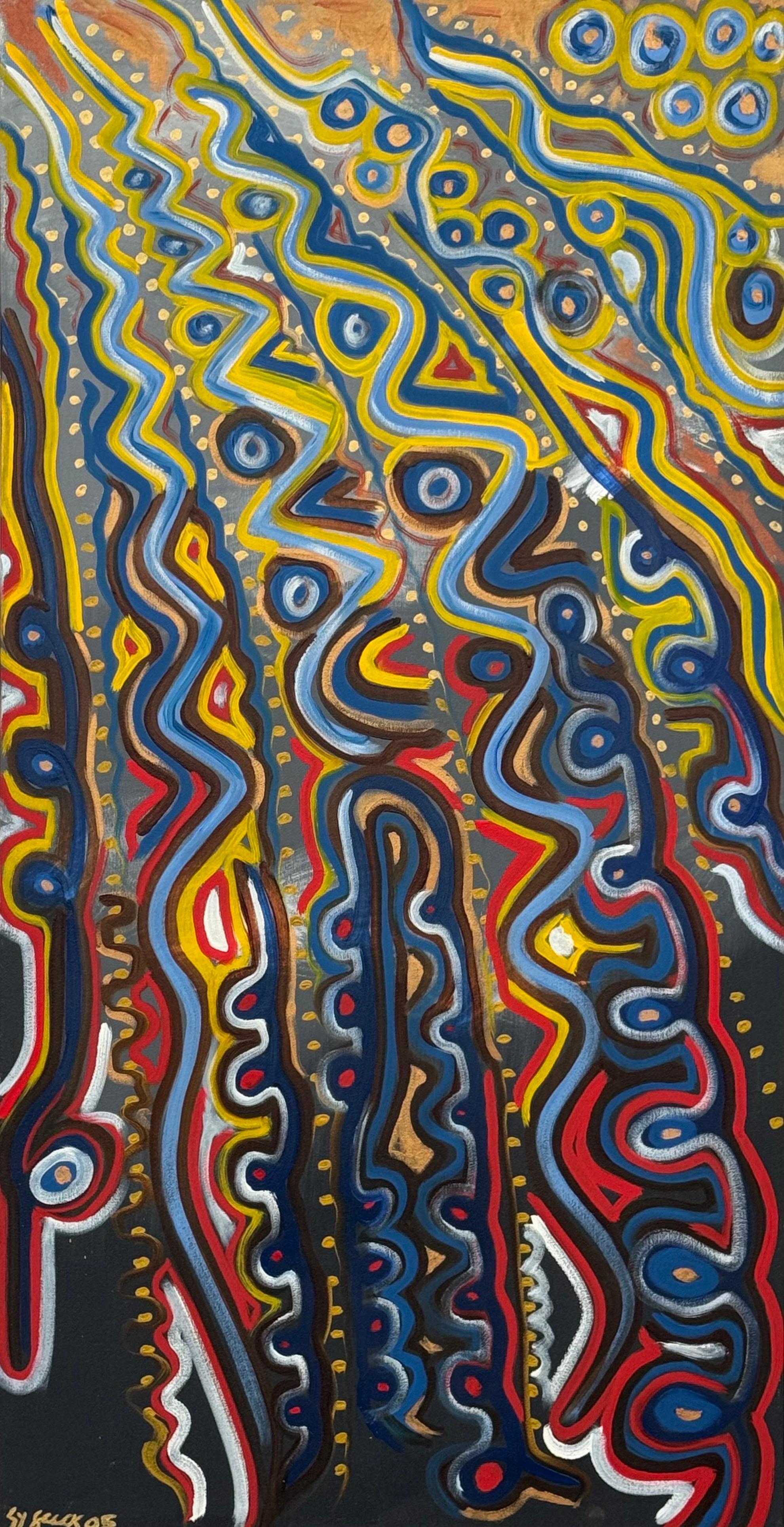
Colourful Abstract Tribal Aboriginal Inspired Oil on Canvas in Portrait Format
Located in Preston, GB
Colourful Abstract Tribal Aboriginal Inspired Oil on Canvas in Portrait Format
25 x 48 inches (unframed)
Original, Oil on Canvas, Signed
This captivating large-scale abstract sho...
Category
Early 2000s Abstract Figurative Paintings
Materials
Canvas, Oil
$4,369 Sale Price
20% Off
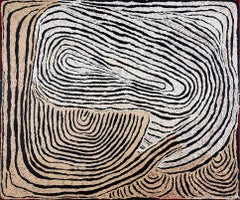
Nyurapayia (Mrs Bennett) Nampitjinpa "Tjalili" (1938-2013) aboriginal art
By Nyurapayia Nampitjinpa (Mrs. Bennett)
Located in PARIS, FR
Artist: Nyurapayia (Mrs Bennett) Nampitjinpa (1938-2013)
Titled: "Tjalili"
Size: 122x102x3 cm
year: 2005
Provenance: Yanda Art, Australia
Biography
Miss Bennett, also known as Nyu...
Category
Early 2000s Abstract Paintings
Materials
Acrylic
Nyurapayia (Mrs Bennett) Nampitjinpa "Tjalili" (1938-2013) aboriginal art
By Nyurapayia Nampitjinpa (Mrs. Bennett)
Located in PARIS, FR
Artist: Nyurapayia (Mrs Bennett) Nampitjinpa (1938-2013)
Titled: "Tjalili"
Size: 122x102x3 cm
year: 2005
Provenance: Yanda Art, Australia
Biography
Miss Bennett, also known as Nyu...
Category
Early 2000s Abstract Paintings
Materials
Acrylic
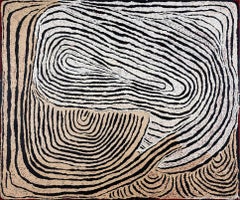
Rhoda Tjitayi "Piltati Tjukurpa" 200x300cm - 2021 - Aboriginal Art
Located in PARIS, FR
Artist: RHODA TJITAYI, (1969 -),
Titre: Piltati Tjukurpa
200x300 cm - 2021
Acrylique on canvas
réf:15021AS
Biography:
Rhoda Tjitayi’s monumental paintings reflect the richness of...
Category
21st Century and Contemporary Contemporary Abstract Paintings
Materials
Acrylic