Want more images or videos?
Request additional images or videos from the seller
1 of 12
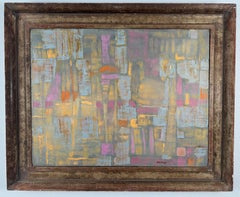
Ethel FisherUntitled (Abstract Expressionist Painting)ca. 1950s
ca. 1950s
$750List Price
About the Item
- Creator:Ethel Fisher (1923 - 2017, American)
- Creation Year:ca. 1950s
- Dimensions:Height: 10.25 in (26.04 cm)Width: 12 in (30.48 cm)Depth: 0.5 in (1.27 cm)
- Medium:
- Movement Style:
- Period:
- Condition:
- Gallery Location:Wilton Manors, FL
- Reference Number:1stDibs: LU245214504252
About the Seller
4.9
Platinum Seller
Premium sellers with a 4.7+ rating and 24-hour response times
Established in 2007
1stDibs seller since 2015
440 sales on 1stDibs
Typical response time: 4 hours
Authenticity Guarantee
In the unlikely event there’s an issue with an item’s authenticity, contact us within 1 year for a full refund. DetailsMoney-Back Guarantee
If your item is not as described, is damaged in transit, or does not arrive, contact us within 7 days for a full refund. Details24-Hour Cancellation
You have a 24-hour grace period in which to reconsider your purchase, with no questions asked.Vetted Professional Sellers
Our world-class sellers must adhere to strict standards for service and quality, maintaining the integrity of our listings.Price-Match Guarantee
If you find that a seller listed the same item for a lower price elsewhere, we’ll match it.Trusted Global Delivery
Our best-in-class carrier network provides specialized shipping options worldwide, including custom delivery.You May Also Like
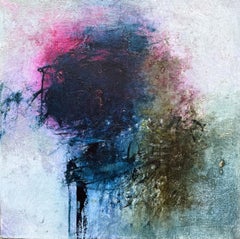
“Magenta Blue”
By Anne Raymond
Located in Southampton, NY
Original oil on canvas abstract painting by the American artist, Anne Raymond. Circa 1910. Condition is excellent. Titled and signed verso. Presently unframed. Provenance: A Long I...
Category
2010s Abstract Expressionist Abstract Paintings
Materials
Canvas, Oil
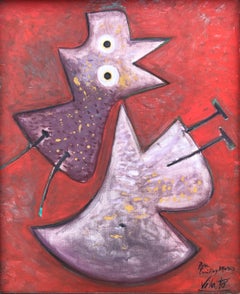
Rouge de fond oil on canvas painting
By Javier Vilato
Located in Sitges, Barcelona
### Technical Sheet:
Title: Rouge de Fond
Artist: Javier Vilató (1921–2000)
Technique: Oil on canvas
Canvas dimensions: 25.6 x 21.3 inches
Framed dimensions: 26.8 x 22.4 inc...
Category
1970s Abstract Expressionist Abstract Paintings
Materials
Canvas, Oil
$14,254 Sale Price
40% Off
H 25.6 in W 21.26 in
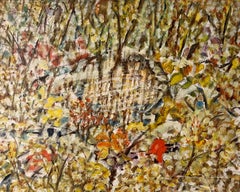
Abstract landscape at Bellport New York. Meditation moments at the Bellport.
By Arthur Pinajian
Located in La Canada Flintridge, CA
In Arthur Pinajian's mesmerizing 1986 oil painting, a lush symphony of nature unfolds on the canvas. The artist's distinctive brushstroke techniques breathe life into the scenery of ...
Category
1980s Abstract Expressionist Landscape Paintings
Materials
Oil
$22,500
H 31 in W 36 in D 1.5 in
Joan Kahn Rome Vibrant Bold Color Abstract Expressionist Modernist Oil Painting
Located in Surfside, FL
Oil paint on heavy tar paper.
Hand signed and dated verso.
Joan Kahn (USA 1953-) grew up in New York City; Princeton, New Jersey; and Vermont; in an environment that patronized the arts. At home her father, a professor, and mother, a state economist and homemaker, collected nineteenth and twentieth century drawings and prints, Middle eastern rugs, and ceramics, pewter, and old tools. Her grandfather, Max Westfield, was an academically trained portrait painter and her great uncle was a well-known gallery owner and art dealer in pre-World War II Germany. One of the influential experiences of Joan’s youth was visiting her grandfather in his studio in Tennessee where the family had first immigrated.
Growing up near New York, and spending a year in Paris during high school, provided formative visits to museums and galleries. Joan was academically talented in grade and high school, but after her father’s death during her first years at university she found herself concentrating on studio and history of art. It was a subject above others absorbed and concentrated her focus.
Influential in Joan’s development and later work are the historic movements of the Bauhaus and Modernist design and architecture, geometric art and design of diverse cultures, Color Field Painting. Many artists have had a impact on her work, such as Paul Klee, Piet Mondrian, Sonia Delaunay, Mark Rothko, Ad Reinhardt, Antoni Tapies, David Smith, John McLaughlin, Tony Smith, Louise Nevelson, Robert Mangold, Ellsworth Kelly, Agnes Martin, Valerie Jaudon, Jasper Johns, James Turrell, Robert Irwin, Vija Celmins, Caio Fonseca, Peter Halley, Ed Moses, Juan Usle, and Nancy Haynes...
Category
1980s Abstract Expressionist Abstract Paintings
Materials
Oil

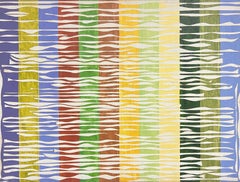
French 20th Century Vibrant Geometric Abstract Textured Interplay Of Colors
Located in Cirencester, Gloucestershire
Abstract Expressionist Composition
by Gilbert Pelissier (French born 1924)
oil painting on canvas, unframed
canvas size: 18 x 24 inches
condition: overall very good, a few minor surf...
Category
Late 20th Century Abstract Expressionist Abstract Paintings
Materials
Canvas, Oil
$471 Sale Price
30% Off
H 18 in W 24 in
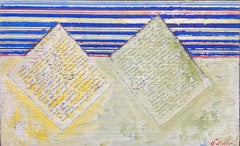
French 20th Century Vibrant Geometric Letter and Stripe Abstract
Located in Cirencester, Gloucestershire
Abstract Expressionist Composition
signed by Gilbert Pelissier (French born 1924)
oil painting on canvas, unframed
canvas size: 15 x 24 inches
condition: overall very good, a few min...
Category
Late 20th Century Abstract Expressionist Abstract Paintings
Materials
Canvas, Oil
$380 Sale Price
30% Off
H 15 in W 24 in
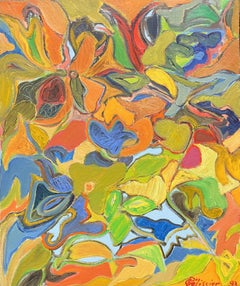
French 20th Century Vibrant Abstract Swirls of Orange Yellow Green and Blue
Located in Cirencester, Gloucestershire
Abstract Expressionist Composition
by Gilbert Pelissier (French born 1924)
signed oil painting on canvas, unframed
dated 93
canvas size: 22 x 18 inches
condition: overall very good, ...
Category
Late 20th Century Abstract Expressionist Abstract Paintings
Materials
Canvas, Oil
$642 Sale Price
30% Off
H 22 in W 18 in
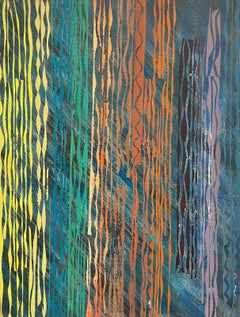
French 20th Century Vibrant Geometric Abstract Vertical Moody Colors
Located in Cirencester, Gloucestershire
Abstract Expressionist Composition
by Gilbert Pelissier (French born 1924)
oil painting on canvas, unframed
canvas size: 24 x 18 inches
condition: overall very good, a few minor surf...
Category
Late 20th Century Abstract Expressionist Abstract Paintings
Materials
Canvas, Oil
$485 Sale Price
30% Off
H 24 in W 18 in
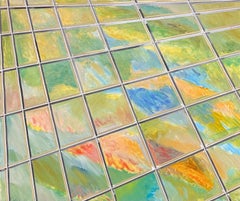
French 20th Century Vibrant Grid Geometric Abstract Blue Green and Yellow Colour
Located in Cirencester, Gloucestershire
Abstract Expressionist Composition
signed by Gilbert Pelissier (French born 1924)
oil painting on canvas, unframed
canvas size: 18 x 22 inches
condition: overall very good, a few min...
Category
Late 20th Century Abstract Expressionist Abstract Paintings
Materials
Canvas, Oil
$523 Sale Price
30% Off
H 18 in W 22 in
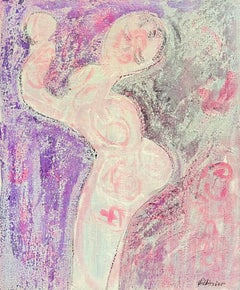
French 20th Century Vibrant Geometric Pink and Purple Quirky Abstract Figure
Located in Cirencester, Gloucestershire
Abstract Expressionist Composition
signed by Gilbert Pelissier (French born 1924)
oil painting on canvas, unframed
canvas size: 24 x 20 inches
condition: overall very good, a few min...
Category
Late 20th Century Abstract Expressionist Abstract Paintings
Materials
Canvas, Oil
$390 Sale Price
30% Off
H 24 in W 20 in
More From This Seller
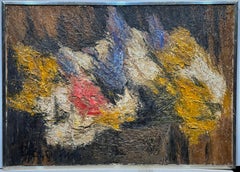
View AllVase of Flowers (Still Life)
Located in Wilton Manors, FL
Louise Delorme (b. 1928). Vase of Flowers, 1969. 26 x 36 inches; 27 x 37 inches framed. Signed lower left. Titled and dated on verso. Excellent condition.
Category
Mid-20th Century Abstract Expressionist Abstract Paintings
Materials
Oil
$900 Sale Price
25% Off
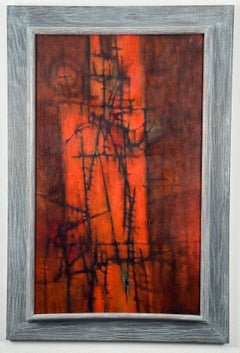
Untitled (Abstract Expressionist Painting)
By Jesse Redwin Bardin
Located in Wilton Manors, FL
Jesse Redwin Bardin (1923-1997). Untitled, ca. 1960.
Oil on canvas, 18 x 31 inches; 21.5 x 36.5 inches framed. Signed lower right.
Provenance: Private collection, Philadelphia; F...
Category
Mid-20th Century Abstract Expressionist Abstract Paintings
Materials
Canvas, Oil
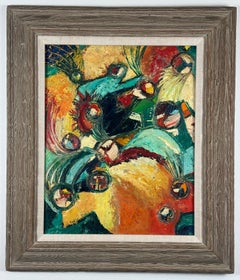
Untitled (Abstract Expressionist Painting)
By Bertha Davis
Located in Wilton Manors, FL
Bertha G. Davis (1911-1997)
Untitled, ca. 1960's
Oil on cradled masonite panel.
16 x 20 inches; 24 x 28 inches framed.
Signed lower left. Artist estate stamp on verso.
Vintage custom wormy chestnut frame.
A painter of cityscapes, landscapes, and abstracts in Texas, Bertha G Davis was primarily a self-taught artist whose style was influenced by her early life experiences in pre-World War II Lithuania and later Mexico. Her style is expressionistic*, relying on color to denote her profound feelings. She works primarily in watercolor and acrylic with some mixed media*.
She is the daughter of Abraham and Dvora Germaize of Vilna, Lithuania and grew up in Jewish ghettos in Vilna, Alita, and Kovno. Davis was influenced by her father who was a decorative wood-worker and carpenter in Lithuania. The family of five daughters and a son escaped to Mexico City in the late 1920’s because of Jewish oppression. The images and emotions she experienced had no outlet.
She was known as a beauty, and at age 17 was named Jewish Miss Mexico, barely able to speak Spanish having just emigrated from Eastern Europe. Irving Davis, a merchant from Texas who had also come from Eastern Europe via Cuba, saw her at this event where she was crowned Jewish Miss Mexico, and three days later asked for her hand in marriage. They moved to a small town in Texas, raising a family.
Her daughter, Sylvia, was born when Davis was 20 and they were inseparable. As Sylvia became an actress, painter, and sculptor, Davis was amazed at the capacity for creativity. Davis didn’t begin her own artistic journey until she was 47, when her daughter Sylvia Caplan encouraged her to try. She was inspired by this daughter who gave her a drugstore palette of watercolors, paper and brushes and told her to “just try.” Davis did not put down her palette and brushes until her death in 1997.
Bertha G Davis was primarily self-taught but maintained a style oriented toward color and texture that reflected her strong feelings. Most of her early work was done while she lived in McAllen, Texas where she was known for her contribution to art and showed her work and the work of other artists at the Bertha Davis Gallery.
She studied with Stewart Van Orden, at Pan American College in 1960-61; and was a student at the Art Institute San Miguel Allende, Mexico, 1965. She was also a student of Harold Phenix...
Category
Mid-20th Century Abstract Expressionist Abstract Paintings
Materials
Masonite, Oil
$975 Sale Price
35% Off
Untitled (Abstract Expressionist)
By Murray Hantman
Located in Wilton Manors, FL
Murray Hantman (1904-1999). Untitled, ca. 1950-55. Oil on canvas measures 20 x 26 inches, 26 x 32 inches in silver leaf vintage frame.. Signed lower right. Excellent condition with ...
Category
Mid-20th Century Abstract Expressionist Abstract Paintings
Materials
Canvas, Oil
$3,000 Sale Price
25% Off
Etude III (abstract expressionist painting)
By Fredric Karoly
Located in Wilton Manors, FL
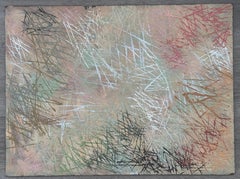
Fredric Karoly (1898-1987). Etude III, 1950. Oil on masonite panel measures 18 x 24 inches. Unframed. Signed, titled, dated on reverse. Good condition with minor paint loss at edges.
Biography:
An abstract painter, Karoly was born in Hungary and studied painting in Paris, architectural eingineering in Berlin, and emigrated to the U.S. in 1926. He began a successful career as a fashion and fabric designer. In 1948 he was working as a fashion director for Simplicity Patters, when he had a solo exhibition of of his oil paintings, wire montages, dry-pen drawings and abstract photography.
Solo Exhibitions:
Hugo Gallery (Alexandre Iolas) New York 1948; Gallery Mai. Paris 1949; New Gallery (Eugene Thaw) New York 1950; Museu de Arte, Sao Paulo, Brazil 1951; Miami Museum of Modern Art, Miami, Florida 1959; Loft Gallery, New York City, 1966.Group Exhibitions:
Hugo Gallery, New York 1947; Salon des Realities Nouvelles, Paris 1949-1953; Whitney Museum of American Art, New York (Annual) 1951-1953, 1963; Biennale of Sao Paulo, Brazil, 1951; International Independent Exhibition, Tokyo, 1951; Martha Jackson Gallery, New York, 1959; The Butler Institute of Art, Youngstown, Ohio, 1960; Stuttman Gallery, New York, 1960; The Art Institute of Chicago (Annual), 1960; International Watercolor Exhibition, Brookyln Museum, 1961; Westchester Art Museum, White Plains, NY, 1963; Whitney Museum, Annual, NY 1963; Cleveland Art Festival, Park Synagogue, Cleveland, 1963; Whitney Museum, Sculpture Annual, NY, 1964.Works in Institutional Collections:
Museu de Arte, San Paulo, Brazil; Museu de Bellas Artes, Buenos Aires, Argentina; New York University, New York; Washington University, St. Louis, Missouri; Finch College, NY; Barnard College, NY; Metropolitan Museum, Whitney Museum and Guggenheim Museum, New York; Museum of Fine Arts, St. Petersburg, FL.
Awards: National Council Arts Awards, 1968.
Frederic Karoly died on December 15, 1987 at the Inter-Continental Hotel in Manhattan, where he had made his home for many years.
Fredric Karoly was born in Budapest in 1893. According to Karoly’s own vitae, his exhibition history began in New York in 1947, when at the age of 54 he took part in a four-person group show at Hugo Gallery. His involvement with visual art however was apparently life long. In a brief introduction to his solo show at Galerie Mai in Paris in June of 1949, Jen Luc de Rudder, reports that Karoly began painting at the age of 12 in Budapest.
After several years of studying, then working in London, Paris and Berlin, Karoly emigrated to the United States in 1925 or 1926 (he probably first came to the US on a work visa in 1925). In New York, Karoly worked in women’s fashion as a designer.
In 1948 Karoly worked in a manner than was clearly influenced by the work of such European surrealists as Max Ernst, creating spiked automatic bi-chromatic paintings. His style progressed into a progressively more biomorphic vein, similar to explorations by Theodore Stamos, Daphnis, Milton Avery and Mark Rothko around the same period. He was supported with patronage during this period by Mrs. Mimi Baliff, who apparently supported the “Industrial Design Workshop” that she helped open to feature Karoly’s designs in 1948.
By the early 1950’s (1951) Karoly started experimenting with the drip and splatter process as well. Drip paintings dominated his process until the late 50’s-early 60’s, when linear compositional elements began to reemerge. By the late 50’s multi-layered drip grid motifs asserted a masque of spatial organization over looser washed fields and splatters of paint that Karoly worked off of. This development was consistent with concurrent explorations into the grid by artist Agnes Martin and others.
By the mid-50’s Karoly’s style began another transition into a more surface concerned “Color Field” style of painting. There are elements still reminding one of Abstract Expressionist concerns as such painters as Clifford Still. But the works that began to emerge from Karoly’s studio in 1958 presaged the Morris Lewis fan motifs and Friedl Dzubas’s epic and romantic color spewing expanses of canvas.
In 1959 Karoly began experiments using washes of turpentine diluted oil paint directly onto raw linen, and all of these subsequently suffered the consequences of oil oxidation and acidity upon the surfaces. However, many of Karoly’s washes in color field happily occurred on lightly prepared primed canvas surfaces as well.
By 1960 Karoly began reintroducing imagistic references to his visual content. There were also various references to Japanese and Zen influences. He experimented with a variety of processes that included mixed media and marbleized surfaces achieved by the intermixture of oil and water mediums. A calligraphic element also enter Karoly’s work in the early 60’s. Then in 1961 glued and assembled objects begin to show up in Karoly’s work in earnest. The influence of early POP artists, particularly Jasper Johns, and Robert Rauschenberg, become apparent. From 1961-63, a series of the assemblage works transition from canvas to the sculptural to pieces obviously intended for full scale installation. Many of these pieces were among the most fragile of his works primarily due to their reliance upon the of gluing of objects such as plastic or paper cups on flexible surfaces of stretched linen or canvas.
In the mid-60’s Karoly apparently produced a number of photo-silk screened series of Picasso, De Kooning and other significant artists of his generation. These were executed in a style somewhere between Rauschenberg’s and Roy Lichtenstein’s, primarily because of their reliance upon half tones and Ben-Day dot effects. Then Karoly began a series of paintings conflating his drip and grid styles with super imposed and painted over string. In the late 60’s Karoly embarked upon a series of multi-paneled stretched linen constructions often with slits and fiber optic back-lit elements that were prescient of the work of Dan Flavin and others. It was this body of work that was shown at Hofstra University’s Emily Lowe Gallery, and it was these works that suffered perhaps the most irreparable damage from a steam/water infiltration in a space where they were being stored.
The late professional start that Karoly had into the art world was balanced by his long life span and early immersion into the design issues of modernism as it emerged in turn of the century Europe and later evolved in America. He was clearly an artist who subscribed to the ethos of the new in abstraction and was obviously impressionable and in some instances prescient with regard to various trends in abstraction.
Several noteworthy and influential collectors and institutions during his 40 years of professional engagement acquired his work. The Whitney Museum of American Art had and may still own a large Karoly canvas from 1960, but this is doubtful as the artist failed to list it on the vitae he filed with MoMA in 1965. His work was recognized and honored by the Whitney with its inclusion in four of their annual survey shows (1951,1953, 1963 and 1964).
The artist’s surrealist influenced paintings from 1948-1950 were the focus of a solo exhibition held of his work by the Museo de Art in Sao Paulo and eight years later a ten year survey of his work was the focus of a solo show at the Miami Museum of Modern art. The Sao Paulo Museum in Brazil, and the Museo de Bellas Artes in Buenos Aires, Argentina each acquired Karoly paintings for their collections in the 1950’s.
One of Karoly’s surrealist pieces was apparently purchased by Christian Zervos, Picasso’s designated chronicler, who apparently also wrote a piece on Karoly in Cahiers D’Art in 1949. A 60’s piece of Karoly art that is in the New York University’s permanent collection is included in the MoMA Library’s catalog...
Category
Mid-20th Century Abstract Expressionist Abstract Paintings
Materials
Oil, Masonite
$2,000 Sale Price
20% Off
Etude (abstract expressionist painting)
By Fredric Karoly
Located in Wilton Manors, FL
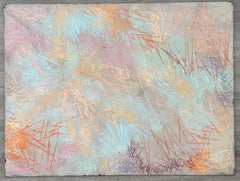
Fredric Karoly (1898-1987). Etude, 1950. Oil on masonite panel measures 18 x 24 inches. Unframed. Signed, titled, dated on reverse. Good condition with minor paint loss at edges.
Biography:
An abstract painter, Karoly was born in Hungary and studied painting in Paris, architectural eingineering in Berlin, and emigrated to the U.S. in 1926. He began a successful career as a fashion and fabric designer. In 1948 he was working as a fashion director for Simplicity Patters, when he had a solo exhibition of of his oil paintings, wire montages, dry-pen drawings and abstract photography.
Solo Exhibitions:
Hugo Gallery (Alexandre Iolas) New York 1948; Gallery Mai. Paris 1949; New Gallery (Eugene Thaw) New York 1950; Museu de Arte, Sao Paulo, Brazil 1951; Miami Museum of Modern Art, Miami, Florida 1959; Loft Gallery, New York City, 1966.Group Exhibitions:
Hugo Gallery, New York 1947; Salon des Realities Nouvelles, Paris 1949-1953; Whitney Museum of American Art, New York (Annual) 1951-1953, 1963; Biennale of Sao Paulo, Brazil, 1951; International Independent Exhibition, Tokyo, 1951; Martha Jackson Gallery, New York, 1959; The Butler Institute of Art, Youngstown, Ohio, 1960; Stuttman Gallery, New York, 1960; The Art Institute of Chicago (Annual), 1960; International Watercolor Exhibition, Brookyln Museum, 1961; Westchester Art Museum, White Plains, NY, 1963; Whitney Museum, Annual, NY 1963; Cleveland Art Festival, Park Synagogue, Cleveland, 1963; Whitney Museum, Sculpture Annual, NY, 1964.Works in Institutional Collections:
Museu de Arte, San Paulo, Brazil; Museu de Bellas Artes, Buenos Aires, Argentina; New York University, New York; Washington University, St. Louis, Missouri; Finch College, NY; Barnard College, NY; Metropolitan Museum, Whitney Museum and Guggenheim Museum, New York; Museum of Fine Arts, St. Petersburg, FL.
Awards: National Council Arts Awards, 1968.
Frederic Karoly died on December 15, 1987 at the Inter-Continental Hotel in Manhattan, where he had made his home for many years.
Fredric Karoly was born in Budapest in 1893. According to Karoly’s own vitae, his exhibition history began in New York in 1947, when at the age of 54 he took part in a four-person group show at Hugo Gallery. His involvement with visual art however was apparently life long. In a brief introduction to his solo show at Galerie Mai in Paris in June of 1949, Jen Luc de Rudder, reports that Karoly began painting at the age of 12 in Budapest.
After several years of studying, then working in London, Paris and Berlin, Karoly emigrated to the United States in 1925 or 1926 (he probably first came to the US on a work visa in 1925). In New York, Karoly worked in women’s fashion as a designer.
In 1948 Karoly worked in a manner than was clearly influenced by the work of such European surrealists as Max Ernst, creating spiked automatic bi-chromatic paintings. His style progressed into a progressively more biomorphic vein, similar to explorations by Theodore Stamos, Daphnis, Milton Avery and Mark Rothko around the same period. He was supported with patronage during this period by Mrs. Mimi Baliff, who apparently supported the “Industrial Design Workshop” that she helped open to feature Karoly’s designs in 1948.
By the early 1950’s (1951) Karoly started experimenting with the drip and splatter process as well. Drip paintings dominated his process until the late 50’s-early 60’s, when linear compositional elements began to reemerge. By the late 50’s multi-layered drip grid motifs asserted a masque of spatial organization over looser washed fields and splatters of paint that Karoly worked off of. This development was consistent with concurrent explorations into the grid by artist Agnes Martin and others.
By the mid-50’s Karoly’s style began another transition into a more surface concerned “Color Field” style of painting. There are elements still reminding one of Abstract Expressionist concerns as such painters as Clifford Still. But the works that began to emerge from Karoly’s studio in 1958 presaged the Morris Lewis fan motifs and Friedl Dzubas’s epic and romantic color spewing expanses of canvas.
In 1959 Karoly began experiments using washes of turpentine diluted oil paint directly onto raw linen, and all of these subsequently suffered the consequences of oil oxidation and acidity upon the surfaces. However, many of Karoly’s washes in color field happily occurred on lightly prepared primed canvas surfaces as well.
By 1960 Karoly began reintroducing imagistic references to his visual content. There were also various references to Japanese and Zen influences. He experimented with a variety of processes that included mixed media and marbleized surfaces achieved by the intermixture of oil and water mediums. A calligraphic element also enter Karoly’s work in the early 60’s. Then in 1961 glued and assembled objects begin to show up in Karoly’s work in earnest. The influence of early POP artists, particularly Jasper Johns, and Robert Rauschenberg, become apparent. From 1961-63, a series of the assemblage works transition from canvas to the sculptural to pieces obviously intended for full scale installation. Many of these pieces were among the most fragile of his works primarily due to their reliance upon the of gluing of objects such as plastic or paper cups on flexible surfaces of stretched linen or canvas.
In the mid-60’s Karoly apparently produced a number of photo-silk screened series of Picasso, De Kooning and other significant artists of his generation. These were executed in a style somewhere between Rauschenberg’s and Roy Lichtenstein’s, primarily because of their reliance upon half tones and Ben-Day dot effects. Then Karoly began a series of paintings conflating his drip and grid styles with super imposed and painted over string. In the late 60’s Karoly embarked upon a series of multi-paneled stretched linen constructions often with slits and fiber optic back-lit elements that were prescient of the work of Dan Flavin and others. It was this body of work that was shown at Hofstra University’s Emily Lowe Gallery, and it was these works that suffered perhaps the most irreparable damage from a steam/water infiltration in a space where they were being stored.
The late professional start that Karoly had into the art world was balanced by his long life span and early immersion into the design issues of modernism as it emerged in turn of the century Europe and later evolved in America. He was clearly an artist who subscribed to the ethos of the new in abstraction and was obviously impressionable and in some instances prescient with regard to various trends in abstraction.
Several noteworthy and influential collectors and institutions during his 40 years of professional engagement acquired his work. The Whitney Museum of American Art had and may still own a large Karoly canvas from 1960, but this is doubtful as the artist failed to list it on the vitae he filed with MoMA in 1965. His work was recognized and honored by the Whitney with its inclusion in four of their annual survey shows (1951,1953, 1963 and 1964).
The artist’s surrealist influenced paintings from 1948-1950 were the focus of a solo exhibition held of his work by the Museo de Art in Sao Paulo and eight years later a ten year survey of his work was the focus of a solo show at the Miami Museum of Modern art. The Sao Paulo Museum in Brazil, and the Museo de Bellas Artes in Buenos Aires, Argentina each acquired Karoly paintings for their collections in the 1950’s.
One of Karoly’s surrealist pieces was apparently purchased by Christian Zervos, Picasso’s designated chronicler, who apparently also wrote a piece on Karoly in Cahiers D’Art in 1949. A 60’s piece of Karoly art that is in the New York University’s permanent collection is included in the MoMA Library’s catalog...
Category
Mid-20th Century Abstract Expressionist Abstract Paintings
Materials
Masonite, Oil
$2,000 Sale Price
20% Off