Items Similar to GENE DAVIS Untitled 1983 Colorfield Painting canvas Blue Red Black White Yellow
Video Loading
Want more images or videos?
Request additional images or videos from the seller
1 of 10
Gene DavisGENE DAVIS Untitled 1983 Colorfield Painting canvas Blue Red Black White Yellow1983
1983
On Hold
$15,000
On Hold
£11,477.80
On Hold
€13,136.46
On Hold
CA$21,183.95
On Hold
A$23,023.32
On Hold
CHF 12,338.39
On Hold
MX$279,543.97
On Hold
NOK 154,901.06
On Hold
SEK 143,647.19
On Hold
DKK 98,113.16
About the Item
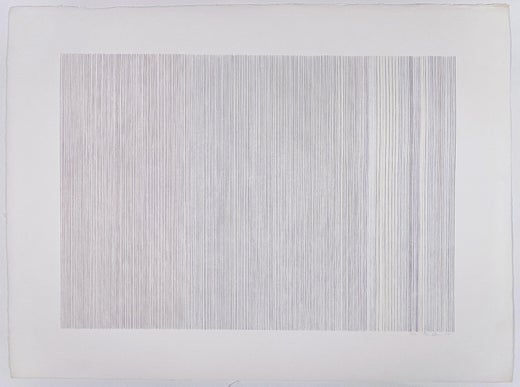
GENE DAVIS
Untitled Colorfield Composition in Blue, Red, Black, White
Yellow
1983
Acrylic painting on canvas
Provenance: Charles Cowles Gallery, New York, NY
Signed
Dated verso
- Creator:Gene Davis (1920-1985, American)
- Creation Year:1983
- Dimensions:Height: 12 in (30.48 cm)Width: 16 in (40.64 cm)Depth: 2 in (5.08 cm)
- Medium:
- Movement Style:
- Period:
- Condition:In very fine, age appropriate condition.
- Gallery Location:Rancho Santa Fe, CA
- Reference Number:1stDibs: LU516312557512
Gene Davis
Davis was born in Washington D.C. in 1920 and spent nearly all his life there. Before he began to paint in 1949, he worked as a sportswriter, covering the Washington Football Team and other local teams. Working as a journalist in the late 1940s, he covered the Roosevelt and Truman presidential administrations, and was often President Truman's partner for poker games. His first art studio was in his apartment on Scott Circle; later he worked out of a studio on Pennsylvania Avenue. Davis's first solo exhibition of drawings was at the Dupont Theater Gallery in 1952, and his first exhibition of paintings was at Catholic University in 1953. A decade later he participated in the "Washington Color Painters" exhibit at the Washington Gallery of Modern Art in Washington, DC, which traveled to other venues around the US, and launched the recognition of the Washington Color School as a regional movement in which Davis was a central figure. The Washington painters were among the most prominent of the mid-century color field painters. Though, he worked in a variety of media and styles, including ink, oil, acrylic, video, and collage, Davis is best known by far for his acrylic paintings (mostly on canvas) of colorful vertical stripes, which he began to paint in 1958. The paintings typically repeat particular colors to create a sense of rhythm and repetition with variations. One of the best-known of his paintings, "Black Grey Beat" (1964), owned by the Smithsonian American Art Museum reinforces these musical comparisons in its title. The pairs of alternating black and grey stripes are repeated across the canvas, and recognizable even as other colors are substituted for black and grey, and returned to even as the repetition of dark and light pairs is here and there broken by sharply contrasting colors. In 1972 Davis created Franklin's Footpath, which was at the time the world's largest artwork, by painting colorful stripes on the street in front of the Philadelphia Museum of Art, and the world's largest painting, Niagara (43,680 square feet), in a parking lot in Lewiston, NY. His "micro-paintings", at the other extreme, were as small as 3/8 of an inch square. For a public work in a different medium altogether, he designed the color patterns of the "Solar Wall," a set of tubes filled with dyed water and backlit by fluorescent lights, at the Muscarelle Museum of Art at the College of William and Mary in Williamsburg, Virginia. Davis began teaching in 1966 at the Corcoran School of Art, where he became a permanent member of the faculty. His works are in the collections of, among others, the Corcoran Gallery of Art, the Solomon R. Guggenheim Museum, The Phillips Collection in Washington, DC, the Walker Art Center in Minneapolis, MN, The Governor Nelson A. Rockefeller Empire State Plaza Art Collection in Albany, NY, and the Smithsonian American Art Museum. He died on April 6, 1985 in Washington, DC.
About the Seller
5.0
Vetted Professional Seller
Every seller passes strict standards for authenticity and reliability
Established in 1984
1stDibs seller since 2016
91 sales on 1stDibs
Typical response time: 1 hour
- ShippingRetrieving quote...Shipping from: Rancho Santa Fe, CA
- Return Policy
More From This Seller
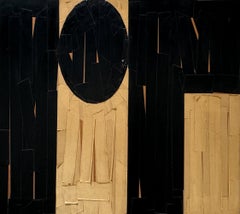
View All"The Barracks" 1970 Mixed Media Canvas Robertino Fatica LARGE B&W Abstract
Located in Rancho Santa Fe, CA
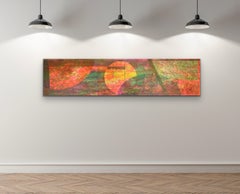
Robertino Fatica’s Barracks (1970) is a long, narrow painting that reads almost like a piece of architecture. At 17.5 by 122 inches, it stretches acros...
Category
1970s Abstract Geometric Abstract Paintings
Materials
Tape, Mixed Media, Acrylic, Canvas
1970 Abstract large Mixed Media “FORMA” by Robertino Fatica - Black
Brown
Located in Rancho Santa Fe, CA
Robertino Fatica was born in 1948 in Cleveland, Ohio. In 1970 he completed a three-year program at the Cooper School of Art in Cleveland. Following that, Fatica served in the U.S. Ar...
Category
1970s Abstract Geometric Abstract Paintings
Materials
Tape, Mixed Media, Masonite
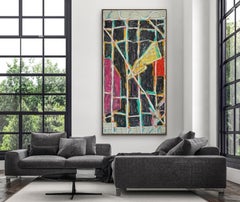
CRAIG KAUFFMAN “Phantom” 1982 Painting Red Yellow Black Green Blue 10 Feet Tall
By Craig Kauffman
Located in Rancho Santa Fe, CA
A wonderful, museum caliber painting by Craig Kauffman.
Initialed "CK" and dated "82" in the lower right corner.
PROVENANCE: Asher Faure Gallery
Luther Vandross
Luther Vandross Estate
Private Collection, New York
Private Collection, San Diego, CA
EXHIBITED: Asher Faure Gallery, Los Angeles, California,
CRAIG KAUFFMAN: NEW PAINTINGS
April 23 through May 21,1983
CATALOGUE: Craig Kauffman Estate Archive Number CR No: P.1982.2
The following is from The New York Times, May 15, 2010, By Douglas Martin
Craig Kauffman, who in the 1960s helped put Los Angeles on the art map with audacious experiments in molding industrial plastic to create ethereal wall-mounted sculptures — some resembling giant pieces of jelly candy — died Sunday in Angeles City in the Philippines. He was 78. The cause was complications of pneumonia following a recent stroke, said Frank Lloyd, his friend and dealer.
Mr. Kauffman was eminent in an eclectic group of artists who reveled in the light, space and energy of postwar Southern California to forge new Minimalist, often glossy artistic approaches. Richard Armstrong, director of the Guggenheim Museum said that these Californians, sometimes called the Cool School — along with Chicago Imagists and Washington, D.C., painters called the Color School — were counterpoints to the Abstract Expressionists who ruled New York.
"California was never ashamed of being a new society," Mr. Armstrong said in an interview on Thursday, "it all fit together nicely."
Los Angeles was then ascending to the status of a metropolis, with a growing number of major-league sports teams, fresh industries and a surging population. There were new quarters for public galleries and the burgeoning of commercial ones.
At the center of the action was the Ferus Gallery, which staged the first solo exhibition of Andy's Warhol's pop art and the first American retrospective of Marcel Duchamp. Mr. Kauffman was a featured artist at the gallery's inaugural exhibition in 1957, "Objects on the New Landscape Demanding of the Eye."
Peter Plagens, in his book Sunshine Muse: Art on the West Coast, 1945-1970, (1974, 1999), wrote, "'Culture' meant 'art' and 'art' implied 'new,' and 'new,' as everybody was informed, meant California — particularly Los Angeles."
The artists who seized this historic opportunity included Billy Al Bengston, Ken Price and Robert Irwin, among others. In an interview on Wednesday, Arne Glimcher, founder and chairman of Pace Gallery, which had Mr. Kauffman's first New York show in 1967, called the California scene in the late '50s and early '60s "a pressure cooker of ideas." Referring to artistic styles, he said, "It was California perfection against New York messiness."
Mr. Kauffman's early paintings were critical in defining this new style. Mr. Plagens called them "the first evidence of a Los Angeles sensibility."
Mr. Kauffman's later work blazed splashier trails, as he experimented with the effects of light on works that were painterly yet three-dimensional. "The true power of what he did was his incorporation and then redirection of light inside sculpture," said Mr. Armstrong, who was the curator of a show of Mr. Kauffman's work at the Whitney Museum of American Art in 1987.
"Many of them glowed," he said. "Others were translucent. Even the supposedly opaque had a noteworthy shimmering quality to them."
What Mr. Kauffman made reflected a wide range of inspirations. In a 2008 video interview in conjunction with a show at the Armory Center for the Arts in Pasadena California, he said that the famed lingerie store Frederick's of Hollywood provided artistic nurture. With a smile, he confessed to a "shoe fetish" that had influenced some of his art.
Robert Craig Kauffman was born on March 31, 1932, in Los Angeles. He started painting regularly at age 7 and went to theUniversity of Southern California to study architecture in 1950. But art soon won out over architecture, and he transferred to the University of California Los Angeles, to study painting. He earned Bachelor's and Master's degrees there.
A breakthrough came in the early 1960s when he experimented with painting on glass, but found it too fragile. He then painted on flat acrylic plastic. His next inspiration came from the plastic packaging increasingly used to wrap merchandise. He sought out craftsmen at commercial factories to learn the technique, Time magazine reported in 1968.
The results were several series of three-dimensional wall hangings. Some were inspired by large plastic fruit clusters on the wall of a doughnut shop he frequented in Los Angeles. These lozenge-shaped reliefs were sometimes called "bubbles."
Barbara Rose, in a catalog essay for an exhibition at the Washington Gallery of Modern Art in 1967, wrote, "Shaping the brittle sheet plastic into a series of voluptuous curves, Kauffman achieves a kind of abstract eroticism that is purely visual."
Mr. Kauffman's work was shown in countless exhibitions and many one-man shows. It has been acquired by the Museum of Modern Art in New York, the Tate Modern in London, the Art Institute of Chicago and the Los Angeles County Museum of Art, among others.
In 2006, one of Mr. Kauffman's reliefs fell from a wall of the Georges Pompidou Center in Paris, where it was part of an exhibition titled "Los Angeles: Birth of an Art Capital, 1955-1985." It shattered. After storms of publicity, the Pompidou provided technical help and money to make a new version.
Mr. Kauffman was married several times. He is survived by his daughters from his marriage to Dana Kauffman, from whom he was separated: Wilhelmina, Vida Rose and Georgia Kauffman. When they started in the 1960s, Mr. Kauffman and his artistic compatriots did not foresee a legacy, much less earning an income, Larry Bell, a prominent artist in the group, said in an interview on Wednesday.
"The troops sort of banded together to be our own audience," he said. "Every once in a while, we'd sell...
Category
1980s Abstract Abstract Paintings
Materials
Silk, Oil Crayon, Acrylic
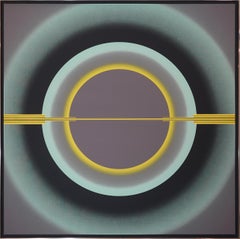
OP ART “Emanations: O_EM 18 24” Blue Black CONTEMPORARY POLISH FEMALE ARTIST
Located in Rancho Santa Fe, CA
“Emanations: O_EM 18 24” is a stunning, contemporary, Op Art painting created by Polish, female artist, Pi Square Milena Kornacka.
Signed, titled and dated v...
Category
2010s Op Art Abstract Paintings
Materials
Canvas, Acrylic
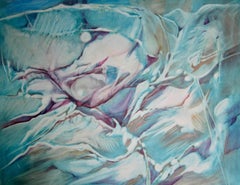
Depths Of The Sea 1978 - Abstract Expressionist Oil Encaustic Blue Female Artist
By Suzanne Bloomfield
Located in Rancho Santa Fe, CA
“In The Depths Of The Sea” 1978
Abstract Expressionist Oil & Encaustic painting
Born in 1934, the work of Suzanne Bloomfield represents the life force which binds us all -- a univer...
Category
1970s Abstract Abstract Paintings
Materials
Canvas, Encaustic, Oil
G Caliman Coxe EXODUS 28 African-American Artist 1980 abstract red orange purple
Located in Rancho Santa Fe, CA
G. Caliman Coxe, an influential African American artist born in 1935, is celebrated for his vibrant abstract works that explore themes of identity, history, and spirituality. A grad...
Category
1980s Abstract Abstract Paintings
Materials
Canvas, Oil
You May Also Like
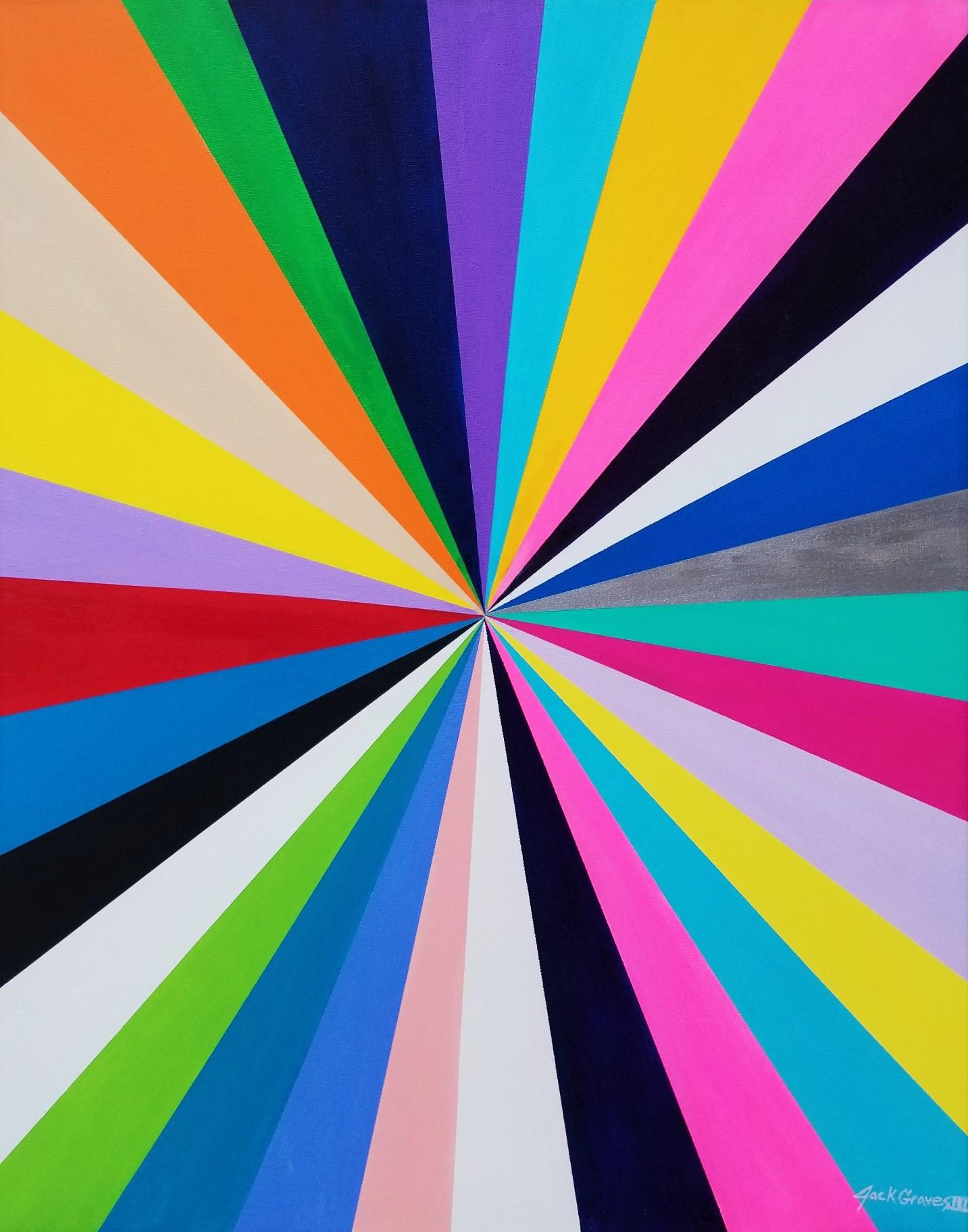
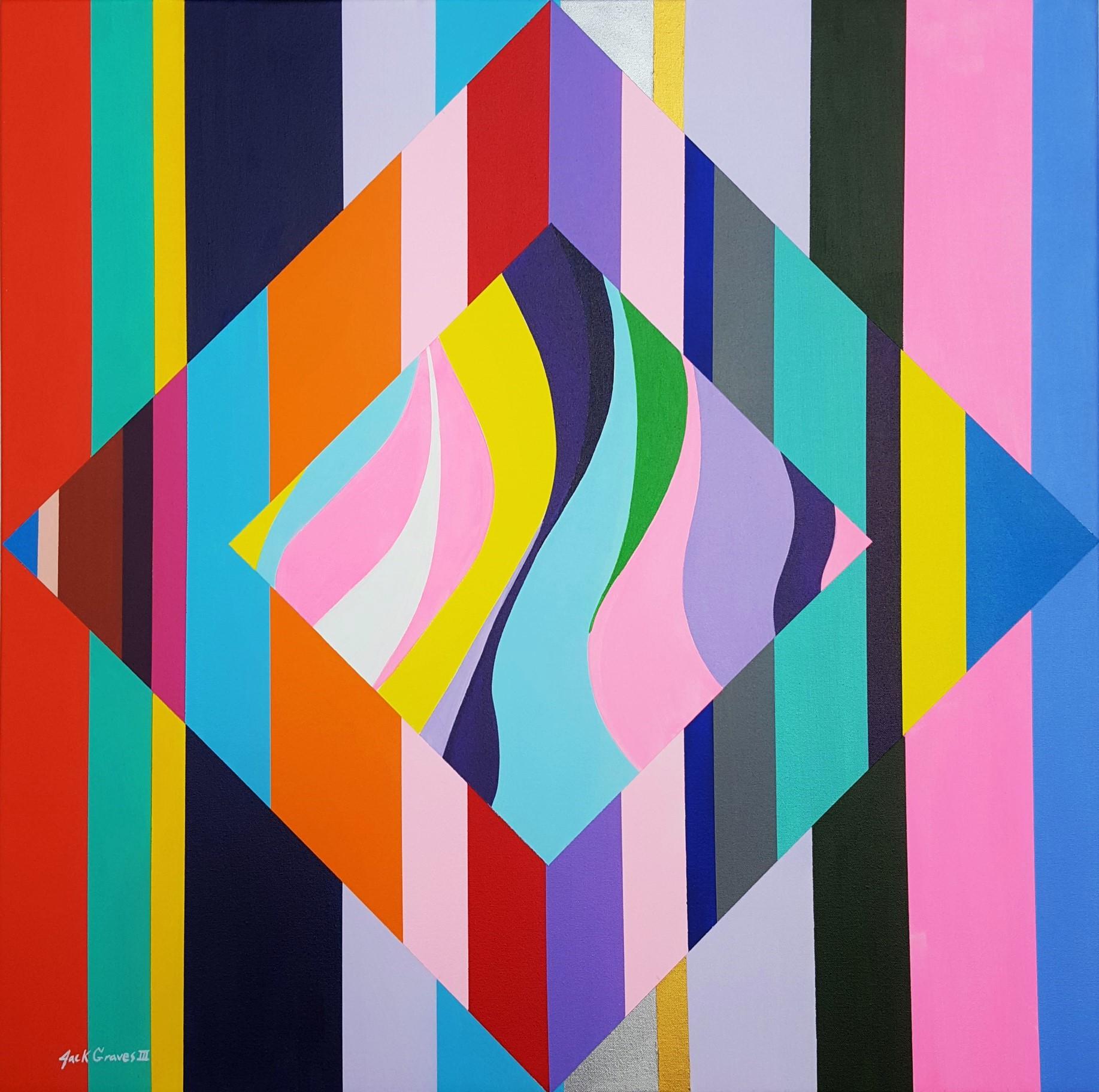
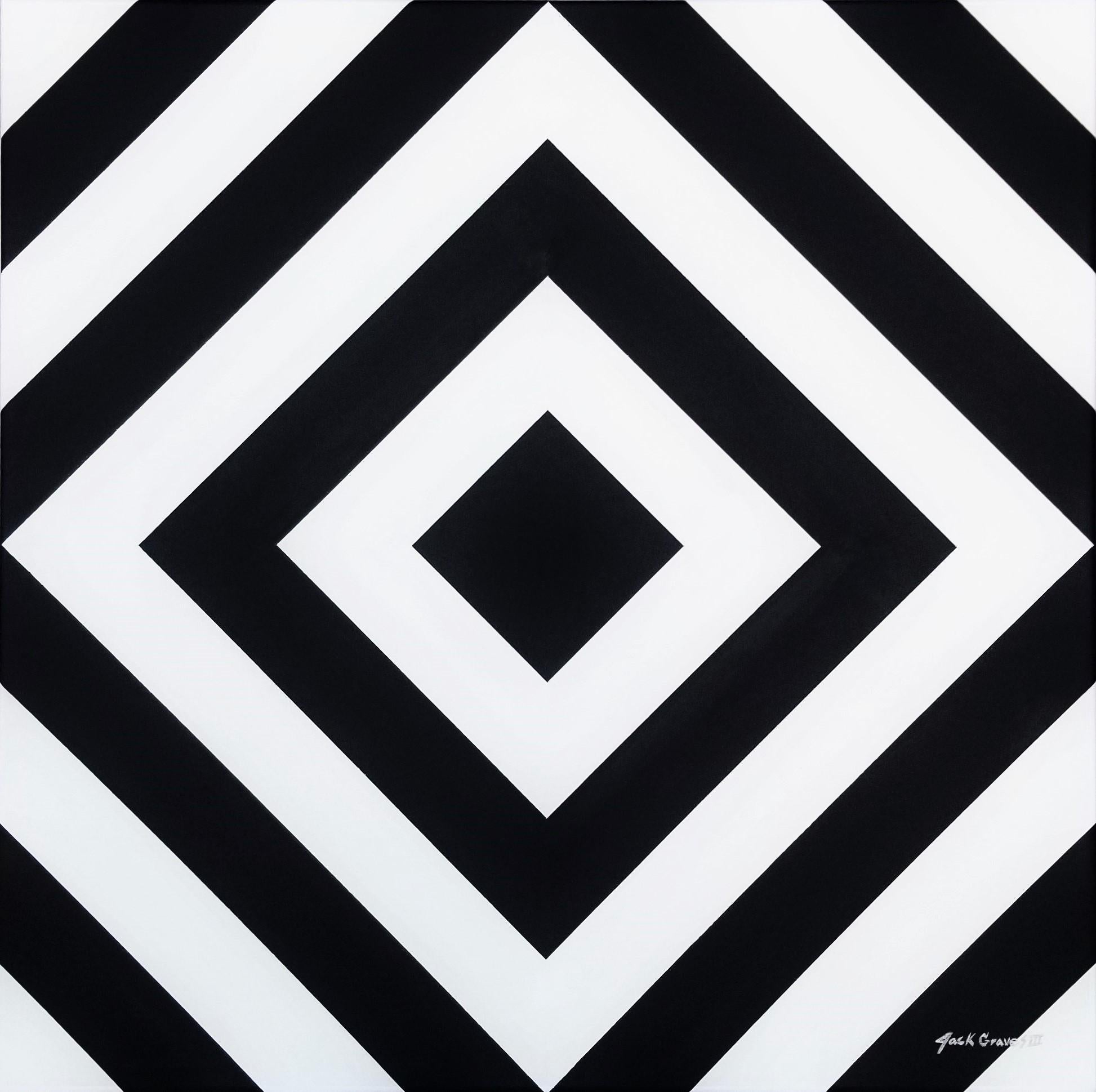
Diamond XXX /// Contemporary Abstract Geometric Striped Colorful Painting Art
By Jack Graves III
Located in Saint Augustine, FL
Artist: Jack Graves III (American, 1988-)
Title: "Diamond XXX"
Series: Diamond
*Signed by Graves lower right. It is also signed, titled, and dated on verso
Year: 2021
Medium: Origin...
Category
2010s Abstract Geometric Abstract Paintings
Materials
Canvas, Paint, Acrylic

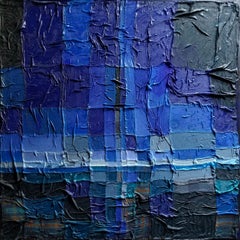
Summer Holiday, Abstract Geometric Acrylic and Canvas Collage, Red White Blue
By Margo Hoff
Located in Denver, CO
Acrylic and canvas collage on canvas by 20th century artist Margo Hoff (1910-2008). An abstract geometric painting in Margo's signature style of canvas collage, laying bits of canva...
Category
20th Century Abstract Geometric Abstract Paintings
Materials
Canvas, Acrylic
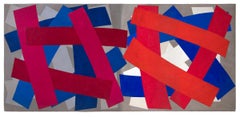
Relativity
By Katharine Weber
Located in Santa Monica, CA
Fabric and acrylic on canvas
Category
21st Century and Contemporary Abstract Geometric Abstract Paintings
Materials
Mixed Media, Fabric, Canvas, Acrylic
Price Upon Request
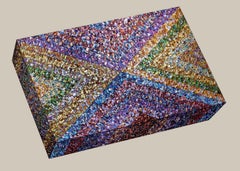
Jack Reilly, Primary Unit with Double Diagonals, Acrylic on Shapped Canvas, 2012
Located in Santa Monica, CA
Painting on stretched canvas over sculpted stretcher bars, constructed by the artist. The work has been painted to give the illusion that it is a raised cube when in fact it is a 2-dimensional shaped canvas.
Multiple acrylic paints and acrylic pigments have been used in each 'Stripe' of this work. Many are semi transparent or metallic pigments, causing a nice nuance in color depending on the lighting of the work.
After receiving his MFA from Florida State University, in 1978 Jack Reilly moved to Los Angeles. His paintings were soon discovered by prominent Los Angeles art dealer Molly Barns, who offered him a solo exhibition with her gallery. Donald Brewer, curator of the Fisher Museum at the University of Southern California, introduced Reilly’s paintings in 1979 in a major museum exhibition entitled The Reality of Illusion, which opened at the Denver Art Museum and traveled for two years to the Oakland Museum, USC Fisher Museum, Johnson Museum at Cornell, Honolulu Academy of Arts, among other institutions nationwide. This series of museum exhibitions, along with numerous solo shows and reviews, established Reilly as one of the original artists of the Abstract illusionism painting movement. In 1979 Reilly received a National Endowment for the Arts Grant. Although he is best known for his abstract paintings on shaped canvas, he also works in representational imagery and mixed-media.
By the early 1980s, Reilly's paintings were represented by galleries in major American cities including the Molly Barnes Gallery in Los Angeles, Aaron Berman Gallery in New York, Foster Goldstrom Fine Arts in San Francisco, Marilyn Butler gallery in Scottsdale and numerous others. Articles and reviews on Reilly's paintings were subsequently published in Arts Magazine, Art Week, the Los Angeles Times, New York Artworld, and in books including American Art Now by noted author and art critic Edward Lucie-Smith, and Inside the L.A. Artist by Marva Marrow.
Such notable collectors of the era, including Fred and Marcia Weisman, Steve Martin...
Category
21st Century and Contemporary Abstract Geometric Abstract Paintings
Materials
Canvas, Acrylic, Stretcher Bars
Jack Reilly, Circles of Time, Mixed Media, Abstract Ilusionist Work, 2016
Located in Santa Monica, CA
Painting on Sculpted Canvas.
An abstract illusionist work by artist Jack Reilly.
After receiving his MFA from Florida State University, in 1978 Jack Re...
Category
21st Century and Contemporary Abstract Geometric Abstract Paintings
Materials
Canvas, Acrylic, Stretcher Bars
$5,200 Sale Price
20% Off
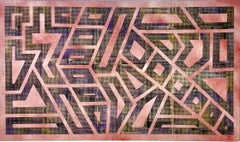
"SPRAY_01" Abstract Painting 40" x 65" by DOT
Located in Culver City, CA
"SPRAY_01" Abstract Painting 40" x 65" by DOT
ABOUT THE ARTIST:
By compiling concepts from multiple philosophies, DOT’s Art seeks to explore an idea that has developed from different roots. Through the use of repeating geometric patterns enhanced by different color theories. A hallucinatory visual field is created. Thus forcing the viewer's perspective to be pushed into a moment of visual confusion.
According to theories in Neuroplasticity, these perspective shifts are catalysts that have the potential to rewire neural pathways and ultimately affect thinking and behavior.
Being self-taught DOT leaned into his understanding of scientific concepts and techniques to develop his artistic explorations. In his most recent body of work, a surgical repetition of shifting color fields reflects his curiosities in the space of visual perception. These lines tend to create a static movement...
Category
21st Century and Contemporary Abstract Geometric Abstract Paintings
Materials
Canvas, Acrylic
More Ways To Browse
Abstract Marine Painting
Abstract Painting Magenta
Black Monochrome Painting
Cat Abstract Painting
Large Diptychs
Purple And Yellow Paintings
Structural Art
Large Minimalist Painting
Painting Circle Geometric
Paper Weave
Scrape Painting
Abstract Fruit Painting
Black And White Checkerboard
Chinese Four Seasons
Juan Jose Garay
Rodriguez Oil Painting
Visionary Painting
Fish Artwork