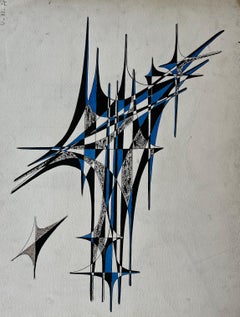
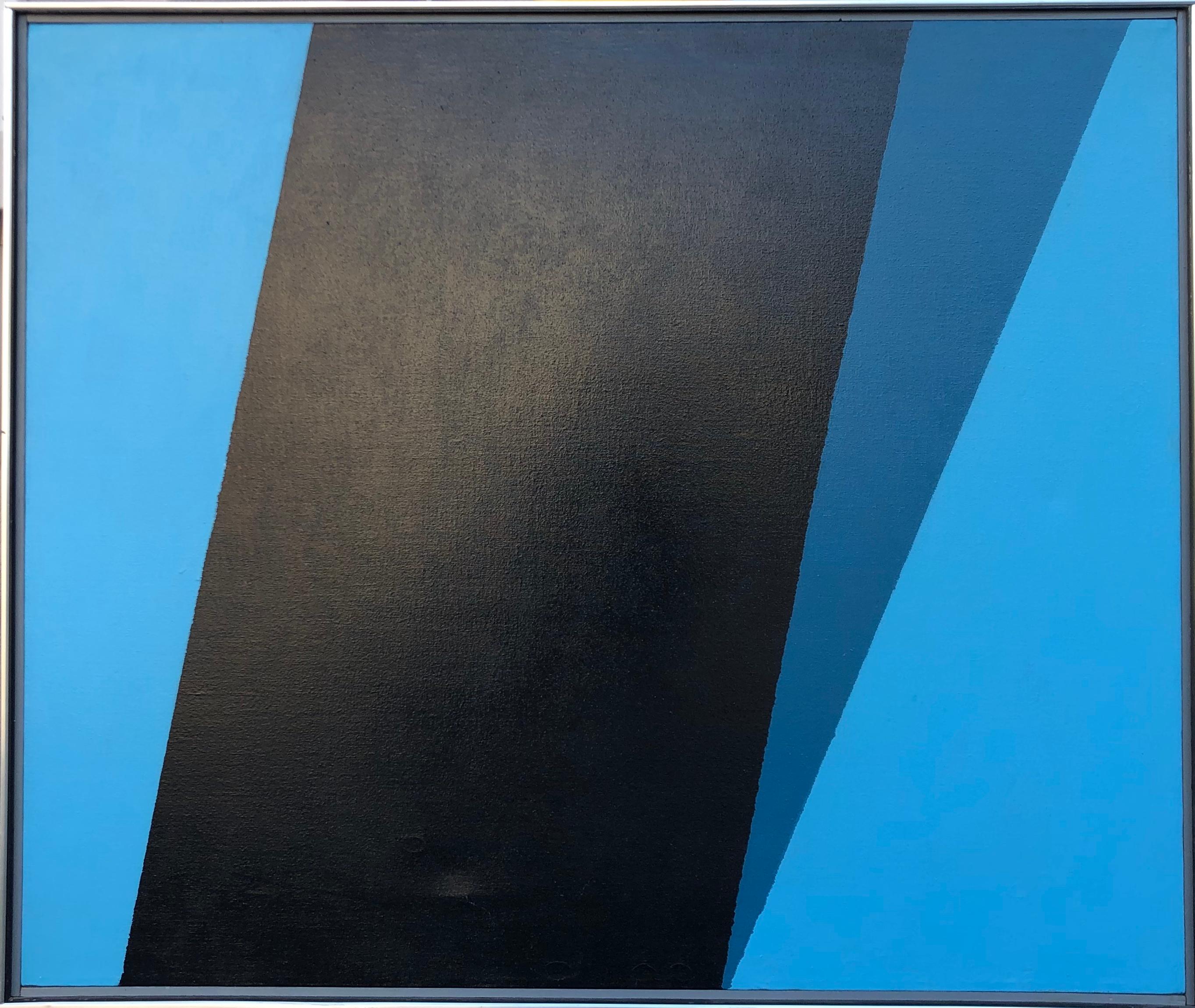
Items Similar to Monumental Blue/White/Black Geometrical Abstract Late 20th Century Painting
Video Loading
Want more images or videos?
Request additional images or videos from the seller
1 of 13
James Massena MarchMonumental Blue/White/Black Geometrical Abstract Late 20th Century Painting
$4,500
£3,416.31
€3,938.45
CA$6,365.87
A$6,853.44
CHF 3,670.15
MX$82,581.50
NOK 46,307.12
SEK 42,378.50
DKK 29,429.70
About the Item
James Massena March (American, 1953-2021)
Untitled
Acrylic on canvas
84 x 84 inches
Provenance: From the Estate of James Massena March
"My paintings are about space, form and energy. I generally start painting without preconceived notions as to the final outcome and build space through a series of constructions and destruction's. The paintings begin with a loose set of limitations and directives. I often work with an abstract idea in mind, several scientific concepts come to mind, to give me focus. I then paint freely, gradually narrowing my focus and zeroing in on a composition that depicts a solid structure, intriguing space and a spontaneity of design. I am interested in complex spatial relationships that lead to a feeling of a comprehensive whole which has energy and a life of it's own. I am also interested in linear movement and visual paradoxes. I do a great deal of my composing on the canvas and never know what I will end up with until I am done. For me painting is an act of discovery." - March
Awards:
Ohio Art Prize for painting- 2009
- Creator:James Massena March (1953 - 2021, American)
- Dimensions:Height: 84 in (213.36 cm)Width: 84 in (213.36 cm)
- Medium:
- Movement Style:
- Period:
- Condition:
- Gallery Location:Beachwood, OH
- Reference Number:1stDibs: LU1768216685252
"My paintings are about space, form and energy. I generally start painting without preconceived notions as to the final outcome and build space through a series of constructions and destruction's. The paintings begin with a loose set of limitations and directives. I often work with an abstract idea in mind, several scientific concepts come to mind, to give me focus. I then paint freely, gradually narrowing my focus and zeroing in on a composition that depicts a solid structure, intriguing space and a spontaneity of design. I am interested in complex spatial relationships that lead to a feeling of a comprehensive whole which has energy and a life of it's own. I am also interested in linear movement and visual paradoxes. I do a great deal of my composing on the canvas and never know what I will end up with until I am done. For me painting is an act of discovery." - March Awards: Ohio Art Prize for painting- 2009
About the Seller
5.0
Gold Seller
Premium sellers maintaining a 4.3+ rating and 24-hour response times
Established in 1975
1stDibs seller since 2022
45 sales on 1stDibs
Typical response time: 1 hour
- ShippingRetrieving quote...Shipping from: Beachwood, OH
- Return Policy
More From This Seller
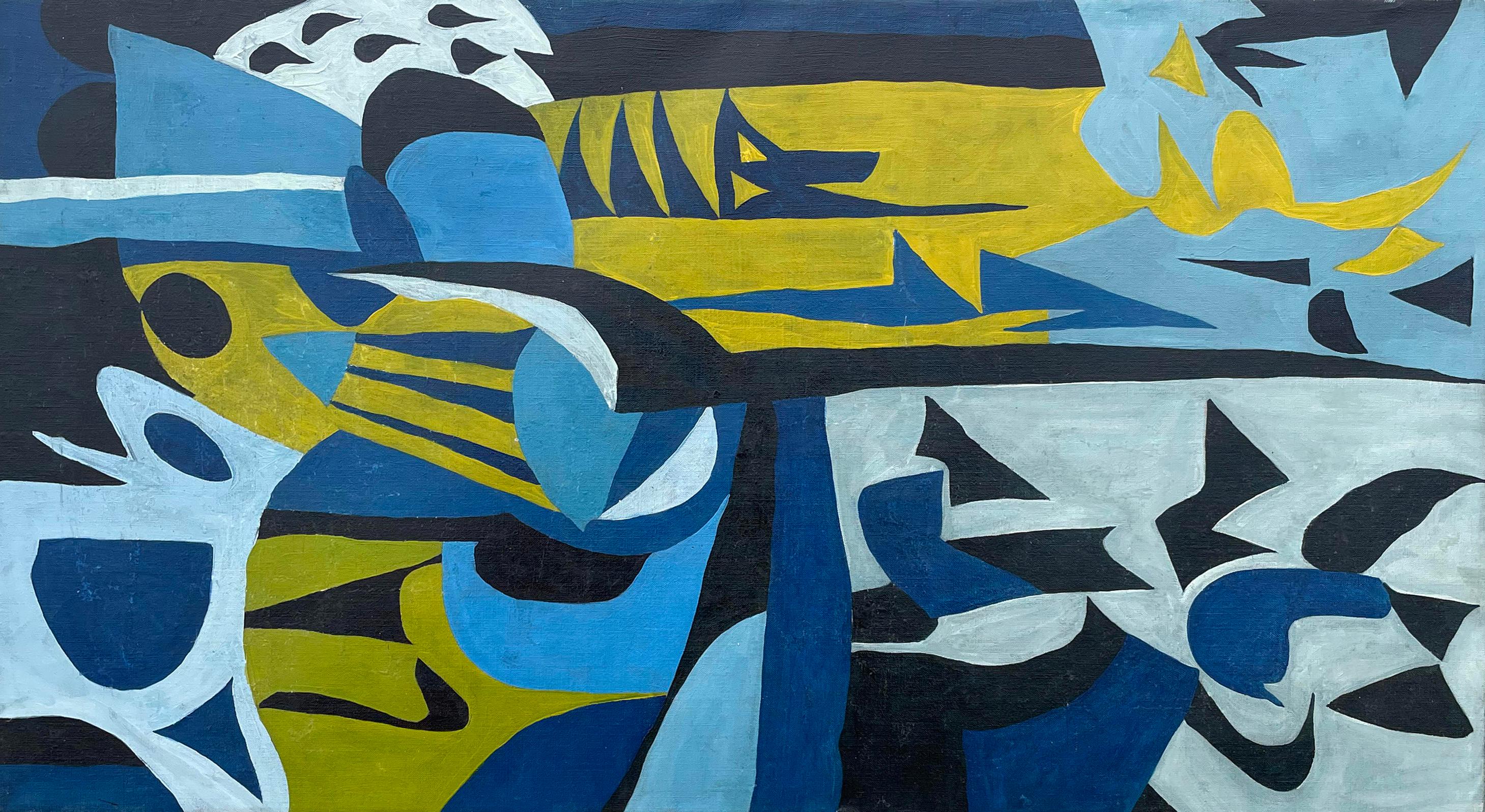
View AllAbstract expressionist blue, black
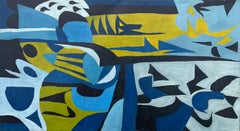
green mid-century geometric painting
By Richard Andres
Located in Beachwood, OH
Richard Andres (American, 1927-2013)
Untitled, c. 1949
oil on canvas
18 x 32 inches
Richard Andres was born in Buffalo, New York in 1927. A graduate of the Cleveland Institute of Art in 1950, he was immediately drafted and served for two years in the army as a mural painter. He received his Master of Arts from Kent State in 1961. A frequent exhibitor at galleries and museums and winner of multiple May Show prizes, Andres taught art in the Cleveland Public Schools for 28 years, as well as teaching the University of Buffalo, the Cleveland Institute of Art and the Western Reserve University.
Very little in Richard Andres’ childhood would have predicted his love of classical music, mid-century-modern architecture and certainly not his lifelong passion for art and in particular abstract art. Richard’s father, Raymond, had no more than a third-grade education, and his mother, Clara, was one of thirteen children – only three of whom lived into adulthood and none of whom attended high school.
They lived, when Richard was a boy, in a dingy area of Buffalo, NY in a walk-up apartment situated above a tavern. Raymond and Clara supplemented the income from their factory jobs in the bar downstairs with Raymond playing ragtime on the piano and Clara serving drinks. This often left Richard and his two older brothers at home alone to fend for themselves. The two older boys, Raymond and Russell, were - unlike Richard- rather rough and tumble and entertained themselves with stickball, boxing and the like. Richard, on the other hand, from a very young age liked to draw, or better yet even, to paint with the small set of watercolors he received for Christmas one year. Paper, however, at the height of the depression, was hard to come by. Luckily, Clara used paper doilies as decoration for the apartment and Richard would contentedly paint and then cut up doilies, gluing the pieces together to create collages.
At eight-years-old, he discovered the Albright-Knox Museum (then known as the Albright Art Gallery) and spent several hours a week there studying the paintings. He was particularly fond of Charles Burchfield‘s landscapes, enamored with their ‘messiness’ and thinking that they somehow captured more ‘feeling’ than works he was previously familiar with. For his tenth Christmas, he asked for and received a ‘how-to’ paint book by Elliot O’Hare. Through this self-teaching, he assembled the portfolio needed for acceptance to Buffalo Technical High School where he studied Advertising Arts. In his Junior year, he was encouraged to enter a watercolor painting, “Two Barns,” in the national 1944-45 Ingersoll Art Award Contest and was one of twelve grand prize winners – each one winning one hundred dollars. More importantly the painting was exhibited at the Carnegie Institute Galleries, which resulted in his winning a national scholarship to the Cleveland School of Art (The Cleveland Art Institute).
He flourished at the art school under the tutelage of faculty members such as Carl Gaertner, as well as that of visiting artists such as William Sommer and Henry George Keller. He would say in later years that Gaertner, in particular, influenced his attitude toward life as well as art. “Gaertner,” Andres said, “believed that there was no need to be a ‘tortured artist’, that an artist should rather enjoy beauty, family, and life in general.” Free to spend his days as he chose, he wandered the Cleveland Art Museum for most of the hours he was not attending classes or painting; the remaining time was spent drinking coffee at a local hangout with art school friends – which is where he met fellow Henry Keller scholarship winner, Avis Johnson. Richard was immediately smitten with Avis, but being rather shy, it took him the entire summer of 1948 to build up his courage to ask her out. Over that summer he ‘thought about Avis’ and worked in a diner to save money. He also used the hundred-dollar prize money won in High School to visit the first Max Beckmann retrospective in the United States at the City Art Museum in St. Louis. Over a half century later he spoke of that exhibit with a reverence usually reserved for spiritual matters, “I walked in and it was like nothing I had ever seen before... the color...It just glowed.”
Returning to campus in the Fall, the first thing he did was go to the coffee shop in hopes of finding Avis. He did, and she, upon seeing him, realized that she was also smitten with him. They quickly became known as ‘the couple’ on campus, and a year later, with Richard being drafted for the Korean war, they were quickly married by a Justice of the Peace, celebrating after with family at Avis’s Cleveland home. As a gift, faculty member John Paul Miller designed and made the simple gold wedding ring Avis wore for their 65 years of marriage. During those 65 years neither wavered in their mutual love, nor in the respect they shared for one another’s art.
The couple lived in a converted chicken coop in Missouri while Richard was in boot camp. At the camp, he would volunteer for any job offered and one of those jobs ended up being painting road signs. His commander noticed how quickly and neatly he worked and gave him more painting work to do - eventually recommending him for a position painting murals for Army offices in Panama. Until her dying day, Avis remained angry that “The army got to keep those fabulous murals and they probably didn’t even know how wonderful they were.” In Panama, their first son, Mark, was born. After Richard’s discharge in 1953, they moved back to the Cleveland area and used the GI bill to attend Kent State gaining his BA in education. The small family then moved briefly to Buffalo, where Richard taught at the Albright Art School and the University of Buffalo – and their second son, Peter, was born. Richard had exhibited work in the Cleveland May Show and the Butler Art Museum during his art school years, and during the years in Buffalo, his work was exhibited at the gallery he had so loved as a child, the Albright Art Gallery.
In 1956, the family moved back to the Cleveland area and Richard began teaching art at Lincoln West High School during the day while working toward his MA in art at Kent State in the evenings. Avis and Richard, with the help of an architect, designed their first home - a saltbox style house in Hudson, Ohio, and in 1958, their third son, Max (after Max Beckmann) was born. Richard enjoyed the consistency of teaching high school as well as the time it gave him to paint on the weekends and during the summer months. In 1961, he received his MA and his daughter, Claire, was born. With a fourth child, the house was much too small, and Avis and Richard began designing their second home. An admirer of MCM architecture, Richard’s favorite example of the style was the Farnsworth house – he often spoke of how the concepts behind this architectural style, particularly that of Mies van der Rohe, influenced his painting.
Andres described himself as a 1950’s...
Category
1940s Abstract Expressionist Abstract Paintings
Materials
Oil
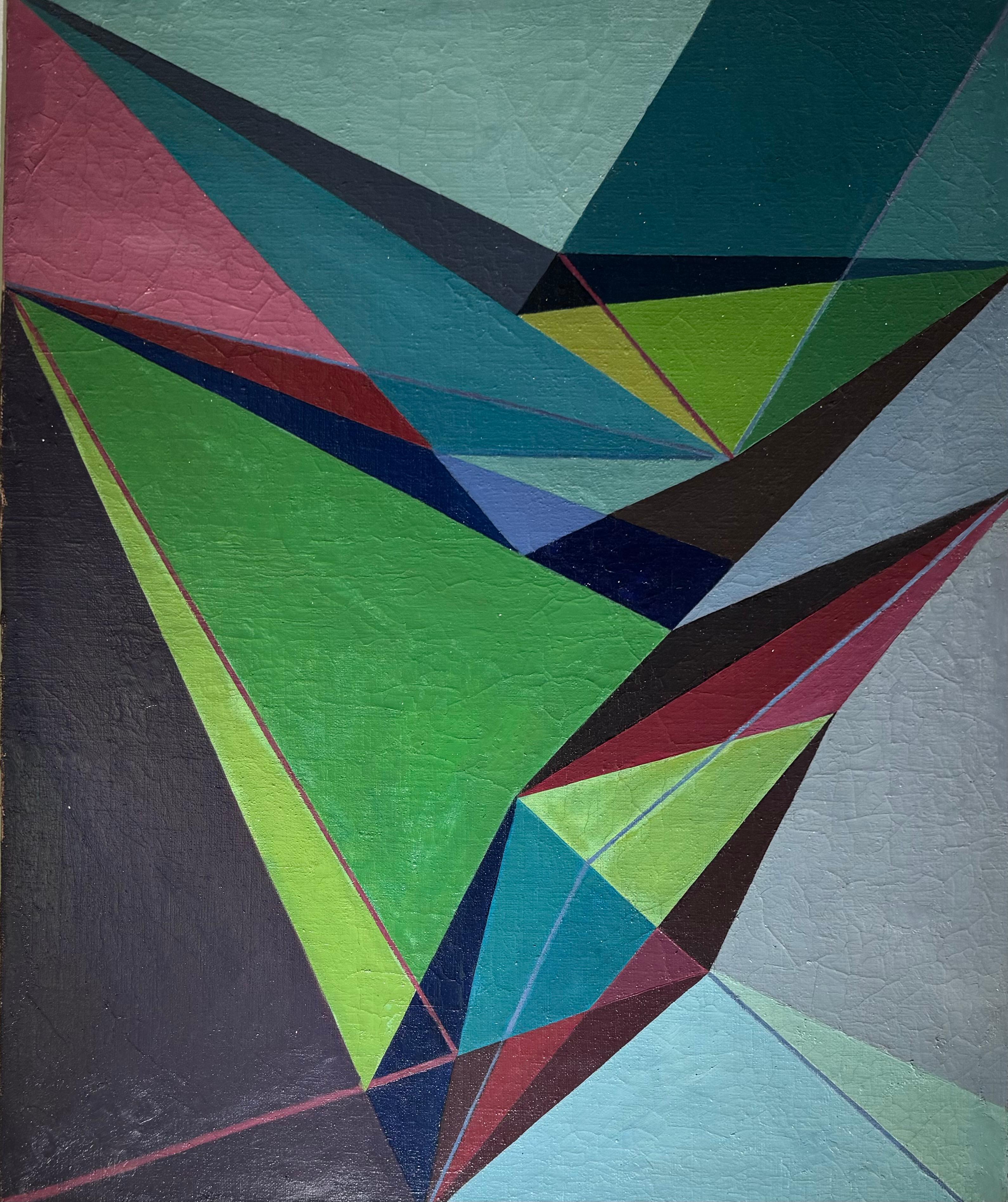
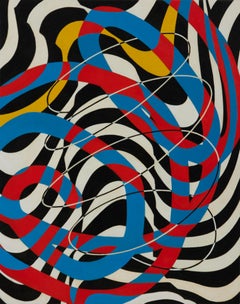
Colorful Abstract Geometrical Late 20th Century Painting by Ohio Artist
Located in Beachwood, OH
James Massena March (American, 1953-2021)
Untitled
Oil on canvas
30 x 24 inches
"My paintings are about space, form and energy. I generally start ...
Category
Late 20th Century Abstract Abstract Paintings
Materials
Oil
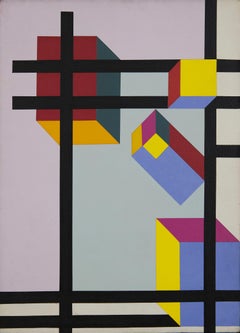
Composite #6, Abstract Geometric Shapes, Mid-20th Century
Located in Beachwood, OH
Charles Fodor (American, 20th Century)
Composite #6, 1969
Oil on canvas
Signed, dated and titled verso
27.5 x 20 inches
29 x 21.5 inches, framed
Category
1960s Abstract Geometric Abstract Paintings
Materials
Oil
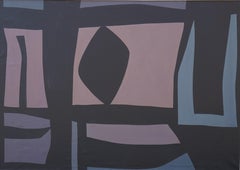
Blue Wall, mid-century abstract expressionist, geometric blue, black
pink work
By Richard Andres
Located in Beachwood, OH
Richard Andres (American, 1927-2013)
Blue Wall, c. 1959
oil on canvas
signed and titled verso
42 x 60 inches
Richard Andres was born in Buffalo, New York in 1927. A graduate of the Cleveland Institute of Art in 1950, he was immediately drafted and served for two years in the army as a mural painter. He received his Master of Arts from Kent State in 1961. A frequent exhibitor at galleries and museums and winner of multiple May Show prizes, Andres taught art in the Cleveland Public Schools for 28 years, as well as teaching the University of Buffalo, the Cleveland Institute of Art and the Western Reserve University.
Very little in Richard Andres’ childhood would have predicted his love of classical music, mid-century-modern architecture and certainly not his lifelong passion for art and in particular abstract art. Richard’s father, Raymond, had no more than a third-grade education, and his mother, Clara, was one of thirteen children – only three of whom lived into adulthood and none of whom attended high school.
They lived, when Richard was a boy, in a dingy area of Buffalo, NY in a walk-up apartment situated above a tavern. Raymond and Clara supplemented the income from their factory jobs in the bar downstairs with Raymond playing ragtime on the piano and Clara serving drinks. This often left Richard and his two older brothers at home alone to fend for themselves. The two older boys, Raymond and Russell, were - unlike Richard- rather rough and tumble and entertained themselves with stickball, boxing and the like. Richard, on the other hand, from a very young age liked to draw, or better yet even, to paint with the small set of watercolors he received for Christmas one year. Paper, however, at the height of the depression, was hard to come by. Luckily, Clara used paper doilies as decoration for the apartment and Richard would contentedly paint and then cut up doilies, gluing the pieces together to create collages.
At eight-years-old, he discovered the Albright-Knox Museum (then known as the Albright Art Gallery) and spent several hours a week there studying the paintings. He was particularly fond of Charles Burchfield‘s landscapes, enamored with their ‘messiness’ and thinking that they somehow captured more ‘feeling’ than works he was previously familiar with. For his tenth Christmas, he asked for and received a ‘how-to’ paint book by Elliot O’Hare. Through this self-teaching, he assembled the portfolio needed for acceptance to Buffalo Technical High School where he studied Advertising Arts. In his Junior year, he was encouraged to enter a watercolor painting, “Two Barns,” in the national 1944-45 Ingersoll Art Award Contest and was one of twelve grand prize winners – each one winning one hundred dollars. More importantly the painting was exhibited at the Carnegie Institute Galleries, which resulted in his winning a national scholarship to the Cleveland School of Art (The Cleveland Art Institute).
He flourished at the art school under the tutelage of faculty members such as Carl Gaertner, as well as that of visiting artists such as William Sommer and Henry George Keller. He would say in later years that Gaertner, in particular, influenced his attitude toward life as well as art. “Gaertner,” Andres said, “believed that there was no need to be a ‘tortured artist’, that an artist should rather enjoy beauty, family, and life in general.” Free to spend his days as he chose, he wandered the Cleveland Art Museum for most of the hours he was not attending classes or painting; the remaining time was spent drinking coffee at a local hangout with art school friends – which is where he met fellow Henry Keller scholarship winner, Avis Johnson. Richard was immediately smitten with Avis, but being rather shy, it took him the entire summer of 1948 to build up his courage to ask her out. Over that summer he ‘thought about Avis’ and worked in a diner to save money. He also used the hundred-dollar prize money won in High School to visit the first Max Beckmann retrospective in the United States at the City Art Museum in St. Louis. Over a half century later he spoke of that exhibit with a reverence usually reserved for spiritual matters, “I walked in and it was like nothing I had ever seen before... the color...It just glowed.”
Returning to campus in the Fall, the first thing he did was go to the coffee shop in hopes of finding Avis. He did, and she, upon seeing him, realized that she was also smitten with him. They quickly became known as ‘the couple’ on campus, and a year later, with Richard being drafted for the Korean war, they were quickly married by a Justice of the Peace, celebrating after with family at Avis’s Cleveland home. As a gift, faculty member John Paul Miller designed and made the simple gold wedding ring Avis wore for their 65 years of marriage. During those 65 years neither wavered in their mutual love, nor in the respect they shared for one another’s art.
The couple lived in a converted chicken coop in Missouri while Richard was in boot camp. At the camp, he would volunteer for any job offered and one of those jobs ended up being painting road signs. His commander noticed how quickly and neatly he worked and gave him more painting work to do - eventually recommending him for a position painting murals for Army offices in Panama. Until her dying day, Avis remained angry that “The army got to keep those fabulous murals and they probably didn’t even know how wonderful they were.” In Panama, their first son, Mark, was born. After Richard’s discharge in 1953, they moved back to the Cleveland area and used the GI bill to attend Kent State gaining his BA in education. The small family then moved briefly to Buffalo, where Richard taught at the Albright Art School and the University of Buffalo – and their second son, Peter, was born. Richard had exhibited work in the Cleveland May Show and the Butler Art Museum during his art school years, and during the years in Buffalo, his work was exhibited at the gallery he had so loved as a child, the Albright Art Gallery.
In 1956, the family moved back to the Cleveland area and Richard began teaching art at Lincoln West High School during the day while working toward his MA in art at Kent State in the evenings. Avis and Richard, with the help of an architect, designed their first home - a saltbox style house in Hudson, Ohio, and in 1958, their third son, Max (after Max Beckmann) was born. Richard enjoyed the consistency of teaching high school as well as the time it gave him to paint on the weekends and during the summer months. In 1961, he received his MA and his daughter, Claire, was born. With a fourth child, the house was much too small, and Avis and Richard began designing their second home. An admirer of MCM architecture, Richard’s favorite example of the style was the Farnsworth house – he often spoke of how the concepts behind this architectural style, particularly that of Mies van der Rohe, influenced his painting.
Andres described himself as a 1950’s...
Category
1950s Abstract Expressionist Abstract Paintings
Materials
Oil
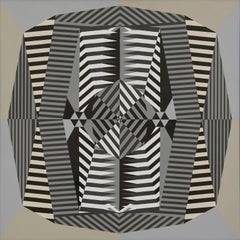
Curved Dimensions, Abstract OpArt Geometrical, Mid-Century Cleveland Artist
By Edwin Mieczkowski
Located in Beachwood, OH
Edwin Mieczkowski (American, 1929-2017)
Curved Dimensions, 1965
Acrylic on board
Signed, dated and titled verso
30 x 29.75 inches
Edwin Mieczkowski, born in Pittsburgh, was a leader of geometric and perceptual abstraction during the latter part of the 20th century. Mieczkowski's work first came to prominence in "The Responsive Eye" exhibition, the nation's first major exhibition of perceptual art, held at the Museum of Modern Art in New York in 1965.
Mieczkowski was also featured in the 1964 article in Timemagazine that first used the term "Op Art" to describe paintings that manipulated visual cues in order to reorder and excite viewers' perceptual responses.
With a complex aesthetic that over time has transcended mere tricks of optical art, Mieczkowski has spent nearly four decades producing geometrically paintings, drawings and sculptures, a genre of modern art that is known broadly as perceptual abstraction.
His output of static and dynamic forms create a body of work, still largely intact, that uses visually disorienting, meticulously arranged lines, dazzling kaleidoscopic colors, and alluring juxtapositions of hue and tone, to playfully and seductively present new challenges for the viewer's eyes. The desired result is an optical effect of perpetual motion, harmonics and rhythm. . . .
Along with Frank Hewitt and Ernst Benkert, Mieczkowski was a co-founder in 1959 of the Anonima* group that worked together in Cleveland and New York and declared itself free from the pressures of the art market and the pursuit of personal fame. Members of Anonima often left their works unsigned and vowed to shun the usual art market venues such as commercial galleries, biennials and competitions. Instead, they engaged in a rigorous, self-imposed program of painting exercises to explore the effects of geometry and color on visual perception.
Although Mieczkowski's work hung side-by-side in the MOMA "Responsive Eye" exhibition with such colleagues as Josef Albers, Victor Vasarely, Richard Anuszkiewicz, Morris Louis, Kenneth Noland, Carlos Cruz...
Category
1960s Op Art Abstract Paintings
Materials
Acrylic
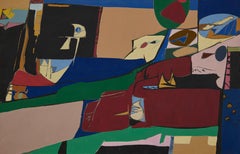
Erie Shore, Large Abstract Expressionist Mid-Century Modern geometric work
By Richard Andres
Located in Beachwood, OH
Richard Andres (American, 1927-2013)
Erie Shore, c. 1975
acrylic on canvas
signed lower right, signed and titled verso
50 x 72 inches
Richard Andres was born in Buffalo, New York in 1927. A graduate of the Cleveland Institute of Art in 1950, he was immediately drafted and served for two years in the army as a mural painter. He received his Master of Arts from Kent State in 1961. A frequent exhibitor at galleries and museums and winner of multiple May Show prizes, Andres taught art in the Cleveland Public Schools for 28 years, as well as teaching the University of Buffalo, the Cleveland Institute of Art and the Western Reserve University.
Very little in Richard Andres’ childhood would have predicted his love of classical music, mid-century-modern architecture and certainly not his lifelong passion for art and in particular abstract art. Richard’s father, Raymond, had no more than a third-grade education, and his mother, Clara, was one of thirteen children – only three of whom lived into adulthood and none of whom attended high school.
They lived, when Richard was a boy, in a dingy area of Buffalo, NY in a walk-up apartment situated above a tavern. Raymond and Clara supplemented the income from their factory jobs in the bar downstairs with Raymond playing ragtime on the piano and Clara serving drinks. This often left Richard and his two older brothers at home alone to fend for themselves. The two older boys, Raymond and Russell, were - unlike Richard- rather rough and tumble and entertained themselves with stickball, boxing and the like. Richard, on the other hand, from a very young age liked to draw, or better yet even, to paint with the small set of watercolors he received for Christmas one year. Paper, however, at the height of the depression, was hard to come by. Luckily, Clara used paper doilies as decoration for the apartment and Richard would contentedly paint and then cut up doilies, gluing the pieces together to create collages.
At eight-years-old, he discovered the Albright-Knox Museum (then known as the Albright Art Gallery) and spent several hours a week there studying the paintings. He was particularly fond of Charles Burchfield‘s landscapes, enamored with their ‘messiness’ and thinking that they somehow captured more ‘feeling’ than works he was previously familiar with. For his tenth Christmas, he asked for and received a ‘how-to’ paint book by Elliot O’Hare. Through this self-teaching, he assembled the portfolio needed for acceptance to Buffalo Technical High School where he studied Advertising Arts. In his Junior year, he was encouraged to enter a watercolor painting, “Two Barns,” in the national 1944-45 Ingersoll Art Award Contest and was one of twelve grand prize winners – each one winning one hundred dollars. More importantly the painting was exhibited at the Carnegie Institute Galleries, which resulted in his winning a national scholarship to the Cleveland School of Art (The Cleveland Art Institute).
He flourished at the art school under the tutelage of faculty members such as Carl Gaertner, as well as that of visiting artists such as William Sommer and Henry George Keller. He would say in later years that Gaertner, in particular, influenced his attitude toward life as well as art. “Gaertner,” Andres said, “believed that there was no need to be a ‘tortured artist’, that an artist should rather enjoy beauty, family, and life in general.” Free to spend his days as he chose, he wandered the Cleveland Art Museum for most of the hours he was not attending classes or painting; the remaining time was spent drinking coffee at a local hangout with art school friends – which is where he met fellow Henry Keller scholarship winner, Avis Johnson. Richard was immediately smitten with Avis, but being rather shy, it took him the entire summer of 1948 to build up his courage to ask her out. Over that summer he ‘thought about Avis’ and worked in a diner to save money. He also used the hundred-dollar prize money won in High School to visit the first Max Beckmann retrospective in the United States at the City Art Museum in St. Louis. Over a half century later he spoke of that exhibit with a reverence usually reserved for spiritual matters, “I walked in and it was like nothing I had ever seen before... the color...It just glowed.”
Returning to campus in the Fall, the first thing he did was go to the coffee shop in hopes of finding Avis. He did, and she, upon seeing him, realized that she was also smitten with him. They quickly became known as ‘the couple’ on campus, and a year later, with Richard being drafted for the Korean war, they were quickly married by a Justice of the Peace, celebrating after with family at Avis’s Cleveland home. As a gift, faculty member John Paul Miller...
Category
1970s Abstract Expressionist Abstract Paintings
Materials
Acrylic
You May Also Like
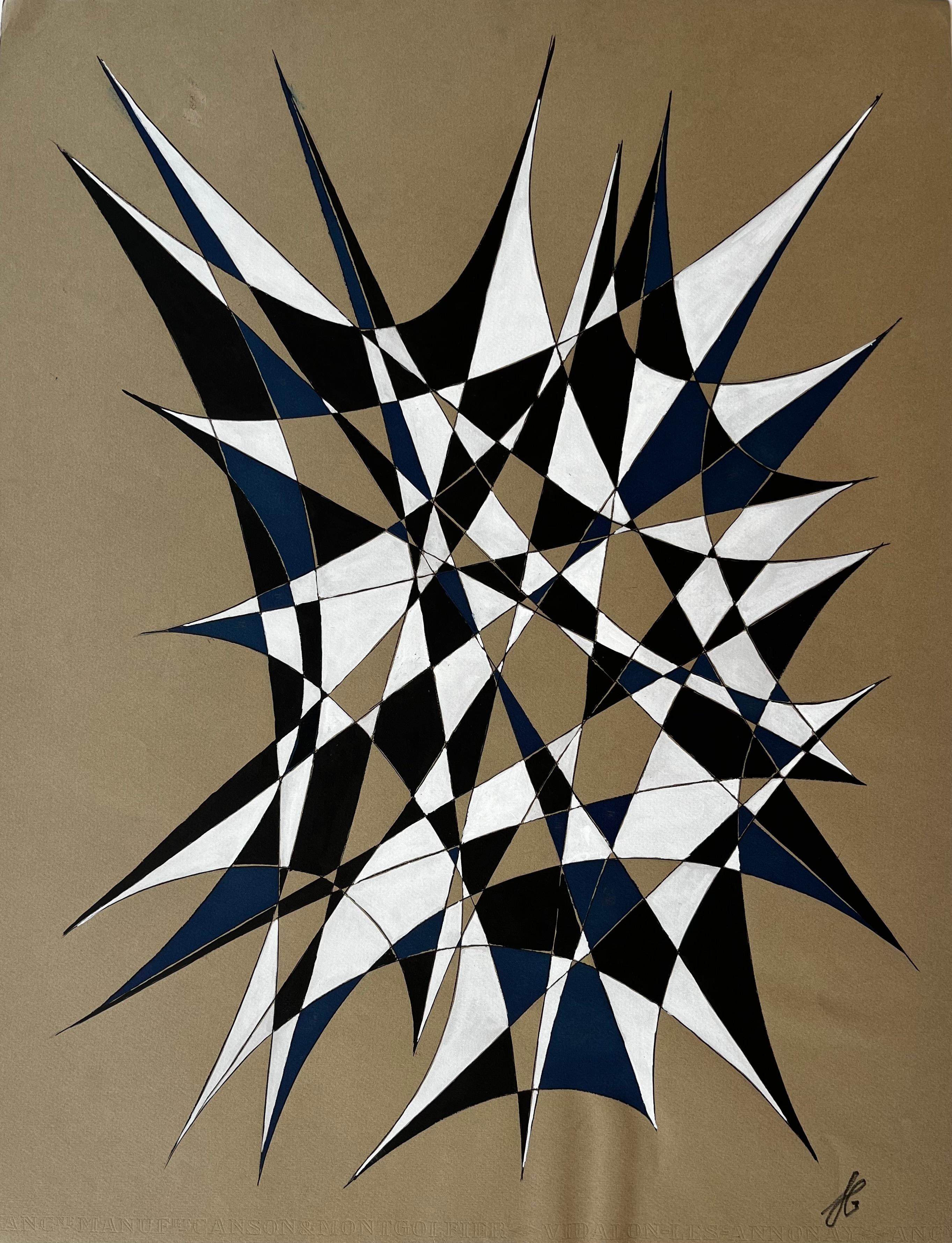
Mid Century French Geometric Abstract in Black White and Blue Signed SG
Located in Cirencester, Gloucestershire
Title: Mid Century French Geometric Abstract in Black White and Blue Signed SG
by Serge Guerin (b. 1916), French
signed lower right “SG”, name stamped verso
Acrylic and gouache on ar...
Category
20th Century Abstract Geometric Abstract Paintings
Materials
Ink, Acrylic, Gouache
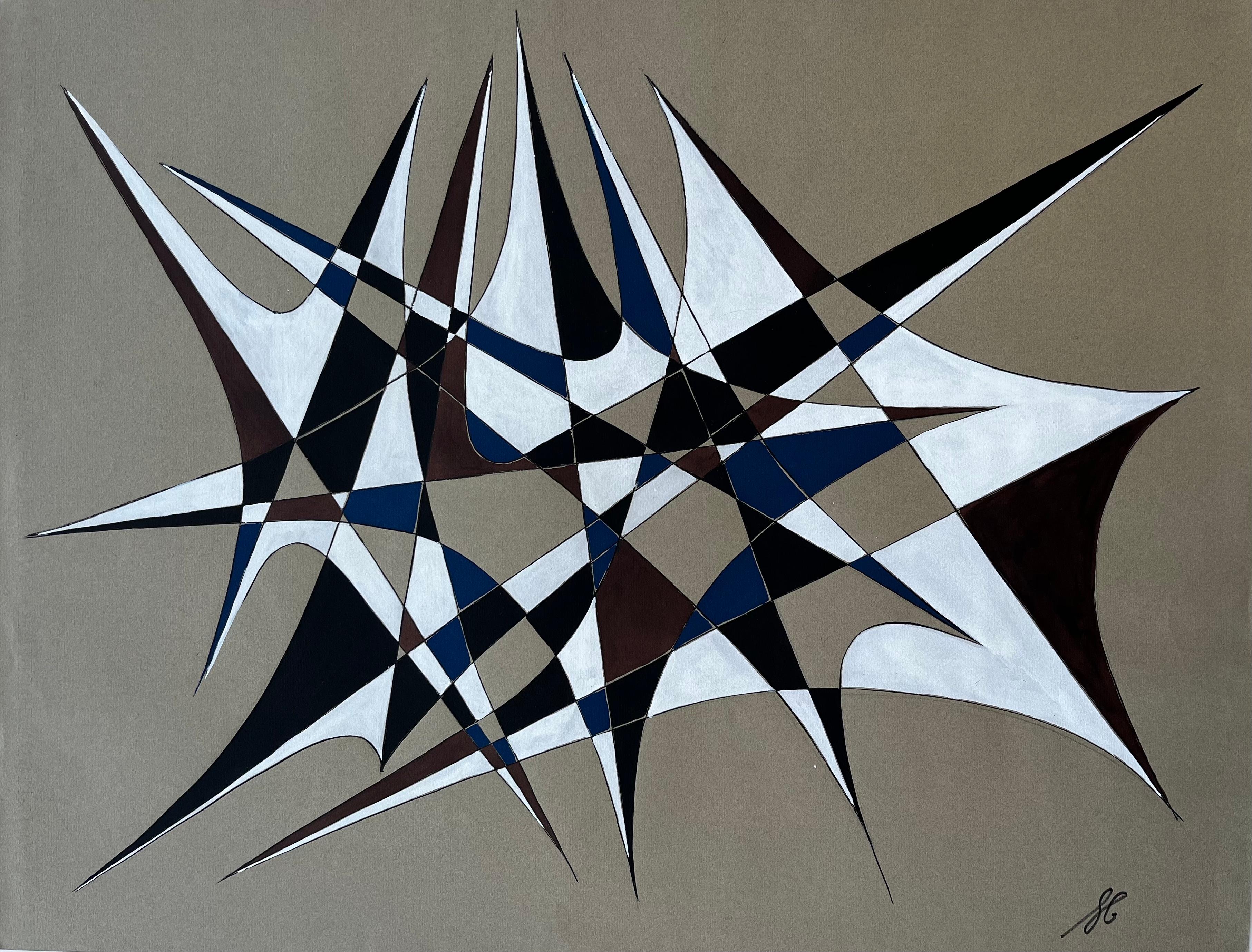
Mid Century French Geometric Abstract in Blue Brown and White Signed
Located in Cirencester, Gloucestershire
Title: Mid Century French Geometric Abstract in Blue Brown and White Signed
by Serge Guerin (b. 1916), French
signed lower right “SG”, name stamped verso
Acrylic and gouache on brown...
Category
20th Century Abstract Geometric Abstract Paintings
Materials
Ink, Acrylic, Gouache
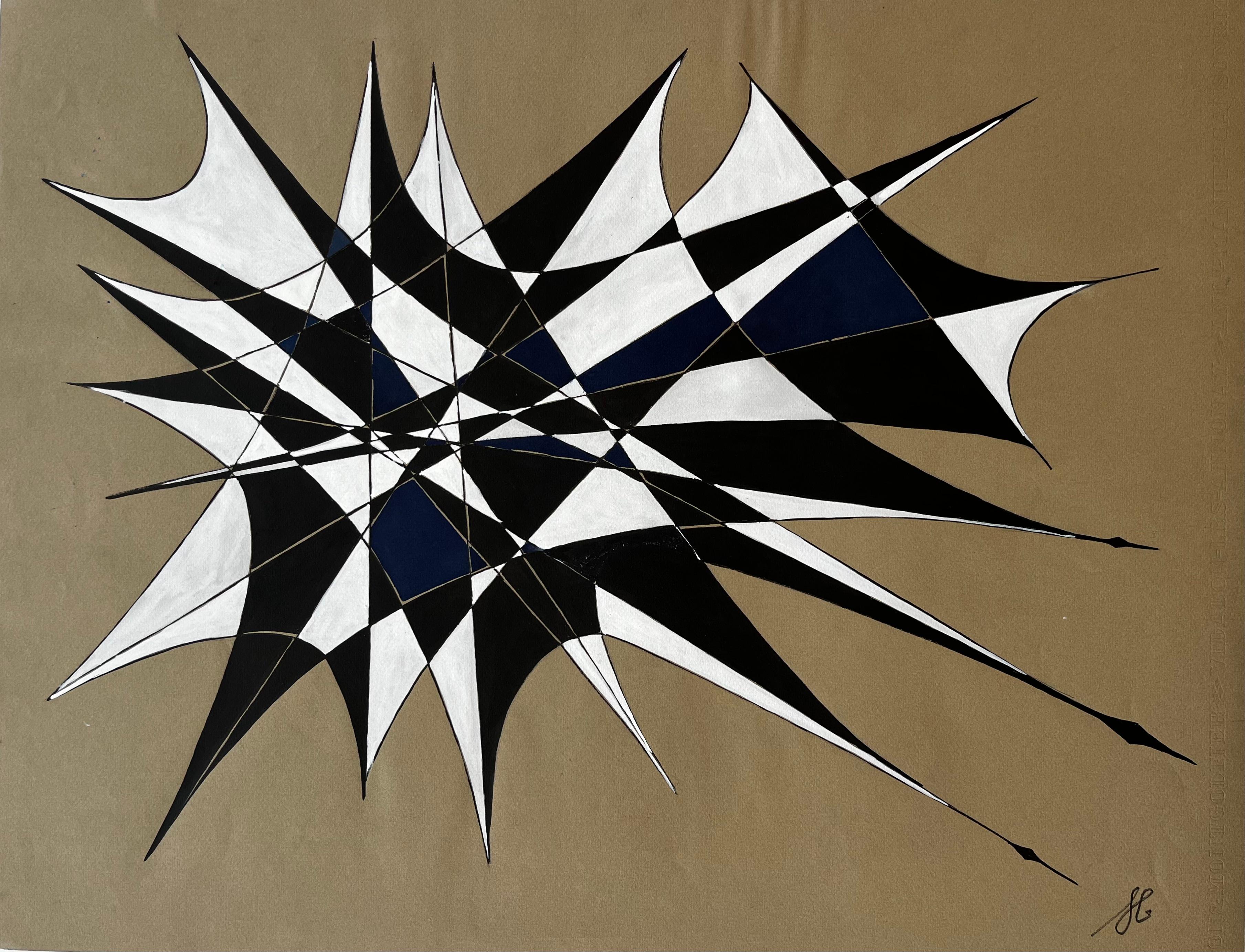
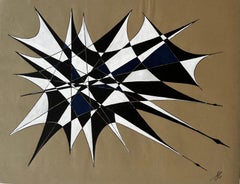
Mid Century French Geometric Abstract in Black White and Navy Signed SG
Located in Cirencester, Gloucestershire
Title: Mid Century French Geometric Abstract in Black White and Navy Signed SG
by Serge Guerin (b. 1916), French
signed lower right “SG”, name stamped verso
Acrylic and gouache on ar...
Category
20th Century Abstract Geometric Abstract Paintings
Materials
Ink, Acrylic, Gouache
Blue and Black Geometric Abstract
By Walter Swyrydenko
Located in Lake Worth Beach, FL
Blue and Black Abstract,
Artist signed and dated 1968
Size: 31x36.5 framed 32x37.5
Born in Sloviansk, Ukraine in 1942. A graduate of Kent State University, receiving a B.S. in Art E...
Category
1960s Abstract Geometric Abstract Paintings
Materials
Cotton Canvas, Oil
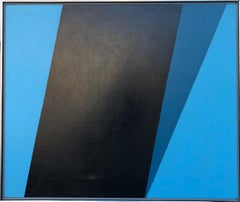
1970’s Large Amercian GEOMETRIC Abstract Blue Colors painting
Located in New York, NY
Roger Selchow
oil on canvas
32x40 inches
Signer Verso
1970’s
Roger Hoffman Selchow was born in Greenwich, Connecticut, and is best known for his paintings of geometric abstraction...
Category
1970s Abstract Geometric Abstract Paintings
Materials
Oil
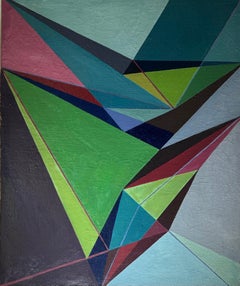
Mid Century French Geometric Abstract in Blue and Black Ink on Paper
Located in Cirencester, Gloucestershire
Title: Mid Century French Geometric Abstract in Blue and Black Ink on Paper
by Serge Guerin (b. 1916), French
Ink and gouache on paper, unframed
Size: 28.5 (height) x 19.75 (width) i...
Category
20th Century Abstract Geometric Abstract Paintings
Materials
Ink, Gouache