Items Similar to Pink
Black Abstract Painting by Cleveland School Artist
Video Loading
Want more images or videos?
Request additional images or videos from the seller
1 of 17
John TeyralPink
Black Abstract Painting by Cleveland School Artist
$2,750
£2,097.51
€2,388.56
CA$3,864.59
A$4,214.88
CHF 2,232.76
MX$50,530.39
NOK 28,435.41
SEK 26,002.07
DKK 17,844.85
About the Item
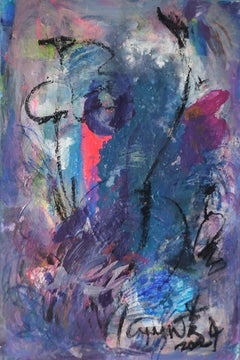
John Teyral (American, 1912-1999)
Untitled
Oil on canvas
Signed Teyral upper right
26 x 12.5 inches
28 x 14 inches, framed
John Teyral was one of Cleveland's most acclaimed artists. He exhibited in galleries across the country and was an award winner in the May Show of the Cleveland Museum of Art for decades. The museum has many of his paintings, and other museums in the country have collected his work. Mr. Teyral also painted portraits of many prominent Clevelanders.
He taught advanced painting at the Cleveland Institute of Art for 40 years.
Mr. Teyral died February 17 in Highlands, N.C. He was 87.
He was born in Yaroslav, Russia, but his family moved to the United States when he was 1. While he was growing up on the near West Side, he took to art the way most boys take to sports. He was 12 when he submitted a drawing at a branch library that won him admission to Saturday classes at the Cleveland Museum of Art. Each year that he was a student at Lincoln High School, he won the Cleveland School of Art's high school competition. When he graduated from the Cleveland Institute of Art in 1934, he received an Agnes Gund traveling scholarship to study at the Boston Museum School of Fine Arts.
In 1938 he attended Ecole de la Grande Chaumiere in Paris. After World War II, he studied at Accademia di Belli Arti in Florence, Italy, through a Fulbright grant.
Mr. Teyral made a number of study trips to Europe, north Africa, Mexico and the Caribbean Islands.
In addition to fine arts painting, Mr. Teyral did commercial art for McCann-Erickson Advertising Agency in the 1930s and 1940s.
He lived in Cleveland Heights for many years. He moved to Highlands, N.C., in the 1970s. He continued painting until five years ago."
----------------------------------------------------------------------
Born in Yaroslav, Russia, John Teyral settled in Lakewood, Ohio where he was a painter with many portrait commissions of prominent persons, muralist, instructor, and designer.
He studied at the Cleveland Institute of Art with Henry Keller, and at the School of the Boston Museum of Fine Arts. He also studied in Europe at the Grande Chaumiere in Paris and the Accademia Belli Arti in Florence.
- Creator:John Teyral (1912 - 1999, American)
- Dimensions:Height: 28 in (71.12 cm)Width: 14 in (35.56 cm)
- Medium:
- Movement Style:
- Period:
- Condition:
- Gallery Location:Beachwood, OH
- Reference Number:1stDibs: LU1768217341862
About the Seller
5.0
Gold Seller
Premium sellers maintaining a 4.3+ rating and 24-hour response times
Established in 1975
1stDibs seller since 2022
42 sales on 1stDibs
Typical response time: 1 hour
- ShippingRetrieving quote...Shipping from: Beachwood, OH
- Return Policy
More From This Seller
View All20th century abstract expressionist oil painting by Cleveland School artist
By Richard Andres
Located in Beachwood, OH
Richard Andres
American, 1927-2013
Untitled, c. 1980
acrylic and ink on paper mounted on canvas
signed lower right
24 x 20 inches
25 x 21 inches, framed
Note: Minor abrasion on lowe...
Category
1980s Abstract Expressionist Abstract Paintings
Materials
Ink, Acrylic
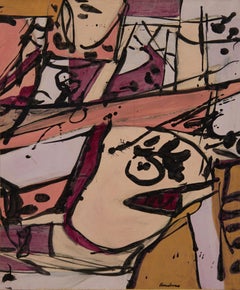
Pieces Collage, vibrant mid-century abstract expressionist black, pink
red
By Richard Andres
Located in Beachwood, OH
Richard Andres (American, 1927-2013)
Pieces Collage, c. 1965
collage on paper
14 x 18 inches
Richard Andres was born in Buffalo, New York in 1927. A graduate of the Cleveland Institute of Art in 1950, he was immediately drafted and served for two years in the army as a mural painter. He received his Master of Arts from Kent State in 1961. A frequent exhibitor at galleries and museums and winner of multiple May Show prizes, Andres taught art in the Cleveland Public Schools for 28 years, as well as teaching the University of Buffalo, the Cleveland Institute of Art and the Western Reserve University.
Very little in Richard Andres’ childhood would have predicted his love of classical music, mid-century-modern architecture and certainly not his lifelong passion for art and in particular abstract art. Richard’s father, Raymond, had no more than a third-grade education, and his mother, Clara, was one of thirteen children – only three of whom lived into adulthood and none of whom attended high school.
They lived, when Richard was a boy, in a dingy area of Buffalo, NY in a walk-up apartment situated above a tavern. Raymond and Clara supplemented the income from their factory jobs in the bar downstairs with Raymond playing ragtime on the piano and Clara serving drinks. This often left Richard and his two older brothers at home alone to fend for themselves. The two older boys, Raymond and Russell, were - unlike Richard- rather rough and tumble and entertained themselves with stickball, boxing and the like. Richard, on the other hand, from a very young age liked to draw, or better yet even, to paint with the small set of watercolors he received for Christmas one year. Paper, however, at the height of the depression, was hard to come by. Luckily, Clara used paper doilies as decoration for the apartment and Richard would contentedly paint and then cut up doilies, gluing the pieces together to create collages.
At eight-years-old, he discovered the Albright-Knox Museum (then known as the Albright Art Gallery) and spent several hours a week there studying the paintings. He was particularly fond of Charles Burchfield‘s landscapes, enamored with their ‘messiness’ and thinking that they somehow captured more ‘feeling’ than works he was previously familiar with. For his tenth Christmas, he asked for and received a ‘how-to’ paint book by Elliot O’Hare. Through this self-teaching, he assembled the portfolio needed for acceptance to Buffalo Technical High School where he studied Advertising Arts. In his Junior year, he was encouraged to enter a watercolor painting, “Two Barns,” in the national 1944-45 Ingersoll Art Award Contest and was one of twelve grand prize winners – each one winning one hundred dollars. More importantly the painting was exhibited at the Carnegie Institute Galleries, which resulted in his winning a national scholarship to the Cleveland School of Art (The Cleveland Art Institute).
He flourished at the art school under the tutelage of faculty members such as Carl Gaertner, as well as that of visiting artists such as William Sommer and Henry George Keller. He would say in later years that Gaertner, in particular, influenced his attitude toward life as well as art. “Gaertner,” Andres said, “believed that there was no need to be a ‘tortured artist’, that an artist should rather enjoy beauty, family, and life in general.” Free to spend his days as he chose, he wandered the Cleveland Art Museum for most of the hours he was not attending classes or painting; the remaining time was spent drinking coffee at a local hangout with art school friends – which is where he met fellow Henry Keller scholarship winner, Avis Johnson. Richard was immediately smitten with Avis, but being rather shy, it took him the entire summer of 1948 to build up his courage to ask her out. Over that summer he ‘thought about Avis’ and worked in a diner to save money. He also used the hundred-dollar prize money won in High School to visit the first Max Beckmann retrospective in the United States at the City Art Museum in St. Louis. Over a half century later he spoke of that exhibit with a reverence usually reserved for spiritual matters, “I walked in and it was like nothing I had ever seen before... the color...It just glowed.”
Returning to campus in the Fall, the first thing he did was go to the coffee shop in hopes of finding Avis. He did, and she, upon seeing him, realized that she was also smitten with him. They quickly became known as ‘the couple’ on campus, and a year later, with Richard being drafted for the Korean war, they were quickly married by a Justice of the Peace, celebrating after with family at Avis’s Cleveland home. As a gift, faculty member John Paul Miller designed and made the simple gold wedding ring Avis wore for their 65 years of marriage. During those 65 years neither wavered in their mutual love, nor in the respect they shared for one another’s art.
The couple lived in a converted chicken coop in Missouri while Richard was in boot camp. At the camp, he would volunteer for any job offered and one of those jobs ended up being painting road signs. His commander noticed how quickly and neatly he worked and gave him more painting work to do - eventually recommending him for a position painting murals for Army offices in Panama. Until her dying day, Avis remained angry that “The army got to keep those fabulous murals and they probably didn’t even know how wonderful they were.” In Panama, their first son, Mark, was born. After Richard’s discharge in 1953, they moved back to the Cleveland area and used the GI bill to attend Kent State gaining his BA in education. The small family then moved briefly to Buffalo, where Richard taught at the Albright Art School and the University of Buffalo – and their second son, Peter, was born. Richard had exhibited work in the Cleveland May Show and the Butler Art Museum during his art school years, and during the years in Buffalo, his work was exhibited at the gallery he had so loved as a child, the Albright Art Gallery.
In 1956, the family moved back to the Cleveland area and Richard began teaching art at Lincoln West High School during the day while working toward his MA in art at Kent State in the evenings. Avis and Richard, with the help of an architect, designed their first home - a saltbox style house in Hudson, Ohio, and in 1958, their third son, Max (after Max Beckmann) was born. Richard enjoyed the consistency of teaching high school as well as the time it gave him to paint on the weekends and during the summer months. In 1961, he received his MA and his daughter, Claire, was born. With a fourth child, the house was much too small, and Avis and Richard began designing their second home. An admirer of MCM architecture, Richard’s favorite example of the style was the Farnsworth house – he often spoke of how the concepts behind this architectural style, particularly that of Mies van der Rohe, influenced his painting.
Andres described himself as a 1950’s...
Category
1960s Abstract Geometric Abstract Paintings
Materials
Acrylic
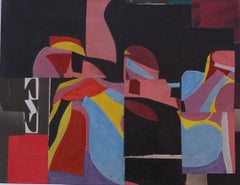
20th century abstract expressionist oil painting by Cleveland School artist
By Richard Andres
Located in Beachwood, OH
Richard Andres
American, 1927-2013
acrylic and ink on paper mounted on canvas
12 x 10 inches
Note: Small dent in canvas. See pictures for details.
Richard Andres was born in Buffal...
Category
1980s Abstract Expressionist Abstract Paintings
Materials
Ink, Acrylic
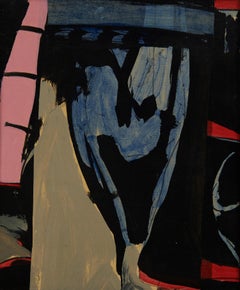
Untitled abstract expressionist oil painting by Cleveland School artist
By Richard Andres
Located in Beachwood, OH
Richard Andres
American, 1927-2013
Untitled, c. 1984
acrylic and ink on paper mounted on canvas
signed lower right
19 x 16 inches
Richard Andres was born in Buffalo, New York in 192...
Category
1980s Abstract Expressionist Abstract Paintings
Materials
Ink, Acrylic
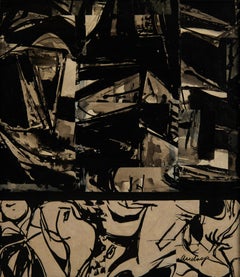
L. S. F. vibrant abstract expressionist painting by Cleveland School artist
By Richard Andres
Located in Beachwood, OH
Richard Andres
American, 1927-2013
L. S. F., 1980
acrylic and ink on paper mounted on canvas
signed lower right, dated and titled verso
48 x 65 inches
48.75 x 65.75 inches, framed
R...
Category
1980s Abstract Expressionist Abstract Paintings
Materials
Ink, Acrylic
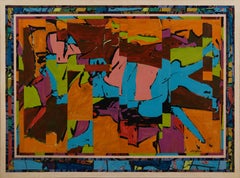
Blue Wall, mid-century abstract expressionist, geometric blue, black
pink work
By Richard Andres
Located in Beachwood, OH
Richard Andres (American, 1927-2013)
Blue Wall, c. 1959
oil on canvas
signed and titled verso
42 x 60 inches
Richard Andres was born in Buffalo, New York in 1927. A graduate of the Cleveland Institute of Art in 1950, he was immediately drafted and served for two years in the army as a mural painter. He received his Master of Arts from Kent State in 1961. A frequent exhibitor at galleries and museums and winner of multiple May Show prizes, Andres taught art in the Cleveland Public Schools for 28 years, as well as teaching the University of Buffalo, the Cleveland Institute of Art and the Western Reserve University.
Very little in Richard Andres’ childhood would have predicted his love of classical music, mid-century-modern architecture and certainly not his lifelong passion for art and in particular abstract art. Richard’s father, Raymond, had no more than a third-grade education, and his mother, Clara, was one of thirteen children – only three of whom lived into adulthood and none of whom attended high school.
They lived, when Richard was a boy, in a dingy area of Buffalo, NY in a walk-up apartment situated above a tavern. Raymond and Clara supplemented the income from their factory jobs in the bar downstairs with Raymond playing ragtime on the piano and Clara serving drinks. This often left Richard and his two older brothers at home alone to fend for themselves. The two older boys, Raymond and Russell, were - unlike Richard- rather rough and tumble and entertained themselves with stickball, boxing and the like. Richard, on the other hand, from a very young age liked to draw, or better yet even, to paint with the small set of watercolors he received for Christmas one year. Paper, however, at the height of the depression, was hard to come by. Luckily, Clara used paper doilies as decoration for the apartment and Richard would contentedly paint and then cut up doilies, gluing the pieces together to create collages.
At eight-years-old, he discovered the Albright-Knox Museum (then known as the Albright Art Gallery) and spent several hours a week there studying the paintings. He was particularly fond of Charles Burchfield‘s landscapes, enamored with their ‘messiness’ and thinking that they somehow captured more ‘feeling’ than works he was previously familiar with. For his tenth Christmas, he asked for and received a ‘how-to’ paint book by Elliot O’Hare. Through this self-teaching, he assembled the portfolio needed for acceptance to Buffalo Technical High School where he studied Advertising Arts. In his Junior year, he was encouraged to enter a watercolor painting, “Two Barns,” in the national 1944-45 Ingersoll Art Award Contest and was one of twelve grand prize winners – each one winning one hundred dollars. More importantly the painting was exhibited at the Carnegie Institute Galleries, which resulted in his winning a national scholarship to the Cleveland School of Art (The Cleveland Art Institute).
He flourished at the art school under the tutelage of faculty members such as Carl Gaertner, as well as that of visiting artists such as William Sommer and Henry George Keller. He would say in later years that Gaertner, in particular, influenced his attitude toward life as well as art. “Gaertner,” Andres said, “believed that there was no need to be a ‘tortured artist’, that an artist should rather enjoy beauty, family, and life in general.” Free to spend his days as he chose, he wandered the Cleveland Art Museum for most of the hours he was not attending classes or painting; the remaining time was spent drinking coffee at a local hangout with art school friends – which is where he met fellow Henry Keller scholarship winner, Avis Johnson. Richard was immediately smitten with Avis, but being rather shy, it took him the entire summer of 1948 to build up his courage to ask her out. Over that summer he ‘thought about Avis’ and worked in a diner to save money. He also used the hundred-dollar prize money won in High School to visit the first Max Beckmann retrospective in the United States at the City Art Museum in St. Louis. Over a half century later he spoke of that exhibit with a reverence usually reserved for spiritual matters, “I walked in and it was like nothing I had ever seen before... the color...It just glowed.”
Returning to campus in the Fall, the first thing he did was go to the coffee shop in hopes of finding Avis. He did, and she, upon seeing him, realized that she was also smitten with him. They quickly became known as ‘the couple’ on campus, and a year later, with Richard being drafted for the Korean war, they were quickly married by a Justice of the Peace, celebrating after with family at Avis’s Cleveland home. As a gift, faculty member John Paul Miller designed and made the simple gold wedding ring Avis wore for their 65 years of marriage. During those 65 years neither wavered in their mutual love, nor in the respect they shared for one another’s art.
The couple lived in a converted chicken coop in Missouri while Richard was in boot camp. At the camp, he would volunteer for any job offered and one of those jobs ended up being painting road signs. His commander noticed how quickly and neatly he worked and gave him more painting work to do - eventually recommending him for a position painting murals for Army offices in Panama. Until her dying day, Avis remained angry that “The army got to keep those fabulous murals and they probably didn’t even know how wonderful they were.” In Panama, their first son, Mark, was born. After Richard’s discharge in 1953, they moved back to the Cleveland area and used the GI bill to attend Kent State gaining his BA in education. The small family then moved briefly to Buffalo, where Richard taught at the Albright Art School and the University of Buffalo – and their second son, Peter, was born. Richard had exhibited work in the Cleveland May Show and the Butler Art Museum during his art school years, and during the years in Buffalo, his work was exhibited at the gallery he had so loved as a child, the Albright Art Gallery.
In 1956, the family moved back to the Cleveland area and Richard began teaching art at Lincoln West High School during the day while working toward his MA in art at Kent State in the evenings. Avis and Richard, with the help of an architect, designed their first home - a saltbox style house in Hudson, Ohio, and in 1958, their third son, Max (after Max Beckmann) was born. Richard enjoyed the consistency of teaching high school as well as the time it gave him to paint on the weekends and during the summer months. In 1961, he received his MA and his daughter, Claire, was born. With a fourth child, the house was much too small, and Avis and Richard began designing their second home. An admirer of MCM architecture, Richard’s favorite example of the style was the Farnsworth house – he often spoke of how the concepts behind this architectural style, particularly that of Mies van der Rohe, influenced his painting.
Andres described himself as a 1950’s...
Category
1950s Abstract Expressionist Abstract Paintings
Materials
Oil
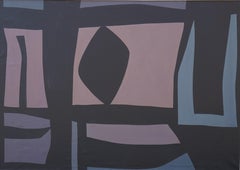
You May Also Like
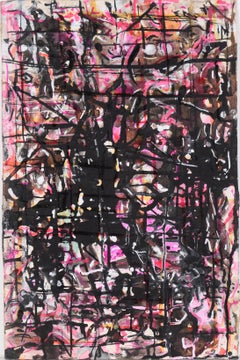
Abstract Composition in Pink and Black in Acrylic on Cardboard
By Honora Berg
Located in Soquel, CA
Abstract Composition in Pink and Black in Acrylic on Cardboard
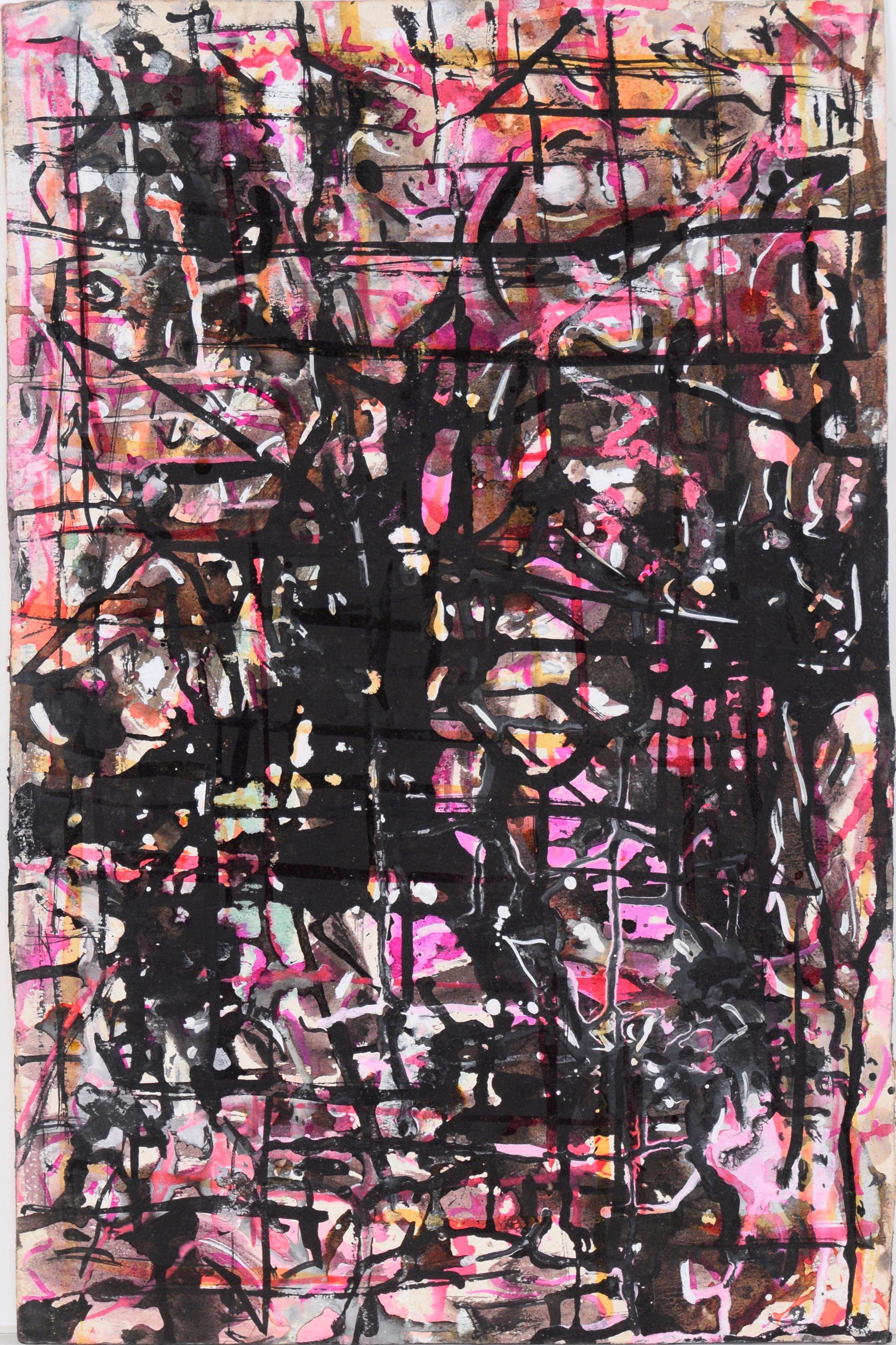
Dynamic abstract in black and pink by Honora Berg (American, 1897-1985). This piece is composed of multiple layers, with bright, bold colors at the bottom, building to black on top. Pink, magenta, yellow, and orange shine through a net of black.
Unsigned, but was acquired with a collection of the artist's work.
Estate stamp on verso "Estate of Honora Berg - Miller Fine Art"
Numbered "246" on verso
Unframed.
Art size: 21.25"H x 14"W
Honora Berg (American, 1897-1985) was an Abstract Expressionist and Bay Area Figurative School artist who studied at the San Francisco Art Institute with David Park, Elmer Bischoff and James Budd Dixon. Berg's friend Edith Truesdell — David Park's aunt — suggested a move to California in 1951 to study under Park. She exhibited at the 25th Annual Drawing, Print and Sculpture Exhibition at the San Francisco Museum of Modern Art, 1961.
Provenance, Estate of Honora Berg - David Carlson Gallery, Larry Miller...
Category
1950s Abstract Expressionist Abstract Paintings
Materials
Cardboard, Acrylic
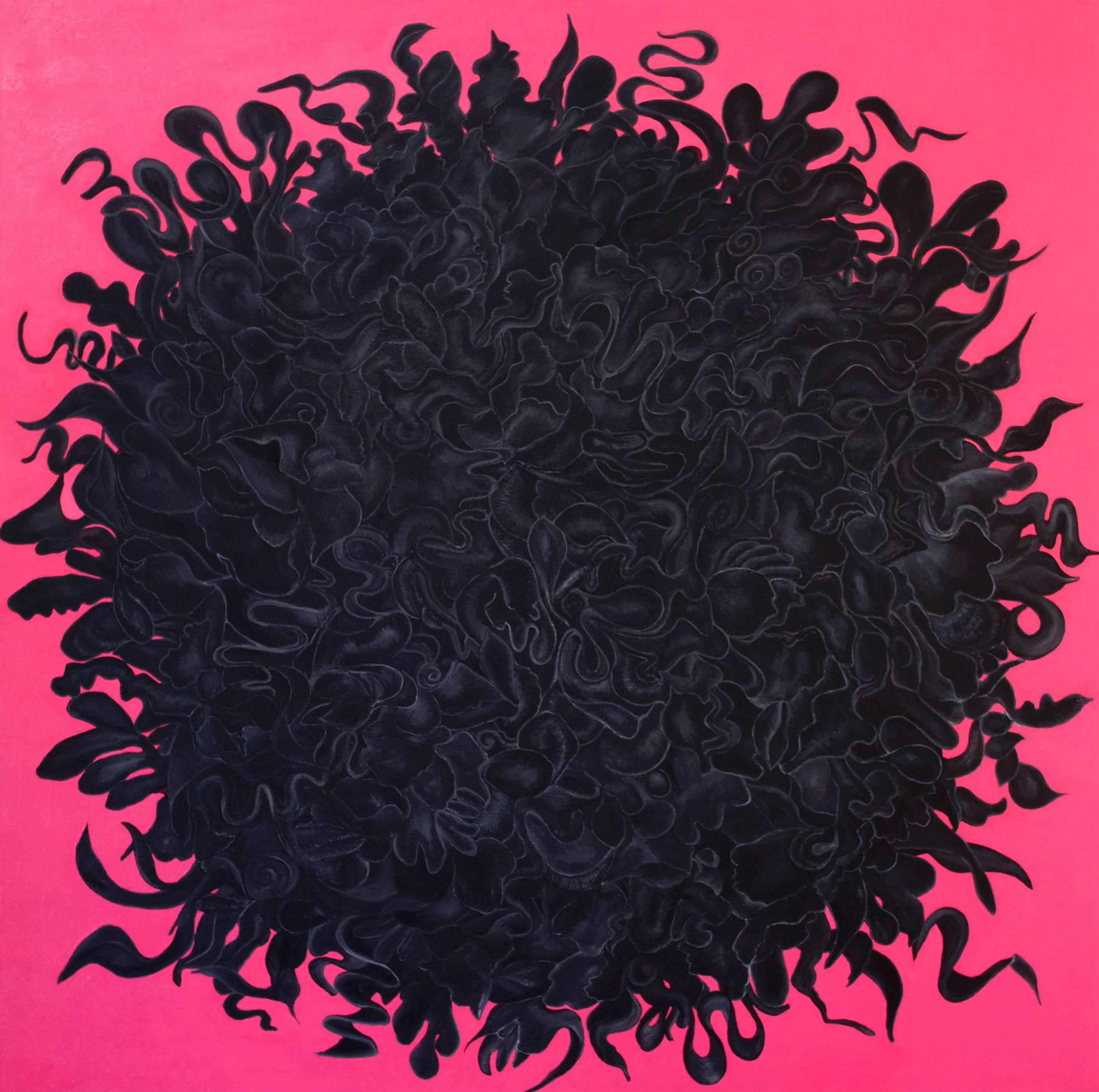
Pink and Black, Abstract Oil Painting
By Susan Bleakley
Located in Brecon, Powys
In this work Bleakley combines shapes from the natural world interlinked with purely abstract design.
Oil and acrylic on canvas.
Category
21st Century and Contemporary Abstract Abstract Paintings
Materials
Canvas, Oil, Acrylic
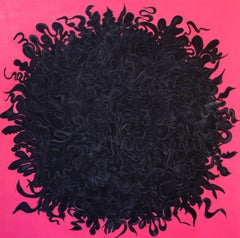
Abstract Pretty in Pink Painting by Joseph Conrad-Ferm, Mixed Media on Canvas
By Joseph Conrad-Ferm
Located in New York, NY
Pretty in Pink by Joseph Conrad-Ferm
2020
62 x 66 inches
Mixed Media on Canvas
Shipping is not included. See our shipping policies. Please contact us for shipping quotes and custo...
Category
21st Century and Contemporary Abstract Expressionist Abstract Paintings
Materials
Mixed Media, Acrylic
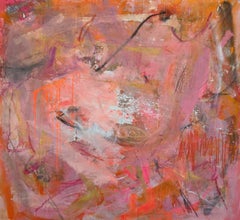
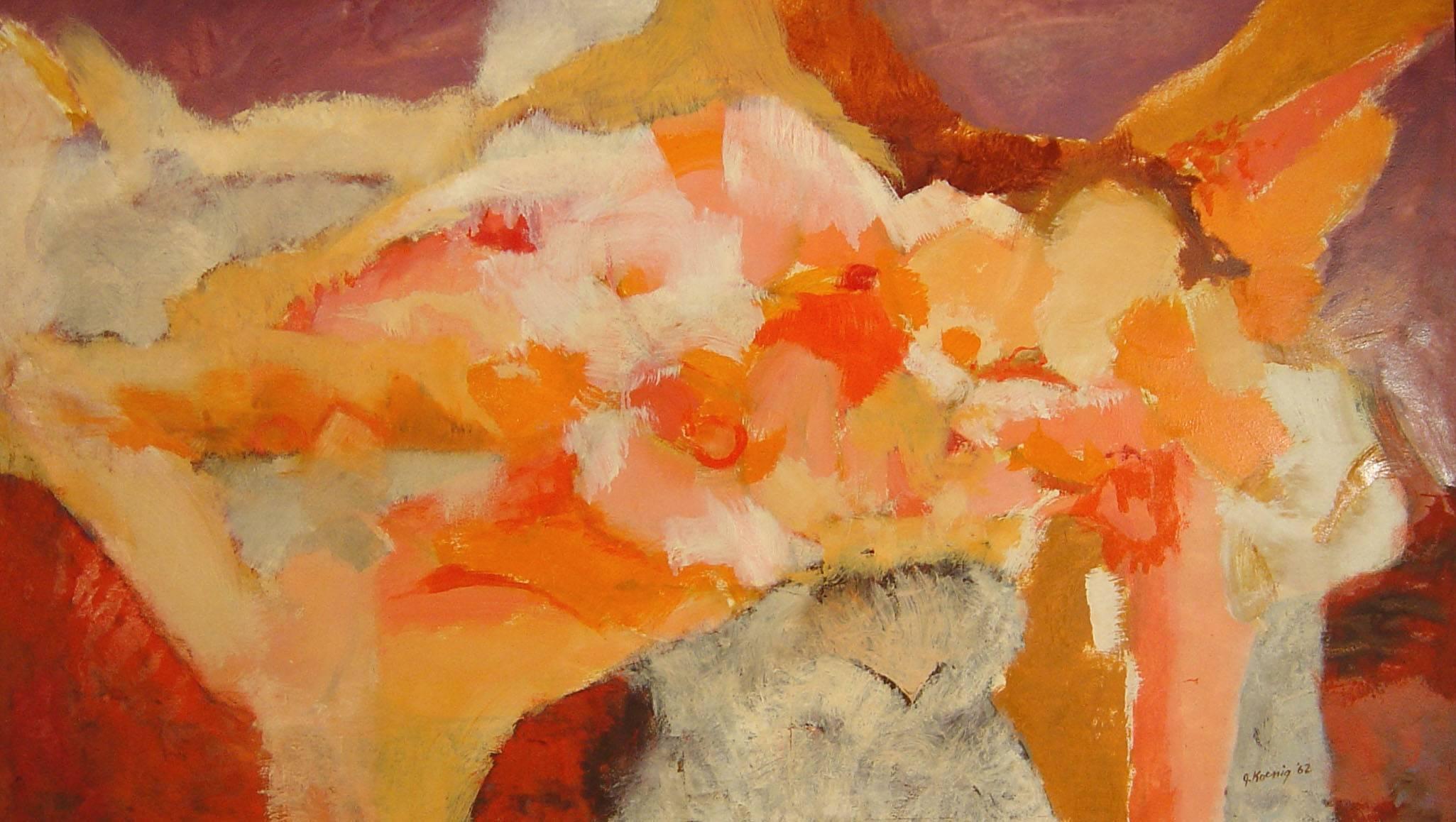
Pink and Red Abstraction
By James Koenig
Located in Buffalo, NY
An original abstract expressionist oil painting by American modern artist James Koenig. This work is currently on view at the Draw Near exhibition at Benjaman Gallery.
Category
1960s Abstract Expressionist Abstract Paintings
Materials
Canvas, Oil
Yes It
s Pink, Acrylic, Texas Artist. Contemporary Art, Abstract Art,
By Cheryl McClure
Located in Houston, TX
Yes It's Pink is an abstract painting by Texas artist Cheryl McClure on a wooden panel so there is no need for a frame..
Like a lot of artists, McClur...
Category
2010s Abstract Abstract Paintings
Materials
Acrylic, Wood Panel
$2,800 Sale Price
20% Off
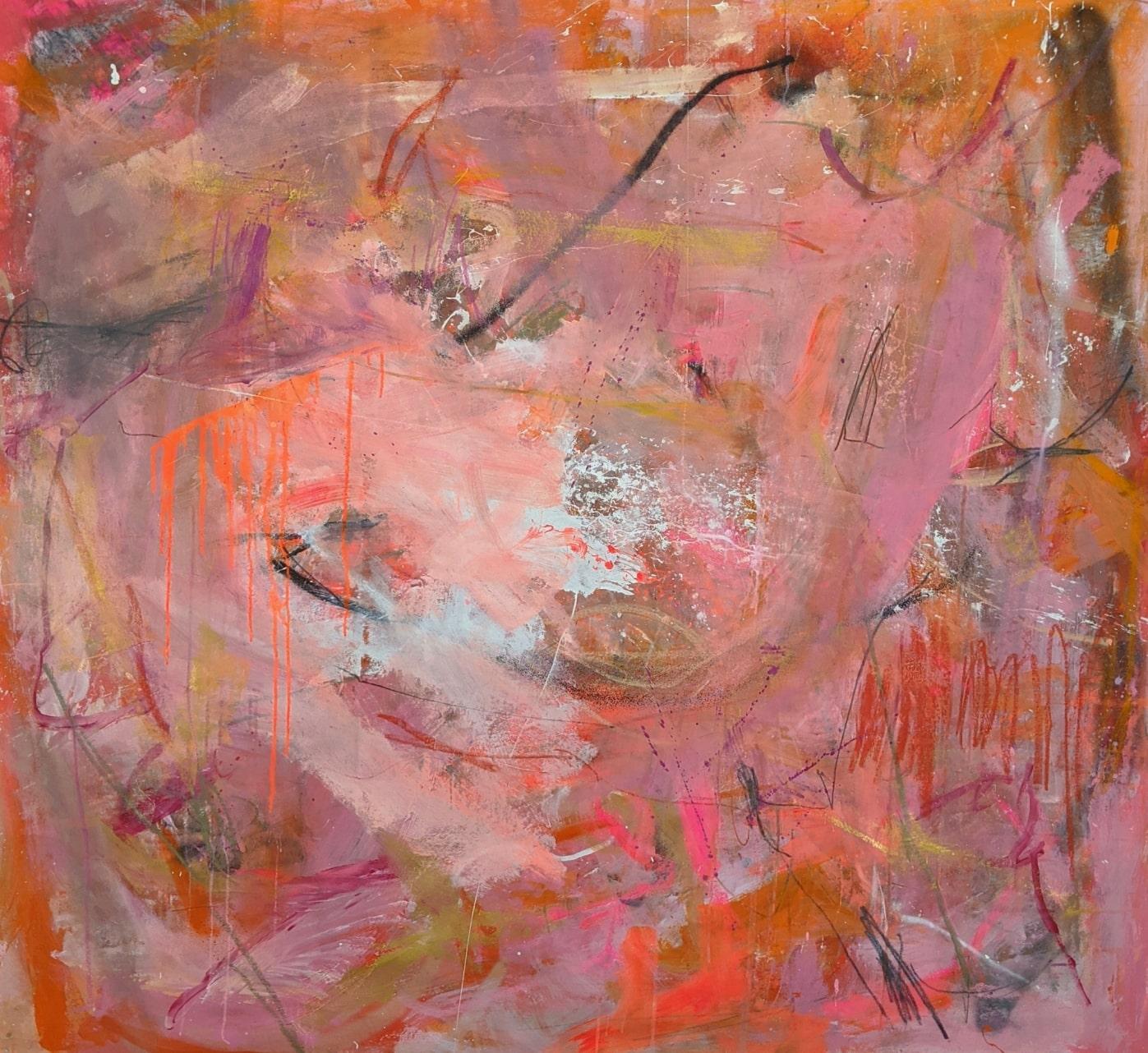
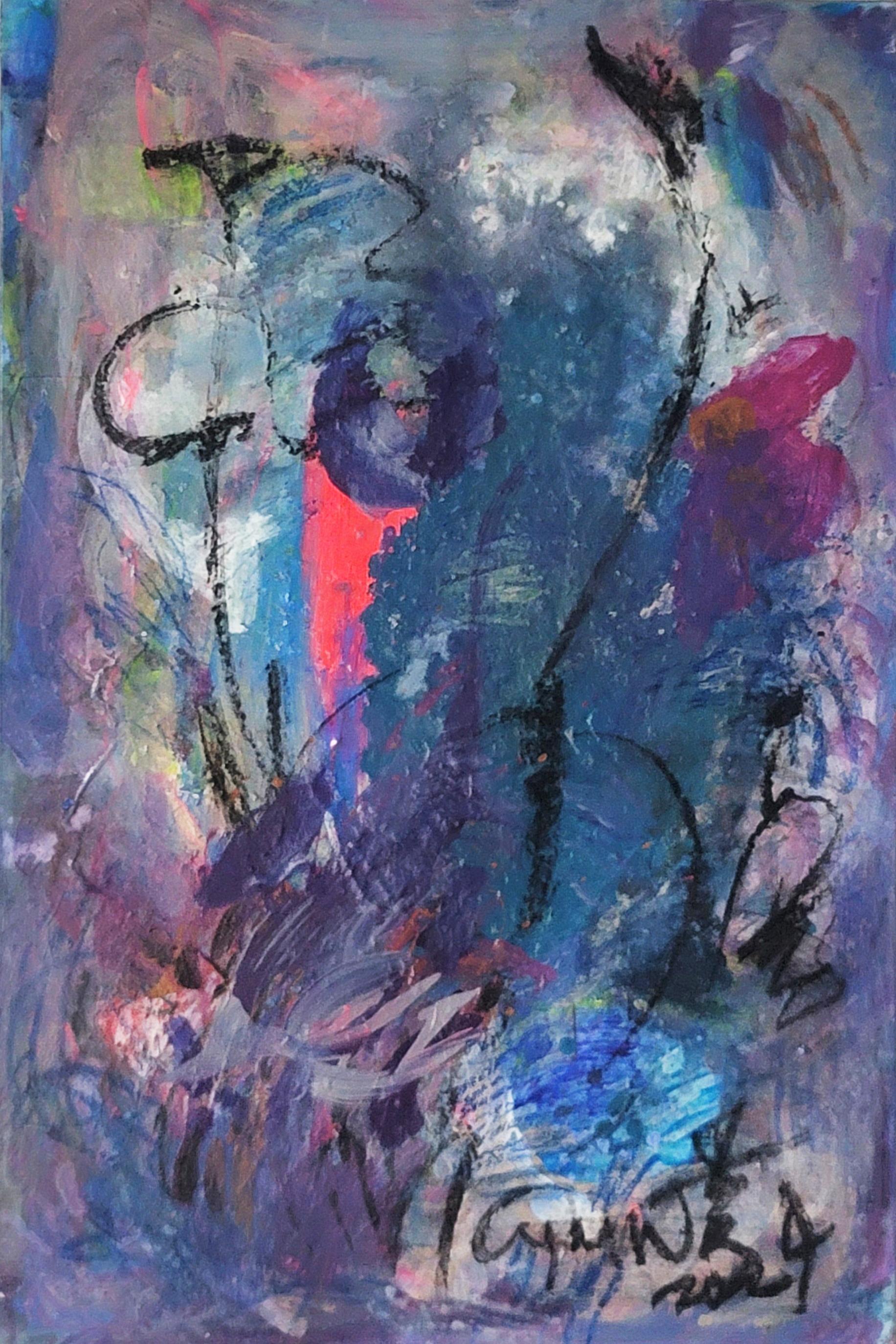
Abstract Impression_ A Little pink I
Located in Rockville, MD
Cymn Wong’s style of mixed media paintings are developed alongside with pastel, crayon, acrylic and ink. Rooted from traditional Chinese ink-brush painting to contemporary New York ...
Category
2010s Abstract Expressionist Paintings
Materials
Mixed Media, Acrylic