Want more images or videos?
Request additional images or videos from the seller
1 of 6
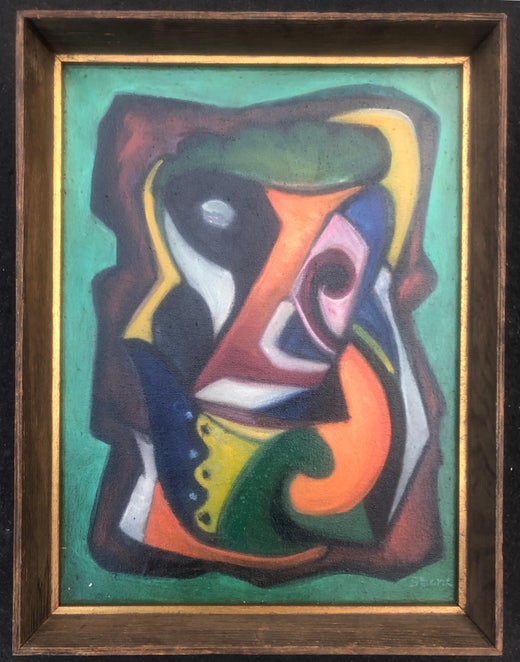
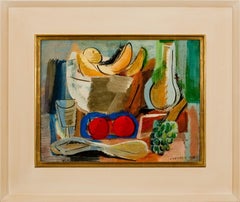
Louis Stone"The Wrench"c. 1938
c. 1938
$43,125List Price
About the Item
- Creator:Louis Stone (1902 - 1984)
- Creation Year:c. 1938
- Dimensions:Height: 19 in (48.26 cm)Width: 15 in (38.1 cm)Depth: 1 in (2.54 cm)
- More Editions Sizes:Framed Size 21.75" x 17.5"Price: $43,125
- Medium:
- Movement Style:
- Period:
- Condition:
- Gallery Location:Lambertville, NJ
- Reference Number:Seller: 100420181stDibs: LU3745435321
Louis Stone
Louis Stone was born in Findlay, Ohio in 1902 and received formal art training at the Art Academy of Cincinnati, the Pennsylvania Academy of Fine Arts summer sessions, and the Art Students League in New York City with Boardman Robinson and Thomas Hart Benton. While painting in Gloucester, Massachusetts during the summer of 1927, Stone met artist Carolyn Hoag, whom he married later that fall. Following their marriage, the Stones lived in Europe for five years, spending most of their time in Southern France. While abroad, Stone studied with Hans Hofmann in St. Tropez and later, at the Hofmann School of Fine Arts in Munich, the Academie Colorossi in Paris, and with André L'hote at the artist's summer school in Mirmande, France. He also lived and painted in Paul Cézanne's former home/studio in Aix-en-Provence. Stone's studies in Europe laid the foundation for his early non-objective work. Stone returned to the United States in 1933 and lived for a brief period in Woodstock, New York before traveling to Florida where Stone and painter James S. Morris co-founded the Stone-Morris School of Fine Arts in Jacksonville. In 1935, he settled in Lambertville, New Jersey, a town near New Hope, Pennsylvania that was home to an active artistic and intellectual community. Stone reunites with close friend Charles Evans, and becomes a leading member of the recently formed Independents, a modernist artist's collective. Like other associations of American artists during this period, the Independents were struggling to gain recognition in a culture that was not particularly receptive to abstract art. Stone exhibited regularly with the Independents and worked to establish the Cooperative Painting Project. Inspired by the performances of improvisational jazz musicians, the Cooperative Painting Project held visual "jam sessions," where the three artists would work together on a single painting, signing their finished artwork with the combined name "Ramstonev." Although Stone frequently collaborated and exchanged ideas with other members of the Independents (including B.J.O. Nordfeldt, John Nevin, Lloyd Ney, and Elsie Driggs), his work from the mid-1930s and 1940s retains a distinctive style that demonstrates a mastery of the modernist lessons he learned in Europe, while asserting an innovative use of flat color to suggest three dimensional space. Stone once remarked that he wanted "to keep his colors alive," and consequently, his work contains visually complex color harmonies that demonstrate his willingness to break the stylistic conventions of the School of Paris in favor of a more idiosyncratic palette. In addition to his association with the Independents, Stone exhibited in the 1939 New York Worlds Fair, as well as in regional museums and galleries throughout New Jersey, Pennsylvania and New York. He worked for the WPA easel project, painting canvases for murals in various public buildings throughout the United States. Stone continued to paint and travel extensively with his family throughout North America until his death in 1984 at the age of 82 at his home near Lambertville.
About the Seller
5.0
Vetted Professional Seller
Every seller passes strict standards for authenticity and reliability
Established in 1997
1stDibs seller since 2014
39 sales on 1stDibs
Typical response time: 1 to 2 days
Authenticity Guarantee
In the unlikely event there’s an issue with an item’s authenticity, contact us within 1 year for a full refund. DetailsMoney-Back Guarantee
If your item is not as described, is damaged in transit, or does not arrive, contact us within 7 days for a full refund. Details24-Hour Cancellation
You have a 24-hour grace period in which to reconsider your purchase, with no questions asked.Vetted Professional Sellers
Our world-class sellers must adhere to strict standards for service and quality, maintaining the integrity of our listings.Price-Match Guarantee
If you find that a seller listed the same item for a lower price elsewhere, we’ll match it.Trusted Global Delivery
Our best-in-class carrier network provides specialized shipping options worldwide, including custom delivery.You May Also Like
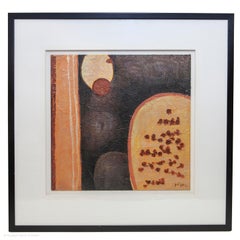
Jens Kjaer Seed Pods Oil Board Abstract Earth Pigments Ochre Sienna Umber 28.5"
Located in Eversholt, Bedfordshire
- The theme of fertility and fecundity is explored in this work.
- The arrangement of the forms within the abstract composition and the handling of the paint creates texture and a rhythmic quality.
- The palette of earth pigments creates an inherent nurturing, wamth and the dark umber tones draw the eye into the work
- A striking, warm, decorative picture
Oil on board Length 54.5 cm, Height 54cm
Floated in a black box frame Length 72cm, Height 54 cm, Depth 3cm
JENS KJAER...
Category
1980s Abstract Abstract Paintings
Materials
Oil, Board
$5,454
H 28.35 in W 28.35 in D 1.19 in
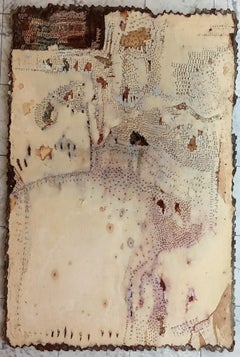
Untitled Jacques Rouby (1953-2019) Contemporary art painted sculpted cardboard
Located in Paris, FR
Painted and sculpted cardboard
Unique work
Coming from the artist's studio
Jacques ROUBY, the aesthetics of mystery
« Experimental dreamer, passionate about graphic adventures, del...
Category
1990s Abstract Abstract Paintings
Materials
Oil, Cardboard
$11,379
H 59.06 in W 39.38 in D 1.97 in
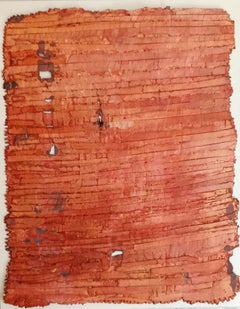
Untitled Jacques Rouby (1953-2019) Contemporary art painted sculpted cardboard
Located in Paris, FR
Painted sculpted cardboard
Unique work
Coming from the artist's studio
Category
1990s Abstract Abstract Paintings
Materials
Oil, Cardboard
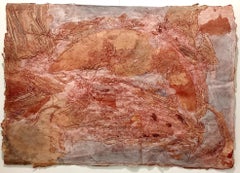
$11,379
H 39.38 in W 59.06 in
Untitled Jacques Rouby (1953-2019) Contemporary art painted sculpted cardboard
Located in Paris, FR
Painted sculpted cardboard
Unique work
Coming from the artist's studio
Category
1990s Abstract Abstract Paintings
Materials
Oil, Cardboard
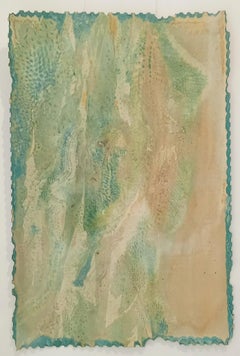
$11,379
H 59.06 in W 39.38 in
Untitled Jacques Rouby (1953-2019) Contemporary art painted sculpted cardboard
Located in Paris, FR
Painted sculpted cardboard
Unique work
Coming from the artist's studio
Category
1990s Abstract Abstract Paintings
Materials
Oil, Cardboard
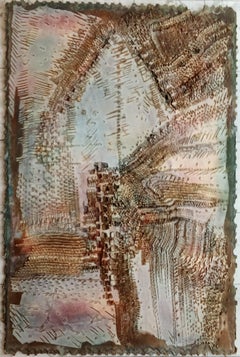
$11,379
H 59.06 in W 39.38 in D 1.97 in
Untitled Jacques Rouby (1953-2019) Contemporary art painted sculpted cardboard
Located in Paris, FR
Painted and sculpted cardboard
Unique work
Coming from the artist's studio
Jacques ROUBY, the aesthetics of mystery
« Experimental dreamer, passionate about graphic adventures, del...
Category
1990s Abstract Abstract Paintings
Materials
Oil, Cardboard
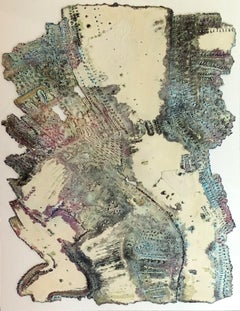
$5,856
H 40.16 in W 31.5 in
Untitled Jacques Rouby (1953-2019) Contemporary art painted sculpted cardboard
Located in Paris, FR
Painted sculpted cardboard
Unique work
Coming from the artist's studio
Category
1990s Abstract Abstract Paintings
Materials
Oil, Cardboard
$5,390
H 40.16 in W 31.5 in
Untitled Jacques Rouby (1953-2019) Contemporary art painted sculpted cardboard
Located in Paris, FR
Painted sculpted cardboard
Unique work
Coming from the artist's studio
Category
1990s Abstract Abstract Paintings
Materials
Oil, Cardboard
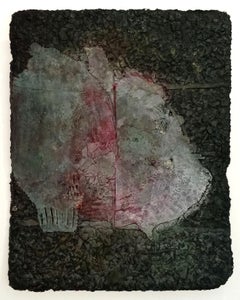
$6,587
H 38.19 in W 29.93 in D 1.19 in
Untitled Jacques Rouby (1953-2019) Contemporary art painted sculpted cardboard
Located in Paris, FR
Painted and sculpted cardboard
Unique work
Coming from the artist's studio
Jacques ROUBY, the aesthetics of mystery
« Experimental dreamer, passionate about graphic adventures, del...
Category
1990s Abstract Abstract Paintings
Materials
Oil, Cardboard
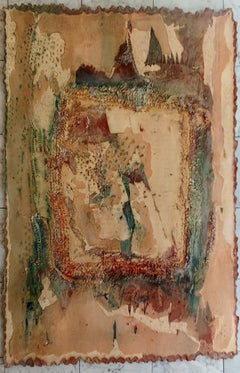
$11,379
H 59.06 in W 39.38 in
Untitled Jacques Rouby (1953-2019) Contemporary art painted sculpted cardboard
Located in Paris, FR
Painted and sculpted cardboard
Unique work
Coming from the artist's studio
Jacques ROUBY, the aesthetics of mystery
« Experimental dreamer, passionate about graphic adventures, del...
Category
1990s Abstract Abstract Paintings
Materials
Oil, Cardboard
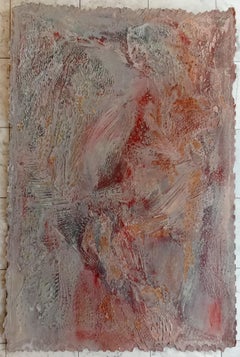
$11,379
H 59.06 in W 39.38 in
More From This Seller
View All“Woman in Black”
By Vaclav Vytlacil
Located in Lambertville, NJ
Jim’s of Lambertville is proud to offer this artwork by:
Vaclav Vytlacil (1892-1984)
He was born to Czechoslovakian parents in 1892 in New York City. Living in Chicago as a youth, he took classes at the School of the Art Institute of Chicago, returning to New York when he was 20. From 1913 to 1916, he enjoyed a scholarship from the Art Students League, and worked with John C. Johansen (a portraitist whose expressive style resembled that of John Singer Sargent), and Anders Zorn.
He accepted a teaching position at the Minneapolis School of Art in 1916, remaining there until 1921. This enabled him to travel to Europe to study Cézanne’s paintings and works of the Old Masters. He traveled to Paris, Prague, Dresden, Berlin, and Munich seeking the works of Titian, Cranach, Rembrandt, Veronese, and Holbein, which gave him new perspective. Vytlacil studied at the Royal Academy of Art in Munich, settling there in 1921. Fellow students were Ernest Thurn and Worth Ryder, who introduced him to famous abstractionist Hans Hofmann. He worked with Hofmann from about 1922 to 1926, as a student and teaching assistant.
During the summer of 1928, after returning to the United States, Vytlacil gave lectures at the University of California, Berkeley, on modern European art. Soon thereafter, he became a member of the Art Students League faculty. After one year, he returned to Europe and successfully persuaded Hofmann to teach at the League as well. He spent about six years in Europe, studying the works of Matisse, Picasso, and Dufy. In 1935, he returned to New York and became a co-founder of the American Abstract Artists group in 1936. He later had teaching posts at Queens College in New York; the College of Arts and Crafts in Oakland, California; Black Mountain College in North Carolina; and the Art Students League.
His paintings exhibit a clear inclination toward modernism. His still lives and interiors from the 1920s indicate an understanding of the art of Cézanne. In the 1930s, his works displayed two very different kinds of art at the same time. His cityscapes and landscapes combine Cubist-inspired spatial concerns with an expressionistic approach to line and color. Vytlacil also used old wood, metal, cork, and string in constructions, influenced by his friend and former student, Rupert Turnbull. He eventually ceased creating constructions as he considered them too limiting. The spatial challenges of painting were still his preference. During the 1940s and 1950s, his works indicated a sense of spontaneity not felt in his earlier work.
He married Elizabeth Foster in Florence, Italy, in 1927 and they lived and worked in Positano, Italy for extended periods of time. Later on, they divided their time between homes in Sparkill, New York and Chilmark, Massachusetts, where Vyt, as he was affectionately called, taught at the Martha's Vineyard Art...
Category
1960s Abstract Expressionist Figurative Paintings
Materials
Oil, Board
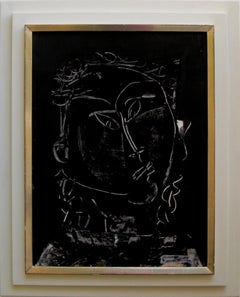
"Roman Bath" Series (2/3)
By Vaclav Vytlacil
Located in Lambertville, NJ
Jim’s of Lambertville is proud to offer this artwork by:
Vaclav Vytlacil (1892-1984)
He was born to Czechoslovakian parents in 1892 in New York City. Living in Chicago as a youth, he took classes at the School of the Art Institute of Chicago, returning to New York when he was 20. From 1913 to 1916, he enjoyed a scholarship from the Art Students League, and worked with John C. Johansen (a portraitist whose expressive style resembled that of John Singer Sargent), and Anders Zorn.
He accepted a teaching position at the Minneapolis School of Art in 1916, remaining there until 1921. This enabled him to travel to Europe to study Cézanne’s paintings and works of the Old Masters. He traveled to Paris, Prague, Dresden, Berlin, and Munich seeking the works of Titian, Cranach, Rembrandt, Veronese, and Holbein, which gave him new perspective. Vytlacil studied at the Royal Academy of Art in Munich, settling there in 1921. Fellow students were Ernest Thurn and Worth Ryder, who introduced him to famous abstractionist Hans Hofmann. He worked with Hofmann from about 1922 to 1926, as a student and teaching assistant.
During the summer of 1928, after returning to the United States, Vytlacil gave lectures at the University of California, Berkeley, on modern European art. Soon thereafter, he became a member of the Art Students League faculty. After one year, he returned to Europe and successfully persuaded Hofmann to teach at the League as well. He spent about six years in Europe, studying the works of Matisse, Picasso, and Dufy. In 1935, he returned to New York and became a co-founder of the American Abstract Artists group in 1936. He later had teaching posts at Queens College in New York; the College of Arts and Crafts in Oakland, California; Black Mountain College in North Carolina; and the Art Students League.
His paintings exhibit a clear inclination toward modernism. His still lives and interiors from the 1920s indicate an understanding of the art of Cézanne. In the 1930s, his works displayed two very different kinds of art at the same time. His cityscapes and landscapes combine Cubist-inspired spatial concerns with an expressionistic approach to line and color. Vytlacil also used old wood, metal, cork, and string in constructions, influenced by his friend and former student, Rupert Turnbull. He eventually ceased creating constructions as he considered them too limiting. The spatial challenges of painting were still his preference. During the 1940s and 1950s, his works indicated a sense of spontaneity not felt in his earlier work.
He married Elizabeth Foster in Florence, Italy, in 1927 and they lived and worked in Positano, Italy for extended periods of time. Later on, they divided their time between homes in Sparkill, New York and Chilmark, Massachusetts, where Vyt, as he was affectionately called, taught at the Martha's Vineyard Art...
Category
20th Century Abstract Impressionist Abstract Paintings
Materials
Oil, Board
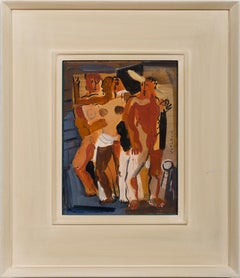
"Lower Manhattan"
By Vaclav Vytlacil
Located in Lambertville, NJ
Signed & dated 1940 lower left.
Vaclav Vytlacil (1892-1984)
He was born to Czechoslovakian parents in 1892 in New York City. Living in Chicago as a youth, he took classes at the S...
Category
1940s Abstract Abstract Paintings
Materials
Oil, Board
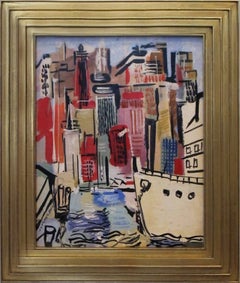
"After Work"
By Vaclav Vytlacil
Located in Lambertville, NJ
Jim’s of Lambertville is proud to offer this artwork.
Signed lower right
Vaclav Vytlacil (1892-1984)
He was born to Czechoslovakian parents in 1892 in New York City. Living in C...
Category
20th Century Abstract Expressionist Abstract Paintings
Materials
Oil, Board
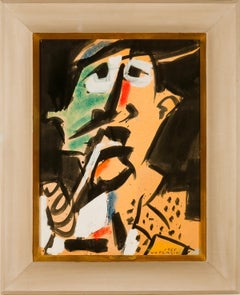
"Still Life with Bananas"
By Vaclav Vytlacil
Located in Lambertville, NJ
Jim’s of Lambertville is proud to offer this artwork by:
Vaclav Vytlacil (1892-1984)
He was born to Czechoslovakian parents in 1892 in New York City. Living in Chicago as a youth, he took classes at the School of the Art Institute of Chicago, returning to New York when he was 20. From 1913 to 1916, he enjoyed a scholarship from the Art Students League, and worked with John C. Johansen (a portraitist whose expressive style resembled that of John Singer Sargent), and Anders Zorn.
He accepted a teaching position at the Minneapolis School of Art in 1916, remaining there until 1921. This enabled him to travel to Europe to study Cézanne’s paintings and works of the Old Masters. He traveled to Paris, Prague, Dresden, Berlin, and Munich seeking the works of Titian, Cranach, Rembrandt, Veronese, and Holbein, which gave him new perspective. Vytlacil studied at the Royal Academy of Art in Munich, settling there in 1921. Fellow students were Ernest Thurn and Worth Ryder, who introduced him to famous abstractionist Hans Hofmann. He worked with Hofmann from about 1922 to 1926, as a student and teaching assistant.
During the summer of 1928, after returning to the United States, Vytlacil gave lectures at the University of California, Berkeley, on modern European art. Soon thereafter, he became a member of the Art Students League faculty. After one year, he returned to Europe and successfully persuaded Hofmann to teach at the League as well. He spent about six years in Europe, studying the works of Matisse, Picasso, and Dufy. In 1935, he returned to New York and became a co-founder of the American Abstract Artists group in 1936. He later had teaching posts at Queens College in New York; the College of Arts and Crafts in Oakland, California; Black Mountain College in North Carolina; and the Art Students League.
His paintings exhibit a clear inclination toward modernism. His still lives and interiors from the 1920s indicate an understanding of the art of Cézanne. In the 1930s, his works displayed two very different kinds of art at the same time. His cityscapes and landscapes combine Cubist-inspired spatial concerns with an expressionistic approach to line and color. Vytlacil also used old wood, metal, cork, and string in constructions, influenced by his friend and former student, Rupert Turnbull. He eventually ceased creating constructions as he considered them too limiting. The spatial challenges of painting were still his preference. During the 1940s and 1950s, his works indicated a sense of spontaneity not felt in his earlier work.
He married Elizabeth Foster in Florence, Italy, in 1927 and they lived and worked in Positano, Italy for extended periods of time. Later on, they divided their time between homes in Sparkill, New York and Chilmark, Massachusetts, where Vyt, as he was affectionately called, taught at the Martha's Vineyard Art...
Category
1930s Abstract Expressionist Abstract Paintings
Materials
Oil, Board
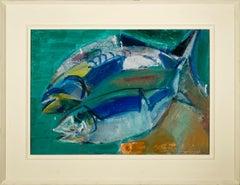
"Blue Fish"
By Vaclav Vytlacil
Located in Lambertville, NJ
Jim’s of Lambertville is proud to offer this artwork by:
Vaclav Vytlacil (1892-1984)
He was born to Czechoslovakian parents in 1892 in New York City. Living in Chicago as a youth, he took classes at the School of the Art Institute of Chicago, returning to New York when he was 20. From 1913 to 1916, he enjoyed a scholarship from the Art Students League, and worked with John C. Johansen (a portraitist whose expressive style resembled that of John Singer Sargent), and Anders Zorn.
He accepted a teaching position at the Minneapolis School of Art in 1916, remaining there until 1921. This enabled him to travel to Europe to study Cézanne’s paintings and works of the Old Masters. He traveled to Paris, Prague, Dresden, Berlin, and Munich seeking the works of Titian, Cranach, Rembrandt, Veronese, and Holbein, which gave him new perspective. Vytlacil studied at the Royal Academy of Art in Munich, settling there in 1921. Fellow students were Ernest Thurn and Worth Ryder, who introduced him to famous abstractionist Hans Hofmann. He worked with Hofmann from about 1922 to 1926, as a student and teaching assistant.
During the summer of 1928, after returning to the United States, Vytlacil gave lectures at the University of California, Berkeley, on modern European art. Soon thereafter, he became a member of the Art Students League faculty. After one year, he returned to Europe and successfully persuaded Hofmann to teach at the League as well. He spent about six years in Europe, studying the works of Matisse, Picasso, and Dufy. In 1935, he returned to New York and became a co-founder of the American Abstract Artists group in 1936. He later had teaching posts at Queens College in New York; the College of Arts and Crafts in Oakland, California; Black Mountain College in North Carolina; and the Art Students League.
His paintings exhibit a clear inclination toward modernism. His still lives and interiors from the 1920s indicate an understanding of the art of Cézanne. In the 1930s, his works displayed two very different kinds of art at the same time. His cityscapes and landscapes combine Cubist-inspired spatial concerns with an expressionistic approach to line and color. Vytlacil also used old wood, metal, cork, and string in constructions, influenced by his friend and former student, Rupert Turnbull. He eventually ceased creating constructions as he considered them too limiting. The spatial challenges of painting were still his preference. During the 1940s and 1950s, his works indicated a sense of spontaneity not felt in his earlier work.
He married Elizabeth Foster in Florence, Italy, in 1927 and they lived and worked in Positano, Italy for extended periods of time. Later on, they divided their time between homes in Sparkill, New York and Chilmark, Massachusetts, where Vyt, as he was affectionately called, taught at the Martha's Vineyard Art...
Category
1960s Abstract Expressionist Abstract Paintings
Materials
Oil, Board