Want more images or videos?
Request additional images or videos from the seller
1 of 11

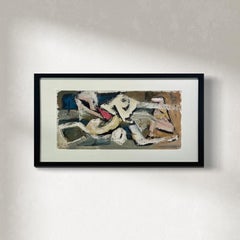
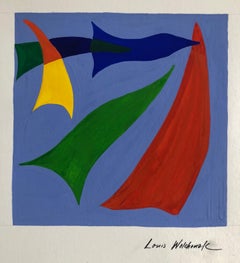
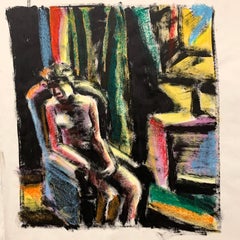
Louis Wolchonok
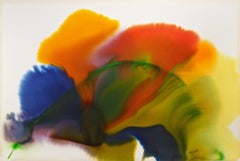
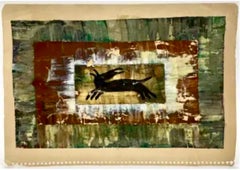
Early Abstract Expressionist Oil Painting Monoprint WPA Jewish Artist

$1,100List Price

You May Also Like

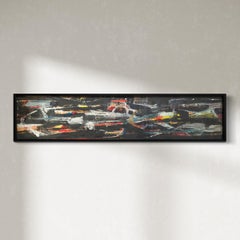
"Untitled #128, " 1960s Modern Abstract Painting
By Stanley Bate
Located in Westport, CT
This Modern Abstract Expressionist painting by Stanley Bate is made with gouache on paper. It features a dark palette, with dark charcoal black tones contrasted by yellow and red accents throughout, and large brush strokes. The painting itself is 16" x 54" and measures 17" x 56" x 2" framed. The paper is mounted on board, framed in a black frame under glass. It is not signed by the artist, but has been authenticated by his estate, and is stamped with the estate seal on the back of the painting, and on the back of the frame. It is ready to hang. Stanley Bate was born on March 26, 1903 in Nashville, Tennessee. The Bates were an established Tennessee family, in fact, Henry’s brother William Bate was the governor of Tennessee from 1883-1887 and a United States Senator from 1887-1905. Stanley studied art at the Watkins Institute in Nashville. In the 1920’s Bate moved to New York City to study at the Art Students League under Frederick Bridgman. He soon landed a job with Encyclopedia Britannica, and from 1927-1929 served as art editor. From 1929 until his death in 1972, Stanley was a self-employed artist. He taught art classes at both the Art Students League and the Albany Institute of History and Art and brought in extra income by making illustrations for magazines such as “Outdoor Life” and “Popular Science”. On January 27, 1934 Stanley married Emilie Rossel. Emilie had emigrated from Switzerland to New York in 1923. She found work as a governess to Alfred Vanderbilt and later as an executive secretary for Wall Street investment brokers Kahn, Loeb and Co. Emilie met Stanley in New York in the early 1930’s when she attended one of his art exhibitions with a friend. The couple, who had no children, lived on 34th Street in Manhattan. During this period, Bate was producing and exhibiting his art and joined several artists groups. Stanley and Emilie became part of the New York art scene, dining weekly at the Society of Illustrators Clubhouse. Stanley Bate’s time in New York was pivotal in the formation of his painting style. He lived in New York during the inception of one of the most important Modern Art movements, one that helped New York replace Paris as the center of avant-garde art. This movement, which was called the New York School of artists, was later known as Abstract Expressionism. It was comprised of a loosely associated group of vanguard artists working in New York City during the 1940s and 1950s. The New York School was not defined by a specific style, but instead reflected a fusion of European Modernism and American social relevancy that was depicted in many individual styles. Influences of Surrealism, Cubism, and Modernism can be found in their work, along with an interest in experimenting with non-traditional materials and methods. American art was in the forefront of international avant-garde for the first time. Stanley Bate was undoubtedly exposed to the varied styles and techniques that were emerging during the formative years of the New York School. Mark Rothko and Robert Motherwell were formulating their versions of color field paintings. Joseph Cornell was experimenting with assemblages, collage and the use of different types of textured paints. Jackson Pollock was adhering objects such as buttons and coins into his early works, while Louise Nevelson was using found objects. Helen Frankenthaler added sand to her early paintings. The New York School artists were undermining traditional fine art by using mixed media and non-traditional methods. Stanley Bate absorbed these varied influences and soon his early realistic landscapes and still-lifes were replaced with something entirely new. The influence of Cubism, notably the flat shallow space of the picture plane, is obvious in many of Bate’s paintings. Surrealism is evident in Bate’s use of subjects from myth, primitive art and antiquity, along with the Automatism-like line work in his more linear images. The unfettered experimentation of the New York School is everywhere in Stanley Bate’s work. We see nods to color field, collage, the mixing of textures into paint, mixed media, the inclusion of found objects and thick, luscious impasto. Bate was prolific and experimented in various media including oil, watercolor, lithography, silk screen, wood cut, drawing, collage, ceramics and sculpture. Bate is considered a true Modernist. His work is largely abstract, but sometimes figures and buildings are discernable. He frequently mixed paint, sand and glue together to achieve a textured surface, and then scraped and scratched through this layer to expose some of the underpainting below. His sculpture, which is often whimsical, also reflects the non-traditional methods of the New York School. Bate pioneered the use of enamel and copper in his work. The sculptures are not carved or modeled as was done in the past, but instead are built using mixed media and new materials. In addition to the New York School influence, many of Bate’s works exhibit a strong connection to the Spanish school, especially the work of Antonio Tapies and Modesto Cuixart. These artists were both part of an avant-garde group known as Art Informel, the Spanish equivalent of Abstract Expressionism. These artists likewise worked in mixed media and introduced objects and texture into their work. Many of Bate’s subjects and titles relate to Spanish locations and words. It is likely that Stanley spent time in Spain and found inspiration there. By the early 1940s, Stanley and Emilie had started spending weekends in a barn they purchased in Craryville, New York, a few hours north of Manhattan. The barn had no electricity or plumbing, but when the Bates eventually decided to leave New York and live full time in Craryville, they remodeled the barn, putting a gallery downstairs and a studio and living quarters upstairs. Although the Bates moved out of New York City, Stanley remained part of the New York art scene, exhibiting in New York and elsewhere throughout the 50s and 60s. During his lifetime he was represented by the New York galleries Knoedler and Company, Kennedy Galleries, Rose Fried Gallery and Key Gallery, along with Tyringham Gallery located in Tyringham, Massachusetts. Craryville was Stanley’s home until his death on August 21, 1972. Emilie died 1984...
Category

1960s Modern Abstract Paintings

Materials

Paper, Gouache

1950s "Sitting in Chair" Mid Century Figurative Pratt Graphic Arts Center
By Donald Stacy
Located in Arp, TX
Donald Stacy "Sitting in Chair" c.1950s Gouache and oil pastel on paper 24" x 18" unframed Came from artist's estate *Custom framing available for additio...
Category

Mid-20th Century American Modern Abstract Drawings and Watercolors

Materials

Paper, Oil Pastel, Gouache

"Flight, " 1960s Modern Abstract Painting
By Stanley Bate
Located in Westport, CT
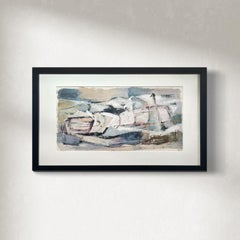
This Modern Abstract Expressionist painting by Stanley Bate is made with gouache on paper. It features a muted palette and large, textured brush strokes. The painting itself is 13" x 22" and it measures 21.25" x 29.25" x 1" framed. It is signed by the artist in the lower right-hand corner of the painting, and is framed in a black frame with an acid-free mat. Wired and ready to hang. Stanley Bate was born on March 26, 1903 in Nashville, Tennessee. The Bates were an established Tennessee family, in fact, Henry’s brother William Bate was the governor of Tennessee from 1883-1887 and a United States Senator from 1887-1905. Stanley studied art at the Watkins Institute in Nashville. In the 1920’s Bate moved to New York City to study at the Art Students League under Frederick Bridgman. He soon landed a job with Encyclopedia Britannica, and from 1927-1929 served as art editor. From 1929 until his death in 1972, Stanley was a self-employed artist. He taught art classes at both the Art Students League and the Albany Institute of History and Art and brought in extra income by making illustrations for magazines such as “Outdoor Life” and “Popular Science”. On January 27, 1934 Stanley married Emilie Rossel. Emilie had emigrated from Switzerland to New York in 1923. She found work as a governess to Alfred Vanderbilt and later as an executive secretary for Wall Street investment brokers Kahn, Loeb and Co. Emilie met Stanley in New York in the early 1930’s when she attended one of his art exhibitions with a friend. The couple, who had no children, lived on 34th Street in Manhattan. During this period, Bate was producing and exhibiting his art and joined several artists groups. Stanley and Emilie became part of the New York art scene, dining weekly at the Society of Illustrators Clubhouse. Stanley Bate’s time in New York was pivotal in the formation of his painting style. He lived in New York during the inception of one of the most important Modern Art movements, one that helped New York replace Paris as the center of avant-garde art. This movement, which was called the New York School of artists, was later known as Abstract Expressionism. It was comprised of a loosely associated group of vanguard artists working in New York City during the 1940s and 1950s. The New York School was not defined by a specific style, but instead reflected a fusion of European Modernism and American social relevancy that was depicted in many individual styles. Influences of Surrealism, Cubism, and Modernism can be found in their work, along with an interest in experimenting with non-traditional materials and methods. American art was in the forefront of international avant-garde for the first time. Stanley Bate was undoubtedly exposed to the varied styles and techniques that were emerging during the formative years of the New York School. Mark Rothko and Robert Motherwell were formulating their versions of color field paintings. Joseph Cornell was experimenting with assemblages, collage and the use of different types of textured paints. Jackson Pollock was adhering objects such as buttons and coins into his early works, while Louise Nevelson was using found objects. Helen Frankenthaler added sand to her early paintings. The New York School artists were undermining traditional fine art by using mixed media and non-traditional methods. Stanley Bate absorbed these varied influences and soon his early realistic landscapes and still-lifes were replaced with something entirely new. The influence of Cubism, notably the flat shallow space of the picture plane, is obvious in many of Bate’s paintings. Surrealism is evident in Bate’s use of subjects from myth, primitive art and antiquity, along with the Automatism-like line work in his more linear images. The unfettered experimentation of the New York School is everywhere in Stanley Bate’s work. We see nods to color field, collage, the mixing of textures into paint, mixed media, the inclusion of found objects and thick, luscious impasto. Bate was prolific and experimented in various media including oil, watercolor, lithography, silk screen, wood cut, drawing, collage, ceramics and sculpture. Bate is considered a true Modernist. His work is largely abstract, but sometimes figures and buildings are discernable. He frequently mixed paint, sand and glue together to achieve a textured surface, and then scraped and scratched through this layer to expose some of the underpainting below. His sculpture, which is often whimsical, also reflects the non-traditional methods of the New York School. Bate pioneered the use of enamel and copper in his work. The sculptures are not carved or modeled as was done in the past, but instead are built using mixed media and new materials. In addition to the New York School influence, many of Bate’s works exhibit a strong connection to the Spanish school, especially the work of Antonio Tapies and Modesto Cuixart. These artists were both part of an avant-garde group known as Art Informel, the Spanish equivalent of Abstract Expressionism. These artists likewise worked in mixed media and introduced objects and texture into their work. Many of Bate’s subjects and titles relate to Spanish locations and words. It is likely that Stanley spent time in Spain and found inspiration there. By the early 1940s, Stanley and Emilie had started spending weekends in a barn they purchased in Craryville, New York, a few hours north of Manhattan. The barn had no electricity or plumbing, but when the Bates eventually decided to leave New York and live full time in Craryville, they remodeled the barn, putting a gallery downstairs and a studio and living quarters upstairs. Although the Bates moved out of New York City, Stanley remained part of the New York art scene, exhibiting in New York and elsewhere throughout the 50s and 60s. During his lifetime he was represented by the New York galleries Knoedler and Company, Kennedy Galleries, Rose Fried Gallery and Key Gallery, along with Tyringham Gallery located in Tyringham, Massachusetts. Craryville was Stanley’s home until his death on August 21, 1972. Emilie died 1984...
Category

1960s Modern Abstract Paintings

Materials

Paper, Gouache

"Northeaster, " 1960s Modern Abstract Painting
By Stanley Bate
Located in Westport, CT
This Modern Abstract Expressionist painting by Stanley Bate is made with gouache on paper and features a cool, muted palette and light texture. The painting itself is 13" x 22" and measures 21.25" x 29.25" x 1" framed. It is signed by the artist in the lower left-hand corner of the painting and is framed in a black frame with an acid-free mat. It is ready to hang. Stanley Bate was born on March 26, 1903 in Nashville, Tennessee. The Bates were an established Tennessee family, in fact, Henry’s brother William Bate was the governor of Tennessee from 1883-1887 and a United States Senator from 1887-1905. Stanley studied art at the Watkins Institute in Nashville. In the 1920’s Bate moved to New York City to study at the Art Students League under Frederick Bridgman. He soon landed a job with Encyclopedia Britannica, and from 1927-1929 served as art editor. From 1929 until his death in 1972, Stanley was a self-employed artist. He taught art classes at both the Art Students League and the Albany Institute of History and Art and brought in extra income by making illustrations for magazines such as “Outdoor Life” and “Popular Science”. On January 27, 1934 Stanley married Emilie Rossel. Emilie had emigrated from Switzerland to New York in 1923. She found work as a governess to Alfred Vanderbilt and later as an executive secretary for Wall Street investment brokers Kahn, Loeb and Co. Emilie met Stanley in New York in the early 1930’s when she attended one of his art exhibitions with a friend. The couple, who had no children, lived on 34th Street in Manhattan. During this period, Bate was producing and exhibiting his art and joined several artists groups. Stanley and Emilie became part of the New York art scene, dining weekly at the Society of Illustrators Clubhouse. Stanley Bate’s time in New York was pivotal in the formation of his painting style. He lived in New York during the inception of one of the most important Modern Art movements, one that helped New York replace Paris as the center of avant-garde art. This movement, which was called the New York School of artists, was later known as Abstract Expressionism. It was comprised of a loosely associated group of vanguard artists working in New York City during the 1940s and 1950s. The New York School was not defined by a specific style, but instead reflected a fusion of European Modernism and American social relevancy that was depicted in many individual styles. Influences of Surrealism, Cubism, and Modernism can be found in their work, along with an interest in experimenting with non-traditional materials and methods. American art was in the forefront of international avant-garde for the first time. Stanley Bate was undoubtedly exposed to the varied styles and techniques that were emerging during the formative years of the New York School. Mark Rothko and Robert Motherwell were formulating their versions of color field paintings. Joseph Cornell was experimenting with assemblages, collage and the use of different types of textured paints. Jackson Pollock was adhering objects such as buttons and coins into his early works, while Louise Nevelson was using found objects. Helen Frankenthaler added sand to her early paintings. The New York School artists were undermining traditional fine art by using mixed media and non-traditional methods. Stanley Bate absorbed these varied influences and soon his early realistic landscapes and still-lifes were replaced with something entirely new. The influence of Cubism, notably the flat shallow space of the picture plane, is obvious in many of Bate’s paintings. Surrealism is evident in Bate’s use of subjects from myth, primitive art and antiquity, along with the Automatism-like line work in his more linear images. The unfettered experimentation of the New York School is everywhere in Stanley Bate’s work. We see nods to color field, collage, the mixing of textures into paint, mixed media, the inclusion of found objects and thick, luscious impasto. Bate was prolific and experimented in various media including oil, watercolor, lithography, silk screen, wood cut, drawing, collage, ceramics and sculpture. Bate is considered a true Modernist. His work is largely abstract, but sometimes figures and buildings are discernable. He frequently mixed paint, sand and glue together to achieve a textured surface, and then scraped and scratched through this layer to expose some of the underpainting below. His sculpture, which is often whimsical, also reflects the non-traditional methods of the New York School. Bate pioneered the use of enamel and copper in his work. The sculptures are not carved or modeled as was done in the past, but instead are built using mixed media and new materials. In addition to the New York School influence, many of Bate’s works exhibit a strong connection to the Spanish school, especially the work of Antonio Tapies and Modesto Cuixart. These artists were both part of an avant-garde group known as Art Informel, the Spanish equivalent of Abstract Expressionism. These artists likewise worked in mixed media and introduced objects and texture into their work. Many of Bate’s subjects and titles relate to Spanish locations and words. It is likely that Stanley spent time in Spain and found inspiration there. By the early 1940s, Stanley and Emilie had started spending weekends in a barn they purchased in Craryville, New York, a few hours north of Manhattan. The barn had no electricity or plumbing, but when the Bates eventually decided to leave New York and live full time in Craryville, they remodeled the barn, putting a gallery downstairs and a studio and living quarters upstairs. Although the Bates moved out of New York City, Stanley remained part of the New York art scene, exhibiting in New York and elsewhere throughout the 50s and 60s. During his lifetime he was represented by the New York galleries Knoedler and Company, Kennedy Galleries, Rose Fried Gallery and Key Gallery, along with Tyringham Gallery located in Tyringham, Massachusetts. Craryville was Stanley’s home until his death on August 21, 1972. Emilie died 1984...
Category

1960s Modern Abstract Paintings

Materials

Paper, Gouache

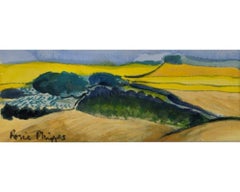
Yellow the Colour of the Sun Watercolour on Paper Painting by Rosie Phipps, 2022
By Rosie Phipps
Located in Deddington, GB
Yellow the Colour of the Sun by Rosie Phipps [2022] Yellow the Colour of the Sun is an original watercolour and gouache on paper by Rosie Phipps, sold mounted. Featuring her gestura...
Category

2010s Modern Landscape Paintings

Materials

Paper, Watercolor, Gouache

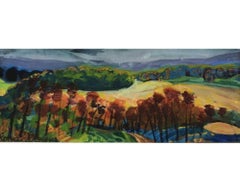
The Autumn Equinox With Its Hunters, Rosie Phipps, Landscape Painting under $500
By Rosie Phipps
Located in Deddington, GB
The Autumn Equinox with its Hunters by Rosie Phipps [2022] The Autumn Equinox with its Hunters is an original watercolour and gouache painting by artist Rosie Phipps, sold mounted. ...
Category

2010s Modern Landscape Paintings

Materials

Paper, Watercolor, Gouache

Phenomena Royal House, Abstract Gouache on Paper, Late 20th Century
By Paul Jenkins
Located in New York, NY
Paul Jenkins American, 1923–2012 Paul Jenkins’s intuitive, chance-based painting techniques helped pioneer new approaches to Abstract Expressionism. Jenkins made his vibrant composi...
Category

Late 20th Century American Modern Abstract Paintings

Materials

Paper, Gouache

Worms and Sun, American Modern Gouache and Watercolor on Paper, 1963
By Alexander Calder
Located in New York, NY
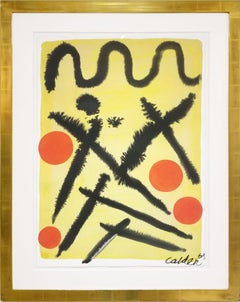
Alexander Calder (1898-1976) American, Lawnton, PA - New York, NY “Worms and Sun” 1963 Gouache and watercolor and paper 29 ½ x 21 ½ in. unframed 36 ⅞ x 27 ⅞ in. framed Signed and da...
Category

Mid-20th Century American Modern Abstract Paintings

Materials

Paper, Watercolor, Gouache

Modern Grey and Orange Geometric Abstract Leaf Pattern Painting
By John Little
Located in Houston, TX
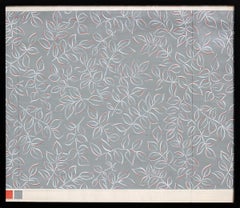
Modern grey and white geometric abstract leaf pattern composition with orange accents by textile designer John Little. The work was created as a proposed design for a wallpaper and features the original color codes in the front lower left corner. Currently hung in a solid black frame with a large white margin. Dimensions Without Frame: H 27.13 in. x W 31.5 in. Artist Biography: A painter and textile designer, John Little is best known for gestural works filled with boldly explosive color that reflect the influences of his teacher Hans Hofmann and for his involvement in the Abstract Expressionist movement in East Hampton, where he moved in the late 1940s. In East Hampton Little congregated with Jackson Pollock, Lee Krasner, and the other artists who were the leading innovators in the New York School. John Little was born in Sanford, Alabama. He left home at the age of fourteen to become an artist, and moved to Buffalo, New York, in 1923. After spending a year working as a stevedore on the docks to save money, he enrolled at the Buffalo Fine Arts Academy and developed an interest in singing. In 1927 he moved to New York City where he continued his vocal work and studied operatic literature. He also became involved in textile design, opening his own store in 1920, called John Little Studios: Fabric and Wallpaper Design. He ran the store until 1950. In 1933 John Little resumed his painting studies at the Art Students League in New York under the guidance of George Grosz (1893-1959). The following year he made his first visit to East Hampton, Long Island, which he would eventually call home. Later in the decade, he traveled to Paris where he became familiar with European modernism. On his return to America, he taught textile design at the Pratt Institute in Brooklyn. He hired Josephine Watkins to work for him; she later became his wife. Little's textile store and teaching job gave him a financial security that was rare during the Depression, and he never found it necessary to find employment with the Works Progress Administration. At the end of the decade, John Little studied with Hans Hofmann (1880-1966) in New York and Provincetown. Little was greatly influenced by Hofmann, particularly by his views on color theory. In 1942 John Little joined the Navy as an aerial photographer. In the late 1940s he purchased a rundown house on Three Mile Harbor...
Category

Early 20th Century Modern Abstract Drawings and Watercolors

Materials

Paper, Gouache

Modern Orange, Brown, Yellow, and Black Geometric Abstract Pattern Painting
By John Little
Located in Houston, TX
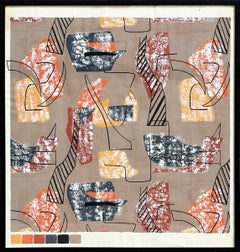
Modern orange, brown, yellow, and black geometric abstract composition by textile designer John Little. The work was created as a proposed design for a wallpaper and features the original color codes in the front lower left corner. Currently hung in a solid black frame with a large white margin. Dimensions Without Frame: H 35.5 in. x W 33.5 in. Artist Biography: A painter and textile designer, John Little is best known for gestural works filled with boldly explosive color that reflect the influences of his teacher Hans Hofmann and for his involvement in the Abstract Expressionist movement in East Hampton, where he moved in the late 1940s. In East Hampton Little congregated with Jackson Pollock, Lee Krasner, and the other artists who were the leading innovators in the New York School. John Little was born in Sanford, Alabama. He left home at the age of fourteen to become an artist, and moved to Buffalo, New York, in 1923. After spending a year working as a stevedore on the docks to save money, he enrolled at the Buffalo Fine Arts Academy and developed an interest in singing. In 1927 he moved to New York City where he continued his vocal work and studied operatic literature. He also became involved in textile design, opening his own store in 1920, called John Little Studios: Fabric and Wallpaper Design. He ran the store until 1950. In 1933 John Little resumed his painting studies at the Art Students League in New York under the guidance of George Grosz (1893-1959). The following year he made his first visit to East Hampton, Long Island, which he would eventually call home. Later in the decade, he traveled to Paris where he became familiar with European modernism. On his return to America, he taught textile design at the Pratt Institute in Brooklyn. He hired Josephine Watkins to work for him; she later became his wife. Little's textile store and teaching job gave him a financial security that was rare during the Depression, and he never found it necessary to find employment with the Works Progress Administration. At the end of the decade, John Little studied with Hans Hofmann (1880-1966) in New York and Provincetown. Little was greatly influenced by Hofmann, particularly by his views on color theory. In 1942 John Little joined the Navy as an aerial photographer. In the late 1940s he purchased a rundown house on Three Mile Harbor...
Category

Early 20th Century Modern Abstract Drawings and Watercolors

Materials

Paper, Gouache

More From This Seller

View All
Large Hudson River Figurative Modernist Landscape Oil Painting Edward Avedisian
By Edward Avedisian
Located in Surfside, FL
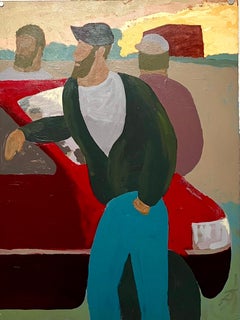
Edward Avedisian ( 1936-2007 ) Gouache or oil on paper, 3 guys around a car, hand signed in paint lower left, Measures 30"x 22.5" Edward Avedisian (June 15, 1936, Lowell, Massac...
Category

20th Century American Modern Landscape Paintings

Materials

Oil, Gouache, Archival Paper

Romanian Modernist Gouache Painting Of Buildings And Boats - Jean David
By Jean David
Located in Surfside, FL
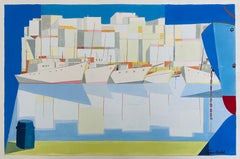
Jean David was a painter and designer, known for his contributions to the Romanian avant-garde and to the early modernist art of Israel (then recently founded). He was the first Israeli artist to be inducted into the illustrious Alliance Graphique Nationale in 1954. He had studied between 1927 and 1937 at various art academies in Paris. In 1929 he participated for the first time at a collective exhibition in Bucharest and in 1933 he had his first personal exhibition (in the same city). In the early '30s he was a member of the Surrealist group "unu" (meaning "one"). In 1942, he left Romania in a boat with 12 other Jews, including Theodor Brauner, the brother of Victor Brauner. After being captured by British authorities in Cyprus, he managed to reach Palestine in 1944. In 1949 he went to live in Jerusalem, where he was active in developing ceramic arts, sculpture works in copper, and artistic tapestry wall hangings under the auspices of the Ministry of Trade and Industry. Together with Marcel Janco, he founded in Israel the artist village known as Ein Hod. He also gained much reputation as a muralist and graphic and poster designer, having designed numerous posters and other works for the El Al air company, Maccabiah games, Zim shipping and The Israel tourist industry. David’s primary importance was in the design of posters. He used a wildly colorful decorative style in his art, which combined illustration, caricature, and national figures. In addition he designed wall hangings for “Maskit,” and also worked in the decoration of public buildings. His paintings had elements of Surrealism and included images from nature and landscapes. Similar in style to David Klein and the Polish Cyrk posters. Forms From Israel, Mounting Exhibition, USA, 1958 Artists: El Hanani (Sapozhnikow), Arie Azaz, Nehemiah Boris Carmi, Hanna Harag Zunz, David, Jean David Gumbel, Keiner Forcheimer, Julia Mansfeld, Al Merom, Peter Mayer, Jean Palombo...
Category

Mid-20th Century Modern Figurative Paintings

Materials

Paper, Gouache

Post Soviet Nonconformist Avant Garde Russian Israeli Gouache Painting Grobman
By Michail Grobman
Located in Surfside, FL
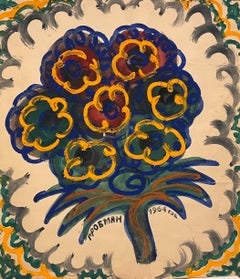
MIchail Grobman Gouache and watercolor on paper Hand signed Lower Left and Dated 1964. Described inn Cyrillic Russian verso. Dimensions: L:13.25" W: 11.75". Michail Grobman (Russ...
Category

1960s Modern Abstract Paintings

Materials

Paper, Watercolor, Gouache

Post Soviet Avant Garde Russian Israeli Gouache Collage Painting Grobman
By Michail Grobman
Located in Surfside, FL
Michail Grobman (Russian: Михаил Гробман, Hebrew: מיכאיל גרובמן‎‎, born 1939) is an artist and a poet working in Israel and Russia. He is father to Hollywood producer Lati Grobman an...
Category

1960s Modern Mixed Media

Materials

Paper, Watercolor, Gouache

Early Abstract Expressionist Gouache Painting WPA Jewish Artist
By Louis Wolchonok
Located in Surfside, FL
Louis Wolchonok was a social realist painter and member of the Woodstock Art Association. His work was exhibited at the Whitney Museum of American Art, the National Academy of Design...
Category

20th Century Modern Abstract Paintings

Materials

Paper, Gouache

Large Original Mixed Media Painting on Rice Paper Chinese Artist Jiang Tiefeng
Located in Surfside, FL
Jiang Tiefeng (China/Minnesota, 1938-) Mixed media gouache painting on rice paper with a gold tone Titled: "Mother and Child II." Artist is identified on Dyansen Gallery label on v...
Category

20th Century Modern Abstract Paintings

Materials

Paint, Ink, Gouache, Rice Paper

Still Thinking About These?

All Recently Viewed