Items Similar to Exhibited Peyote Priest visionary painting with an artist-made, decorated frame


Want more images or videos?
Request additional images or videos from the seller
1 of 10
Ranzy - Chief Charging SkunkExhibited Peyote Priest visionary painting with an artist-made, decorated frame1930s
1930s
$14,500
£11,059.59
€12,594.20
CA$20,376.92
A$22,223.90
CHF 11,772.72
MX$266,432.98
NOK 149,932.15
SEK 137,101.82
DKK 94,091.02
About the Item
A rare visionary sand painting by Kiowa Peyote Priest, Chief Charging Skunk, housed in a hand carved and painted frame, created by the artist.
Works by Chief Charging Skunk are hard to find, and this work is a great example of the artist's work.
This painting was exhibited at the Butler Institute, (1958), and the Art Center Annual, California, (1965).
Chief Charging Skunk, also known as Ranzy Alison Newton, was a Kiowa artist who showed his work in the 1920s at Yale's Peabody Museum, and later at the Butler Institute, and other venues in Alabama, New Mexico, and California, where he settled.
One of Chief Charging Skunk's works is currently held in the collection of the Smithsonian, in Washington DC.
Ranzy was born in Texas, raised in Oklahoma, spent 8 years serving in the US military, before settling in Stockton, California.
By all accounts, Ranzy's works are rare, and most are signed Ranzy, with a picture of a skunk, as this painting is. This work also retains exhibition labels verso.
- Creator:Ranzy - Chief Charging Skunk (1894, Native American)
- Creation Year:1930s
- Dimensions:Height: 23.5 in (59.69 cm)Width: 27.25 in (69.22 cm)Depth: 1.25 in (3.18 cm)
- Medium:
- Movement Style:
- Period:
- Condition:Some discoloration in areas, and some wear to frame.
- Gallery Location:Colfax, CA
- Reference Number:1stDibs: LU2907217310162
About the Seller
New to 1stDibs
Joined in the past six months.
No Reviews Yet
Vetted Professional Seller
Every seller passes strict standards for authenticity and reliability
1stDibs seller since 2025
Typical response time: <1 hour
- ShippingRetrieving quote...Shipping from: Colfax, CA
- Return Policy
More From This Seller
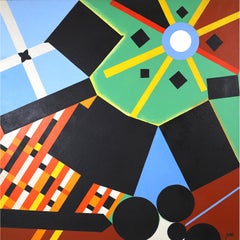
View AllA dynamic futurist inspired painting with a color-filled pallet
Located in Colfax, CA
A dynamic abstract painting from the 1950s.
The work appears to be signed, Nicotine, Nicotina, or Vicotina?
The artist was clearly influenced by earlier styles of abstraction, includ...
Category
1950s Abstract Abstract Paintings
Materials
Oil
Colorful Hard Edge abstract painting from circa 1960
By Michiel Gloeckner
Located in Colfax, CA
A great hard edge abstract painting, possibly by Michiel Gloeckner.
This work was purchased from Trinity Auctions. Trinity Auctions have handled many works by the artist, and some a...
Category
1960s Abstract Abstract Paintings
Materials
Oil
Abstract expressionist painting by an important Portland, Oregon artist
By Carl Morris
Located in Colfax, CA
A great abstract expressionist painting on canvas by Portland, Oregon artist Carl Morris.
Carl A. Morris, (1911 – 1993), was one of the most important artist from Oregon.
An Amer...
Category
1970s Abstract Expressionist Abstract Paintings
Materials
Oil
Hard Edge painting by California modern artist titled
Maximum Circus
By James McCray
Located in Colfax, CA
A vibrant and energetic abstract painting by a influential artist and professor in the San Francisco Bay Area art scene.
James McCray was born in the Bay Area in 1912. He studied a...
Category
1960s Hard-Edge Abstract Paintings
Materials
Oil
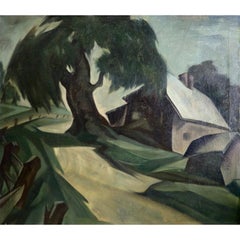
A brooding American modernist landscape painting with a house or outbuilding
Located in Colfax, CA
A nice American modernist landscape painting, dating from the 1940s.
This work is on the manner of E. Oscar Thalinger, but does not appear to be signed.
The work is unframed, as it...
Category
1940s American Modern Landscape Paintings
Materials
Oil
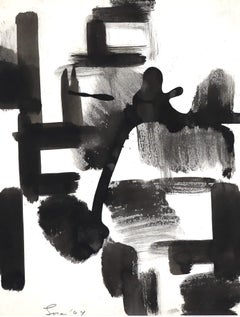
Non-Objective abstract work on paper by well-known San Francisco Bay Area artist
By Erle Loran
Located in Colfax, CA
A great, and early, non-objective ab-ex study by Erle Loran, most likely created in the 1940s,
Erle Loran, (1905-1999), was an American painter and educator who painted for the enti...
Category
1940s Abstract Expressionist Abstract Drawings and Watercolors
Materials
Ink
You May Also Like
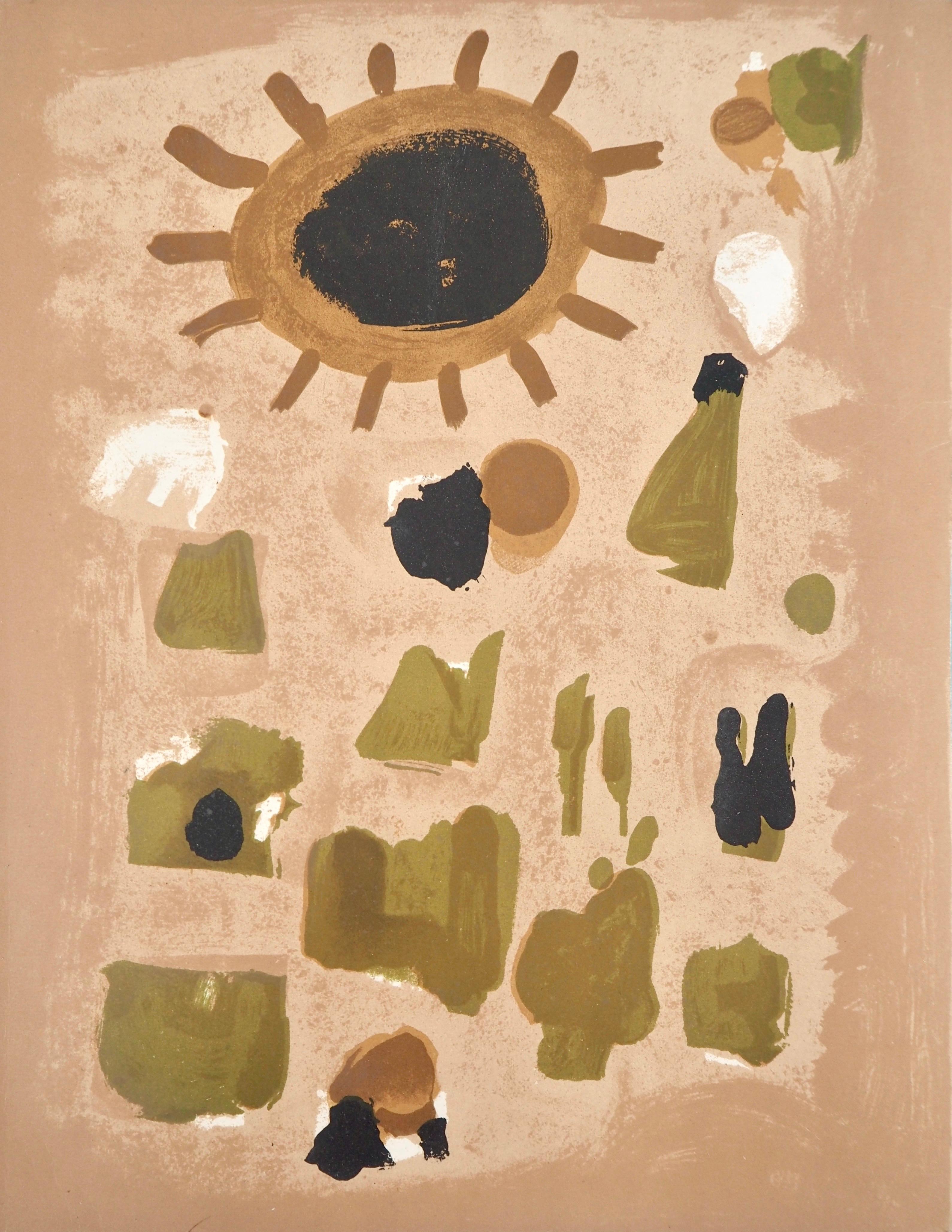
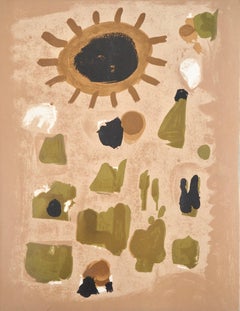
Roger Bissiere, Sun, from XXe Siecle, 1964
By Roger Bissière
Located in Southampton, NY
This exquisite lithograph by Roger Bissiere (1886–1964), titled Soleil (Sun), from the album XXe Siecle, Nouvelle serie, XXVIe Annee N°24, Decembre 1964, originates from the 1964 edi...
Category
1960s Modern Abstract Prints
Materials
Lithograph
Untitled
Located in Buffalo, NY
An unsigned mid century modern American abstract painting
Category
1950s American Modern Abstract Paintings
Materials
Board, Illustration Board, Oil
$750
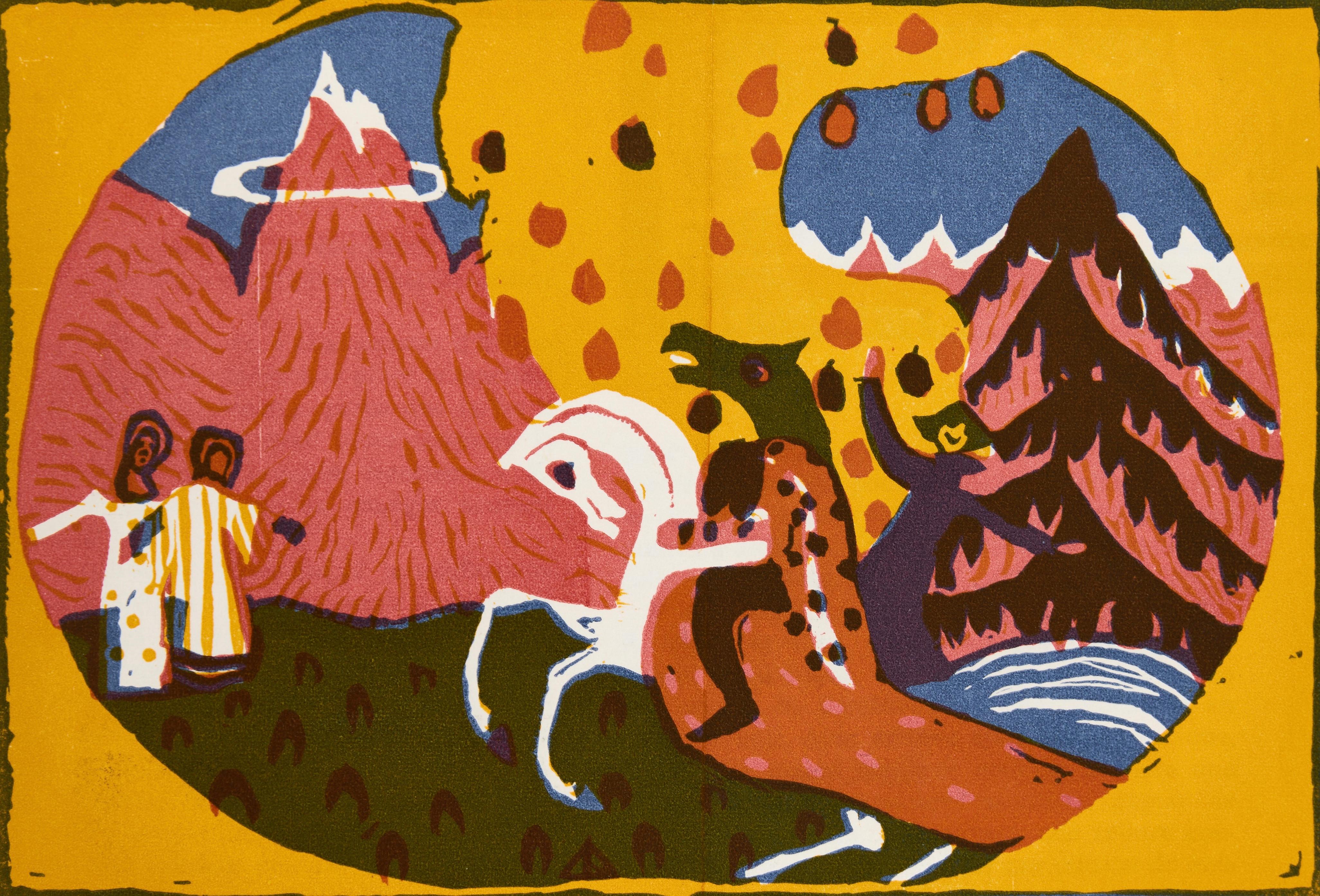
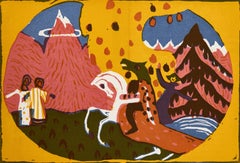
Wassily Kandinsky, Sounds, from XXe Siecle, 1966 (after)
By Wassily Kandinsky
Located in Southampton, NY
This exquisite woodcut after Wassily Kandinsky (1866–1944), titled Klange (Sounds), from the album XXe Siecle, Decembre 1966, originates from the 1966 edition published by Societe Internationale d'Art XXe siecle, Paris, under the direction of Gualtieri di San Lazzaro, editeur, Paris, and printed by Mourlot Freres, Paris, 1966. Klange reflects Kandinsky’s revolutionary synthesis of sound, color, and emotion, merging visual rhythm and spiritual resonance in a poetic abstraction that embodies the birth of modern non-objective art.
Executed as a woodcut on velin paper, this work measures 12.5 x 9.75 inches. Unsigned and unnumbered as issued. The edition exemplifies the superb craftsmanship of Mourlot Freres, Paris.
Artwork Details:
Artist: After Wassily Kandinsky (1866–1944)
Title: Klange (Sounds), from the album XXe Siecle, Decembre 1966
Medium: Woodcut on velin paper
Dimensions: 12.5 x 9.75 inches (31.75 x 24.77 cm)
Inscription: Unsigned and unnumbered as issued
Date: 1966
Publisher: Societe Internationale d'Art XXe siecle, Paris, under the direction of Gualtieri di San Lazzaro, editeur, Paris
Printer: Mourlot Freres, Paris
Condition: Well preserved, consistent with age and medium
Provenance: From the album XXe Siecle, Decembre 1966, published by Societe Internationale d'Art XXe siecle, Paris, under the direction of Gualtieri di San Lazzaro, editeur, Paris; printed by Mourlot Freres, Paris, 1966
About the Publication:
Gualtieri di San Lazzaro's XXe Siecle (Twentieth Century) was one of the most influential art journals of the modern era, founded in Paris in 1938 as a platform for the greatest painters, sculptors, and writers of the 20th century. San Lazzaro, a visionary editor, critic, and champion of modernism, believed that art and literature should coexist as expressions of a shared human imagination. Under his direction, XXe Siecle became a cultural bridge between Europe and the wider world, publishing special issues devoted to leading figures such as Picasso, Matisse, Chagall, Braque, Calder, Miro, Kandinsky, and Leger. Each edition combined essays by renowned critics and poets with original lithographs and woodcuts printed by the foremost ateliers of Paris, Milan, and New York, including Mourlot, Curwen, and Amilcare Pizzi, creating a uniquely rich dialogue between text and image. Through XXe Siecle, San Lazzaro preserved the creative spirit of the avant-garde during and after World War II, championing freedom of expression and the evolution of abstraction, surrealism, and modern thought. Over nearly four decades, the journal shaped international taste and defined the intellectual landscape of postwar art publishing. Today, XXe Siecle remains celebrated for its extraordinary synthesis of art, literature, and design, an enduring testament to Gualtieri di San Lazzaro's belief that the visual arts are the soul of the modern age.
About the Artist:
Wassily Kandinsky (1866–1944) was a visionary Russian-born, later French, painter, printmaker, and pioneering theorist whose quest to translate music and spirituality into pure visual form helped birth abstract art and irrevocably transform the modern aesthetic. Emerging from a background of law and economics, he embraced painting in his late thirties and soon became a central figure in avant-garde circles—including co-founding the Munich-based Der Blaue Reiter and later teaching at the prestigious Bauhaus school—fusing his deep interests in Russian icon painting, folk ornament, theosophy, color theory, and the experimental energy of early 20th-century artistic innovation. Influenced by predecessors such as Cezanne, Matisse, and the non-European masks and forms he encountered, Kandinsky worked alongside and in dialogue with contemporaries including Alexander Calder, Alberto Giacometti, Salvador Dali, Joan Miro, Marcel Duchamp, and Man Ray—artists united by a fearless rejection of conventional representation and a shared impulse toward radical visual invention. His compositions of floating geometric forms, vibrant chromatic symphonies, and lyrical abstractions not only charted new territory for the avant-garde in his own time but also inspired innumerable later artists—from the Abstract Expressionists like Jackson Pollock and Mark Rothko, to the Color Field painters, post-war neo-expressionists, and contemporary abstractionists who continue to echo his bold experimentations with color, line, and composition. Kandinsky’s works remain cornerstone acquisitions for major museums worldwide and prime offerings in the global collector market. His auction record stands with Murnau with Church II (1910), which sold for £37,196,800 (≈$44.9 million) at Sotheby’s, London, on March 1, 2023.
Wassily Kandinsky Klange...
Category
1960s Modern Abstract Prints
Materials
Woodcut
Abstract composition
Located in Genève, GE
Work on canvas
Golden wooden frame
63 x 72 x 5 cm
Category
1960s Abstract Abstract Paintings
Materials
Oil
$1,197
From Here to There
Located in Surfside, FL
Will Petersen, a painter, master printer and a poet, was born in
Chicago. (Amer. 1928-1994)
Will's formal art education began with classes at the Chicago Academy
of Fine Arts. As a student at the city's Steinmetz High School,
Petersen succeeded Hugh Hefner (of Playboy magazine fame) as the HS
newspaper cartoonist, the Steinmetz Star. During this time, Petersen
recovered from polio.
In 1947 Petersen enrolled at Chicago's Wilbur Wright College. While
there, he painted with oils for the first time. Two years later he
enrolled at Michigan State University where he developed a strong
interest in literature and writing and began printmaking. By 1951 he
had begun to exhibit paintings and prints nationally. A year later he
completed his master's degree.
Petersen served in the United States Army from 1952-54, spending one
year as an education specialist in Japan. This encounter with the
Japanese culture affected his entire life. He became interested in
calligraphy and Noh, classical Japanese Buddhist performance that
combines elements of drama, music and poetry. Upon completion of his
military service in Japan in 1955, Will Petersen settled in Oakland,
California, where he met some of the most active poets of the Beat
Generation: Gary Snyder, Allen Ginsberg, Jack Kerouac, Phil Whalen,
Mike McClure and others. Petersen was attracted to the group by their
intelligence and belief in Zen Buddhism.
In 1956 in his small studio in Oakland, he printed the poems of Jack
Kerouac. He attended for the first time, the reading of Ginsberg's
Howl at Six Gallery. His relationship with Gary Snyder had begun when
both were in Kyoto, Japan; later Snyder wrote for the Plucked Chicken.
Petersen returned to Japan in 1957, pursuing painting, printmaking and
writing for eight years while living in Kyoto. In 1965 he accepted a
faculty appointment at Ohio State University, teaching drawing,
painting and printmaking. Four years later Petersen took his teaching
skills to West Virginia University in Morgantown, where he
concentrated on printmaking. He taught there until 1977 when he began
publishing Plucked Chicken, a journal of art and poetry. In 1978 in
Morgantown, Petersen and his wife, Cynthia Archer, established Plucked
Chicken Press, which they later moved to Chicago and then Evanston.
Petersen operated the Press until his death on April 1, 1994.
1956 In storefront studio in Oakland, California, creates signed serigraphs
and lithographs. Prints poems of Jack Kerouac.
1961 Back in Japan, acquires a lithography press and stones and
resumes printing lithographs. Exhibits regularly with Kyoto
Printmakers.
1969 Resident lithographer at the Lakeside Studio, Lakeside, Michigan.
Prints for the first time Richard Hunt lithographs.
1978 Establishes Plucked Chicken Press in Morgantown, West Virginia.
Resident lithographer at Lakeside Studio in Michigan.
1980 Plucked Chicken Press moves to Chicago. Publishes lithographs by
Don Crouch and Art Kleinman.
1982 Publishes Blossom, a lithograph/collage by Tom Nakashima.
1983 Series I of Plucked Chicken Press is published with work by
Archer, Duckworth, Godfrey, Heagstedt, Himmelfarb, Hoff, Hunt, Martyl,
Miller, Nakashima and Petersen.
1984 Plucked Chicken Press moves to Evanston. Series II of Plucked
Chicken Press is published with works by Croydon, Ho, Archer, Torn,
Osver, Middaugh, Roseberry, Petersen, Spiess-Ferris and Hoppock.
1985 Series III of Plucked Chicken Press is published with works by
Driesbach, Hunt, Trupp, Gregor, Pattison, Conger, Evans, Weygandt,
Archer, Ho and Petersen. Prints Suite I, Northern Illinois University
Collectors Series, with lithographs by Renie Adams, David Bower, David
Driesbach, Carl Hayano and Ben Mahmoud...
Category
1980s Modern Abstract Prints
Materials
Lithograph
Abstract
Located in Houston, TX
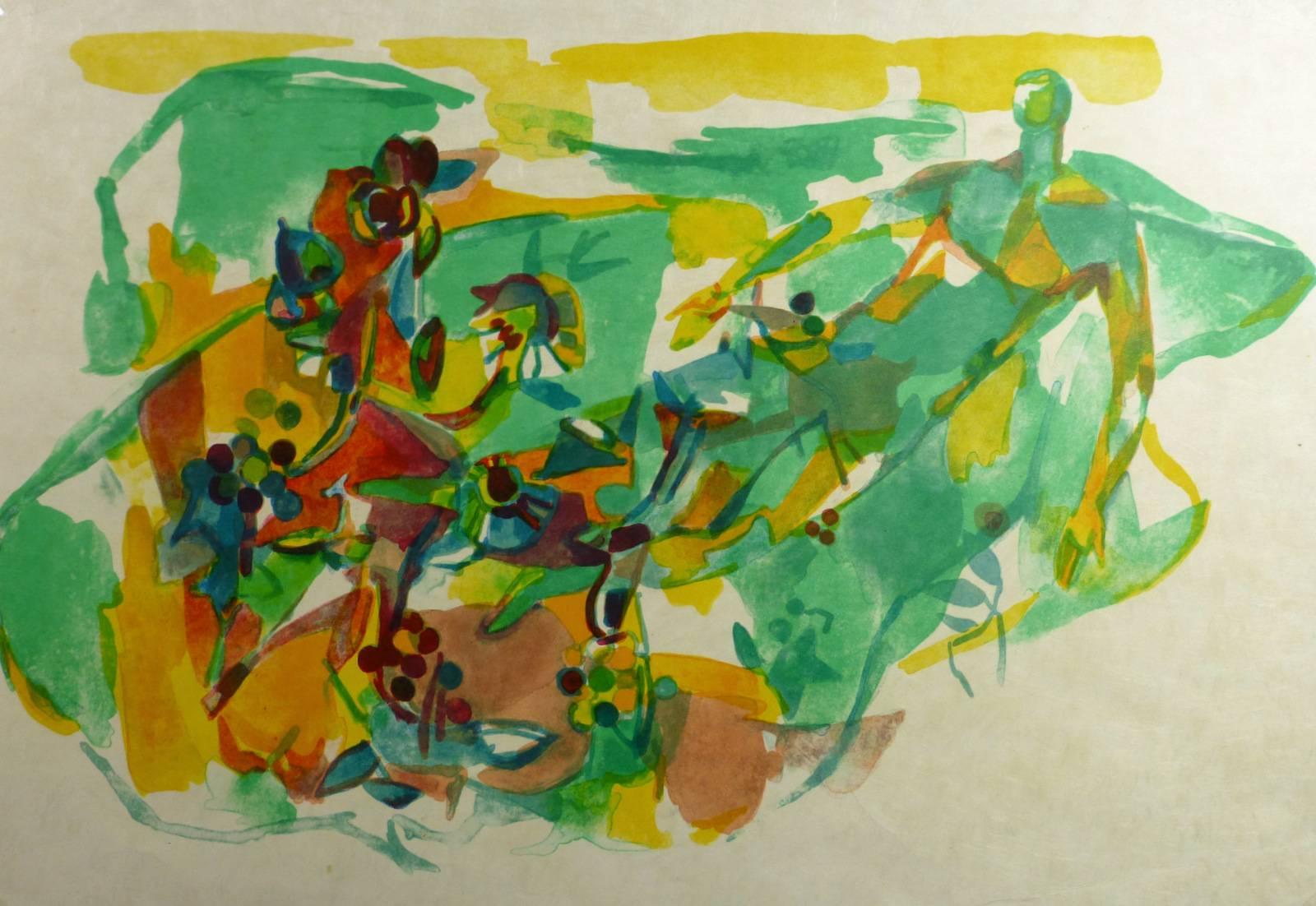
French lithograph abstract in green and yellow tones, circa 1960.
Original artwork on paper displayed on a white mat with a gold border. Mat fits a standard-size frame. Archival...
Category
1960s Abstract Prints
Materials
Watercolor