Items Similar to Israeli Op Art Kabbala Mandala Abstract Oil Painting Judaica Jacob Kaszemacher
Want more images or videos?
Request additional images or videos from the seller
1 of 10
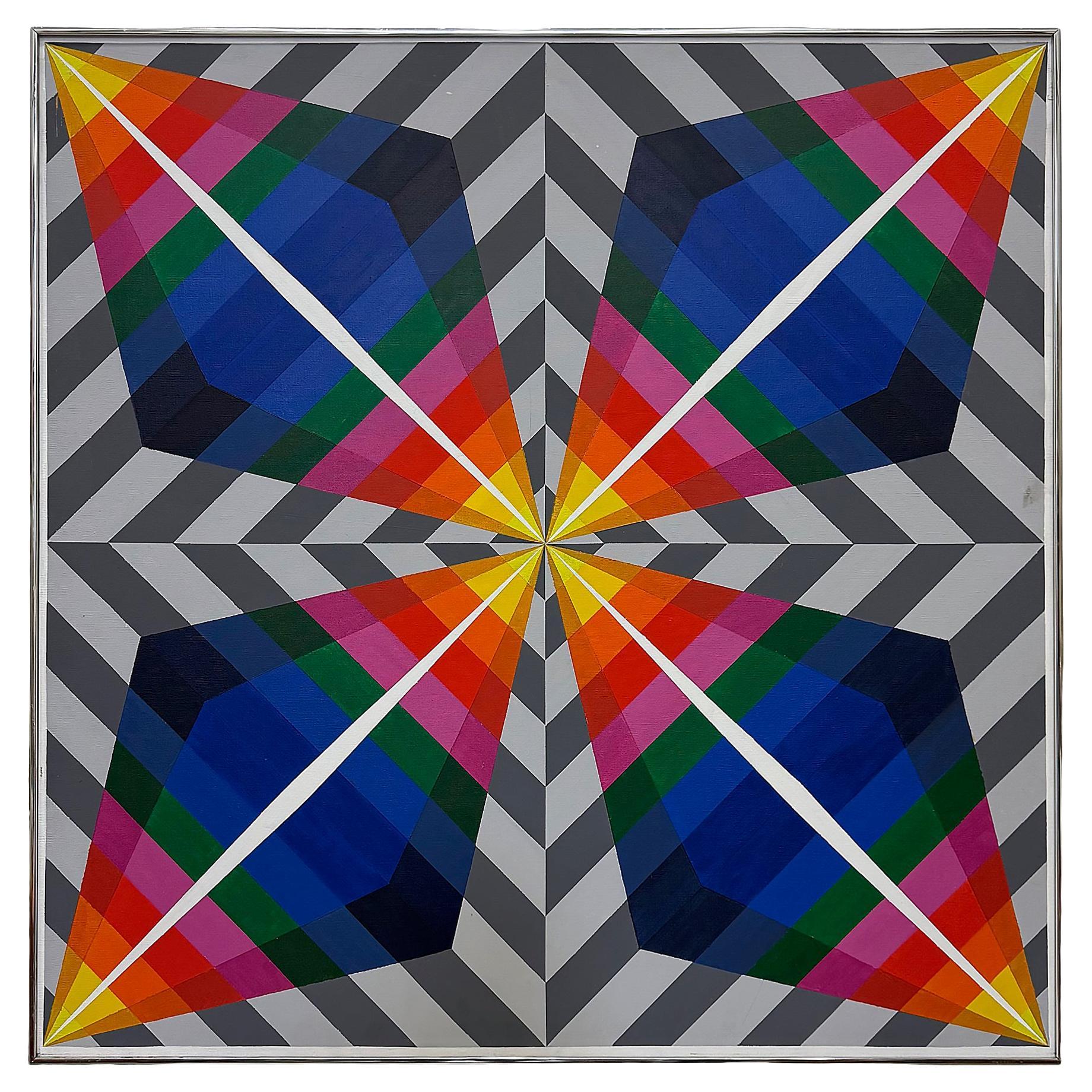
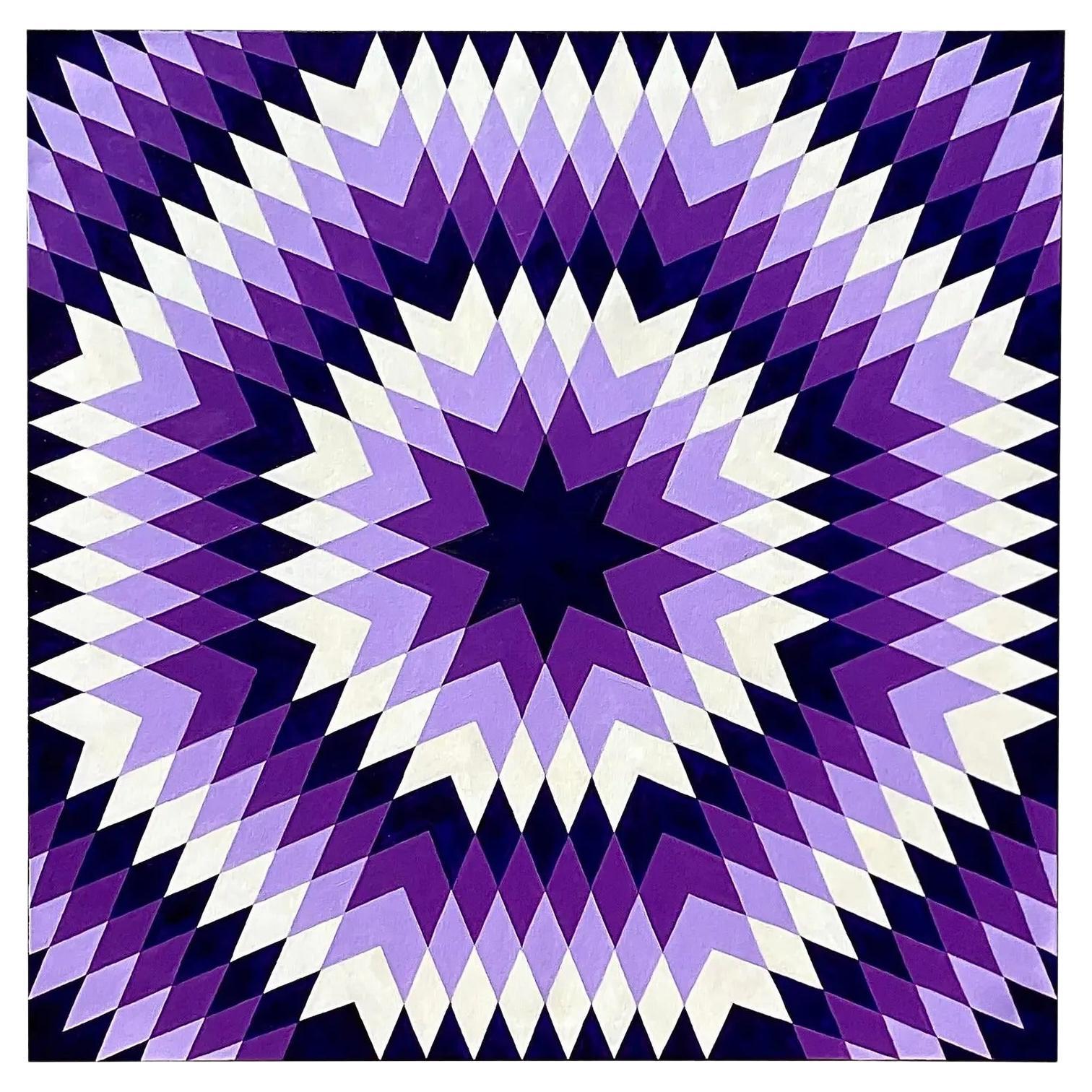
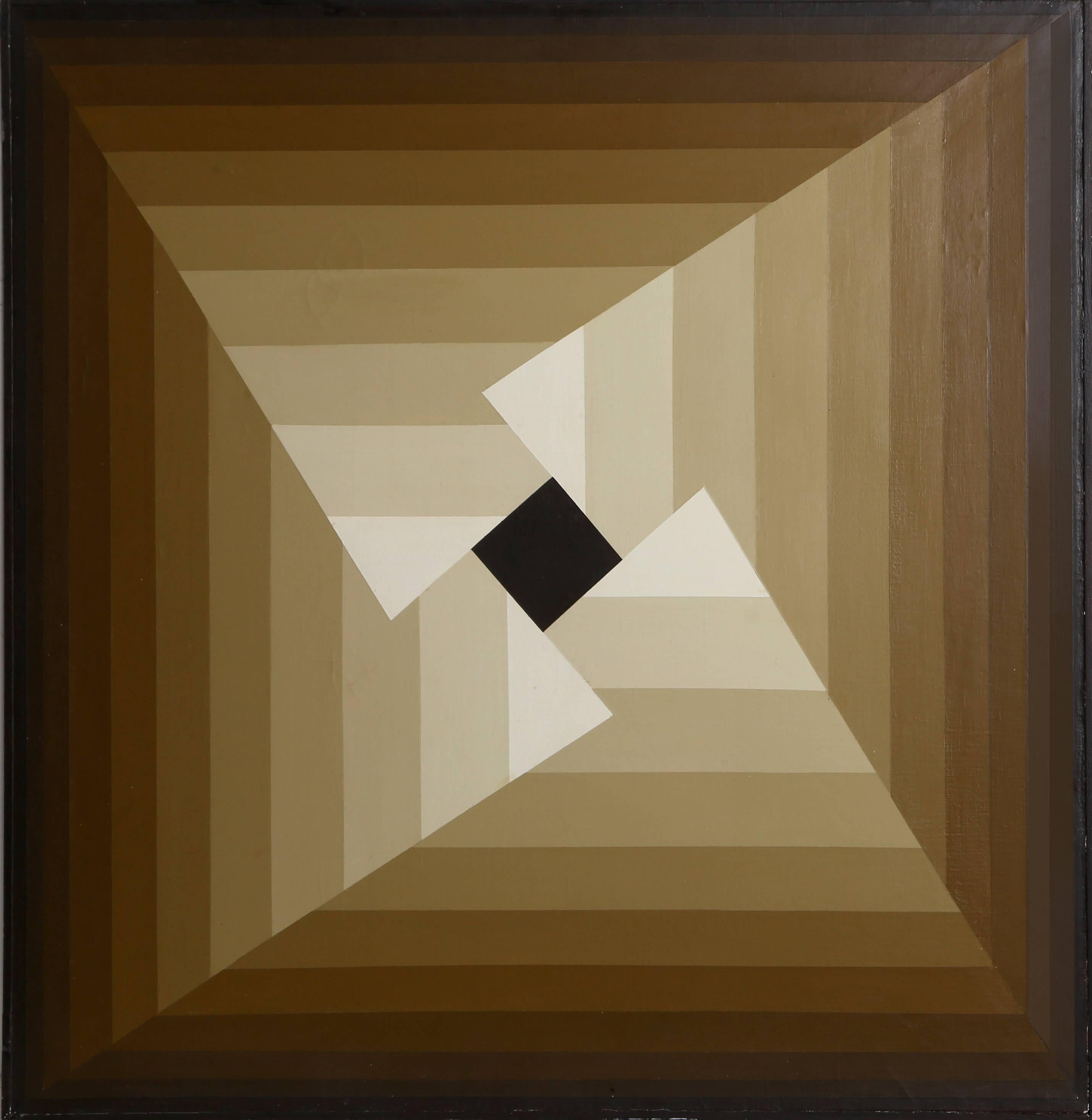
Yakov KaszemacherIsraeli Op Art Kabbala Mandala Abstract Oil Painting Judaica Jacob Kaszemacher1987
1987
$3,600
£2,743.27
€3,163.74
CA$5,113.08
A$5,493.72
CHF 2,947.37
MX$64,722.30
About the Item
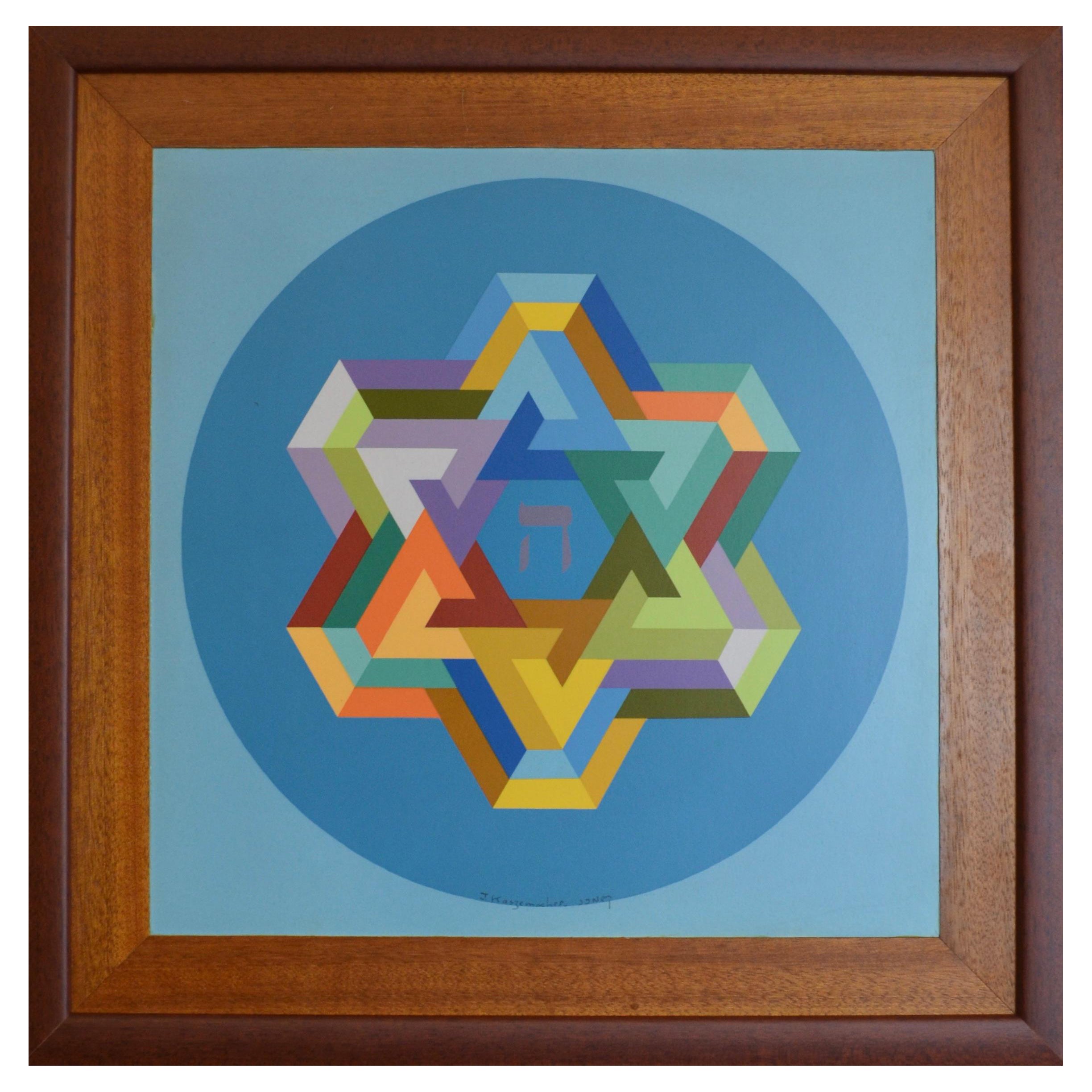
Hand signed lower right
Dated with Hebrew date 5747 (approximately 1987)
Oil on Canvas
Ya'acov Kaszemacher, well-known artist and photographer whose unique images of Hassidic festivities are fascinating to view, and offer one an opportunity to peek into the community during its most joyous moments.
Yaakov Kaszemacher was born in France to Jewish Polish refugees who raised him in a secular environment. He became involved with the beatniks of the ‘50s and then the hippies of the ‘60s, both in the nightclubs of St. Germain Des Pres in Paris and then in Bohemian Greenwich Village in New York. He embarked on a spiritual quest in 1971 and decided to live in Tzfat where he infused his artwork with Jewish, Hassidic and Kabbalistic content.
Kaszemacher began to experiment with different art styles in the ‘50s and ‘60s. He varied his techniques and mediums but mostly favored bold colors and hard edges in an Op Art constructionist approach. After his religious awakening he continued to use these techniques to express mathematical and mystical themes. He saw his Kinetic art as a meditative support and created his works in a way that each design could include multi-layered religious significance.
Kaszemacher’s works are often concretic or circular and are frequently used as a Kabbala mandala - mystical circles employed as visual stimulation for meditation.
Kaszemacher was raised in Paris, and joined the beatnik artists of the '50s. He migrated to New York City in the '60s, where he easily melded with the counter-culture artists of the Greenwich Village. During his time in New York, his art flourished as he experimented with the psychedelic styles and special effects which were becoming popular. While in New York he also began to work with photography.
Kaszemacher looked like an old-world Hassid, but his art remains pure 21st century. He was one of the first artists in Tzfat to combine his study of Kabbalah with his art, and many of his works have deep mystical meanings. Time magazine coined the term op art in 1964, in response to Julian Stanczak show Optical Paintings at the Martha Jackson Gallery, to mean a form of abstract art (specifically non-objective art) that uses optical illusions. Op art perhaps more closely derives from the constructivist practices of the Bauhaus founded by Walter Gropius, where Anni Albers and Josef Albers later taught. Op art also stems from trompe-l'œil and anamorphosis. Links with psychological research have also been made, particularly with Gestalt theory and psychophysiology.
Op art or Kinetic Art is art based on movement represented by Yaacov Agam, Carlos Cruz-Diez, Jesús Rafael Soto, Bridget Riley, Richard Anuszkiewicz and Nicolas Schöffer. From 1961 to 1968, the Groupe de Recherche d'Art Visuel (GRAV) founded by François Morellet, Julio Le Parc, Francisco Sobrino, Horacio Garcia Rossi, Yvaral, Joël Stein and Vera Molnár was also active. the Rene Denise Gallery in Paris actively showed and promoted many of these artists.
- Creator:Yakov Kaszemacher (1941 - 2011, French, Israeli)
- Creation Year:1987
- Dimensions:Height: 17.25 in (43.82 cm)Width: 17.25 in (43.82 cm)
- Medium:
- Movement Style:
- Period:
- Condition:
- Gallery Location:Surfside, FL
- Reference Number:1stDibs: LU38217132822
About the Seller
4.9
Platinum Seller
Premium sellers with a 4.7+ rating and 24-hour response times
Established in 1995
1stDibs seller since 2014
1,863 sales on 1stDibs
Typical response time: <1 hour
- ShippingRetrieving quote...Shipping from: Surfside, FL
- Return Policy
More From This Seller
View AllIsraeli Op Art Kabbalah Mandala Painting Jerusalem, 5732 Star of David Judaica
By Yakov Kaszemacher
Located in Surfside, FL
Ya'acov Kaszemacher, well-known artist and photographer whose unique images of Hassidic festivities are fascinating to view, and offer one an opportunity to peek into the community...
Category
1970s Op Art Abstract Paintings
Materials
Oil
1970
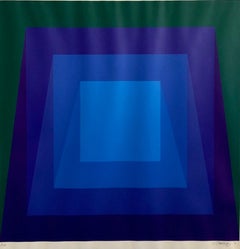
s Op Art Cintique Geometric Abstract Color Gradations Silkscreen Domberger
Located in Surfside, FL
Silkscreen serigraph Op art print.
Luitpold Domberger (1912-2005 ) was a pioneer of artistic screen printing in Germany.
Luitpold (Poldi) Domberger...
Category
1970s Op Art Abstract Prints
Materials
Screen
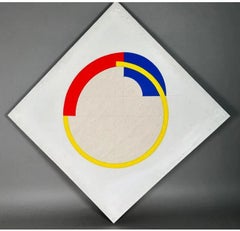
Op Art Hard Edged Abstract Geometric Mod Painting John Pearson
Located in Surfside, FL
John Pearson (American born 1940)
"Study for Circus"
1985
Acrylic on canvas painting
Hand signed verso, hangs from corner of canvas.
Provenance: The New Gallery of Contemporary Art, Cleveland, Ohio. Bearing label verso:
Dimensions: 19 x 19 in (it hangs in diamond shape which measures point to point 26.87 X 26.87 inches)
Red, White, Blue, and Yellow abstract geometric painting. Circle and ellipse.
John Pearson (British, 1940-was born in Yorkshire, England, and studied at the Harrogate School of Art, Yorkshire (National Diploma of Design, 1960), the Royal Academy Schools, London (Certificate, R.A.S 1963), the Akademie der Bildenden Kunst, Munich (1963–64, research fellow), and Northern Illinois University (M.F.A. 1966). He is known for hard edged, mod abstract oil painting on shaped canvas in geometric, curvilinear forms.
For many years, Pearson has made paintings and low-relief sculpture, predominantly wall pieces, which use color, form, and various degrees of abstraction to modify the space of entire rooms. With work exhibited nationally and internationally in both solo and group shows, Pearson has also been sought for many site-specific commissions, both public and private. These are typically highly abstract, simplified, and nuanced; they’re often witty, too.
Pearson early on became a devotee of the Dutch artist Piet Mondrian, a chief proponent of De Stijl (The Style), Pearson’s style has evolved from intense system-based abstract compositions to one more attuned to the spiritual influences of the natural environment. Pearson’s early style reflects the European reaction to expressionism and artistic emotionalism in the form of a rational, systematic approach to art (often called the “New Tendency”). An heir to the tenets of Constructivism, he investigated color within a predetermined linear or grid system that eliminated options after the artist’s initial choices. He was drawn to Cleveland in 1970 because of its reputation at the time for having a rich environment for abstract art, as two of the chief proponents of Kinetic art and op art, Julian Stanczak and Richard Anuszkeiwicz, worked there. Students of Josef Albers, the grand master of color theory who taught these two primary practitioners of the “Color Function” school of abstract art at Yale in the 1950s.
Pearson’s early style reflects a European reaction to abstract expressionism that manifested itself in a rational, systematic approach to art.Since his emergence in 1960s London, John Pearson has been using mathematical systems and computer programs to generate hard-edged geometric compositions. His work is of the same genre as the artists of the Denise Rene Gallery in Paris, similar to Vasarely, Agam, Cruz Diez and Soto. His most recent work, with its circles and ellipses superimposed on patterns of wavy lines, brings a more easygoing approach to his particular breed of rule-based art. Pearson has received grants from the National Endowment for the Arts and the Canada Council, and has had solo exhibitions at institutions including the Akron Art Museum, the Cleveland Center for Contemporary Art, and the Museum of Modern Art in Rijeka, Croatia. Pearson was born in Yorkshire (Britain) and studied art at the Royal Academy Schools in London, did advanced work in Munich (Germany), and earned the M.F.A. (Master of Fine Arts) degree from Northern Illinois University. Before arriving to teach at Oberlin College in 1972, he taught at the University of New Mexico, the Nova Scotia College of Art and Design, and the Cleveland Institute of Art. At Oberlin, he served as the Young-Hunter Professor of Art. John retired from teaching in 2014 but still occasionally works with students and lives in Oberlin where he educated several generations of appreciative liberal arts students. He also served as department chair and held the Young-Hunter endowed professorship from 1987 onward, until his retirement. Pearson travelled widely to paint, exhibit, and teach and received support from the Ohio Arts Council and the National Endowment for the Arts, among others. His career received recognition via the Cleveland Arts Prize in 1975, while most recently he was recognized as a Special Honoree by the same organization.
His paintings and sculptures are held in many public and private collections in the U.S., Canada, Europe, China, and Japan, as well as by museums, such as the Allen Art Museum (Oberlin), the Cleveland Museum of Art, the Museum of Modern Art (New York), and the Art Institute of Chicago. Hard-Edged
Select Group Exhibitions
Abstract, Constructive, Concrete Mondrian huis, Amersfoort, Holland
Chronologic Planet Art...
Category
1980s Abstract Geometric Abstract Paintings
Materials
Acrylic, Canvas
Op Art 1971 Kinetic Oil Painting Pop Art Artist
By Josef Levi
Located in Surfside, FL
Josef Alan Levi (1938) is an American artist whose works range over a number of different styles, but which are unified by certain themes consistently present among them. Josef Levi began his artistic career in the 1960s and early '70s, producing highly abstract and very modernist pieces: these employing exotic materials such as light fixtures and metallic parts. By 1975, Levy had transitioned to painting and drawing still lifes. At first these were, traditionally, of mundane subjects. Later, he would depict images from art history, including figures originally created by the Old Masters. Around 1980, he made another important shift, this time toward creating highly precise, though subtly altered reproductions of pairs of female faces which were originally produced by other artists. It is perhaps this work for which he is most well known. Since around 2000, Josef Levi has changed the style of his work yet again: now he works entirely with computers, using digital techniques to abstract greatly from art history, and also from other sources.
Levi's works of art in the collections of the Museum of Modern Art, NYC, the National Gallery of Art, and the Albright-Knox Museum, among many others. Levi's art has been featured on the cover of Harper's Magazine twice, once in June 1987, and once in May 1997.
Josef Levi received a Bachelor of Arts degree in 1959 from the University of Connecticut, where he majored in fine arts and minored in literature. From 1959 to 1960, he served to a first lieutenant in the U.S. Army, and from 1960 through 1967 he was in the U.S. Army Reserves.
In 1966, he received the Purchase Award from the University of Illinois in 1966, and he was featured in New Talent U.S.A. by Art in America. He was an artist in residence at Appalachian State University in 1969, taught at Farleigh Dickenson University in 1971 and was a visiting professor of art at Pennsylvania State University in 1977. From 1975 to 2007, Levi resided in New York City. He now lives in an apartment in Rome, where he is able to paint with natural light as he was unable in New York.
From 1959 to 1960, Josef took some courses of Howard McParlin Davis and Meyer Schapiro at Columbia University which initiated him into the techniques of reproducing the works of the Old Masters. His first works, created in the 1960s, were wood and stone sculptures of women. His first mature works were abstract pieces, constructed of electric lights and steel.
In 1970, Levi's materials included fluorescent light bulbs, Rust-Oleum and perforated metal in addition to paint and canvas.
By 1980, Josef Levi's art had transformed into a very specific form: a combination of reproductions of female faces which were originally depicted by other artists. The faces which he reproduces may be derived from either portraits or from small portions of much larger works; they are taken from paintings of the Old Masters, Japanese ukiyo-e, and 20th-century art. Artists from whom he has borrowed include: Vermeer, Rembrandt, Piero della Francesca, Botero, Matisse, Utamaro, Correggio, Da Vinci, Picasso, Chuck Close, Max Beckmann, Pisanello, Lichtenstein. The creation of these works is informed by Levi's knowledge and study of art history.
Josef Levi's paintings from this period are drawn, then painted on fine linen canvas on wooden stretchers. The canvas is coated with twenty-five layers of gesso in order to produce a smooth surface on which to work. The drawing phase takes at least one month. Levi seals the drawing with acrylic varnish, and then he may apply layers of transparent acrylic in order to approximate the look of old paintings. After the last paint is applied, another layer of acrylic varnish is sprayed on to protect the work.
Most of the figures in his contemporary pieces are not paired with any others.
SELECTED COLLECTIONS
MUSEUM OF MODERN ART, NEW YORK, NY
ALBRIGHT- KNOX GALLERY, BUFFALO, NY
ALDRICH MUSEUM OF CONTEMPORARY ART, RIDGEFIELD, CT
NATIONAL GALLERY OF ART, WASHINGTON, DC
BROOKLYN MUSEUM OF ART, BROOKLYN, NY
SMITHSONIAN NATIONAL MUSEUM OF AMERICAN HISTORY, WASHINGTON, DC
CORCORAN GALLERY, WASHINGTON, DC
UNIVERSITY OF NOTRE DAME ART...
Category
1970s Op Art Abstract Paintings
Materials
Canvas, Oil
Agam Silkscreen Mod Judaica Lithograph Hand Signed Israeli Kinetic Op Art Print
By Yaacov Agam
Located in Surfside, FL
Yaacov Agam
Israeli (b. 1928)
Hand signed, not individually numbered but from edition of 180. I can include a copy of the title sheet with the edition size and his signature if you r...
Category
1980s Op Art Abstract Prints
Materials
Lithograph, Screen
Ajapa Jaapa Abstract Geometric Modern Indian Painting
By Jeet Aulakh
Located in Surfside, FL
Born and raised in India, Canadian Contemporary artist Jeet Aulakh participates in a rich and varied cultural and social history in which...
Category
21st Century and Contemporary Contemporary Abstract Drawings and Waterco...
Materials
Paper, Watercolor
You May Also Like
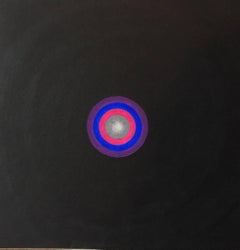
Sun in Clouds, Large Geometric Abstract Acrylic Painting by Max Epstein
By Max Epstein
Located in Long Island City, NY
Artist: Max Epstein, Canadian (1932 - 2002)
Title: Untitled
Year: 1973
Medium: Acrylic on Canvas, signed and dated verso
Size: 67 x 67 inches
Frame Size: 68 x 68 in. (172.72 x 172.72...
Category
1970s Op Art Abstract Paintings
Materials
Acrylic
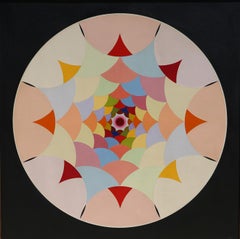
Geometric composition by Yaakov Kaszemacher, Acrylic on paper mounted on wood
Located in Marinha Grande, PT
Artist: Yaakov Kaszemacher (1941 - 2011)
Technique: Acrylic on paper mounted on wood
Dimensions: Height 46 cm x Width 46.5 cm
without the frame: 34 x 34,5 cm
Date: 1970s/1980s
signed...
Category
Vintage 1980s Israeli Kinetic Paintings
Materials
Acrylic, Wood
$1,268 Sale Price
35% Off
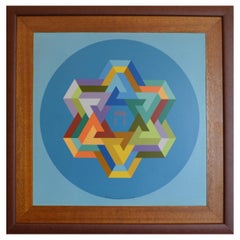
Gabe Silverman 1980s Abstract Op Art Painting on Canvas, Original Frame
Located in Miami, FL
Gabe Silverman 1980s Abstract Op Art Painting on Canvas, Original metal frame.
Offered for sale is an oversized original and exceptional Op Art painting recently discovered in a ti...
Category
Vintage 1980s Paintings
Materials
Metal
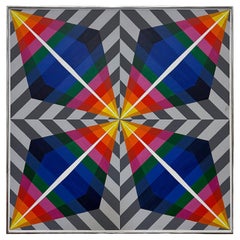
Vintage Op Art Geometric Signed Original Oil Painting 1969
Located in West Palm Beach, FL
Fabulous vintage signed original oil painting. A beautiful Op Art piece in a chic geometric design. Signed by the artist. Acquired from a Palm B...
Category
Vintage 1960s North American Paintings
Materials
Paint
Aperture, Op Art Geometric Abstract Oil Painting by Roy Ahlgren
By Roy Ahlgren
Located in Long Island City, NY
Artist: Roy Ahlgren, American (1927 - 2011)
Title: Aperture
Year: 1976
Medium: Acrylic on Canvas, signed verso
Size: 30 x 30 in. (76.2 x 76.2 cm)
Category
1970s Op Art Abstract Paintings
Materials
Oil
Monumental Geometric Op Art Oil Painting c.1970s
Located in San Francisco, CA
Monumental Geometric Op Art Oil Painting c.1970s
Fantastic original Op Art oil painting. The large size will ensure it's the centerpiece of any r...
Category
Mid-20th Century Abstract Abstract Paintings
Materials
Oil