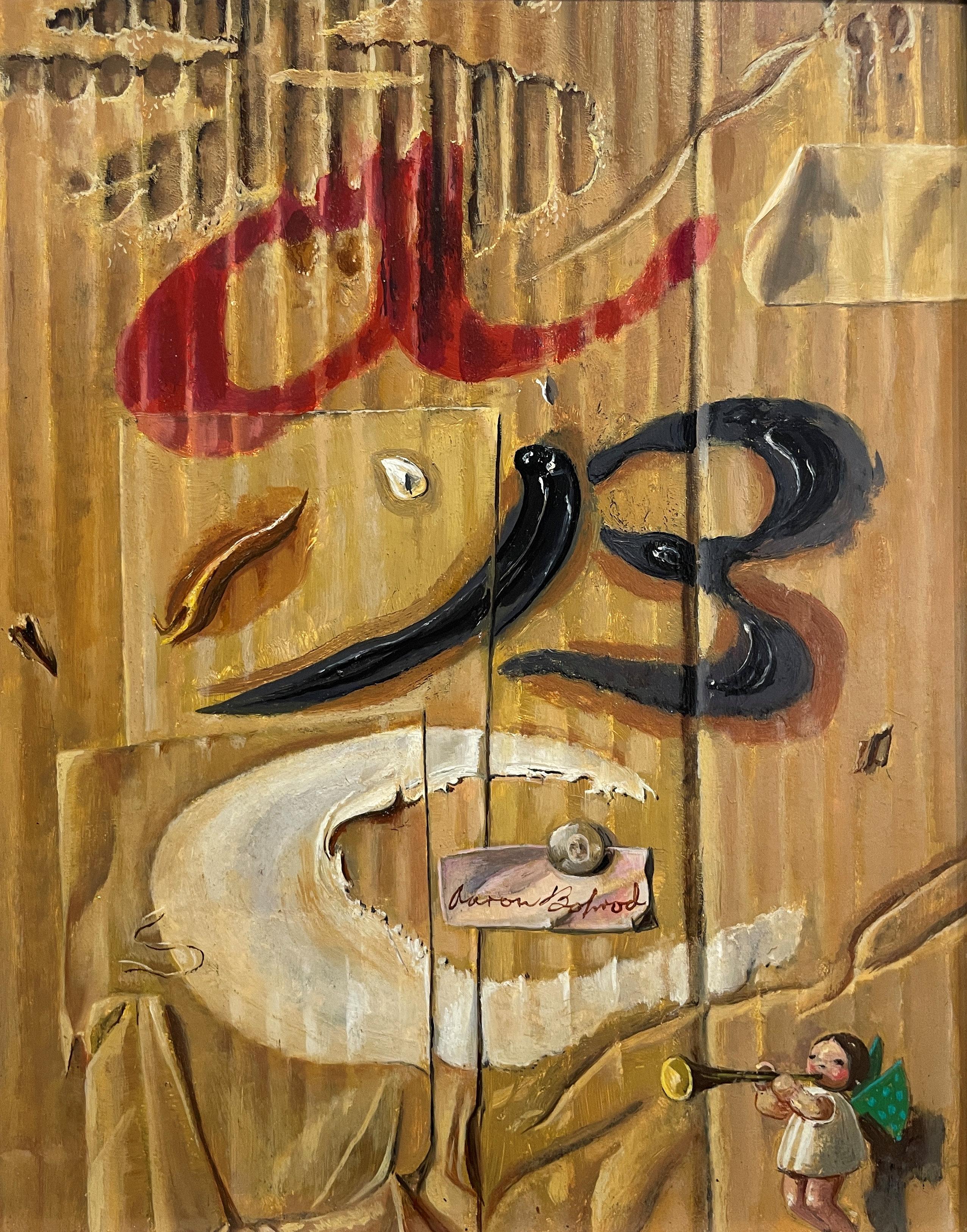
Items Similar to "The Magnificent Seven" Aaron Bohrod, Pun Humor, Magic Realism, Numbers, Text
Want more images or videos?
Request additional images or videos from the seller
1 of 10
Aaron Bohrod"The Magnificent Seven" Aaron Bohrod, Pun Humor, Magic Realism, Numbers, Text1990
1990
$4,500
£3,426.75
€3,913.13
CA$6,323.06
A$6,937.60
CHF 3,654.39
MX$82,530.03
NOK 46,812.33
SEK 42,746.05
DKK 29,234.82
About the Item
Aaron Bohrod
The Magnificent Seven, 1990
Signed lower right
Oil on gesso panel
11 x 14 inches
Aaron Bohrod's work has not been limited to one style or medium. Initially recognized as a regionalist painter of American scenes, particularly of his native Chicago, Bohrod later devoted himself to detailed still-life paintings rendered in the trompe l'oeil style. He also worked for several years in ceramics and wrote a book on pottery.
Born in 1907, Bohrod began his studies at Chicago's Crane Junior College in 1925, and two years later enrolled in the Art Institute of Chicago. But it was at the Art Students League in New York City, from 1930 to 1932, that he studied under the man believed to be his most significant early influence, John Sloan. Sloan's romantic realism is reflected in the many depictions of Chicago life, which comprised most of Bohrod's early work.
Under Sloan's tutelage, Bohrod came to subscribe to the belief that painters should find the subjects of their art in the immediate world around them. These paintings emphasized architecture unique to north Chicago and featured Chicagoans engaged in such everyday activities as working, playing or going to the theatre. The romantic aspect was conveyed by the use of misty colors, and the realism by attention to detail.
In 1936, Bohrod won the Guggenheim Fellowship award in creative painting. It enabled him to travel the United States, producing similar regionalist paintings on a much broader range of subjects. Nevertheless, most of his early work centered on Chicago and the urban Midwest.
In 1943, Bohrod was commissioned by editors of Life magazine to cover the battlefronts as a war correspondent and artist. Three years later, Bohrod was invited to become the Artist in Residence at the University of Wisconsin, a position that became vacant with the unexpected death of John Steuart Curry. He would remain at the University from 1948 to his retirement in 1973.
Then, quite atypically, fantasy started to appear in his work. Elements of Surrealism, supposedly inspired by his concurrent involvement in ceramics with F. Carlton Ball, began influencing his landscapes. By 1953, Bohrod had completely ceased painting landscapes, turning instead to often symbolic still-life subjects. He abandoned his earlier romantic realism to paint in the luminous trompe l'oeil tradition of William Harnett. Bohrod continued to produce these meticulously crafted fantasies exclusively. While in his position at the University of Wisconsin, Bohrod painted covers for Time magazine and authored two books, A Pottery Sketch-book (1959) and A Decade of Still Life (1966), in which are produced many of his trompe l'oeil paintings.
- Creator:Aaron Bohrod (1907 - 1992, American)
- Creation Year:1990
- Dimensions:Height: 16 in (40.64 cm)Width: 18 in (45.72 cm)
- Medium:
- Movement Style:
- Period:
- Condition:
- Gallery Location:New York, NY
- Reference Number:1stDibs: LU1841213871332
Aaron Bohrod
Aaron Bohrod's work has not been limited to one style or medium. Initially recognized as a regionalist painter of American scenes, particularly of his native Chicago, Bohrod later devoted himself to detailed still-life paintings rendered in the trompe l'oeil style. He also worked for several years in ceramics and wrote a book on pottery. Born in 1907, Bohrod began his studies at Chicago's Crane Junior College in 1925, and two years later enrolled in the Art Institute of Chicago. But it was at the Art Students League in New York City, from 1930 to 1932, that he studied under the man believed to be his most significant early influence, John Sloan. Sloan's romantic realism is reflected in the many depictions of Chicago life, which comprised most of Bohrod's early work. Under Sloan's tutelage, Bohrod came to subscribe to the belief that painters should find the subjects of their art in the immediate world around them. These paintings emphasized architecture unique to north Chicago and featured Chicagoans engaged in such everyday activities as working, playing or going to the theatre. The romantic aspect was conveyed by the use of misty colors, and the realism by attention to detail. In 1936, Bohrod won the Guggenheim Fellowship award in creative painting. It enabled him to travel the United States, producing similar regionalist paintings on a much broader range of subjects. Nevertheless, most of his early work centered on Chicago and the urban Midwest. In 1943, Bohrod was commissioned by editors of Life magazine to cover the battlefronts as a war correspondent and artist. Three years later, Bohrod was invited to become the Artist in Residence at the University of Wisconsin, a position that became vacant with the unexpected death of John Steuart Curry. He would remain at the University from 1948 to his retirement in 1973. Then, quite atypically, fantasy started to appear in his work. Elements of Surrealism, supposedly inspired by his concurrent involvement in ceramics with F. Carlton Ball, began influencing his landscapes. By 1953, Bohrod had completely ceased painting landscapes, turning instead to often symbolic still-life subjects. He abandoned his earlier romantic realism to paint in the luminous trompe l'oeil tradition of William Harnett. Bohrod continued to produce these meticulously crafted fantasies exclusively. While in his position at the University of Wisconsin, Bohrod painted covers for Time magazine and authored two books, A Pottery Sketch-book (1959) and A Decade of Still Life (1966), in which are produced many of his trompe l'oeil paintings.
About the Seller
5.0
Platinum Seller
Premium sellers with a 4.7+ rating and 24-hour response times
Established in 2022
1stDibs seller since 2022
133 sales on 1stDibs
Typical response time: <1 hour
- ShippingRetrieving quote...Shipping from: New York, NY
- Return Policy
More From This Seller
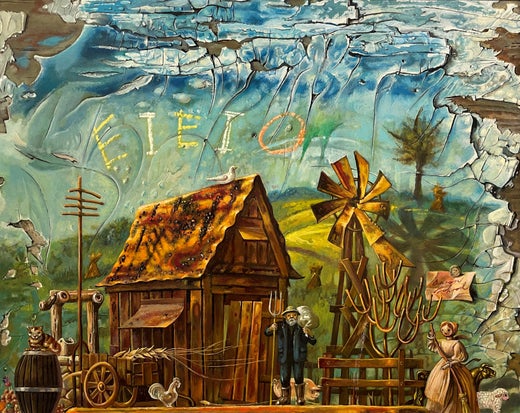
View All"The Beginning" Aaron Bohrod, Pun Humor, Magic Realism, Alphabet Letters, Text
By Aaron Bohrod
Located in New York, NY
Aaron Bohrod
The Beginning, 1990
Signed center
Oil on gesso board
10 x 8 inches
Aaron Bohrod's work has not been limited to one style or medium. Initially recognized as a regionalis...
Category
1990s Realist Animal Paintings
Materials
Oil, Board
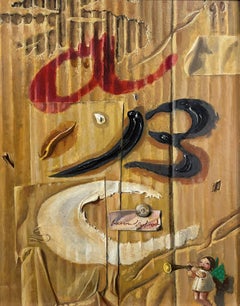
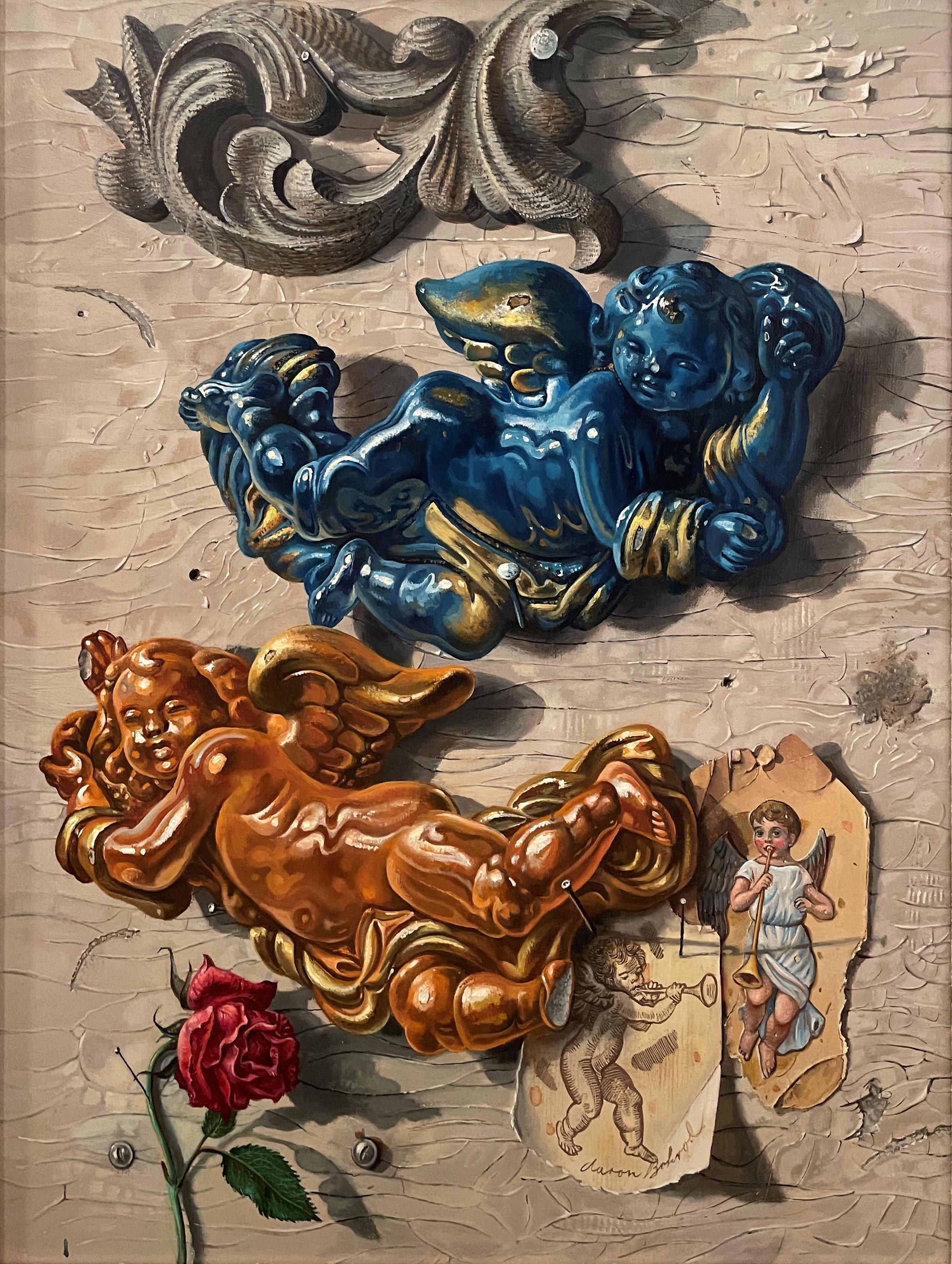
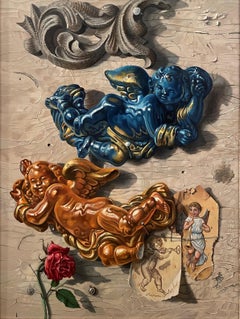
"Complementary Angels" Aaron Bohrod, Pun Humor, Magic Realism, Putti
By Aaron Bohrod
Located in New York, NY
Aaron Bohrod
Complementary Angels, 1977
Signed lower center
Oil on gesso panel
16 x 12 inches
Aaron Bohrod's work has not been limited to one style or medium. Initially recognized as a regionalist painter of American scenes, particularly of his native Chicago, Bohrod later devoted himself to detailed still-life paintings rendered in the trompe l'oeil style. He also worked for several years in ceramics and wrote a book on pottery.
Born in 1907, Bohrod began his studies at Chicago's Crane Junior College in 1925, and two years later enrolled in the Art Institute of Chicago. But it was at the Art Students League in New York City, from 1930 to 1932, that he studied under the man believed to be his most significant early influence, John Sloan. Sloan's romantic realism is reflected in the many depictions of Chicago life...
Category
1970s Realist Animal Paintings
Materials
Oil, Board
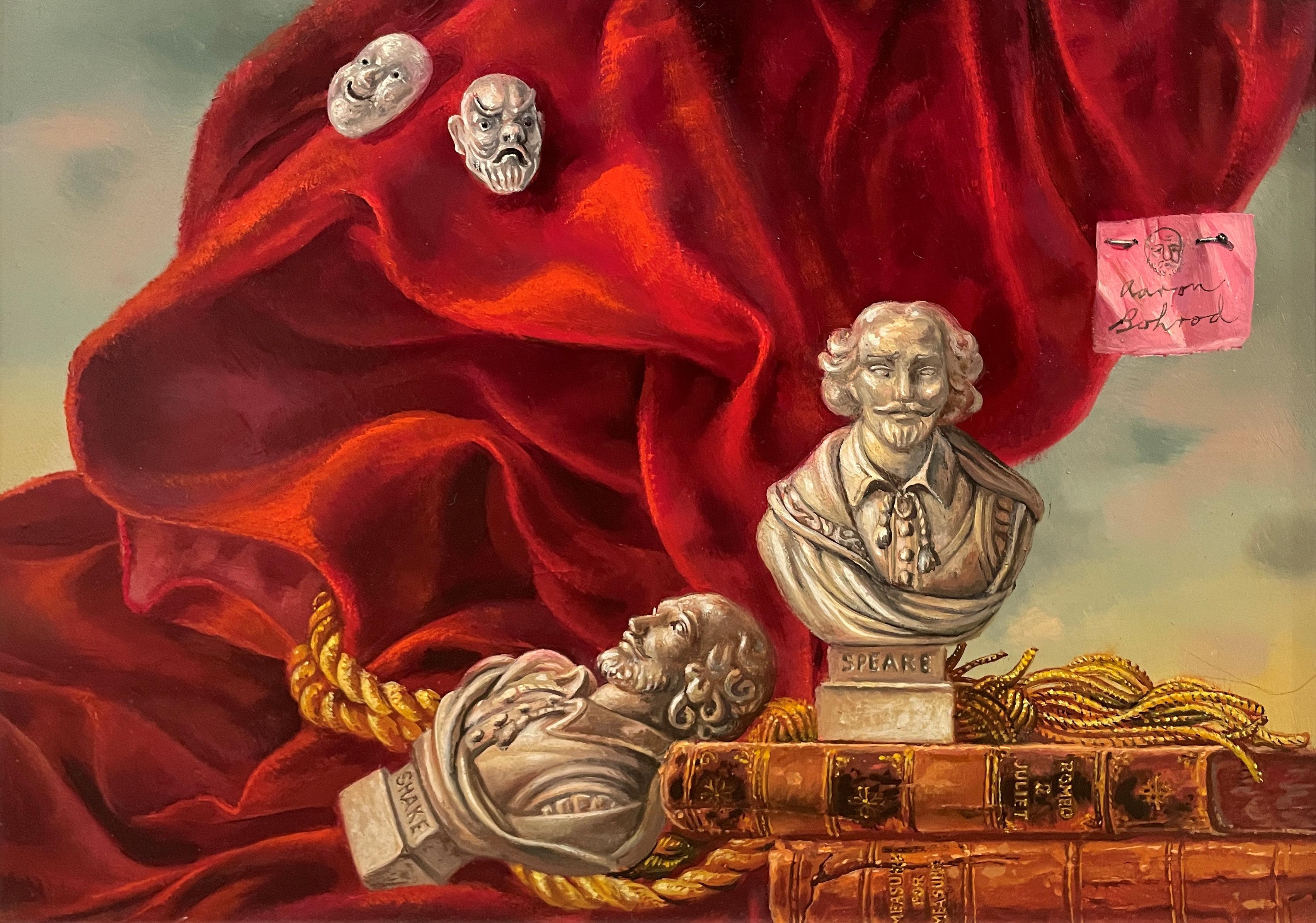
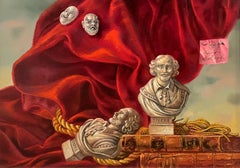
"Double Bill" Aaron Bohrod, Pun Humor, Magic Realism, Shakespeare, Theater
By Aaron Bohrod
Located in New York, NY
Aaron Bohrod
Double Bill, 1990
Signed upper right
Oil on gesso panel
9 x 12 inches
Aaron Bohrod's work has not been limited to one style or medium. Initially recognized as a regiona...
Category
1990s Realist Animal Paintings
Materials
Oil, Board
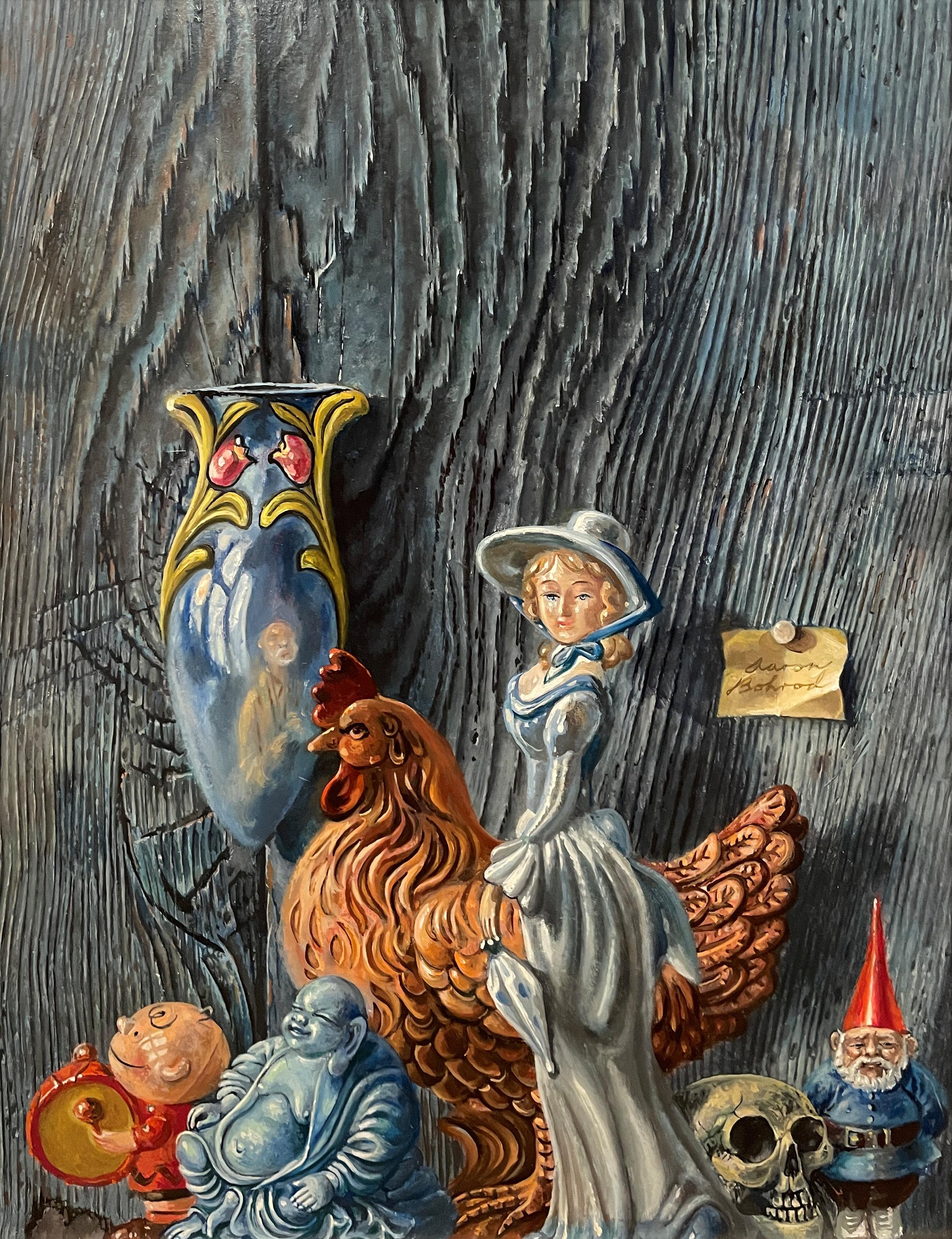
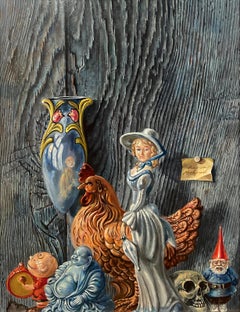
"Gallimaufry" Aaron Bohrod, Realism, Surrealism, Charlie Brown, Buddha, Gnome
By Aaron Bohrod
Located in New York, NY
Aaron Bohrod
Gallimaufry, 1989
Signed on the right
Oil on gesso panel
14 x 11 inches
Aaron Bohrod's work has not been limited to one style or medium. Initially recognized as a regionalist painter of American scenes, particularly of his native Chicago, Bohrod later devoted himself to detailed still-life paintings rendered in the trompe l'oeil style. He also worked for several years in ceramics and wrote a book on pottery.
Born in 1907, Bohrod began his studies at Chicago's Crane Junior College in 1925, and two years later enrolled in the Art Institute of Chicago. But it was at the Art Students League in New York City, from 1930 to 1932, that he studied under the man believed to be his most significant early influence, John Sloan. Sloan's romantic realism...
Category
1980s Realist Animal Paintings
Materials
Oil, Board
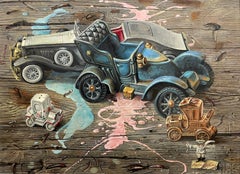
"Autobiography" Aaron Bohrod, Pun Humor, Cars, Realism, Motoring
By Aaron Bohrod
Located in New York, NY
Aaron Bohrod
Autobiography, 1991
Signed lower right
Oil on gesso board
12 x 16 inches
Aaron Bohrod's work has not been limited to one style or medium. Initially recognized as a regionalist painter of American scenes, particularly of his native Chicago, Bohrod later devoted himself to detailed still-life paintings rendered in the trompe l'oeil style. He also worked for several years in ceramics and wrote a book on pottery.
Born in 1907, Bohrod began his studies at Chicago's Crane Junior College in 1925, and two years later enrolled in the Art Institute of Chicago. But it was at the Art Students League in New York City, from 1930 to 1932, that he studied under the man believed to be his most significant early influence, John Sloan. Sloan's romantic realism is reflected in the many depictions of Chicago life...
Category
1990s Realist Animal Paintings
Materials
Oil, Board
"Old McDonald
s Farm" Aaron Bohrod, Pun Humor, Magic Realism, Midwestern Rural
By Aaron Bohrod
Located in New York, NY
Aaron Bohrod
Old McDonald's Farm, 1989
Signed lower right
Oil on gesso board
14 x 18 inches
Aaron Bohrod's work has not been limited to one style or medium. Initially recognized as ...
Category
1980s Realist Animal Paintings
Materials
Oil, Board
You May Also Like
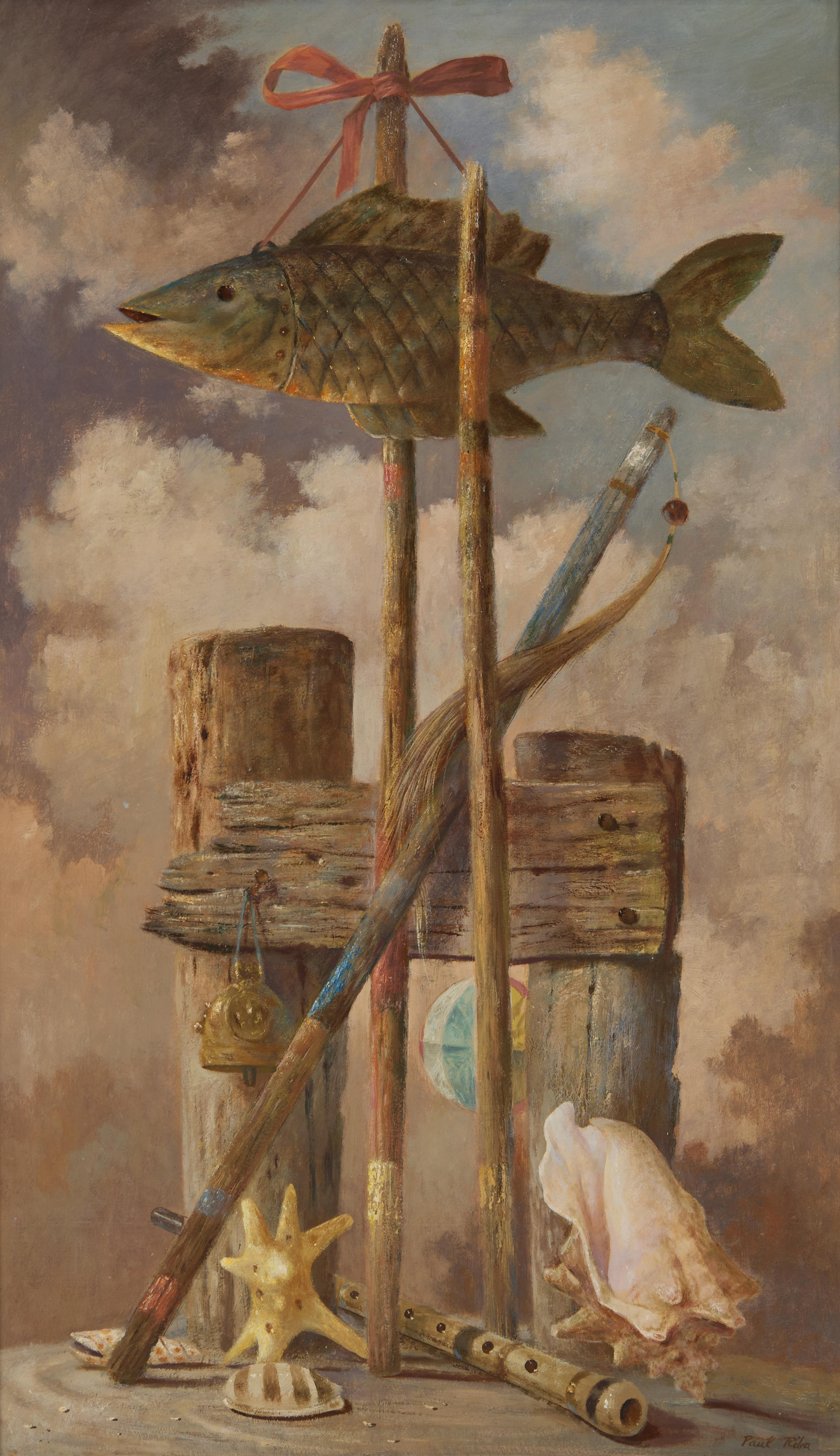
Mid-20th Century Magical Realism, Surrealist Painting, Cleveland School Artist
By Paul Riba
Located in Beachwood, OH
Paul Riba (American, 1912-1977)
Untitled
Oil on panel
Signed lower right
30 x 18 inches
39.25 x 27.25 inches, framed
Paul Riba was a painter of Magic Realism. He explored the unrea...
Category
20th Century Surrealist Figurative Paintings
Materials
Oil
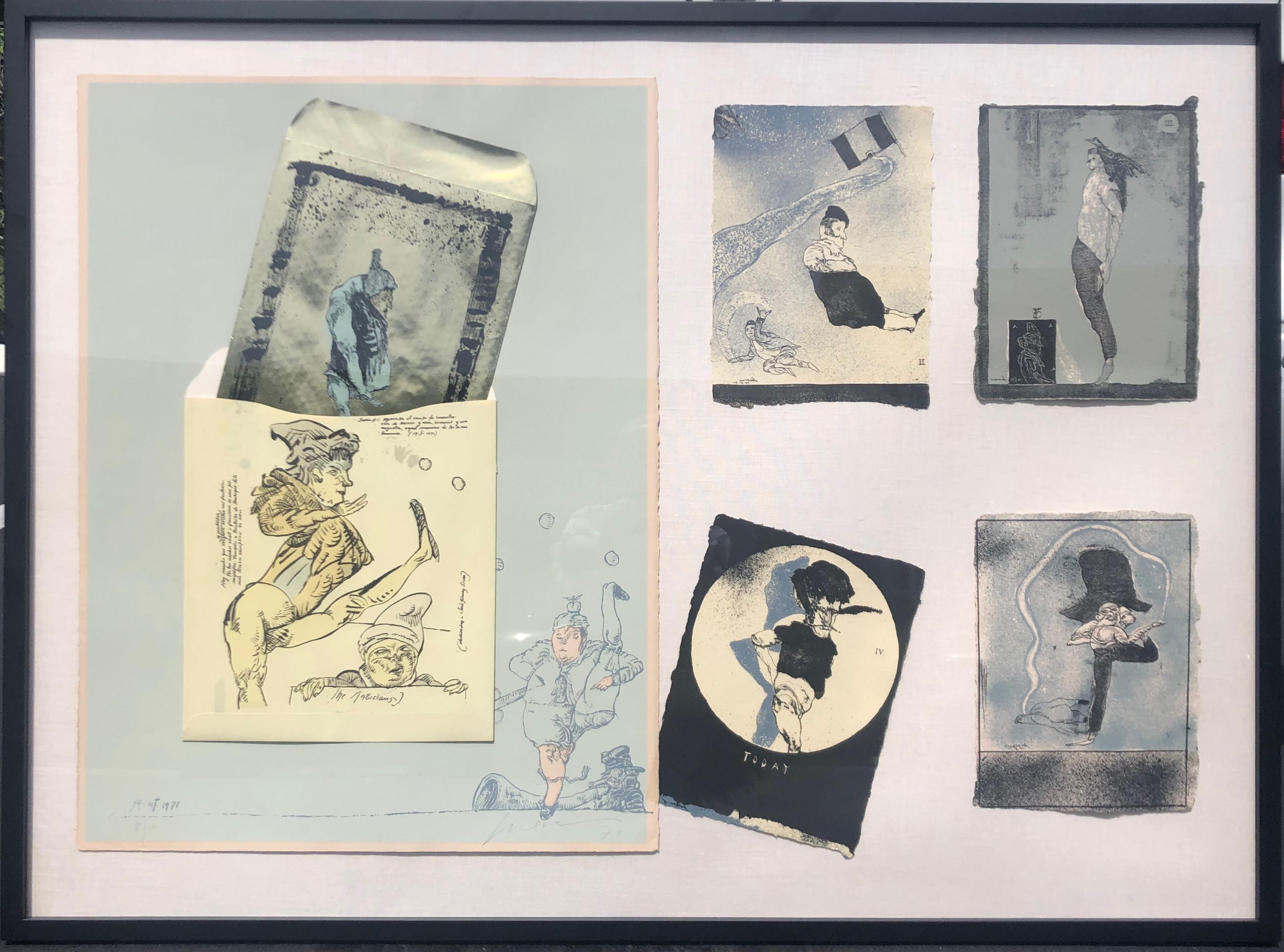
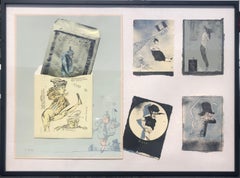
The Magicians Message From Cuevas
Comedies
By José Luis Cuevas
Located in Lake Worth Beach, FL
The Magicians Message From Cuevas' Comedies.
Screenprint with collage additions and five lithographs from a portfolio
of ten lithographs (one with screenprint and embossing, one with embossing)
and five screenprints (two double-sided, one with collage additions).
Pencil signed and dated 1971, edition 84/100, blindstamp visible, published by Collector's Press, San Francisco.
Framed under Plexiglas.
Jose Louis Cuevas was born in Mexico City in 1933 -2017.
A master draftsman, Jose Luis Cuevas played a pivotal role in Latin America's drawing and printmaking renaissance of the sixties and seventies. He is also associated with Latin America's neofigurative movement, along with artists such as Fernando Botero and Antonio Segui. By the age of fourteen, he had illustrated numerous periodicals and books and had had his first exhibition in Mexico City. In 1953 Cuevas published La cortina del nopal (The Cactus Curtain), an article condemning aspects of the Mexican Mural movement and advocating greater artistic freedom. This philosophy inspired the founding in 1960 of the group Nueva Presencia, which he joined for a brief time. It promoted individual expression and figurative art reflecting the contemporary human condition.
Cuevas' work was influenced by the graphic art of Goya and Picasso as well as by Posada and Orozco, whose representations of deformed creatures, degraded humanity and prostitutes were of particular thematic interest. Over the years, he has paid homage to his favorite painters as well as writers, such as Dostoevsky, Kafka, Quevedo and Sade, in numerous series of drawings and prints. Cuevas has said that his drawing represents the solitude and isolation of contemporary man and man's inability to communicate. It is for this reason that he often distorts and transforms the human figure to the point of uniqueness.
Cuevas has had solo exhibitions in museums and galleries throughout the world including the:
University of Texas, Austin, 1961, the San Francisco Museum of Art, California,1970, the Museo de Arte Moderno, Mexico City, 1972, Museo de Arte Contemporaneo, Caracas, 1974, Phoenix Art Museum, Arizona, 1975, Musee d'Art Moderne, Paris, 1976. His work was included in Four Masters of Line: Jose Luis Cuevas, Alexander Calder, Stuart Davis, and Morris Graves, Musee de la Napoule, France, 1957 and in The Emergent Decade, Cornell University and Solomon R. Guggenheim Museum, New York, 1965. Among his many awards are First International Prize for Drawing, Biennial of Sao Paulo, 1959, First Prize, International Black and White Exhibition, Lugano, Switzerland, 1962, First International Prize for Printmaking, Triennial of Graphic Arts, New Delhi, India, 1968, First Prize, III Latin American Print...
Category
1970s Modern Figurative Prints
Materials
Etching, Lithograph
Untitled (Fantastic Scene)
By Michael Bowen
Located in San Francisco, CA
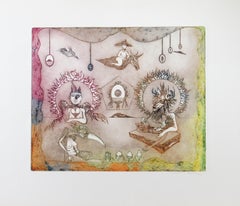
This artwork "Untitled, Fantastic Scene" c.1975 is an original color etching with aquatint on wove paper by American surrealist artist Michael Bowen, 1937-2009. It is hand signed in pencil by the artist. The plate mark (image) size is 14.85 x 18 inches, sheet size is 21.5 x 26 inches. It is in excellent condition, has never been framed.
About the subject:
Nowhere is the intertwining of metaphysical, biographic and social narratives more evident than in the Café Life series painted in the 1980’s. Though the “series” was done in the 80’s, the pieces really revive the spirit of the Beat café scene, which began in the mid-1950’s and which was so instrumental to the particular spiritual and social vibe of the counter culture. And his Café Life observations continue over his artist life with scenes, such as the ones here, from Los Angles, Bolinas, Mexico and Italy.
About the artist:
Michael Bowen (December 8, 1937 – March 7, 2009) was an American fine artist known as one of the co-founders of the late 20th and 21st century Visionary art movements. His works include paintings on canvas and paper, 92 intaglio etchings based on Jungian psychology, assemblage, bronze sculpture, collage, and handmade art books. An icon of the American Beat Generation and the 1960s counterculture, Bowen is also known for his role in inspiring and organizing the first Human Be-In in San Francisco. Chronicled in books and periodicals reflecting on the turbulent 1960s, Bowen's historical impact on both the literary and visual art worlds is well documented. He remains influential among avant-garde art circles around the world. He started his art career at age 17, when he joined the American installation artist Ed Kienholz in his Los Angeles studio. There he met and joined with other influential Beat Generation artists including Wallace Berman, John Altoon, and Dennis Hopper. Bowen participated in the construction of the Ferus Gallery and Now Gallery created by Ed Kienholz and curated by Walter Hopps. Bowen attended the Chouinard Art Institute for several years during his formative artistic experiences in Los Angeles. In the late 50s and early 60s, Bowen continued his spiritual training and research. He investigated and practiced a variety of occult topics, Eastern philosophies, and mysticism, and his artwork reflected these themes. Bowen is often referred to as a mystic artist. As a lifelong student of the Bhagavad-Gita, Bowen's entire career has emulated the spiritual warrior archetype of Arjuna, fighting for the Bill of Rights of the United States Constitution. Michael Bowen moved to San Francisco in the late 1950s, and along with fellow artist comrades Arthur Monroe...
Category
Late 20th Century Surrealist Figurative Prints
Materials
Etching, Aquatint
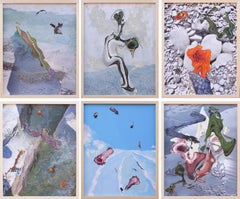
Set of 6 Paintings. From the Medium - Screen Time series
Located in Miami Beach, FL
In this project, exploring the fluid condition between the virtual and real world, the artist seek to materialize my experiences in digital environments - whether browsing through G...
Category
2010s Contemporary Mixed Media
Materials
Canvas, Wood, Mixed Media, Oil, Giclée
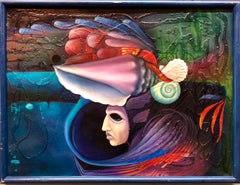
Magic Realist Surrealist Latin American Naive Fantasy Painting
By German Ramon Duron Lanza
Located in Surfside, FL
Magic realist fantasy painting in the manner of Ernst Fuchs and Arik Brauer.
Naïve art is any form of visual art that is created by a person who lacks the formal education and training that a professional artist undergoes (in anatomy, art history, technique, perspective, ways of seeing). Unlike folk art, naïve art does not necessarily evince a distinct cultural context or tradition. Naïve art is recognized, and often imitated, for its childlike simplicity and frankness. Paintings of this kind typically have a flat rendering style with a rudimentary expression of perspective.
One particularly influential painter of "naïve art" was Henri Rousseau (1844–1910), a French Post-Impressionist who was discovered by Pablo Picasso.
Naïve art is often seen as outsider art that is by someone without formal (or little) training or degree. While this was true before the twentieth century, there are now academies for naïve art. Naïve art is now a fully recognized art genre, represented in art galleries worldwide.
Museums devoted to naïve art now exist in Kecskemét, Hungary; Riga, Latvia; Jaen, Spain; Rio de Janeiro, Brasil; Vicq France and Paris. "Primitive art" is another term often applied to art by those without formal training, but is historically more often applied to work from certain cultures that have been judged socially or technologically "primitive" by Western academia, such as Native American, sub saharan African or Pacific Island art (see Tribal art). This is distinguished from the self-conscious, "primitive" inspired movement primitivism. Another term related to (but not completely synonymous with) naïve art is folk art.
There also exist the terms "naïvism" and "primitivism" which are usually applied to professional painters working in the style of naïve art (like Paul Gauguin, Mikhail Larionov, Paul Klee).
At all events, naive art can be regarded as having occupied an "official" position in the annals of twentieth-century art since - at the very latest - the publication of the Der Blaue Reiter, an almanac in 1912. Wassily Kandinsky and Franz Marc, who brought out the almanac, presented 6 reproductions of paintings by le Douanier' Rousseau (Henri Rousseau), comparing them with other pictorial examples. However, most experts agree that the year that naive art was "discovered" was 1885, when the painter Paul Signac became aware of the talents of Henri Rousseau and set about organizing exhibitions of his work in a number of prestigious galleries.
The Earth Group (Grupa Zemlja) were Croatian artists, architects and intellectuals active in Zagreb from 1929 to 1935. The group included the painters Krsto Hegedušić, Edo Kovačević, Omer Mujadžić, Kamilo Ružička, Ivan Tabaković, and Oton Postružnik, the sculptors Antun Augustinčić, Frano Kršinić, and the architect Drago Ibler.
A term applied to Yugoslav (Croatian) naive painters working in or around the village of Hlebine, near the Hungarian border, from about 1930. Some of the best known naive artists are Dragan Gaži, Ivan Generalić, Josip Generalić, Krsto Hegedušić, Mijo Kovačić, Ivan Lacković-Croata, Franjo Mraz, Ivan Večenaj and Mirko Virius.
Camille Bombois (1883–1970) Ferdinand Cheval, known as 'le facteur Cheval' (1836–1924)
Henry Darger (1892–1973) L. S. Lowry (1887–1976) Grandma Moses, Anna Mary Robertson (1860–1961) Nikifor (1895–1968) Poland, Horace Pippin (1888–1946) Jon Serl (1894-1993) United States
Alfred Wallis (1855–1942) Scottie Wilson (1890–1972) Gesner Abelard (b. 1922) Jan Balet (1913–2009) Michel Delacroix (b. 1933) France Howard Finster (1916–2001) Ivan Rabuzin (1921–2008)
Spontaneous Art Museum in Brussels
Art en Marge Museum in Brussels
MADmusée in Liege
International Museum of Naive Art of Brazil in Cosme Velho, Rio de Janeiro
Gallery Jacques Ardies in São Paulo
Musée international d'art naïf de Magog in Magog
Croatian Museum of Naïve Art in Zagreb
Gallery of Croatian Naïve Art...
Category
20th Century Folk Art Figurative Paintings
Materials
Canvas, Acrylic
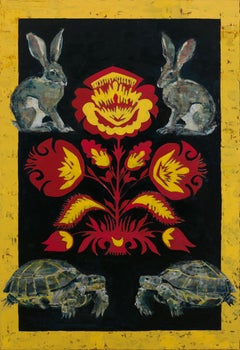
Time Is Not a Machine
By Brian Keith Stephens
Located in Denver, CO
"Time Is Not a Machine," is an original oil painting by Brian Keith Stephens. It is unframed, but ready-to-hang.
Artist Statement
How to capture the past...
Category
21st Century and Contemporary Realist Figurative Paintings
Materials
Wax, Cotton, Oil
More Ways To Browse
Vintage Magic Art
Life Magazine Cover
Magic Realism Art
Curry John Steuart
Magnificent Seven
Equine Art Paintings
Impressionist Bird Painting
Original Dog Art
Crow Painting
Horse Post
Antique Equestrian Art
Parrot Paintings
Blue Hunt Slonem
Buffalo Painting
El Salvador
Koi Paintings
Landscape Painting With Animals
Chicken Oil Painting