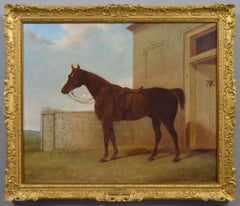
Items Similar to Dark Bay Horse by a Stone Wall
Want more images or videos?
Request additional images or videos from the seller
1 of 13
B. A. HoweDark Bay Horse by a Stone Wall
$2,454.50
£1,800
€2,090.14
CA$3,382.18
A$3,717.84
CHF 1,951.85
MX$44,207.76
NOK 25,066.15
SEK 22,832.56
DKK 15,616.71
About the Item
Little is known of the life and career of the painter B. A. Howe, who appears to have been active in Britain during the mid- to late-nineteenth century. Works signed with this name suggest an artist engaged in portraiture and animal painting, genres popular among middle-class patrons of the Victorian period.
A painting titled Portrait of a Scottish Deerhound (dated 1869) provides the only securely recorded example of Howe’s work, indicating a competence in the detailed naturalism favored by British sporting and animal painters of the time. Other attributed works, including female portraits, reveal a restrained palette and attention to fabric and pose consistent with provincial portrait practice of the mid-nineteenth century.
No record of exhibition at the Royal Academy, Royal Scottish Academy, or other major institutions has been located, suggesting that Howe may have worked outside London’s professional art circles—perhaps as a regional or itinerant artist. The initials “B. A.” remain unidentified, and neither the artist’s full name nor dates of birth and death are presently known.
Despite the scarcity of biographical data, the surviving works attributed to B. A. Howe contribute to the broader understanding of Victorian domestic portraiture and the culture of private commission that flourished across Britain in the mid-nineteenth century.
This painting depicts a dark brown (bay) horse shown in profile, standing before a curved stone wall partly overgrown with a creeping plant. Beyond the wall rise a pair of slender trees, their foliage softly silhouetted against a muted sky. At the base of the composition, a stone fountain or trough provides a focal point, toward which the horse gently inclines its head to drink.
The animal is rendered with careful attention to anatomy and coat texture, displaying the naturalistic precision characteristic of mid-nineteenth-century British equine portraiture. The scene is composed with quiet balance and restraint: the gentle curve of the wall and the contained landscape lend the image a sense of order and domestic calm, rather than dramatic action.
Howe’s subdued palette—predominantly earth browns, greys, and mossy greens—and soft atmospheric treatment of background forms reflect the influence of Victorian provincial realism, emphasizing familiarity and dignity over spectacle. The result is a work that celebrates the horse not as a racing or hunting subject but as a creature of steadfast character and beauty, seen within the tranquillity of a country estate setting.
Although little biographical information is known about B. A. Howe, this painting aligns with his few recorded works, which display a sensitive understanding of animal form and a preference for measured, contemplative compositions typical of regional British painters of the period.
It is signed on the lower left:
B. A. Howe
it bear a Christies number in the stretcher
the size of the canvas is:
49.5 x 60 cm
- Creator:B. A. Howe (British)
- Dimensions:Height: 21.86 in (55.5 cm)Width: 25.2 in (64 cm)
- Medium:
- Movement Style:
- Period:
- Condition:
- Gallery Location:GB
- Reference Number:Seller: B761stDibs: LU2841217157062
About the Seller
5.0
Vetted Professional Seller
Every seller passes strict standards for authenticity and reliability
1stDibs seller since 2025
10 sales on 1stDibs
Typical response time: 8 hours
- ShippingRetrieving quote...Shipping from: United Kingdom
- Return Policy
More From This Seller
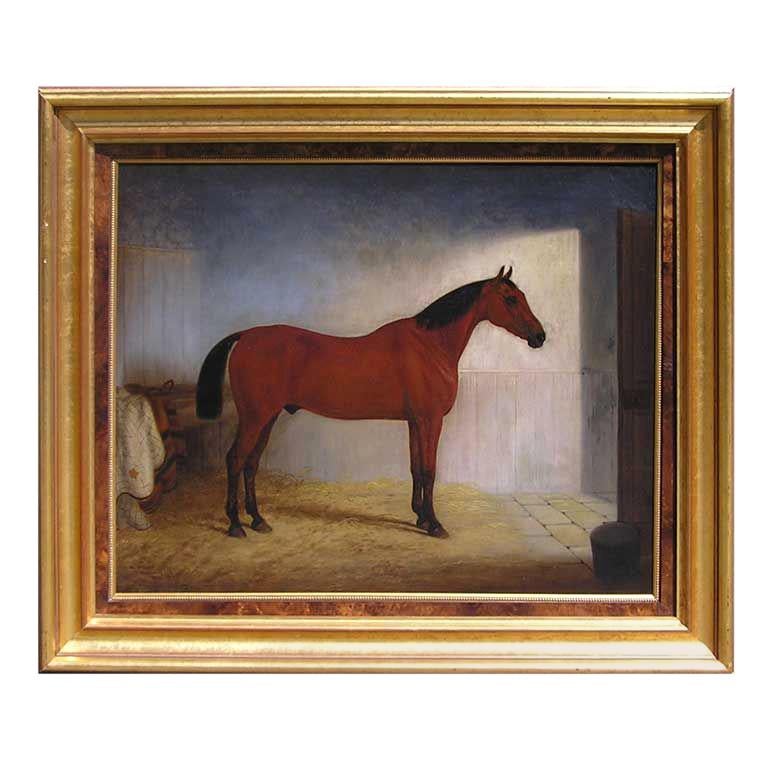
View AllBay race horse in a stable, William Osborne RHA, Irish Artist, 1823 - 1901
By William Osborne
Located in GB
This painting by William Osborne, an Irish artist from the 19th century, features a bay racehorse in a stable, captured in rich oil on canvas. The scene evokes a sense of realism and attention to detail, as Osborne was known for his vivid depictions of horses, particularly those involved in racing or in stables. The piece is signed with the artist’s initials, and still features the original frame.
William Osborne is today best remembered as the father of the artist Walter Osborne. But he was a significant artist in his own right. He specialised in painting animals especially his own terriers who were often depicted in his studio. Strickland wrote ''His pictures of dogs...
Category
Late 19th Century Animal Paintings
Materials
Canvas, Oil
$7,856 Sale Price
20% Off
Chestnut Stallion at Rest, British School 19th century
Located in GB
This 19th-century British School painting depicts a handsome chestnut horse standing proudly in a verdant rural landscape—a classic subject in ...
Category
19th Century Animal Paintings
Materials
Canvas, Oil
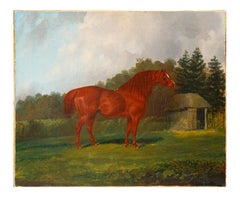
Charger (military horse) "Sphinx"
By John Ferneley Junior
Located in GB
John Ferneley Jr. (1815–1862) was born in 1815 in Melton Mowbray, Leicestershire, the eldest son of renowned sporting artist John Ferneley Sr. Growing up in a family immersed in the ...
Category
Mid-19th Century Victorian Animal Paintings
Materials
Canvas, Oil
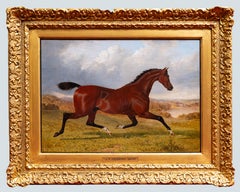
The Galloping Racehorse, John Frederick Herring Sr (1795-1865)
By John Frederick Herring Sr.
Located in GB
"The Galloping Racehorse" by John Frederick Herring Sr. is a stunning oil painting on canvas that vividly captures the dynamic motion and energy of a racehorse in full gallop. In thi...
Category
19th Century Animal Paintings
Materials
Canvas, Oil
$8,183 Sale Price
20% Off
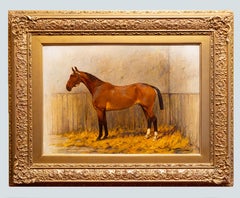
A hunter in a stable interior, by George Wright (30 June 1860 - 11 March 1944)
By George Wright
Located in GB
George Wright (1860–1944) was a British painter renowned for his equestrian art, particularly hunting and coaching scenes. Born in Leeds, England, he was the eldest of seven children...
Category
Early 20th Century Animal Paintings
Materials
Canvas, Oil
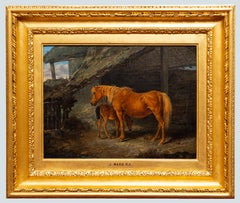
Mare and Foal in a Stable Interior, James Ward RA (1769 - 1859)
By James Ward
Located in GB
James Ward, an 18th-century English artist, captures a serene and intimate scene in his oil painting Mare and Foal in a Stable Interior. This work embodies Ward's expertise in portra...
Category
18th Century Animal Paintings
Materials
Canvas, Oil
$6,547 Sale Price
20% Off
You May Also Like
English Oil on Canvas Horse Portrait in Burl Walnut Gilt Frame, Signed. C. 1866
Located in Charleston, SC
English oil on canvas horse portrait in burl walnut giltwood and beaded molded edge frame. Signed & Dated by Artist "J. Brown Coventry 1866"
Category
Antique 1860s English William IV Paintings
Materials
Canvas, Wood, Giltwood, Paint
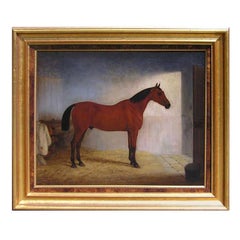
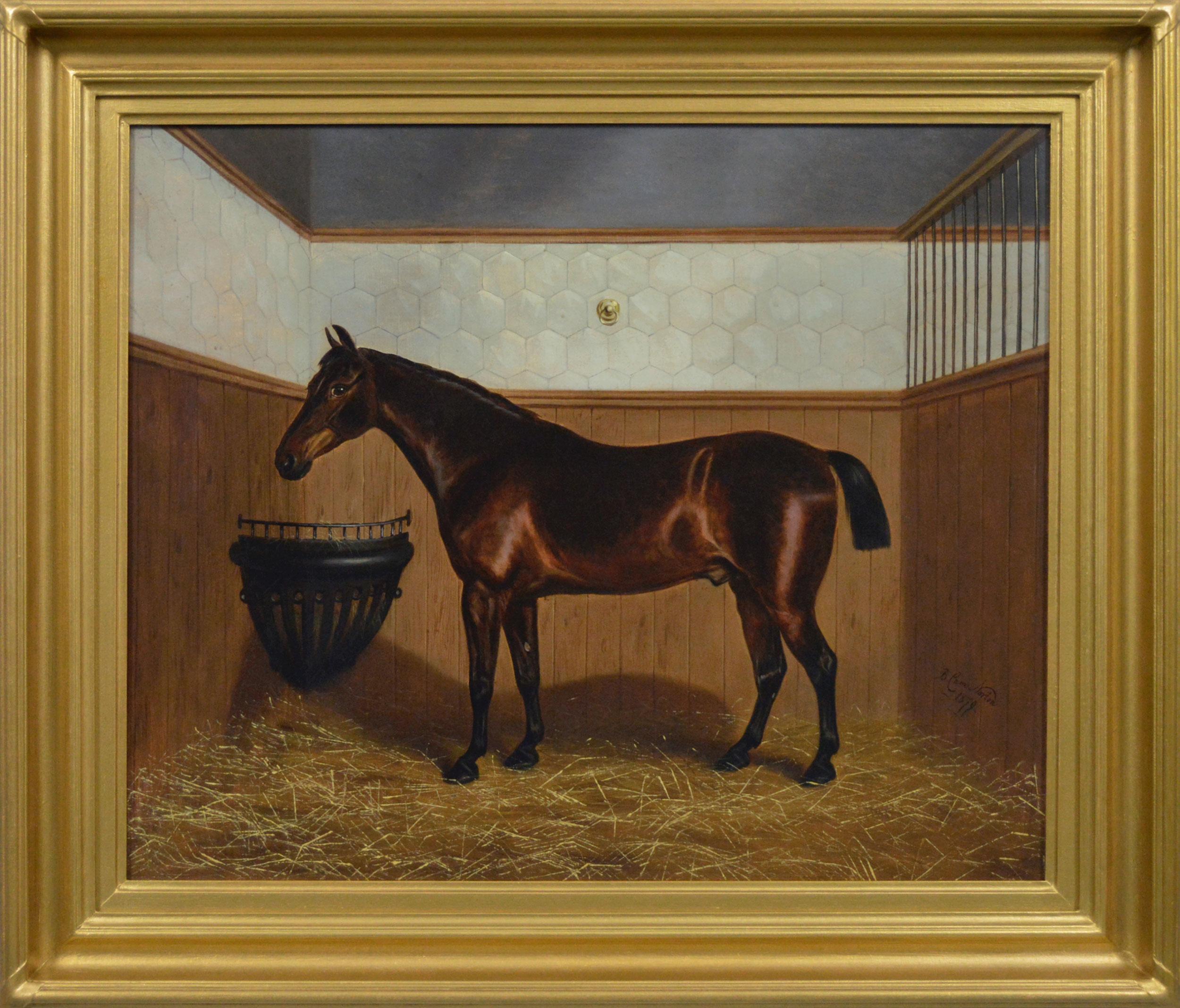
19th Century horse portrait oil painting of a bay horse in a stable
By Benjamin Cam Norton
Located in Nr Broadway, Worcestershire
Benjamin Cam Norton
British, (1834-1900)
Bay Horse in a Stable
Oil on canvas, signed & dated 1879
Image size: 19.5 inches x 23.5 inches
Size including frame: 25.5 inches x 29.5 inch...
Category
19th Century Victorian Animal Paintings
Materials
Canvas, Oil
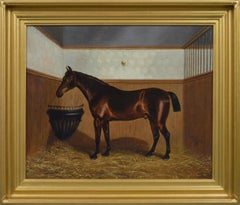
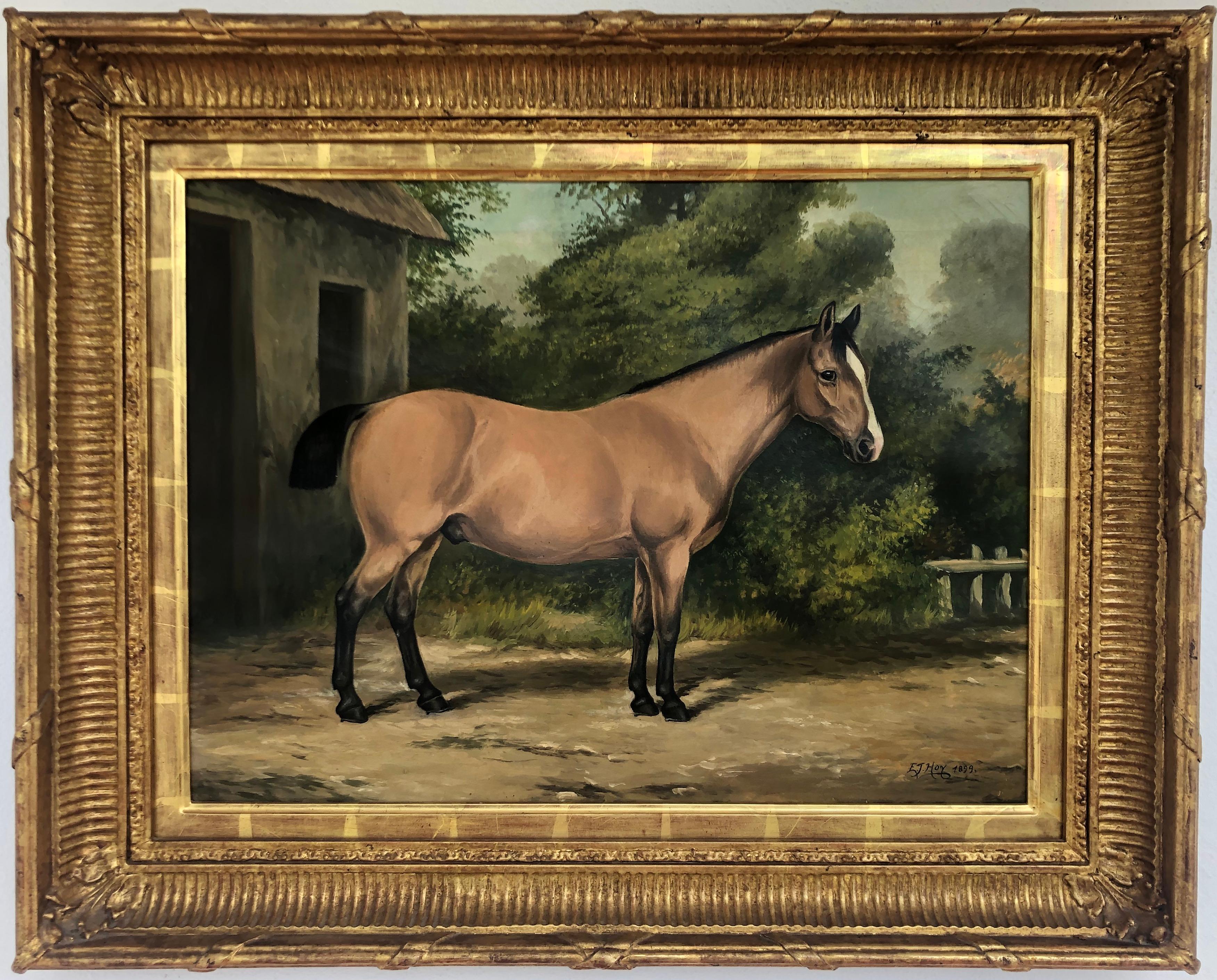
Antique English Horse Painting
Located in Lake Worth Beach, FL
Horse in front of the barn.
19th Century English by Edward John Hoy signed, dated 1899.
Beautiful custom (Richard Tobey) gilt wood frame, canvas 18x24 ...
Category
1890s Realist Animal Paintings
Materials
Canvas, Oil
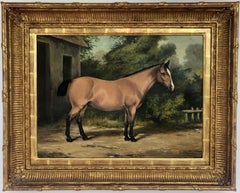
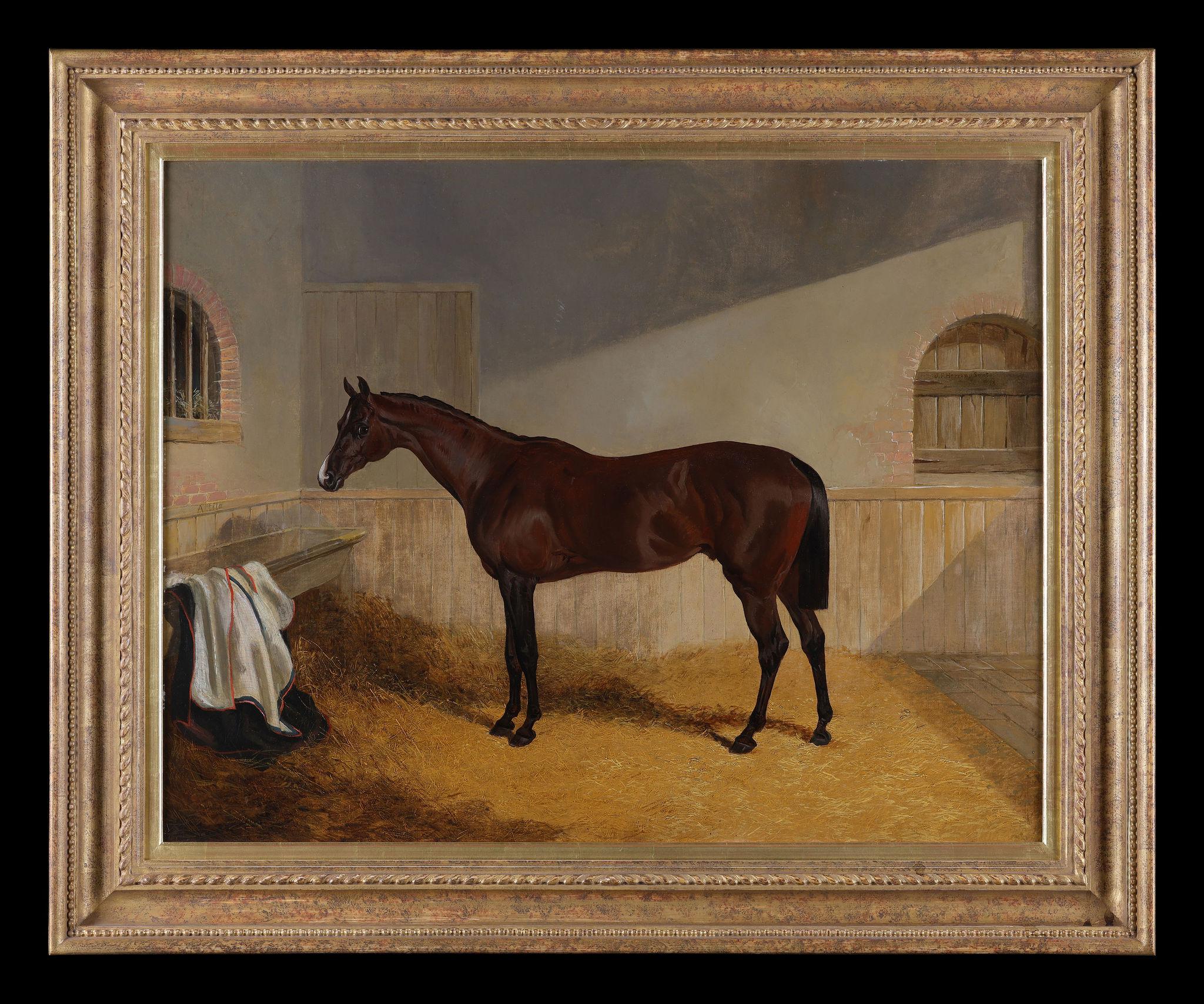
Attilla
A Chestnut Horse in a Stable. Oil on canvas
By John Frederick Herring Sr.
Located in St. Albans, GB
Canvas Size: 28 x 36" (71 x 91cm)
Outside Frame Size 36 x 44" (91 x 111cm)
It is signed on the middle right on the wooden window.
This is a stunning painting of a racehorse signed and dated J F Herring Sen 1842. The horse is named above the water trough as Attilla. As Herring was a renowned painter of racehorses it is likely that this was done for a wealthy patron who owned several. Although he painted many of the winners of the St. Ledger Cup Attilla was not one of these.
Free carriage worldwide
John Frederick HERRING Snr
1795 – 1865
A sporting painter, born in Surrey of American/Dutch extraction. At first he was a sign and coach painter. He then worked as a stable boy and coachman in Yorkshire until with the help of patrons he was able to study with Abraham Cooper RA, the only art education he appears to have had.
He specialised in racing subjects and his few hunting scenes are rare. Herring painted the start of the 1844 Derby, which became known as ‘the dirtiest Derby in history’. He sometimes collaborated with his three sons, J.F.Jnr, Benjamin Jnr and Charles. He also collaborated with James Pollard on a number of racing scenes inc. ‘The Doncaster Gold Cup’, 1838, ‘The Emperor of Russia’s Cup at Ascot’ 1845 and ‘The Dead Heat for the Doncaster Great St. Ledger’ 1849
Herring painted 33 successive winners of the St. Ledger and not surprisingly lived a large part of his life in the Doncaster area before settling in Newmarket in 1830 and then in London in 1835. He suffered serious financial difficulties after his move to London which, thanks to a great friend and patron William Taylor Copeland (1797 – 1868) head of the Spode Porcelain factory at Stoke on Trent, was resolved.
He painted many pictures of the Copeland family, some of which were adapted and used as designs on the Spode china...
Category
1840s Victorian Animal Paintings
Materials
Oil
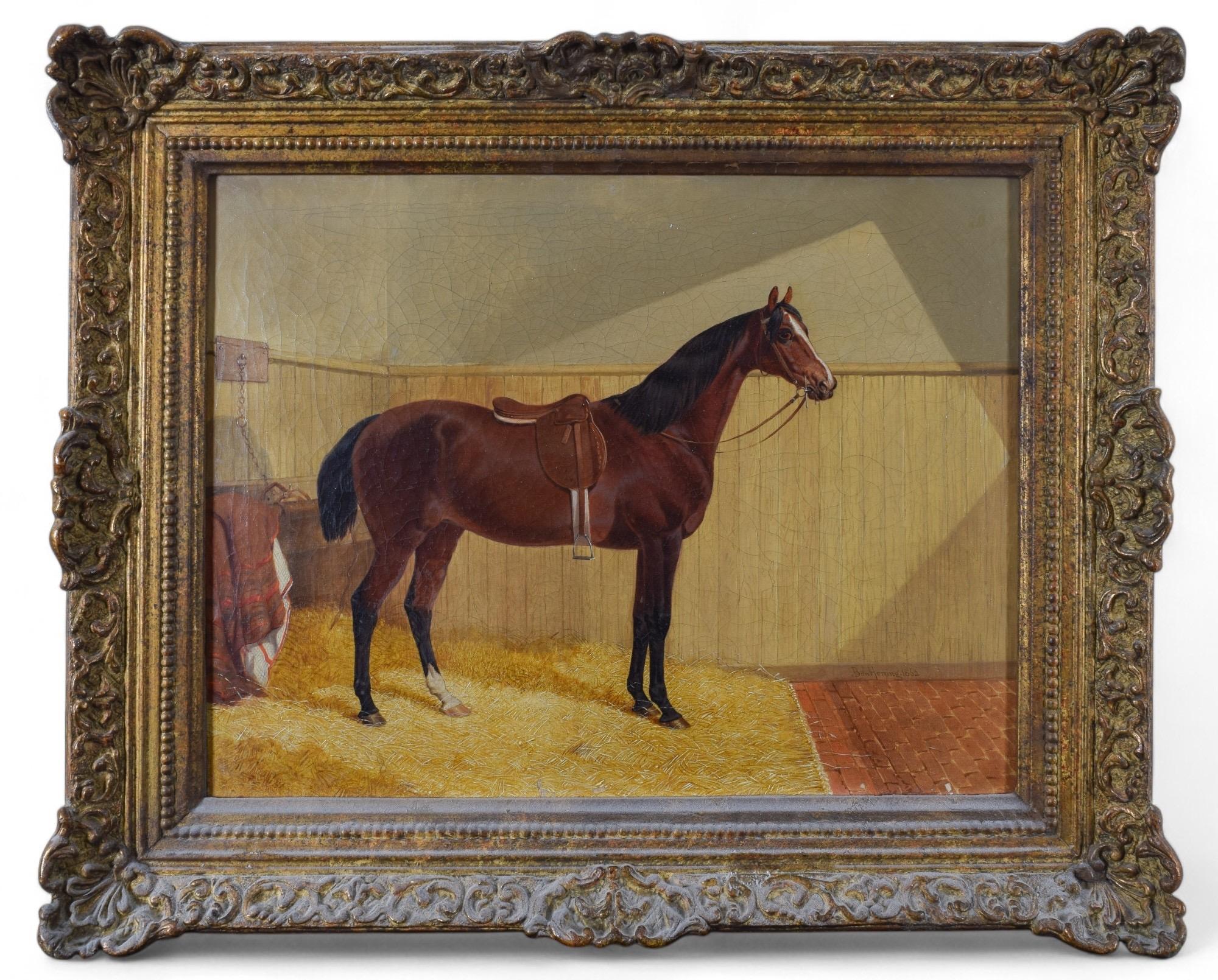
Saddled bay hunter horse Oil on canvas British 1863
Located in London, GB
Benjamin Herring Snr (British, 1830-1871)
Saddled bay hunter
1863
Oil on canvas
With old Christie's stencil verso
Property of a gentleman
From the collection of Peter Roe
Dimension...
Category
18th Century English School Animal Paintings
Materials
Oil
19th Century sporting horse portrait oil painting of a chestnut hunter
By Abraham Cooper
Located in Nr Broadway, Worcestershire
Abraham Cooper RA
British, (1787-1868)
A Surrey Hunter
Oil on canvas, signed with monogram & dated 1850, further inscribed bottom left
Image size: 24 inches x 29 inches
Size includi...
Category
19th Century Victorian Animal Paintings
Materials
Canvas, Oil