1 of 4
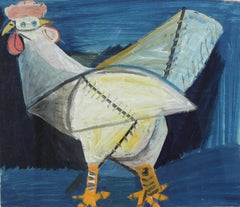
Bill TraylorStanding Hen
$85,000List Price
About the Item
- Creator:Bill Traylor (1854-1947, American)
- Dimensions:Height: 17 in (43.18 cm)Width: 18 in (45.72 cm)
- Condition:
- Gallery Location:Summerland, CA
- Reference Number:1stDibs: G12121212915
Authenticity Guarantee
In the unlikely event there’s an issue with an item’s authenticity, contact us within 1 year for a full refund. DetailsMoney-Back Guarantee
If your item is not as described, is damaged in transit, or does not arrive, contact us within 7 days for a full refund. Details24-Hour Cancellation
You have a 24-hour grace period in which to reconsider your purchase, with no questions asked.Vetted Professional Sellers
Our world-class sellers must adhere to strict standards for service and quality, maintaining the integrity of our listings.Price-Match Guarantee
If you find that a seller listed the same item for a lower price elsewhere, we’ll match it.Trusted Global Delivery
Our best-in-class carrier network provides specialized shipping options worldwide, including custom delivery.You May Also Like
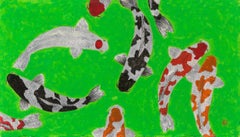
Koi Pond Conclave - Japanese Style Gyotaku Painting on Archival Kraft Paper
By Jeff Conroy
Located in Chicago, IL
In Japan they are known as Nishikigoi, or living jewels. These brilliantly colored varieties of the Amur carp have been selectively bred by family owned fisheries for generations. When I began this series of Gyotaku (Japanese fish printing) I studied the many varieties of Koi, each with their own unique colors and patterns. My particular favorites are the Tanchos which can be identified by the distinct red spot on their heads. To create these pieces I print common carp I catch myself with sumi ink using traditional techniques used by Japanese fisherman...
Category
21st Century and Contemporary Contemporary Animal Paintings
Materials
Sumi Ink, Watercolor, Archival Paper
$3,500
H 35.5 in W 63 in
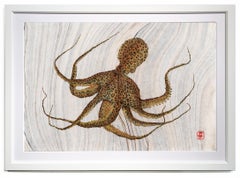
Cheetahpus - Gyotaku Style Japanese Sumi Ink Painting, Cheetah Patterned Octopus
By Jeff Conroy
Located in Chicago, IL
A newly discovered sea creature?? No, just an imaginative artist creating a Gyo-Tako print of large octopus by Jeff Conroy entitled "Cheetahpus". To achieve this remarkable painting, the artist inks the octopus using traditional sumi ink then "prints" it onto Mulberry paper - a soft, handmade paper. He then embellishes the details with watercolor to give extraordinary dimension and interest to its overall aesthetic. Framed as shown.
Jeff Conroy
Cheetahpus
sumi ink and watercolor on mulberry paper
25h x 36.50w in
63.50h x 92.71w cm
JEC080
Gyotaku - A Japanese word translated from "gyo" meaning fish and "taku" meaning stone impression and is believed to get its inspiration from Chinese stone rubbings of calligraphy, which then gave rise to printing . This tradition dates back to the mid-1800s and was used by fishermen to record their catches, but has also become an art form of its own. Prints were made using Sumi ink and Washi paper. It is rumored that Samurai would settle fishing competitions using Gyotaku prints. This original form of Gyotaku is still utilized today, and can be seen hanging in fish and tackle shops all...
Category
21st Century and Contemporary Contemporary Animal Drawings and Watercolors
Materials
Sumi Ink, Watercolor, Mulberry Paper
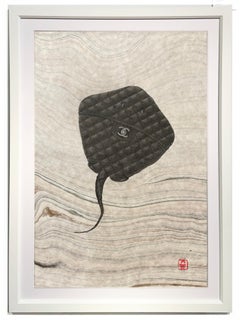
Chanel Quilted Black Caviar Ray - Sumi Ink on Mulberry Paper, Gyotaku Original
By Jeff Conroy
Located in Chicago, IL
Designers have an wide reach through out the world but have yet to reach the depths of the ocean. Artist Jeff Conroy has created this Gyotaku print of large ray entitled simply "Channel Quilted Black Caviar Ray" to fill that void. To achieve this remarkable painting, the artist applies sumi ink to a sting ray he caught himself on Florida's Gulf Coast, then "prints" it onto Marbled Mulberry paper - a soft, handmade paper. He then embellishes the details with watercolor to give extraordinary dimension and interest to its overall aesthetic. The artwork is framed as shown.
Jeff Conroy
Chanel Quilted Black Caviar Ray
sumi ink and watercolor on mulberry paper
37h x 25w in
93.98h x 63.50w cm
FRAMED DIMENSIONS
42.50h x 30.75w x 1d in
107.95h x 78.11w x 2.54d cm
JEC083
Gyotaku - A Japanese word translated from "gyo" meaning fish and "taku" meaning stone impression and is believed to get its inspiration from Chinese stone rubbings of calligraphy, which then gave rise to printing . This tradition dates back to the mid-1800s and was used by fishermen to record their catches, but has also become an art form of its own. Prints were made using Sumi ink and Washi paper. It is rumored that Samurai would settle fishing competitions using Gyotaku prints. This original form of Gyotaku is still utilized today, and can be seen hanging in fish and tackle shops all...
Category
21st Century and Contemporary Contemporary Animal Drawings and Watercolors
Materials
Sumi Ink, Watercolor, Mulberry Paper
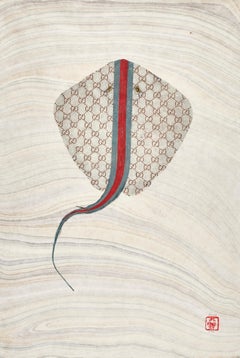
Gucci Ray - Sumi Ink on Mulberry Paper, Original Artwork, Gyotaku Style
By Jeff Conroy
Located in Chicago, IL
Designers have an wide reach through out the world but have yet to reach the depths of the ocean. Artist Jeff Conroy has created this Gyotaku print of large ray entitled simply "Gucci Ray" to fill that void. To achieve this remarkable painting, the artist applies sumi ink to a sting ray he caught himself on Florida's Gulf Coast, then "prints" it onto Marbled Mulberry paper - a soft, handmade paper. He then embellishes the details with watercolor to give extraordinary dimension and interest to its overall aesthetic. The artwork is unframed. Please contact the gallery for framing options.
Jeff Conroy
Gucci Ray
sumi ink and watercolor on mulberry paper
37h x 25w in
93.98h x 63.50w cm
JEC088
Gyotaku - A Japanese word translated from "gyo" meaning fish and "taku" meaning stone impression and is believed to get its inspiration from Chinese stone rubbings of calligraphy, which then gave rise to printing . This tradition dates back to the mid-1800s and was used by fishermen to record their catches, but has also become an art form of its own. Prints were made using Sumi ink and Washi paper. It is rumored that Samurai would settle fishing competitions using Gyotaku prints. This original form of Gyotaku is still utilized today, and can be seen hanging in fish and tackle shops all...
Category
21st Century and Contemporary Contemporary Animal Drawings and Watercolors
Materials
Sumi Ink, Watercolor, Mulberry Paper
The French Rooster
By Raymond Debieve
Located in London, GB
'The French Rooster', gouache on art paper, by Raymond Debiève (circa 1960s). A Mid-Century modern depiction of the French coq, or rooster. The origin o...
Category
1960s Modern Animal Paintings
Materials
Paper, Gouache
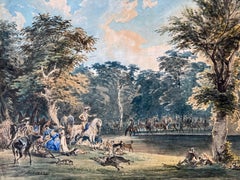
Noble Hunting Society wild Boar Deer and Dogs, Hunter
s Life, 1822, Watercolour
Located in Greven, DE
This Watercolor drawing shows a noble hunting society. The duke (?) on horse and several noble ladies accompanying the soctiety. The duke (?) gestures towards a group of hunters on h...
Category
19th Century Romantic Animal Paintings
Materials
Watercolor
$1,244 Sale Price
20% Off
H 10.95 in W 16.78 in
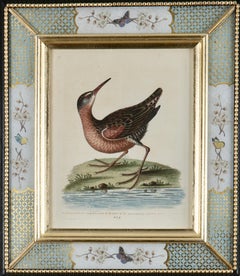
George Edwards: 18th Century Engravings of Birds
By George Edwards
Located in Richmond, GB
George Edwards: ""A History of Uncommon Birds"", 1749-1761.
A prominent English naturalist and ornithologist, George Edwards (1694 -1773) is best known for his work, ""A Natural His...
Category
18th Century Animal Drawings and Watercolors
Materials
Watercolor, Engraving
$1,650
H 15.75 in W 13.75 in
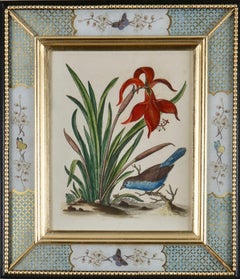
George Edwards: 18th Century Engravings of Birds
By George Edwards
Located in Richmond, GB
George Edwards: ""A History of Uncommon Birds"", 1749-1761.
A prominent English naturalist and ornithologist, George Edwards (1694 -1773) is best known for his work, ""A Natural His...
Category
18th Century Animal Drawings and Watercolors
Materials
Watercolor, Engraving
$1,650
H 15.75 in W 13.75 in
George Edwards: 18th Century Engravings of Birds
By George Edwards
Located in Richmond, GB
George Edwards: ""A History of Uncommon Birds"", 1749-1761.
A prominent English naturalist and ornithologist, George Edwards (1694 -1773) is best known for his work, ""A Natural His...
Category
18th Century Animal Drawings and Watercolors
Materials
Watercolor, Engraving
$1,650
H 15.75 in W 13.75 in
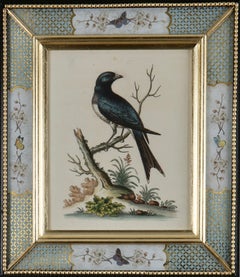
George Edwards: 18th Century Engravings of Birds
By George Edwards
Located in Richmond, GB
George Edwards: ""A History of Uncommon Birds"", 1749-1761.
A prominent English naturalist and ornithologist, George Edwards (1694 -1773) is best known for his work, ""A Natural His...
Category
18th Century Animal Drawings and Watercolors
Materials
Watercolor, Engraving

$1,650
H 15.75 in W 13.75 in
Still Thinking About These?
All Recently ViewedMore Ways To Browse
Hen Painting
Egret Painting
Panda Painting
Red Bunny
Unicorn Painting
Abraham Lincoln Portrait
Arabian Horse Art
Calf Painting
Cheetah Paintings
Donkey Oil Painting
Golden Retriever
Highland Cattle Painting
Hunt Slonem White Bunny
Hunting Dogs Oil Painting
Jockey Silks
Oil Painting Pigeon
English Hunting Oil Painting
Goldfish Painting