Items Similar to Horses in a Landscape - Scottish 1960
s equine art oil painting female artist
Want more images or videos?
Request additional images or videos from the seller
1 of 13
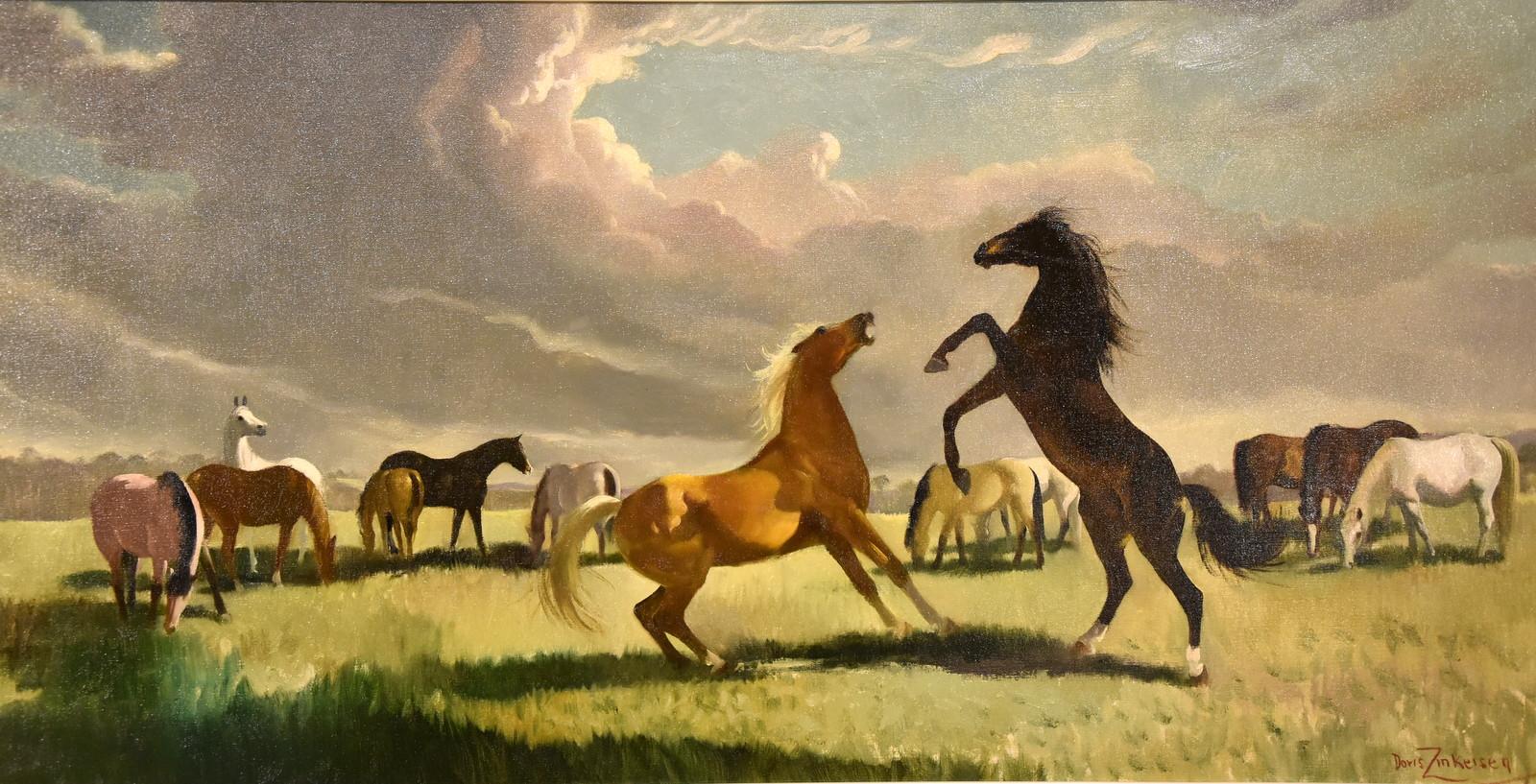
Doris ZinkeisenHorses in a Landscape - Scottish 1960
s equine art oil painting female artistCirca 1960
Circa 1960
$3,956.07
$4,945.0820% Off
£2,880
£3,60020% Off
€3,373.34
€4,216.6720% Off
CA$5,435.44
CA$6,794.2920% Off
A$5,911.64
A$7,389.5420% Off
CHF 3,132.95
CHF 3,916.1920% Off
MX$70,833.74
MX$88,542.1820% Off
NOK 39,818.19
NOK 49,772.7420% Off
SEK 36,478.88
SEK 45,598.6020% Off
DKK 25,214.38
DKK 31,517.9720% Off
About the Item
This superb oil painting of horses is by Scottish female artist Doris Zinkeisen. Painted circa 1960 the composition has six horses in a landscape. There is great impasto and brushwork and this is a lovely vibrant painting for horse lovers. Zinkeisen herself was a keen horse woman as well as an artist and loved to paint horses.
Signed Doris Zinkeisen lower right and dated.
Provenance. Wiltshire estate.
Condition. Oil on Canvas, 20 x 24 inches unframed and in good condition.
Frame. Housed in a coloured gallery frame, 31 inches by 27 inches and in good condition.
Doris Clare Zinkeisen (1898-1991) was a Scottish theatrical stage and costume designer, painter, commercial artist, and writer. She was best known for her work in theatrical design. Doris Zinkeisen was born in Clynder House in Rosneath, Argyll, Scotland. Her parents were Welsh-born Clare Bolton-Charles and Victor Zinkeisen, a timber merchant and amateur artist from Glasgow. Her father's family were originally from Bohemia and had been settled in Scotland for two hundred years. She had a younger sister, Anna Zinkeisen, who also became an artist. The family left Scotland and moved to Pinner, near Harrow in 1909. Zinkeisen attended the Harrow School of Art for four years and won a scholarship to the Royal Academy Schools in 1917 together with her sister Anna. During World War I Zinkeisen served as a Voluntary Aid Detachment at a hospital in Northwood, Middlesex.Zinkeisen shared a studio in London with her sister during the 1920s and 1930s from where she embarked on her career as a painter, commercial artist, and theatrical designer.Zinkeisen's realist style made her popular as a portraitist and she became a well-known society painter. The subject matter of her paintings, society portraiture, equestrian portraiture, and scenes from the parks of London and Paris reflect the lifestyle of the upper class at the time. An early success was her 1925 portrait of the actor Elsa Lanchester.She also worked widely in other media as an illustrator and commercial artist including producing advertising posters for several British mainline railway companies and murals for the RMS Queen Mary. A 1939 poster for the London Underground, At the Theatre, was printed but never issued due to the start of World War II. In 1944, Doris and her sister Anna were commissioned by United Steel Companies (USC) to produce twelve paintings that were reproduced in the trade and technical press in Britain, Canada, Australia and South Africa. The images were subsequently collated in a book, This Present Age, published in 1946. Zinkeisen produced a number of posters for London and North Eastern Railway (LNER), Southern Railway (SR), and the London, Midland and Scottish Railway (LMS) in the 1930s. The posters often featured historical themes such as Berwick-upon-Tweed by LNER (1930) which shows Isabella MacDuff, Countess of Buchan being punished by Edward I for crowning Robert the Bruce at Scone in 1306. In 1935, John Brown and Company Shipbuilders of Clydebank commissioned both of the Zinkeisen sisters to paint the murals in the Verandah Grill, a restaurant and night-club on the ocean liner the RMS Queen Mary. The murals, on the theme of entertainment, depicted circus and theatre scenes and can still be seen on the ship, now permanently moored in Long Beach, California. Zinkeisen was also involved in planning the interior decoration which featured a parquet dance floor surrounded by black Wilton carpets, star-studded red velvet curtains and a sweeping illuminated balustrade whose colours changed in time with the music. Writing in Vogue in 1936, Cecil Beaton described the Verandah Grill as By far the prettiest room on any ship – becomingly lit, gay in colour and obviously so successful that it would be crowded if twice its present size. The largest mural was damaged during World War II by gunnery officers tacking charts to the poster board covering the mural. After the war, Zinkeisen restored the mural and reportedly painted a mouse in the mural so there would always be a mouse on the Queen Mary, a dig at Cunard, which prided itself on having no rodents on their ships. Both sisters also contributed murals to the RMS Queen Elizabeth in 1940. Zinkeisen exhibited at the Royal Academy in 1929, at the Royal Society of Portrait Painters in London and in Paris and the United States. She received Bronze (1929), Silver (1930) and Gold (1934) Paris Salon medals for her work. By 1929 she had been elected a member of the Royal Institute of Oil Painters (ROI). Zinkeisen was a successful stage and costume designer for plays and films. Despite her success as a painter and commercial artist she was best known as a theatrical designer. During World War II, Zinkeisen joined the St John Ambulance Brigade and worked as a nurse in London helping wartime Blitz casualties having first trained as a Voluntary Aid Detachment (VAD) nurse during World War I. She worked in the casualty department in St Mary's Hospital, Paddington. Zinkeisen worked in the casualty department in the mornings and painted in the afternoons, recording the events of the day. Following the liberation of Europe in 1945, Zinkeisen was commissioned by the War Artists' Advisory Committee as a war artist for the North West Europe Commission of the Joint War Organisation of the British Red Cross Society and the Order of St John (JWO). As the organisation's staff and resources moved into newly liberated areas, Zinkeisen's role as a war artist was to record the commission's activities. Based in Brussels at the commission's headquarters she recorded the commission's post-war relief work in north west Europe including the rehabilitation and repatriation of prisoners of war and civilian internees. Zinkeisen traveled by lorry or by air (from a nearby RAF base) throughout north-west Europe making sketches which she brought back to her studio in the commission's headquarters for further work. Her work as a war artist included three days at the Bergen-Belsen concentration camp in April 1945, immediately after its liberation. Zinkeisen was one of a small number of artists who produced pictures of Bergen-Belsen in the months following its liberation. The other artists there included Leslie Cole, Mary Kessell, Sergeant Eric Taylor (one of the camp's liberators), Edgar Ainsworth, and Mervyn Peake. Her painting Human Laundry shows German orderlies washing camp inmates before they go to hospital. By the time Zinkeisen had become a war artist her palette had already darkened from the colours of her society paintings. Her war paintings use muted greys, browns, and ochres like contemporaries such as Eric Ravilious and Stanley Spencer Paintings from Zinkeisen's time as a war artist are held by the Red Cross museum and archives, the museum of the Order of St John and the Imperial War Museum. Her work was part of the painting event in the art competition at the 1948 Summer Olympics. After the war, Zinkeisen continued to work in London as a theatrical designer and held occasional exhibitions of her paintings. She designed the cover of a special edition of Everybody's Magazine to celebrate the coronation of Queen Elizabeth II in June 1953. In 1954, Zinkeisen designed the scenery and costumes for Noël Coward's musical, After the Ball, based on Oscar Wilde's play, Lady Windermere's Fan, and the Prince Littler directed play, The Little Glass Clock, written by Hugh Mills. Zinkeisen married Edward Grahame Johnstone, a naval officer in 1927 and had twin daughters in June 1928, the children's book illustrators Janet and Anne Grahame Johnstone and a son, Murray Johnstone. Zinkeisen was a fine horsewoman and won the Moscow Cup at the International Horse Show in 1934. Grahame Johnstone died in 1946 and Zinkeisen's twin girls then lived with their mother moving with her to Suffolk in 1966. Zinkeisen outlived her daughter Janet who died in an accident in 1979. Doris Zinkeisen died on 3 January 1991, in Badingham, Suffolk, aged 92.
Exhibited: Royal Academy 9, Royal Scottish Academy 7, Glasgow Institute 1, Society of Women Artists 3, Royal Hibernian Academy 1 and Paris Salon.
- Creator:Doris Zinkeisen (1898 - 1991, British)
- Creation Year:Circa 1960
- Dimensions:Height: 27 in (68.58 cm)Width: 31 in (78.74 cm)Depth: 2 in (5.08 cm)
- Medium:
- Movement Style:
- Period:
- Condition:
- Gallery Location:Hagley, GB
- Reference Number:1stDibs: LU853113404362
Doris Zinkeisen
Born in Clynder House in Rosneath, Argyll, Scotland, Zinkeisen attended the Harrow School of Art for four years. During the 1920s and ’30s, she shared a studio with her sister in London, where she started her career as a commercial artist, theatrical designer, and painter. During World War II, she joined the St. John Ambulance Brigade and worked as a nurse in London. Following the liberation of Europe in 1945, she was commissioned by the War Artists Advisory Committee. After the war she continued to work in London, producing theatrical designs and occasionally exhibiting her paintings.
About the Seller
5.0
Platinum Seller
Premium sellers with a 4.7+ rating and 24-hour response times
1stDibs seller since 2018
473 sales on 1stDibs
Typical response time: <1 hour
- ShippingRetrieving quote...Shipping from: Hagley, United Kingdom
- Return Policy
More From This Seller
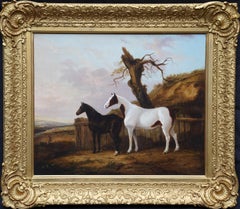
View AllPortrait of Two Horses in a Landscape - British 19thC equine art oil painting
By George Cole
Located in Hagley, England
This lovely British Victorian oil painting is attributed noted landscape and animal artist George Cole ans ascribed verso. Painted in 1840 it is a superb portrait of two horses, one ...
Category
1840s Victorian Animal Paintings
Materials
Oil
$7,692 Sale Price
20% Off
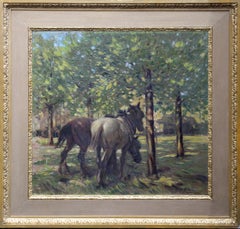
Portrait of Horses in Dappled Sunlight - British 30
s Impressionist oil painting
By Arthur Spooner
Located in Hagley, England
This beautiful British Impressionist oil painting is by noted animal artist Arthur Spooner. Painted circa 1935 it is a superb painting of two working horses standing in the shade of ...
Category
Early 20th Century Impressionist Animal Paintings
Materials
Oil
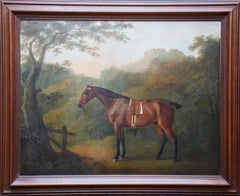
Saddled Hunter Horse in a Landscape - British Old Master equine art oil painting
By John Boultbee
Located in Hagley, England
This large superb British Old Master horse portrait oil painting is by noted artist John Boultbee. Painted circa 1790, the composition is a beautif...
Category
1790s Old Masters Animal Paintings
Materials
Oil
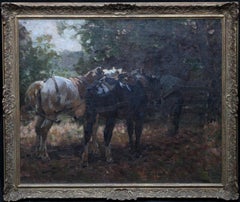
Horses at the Gate - British 1912 Post Impressionist equine art exh oil painting
By Edgar Downs
Located in Hagley, England
This wonderful Post Impressionist exhibited horses portrait oil painting is by noted British artist Edgar Downs. Painted in 1912 it was exhibited the same year at the Royal Academy London. The painting is of two magnificent horses, one white one brown, waiting patiently while a man leans over to open the gate. Beyond is a canopy of trees. The impressionist brushwork and strong impasto create a light which is vibrant and colourful. This is an excellent example of Downs' work and one can see his infinity with the natural world.
Signed and date lower right.
Provenance. Exhibited at the Royal Academy London 1912 no. 789.
Condition. Oil on canvas, image size is 36 inches by 30 inches and in good condition.
Frame. Housed in a complementary frame 44 inches by 38 inches and in good condition.
Edgar Downs, ROI, (1876–1963) was a British painter, known for painting agricultural scenes. Downs was born on 12 October 1876 at Claughton, Birkenhead, the son of William Downs. He was educated at Birkenhead School and the Academy of Fine Arts, Munich, and received a silver medal there. He exhibited paintings called Our Daily Bread and The Edge of the Bog at the Royal Academy in 1911, when his address was given as 12 Bedford Gardens, Kensington, London. His other addresses included Arun House at Clymping, West Sussex, and latterly Mudeford, Hampshire where he died. During World War I, he served as a war artist, including spells at Gallipoli in 1915 and Salonica in 1916. He was assigned to the 1st County of London Yeomanry in July 1918. One of his paintings made at this time hangs in the Headquarters of the Inns of Court & City Yeomanry. Two of his works, Gathering Kelp (1914) and Cattle Ploughing in an Open Landscape (c. 1914), are in the collection of Fordingbridge Town Council at Fordingbridge Town Hall. He was a member of the Royal Institute of Oil Painters ("ROI"), the London Sketch...
Category
1910s Post-Impressionist Animal Paintings
Materials
Oil
$10,769 Sale Price
20% Off
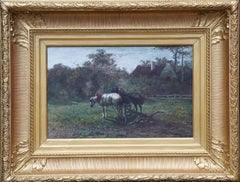
Working Horses in a Landscape - Dutch Victorian animal art equine W/C painting
Located in Hagley, England
This lovely Victorian animal landscape watercolour painting is by Dutch artist Johannes Martinus Vrolyk or Vrolijk. Painted in 1875, the painting is of two working horses, one white ...
Category
1870s Realist Animal Drawings and Watercolors
Materials
Watercolor
Race Horse Phoenix with Guilermo Kemmis - British 19th century art oil painting
Located in Hagley, England
This superb British 19th century equine oil painting is by noted horse lover, George Gascoyne. Painted in 1889, this French born chestnut horse is Phoenix. While he was essentially a miler, Phoenix (sometimes seen spelled as “Phenix”) came from a family that had produced Classic winners in France at up to 15 furlongs. He proved an excellent sire following his export to Argentina, becoming the foundation stallion for Guillermo Kemmis' breeding program at Haras Las Rosas. This painting is from his time in Argentina with Kemmis. Phoenix is depicted in a flat landscape against a vivid blue sky. A gentleman, possibly his owner, Guillermo Kemmis, stands smiling in front of him holding his reigns and gives perspective to how tall Phoenix is. Although in profile, Phoenix is turning to look at the viewer, his chestnut coat gleaming and his anatomy perfectly portrayed. This is a superb Victorian equine portrait of a noted horse in the 19th century and is a lovely example of Gascoyne's work as a horse lover.
Signed with initials and dated GG 1889 lower right.
Provenance. Inscribed "Phenix" (Cymbal -- Belle-Etoile) by George Gascoyne, Sittingbourne, Kent to reverse.
Condition. Oil on canvas, 36 inches by 28 inches and in good condition.
Frame. Housed in a wooden frame, 44 inches by 36 inches and in good condition.
HORSE BIOGRAPHY
Phoenix (FR) 1875 – 1893? Chestnut horse.
Cymbal (GB) x Belle Etoile (FR), by First Born (FR)
Family 25. While he was essentially a miler, Phoenix (sometimes seen spelled as “Phenix”) came from a family that had produced Classic winners in France at up to 15 furlongs. He proved an excellent sire following his export to Argentina, becoming the foundation stallion for Guillermo Kemmis' breeding program at Haras Las Rosas.
Race record. Complete record unavailable but as follows:
1878: Won Prix de la Forêt (FR, 1600mT, Longchamp)
1879: Won July Cup (ENG, 6FT, Newmarket July). Won Rous Memorial Stakes (ENG, 8FT, Ascot). Won Bunbury Stakes (ENG, Newmarket). 2nd Rosebery Handicap (ENG, Epsom)
1880: Won Lennox Stakes (ENG, Goodwood)
As a stallion: Phoenix was the Argentine champion sire six times, reaching the top in 1887-1890, 1892 and 1895.
Notable progeny: Hawk Eye (ARG), Lenape (ARG), Marinera (ARG), Osiris (ARG), San Martín (ARG), Surplice (ARG)
Connections: Phoenix was owned by Comte Frédéric de Lagrange. After being exported to Argentina, he stood at Haras Las Rosas, the stud farm of leading Argentine breeder Guillermo Kemmis. His last known foals were born in 1894.
Pedigree notes: Phoenix is outcrossed through five generations. Sired by Cymbal, a son of 1861 Derby Stakes winner Kettledrum, he is out of Belle Etoile, whose half sister Garenne (by Gladiator or Ethirion or Freystrop) is the second dam of 1894 Prix Royal-Oak (French St. Leger) winner Gouvernail and the third dam of 1894 Prix du Jockey Club (French Derby...
Category
1880s Realist Animal Paintings
Materials
Oil
You May Also Like
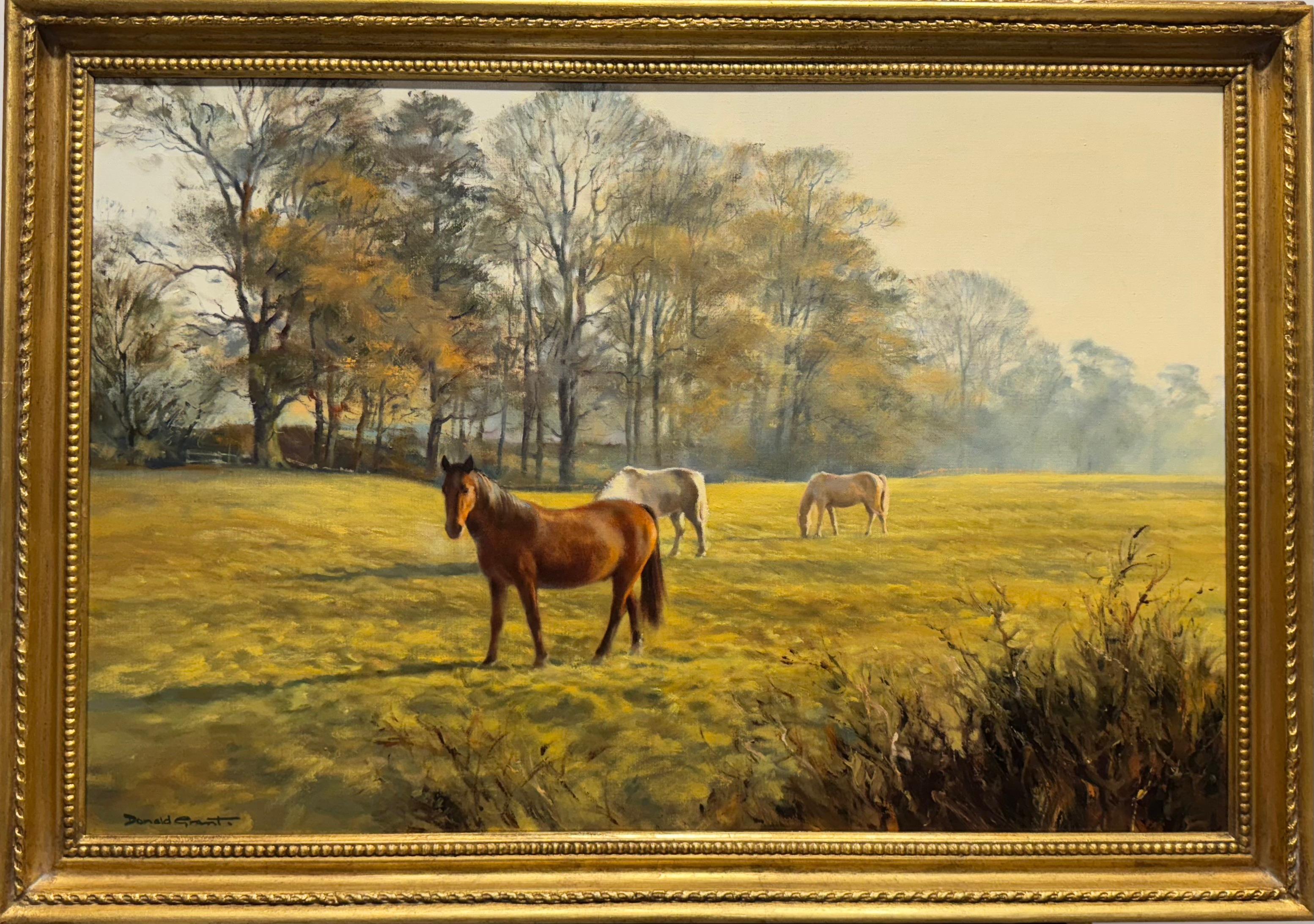
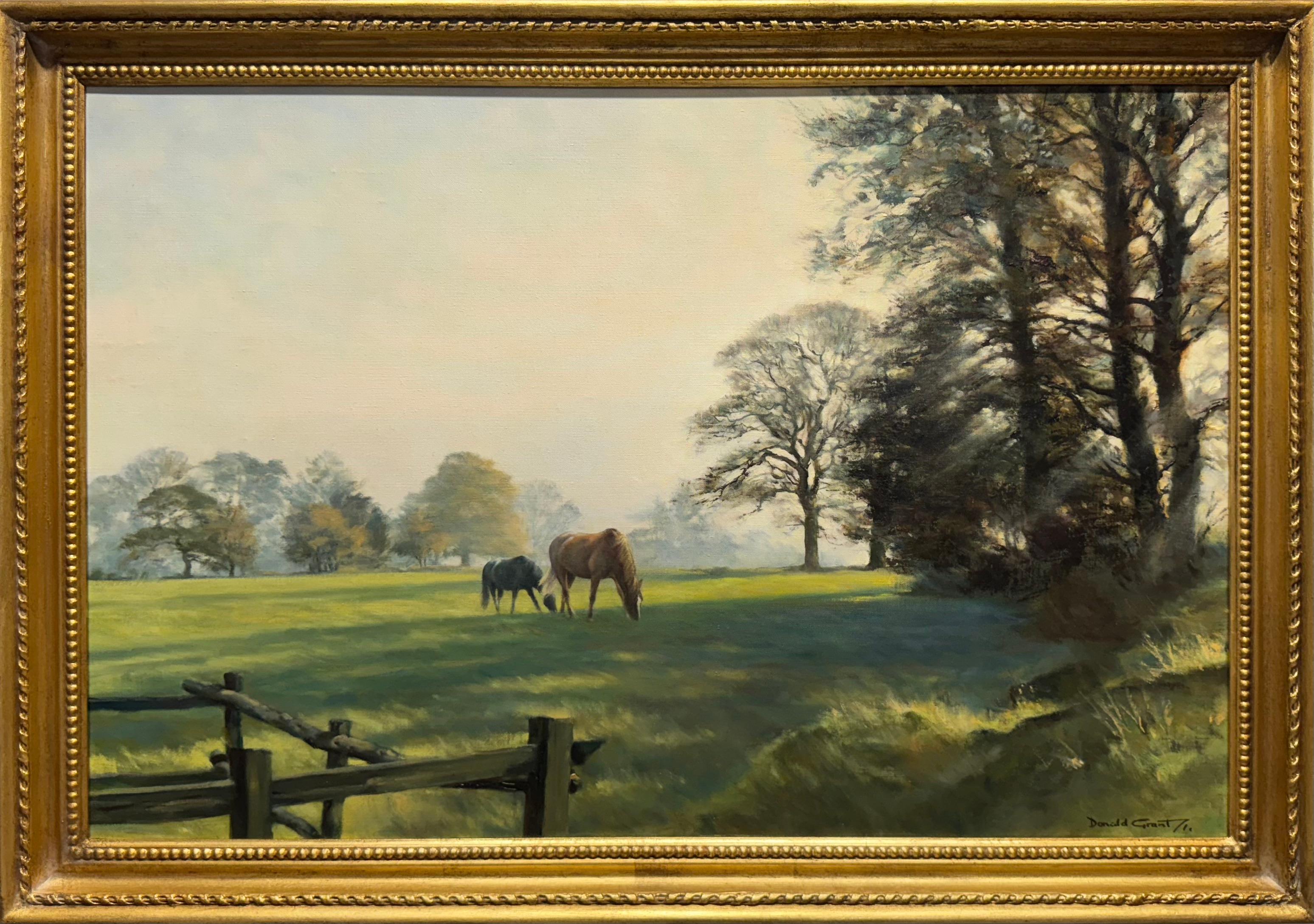
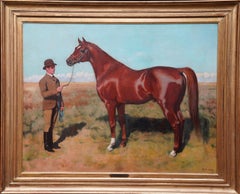
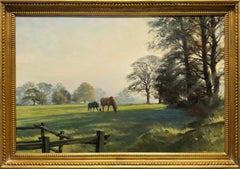
Horses in a paddock
By Donald Grant
Located in Stoke, Hampshire
Donald Grant (1924-2001)
Horses in a paddock
Signed lower left
Oil on canvas
Canvas size - 24 x 36 in
Donald Currie Grant was born in 1930 in North Shiel...
Category
20th Century Modern Animal Paintings
Materials
Oil
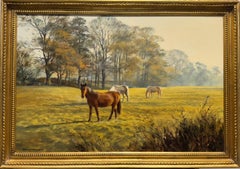
Oil Painting by Doris Zinkeisen "New Forest Ponies"
By Doris Clare Zinkeisen
Located in Mere, GB
“New Forest Ponies” by Doris Zinkeisen 1898-1991. Highly fashionable painter of equestrian scenes fine horsewoman herself. Studied at the Royal Academy. Oil...
Category
20th Century Modern Animal Paintings
Materials
Oil
$5,837 Sale Price
24% Off
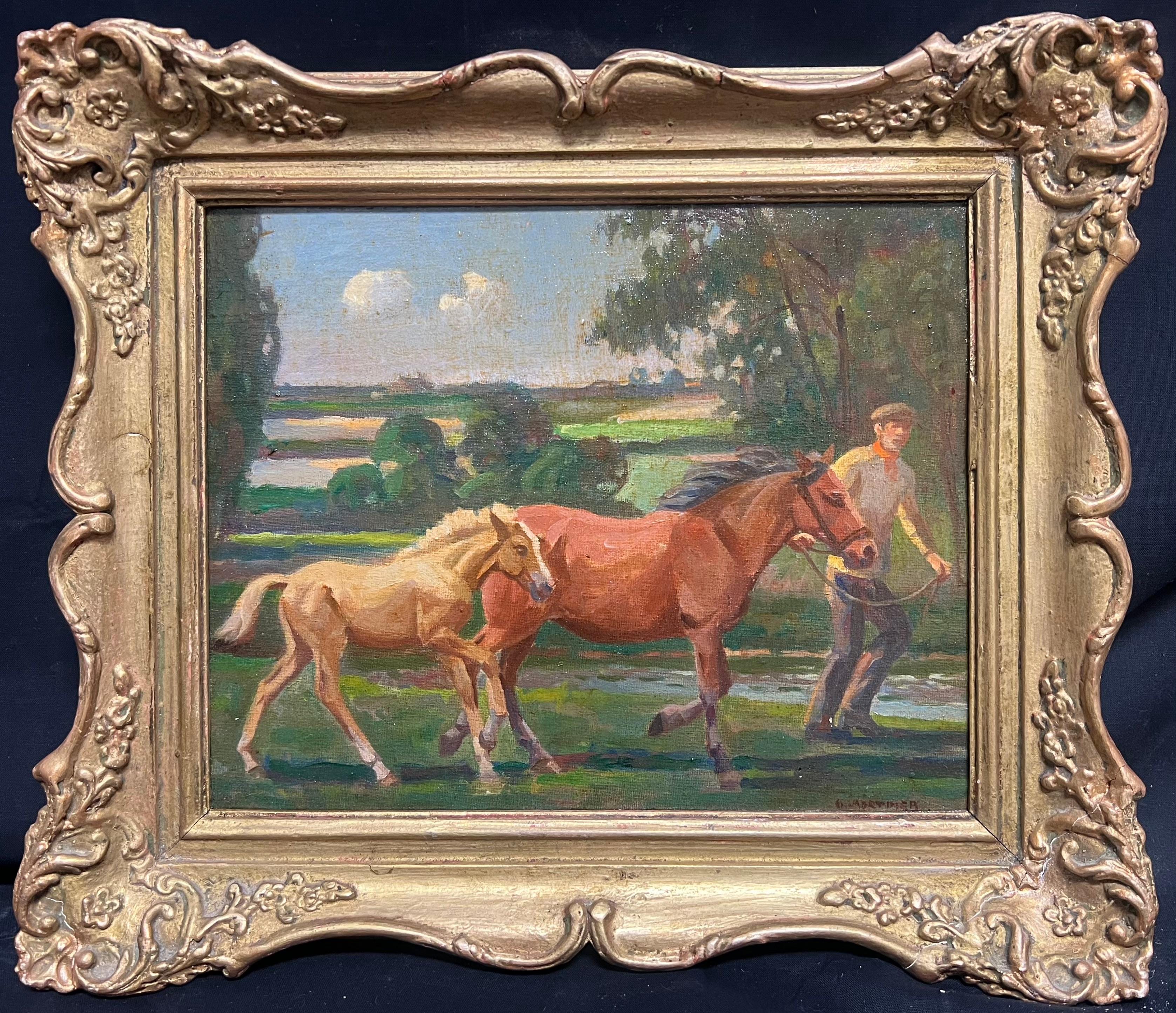
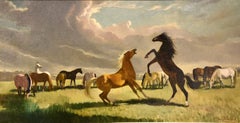
Vintage Equestrian English Oil Painting in Ornate Frame Mare and Foal Landscape
Located in Cirencester, Gloucestershire
Mare and Foal
by Geoffrey Mortimer (1895 - 1986)
Signed oil on board, framed
Framed: 13 x 15 inches
Board : 10 x 12 inches
Provenance: private collection
Condition: very good conditi...
Category
Early 20th Century Impressionist Animal Paintings
Materials
Oil
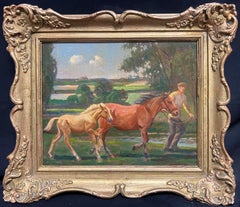
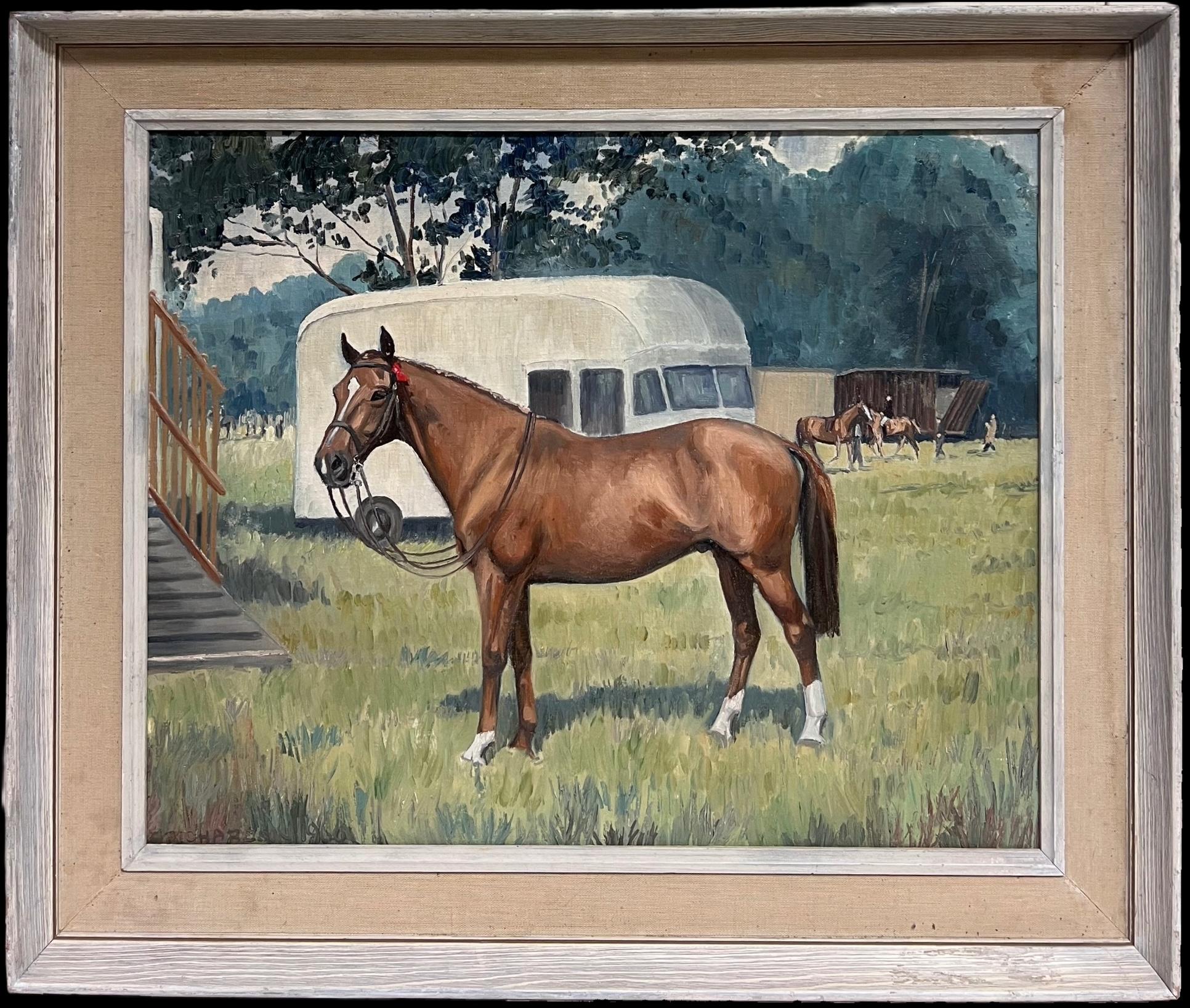
Fine English Sporting Art Oil Painting Racehorse in Paddock Signed
Dated 1966
Located in Cirencester, Gloucestershire
Ready for Race
English School, indistinctly signed 'Richardson'?
oil on board, framed
signed dated 1966
framed: 23 x 27 inches
board : 18 x 22 inches
Provenance: private collection, ...
Category
Mid-20th Century English School Animal Paintings
Materials
Oil
Horses in a paddock
By Donald Grant
Located in Stoke, Hampshire
Donald Grant (1924-2001)
Horses in a paddock
Signed lower right
Oil on canvas
Canvas size - 24 x 36 in
Donald Currie Grant was born in 1930 in North Shie...
Category
20th Century Modern Animal Paintings
Materials
Oil
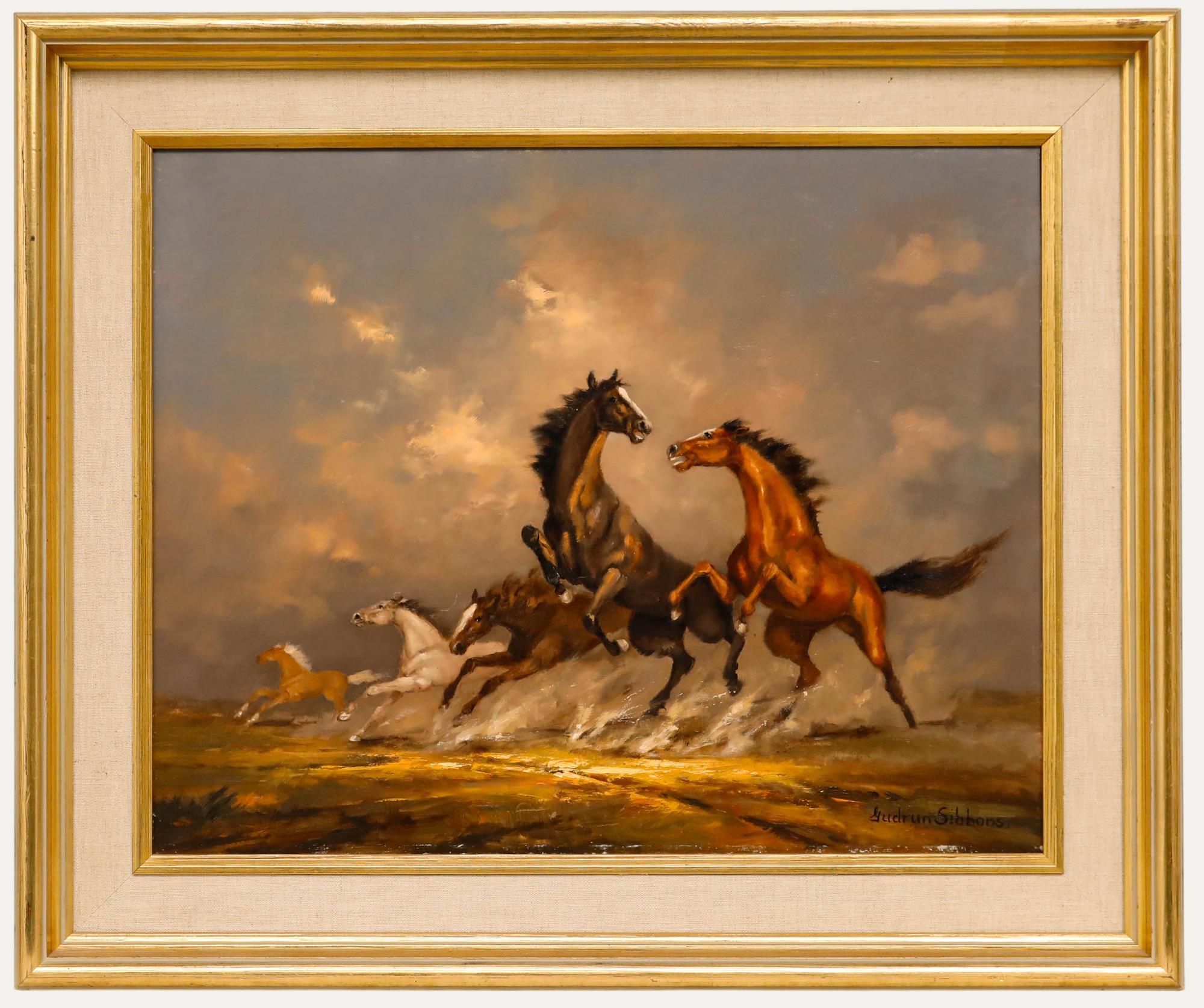
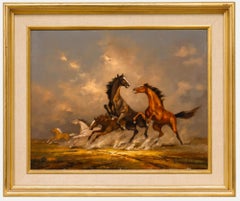
Gudrun Sibbons (1929-2020) - 20th Century Oil, Wild Stallions
By Gudrun Sibbons
Located in Corsham, GB
This dynamic equestrian painting captures a spirited herd of horses in full gallop across an open landscape, their powerful forms rendered in rich earth tones of chestnut, bay, and g...
Category
20th Century Animal Paintings
Materials
Oil
More Ways To Browse
Oil Painting Of Mother Daughter
1930 Oil Painting Of A Woman
Oil Paintings Female Artist
1930s Vintage Posters
Vintage Nurse
Portrait Of Queen Elizabeth I
Horse Painting In Frame
Equine Art Paintings
Oil Paintings Of Scotland
Dance Floor Used
Southern Railway
1960s Landscape Oil Painting
Female Landscape Artist
Taylor Vintage Landscape
Queen Mary Vintage
Harrow School
Vintage Ambulance
Noel Coward