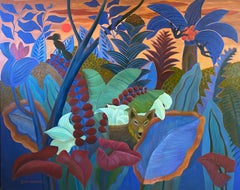
Items Similar to "Elephant and Jungle Animals" Henri Maik, Vibrant, Dreamlike Modernist Landscape
Want more images or videos?
Request additional images or videos from the seller
1 of 14
Henri Maik"Elephant and Jungle Animals" Henri Maik, Vibrant, Dreamlike Modernist Landscapecirca 1975
circa 1975
$11,500
£8,764.86
€10,018.79
CA$16,179.78
A$17,724.44
CHF 9,329.46
MX$211,545.86
NOK 118,926.95
SEK 108,717.16
DKK 74,838.57
About the Item
Henri Maik
Elephant and Jungle Animals, circa 1975
Signed lower right
Oil on canvas
10 x 11 5/8 inches
Provenance
Wally Findlay Galleries, Beverly Hills, California
Private Collection, New York
Estate of the above, 2023
Henri Maik was born in Paris on March 27, 1922, to Joseph Hecht, who was an illustrator and engraver. Maik also designed tapestries made with Aubusson, created a special collection of fine jewelry, and written and illustrated several well-loved children's books.
At the young age of 18, in 1940, Maik joined the French Navy and worked as a medical aide. Later, he was captured and held in a hospital in Brest. After his release in 1942, he worked as a lumberjack in Normandy until France was freed. Once France was free, Maik went back to Paris and acted in both plays and French films. He started painting in 1956, and 1960 was an important year for him because he had his very first solo exhibition in Paris.
In 1964, Wally Findlay saw his skill and held Maik’s first exhibition in the United States in Palm Beach, Florida. This event kicked off many successful shows at Wally Findlay Galleries located in New York, Chicago, Palm Beach, Beverly Hills, and Paris.
Henri Maik’s paintings were shown at the Musée de l’Art Moderne in Paris in 1966, 1967, and 1968 as part of a sacred art exhibition. His works were also displayed at the Cité Internationale des Arts in Paris during 1966 and 1967. Maik received positive recognition for his pieces shown at the Abbey of Salins-les-Bains in 1965 and at the Galerie Johnson in Usès in 1966.
He exhibited at various events such as the Salon d’Automne, the Salon de Bollène, the Centre National de la Tapissserie d’Aubusson, and the Salon of Swedish Art. His paintings can be found in the National Museum of Budapest, the Center of Contemporary and Experimental Art in Rebhoboth, Israel, the Musée d’Art Naif de l’Île-de-France in Vicq, and the Musée de Colmar.
- Creator:Henri Maik (1922 - 1993, French)
- Creation Year:circa 1975
- Dimensions:Height: 16.5 in (41.91 cm)Width: 18.5 in (46.99 cm)
- Medium:
- Movement Style:
- Period:
- Condition:
- Gallery Location:New York, NY
- Reference Number:1stDibs: LU1841217390662
About the Seller
5.0
Platinum Seller
Premium sellers with a 4.7+ rating and 24-hour response times
Established in 2022
1stDibs seller since 2022
133 sales on 1stDibs
Typical response time: <1 hour
- ShippingRetrieving quote...Shipping from: New York, NY
- Return Policy
More From This Seller
View All"Cronus Elephant" David Hare, Surrealist Abstract Composition Painting
By David Hare
Located in New York, NY
David Hare
Cronus Elephant, 1975
Acrylic on linen
82 x 60 inches
“Freedom is what we want,” David Hare boldly stated in 1965, but then he added the caveat, “and what we are most afr...
Category
1970s Abstract Abstract Paintings
Materials
Linen, Acrylic
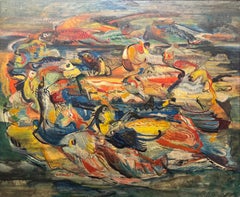
"Piscatory" Abraham P. Hankins, Modernist Composition of Fish, Abstracted Nature
Located in New York, NY
Abraham P. Hankins
Piscatory, 1941
Signed and dated lower center
Tempera on panel
24 x 30 inches
Provenance
Private Collection, New York
Alexandra Avlonitis, New York (acquired from...
Category
1940s American Modern Animal Paintings
Materials
Tempera, Panel
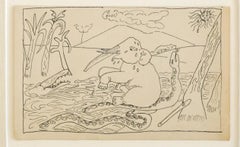
"Animal Illustrations" Allan Rohan Crite, 2 Ink Drawings African American Artist
Located in New York, NY
Allan Rohan Crite
Animal Illustrations
Signed lower left
Pen and ink on paper
23 1/2 x 16 inches
Brought up in Boston, Crite received his art training al the School of the Museum of Fine Arts and earned a Bachelor of Arts degree at the Harvard University Extension School in 1968. He worked for most of his life as an illustrator in the Planning Department of the Boston Naval Shipyards, retiring in 1976, but continued to paint at the same time. His work has been widely exhibited and well received in Boston, where a square is named after him. Crite's early paintings depict the daily life of Boston's African-American community, a community that was to be transformed in the following decade by urban renewal and housing projects.
In his later paintings, magic-realist visions in which a black Virgin and Child ride on public transportation or float above the city streets, Crite used a bright palette rather than the more somber tones of his "neighborhood paintings...
Category
1930s Surrealist Animal Drawings and Watercolors
Materials
Paper, Ink
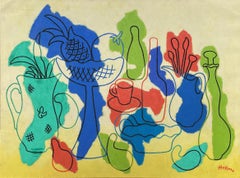
"Untitled" Albert Heckman, 1950s Modernist Abstracted Still Life Painting
By Albert Heckman
Located in New York, NY
Albert Heckman
Untitled, circa 1950
Signed lower right
Oil on canvas
21 1/4 x 29 inches
Albert Heckman was born in Meadville, Western Pennsylvania, 1893. He went to New York City to try his hand at the art world in 1915 after graduating from high school and landing a job at the Meadville Post Office. In 1917, at the age of 24, Heckman enrolled part-time in Teachers' College, Columbia University's Fine Arts Department to begin his formal art education. He worked as a freelance ceramic and textile designer and occasionally as a lecturer at the Metropolitan Museum of Art. In the early 1920s, at the age of almost 30, he graduated with a Bachelor of Arts degree from Columbia Teachers College. He was especially impacted by his instructor at Columbia, Arthur Wesley Dow.
After graduating, he was hired by the Teachers' College as a Fine Arts instructor. He stayed with Columbia Teachers' College until 1929, when he left to attend the Leipzig Institute of Graphic Arts in Leipzig, Germany. Isami Doi (1903-1965), who was born in Hawaii, was arguably his most impressive student at Columbia. Doi is now regarded as one of the most prominent artists hailing from Hawaii. Heckman became an active member and officer of the Keramic Society and Design Guild of New York in the 1920s as part of his early commercial art career. The Society's mission was to share knowledge and showcase textile and ceramic design exhibits.
In 1922, Heckman married Florence Hardman, a concert violinist. Mrs. Heckman's concert schedule during the 1920s kept Albert and Florence Heckman apart for a significant portion of the time, but they spent what little time they had together designing and building their Woodstock, New York, summer house and grounds. A small house and an acre of surrounding land on Overlook Mountain, just behind the village of Woodstock, were purchased by Albert and Florence Heckman at the time of their marriage. Their Woodstock home, with its connections, friendships, and memories, became a central part of their lives over the years, even though they had an apartment in New York City.
Heckman's main artistic focus shifted to the house on Overlook Mountain and the nearby towns and villages, Kingston, Eddyville, and Glasco. After returning from the Leipzig Institute of Graphic Arts in 1930, Mr. Heckman joined Hunter College as an assistant professor of art. He worked there for almost thirty years, retiring in 1956. Throughout his tenure at Hunter, Mr. Heckman and his spouse spent the summers at their Woodstock residence and the winters in New York City. They were regular and well-known guests at the opera and art galleries in New York. Following his retirement in 1956, the Heckmans settled in Woodstock permanently, with occasional trips to Florida or Europe during the fall and winter. Mr. Heckman's close friends and artistic career were always connected to Woodstock or New York City. He joined the Woodstock art group early on and was greatly influenced by artists like Paul and Caroline Rohland, Emil Ganso, Yasuo Kuniyoshi, Andre Ruellan, and her husband, Jack Taylor.
Heckman operated a summer art school in Woodstock for several years in the 1930s with support from Columbia University, where these and other Woodstock artists gave guest lectures. The Potter's Shop in New York City hosted Mr. Heckman's first art show in December 1928. The exhibit received some positive reviews from critics. The American Institute of Graphic Arts chose the plate of "Wehlen, Saxony" as one of the "Fifty Prints of the Year in 1929." There were sixteen etchings displayed. The remaining plates depicted scenes in Saxony, Germany, while five of the plates were based on scenes in Rondout, New York.
Heckman started switching from etching to black and white lithography by the early 1930s. A lifelong admirer of Heckman's artwork, Mr. Gustave von Groschwitz organized a significant exhibition of Heckman etchings and lithographs at the Ferargil Gallery in New York City in 1933. The exhibition traveled to the Stendahl Galleries in Los Angeles (May 1933), the Charles Lessler Gallery in Philadelphia (May 1933), J.L. Hudson in Detroit (June 1933), and Gumps in San Francisco (July 1933). Together with his early etchings, the exhibition featured brand-new black and white lithographs depicting scenes in and around Woodstock as well as "A View from Tudor City...
Category
1950s American Modern Figurative Paintings
Materials
Canvas, Oil
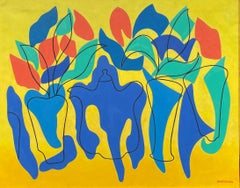
"Rainforest to Palenque, Mexico" Alice Baber, Color Field, Female Abstract
By Alice Baber
Located in New York, NY
Alice Baber
Rainforest to Palenque, Mexico, 1975
Signed upper right; signed, titled and dated on the overlap
Oil on canvas
40 x 30 inches
Provenance:
Steven Wolf Fine Arts, San Fran...
Category
1970s Color-Field Abstract Paintings
Materials
Canvas, Oil

"Untitled" Albert Heckman, Still Life, Floral Abstracted Modernist Composition
By Albert Heckman
Located in New York, NY
Albert Heckman
Untitled, circa 1950
Signed lower right
Oil on canvas
25 1/4 x 32 1/4 inches
Albert Heckman was born in Meadville, Western Pennsylvania, 1893. He went to New York City to try his hand at the art world in 1915 after graduating from high school and landing a job at the Meadville Post Office. In 1917, at the age of 24, Heckman enrolled part-time in Teachers' College, Columbia University's Fine Arts Department to begin his formal art education. He worked as a freelance ceramic and textile designer and occasionally as a lecturer at the Metropolitan Museum of Art. In the early 1920s, at the age of almost 30, he graduated with a Bachelor of Arts degree from Columbia Teachers College. He was especially impacted by his instructor at Columbia, Arthur Wesley Dow.
After graduating, he was hired by the Teachers' College as a Fine Arts instructor. He stayed with Columbia Teachers' College until 1929, when he left to attend the Leipzig Institute of Graphic Arts in Leipzig, Germany. Isami Doi (1903-1965), who was born in Hawaii, was arguably his most impressive student at Columbia. Doi is now regarded as one of the most prominent artists hailing from Hawaii. Heckman became an active member and officer of the Keramic Society and Design Guild of New York in the 1920s as part of his early commercial art career. The Society's mission was to share knowledge and showcase textile and ceramic design exhibits.
In 1922, Heckman married Florence Hardman, a concert violinist. Mrs. Heckman's concert schedule during the 1920s kept Albert and Florence Heckman apart for a significant portion of the time, but they spent what little time they had together designing and building their Woodstock, New York, summer house and grounds. A small house and an acre of surrounding land on Overlook Mountain, just behind the village of Woodstock, were purchased by Albert and Florence Heckman at the time of their marriage. Their Woodstock home, with its connections, friendships, and memories, became a central part of their lives over the years, even though they had an apartment in New York City.
Heckman's main artistic focus shifted to the house on Overlook Mountain and the nearby towns and villages, Kingston, Eddyville, and Glasco. After returning from the Leipzig Institute of Graphic Arts in 1930, Mr. Heckman joined Hunter College as an assistant professor of art. He worked there for almost thirty years, retiring in 1956. Throughout his tenure at Hunter, Mr. Heckman and his spouse spent the summers at their Woodstock residence and the winters in New York City. They were regular and well-known guests at the opera and art galleries in New York. Following his retirement in 1956, the Heckmans settled in Woodstock permanently, with occasional trips to Florida or Europe during the fall and winter. Mr. Heckman's close friends and artistic career were always connected to Woodstock or New York City. He joined the Woodstock art group early on and was greatly influenced by artists like Paul and Caroline Rohland, Emil Ganso, Yasuo Kuniyoshi, Andre Ruellan, and her husband, Jack Taylor.
Heckman operated a summer art school in Woodstock for several years in the 1930s with support from Columbia University, where these and other Woodstock artists gave guest lectures. The Potter's Shop in New York City hosted Mr. Heckman's first art show in December 1928. The exhibit received some positive reviews from critics. The American Institute of Graphic Arts chose the plate of "Wehlen, Saxony" as one of the "Fifty Prints of the Year in 1929." There were sixteen etchings displayed. The remaining plates depicted scenes in Saxony, Germany, while five of the plates were based on scenes in Rondout, New York.
Heckman started switching from etching to black and white lithography by the early 1930s. A lifelong admirer of Heckman's artwork, Mr. Gustave von Groschwitz organized a significant exhibition of Heckman etchings and lithographs at the Ferargil Gallery in New York City in 1933. The exhibition traveled to the Stendahl Galleries in Los Angeles (May 1933), the Charles Lessler Gallery in Philadelphia (May 1933), J.L. Hudson in Detroit (June 1933), and Gumps in San Francisco (July 1933). Together with his early etchings, the exhibition featured brand-new black and white lithographs depicting scenes in and around Woodstock as well as "A View from Tudor City...
Category
1950s Abstract Figurative Paintings
Materials
Canvas, Oil
You May Also Like
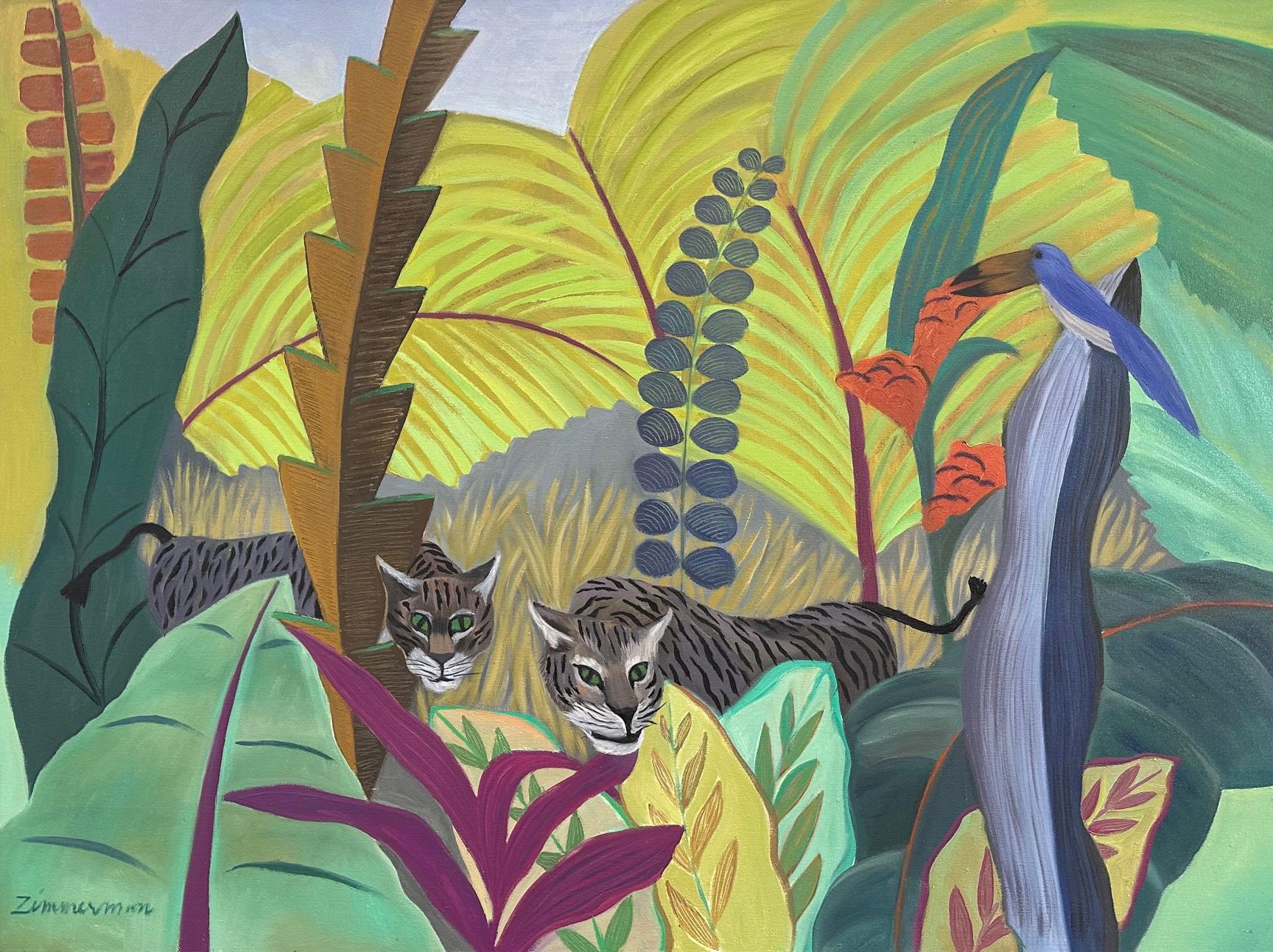
Jungle Cats - Animals Landscape Jungle Painting By Marc Zimmerman
By Marc Zimmerman
Located in Carmel, CA
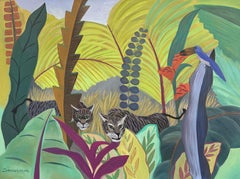
2 Toucans / 2 Cats - Animals Landscape Jungle Painting By Marc Zimmerman
This masterpiece is exhibited in the Zimmerman Gallery, Carmel CA.
Marc Zimmerman creates playful painting...
Category
2010s Contemporary Animal Paintings
Materials
Canvas, Oil
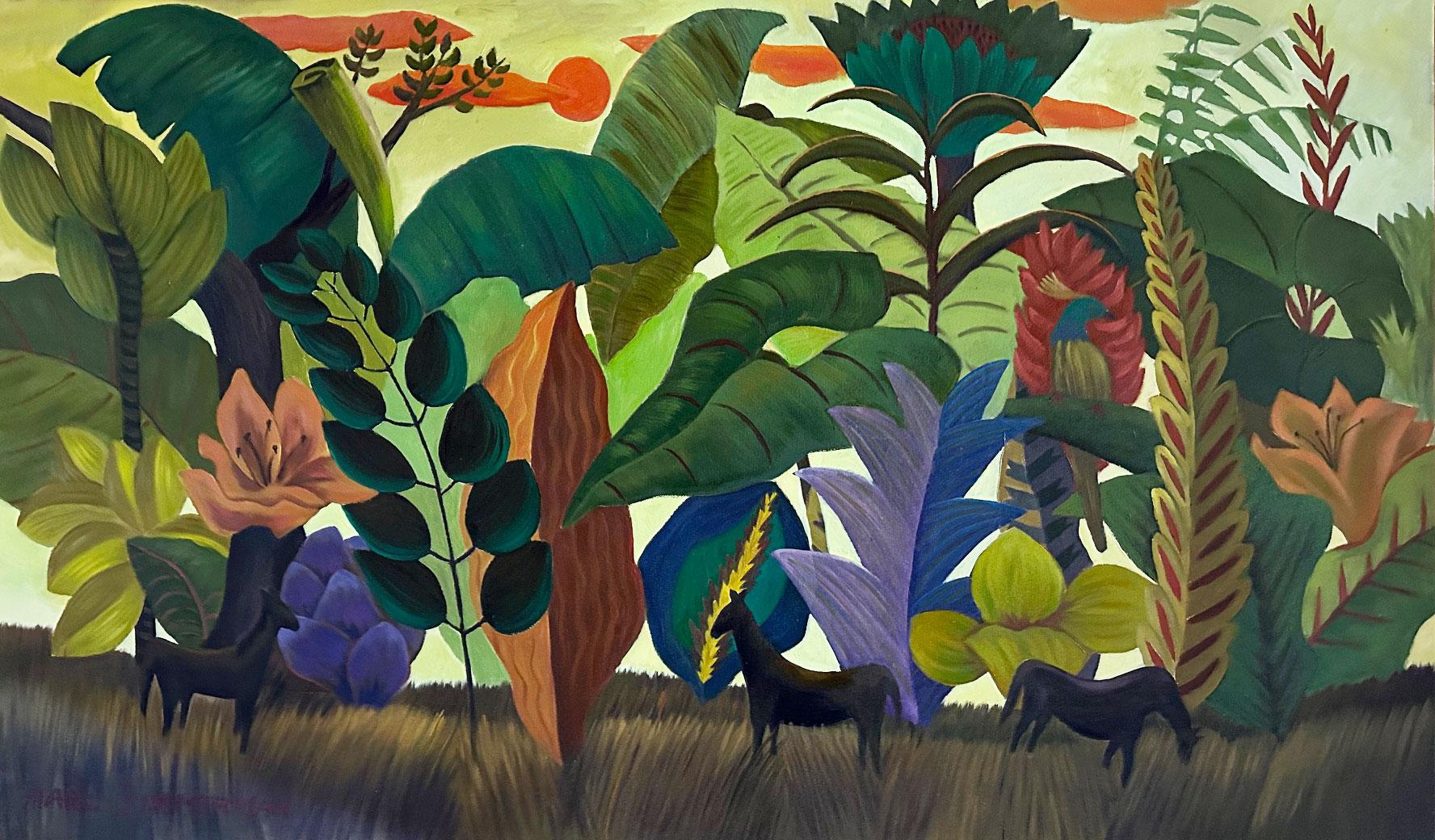
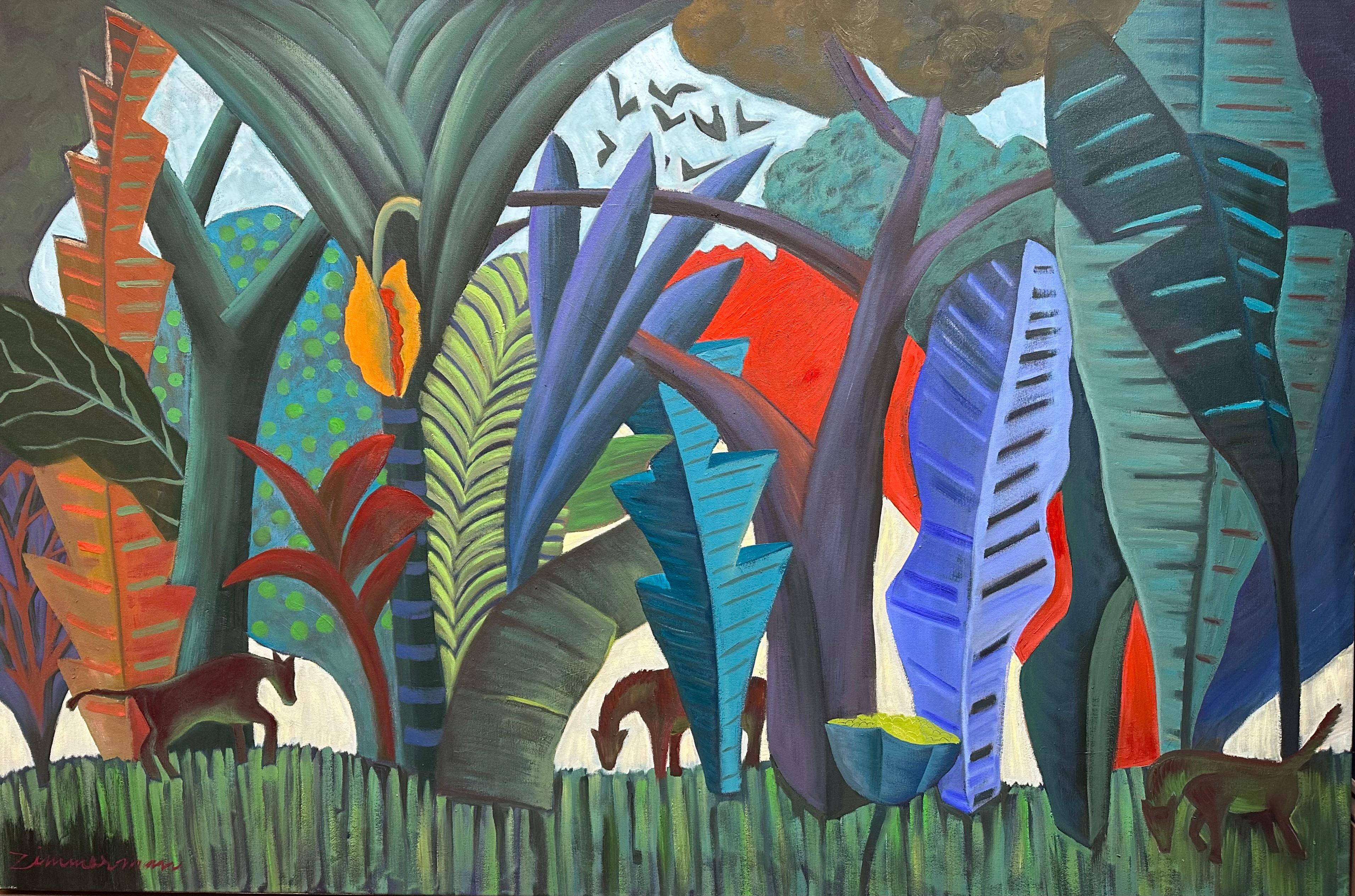
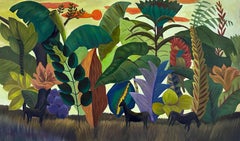
New Jungle By Marc Zimmerman - Landscape Animal Art
By Marc Zimmerman
Located in Carmel, CA
New Jungle By Marc Zimmerman - Landscape Animal Art
Marc Zimmerman creates playful paintings, whether deep mysterious jungle or delightfully whimsical florals. His color palette exp...
Category
2010s Contemporary Landscape Paintings
Materials
Canvas, Oil
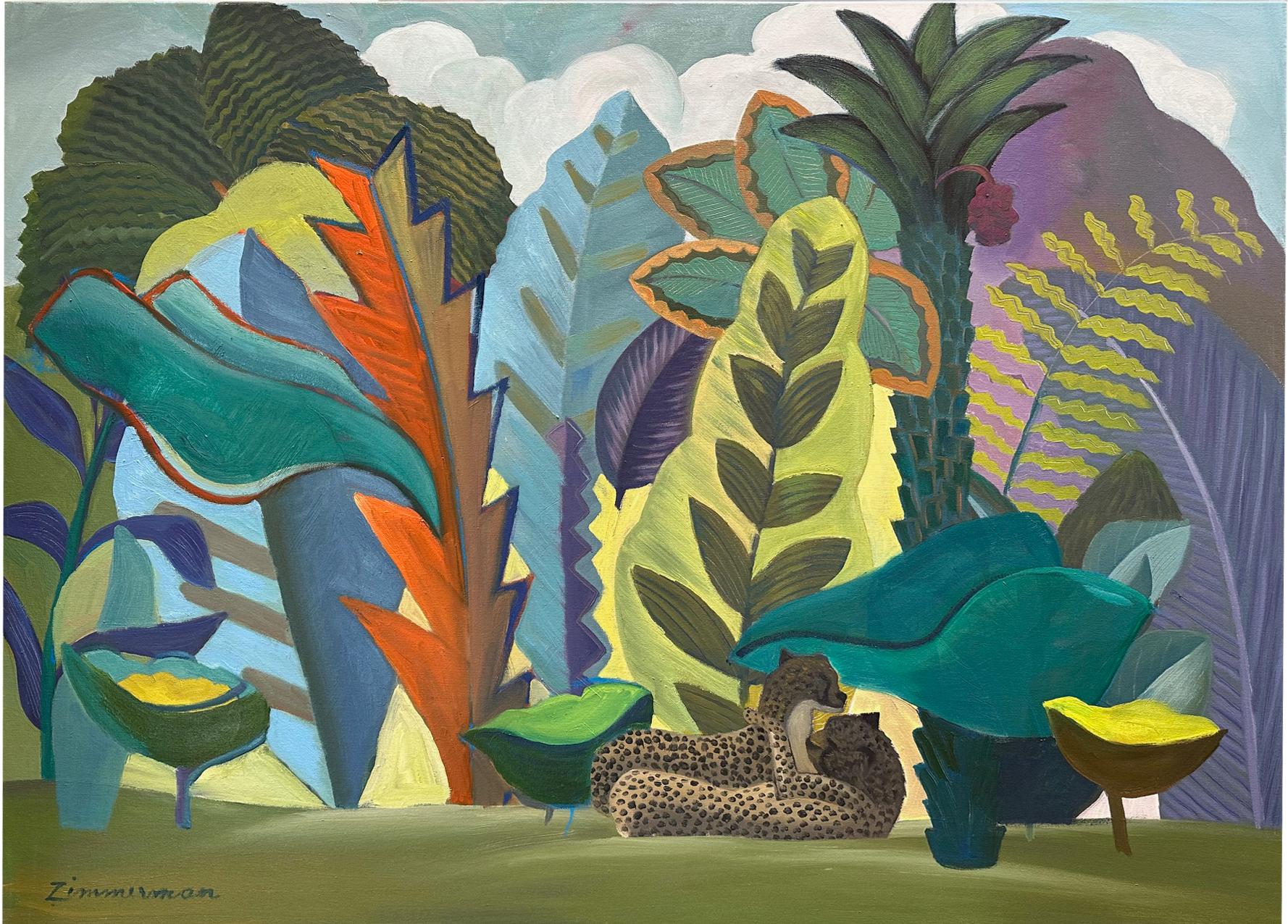
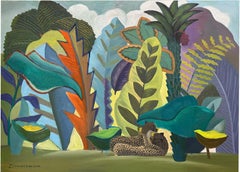
Cheetahs in The Jungle - Wild Cats Painting By Marc Zimmerman
By Marc Zimmerman
Located in Carmel, CA
Cheetahs Cuddling In The Jungle - Wild Cats Painting By Marc Zimmerman
'Jungle Sonata in B Sharp', oil on canvas, 36"x48"
This masterpiece is exhibited in the Zimmerman Gallery, Ca...
Category
2010s Contemporary Animal Paintings
Materials
Canvas, Oil
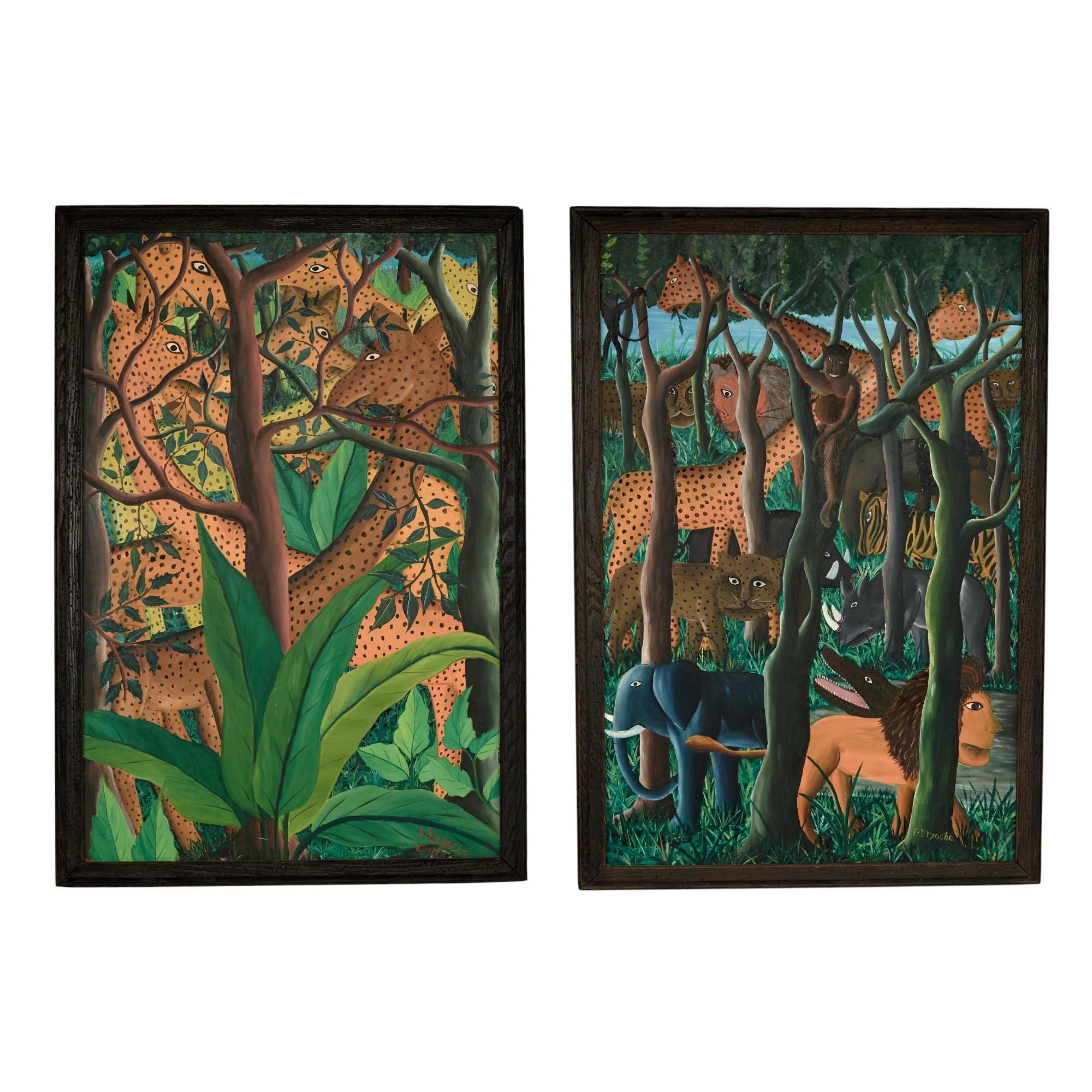
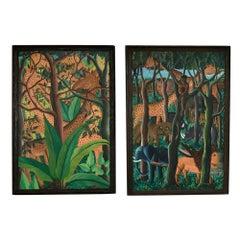
Mid Century Haitian Paintings of Jungle Scenes by Felix Bryoché
Located in Palm Beach, FL
Enchanting vintage acrylic paintings on boards of two jungle scenes with African animals and trees in an eccentric composition executed in a distinctive naive style with a lush power...
Category
21st Century and Contemporary Folk Art Animal Paintings
Materials
Acrylic
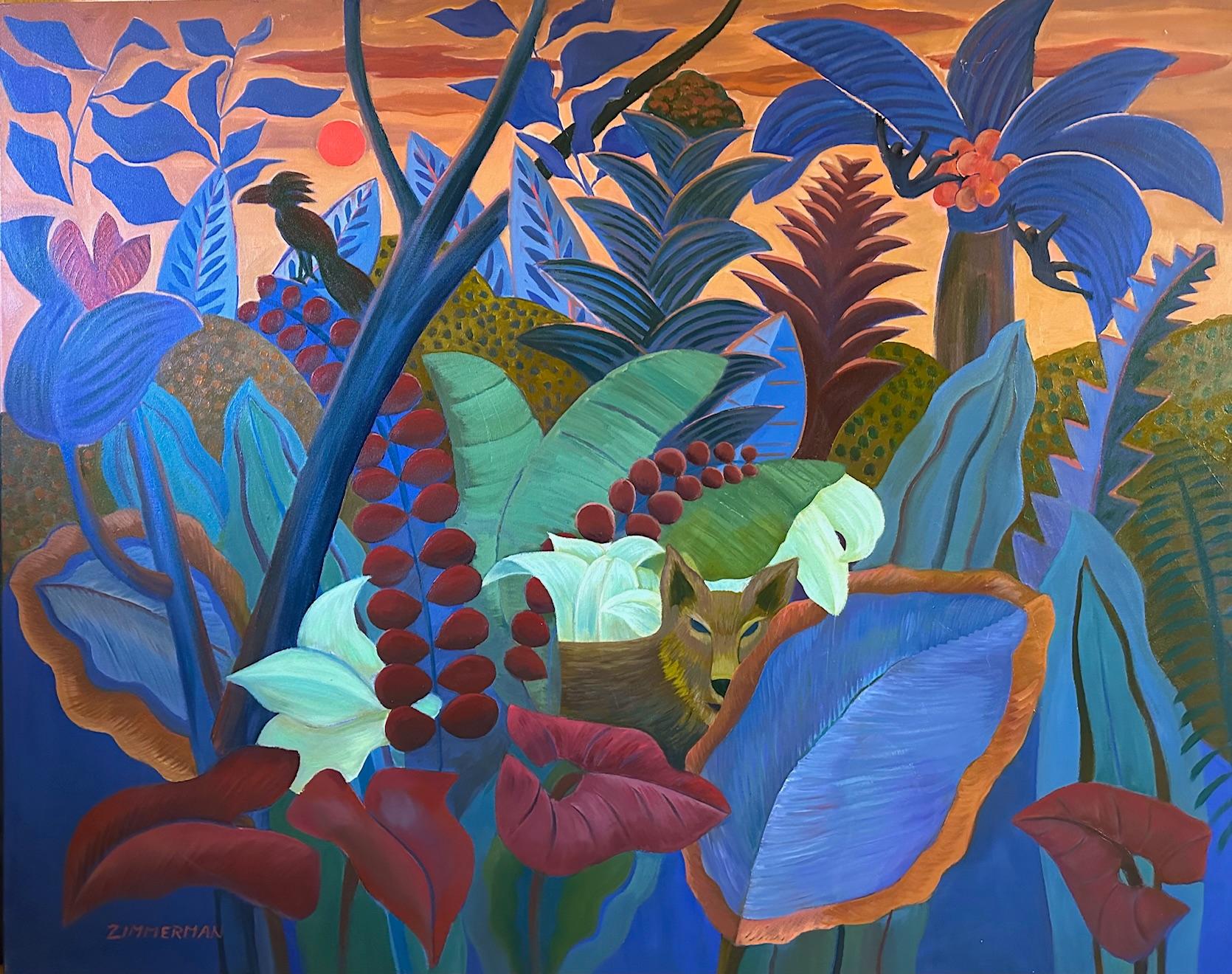
Jungle Rhapsody by Marc Zimmerman
By Marc Zimmerman
Located in Carmel, CA
Jungle Rhapsody by Marc Zimmerman
Bold color and sweeping form create a jungle setting where the artist assigns strong color and tonal contrasts. The design leans towards cubism wher...
Category
2010s Contemporary Landscape Paintings
Materials
Canvas, Oil
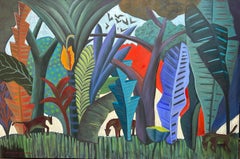
Woven Jungle - Landscape Nature Painting With Animals By Marc Zimmerman
By Marc Zimmerman
Located in Carmel, CA
Woven Jungle - Landscape Nature Painting With Animals By Marc Zimmerman
This masterwork is exhibited in the Zimmerman Gallery, Carmel CA.
This large tropical jungle painting depict...
Category
2010s Contemporary Landscape Paintings
Materials
Canvas, Oil