Want more images or videos?
Request additional images or videos from the seller
1 of 9

James Ward
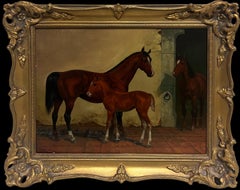
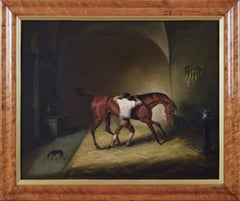
Mare and Foal in a Stable Interior, James Ward RA (1769 - 1859)

$6,563.57
$8,204.4720% Off
£4,800
£6,00020% Off
€5,641.19
€7,051.4920% Off
CA$9,135.51
CA$11,419.3920% Off
A$9,800.77
A$12,250.9620% Off
CHF 5,256.93
CHF 6,571.1620% Off
MX$117,999.94
MX$147,499.9320% Off
NOK 66,269.79
NOK 82,837.2320% Off
SEK 60,428.86
SEK 75,536.0820% Off
DKK 42,147.21
DKK 52,684.0120% Off

About the Item

James Ward, an 18th-century English artist, captures a serene and intimate scene in his oil painting Mare and Foal in a Stable Interior. This work embodies Ward's expertise in portraying animals with great sensitivity and precision, especially within the context of rural and domestic environments. In this painting, the focus is on the tender relationship between the mare and her foal. The mare is depicted with a gentle and protective posture, standing in the stable. The foal, still youthful and fragile, is shown beside her nestled close to her, embodying the innocence and vulnerability of young life. The artist’s skillful rendering of their coats, the rich textures of the horses' fur, reveals a deep understanding of anatomy and light, as shadows play across their forms. The stable interior itself is warm and rustic, with soft light filtering through the stable’s wooden beams, casting a gentle glow on the horses. Ward’s meticulous technique and understanding of animal anatomy are on full display as he emphasizes the strength and grace of the horses while maintaining a soft, almost sentimental atmosphere. The stable setting conveys a sense of peace and simplicity, focusing on the natural bond between the mare and foal in their shared moment of quiet. James Ward was born in 1769 in London, the son of a fruit merchant. One of five children - another of whom, William, became an associate of the Royal Academy - Ward did not attend school and instead was apprenticed to an engraver from the age of twelve. This training revealed his natural artistic talents and during his early career he established himself as a successful mezzotinter, reproducing works by other artists. Ward started painting his own compositions around 1790 and, at first, was greatly influenced stylistically by his brother-in-law, the artist George Morland (1763-1804). After seeing Rubens’ Chateau de Steen in 1803, Ward’s painting style also incorporated Rubensian elements. He was an active observer of the natural world and studied animal and human anatomy. Ward became a respected animal-painter, often depicting animals on a colossal scale. He enjoyed a healthy business painting animals commissioned by members of the merchant classes, gentry and nobility. Having been elected to the Royal Academy as a full member in 1811, Ward sought to diversify his subjects, and in the decades that followed, he produced renowned landscape, religious and history paintings. Ward also received significant public commissions relating to the Napoleonic Wars, notably producing The Waterloo Allegory (1815-21) to commemorate the victory of Wellington over Napoleon, for the British Institution. A number of personal tragedies caused Ward to move from London to Hertfordshire in 1830 and, in his later years, he spent most of his time producing religious paintings although he still painted and submitted animal pictures to the RA Annual (now Summer) Exhibition. He continued to paint and exhibit until 1852, but the calibre of his work declined in tandem with his health and finances. Suffering a stroke in the mid 1850s, Ward died in November 1859. Regarded by many as the quintessential animal painter of his generation, Ward’s paintings often had moralistic undertones that reflected his unusually progressive views. These included his hatred of cruelty to animals and defence of beards (which were extremely unfashionable at the time), and his works were sometime accompanied by lengthy explanations or poems.
  • Creator:
    James Ward (1769 - 1859, English)
  • Dimensions:
    Height: 22.05 in (56 cm)Width: 25.99 in (66 cm)
  • More Editions Sizes:
    56cm L x 66cm W canvas only without framePrice: $8,204
  • Medium:
  • Period:
  • Condition:
  • Gallery Location:
    GB
  • Reference Number:
    Seller: 581stDibs: LU2841215850402

More From This Seller

View All
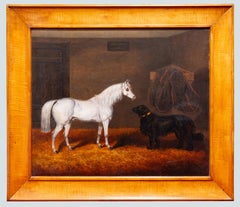
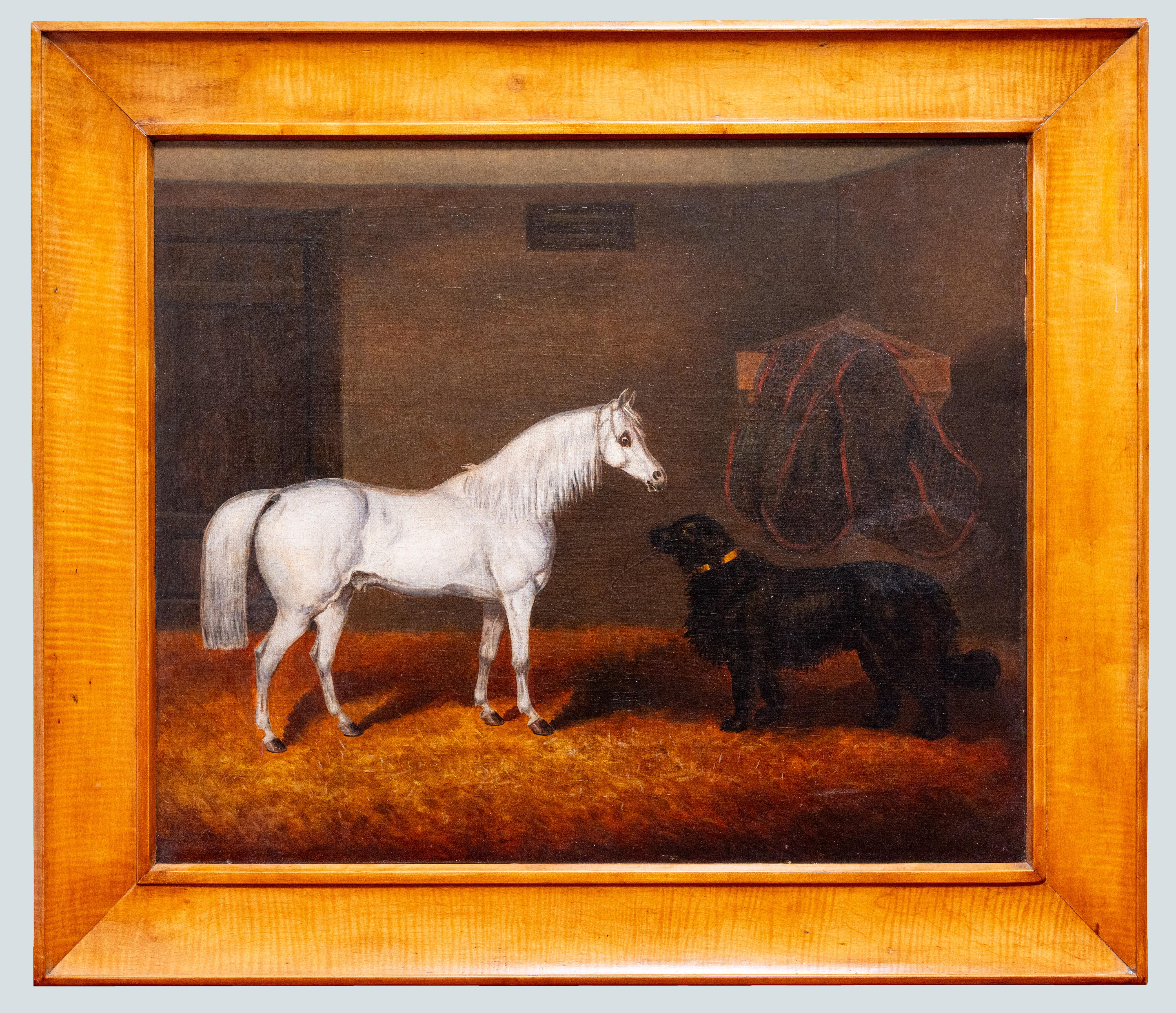
Grey Pony and a Dog in a Stable Interior. Samuel Spode (1798 - 1858), signed
By Samuel Spode
Located in GB
In this charming oil on canvas, Irish artist Sam Spode beautifully captures a serene moment within the quiet, intimate setting of a stable. The grey pony, depicted with remarkable detail, stands alongside a loyal dog, creating a peaceful harmony between the two animals. Samuel Spode...
Category

Early 19th Century Animal Paintings

Materials

Oil

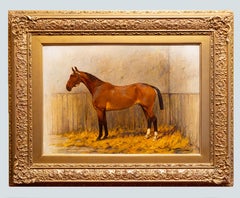
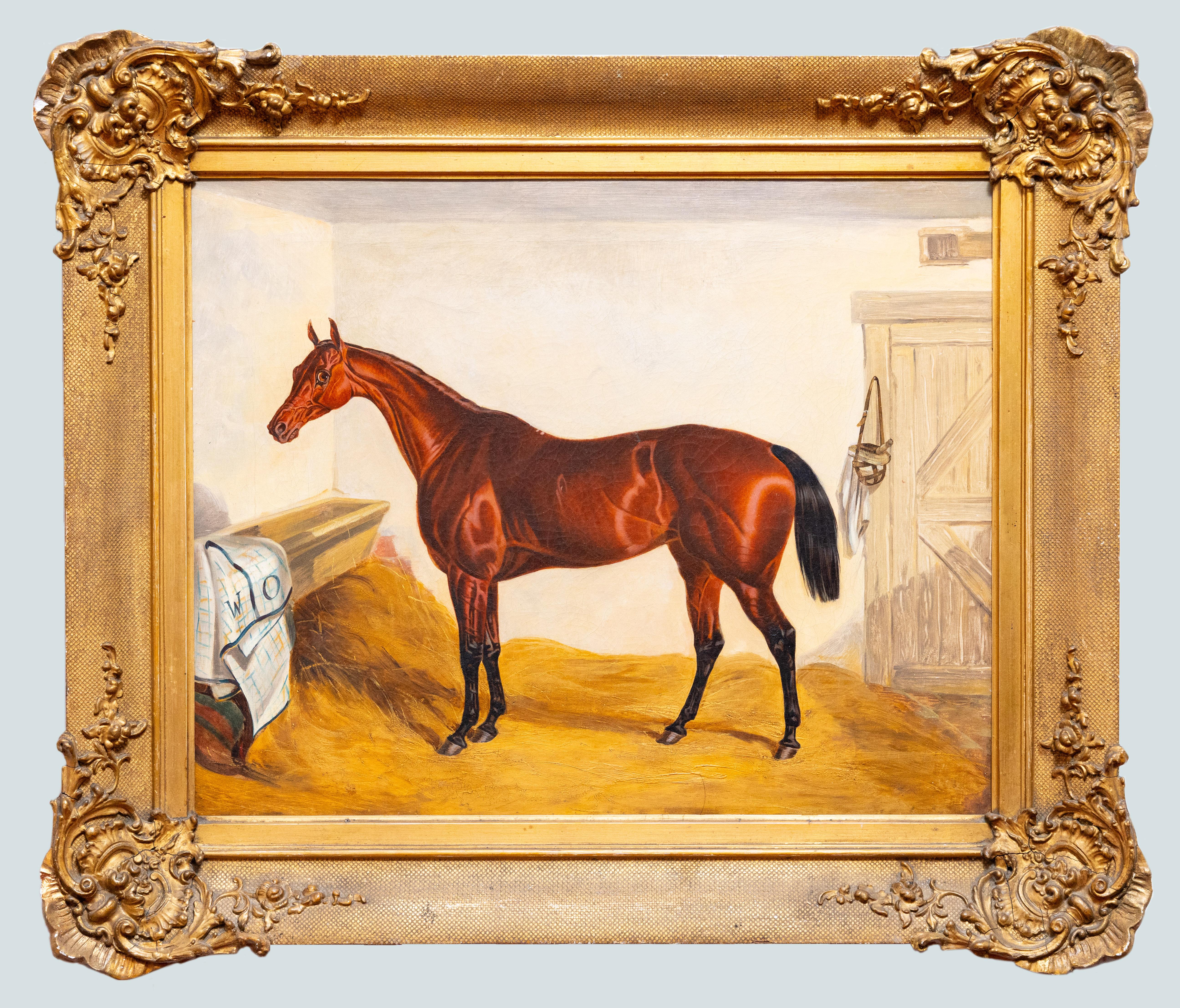
Bay race horse in a stable, William Osborne RHA, Irish Artist, 1823 - 1901
By William Osborne
Located in GB
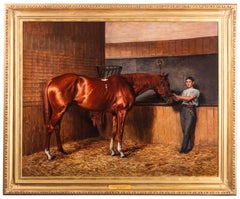
This painting by William Osborne, an Irish artist from the 19th century, features a bay racehorse in a stable, captured in rich oil on canvas. The scene evokes a sense of realism and attention to detail, as Osborne was known for his vivid depictions of horses, particularly those involved in racing or in stables. The piece is signed with the artist’s initials, and still features the original frame. William Osborne is today best remembered as the father of the artist Walter Osborne. But he was a significant artist in his own right. He specialised in painting animals especially his own terriers who were often depicted in his studio. Strickland wrote ''His pictures of dogs...
Category

Late 19th Century Animal Paintings

Materials

Canvas, Oil

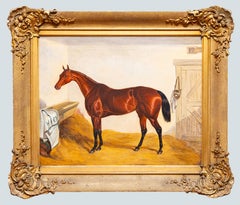
A hunter in a stable interior, by George Wright (30 June 1860 - 11 March 1944)
By George Wright
Located in GB
George Wright (1860–1944) was a British painter renowned for his equestrian art, particularly hunting and coaching scenes. Born in Leeds, England, he was the eldest of seven children...
Category

Early 20th Century Animal Paintings

Materials

Canvas, Oil

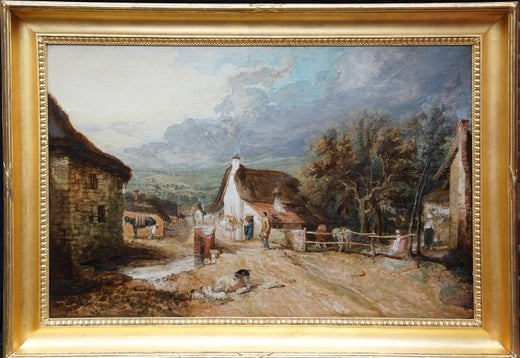
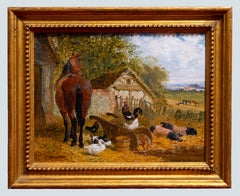
The Farmyard, John Frederick Herring Jr (1795–1865)
By John Frederick Herring Jr
Located in GB
"The Farmyard" by John Frederick Herring is a well-known piece by the 19th-century English artist, famous for his depictions of animals and rural scenes. In "The Farmyard," Herring ...
Category

19th Century Animal Paintings

Materials

Oil, Board

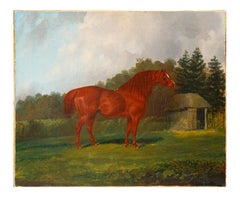
Chestnut Stallion at Rest, British School 19th century
Located in GB
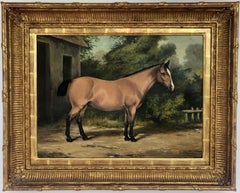
This 19th-century British School painting depicts a handsome chestnut horse standing proudly in a verdant rural landscape—a classic subject in ...
Category

19th Century Animal Paintings

Materials

Canvas, Oil

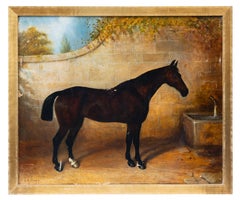
Dark Bay Horse by a Stone Wall
Located in GB
Little is known of the life and career of the painter B. A. Howe, who appears to have been active in Britain during the mid- to late-nineteenth century. Works signed with this name s...
Category

19th Century Victorian Animal Paintings

Materials

Canvas, Oil

You May Also Like

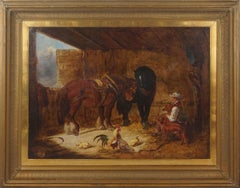
Mid 19th Century Interior of Stable with Horses, Dogs, and Stable Hand
Located in Soquel, CA
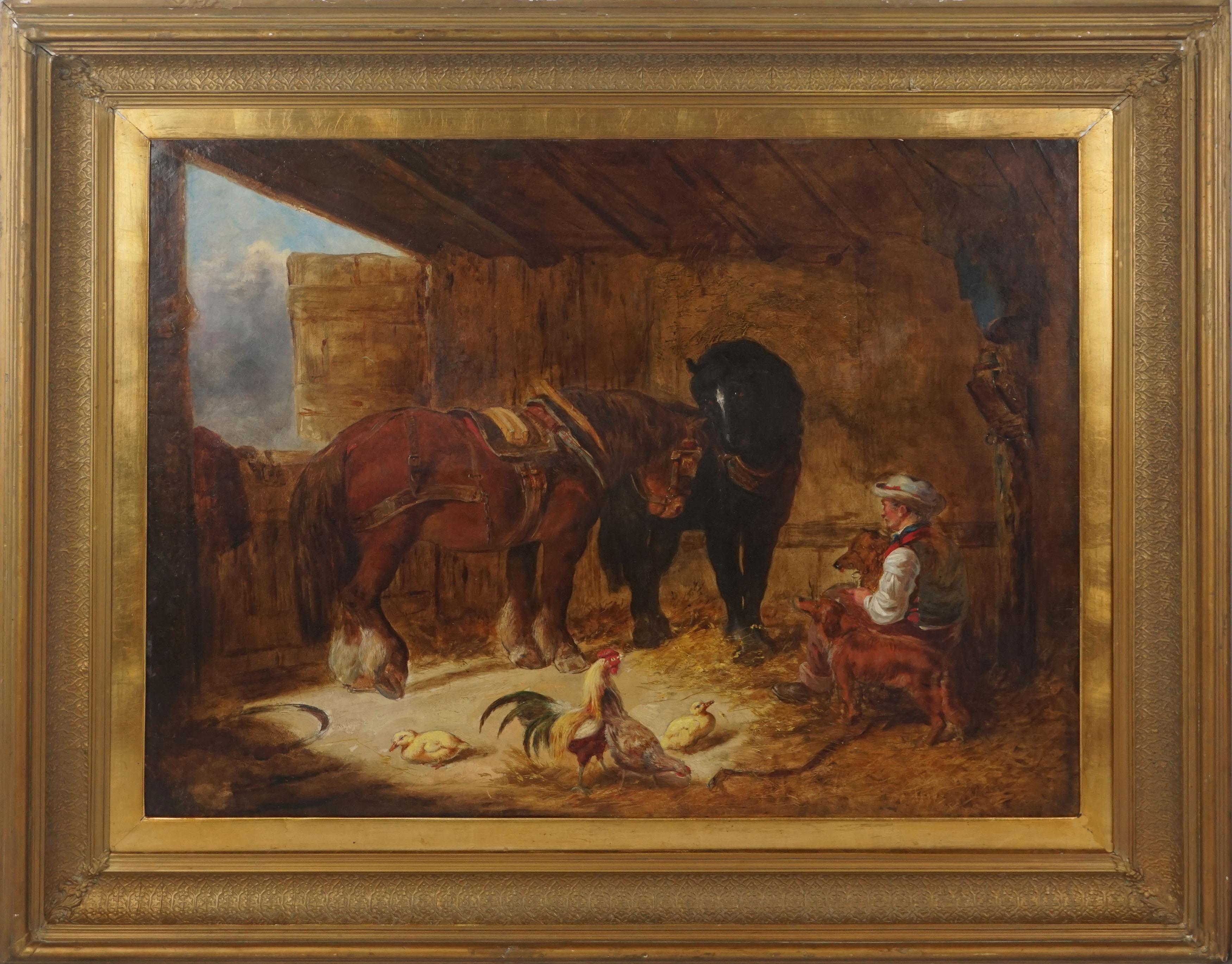
Wonderful mid 19th Century painting of a stable's interior with two horses, stable hand, two spaniels, a rooster and ducks from a follower of John Frederick Herring, Sr. (British, 17...
Category

19th Century English School Animal Paintings

Materials

Masonite, Oil, Linen

Fine Antique British Sporting Art Oil Painting Mother Foal Horse in Stable
Located in Cirencester, Gloucestershire
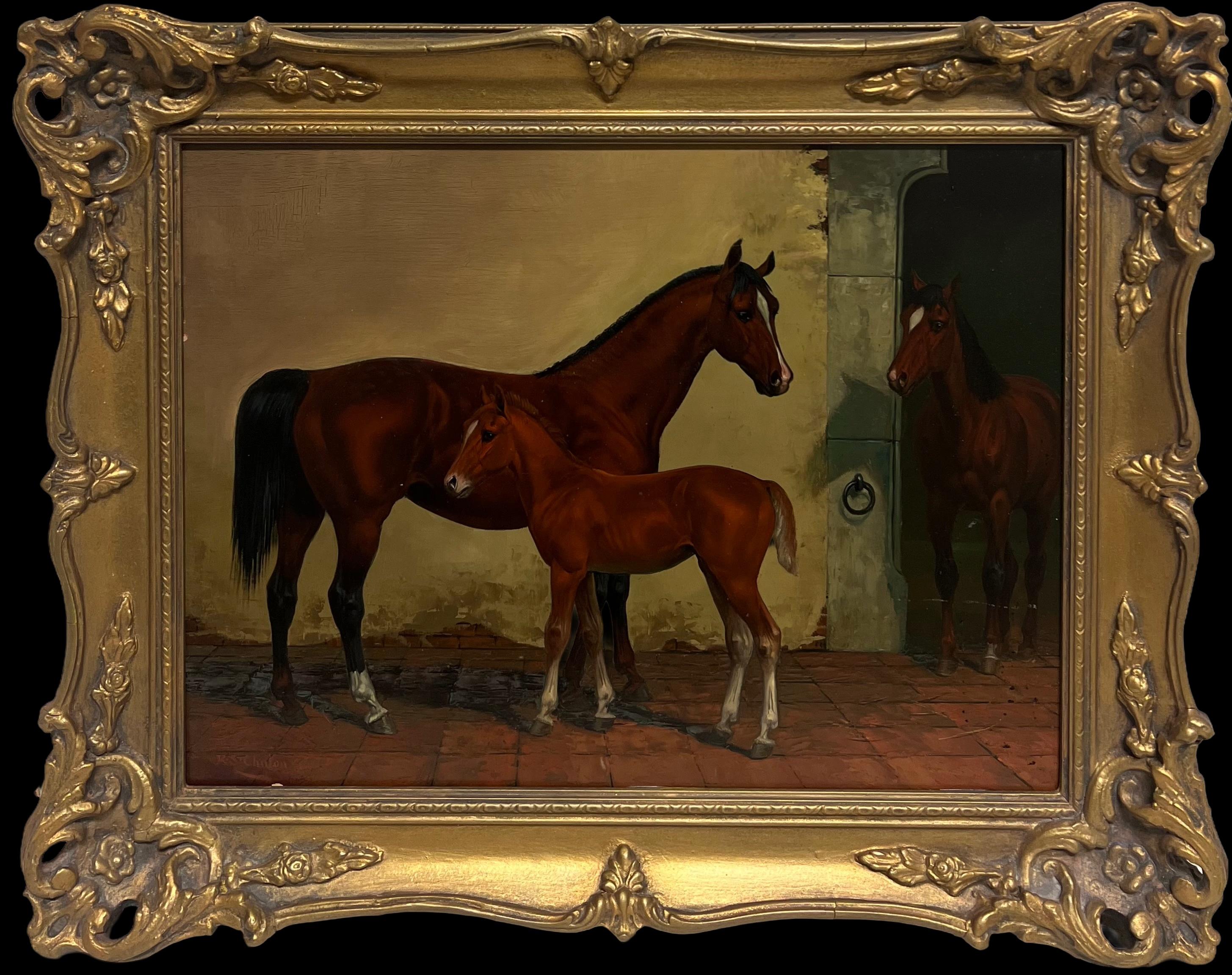
Mother and Foal in a Stable Interior by Kingsley S. Chalon (British, early 20th century) unsigned oil on panel, framed framed: 16 x 19.5 inches panel: 12 x 16 inches Provenance: priv...
Category

Early 20th Century Victorian Animal Paintings

Materials

Oil

Antique English Horse Painting
Located in Lake Worth Beach, FL
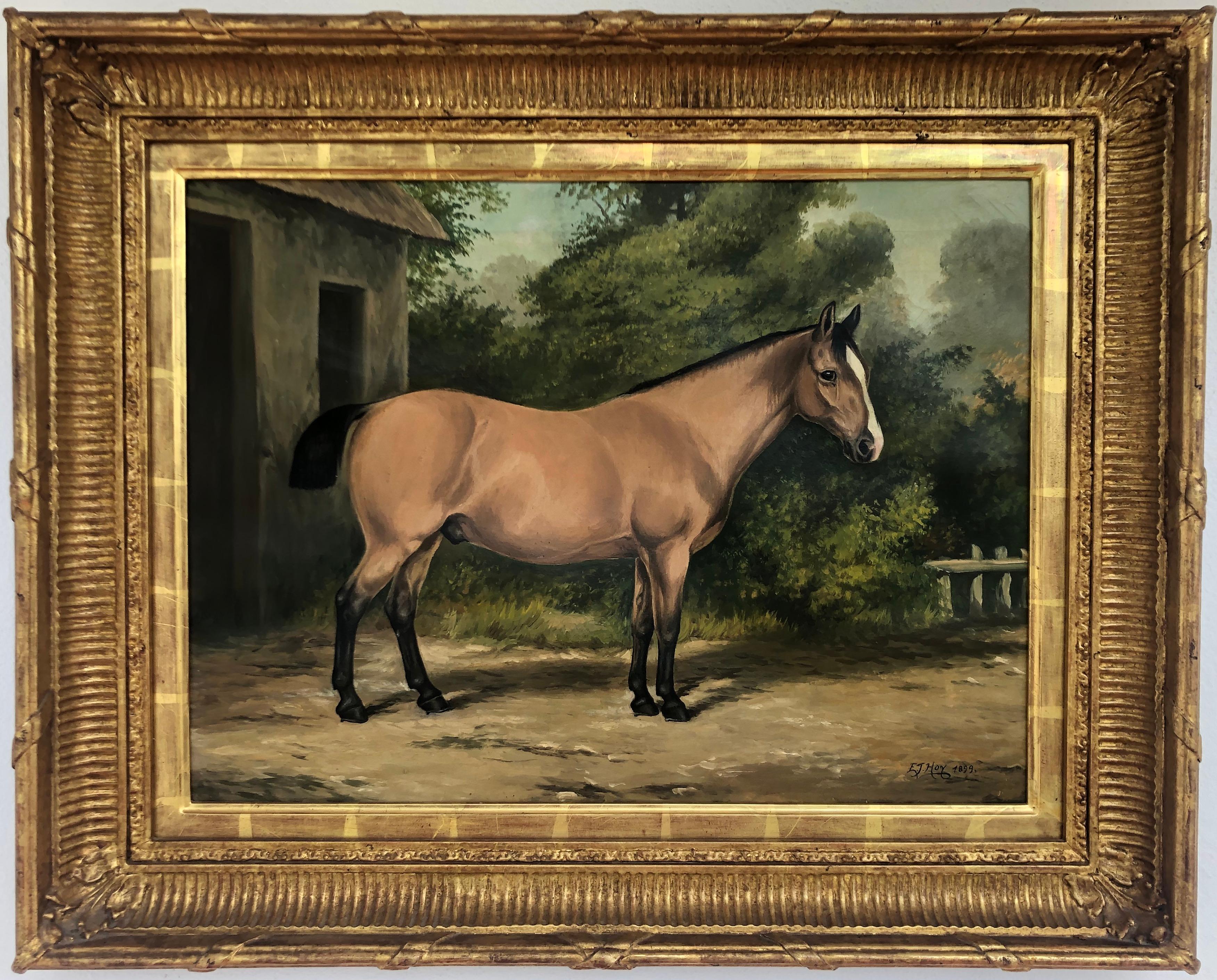
Horse in front of the barn. 19th Century English by Edward John Hoy signed, dated 1899. Beautiful custom (Richard Tobey) gilt wood frame, canvas 18x24 ...
Category

1890s Realist Animal Paintings

Materials

Canvas, Oil

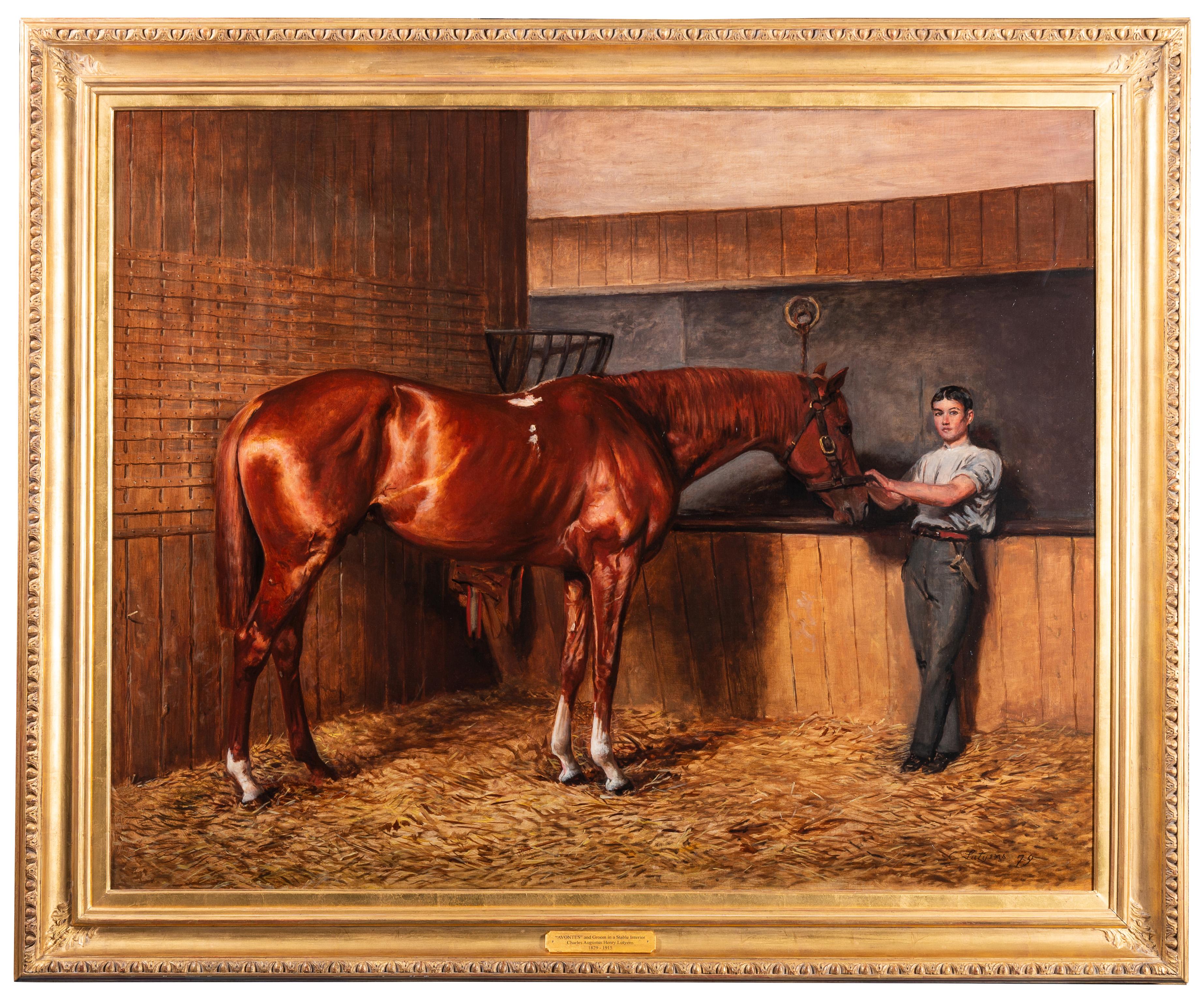
Avontes a bay stallion with a groom in a stable interior
By Charles Augustus Henry Lutyens
Located in Stoke, Hampshire
Charles Augustus Henry Lutyens (1829-1915) Avontes, a bay stallion with a groom in a stable interior signed and dated 'C Lutyens 79' (lower right) Oil on canvas Canvas Size - 40 x 50...
Category

19th Century Victorian Animal Paintings

Materials

Oil

"Interior of a Stable" William Hart, Hudson River School Antique, Boy and Horse
By William Hart
Located in New York, NY
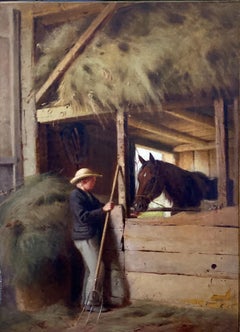
William M. Hart (1823 - 1894) Interior of a Stable Oil on canvas 17 x 12 inches Provenance William Macbeth Gallery, New York Mrs. Mabel Brady Garvan Collection Christie's New York, Sporting Art, November 28, 1995, Lot 116 Ann Carter Stonesifer, Maryland Estate of above Brunk Auctions, Asheville, North Carolina, January 27 2018, Lot 777 Exhibited New York, The Metropolitan Museum of Art, Life in America, April 24 - October 29, 1939, no. 123, illustrated. New York, Macbeth Gallery, 1892: Sixtieth Anniversary Exhibition, April 1952, p. 5, no. 18. Literature Turner Reuter Jr, Animal and Sporting Artists in America, Middleburg, Virginia, 2008, p. 306. Gary Stiles, William Hart: Catalogue Raisonné and Artistic Biography, no. 1126, illustrated. It should be noted that the Francis Patrick Garvan and Mrs. Mabel Brady Garvan collection, of which this painting was a part of, was one of the foremost American Art collections and now makes up a large part of the Smithsonian American Art Museum and the Yale University Art Gallery collections. Born in 1823 in Paisley, Scotland, William Hart emigrated with his parents to the United States at the age of nine and settled in Albany, New York. It was here that Hart first began his artistic training when he was placed under the tutelage of Messrs, Eaton & Gilbert, the prestigious coach-makers from Troy, New York. During this time, Hart learned how to decorate coach panels, covering them with either landscapes or figurative compositions. At the age of seventeen, he was eagerly contemplating an artist’s profession. Consequently, he left the mechanical trade of coach-making and began expanding his artistic pursuits to more refined endeavors. Hart followed coach-making with decorating window shades and later developed an interest in portraiture. Around 1840, he established his first formal studio in his father’s woodshed in Troy. There, he created many likenesses of individuals, affording him a nominal income. Once, he remarked that he felt prouder over his first fee of five dollars for painting a head then for the larger sums he would command later in his career. Nevertheless, his wages from portraits during this early period proved insufficient. Thus, he expanded into landscape painting, allowing him to barter his works or sell them for modest prices. In 1842, Hart moved to Michigan in an attempt to further his success; portraiture remained his primary means of support. Unfortunately, his experiences in the West were disappointing. Hart spent three years living a rough existence until he finally returned to Albany in 1845. Upon his return, he fully devoted himself to the art of landscape painting. Despite his failing health, he worked diligently to perfect his skill until 1849 when he traveled abroad to his native land of Scotland. This trip was made possible through the generosity of his patron and advisor, Dr. Ormsby of Albany. For three years, he studied in the open-air, creating brilliant sketches of the Scottish Highlands and the surrounding British Isles. Returning to Albany once more in 1852, Hart enjoyed improved health and was reinvigorated with purpose. The following year, he moved to New York and opened a studio, promoting himself as a specialist in landscape painting. Hart became a regular contributor to the National Academy of Design. His works received a great deal of attention from artists and connoisseurs alike, all of whom praised him for his fresh, self-taught style. In 1855, he was designated as an associate of the National Academy of Design; three years later he was elected to Academician. In 1865, he was unanimously chosen to be the first president of the Brooklyn Academy of Design. It was during his tenure there that he delivered his famous lecture The Field and Easel, which emphasized the distinguishing principles of landscape art in America. Hart argued that landscape painters should express the “look of the place” being depicted.Critics during the 1870s noted his sensitive balance between capturing a strict “real” interpretation of nature and that of a more “ideal” sentimental tone. For instance, in 1869, Putnam Magazine noted that Hart brought back “exquisite studies” of the surrounding Tappan...
Category

19th Century Hudson River School Animal Paintings

Materials

Canvas, Oil

19th Century sporting animal oil painting of a horse groom in a stable
By John Ferneley Junior
Located in Nr Broadway, Worcestershire
John Ferneley Jnr British, (1815-1862) Horse & Groom in a Stable Oil on canvas, indistinctly signed Image size: 18.75 inches x 23.25 inches Size including frame: 23.5 inches x 28 inches Provenance: The Parker Gallery, Berkeley St., London A mid-19th century sporting painting of a horse and groom in a stable by John Ferneley Jnr. A stable hand is depicted in the middle of a stall grooming a bay horse. Nearby, a tabby cat can be seen resting on table whilst a small black and tan dog wanders by a door to the left. John Ferneley Junior was born in 1815, at Melton Mowbray, the son of the sporting artist John E Ferneley (1782-1869) and his first wife Sarah. His brother Claude Lorraine Ferneley (1822-1892) and sister Sarah Ferneley...
Category

19th Century Victorian Animal Paintings

Materials

Canvas, Oil