Items Similar to Congregation - Japanese Style Gyotaku Painting of Koi on Marbled Mulberry Paper
Want more images or videos?
Request additional images or videos from the seller
1 of 11
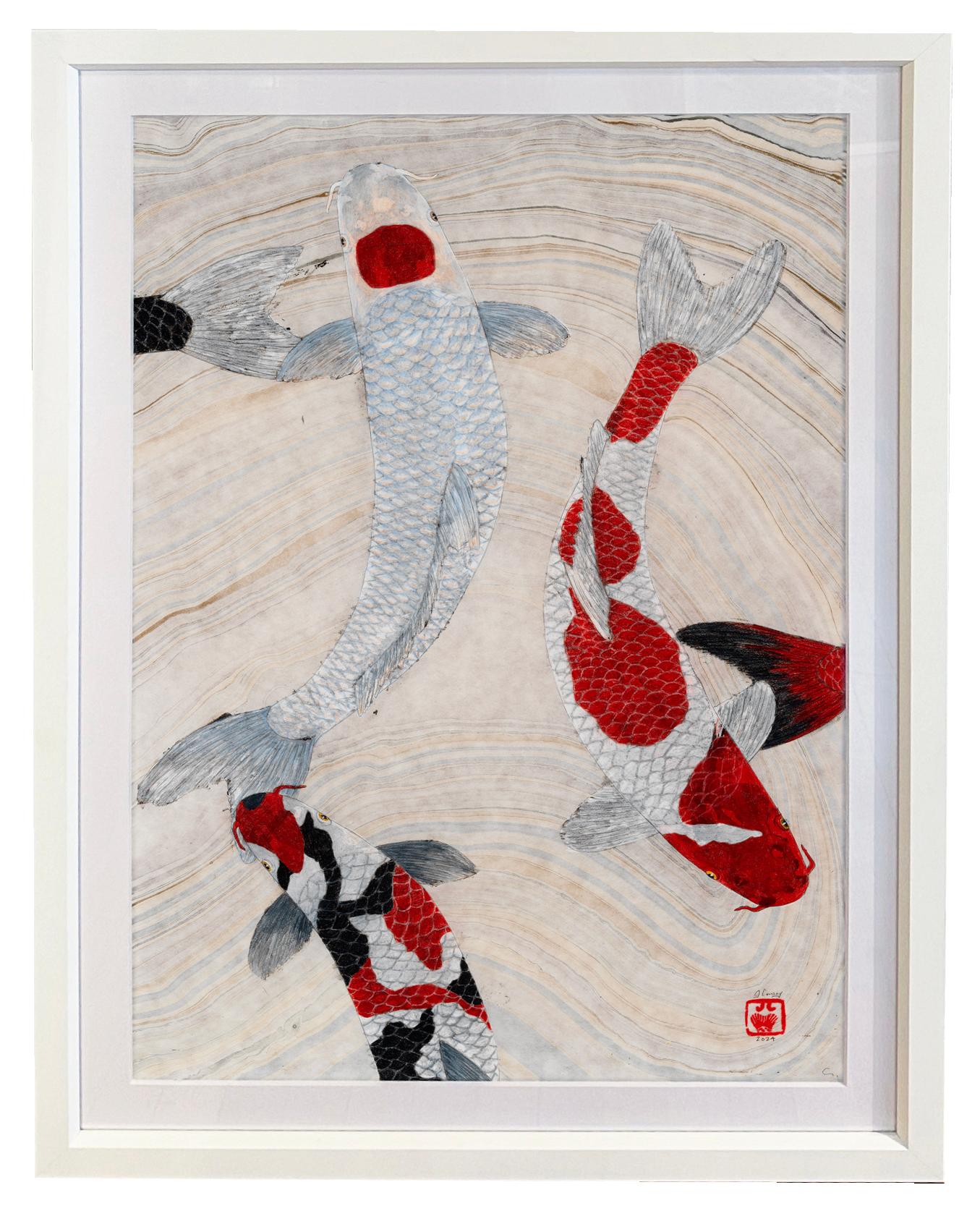
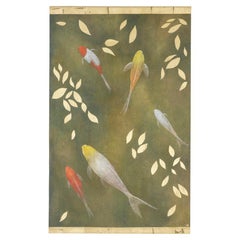
Jeff ConroyCongregation - Japanese Style Gyotaku Painting of Koi on Marbled Mulberry Paper2024
2024
$2,100
£1,599.15
€1,826.13
CA$2,950.76
A$3,237.55
CHF 1,705.38
MX$38,514.01
NOK 21,845.75
SEK 19,948.16
DKK 13,642.92
About the Item
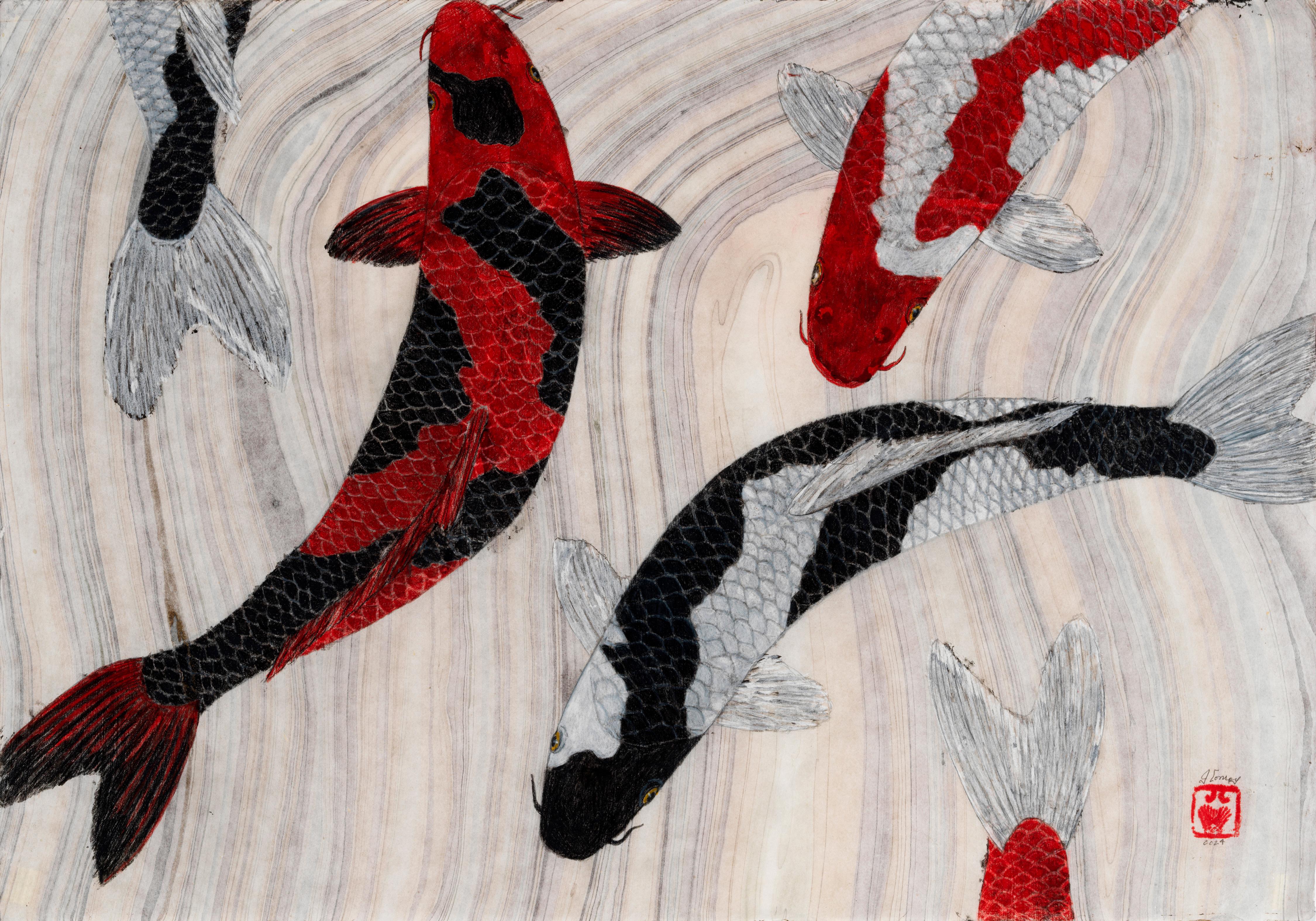
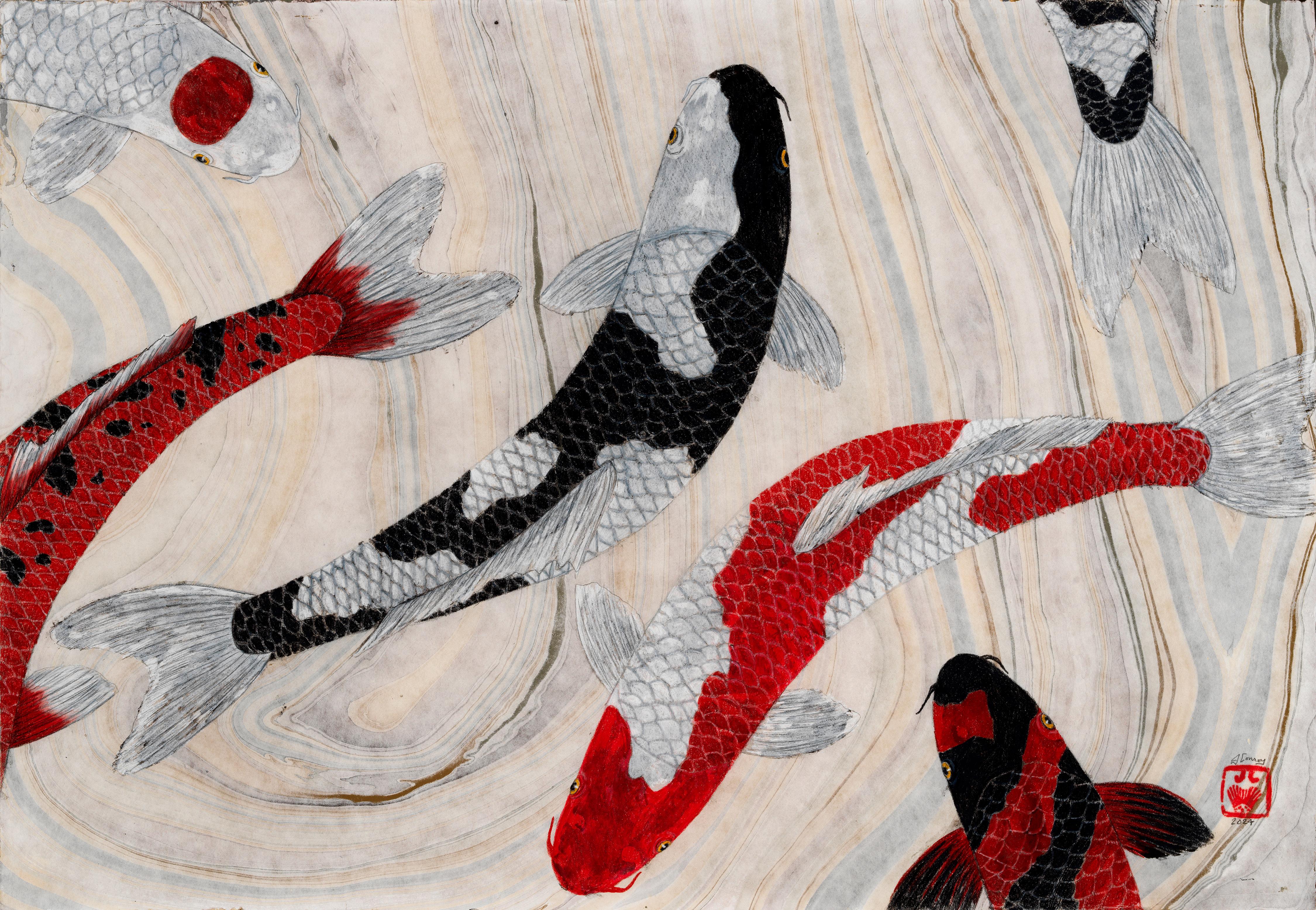
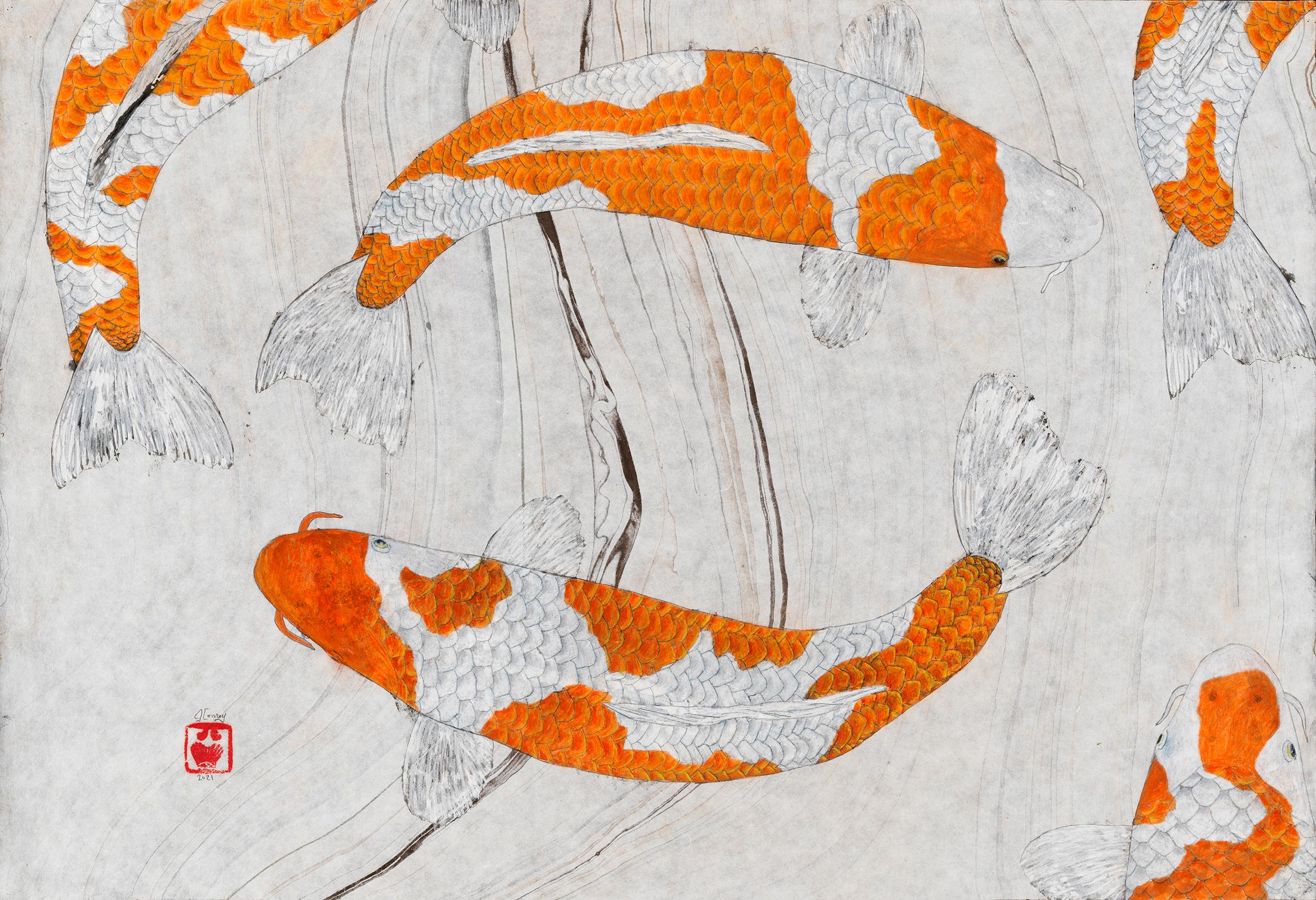
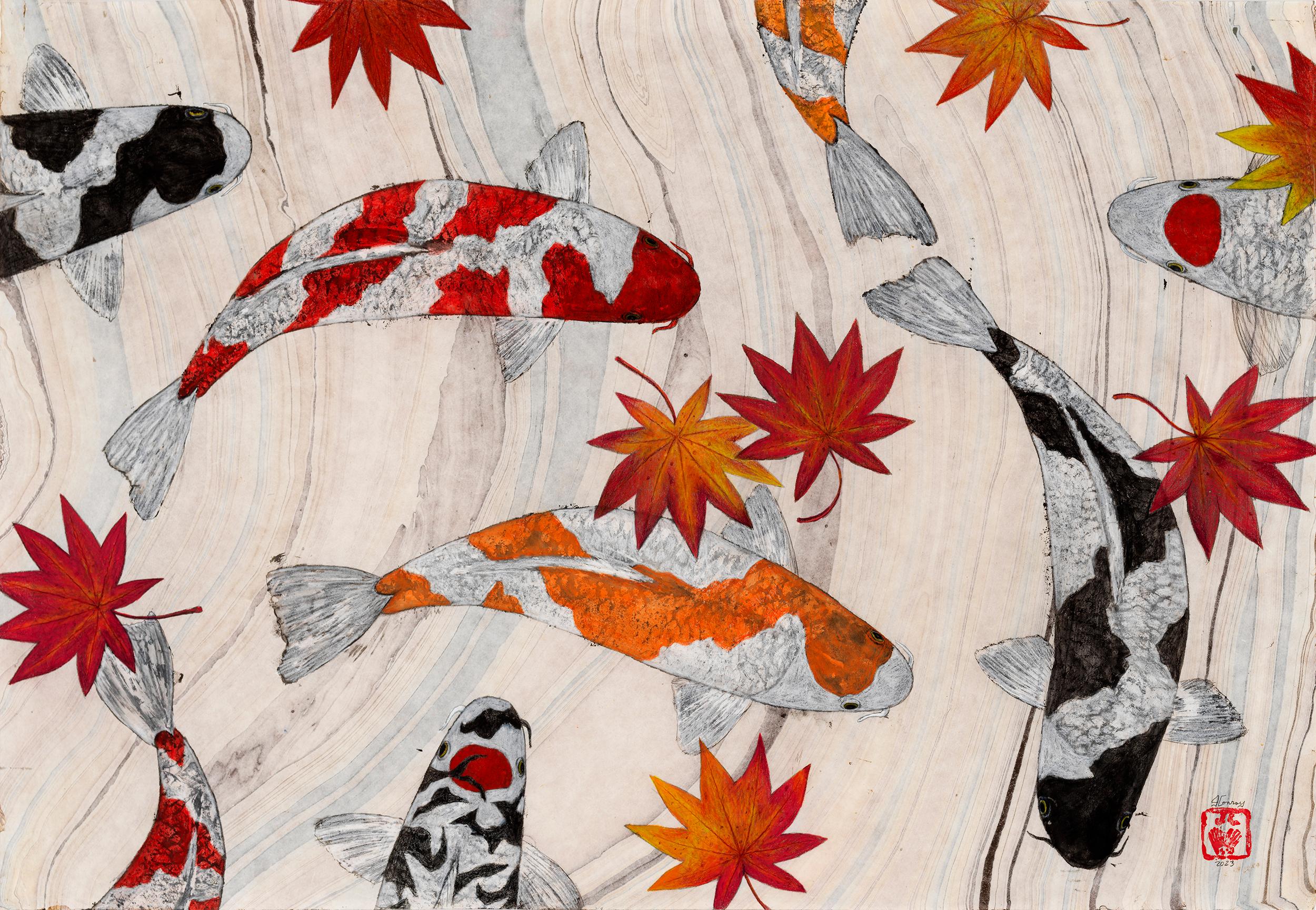
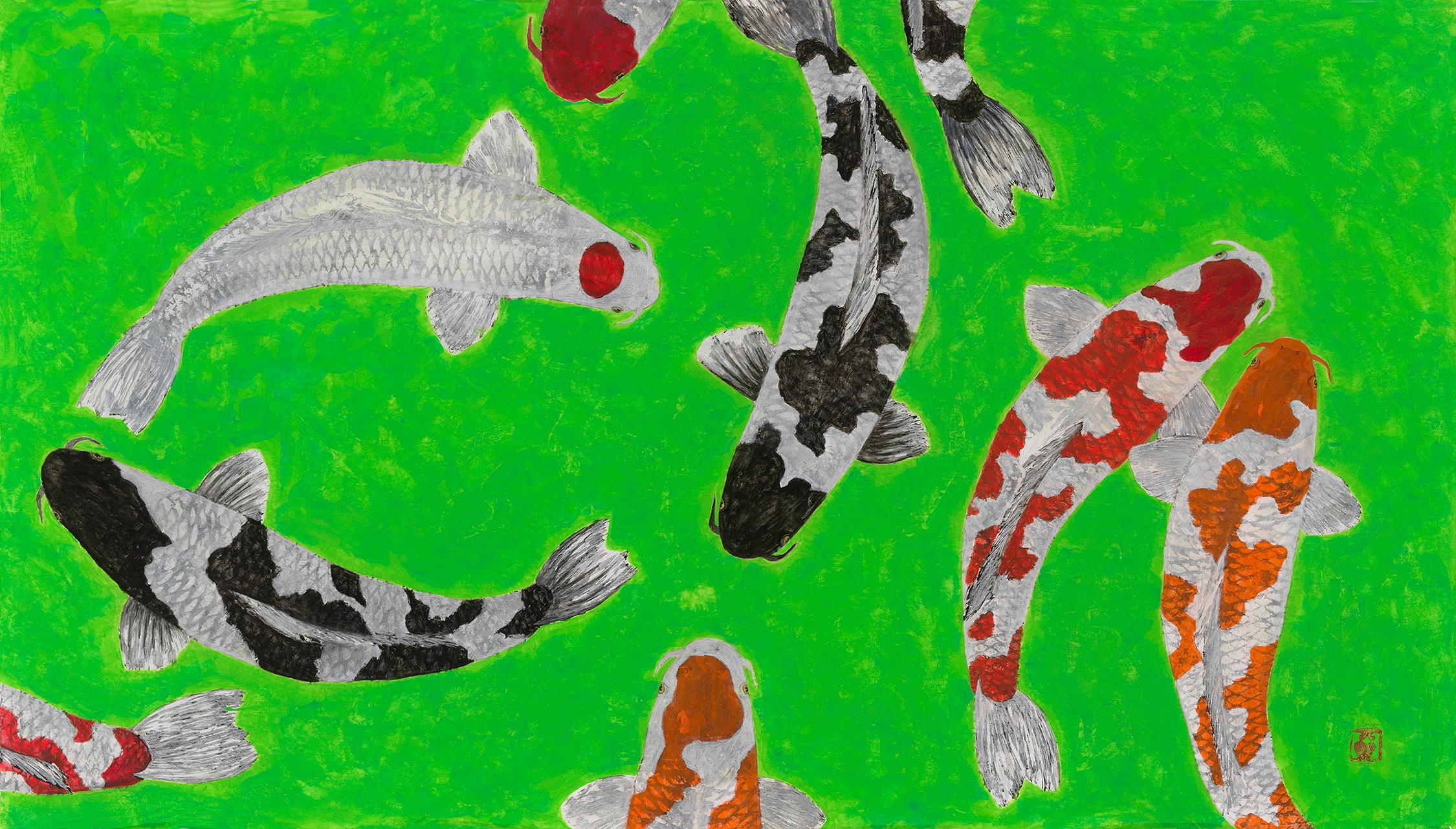
In Japan they are known as Nishikigoi, or living jewels. These brilliantly colored varieties of the Amur carp have been selectively bred by family owned fisheries for generations. When I began this series of Gyotaku (Japanese fish printing) I studied the many varieties of Koi, each with their own unique colors and patterns. My particular favorites are the Tanchos which can be identified by the distinct red spot on their heads. To create these pieces I print common carp I catch myself with sumi ink using traditional techniques used by Japanese fisherman dating back the mid 1800's. I then tint the images using watercolor. In each piece I hope to translate a sense of movement to give the viewer a sense of calm one might experience watching the living versions lazily meandering around a serene pond. —Jeff Conroy
Several Koi swim against one another in this Gyo-tako method of painting by artist Jeff Conroy. After inking and taking impressions of the koi, the artist then uses watercolors to enhance their beauty. By using marbled mulberry paper to print on, he has created the illusion of water with the swirls of the mulberry paper. The paper itself has a soft hue and slightly wavy texture adding the overall feel of the artwork. This artwork is matted and framed in a white wooden frame measuring 42.5h x 30.75w x 1d inches.
Jeff Conroy
Congregation, 2024
sumi ink and colored pencil
37h x 25w in
93.98h x 63.50w cm
JEC169
Gyotaku - A Japanese word translated from "gyo" meaning fish and "taku" meaning stone impression. It is the traditional Japanese method of printing fish, a practice which dates back to the mid-1800s. This form of nature printing was used by fishermen to record their catches, but has also become an art form of its own. Gyotaku is a Japanese method of printmaking that traditionally utilizes fish, sea creatures or similar subjects as printing "plates" in its process. The literal translation of the word is "fish stone rubbing" and is believed to get its inspiration from Chinese stone rubbings of calligraphy, which gave rise to printing. Gyotaku, or Japanese fish printing, was originally used to record and commemorate a fisherman's catch. Prints were made using Sumi ink and Washi paper. It is rumored that Samurai would settle fishing competitions using Gyotaku prints. This original form of Gyotaku, as a recording method for fisherman, is still utilized today, and can be seen hanging in tackle shops in Japan and Okinawa.
- Creator:Jeff Conroy (1967, American)
- Creation Year:2024
- Dimensions:Height: 37 in (93.98 cm)Width: 25 in (63.5 cm)
- Medium:
- Movement Style:
- Period:
- Condition:
- Gallery Location:Chicago, IL
- Reference Number:Seller: JEC1691stDibs: LU554315258612
About the Seller
5.0
Gold Seller
Premium sellers maintaining a 4.3+ rating and 24-hour response times
Established in 2017
1stDibs seller since 2017
382 sales on 1stDibs
Typical response time: <1 hour
- ShippingRetrieving quote...Shipping from: Chicago, IL
- Return Policy
More From This Seller
View AllReunion - Japanese Style Gyotaku Painting of Koi on Marbled Mulberry Paper
By Jeff Conroy
Located in Chicago, IL
In Japan they are known as Nishikigoi, or living jewels. These brilliantly colored varieties of the Amur carp have been selectively bred by family owned fisheries for generations. Wh...
Category
21st Century and Contemporary Contemporary Animal Paintings
Materials
Sumi Ink, Watercolor, Mulberry Paper
Assembly - Gyotaku Style Sumi Ink Painting of an Koi Pond on Mulberry Paper
By Jeff Conroy
Located in Chicago, IL
In Japan, they are known as Nishikigoi, or living jewels. These brilliantly colored varieties of the Amur carp have been selectively bred by family owned fisheries for generations. W...
Category
21st Century and Contemporary Contemporary Animal Drawings and Watercolors
Materials
Sumi Ink, Watercolor, Mulberry Paper, Color Pencil
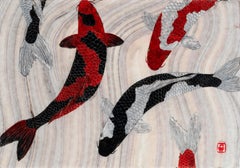
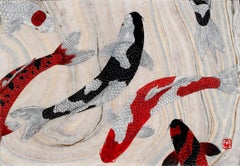
Encounter - Gyotaku Style Sumi Ink Painting of an Koi Pond on Mulberry Paper
By Jeff Conroy
Located in Chicago, IL
In Japan, they are known as Nishikigoi, or living jewels. These brilliantly colored varieties of the Amur carp have been selectively bred by family owned fisheries for generations. W...
Category
21st Century and Contemporary Contemporary Animal Drawings and Watercolors
Materials
Sumi Ink, Watercolor, Mulberry Paper, Color Pencil
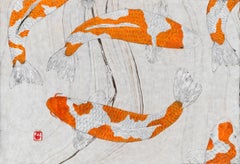
Kikusui - Japanese Gyotaku Painting of Orange Koi on Marbled Mulberry Paper
By Jeff Conroy
Located in Chicago, IL
In Japan, they are known as Nishikigoi, or living jewels. These brilliantly colored varieties of the Amur carp have been selectively bred by family owned fisheries for generations. When I began this series of Gyotaku (Japanese fish printing) I studied the many varieties of Koi, each with their own unique colors and patterns. To create these pieces I print common carp I catch myself with sumi ink using traditional techniques used by Japanese fisherman...
Category
21st Century and Contemporary Contemporary Animal Paintings
Materials
Sumi Ink, Watercolor, Mulberry Paper
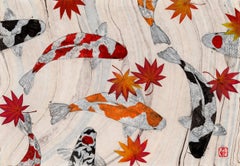
Autumn Cotilion - Japanese Style Gyotaku Painting on Marbled Mulberry Paper
By Jeff Conroy
Located in Chicago, IL
In Japan they are known as Nishikigoi, or living jewels. These brilliantly colored varieties of the Amur carp have been selectively bred by family owned fisheries for generations. When I began this series of Gyotaku (Japanese fish printing) I studied the many varieties of Koi, each with their own unique colors and patterns. My particular favorites are the Tanchos which can be identified by the distinct red spot on their heads. To create these pieces I print common carp I catch myself with sumi ink using traditional techniques used by Japanese fisherman dating back the mid 1800's. I then tint the images using watercolor. In each piece I hope to translate a sense of movement to give the viewer a sense of calm one might experience watching the living versions lazily meandering around a serene pond. —Jeff Conroy
Several koi swim in a circle while autumn leaves fall on the surface of the water in this Gyo-tako method of painting by artist Jeff Conroy. After inking and taking impressions of the koi, the artist then uses watercolors to enhance their beauty. By using marbled mulberry paper to print on, he has created the illusion of water with the swirls of the mulberry paper. The paper itself has a soft hue and slightly wavy texture adding the overall feel of the artwork. This artwork is unframed. Contact gallery for framing options.
Jeff Conroy
Autumn Cotillion
sumi ink and colored pencil on mulberry paper
25h x 37w in
63.50h x 93.98w cm
JEC103
Gyotaku - A Japanese word translated from "gyo" meaning fish and "taku" meaning stone impression. It is the traditional Japanese method of printing fish, a practice which dates back to the mid-1800s. This form of nature printing was used by fishermen to record their catches, but has also become an art form of its own. Gyotaku is a Japanese method of printmaking that traditionally utilizes fish, sea creatures or similar subjects as printing "plates" in its process. The literal translation of the word is "fish stone rubbing...
Category
21st Century and Contemporary Contemporary Animal Paintings
Materials
Sumi Ink, Watercolor, Mulberry Paper
Koi Pond Conclave - Japanese Style Gyotaku Painting on Archival Kraft Paper
By Jeff Conroy
Located in Chicago, IL
In Japan they are known as Nishikigoi, or living jewels. These brilliantly colored varieties of the Amur carp have been selectively bred by family owned fisheries for generations. When I began this series of Gyotaku (Japanese fish printing) I studied the many varieties of Koi, each with their own unique colors and patterns. My particular favorites are the Tanchos which can be identified by the distinct red spot on their heads. To create these pieces I print common carp I catch myself with sumi ink using traditional techniques used by Japanese fisherman...
Category
21st Century and Contemporary Contemporary Animal Paintings
Materials
Sumi Ink, Watercolor, Archival Paper
You May Also Like
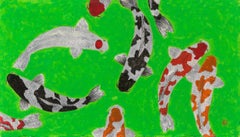
Japanese Koi Carp. Original painting
Located in Zofingen, AG
The painting "Japanese Koi Carp" is made with acrylic paints and texture paste. Bright colors and volumetric effect create a sense of depth and movement. The painting will look good ...
Category
2010s Impressionist Animal Paintings
Materials
Canvas
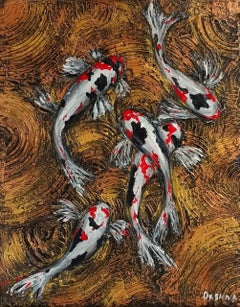
Group of Koi (Carp) screen ) by Nitten artist Tozaburo Ohno (大野藤三郎)
Located in Fukuoka, JP
Tozaburo Ohno (大野藤三郎)
A Japanese-style painter known for his refined depictions of koi carp and seasonal flowers. Born in 1917 in Osaka (though some sources cite Kyoto), he studied ...
Category
20th Century Japanese Showa Paintings and Screens
Materials
Wood, Paper
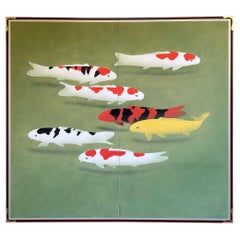
Painted canvas representing carp. Contemporary work.
Located in Saint-Ouen, FR
Painted canvas, or decorative panel, representing carp.
Contemporary French work.
Dimensions: H 120 x W 100 cm
Reference: LS6028675A
The manufacturing time indicated is approxima...
Category
21st Century and Contemporary French Decorative Art
Materials
Copper, Gold Leaf
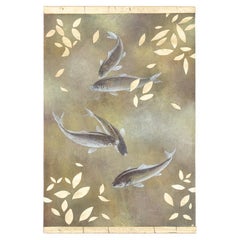
6 Koi success
Located in Atlanta, GA
Rosa McMurtray is an internationally exhibited artist who was born in Spain and currently lives in Atlanta, Georgia. Her innate artistic talent was reco...
Category
21st Century and Contemporary Modern Figurative Paintings
Materials
Acrylic

Painted Canvas Representing Koi Carp, Contemporary Work
Located in Saint-Ouen, FR
Painted canvas representing koi carp.
Contemporary French craftsmanship.
Raw linen canvas hand painted with natural pigments and golden patterns made with copper leaf. Canvas stret...
Category
21st Century and Contemporary French Decorative Art
Materials
Canvas
Japanese Print, Koi Carp - Signed Woodcut
Located in Paris, IDF
Mokuchu URUSHIBARA
Koi Carp, c. 1930
Woodcut after on an ink drawing
Signed with the artist's stamp
On paper 30 x 24 cm (c. 11.81 x 9.44 in)
INFORMATION : Engraving published by Mo...
Category
1930s Modern Animal Prints
Materials
Woodcut