Want more images or videos?
Request additional images or videos from the seller
1 of 9

John Ferneley Junior
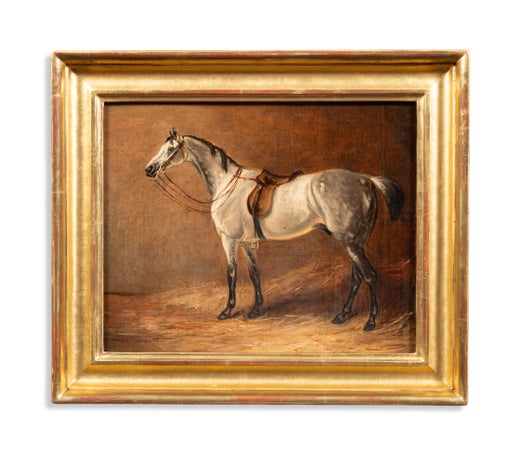
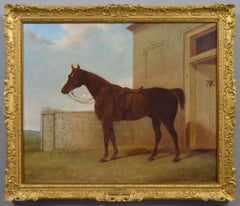
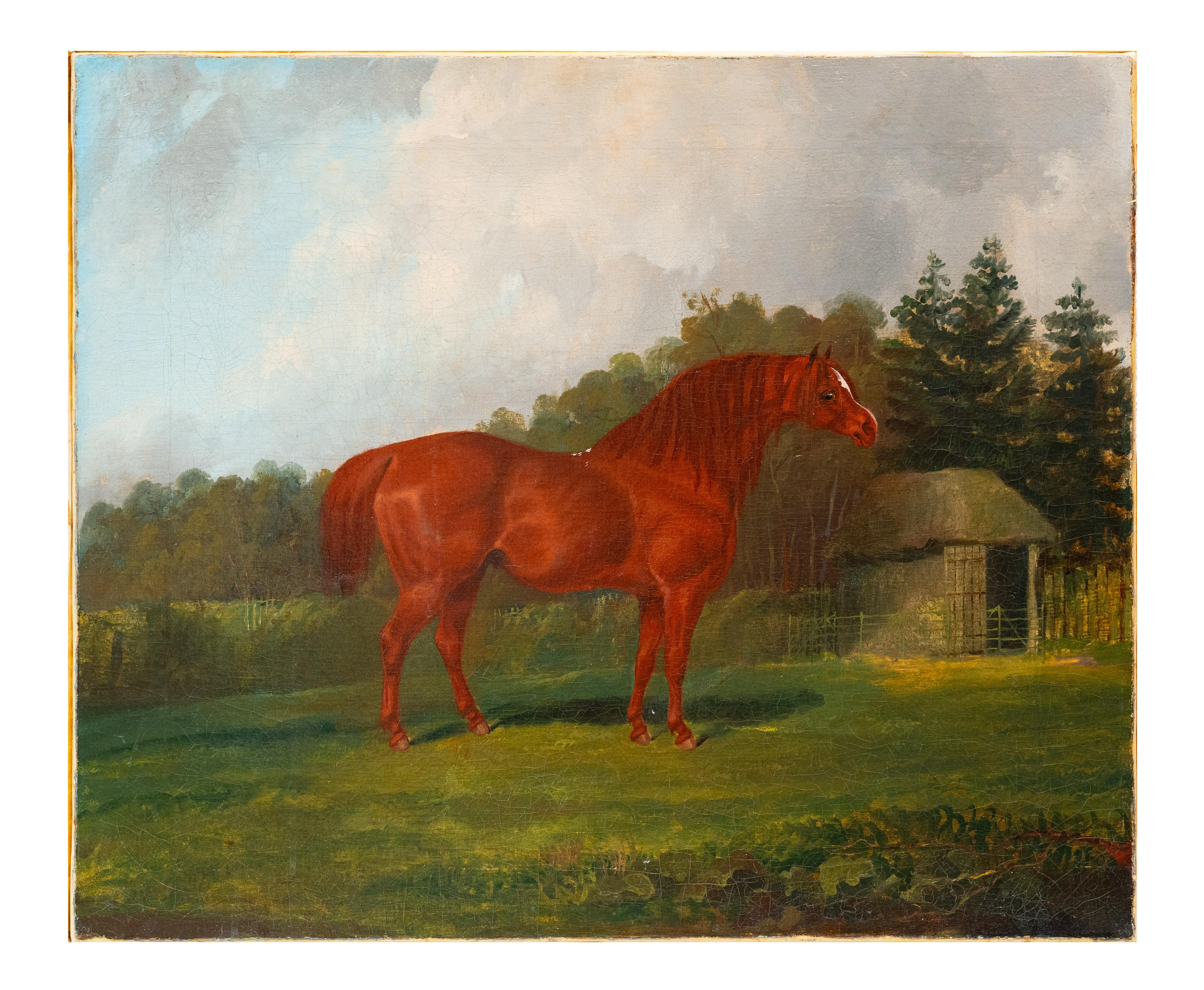
Charger (military horse) "Sphinx"

1860

$10,955.14
£8,000
€9,377.55
CA$15,086.11
A$16,420.85
CHF 8,700.82
MX$197,485.60
NOK 110,628.74
SEK 101,379
DKK 70,049.76

About the Item

John Ferneley Jr. (1815–1862) was born in 1815 in Melton Mowbray, Leicestershire, the eldest son of renowned sporting artist John Ferneley Sr. Growing up in a family immersed in the world of equestrian art, Ferneley Jr. was introduced to painting at an early age under his father's tutelage. His siblings, including brother Claude Lorraine Ferneley and sister Sarah Ferneley, also pursued artistic careers, indicating a family deeply engaged in the arts. By 1839, Ferneley Jr. had established his own studio in Malton, North Yorkshire, marking the beginning of his independent artistic career. He specialized in equestrian portraits and sporting scenes, capturing the grace and power of horses with meticulous attention to detail. His works often depicted horses in various settings, from racing scenes to portraits in stables, reflecting the sporting culture of 19th-century Britain. Ferneley Jr.'s clientele included wealthy landowners and aristocrats, and he produced a series of paintings for the 7th (Princess Royal's) Dragoon Guards and the 4th Royal Irish Dragoon Guards. His ability to convey the elegance and vitality of horses made his works highly sought after. In 1846, Ferneley Jr. married Rachel Strickland, and later, in 1856, he married Mary Wilcox, a widow from Cheshire. The couple resided near Manchester, where Ferneley Jr. continued his artistic endeavours until his death in 1862. His legacy as a prominent equestrian artist endures, with his works held in various collections and admired for their historical and artistic value. "Sphinx" (1860) The painting showcases Sphinx as a proud and muscular charger, characterized by its reddish brown coat and distinct black legs. The horse stands poised, exuding strength and elegance, with its name "Sphinx" inscribed in green on the bottom left corner of the canvas. In the background, two other horses are visible: one white and the other dark brown. These figures add depth to the composition and suggest a dynamic equestrian scene. The inclusion of these horses also reflects Ferneley Jr.'s skill in creating a sense of movement and interaction within his works. The choice of the name "Sphinx" for the horse may have been symbolic, perhaps alluding to the animal's enigmatic and regal presence. Such naming conventions were common among aristocratic horse owners of the time, who often chose names that conveyed power, mystery, or nobility. This painting exemplifies Ferneley Jr.'s expertise in capturing the essence of horses, not merely as animals but as subjects of grace and character. His works continue to be celebrated for their historical significance and artistic merit, offering a glimpse into the equestrian culture of 19th-century Britain. Signed John Ferneley 1860. Sizes without the frame 73 x 93 cm. Painting and frame conservation services are provided upon request. Please message us for further advice.
  • Creator:
    John Ferneley Junior (1815 - 1862, British)
  • Creation Year:
    1860
  • Dimensions:
    Height: 33.08 in (84 cm)Width: 40.56 in (103 cm)
  • Medium:
  • Movement Style:
  • Period:
  • Framing:
    Frame Included
    Framing Options Available
  • Condition:
  • Gallery Location:
    GB
  • Reference Number:
    Seller: 321stDibs: LU2841216327862

More From This Seller

View All
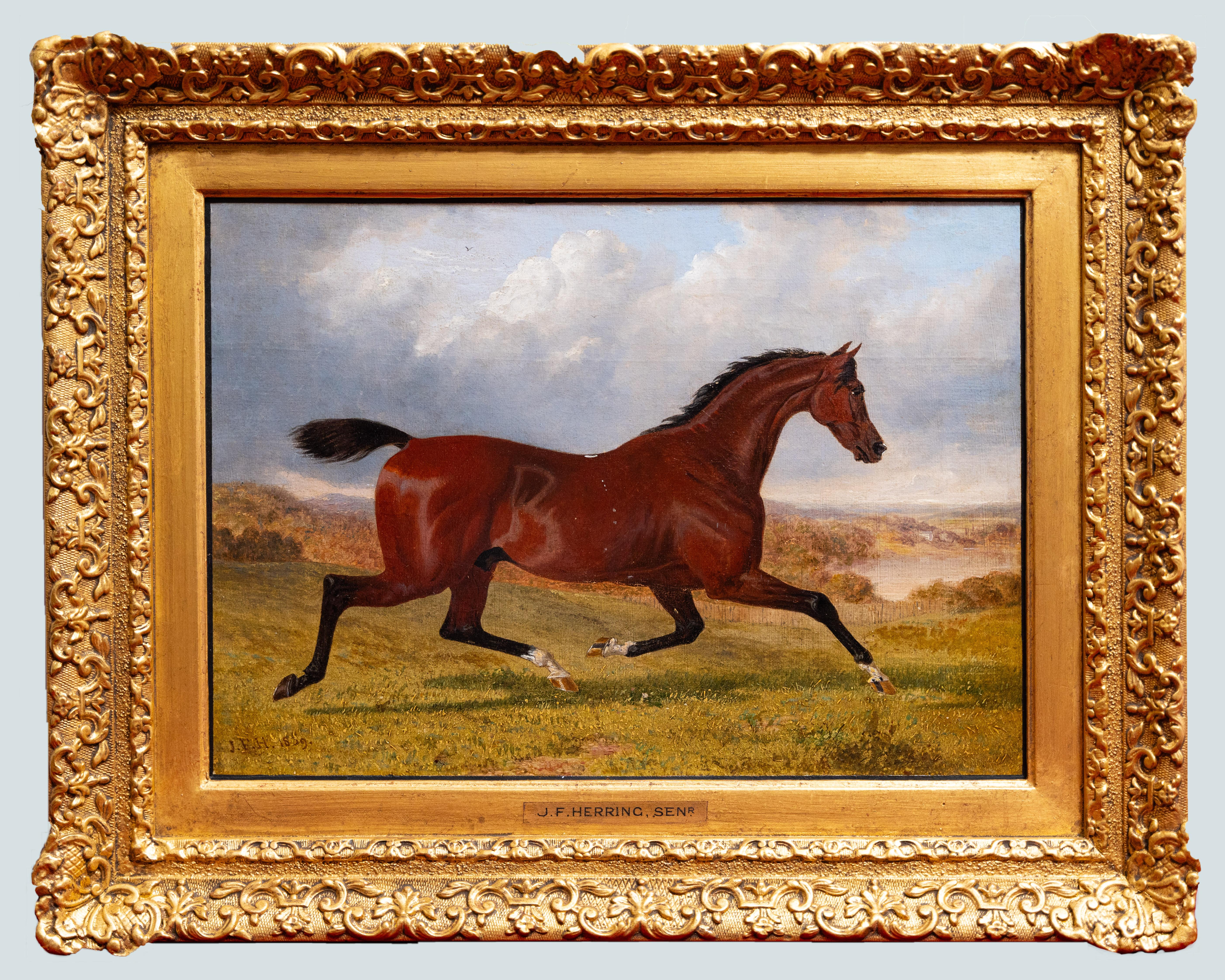
The Galloping Racehorse, John Frederick Herring Sr (1795-1865)
By John Frederick Herring Sr.
Located in GB
"The Galloping Racehorse" by John Frederick Herring Sr. is a stunning oil painting on canvas that vividly captures the dynamic motion and energy of a racehorse in full gallop. In thi...
Category

19th Century Animal Paintings

Materials

Canvas, Oil

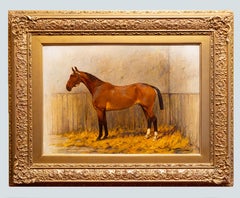
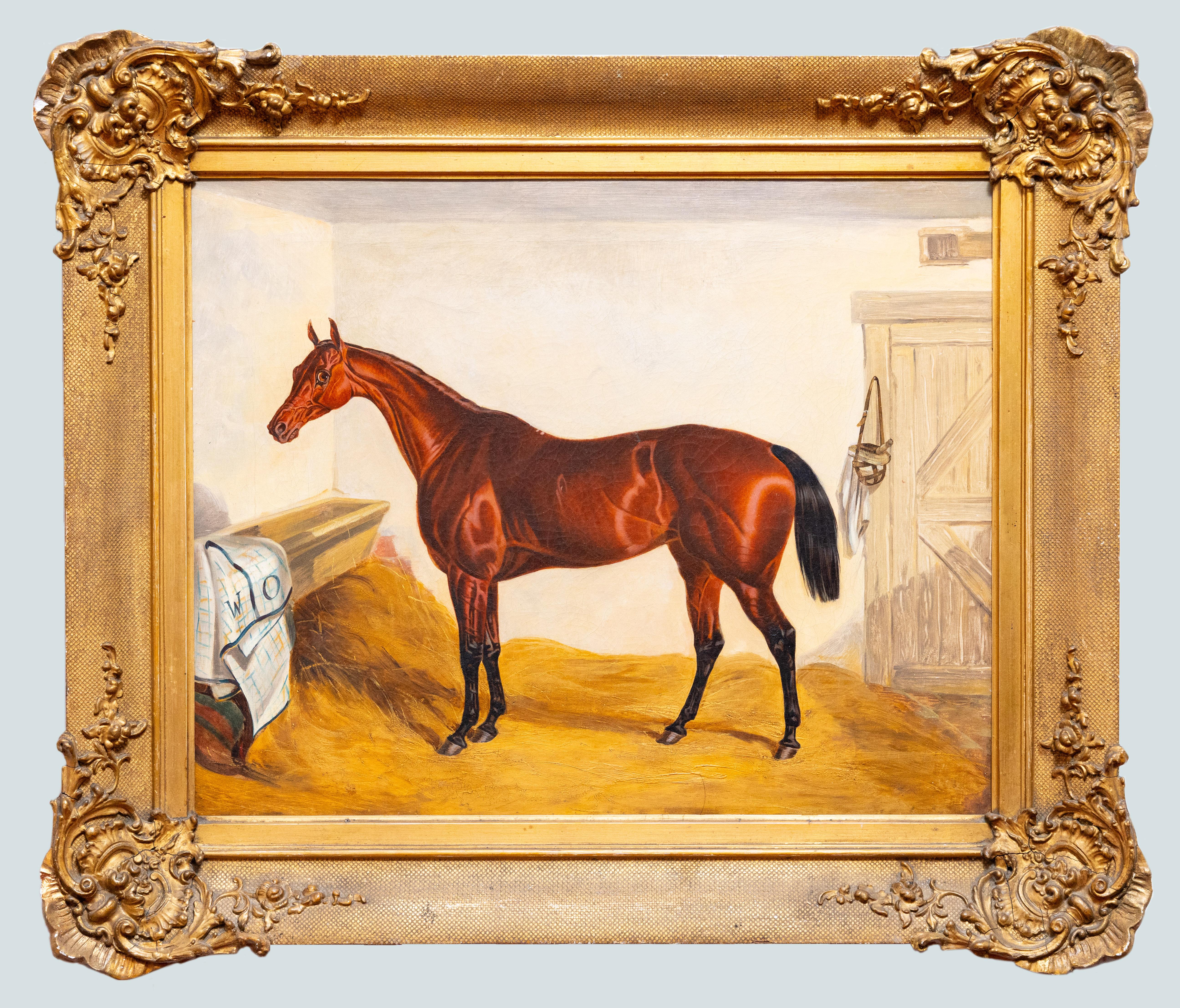
Bay race horse in a stable, William Osborne RHA, Irish Artist, 1823 - 1901
By William Osborne
Located in GB
This painting by William Osborne, an Irish artist from the 19th century, features a bay racehorse in a stable, captured in rich oil on canvas. The scene evokes a sense of realism and attention to detail, as Osborne was known for his vivid depictions of horses, particularly those involved in racing or in stables. The piece is signed with the artist’s initials, and still features the original frame. William Osborne is today best remembered as the father of the artist Walter Osborne. But he was a significant artist in his own right. He specialised in painting animals especially his own terriers who were often depicted in his studio. Strickland wrote ''His pictures of dogs...
Category

Late 19th Century Animal Paintings

Materials

Canvas, Oil

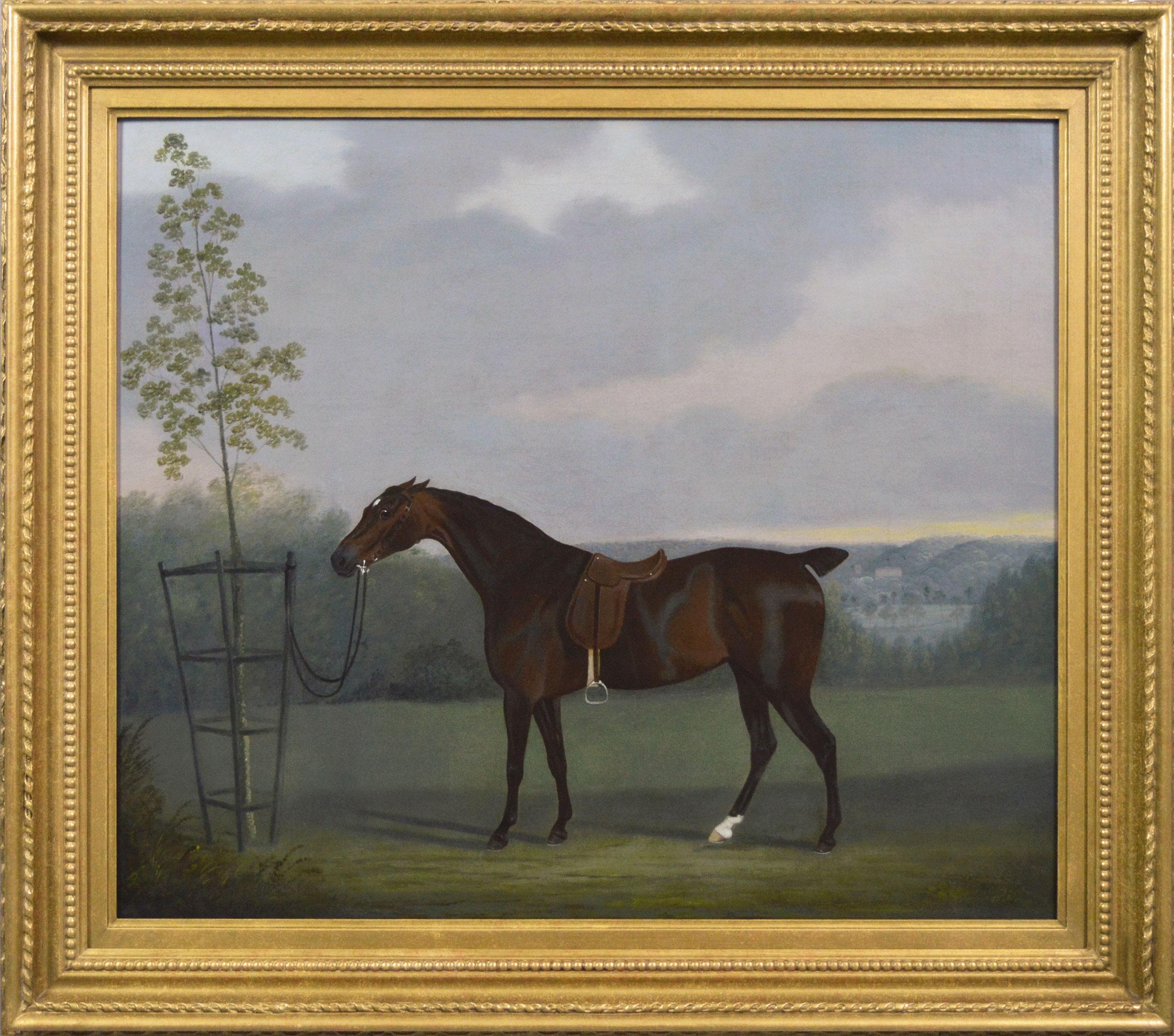
Chestnut Stallion at Rest, British School 19th century
Located in GB
This 19th-century British School painting depicts a handsome chestnut horse standing proudly in a verdant rural landscape—a classic subject in ...
Category

19th Century Animal Paintings

Materials

Canvas, Oil

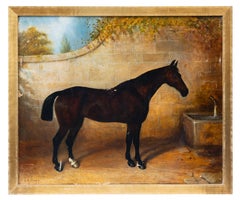
Dark Bay Horse by a Stone Wall
Located in GB
Little is known of the life and career of the painter B. A. Howe, who appears to have been active in Britain during the mid- to late-nineteenth century. Works signed with this name s...
Category

19th Century Victorian Animal Paintings

Materials

Canvas, Oil

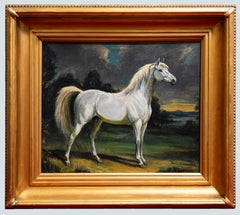
Arab stallion in a landscape, Lionel Hamilton Renwick (1917-2003)
Located in GB
Lionel Hamilton Renwick’s "Arab Stallion in a Landscape" captures the striking beauty and elegance of an Arabian horse set against a sweeping, natural backdrop. Known for his equine ...
Category

20th Century Animal Paintings

Materials

Canvas, Oil

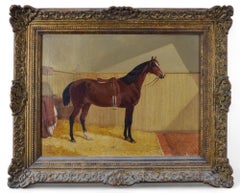
A hunter in a stable interior, by George Wright (30 June 1860 - 11 March 1944)
By George Wright
Located in GB
George Wright (1860–1944) was a British painter renowned for his equestrian art, particularly hunting and coaching scenes. Born in Leeds, England, he was the eldest of seven children...
Category

Early 20th Century Animal Paintings

Materials

Canvas, Oil

You May Also Like

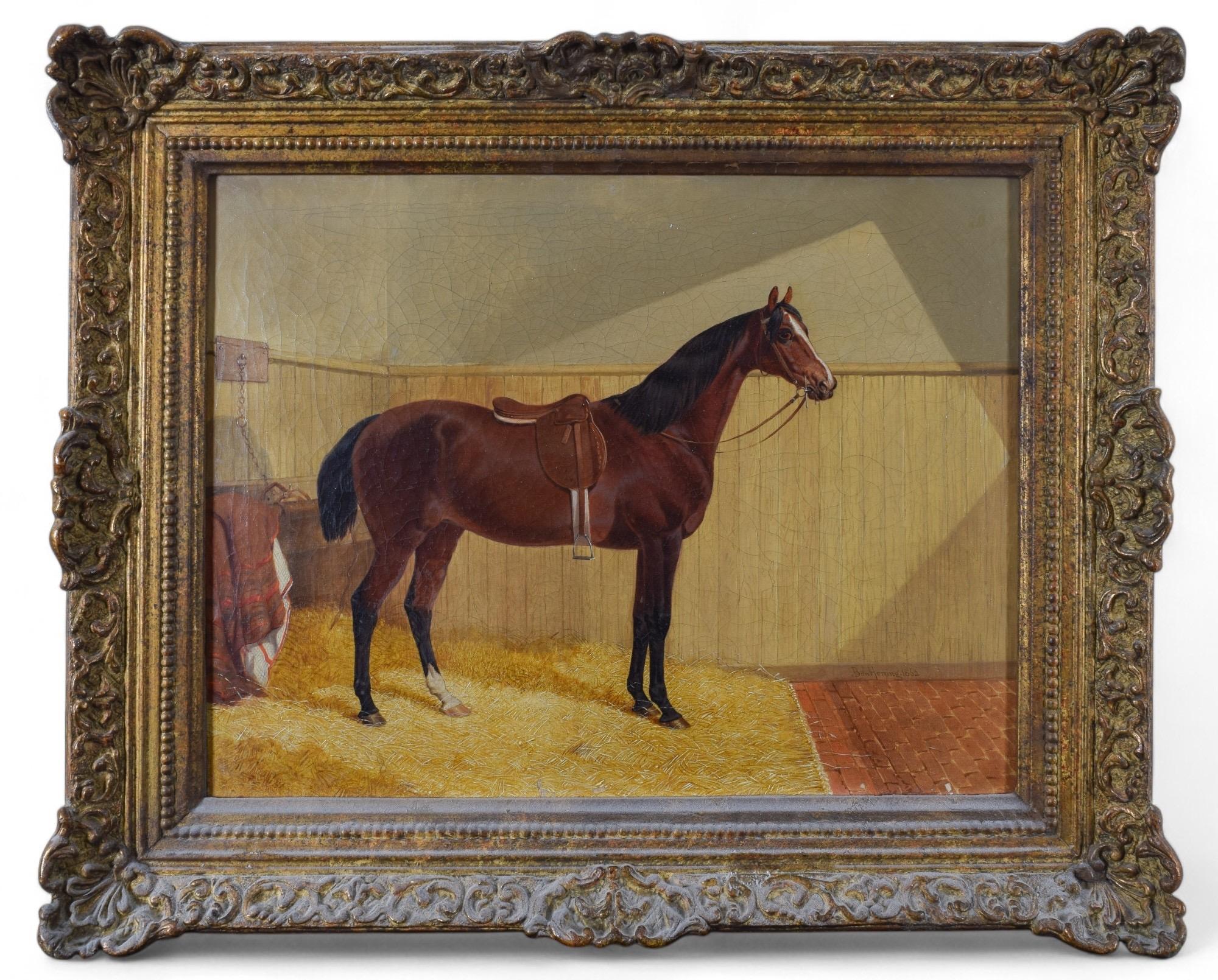
Saddled bay hunter horse Oil on canvas British 1863
Located in London, GB
Benjamin Herring Snr (British, 1830-1871) Saddled bay hunter 1863 Oil on canvas With old Christie's stencil verso Property of a gentleman From the collection of Peter Roe Dimension...
Category

18th Century English School Animal Paintings

Materials

Oil

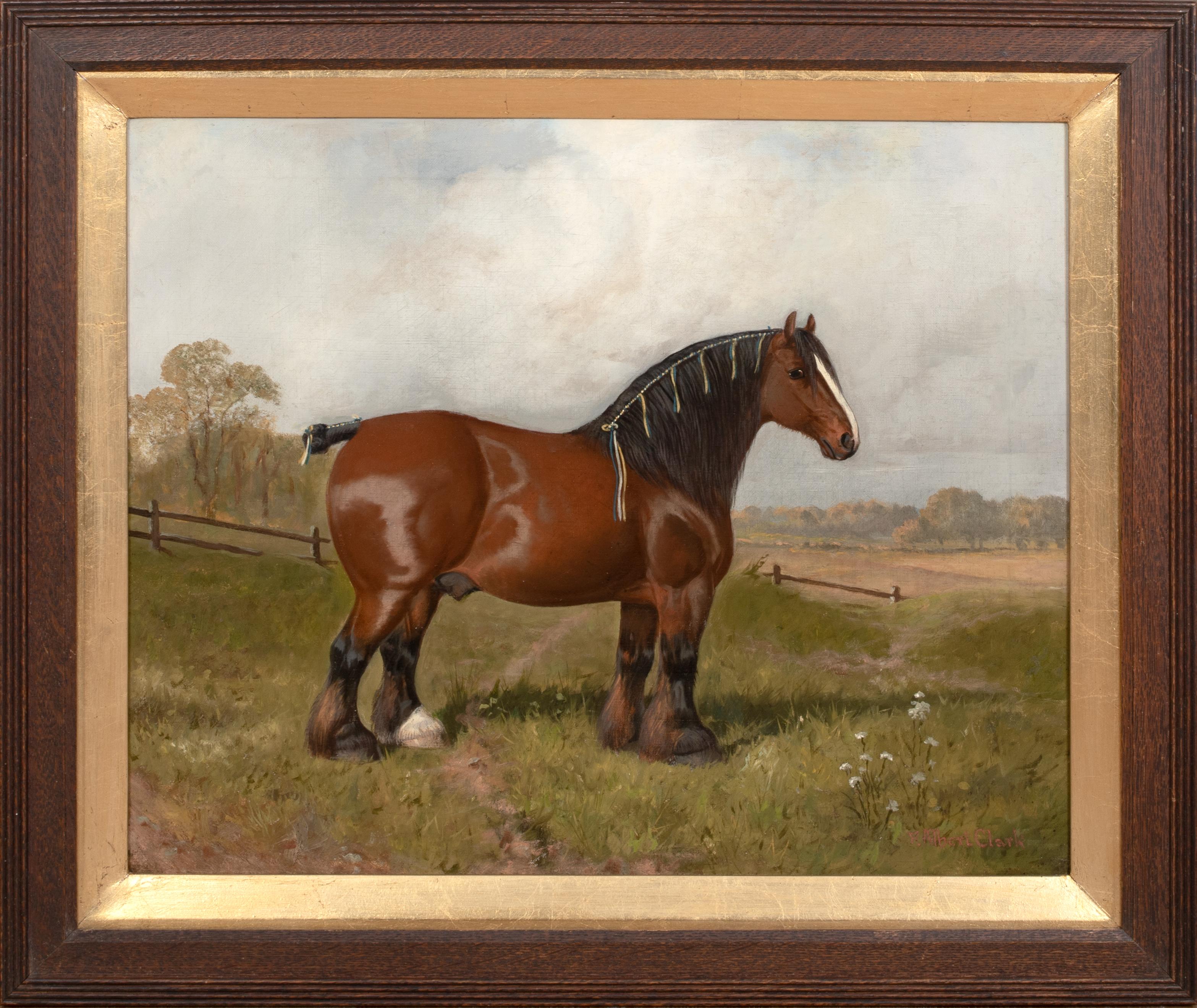
Portrait of A Prize Winning Shire Horse, 19th Century by WILLIAM ALBERT CLARK
Located in Blackwater, GB
Portrait of A Prize Winning Shire Horse, 19th Century WILLIAM ALBERT CLARK (1860-1843) Large 19th Century English portrait of a prize winning shire horse, oil on canvas by William ...
Category

19th Century Animal Paintings

Materials

Canvas, Oil

Early 19th Century sporting oil painting of a horse in a landscape
By Clifton Tomson
Located in Nr Broadway, Worcestershire
Clifton Tomson British, (1775-1828) Pysche Oil on canvas, signed, inscribed & dated ‘Nottingham 1825’ Image size: 24.75 inches x 29.25 inches Size including frame: 32 inches x 36.5 ...
Category

Early 19th Century Animal Paintings

Materials

Canvas, Oil

Saddled Hunter Horse in a Landscape - British Old Master equine art oil painting
By John Boultbee
Located in Hagley, England
This large superb British Old Master horse portrait oil painting is by noted artist John Boultbee. Painted circa 1790, the composition is a beautif...
Category

1790s Old Masters Animal Paintings

Materials

Oil

19th Century sporting horse portrait oil painting of a chestnut hunter
By Abraham Cooper
Located in Nr Broadway, Worcestershire
Abraham Cooper RA British, (1787-1868) A Surrey Hunter Oil on canvas, signed with monogram & dated 1850, further inscribed bottom left Image size: 24 inches x 29 inches Size includi...
Category

19th Century Victorian Animal Paintings

Materials

Canvas, Oil

Early 20th century English Antique portrait of a Polo Pony
By George Paice
Located in Woodbury, CT
This early 20th-century portrait of a Polo Pony by the esteemed English artist George Paice is an exquisite representation of equine artistry, showcasing Paice’s remarkable skill in ...
Category

1910s Victorian Figurative Paintings

Materials

Oil, Board