Want more images or videos?
Request additional images or videos from the seller
1 of 7

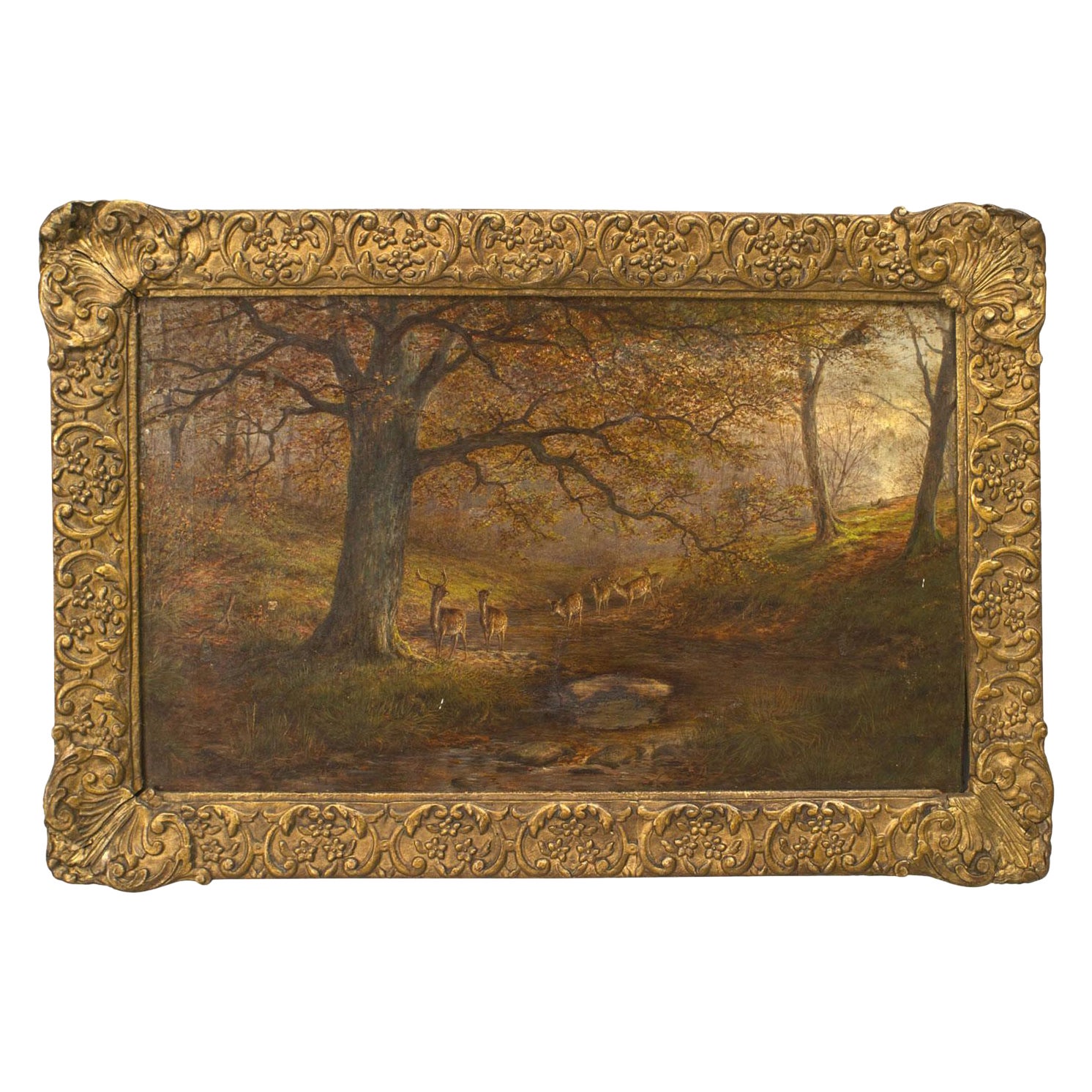
John Frederick Herring Sr.
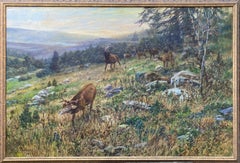
Deer in Windsor Park

$9,491.64
£6,950
€8,174.71
CA$13,181.50
A$14,153.63
CHF 7,615.80
MX$167,494.44
NOK 95,945.26
SEK 87,507.44
DKK 61,079.59

About the Item

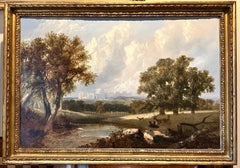
John Frederick Herring Snr (Surrey 1795-1863 Kent) Deer in Windsor Park Signed and dated 'J.F. Herring 1835' Oil on Panel Painting size 10 x 12 in Framed Size 15 x 17 in John Frederick Herring Sr. was born on September 12, 1795, in London, England. He was the son of a London-based fringe maker, and the family lived in modest circumstances. Although little is known about his early education, Herring showed a natural affinity for art and horses from a young age. His father moved the family to Doncaster when Herring was still a boy, a town famous for horse racing, which would play a significant role in shaping his future career. Herring’s love for horses became evident during his youth, where he worked as a coachman and sign painter. He often painted inn signs, which frequently featured horses. His work caught the attention of local patrons, and his talent was soon recognized by wealthy patrons who commissioned him to paint their prized horses. By the 1820s, Herring had established himself as a notable horse painter. His paintings of racehorses, hunters, and other equestrian subjects began to gain popularity. His ability to capture the majesty and spirit of horses set him apart from his contemporaries. Herring's paintings were particularly sought after by the aristocracy, who admired his skill in depicting their prized animals. Herring's reputation continued to grow, and by the 1830s, he had become one of England's most celebrated animal painters. His works were regularly exhibited at the Royal Academy, and he was frequently commissioned by members of the nobility, including the Duke of Orléans and Queen Victoria, to paint their horses. During this period, Herring also expanded his repertoire to include hunting scenes, agricultural scenes, and other rural subjects. His attention to detail and ability to portray the English countryside with great fidelity earned him further acclaim. Herring's paintings were characterized by their vibrant colors, dynamic compositions, and lifelike representations of animals. In the 1840s, Herring moved to Kent, where he continued to paint, focusing more on agricultural and rural scenes. His later works often depicted scenes of farm life, with an emphasis on the relationships between humans and animals. These works were marked by a sense of tranquility and harmony, reflecting Herring's deep appreciation for the countryside and its inhabitants. Herring's artistic style evolved throughout his career. While his early works were highly detailed and precise, his later paintings became more expressive and fluid. He also began to experiment with light and shadow, creating more atmospheric and emotive works. Despite these changes, Herring remained committed to the accurate depiction of animals, and his works continued to be praised for their realism and vitality. John Frederick Herring Sr. married Ann Harris in 1815, and they had four children, three of whom—John Frederick Herring Jr., Charles Herring, and Benjamin Herring—became artists in their own right. His sons often assisted him in his studio, and their works were sometimes confused with their father's due to the similarity in style and subject matter. Herring's legacy as one of the leading animal painters of the 19th century is secure. His paintings have been collected and admired by art lovers around the world, and his influence can be seen in the works of subsequent generations of animal painters. Herring passed away on September 23, 1865, in Meopham Park, Kent, leaving behind a rich body of work that continues to be celebrated for its beauty, precision, and deep understanding of the subjects he portrayed. His contributions to the genre of animal painting have earned him a lasting place in the history of British art.
  • Creator:
    John Frederick Herring Sr. (1795 - 1865, British)
  • Dimensions:
    Height: 15 in (38.1 cm)Width: 17 in (43.18 cm)
  • Medium:
  • Movement Style:
  • Period:
  • Condition:
  • Gallery Location:
    Stoke, GB
  • Reference Number:
    1stDibs: LU446315929962

More From This Seller

View All
Feeding Time
By John Frederick Herring Sr.
Located in Stoke, Hampshire
John Frederick Herring Snr (Surrey 1795-1863 Kent) "Feeding Time" Signed and dated 1850 middle right Oil on canvas Painting Size - 16 x 16 in John Frederick Herring Sr. (1795–1865) ...
Category

19th Century Victorian Animal Paintings

Materials

Oil

A fox at bay
By James Bateman
Located in Stoke, Hampshire
James Bateman (1814-1849) A fox at bay signed and dated 'J. Bateman 44' centre right Oil on panel Painting size 8 x 10 in Framed size 13 x 15 in James Bateman (1893–1959) was an Eng...
Category

19th Century Victorian Animal Paintings

Materials

Oil

Sir Richard Sutton s foxhounds
By John Ferneley Senior
Located in Stoke, Hampshire
John Ferneley Snr (1782-1860 Melton Mowbray) Sir Richard Sutton's foxhounds signed J. Ferneley lower right Oil on canvas Canvas Size 16 1/8 x 20 1/2 in Framed Size 21 x 25 in Proven...
Category

18th Century Old Masters Animal Paintings

Materials

Oil

An elegant lady and gentleman hare coursing in an extensive landscape
By James Seymour
Located in Stoke, Hampshire
James Seymour (1702-1752) & Thomas Spencer (1700-1753) An elegant lady and gentleman hare coursing in an extensive landscape Oil on canvas Canvas Size - 33 x 50 in Framed Size - 41 x...
Category

18th Century Old Masters Figurative Paintings

Materials

Oil

The Shepherd s friend
Located in Stoke, Hampshire
Robert L. Alexander R.S.A., R.S.W. (1840- 1923) The shepherd's friend signed 'R. ALEXANDER' (lower left) Oil on canvas Canvas Size - 24 x 35 in Framed Size - 31 x 41 in Provenance w...
Category

19th Century Victorian Animal Paintings

Materials

Oil

The Shepherd
s friend
$10,379 Sale Price
20% Off
Free Shipping
A greyhound in a landscape
By Charles Towne
Located in Stoke, Hampshire
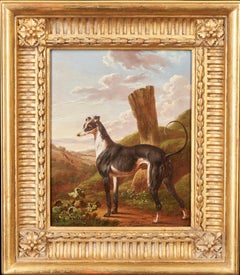
Charles Towne (1763-1840) A greyhound in a landscape Signed with initials and dated 'CT 1805' lower right Oil on panel Painting size 10 1/2 x 8 1/4 in Framed size 16 x 14 in Provena...
Category

19th Century Old Masters Animal Paintings

Materials

Oil

You May Also Like

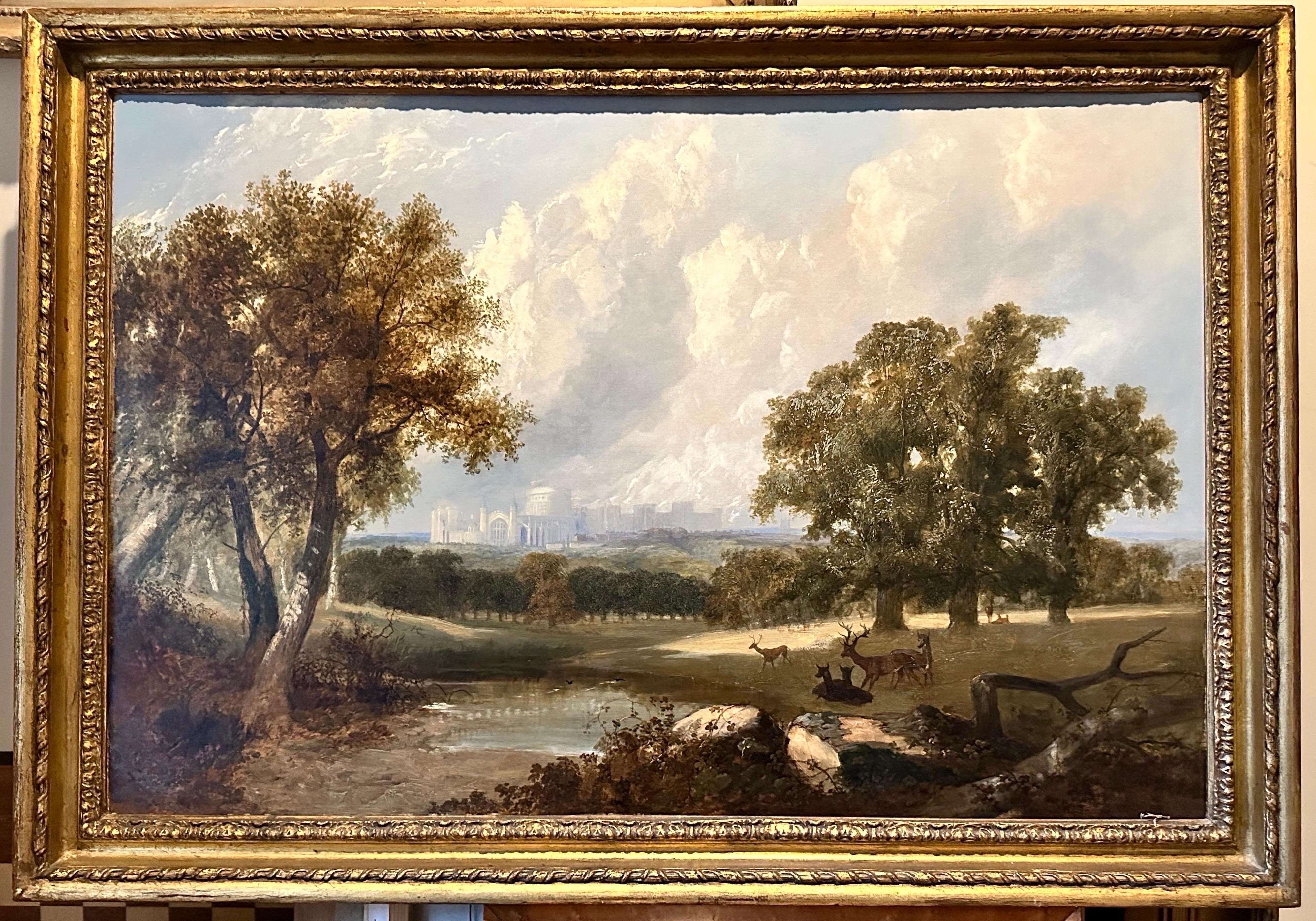
Very Fine Large 19th Century English Oil Windsor Castle Deer Park with Stags
Located in Cirencester, Gloucestershire
Windsor Great Park with Windsor Castle (St. Georges Chapel) in the distance Attributed to James Middleton (English 1805-1874, British) inscribed to label verso, unsigned oil paintin...
Category

Mid-19th Century Victorian Landscape Paintings

Materials

Canvas, Oil

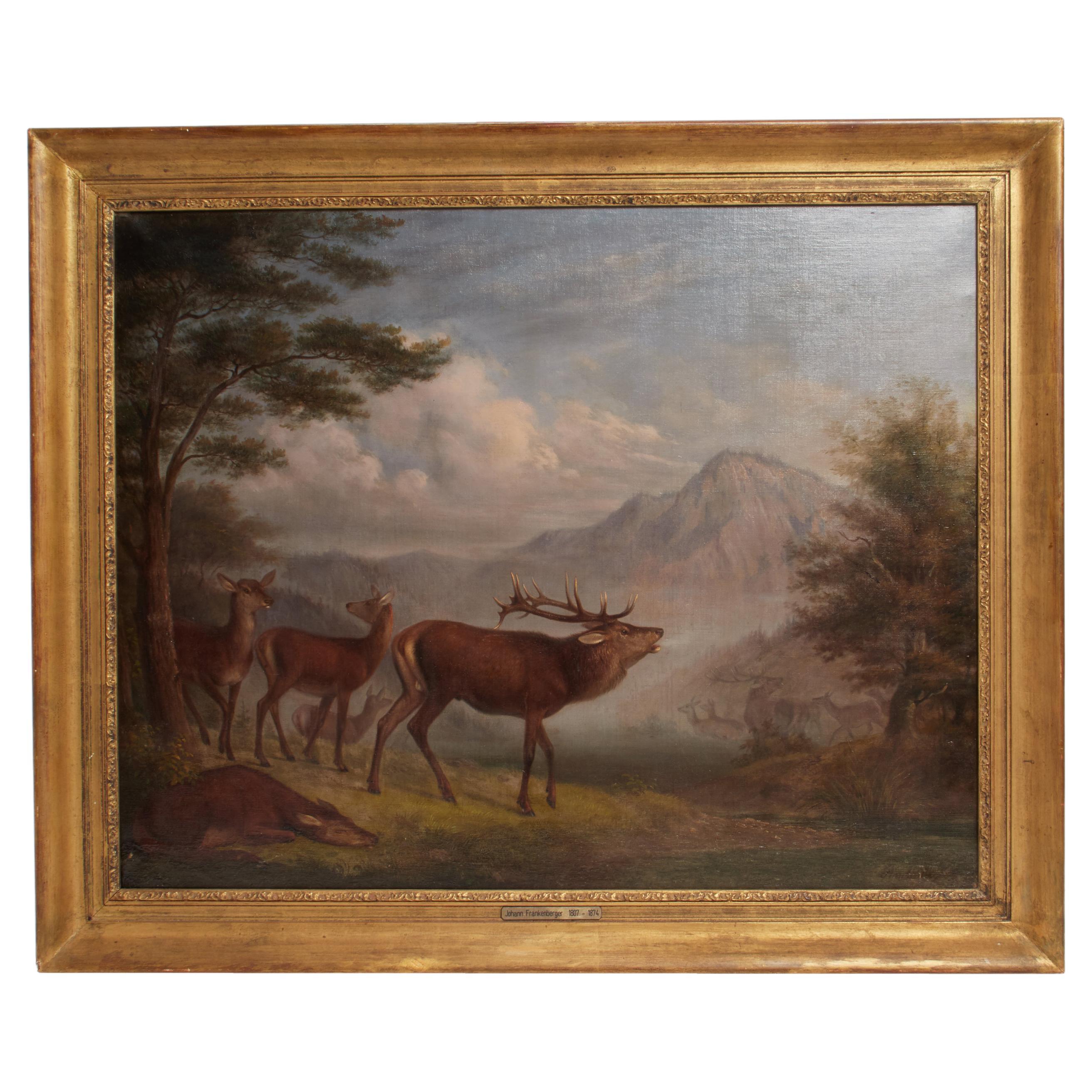
Painting oil on canvas with wild stags. By Johann Frankenberger, Germany 1840.
Located in Milan, IT
Oil on canvas painting depicting a group of wild stags in a mountain landscape od romantic taste. Golden gilt fruitwood frame. Signed: Johann Frankenberger (Hadamar 1807 - Wien 1874), renowned painter of intense portraits...
Category

Antique Mid-19th Century Austrian Paintings

Materials

Canvas, Fruitwood

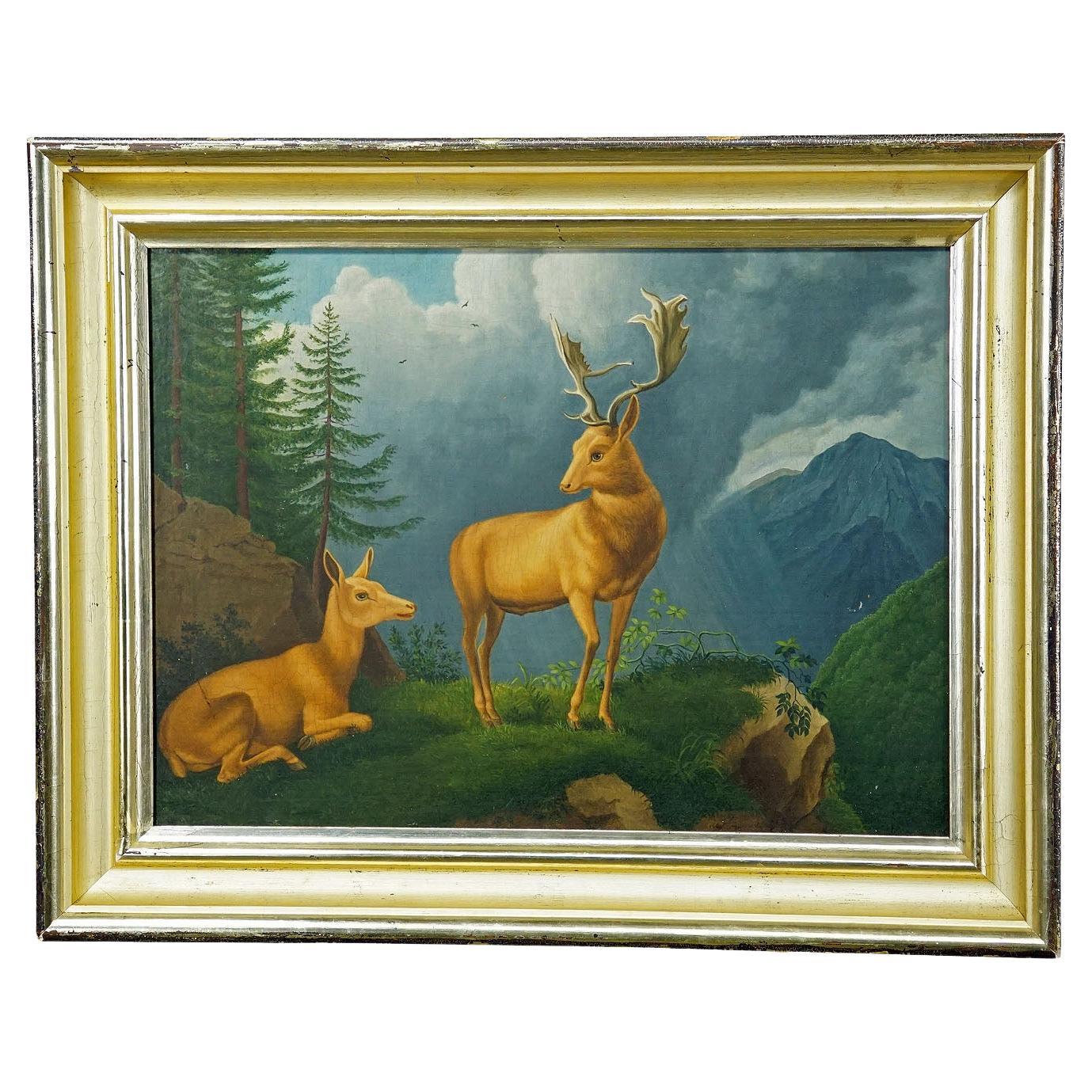
Unknown - Painting Fallow Deer with Doe in the Alps, Oil on Canvas 19th century
Located in Berghuelen, DE
Unknown - Painting Fallow Deer with Doe in the Alps, Oil on Canvas 19th century A lovely Biedermeier style oil painting depicting a fallow deer family in the alpine landscape. Oil on canvas 1st halve of the 19th century. Framed with antique gilded frame, stretcher frame replaced. A marvelous wall decoration for each rustig log cabin. The Biedermeier period runs parallel to the Romantic period and both are characterized by similar features. Domesticity, closeness to nature, folksiness and need for harmony are buzzwords of this time. The focus is on the simple, the conservative and the tried and tested. There is little experimentation and more observation and enjoyment. The art style is kept very realistic and shows great similarity to photography. Domestic idyllic representations, beautiful landscape and impressive portraits are the most popular topics for oil paintings...
Category

Antique Mid-19th Century German Early Victorian Paintings

Materials

Wood

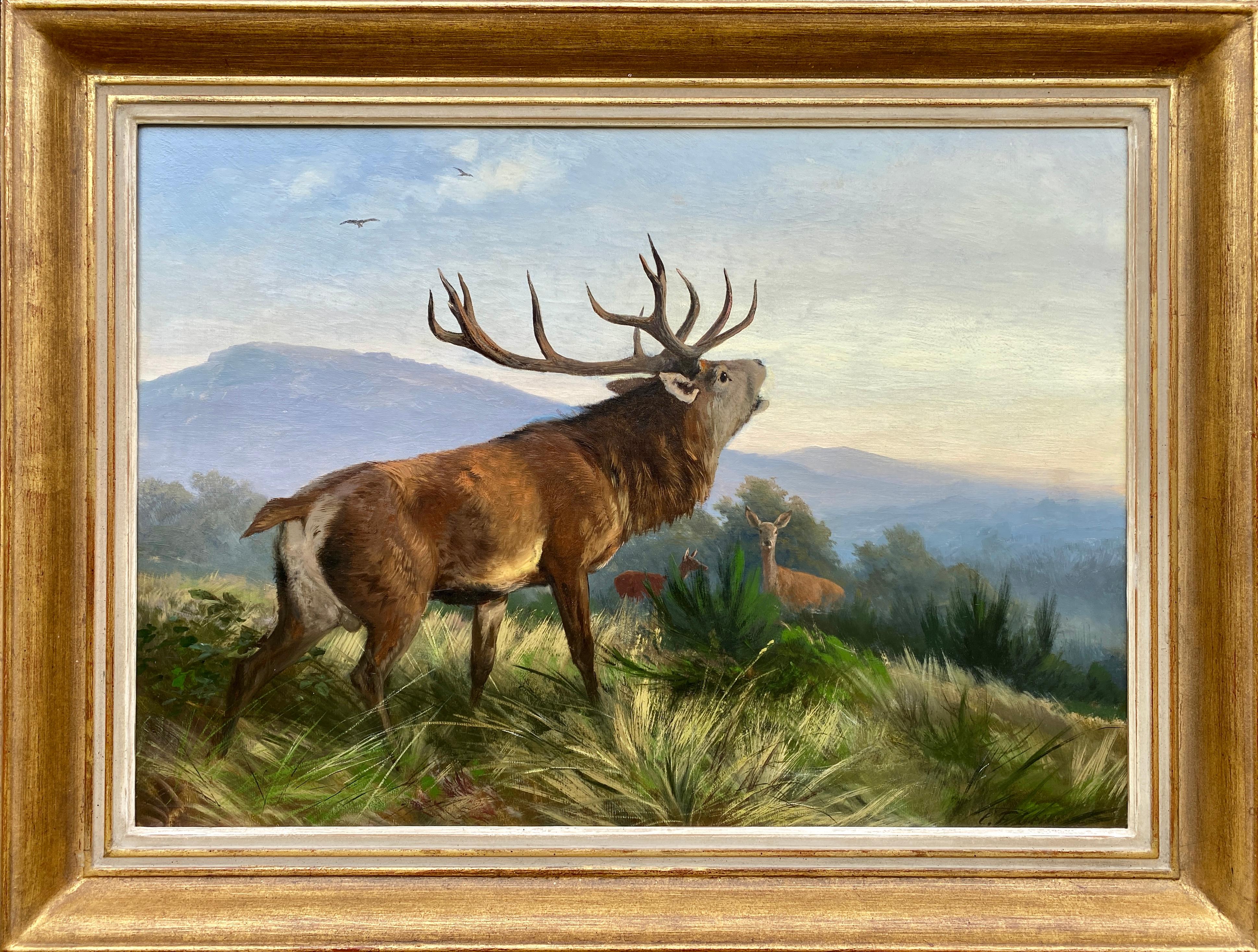
Roaring Deer Stag, Carl Friedrich Deiker, Wetzlar 1836 – 1892 Düsseldorf, Signed
Located in Knokke, BE
Roaring Deer Stag Deiker Carl Friedrich Wetzlar, Germany 1836 – 1892 Dusseldorf, Germany German Painter Signature: Signed bottom right Medium: Oil on canvas Dimensions: Image size 58 x 81 cm, frame size 73 x 96 cm Biography: Deiker Carl Friedrich was born on April 3, 1836 in Wetzlar. He was a Prussian animal painter. Deiker was specialised in animal genres related to hunting and wildlife. He also illustrated magazines and books on hunting. Carl Friedrich Deiker was the son of Friedrich Deiker, a painter and drawing teacher at the high school. His older brother, Johannes Deiker, with whom he learned to draw after their father’s death in 1843, was a painter specialising in hunting scenes. Deiker attended the Hanau drawing Academy, where he was a pupil of the director Theodor Pélissier (1794-1863), and then studied at Johann Wilhelm Schirmer’s studio in Carlsruhe. In 1859, in the Reinhardswald forest, he collected studies for his large hunting paintings...
Category

19th Century Baroque Animal Paintings

Materials

Canvas, Oil

American Victorian Deer Oil Painting
Located in Queens, NY
American Victorian gilt framed oil painting of 5 deer crossing stream.
Category

Antique 19th Century American Rustic Paintings

Materials

Paint

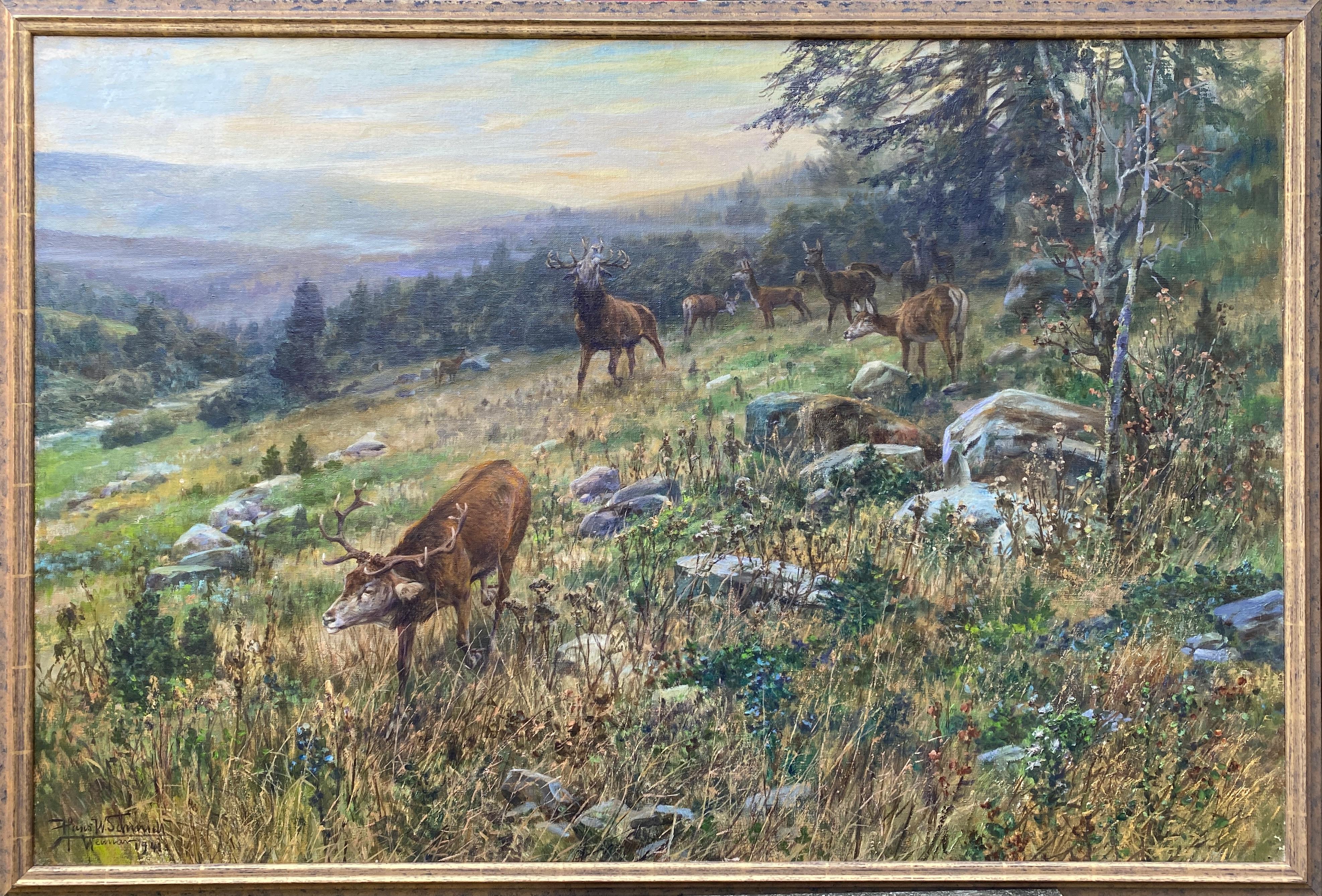
Schmidt Hans, Hamburg 1859 – 1950 Weimar, German Painter, Deer in a Landscape
Located in Knokke, BE
Hans Schmidt Hamburg 1859 – 1950 Weimar German Painter 'Deer in a Landscape' Signature: Signed bottom left, placed Weimar and dated 1941 Medium: Oil on canvas Dimensions: Image siz...
Category

Mid-20th Century Realist Animal Paintings

Materials

Canvas, Oil