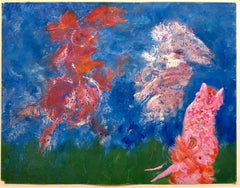
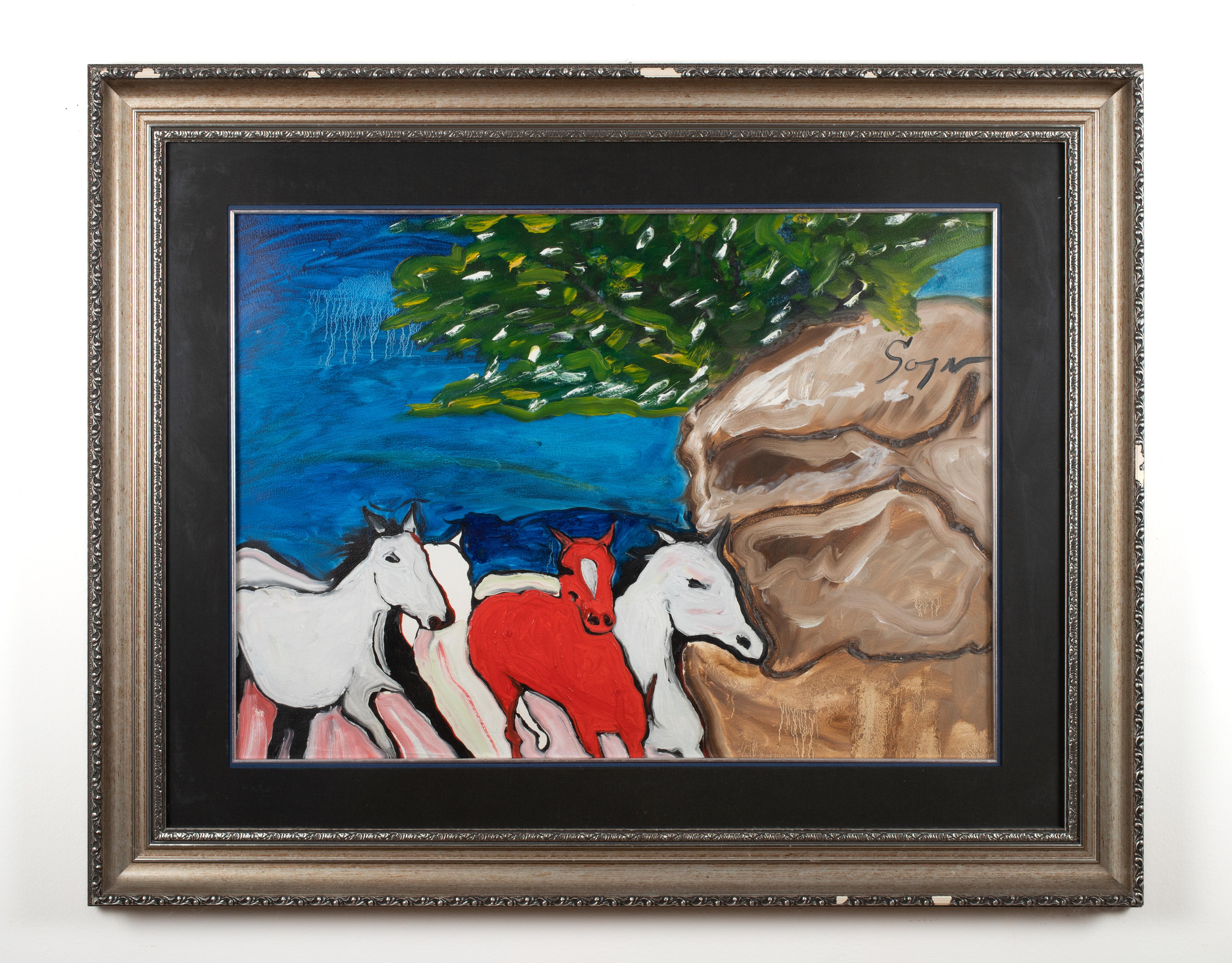
Items Similar to Justin McCarthy “Horses” Painting, Outsider Artist
Want more images or videos?
Request additional images or videos from the seller
1 of 8
Justin McCarthyJustin McCarthy “Horses” Painting, Outsider Artist20th Century
20th Century
$7,500
£5,664.50
€6,543.38
CA$10,566.43
A$11,316.65
CHF 6,083.75
MX$137,447.36
NOK 76,871.20
SEK 70,381.30
DKK 48,891.02
About the Item
Artist/Designer; Manufacturer: Justin McCarthy (American, 1891-1977)
Marking(s); notes: marking(s)
Materials: board/panel
Dimensions (H, W, D): 24"h, 23.75"w
Additional Information: Provenance: Artist (part of collection of nearly 300 pieces bequeathed to his cousin, Robert “Buddy” Goeltz, thence by descent ) / Ashcroft and Moore, 4.28.2022, lot 106.
Justin McCarthy (1891–1977) was a self-taught American artist whose vibrant, expressionistic works captured scenes of popular culture, landscapes, and figures with a raw and intuitive approach. His paintings, now celebrated in the world of outsider and folk art, have been compared to the works of Purvis Young and Grandma Moses, reflecting a similar untrained yet deeply expressive visual language. Included in major exhibitions such as the 1982 landmark show Black Folk Art in America at the Corcoran Gallery, this piece is part of a collection of nearly 300 works originally bequeathed to his cousin, Robert 'Buddy' Goeltz, and later sold at Ashcroft and Moore (Lot 106, 4/28/2022). Please see our other Justin McCarthy works listed on 1stdibs.
- Creator:Justin McCarthy (1891 - 1977, American)
- Creation Year:20th Century
- Dimensions:Height: 24 in (60.96 cm)Width: 23.75 in (60.33 cm)
- Medium:
- Movement Style:
- Period:
- Condition:very good, wear and distressing to art, likely original to the work (Note: Condition of outsider and naive-style art is described in a general way per visual inspection, with the expectation that many if not all imperfections are expected inherent).
- Gallery Location:Lake Worth Beach, FL
- Reference Number:1stDibs: LU2698216047582
Justin McCarthy, an enigmatic outsider artist from 20th century Pennsylvania, channeled his raw creativity and vivid imagination into a captivating body of work, offering an unfiltered glimpse into the depths of his unique perspective on the world.
About the Seller
No Reviews Yet
Vetted Professional Seller
Every seller passes strict standards for authenticity and reliability
Established in 2003
1stDibs seller since 2024
5 sales on 1stDibs
Typical response time: <1 hour
- ShippingRetrieving quote...Shipping from: Lake Worth Beach, FL
- Return Policy
More From This Seller
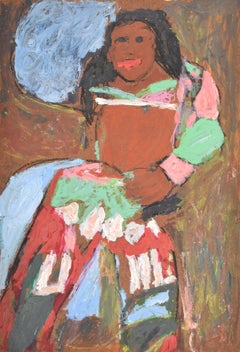
View AllJustin McCarthy Painting, Outsider Artist
Located in Lake Worth Beach, FL
Artist/Designer; Manufacturer: Justin McCarthy (American, 1891-1977)
Marking(s); notes: no marking(s) apparent
Materials: board/panel
Dimensions (H, W, D): 24"h, 16"w
Additional Info...
Category
20th Century Outsider Art Figurative Paintings
Materials
Board, Paint
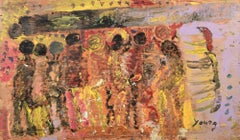
Massive Purvis Young Painting, Estate of the Artist, 84"W
By Purvis Young
Located in Lake Worth Beach, FL
Artist/Designer; Manufacturer: Purvis Young (American, 1943-2010)
Marking(s); notes: signed, BCO1FE60
Materials: painted wood
Dimensions (H, W, D): 48"h, 84"w; 50"h, 86"w frame
Additional Information: Provenance: This work is from the personal collection of Anthony Romano, one of the two guardians appointed to the artist in the later part of his life.
Purvis Young (1943–2010) was a self-taught American artist from Miami’s Overtown neighborhood, known for his raw, expressive paintings on found materials that explore themes of social justice, spirituality, and everyday urban life. His work resonates with the visual urgency of Jean-Michel Basquiat, the narrative power of Thornton Dial, and the outsider spirit of Bill Traylor and Sister Gertrude Morgan...
Category
Late 20th Century Outsider Art Figurative Paintings
Materials
Wood
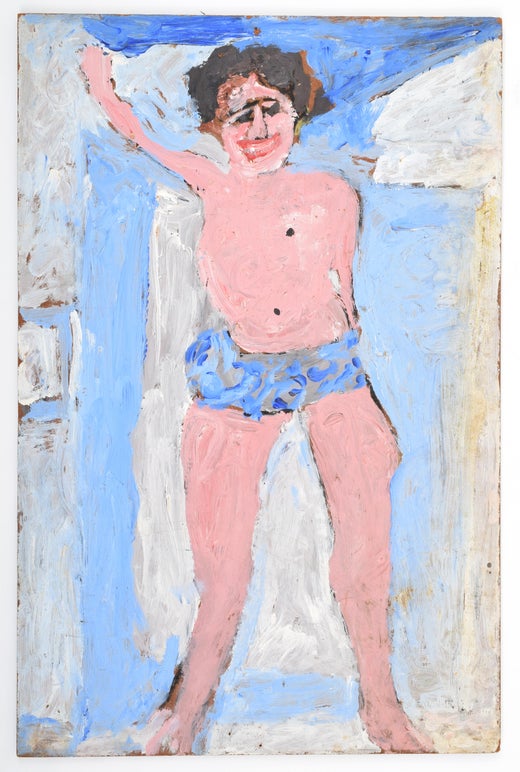
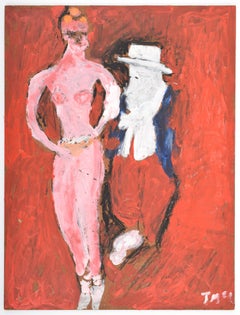
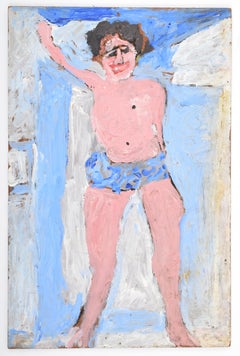
Justin McCarthy Nude Painting, Outsider Artist
Located in Lake Worth Beach, FL
Artist/Designer; Manufacturer: Justin McCarthy (American, 1891-1977)
Marking(s); notes: no marking(s) apparent
Materials: board/panel
Dimensions (H, W, D): 24"h, 18"w
Additional Info...
Category
20th Century Outsider Art Figurative Paintings
Materials
Paint, Board
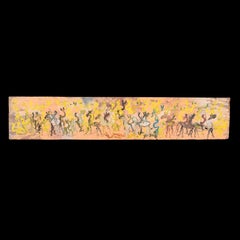
Large Purvis Young Painting, Estate of the Artist, 96"W
By Purvis Young
Located in Lake Worth Beach, FL
Artist/Designer; Manufacturer: Purvis Young (American, 1943-2010)
Marking(s); notes: signed, LPOO2 FEJU60
Materials: painted wood
Dimensions (H, W, D): 18.5"h, 96"w (work is not framed)
Additional Information: Provenance: This work is from the personal collection of Anthony Romano, one of the two guardians appointed to the artist in the later part of his life.
Purvis Young (1943–2010) was a self-taught American artist from Miami’s Overtown neighborhood, known for his raw, expressive paintings on found materials that explore themes of social justice, spirituality, and everyday urban life. His work resonates with the visual urgency of Jean-Michel Basquiat, the narrative power of Thornton Dial, and the outsider spirit of Bill Traylor and Sister Gertrude Morgan...
Category
Late 20th Century Outsider Art Figurative Paintings
Materials
Wood, Paint
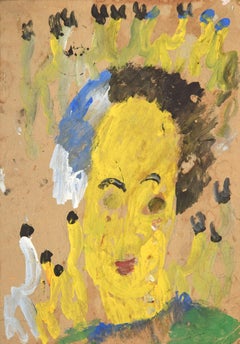
Justin McCarthy Painting, Outsider Art
Located in Lake Worth Beach, FL
Artist/Designer; Manufacturer: Justin McCarthy (American, 1891-1977)
Marking(s); notes: no marking(s) apparent
Materials: board/panel
Dimensions (H, W, D): 24"h, 16"w
Additional Info...
Category
20th Century Outsider Art Figurative Paintings
Materials
Paint, Board
Purvis Young Painting, Estate of the Artist
By Purvis Young
Located in Lake Worth Beach, FL
Artist/Designer; Manufacturer: Purvis Young (1943-2010)
Marking(s); notes: no marking(s) apparent
Country of origin; materials: American; paint on fabric
Dimensions (H, W, D): 13"h, 18"w; 34.5"h, 30.75"w frame
Additional Information: Provenance: Gallery 721, Larry Clemons, Fort Lauderdale, Florida Private Collection, Aventura, Florida.
Purvis Young (1943–2010) was a self-taught American artist from Miami’s Overtown neighborhood, known for his raw, expressive paintings on found materials that explore themes of social justice, spirituality, and everyday urban life. His work resonates with the visual urgency of Jean-Michel Basquiat, the narrative power of Thornton Dial, and the outsider spirit of Bill Traylor and Sister Gertrude Morgan...
Category
20th Century Outsider Art Figurative Paintings
Materials
Fabric, Paint
You May Also Like
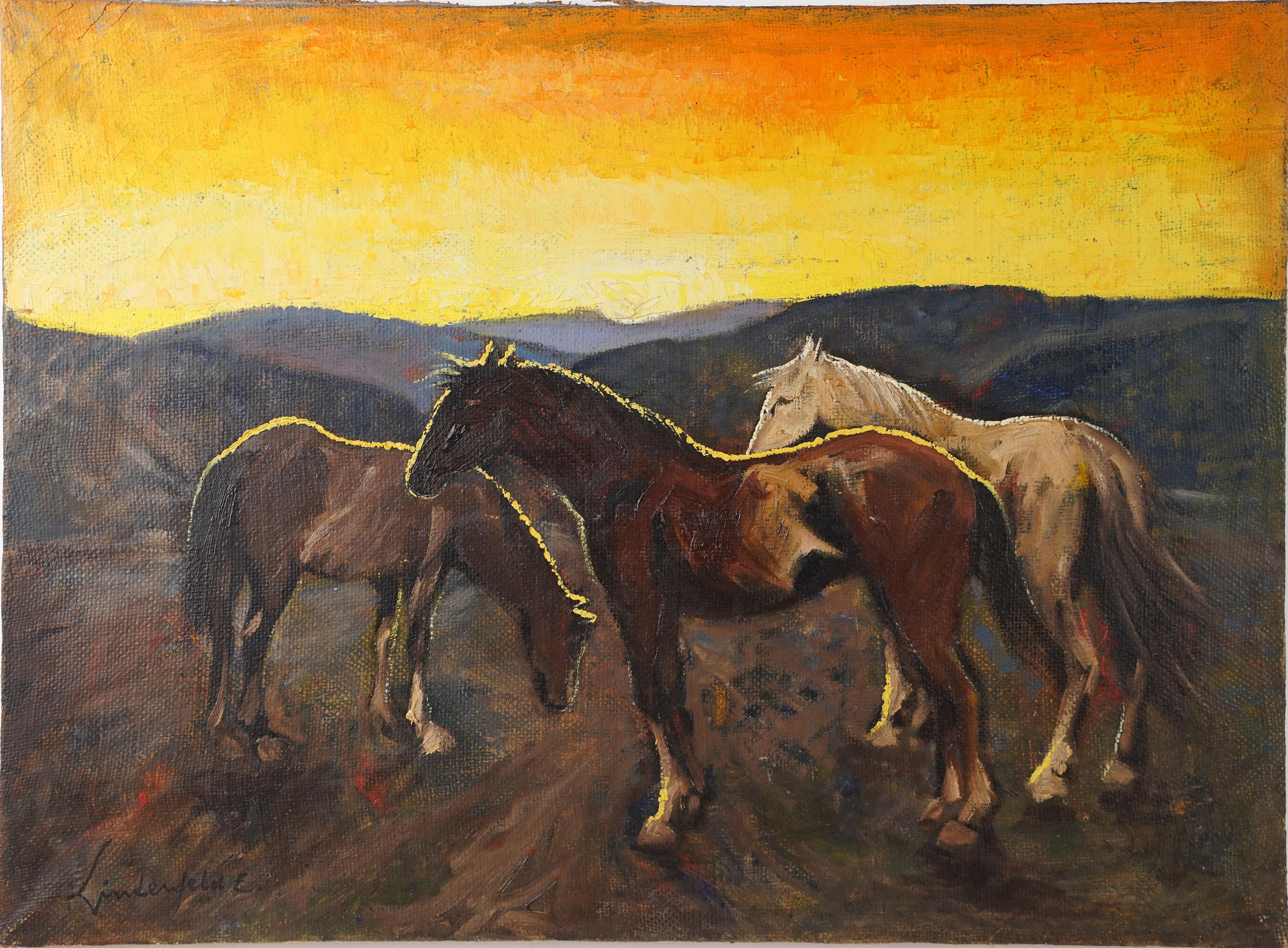
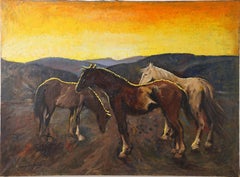
Antique American Expressionist Signed Original Sunset Horse Landscape Painting
Located in Buffalo, NY
Vintage modernist expressionist sunset oil painting. Oil on canvas. Image size, 27.5L x 20H. Signed.
Category
1960s Modern Landscape Paintings
Materials
Canvas, Oil
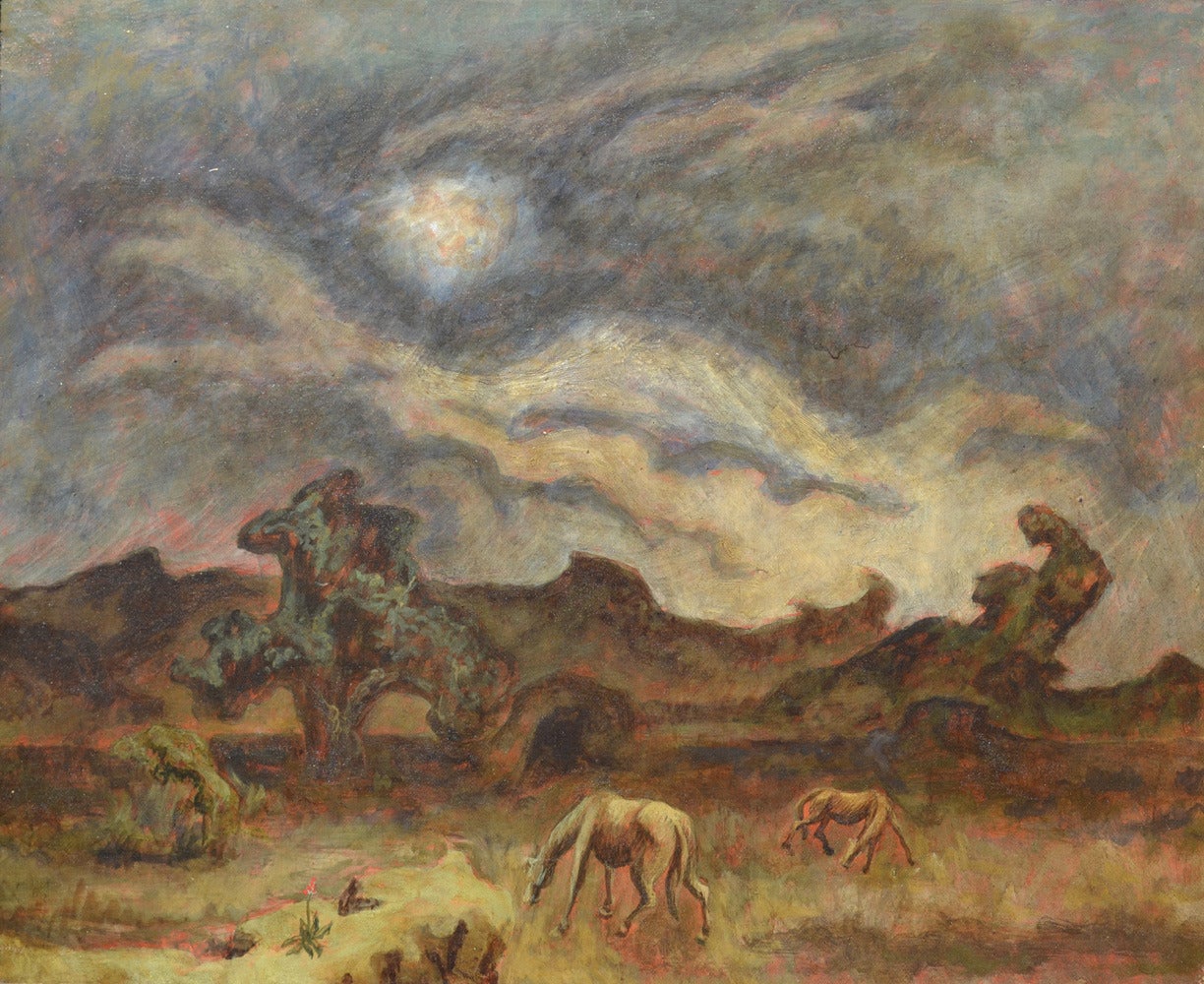
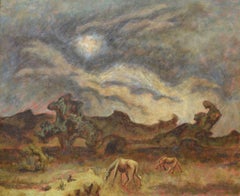
Two Horses
By Elwood James Fordham
Located in West Hollywood, CA
Presenting a rare original oil on panel by American artist Elwood Fordham.
Fordham worked primarily in Los Angeles, specializing in genre subjects.
"Two Horses...
Category
1930s Animal Paintings
Price Upon Request
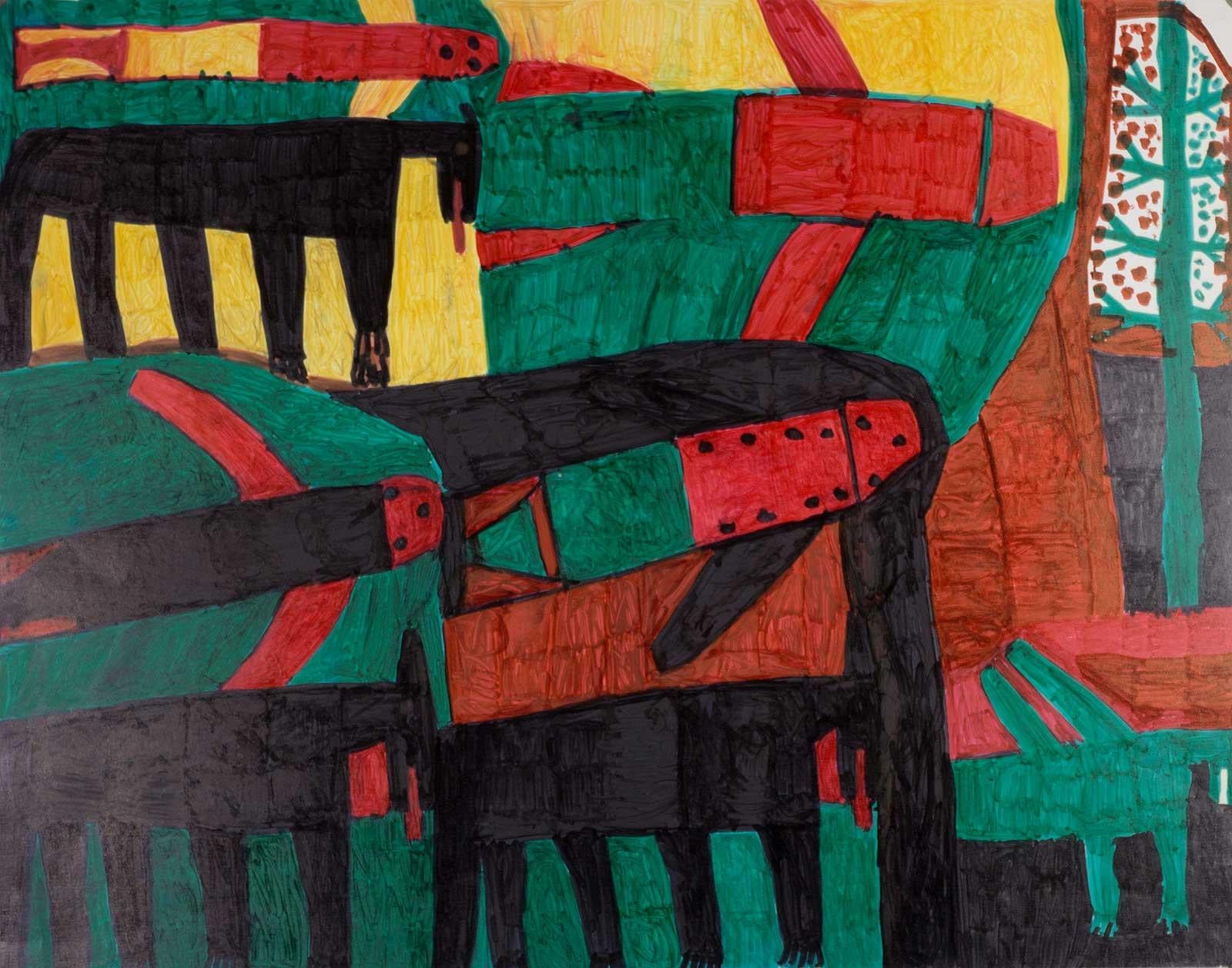
Untitled 5 - Herd Animals
Located in New Orleans, LA
Self taught outsider art by African American artist from New Orleans with work in major museum and private collections. White created a bold c...
Category
1990s Outsider Art Animal Paintings
Materials
Foam Board, Felt Pen
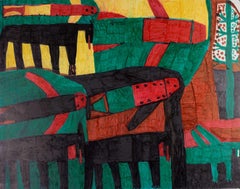
Untitled (Four Horses)
Located in Brooklyn, NY
Cahuilla/Soboba Band of Luiseño Indians/Apache
Billy Soza War Soldier was a pioneering Native American artist and activist whose work powerfully reflects the intersections of Indige...
Category
20th Century Animal Paintings
Materials
Paper, Oil
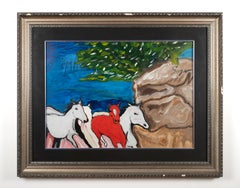
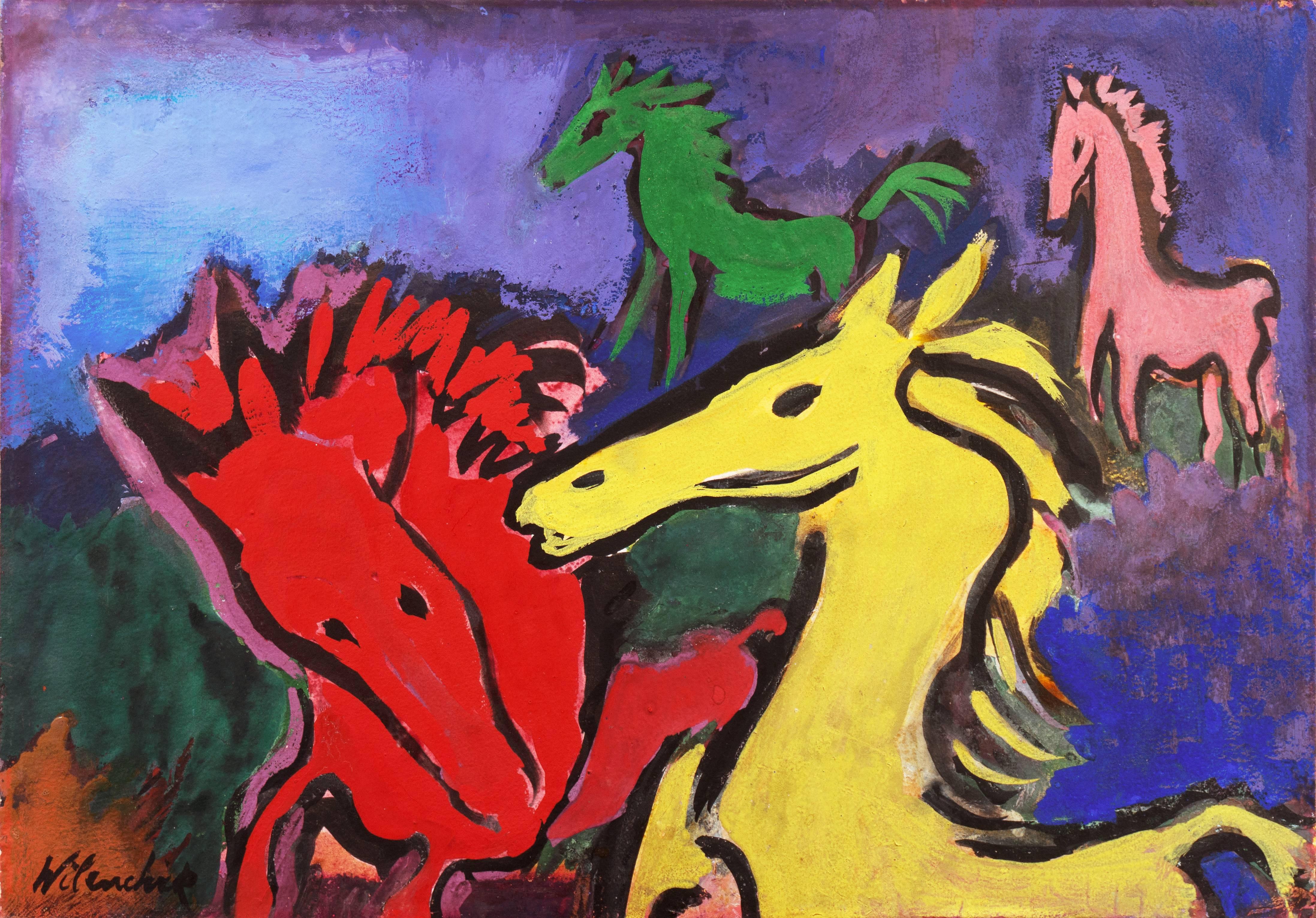
Ponies Dancing
California Post-Impressionist, San Francisco Art Association
By Clement Samuel Wilenchick
Located in Santa Cruz, CA
Signed lower left, 'Wilenchick' for Clement Samuel Wilenchick (American, 1900-1957) and painted circa 1955.
A dynamic, post-impressionist oil showing horses frolicking together agai...
Category
1950s Animal Paintings
Materials
Acrylic, Board
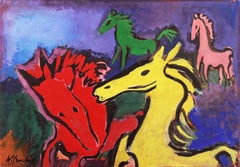
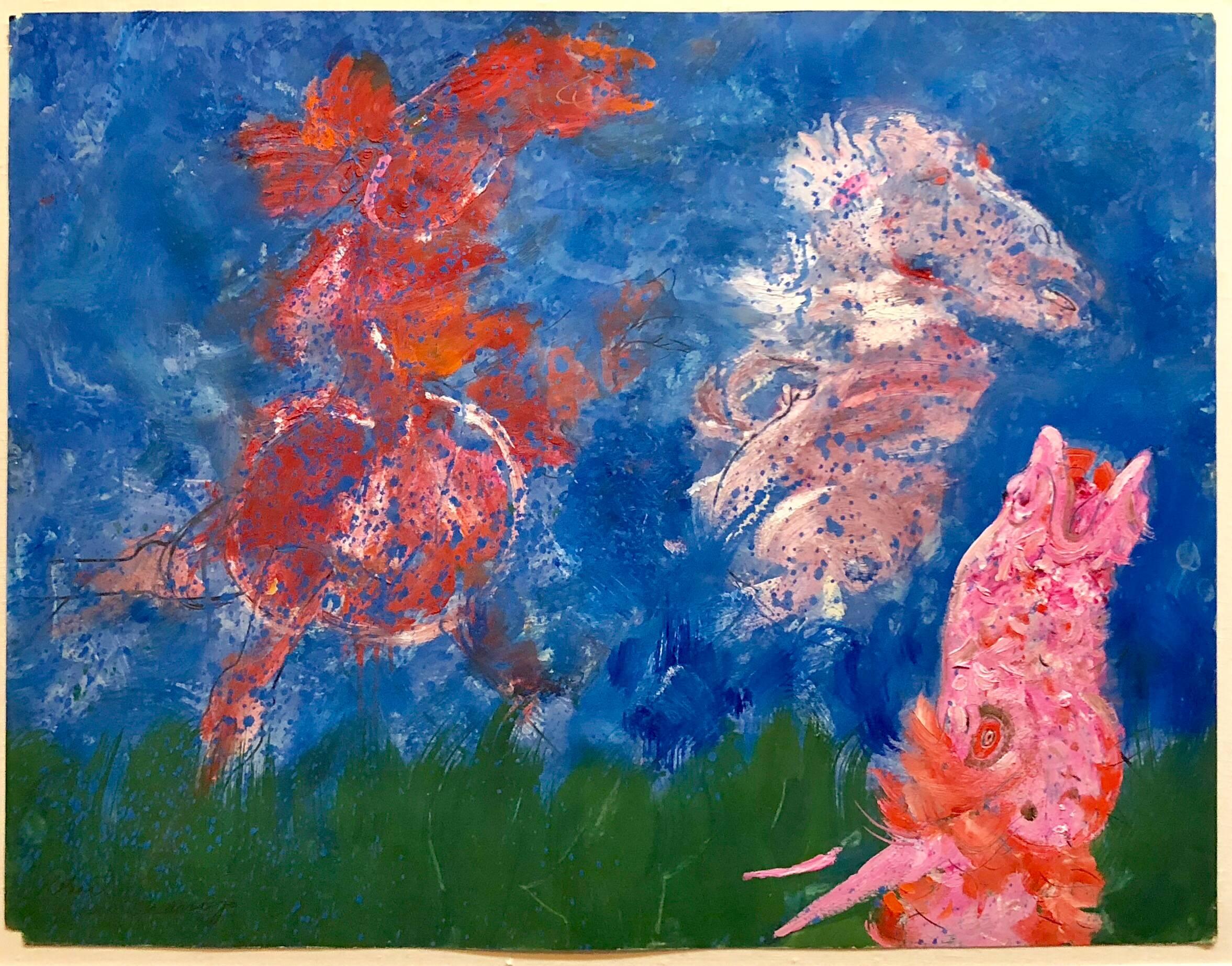
American Neo Expressionist "Wild Horses" Modernist Oil Painting
By Robert Beauchamp
Located in Surfside, FL
Signed lower left.
Robert Beauchamp (1923 – March 1995) was an American figurative painter and arts educator. Beauchamp's paintings and drawings are known for depicting dramatic creatures and figures with expressionistic colors. His work was described in the New York Times as being "both frightening and amusing,". He was a Guggenheim Fellow and a student of Hans Hofmann.
Robert Beauchamp was born in Denver, Colorado in 1923. He had three brothers and three sisters, and the children were orphaned by both parents by the time Beauchamp was three. The family grew up impoverished due to the Great Depression, living in a community house with other families. As a child he dabbled in art but it wasn't until high school that he began taking art classes. When not creating art he also played sports; football and basketball, and enjoyed chemistry and geology.
He was told he was good at drawing, and replaced study hall classes with art classes, receiving instruction and inspiration from a Welsh teacher named R. Idris Thomas. While in high school Beauchamp would go, every Monday, to the public library and a local museum where he would read books about art; specifically French painting, as assigned by Thomas. Beauchamp absorbed the tenets of European Modernism and American Abstract Expressionism—with which he eventually broke. While abstraction, with its focus on color and form, underlies his compositions, he filled canvas and paper with psychologically acute portraits of himself and others, nudes, animals, and objects of all kinds. Beauchamp would spend upwards of four hours a day in the art room and eventually won the Carter Memorial Prize, which provided a scholarship to the Colorado Springs Fine Arts Center. At Colorado Springs he studied under Boardman Robinson, painting landscapes in nature.
Beauchamp eventually joined the Navy and then returned to Colorado Springs to continue his studies. Traveling the world as an Armed Guard, he spent a year and a half at sea and the rest of the three years in San Francisco. Seeking to make money, and to follow his love for a girl, Beauchamp decided to attend Cranbrook Academy of Art from 1947–1948. There he studied pottery, believing one could "make more money selling pots than you could selling paintings." He described his experience at Cranbrook as intimidating and claustrophobic, and eventually switched to sculpture before switching to painting.
Beauchamp moved to New York City in the early 1950s and was involved in the Tenth Street galleries, which provided outlets for more experimental artists and the second generation of abstract expressionists. Despite his involvement with 10th Street and friendships with abstract artists, abstract art never interested in him. He showed at numerous galleries in New York and Provincetown, socializing with gallery owners, artists and collectors. His first exhibition was at the Tanager Gallery in New York, he also showed during the 1950s at the Hansa Gallery. In New York and Provincetown he studied under Hans Hofmann Eventually he felt that abstract expressionism became dull and stalemated.
During the 1960s he showed at the Green Gallery. C. 1960 he was awarded a Fulbright Award allowing him to travel to La Romola, Italy. He traveled frequently to cities such as Rome and worked constantly. Beauchamp returned to the states and lived in Provincetown at Walter Gutman's house, who awarded Beauchamp a grant. That year he met his future wife, Nadine Valenti, whom he married in 1967. Beauchamp taught at a variety of schools during his lifetime including Brooklyn College, School of Visual Arts, Cooper Union and the Art Students League of New York during the last fifteen years of his life.
Beauchamp described his drawings as painterly, seeking the spontaneity in an image. He would develop a drawing then a painting, and vice versa. His heavily impastoed paintings, often described as sculptures themselves, came from the pouring of paint from a can, with little planning and constant evolution in the medium upon the canvas. He preferred little planning to his creations, believing that an artists work would become stale and repetitive with constant planning.
He also created large scale works, at times 70 inches long. Beauchamp had little intention of ever selling his large works, preferring to create them due to the slow and intense experience he received from the process. The large drawings he created on the floor, and the smaller works were created on a table. Paintings were created on either the floor or wall and he described his painting process as "splattering", "pushing the paint around," and sponging.
Animals often appear in his paintings, despite a dislike for domestic animals outside of his artistic creations. He called the characters in his paintings as Beauchamps. Some Beauchamps hold meaning, with Beauchamp rarely sharing the meaning behind the symbols and characters. He made up the creatures himself, seeking to emphasize the character of each.
In 2006 the University of Massachusetts Amherst College of Visual & Performing Arts hosted an exhibition of Beauchamp's pieces from the 1960s, curators stated that Beauchamp's work: "effortlessly blends innovative style elements with narrative, descriptive images. One senses equal enjoyment in the manipulation of, and interaction with, color and paint, and the often sudden and unexpected presence of a wasp or a lump of sugar."
included in the important exhibit "Twelve New York Painters." New York: David Findlay Jr. Fine Art with Mary Abbott, Alcopley, Robert Beauchamp, Byron Browne, Charles Cajori, Jim Forsberg, Carl Heidenreich, Angelo Ippolito, Emily Mason, Robert Natkin, Robert Richenburg and Nina Tryggvadottir...
Category
20th Century Neo-Expressionist Abstract Paintings
Materials
Paper, Oil