Items Similar to Whimsical French Folk Art, Naive, Oil Painting Madeline Marie Christine Clavier
Want more images or videos?
Request additional images or videos from the seller
1 of 15
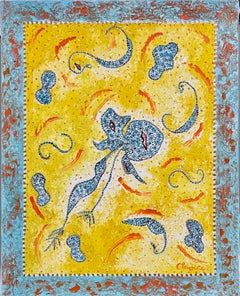
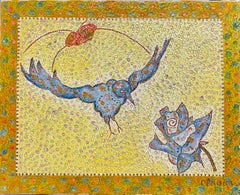
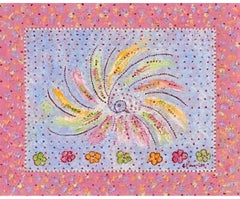
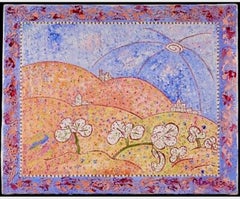
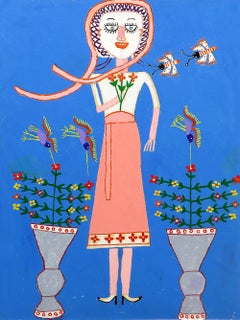
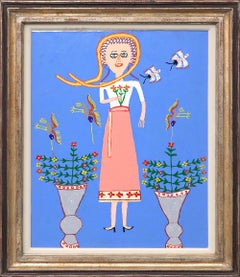
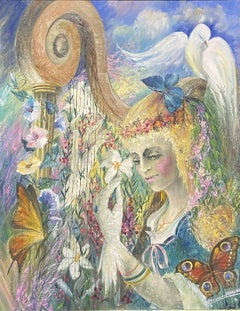
Madeline Christine ClavierWhimsical French Folk Art, Naive, Oil Painting Madeline Marie Christine Clavier
$2,000
£1,519.51
€1,746.23
CA$2,809.25
A$3,057.79
CHF 1,620.21
MX$36,774.58
NOK 20,600.62
SEK 18,878.19
DKK 13,044.25
About the Item
MADELINE CHRISTINE CLAVIER (1913-2015)
Signature: Signed lower right
titled verso
Medium: Oil on canvas
Provenance: The collection of the artist's family
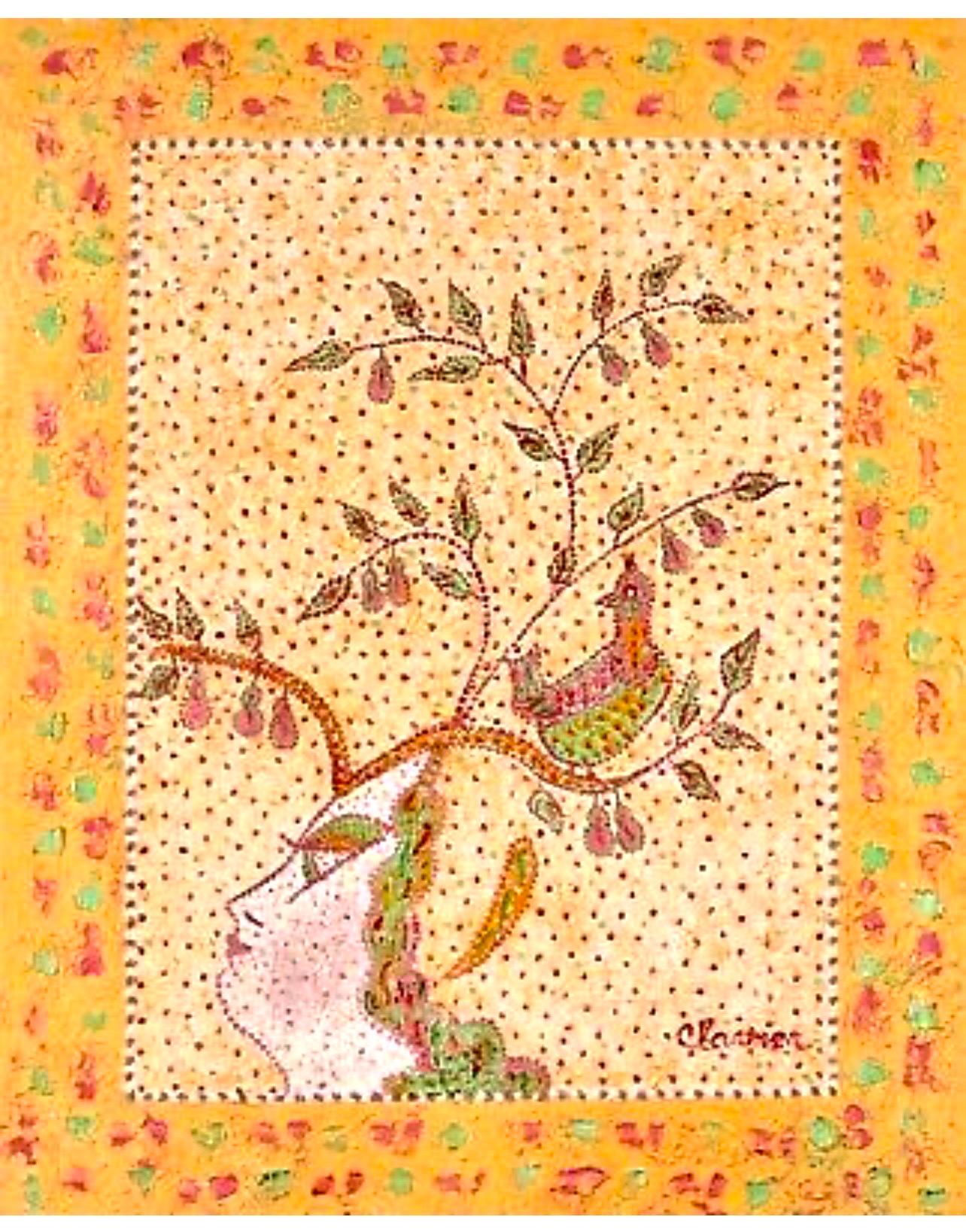
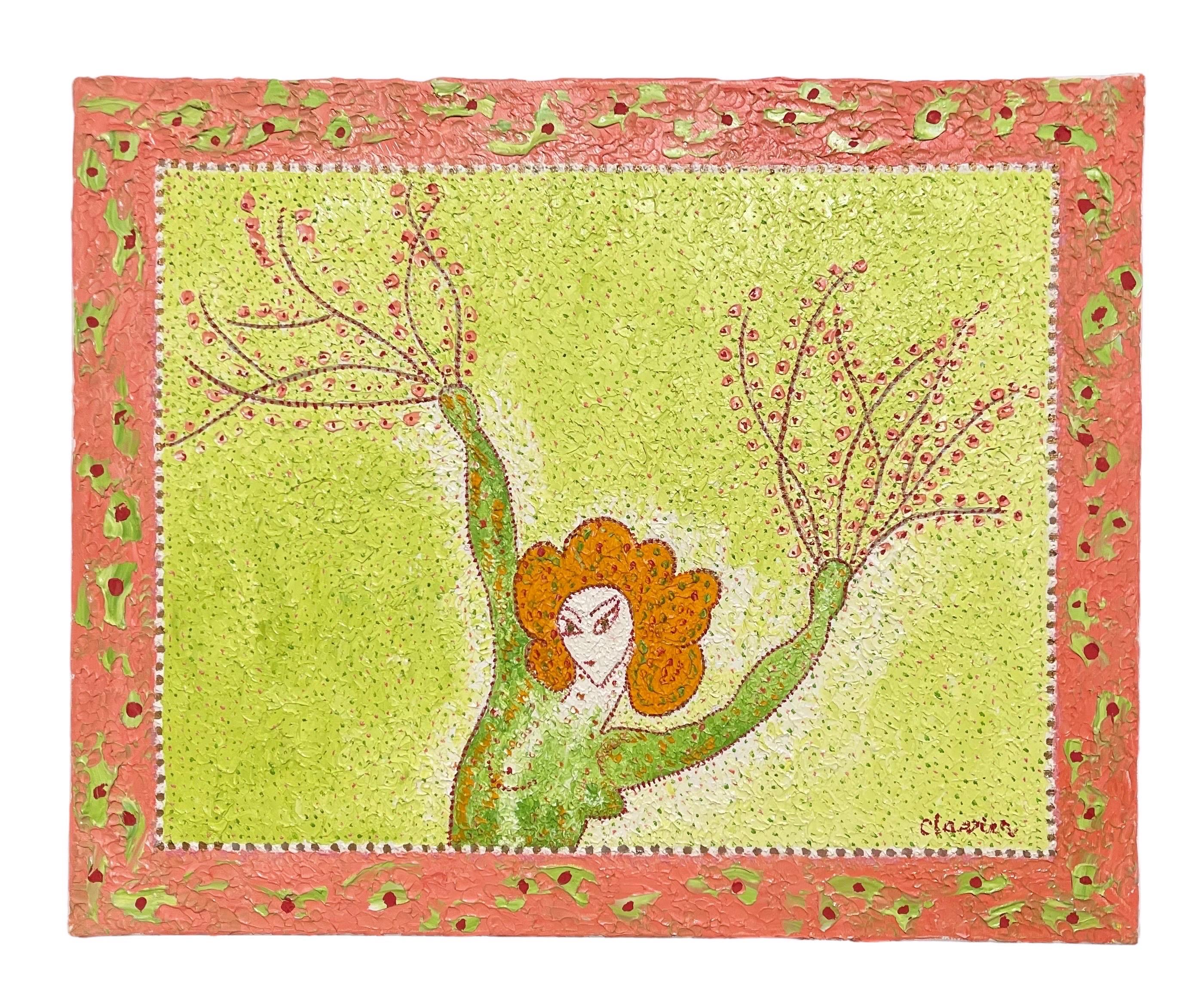
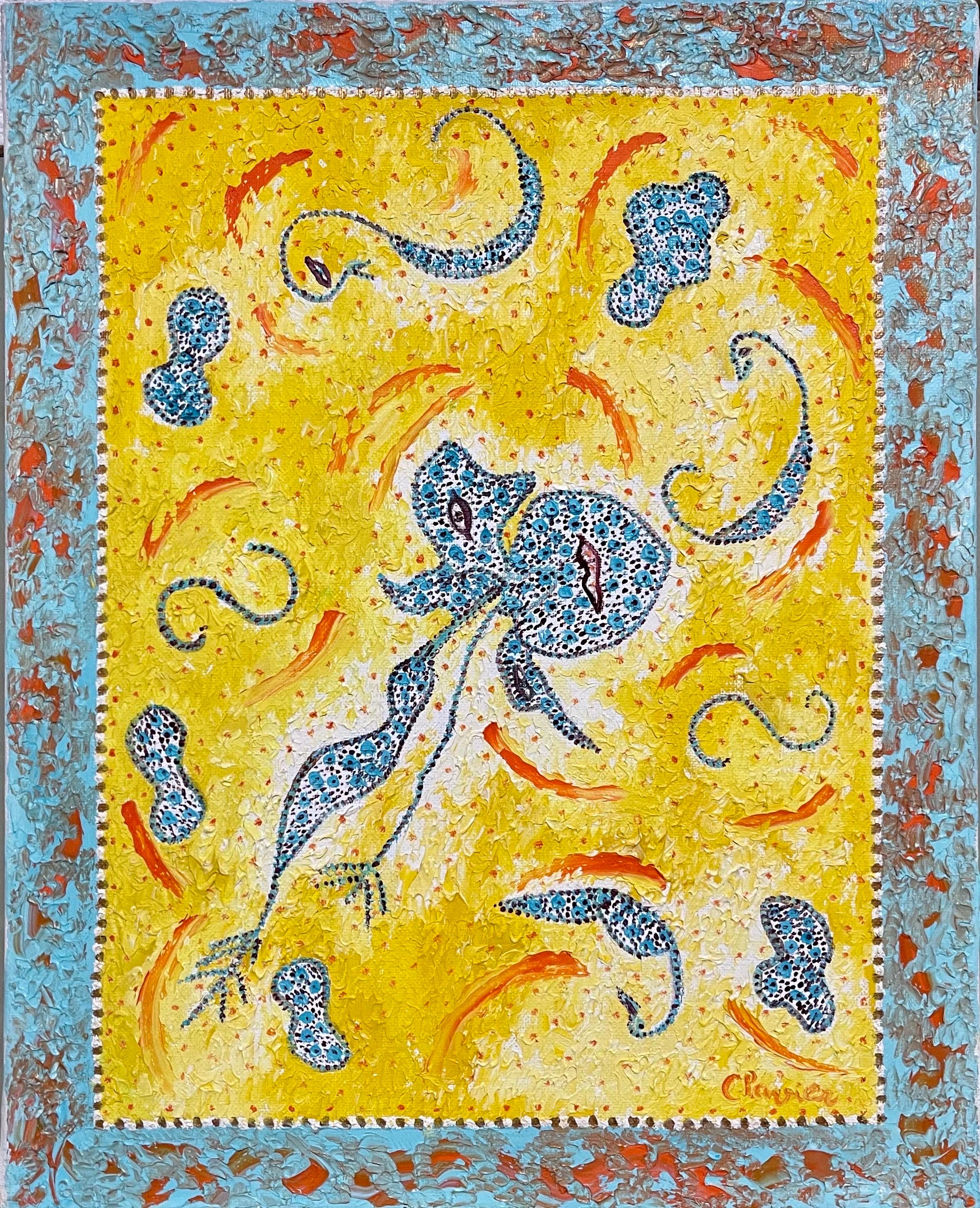
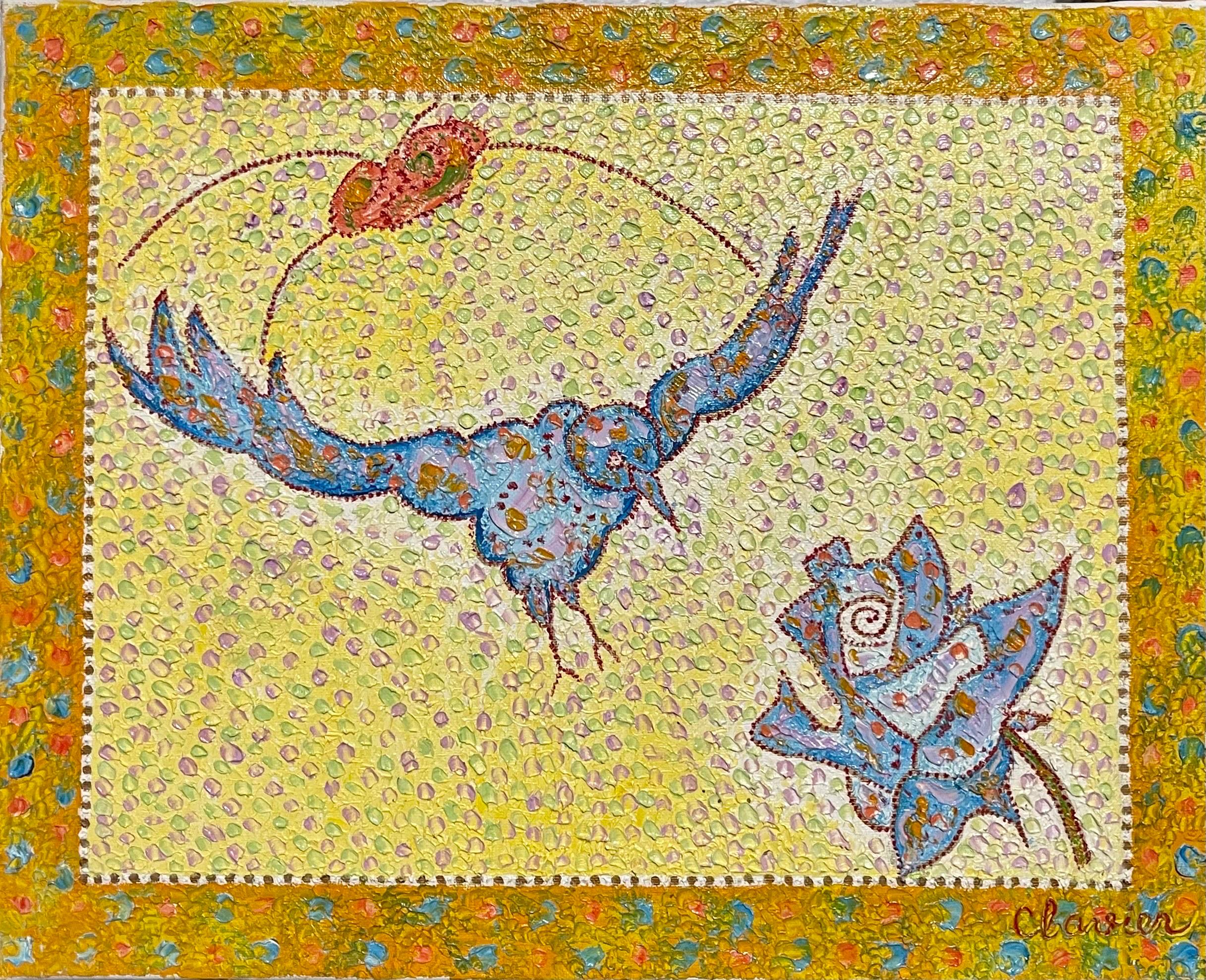
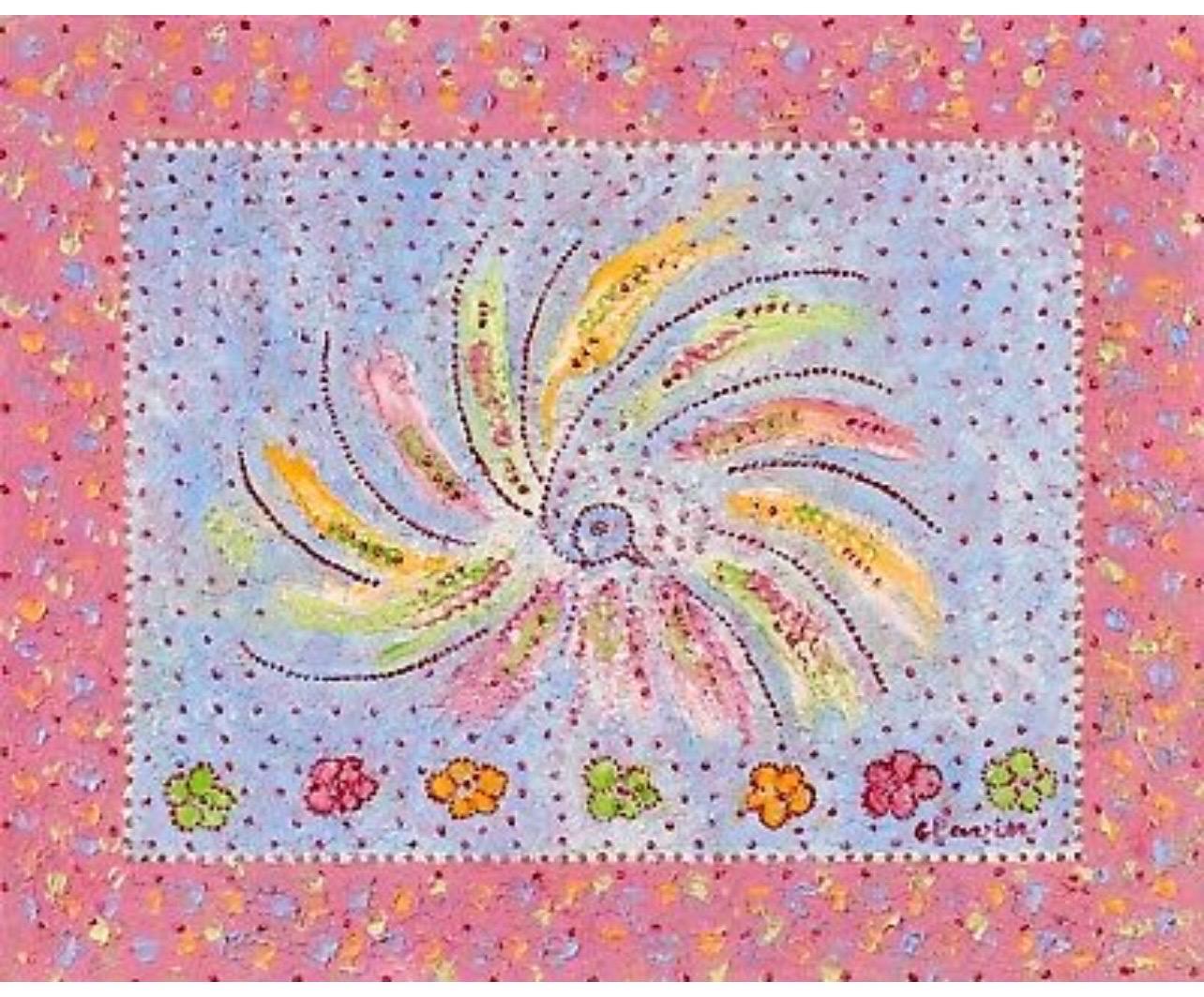
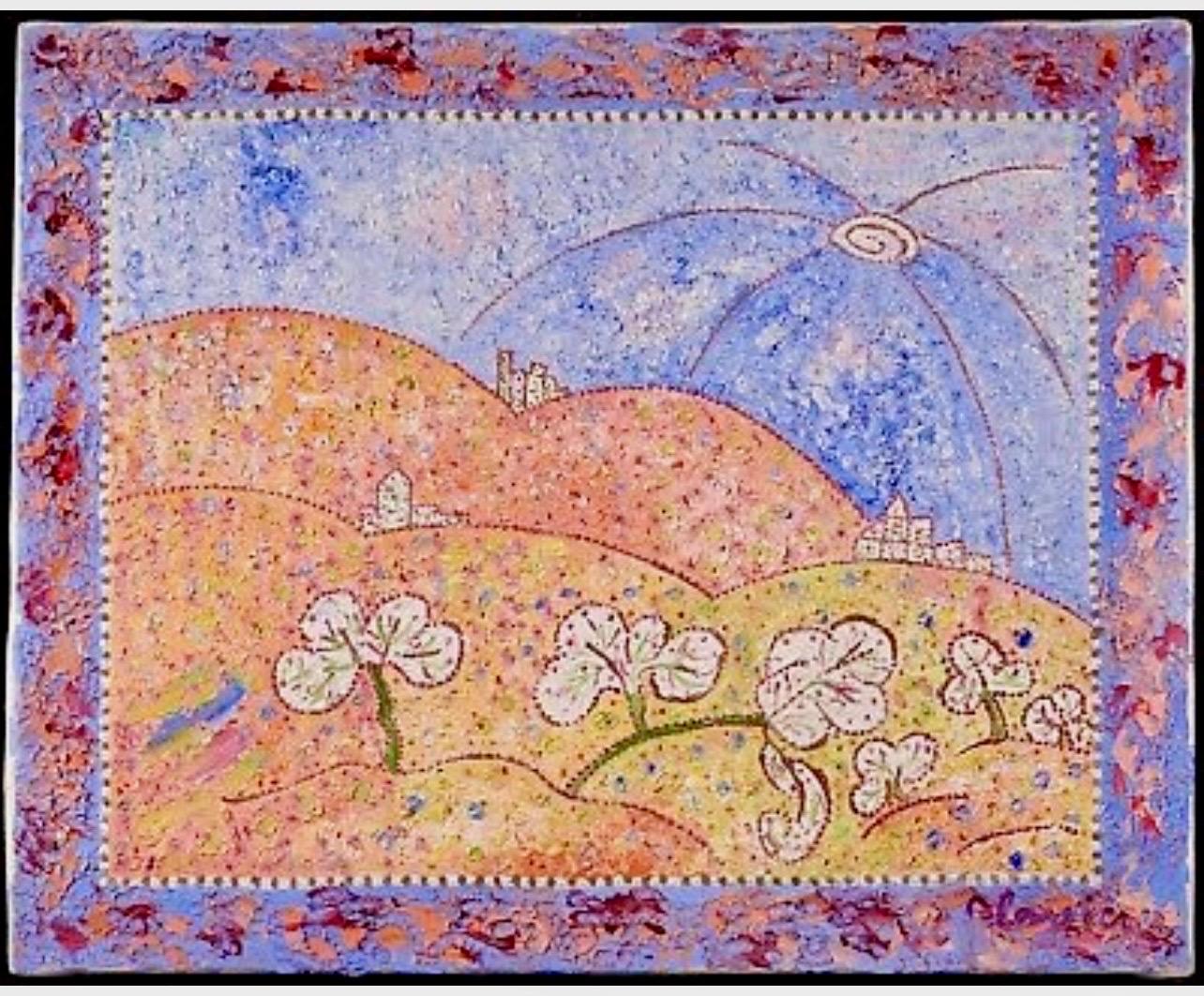
Marie Christine Clavier was born in Saigon, Vietnam in 1913 to French parents and lived there for her formative years. She returned to France as a teenager and began to study painting. Her work quickly developed into whimsical paintings of poetry and songs – harmonized in a unique and distinct painting technique. Her work has an impasto feel and a folk art, outsider artist sensibility to it. Similar in style to Maik and other fantasy realists who use animals, flowers and foliage in their artworks. Marie Clavier painted ro herself rather than for profit as she was quite independently wealthy. Her work is in a more whimsical style of Francoise Gilot. She exhibited extensively in the United States in the 1970s especially across Connecticut and New York, showing at various galleries and cultural centres. She had numerous solo exhibitions in the 1970’s- notably at the Maison Francaise in New York and New York University. She showed at Galerie Bernheim Jeune in Paris. She won many awards for her work including Gold Medals and Palme D’Or medals. In 1988 the prestigious art publisher Leopard D’Or produced catalogue book on her life and work – by this point she had virtually given up painting. She died in 2015 aged 102.
Bernheim-Jeune gallery is one of the oldest art galleries in Paris. Opened on Rue Laffitte in 1863 by Alexandre Bernheim (1839-1915), friend of Delacroix, Corot and Courbet, it changed location a few times before settling on Avenue Matignon. The gallery promoted realists, Barbizon school paintings and, in 1874, the first impressionist and later post-impressionist painters. It closed in 2019. In 1901, Alexandre Bernheim, with his sons, Josse (1870-1941), and Gaston (1870-1953), organized the first important exhibition of Vincent van Gogh paintings in Paris with the help of art critic Julien Leclercq. In 1906, Bernheim-Jeune frères started presenting works by Pierre Bonnard, Edouard Vuillard, Paul Cezanne, Henri-Edmond Cross, Kees van Dongen, Henri Matisse, Le Douanier Rousseau, Raoul Dufy, Maurice de Vlaminck, Amedeo Modigliani, Maurice Utrillo and Georges Dufrenoy. From 1906 to 1925, art critic Félix Fénéon was the director of the gallery and was instrumental in bringing in the art of Georges Seurat and Umberto Boccioni.
In 1922, an exhibition brought together works by Alice Halicka, Auguste Herbin, Pierre Hodé, Moise Kisling, Marie Laurencin, Henri Lebasque, Fernand Leger and Henri Matisse. The gallery now exhibits painters and sculptors in the tradition of the École de Paris and artists such as Jean Carzou, Shelomo Selinger or Pollès.
Her style is a recognizable, cheerful, whimsical and a happy creation. Naïve art is any form of visual art that is created by a person who lacks the formal education and training that a professional artist undergoes (in anatomy, art history, technique, perspective, ways of seeing). Unlike folk art, naïve art does not necessarily evince a distinct cultural context or tradition. Naïve art is recognized, and often imitated, for its childlike simplicity and frankness. Paintings of this kind typically have a flat rendering style with a rudimentary expression of perspective.
One particularly influential painter of "naïve art" was Henri Rousseau (1844–1910), a French Post-Impressionist who was discovered by Pablo Picasso. Naïve art is often seen as outsider art that is by someone without formal (or little) training or degree. While this was true before the twentieth century, there are now academies for naïve art. Naïve art is now a fully recognized art genre, represented in art galleries worldwide. Museums devoted to naïve art now exist in Kecskemét, Hungary; Riga, Latvia; Jaen, Spain; Rio de Janeiro, Brasil; Vicq France and Paris. Another term related to (but not completely synonymous with) naïve art is folk art. There also exist the terms "naïvism" and "primitivism" which are usually applied to professional painters working in the style of naïve art (like Paul Gauguin, Mikhail Larionov, Paul Klee). At all events, naive art can be regarded as having occupied an "official" position in the annals of twentieth-century art since - at the very latest - the publication of the Der Blaue Reiter, an almanac in 1912. Wassily Kandinsky and Franz Marc, who brought out the almanac, presented 6 reproductions of paintings by le Douanier' Rousseau (Henri Rousseau), comparing them with other pictorial examples. However, most experts agree that the year that naive art was "discovered" was 1885, when the painter Paul Signac became aware of the talents of Henri Rousseau and set about organizing exhibitions of his work in a number of prestigious galleries. The Earth Group (Grupa Zemlja) were Croatian artists, architects and intellectuals active in Zagreb from 1929 to 1935. The group included the painters Krsto Hegedušić, Edo Kovačević, Omer Mujadžić, Kamilo Ružička, Ivan Tabaković, and Oton Postružnik, the sculptors Antun Augustinčić, Frano Kršinić, and the architect Drago Ibler. A term applied to Yugoslav (Croatian) naive painters working in or around the village of Hlebine, near the Hungarian border, from about 1930. Some of the best known naive artists are Dragan Gaži, Ivan Generalić, Josip Generalić, Krsto Hegedušić, Mijo Kovačić, Ivan Lacković-Croata, Franjo Mraz, Ivan Večenaj and Mirko Virius. Camille Bombois (1883–1970) Ferdinand Cheval, known as 'le facteur Cheval' (1836–1924) Henry Darger (1892–1973) L. S. Lowry (1887–1976) Grandma Moses, Anna Mary Robertson (1860–1961) Nikifor (1895–1968) Poland, Horace Pippin (1888–1946) Jon Serl (1894-1993) United States Alfred Wallis (1855–1942) Scottie Wilson (1890–1972) Gesner Abelard (b. 1922) Jan Balet (1913–2009) Michel Delacroix (b. 1933) France Howard Finster (1916–2001) Ivan Rabuzin (1921–2008)
- Creator:Madeline Christine Clavier (1913 - 2015)
- Dimensions:Height: 13 in (33.02 cm)Width: 16 in (40.64 cm)
- Medium:
- Movement Style:
- Period:
- Condition:
- Gallery Location:Surfside, FL
- Reference Number:1stDibs: LU38216943912
About the Seller
4.9
Platinum Seller
Premium sellers with a 4.7+ rating and 24-hour response times
Established in 1995
1stDibs seller since 2014
1,855 sales on 1stDibs
Typical response time: <1 hour
- ShippingRetrieving quote...Shipping from: Surfside, FL
- Return Policy
More From This Seller
View AllWhimsical French Folk Art, Naive, Oil Painting Madeline Marie Christine Clavier
By Madeline Christine Clavier
Located in Surfside, FL
MADELINE CHRISTINE CLAVIER (1913-2015)
Signature: Signed lower right & titled verso
Medium: Oil on canvas
Provenance: The collection of the artist's family
Marie Christine Clavier ...
Category
20th Century Folk Art Animal Paintings
Materials
Canvas, Oil
Whimsical French Folk Art, Naive, Oil Painting Madeline Marie Christine Clavier
By Madeline Christine Clavier
Located in Surfside, FL
MADELINE CHRISTINE CLAVIER (1913-2015)
Signature: Signed lower right & titled verso
Medium: Oil on canvas
Provenance: The collection of the artist's family
Marie Christine Clavier was born in Saigon, Vietnam in 1913 to French parents and lived there for her formative years. She returned to France as a teenager and began to study painting. Her work quickly developed into whimsical paintings of poetry and songs – harmonized in a unique and distinct painting technique. Her work has an impasto feel and a folk art, outsider artist sensibility to it. Similar in style to Maik and other fantasy realists who use animals, flowers and foliage in their artworks. Marie Clavier painted ro herself rather than for profit as she was quite independently wealthy. She exhibited extensively in the United States in the 1970s especially across Connecticut and New York, showing at various galleries and cultural centres. She had numerous solo exhibitions in the 1970’s- notably at the Maison Francaise in New York and New York University. She showed at Galerie Bernheim Jeune in Paris. She won many awards for her work including Gold Medals and Palme D’Or medals. In 1988 the prestigious art publisher Leopard D’Or produced catalogue book on her life and work – by this point she had virtually given up painting. She died in 2015 aged 102.
Bernheim-Jeune gallery is one of the oldest art galleries in Paris. Opened on Rue Laffitte in 1863 by Alexandre Bernheim (1839-1915), friend of Delacroix, Corot and Courbet, it changed location a few times before settling on Avenue Matignon. The gallery promoted realists, Barbizon school paintings and, in 1874, the first impressionist and later post-impressionist painters. It closed in 2019. In 1901, Alexandre Bernheim, with his sons, Josse (1870-1941), and Gaston (1870-1953), organized the first important exhibition of Vincent van Gogh paintings in Paris with the help of art critic Julien Leclercq. In 1906, Bernheim-Jeune frères started presenting works by Pierre Bonnard, Edouard Vuillard, Paul Cezanne, Henri-Edmond Cross, Kees van Dongen, Henri Matisse, Le Douanier Rousseau, Raoul Dufy, Maurice de Vlaminck, Amedeo Modigliani, Maurice Utrillo and Georges Dufrenoy. From 1906 to 1925, art critic Félix Fénéon was the director of the gallery and was instrumental in bringing in the art of Georges Seurat and Umberto Boccioni.
In 1922, an exhibition brought together works by Alice Halicka, Auguste Herbin, Pierre Hodé, Moise Kisling, Marie Laurencin, Henri Lebasque, Fernand Leger and Henri Matisse. The gallery now exhibits painters and sculptors in the tradition of the École de Paris and artists such as Jean Carzou, Shelomo Selinger or Pollès.
Her style is a recognizable, cheerful, whimsical and a happy creation. Naïve art is any form of visual art that is created by a person who lacks the formal education and training that a professional artist undergoes (in anatomy, art history, technique, perspective, ways of seeing). Unlike folk art, naïve art does not necessarily evince a distinct cultural context or tradition. Naïve art is recognized, and often imitated, for its childlike simplicity and frankness. Paintings of this kind typically have a flat rendering style with a rudimentary expression of perspective.
One particularly influential painter of "naïve art" was Henri Rousseau (1844–1910), a French Post-Impressionist who was discovered by Pablo Picasso. Naïve art is often seen as outsider art that is by someone without formal (or little) training or degree. While this was true before the twentieth century, there are now academies for naïve art. Naïve art is now a fully recognized art genre, represented in art galleries worldwide. Museums devoted to naïve art now exist in Kecskemét, Hungary; Riga, Latvia; Jaen, Spain; Rio de Janeiro, Brasil; Vicq France and Paris. Another term related to (but not completely synonymous with) naïve art is folk art. There also exist the terms "naïvism" and "primitivism" which are usually applied to professional painters working in the style of naïve art (like Paul Gauguin, Mikhail Larionov, Paul Klee). At all events, naive art can be regarded as having occupied an "official" position in the annals of twentieth-century art since - at the very latest - the publication of the Der Blaue Reiter, an almanac in 1912. Wassily Kandinsky and Franz Marc, who brought out the almanac, presented 6 reproductions of paintings by le Douanier' Rousseau (Henri Rousseau), comparing them with other pictorial examples. However, most experts agree that the year that naive art was "discovered" was 1885, when the painter Paul Signac became aware of the talents of Henri Rousseau and set about organizing exhibitions of his work in a number of prestigious galleries. The Earth Group (Grupa Zemlja) were Croatian artists, architects and intellectuals active in Zagreb from 1929 to 1935. The group included the painters Krsto Hegedušić, Edo Kovačević, Omer Mujadžić, Kamilo Ružička, Ivan Tabaković, and Oton Postružnik, the sculptors Antun Augustinčić, Frano Kršinić, and the architect Drago Ibler. A term applied to Yugoslav (Croatian) naive painters working in or around the village of Hlebine, near the Hungarian border, from about 1930. Some of the best known naive artists are Dragan Gaži, Ivan Generalić, Josip Generalić, Krsto Hegedušić, Mijo Kovačić, Ivan Lacković-Croata, Franjo Mraz, Ivan Večenaj and Mirko Virius. Camille Bombois (1883–1970) Ferdinand Cheval, known as 'le facteur Cheval' (1836–1924) Henry Darger (1892–1973) L. S. Lowry (1887–1976) Grandma Moses, Anna Mary Robertson...
Category
20th Century Folk Art Animal Paintings
Materials
Canvas, Oil
Whimsical French Folk Art, Naive, Oil Painting Madeline Marie Christine Clavier
By Madeline Christine Clavier
Located in Surfside, FL
MADELINE CHRISTINE CLAVIER (1913-2015)
Signature: Signed lower right & titled verso
Medium: Oil on canvas
Provenance: The collection of the artist's family
Marie Christine Clavier ...
Category
20th Century Folk Art Animal Paintings
Materials
Canvas, Oil
Whimsical French Folk Art, Naive, Oil Painting Madeline Marie Christine Clavier
By Madeline Christine Clavier
Located in Surfside, FL
MADELINE CHRISTINE CLAVIER (1913-2015)
Signature: Signed lower right & titled verso
Medium: Oil on canvas
Provenance: The collection of the artist's family
Marie Christine Clavier ...
Category
20th Century Folk Art Animal Paintings
Materials
Canvas, Oil
Whimsical French Folk Art, Naive, Oil Painting Madeline Marie Christine Clavier
By Madeline Christine Clavier
Located in Surfside, FL
MADELINE CHRISTINE CLAVIER (1913-2015)
Signature: Signed lower right & titled verso
Medium: Oil on canvas
Provenance: The collection of the artist's family
Marie Christine Clavier ...
Category
20th Century Folk Art Animal Paintings
Materials
Canvas, Oil
Whimsical French Folk Art, Naive, Oil Painting Madeline Marie Christine Clavier
By Madeline Christine Clavier
Located in Surfside, FL
MADELINE CHRISTINE CLAVIER (1913-2015)
Signature: Signed lower right & titled verso
Medium: Oil on canvas
Provenance: The collection of the artist's family
Marie Christine Clavier was born in Saigon, Vietnam in 1913 to French parents and lived there for her formative years. She returned to France as a teenager and began to study painting. Her work quickly developed into whimsical paintings of poetry and songs – harmonized in a unique and distinct painting technique. Her work has an impasto feel and a folk art, outsider artist sensibility to it. Similar in style to Maik and other fantasy realists who use animals, flowers and foliage in their artworks. Marie Clavier painted ro herself rather than for profit as she was quite independently wealthy. She exhibited extensively in the United States in the 1970s especially across Connecticut and New York, showing at various galleries and cultural centres. She had numerous solo exhibitions in the 1970’s- notably at the Maison Francaise in New York and New York University. She showed at Galerie Bernheim Jeune in Paris. She won many awards for her work including Gold Medals and Palme D’Or medals. In 1988 the prestigious art publisher Leopard D’Or produced catalogue book on her life and work – by this point she had virtually given up painting. She died in 2015 aged 102.
Bernheim-Jeune gallery is one of the oldest art galleries in Paris. Opened on Rue Laffitte in 1863 by Alexandre Bernheim (1839-1915), friend of Delacroix, Corot and Courbet, it changed location a few times before settling on Avenue Matignon. The gallery promoted realists, Barbizon school paintings and, in 1874, the first impressionist and later post-impressionist painters. It closed in 2019. In 1901, Alexandre Bernheim, with his sons, Josse (1870-1941), and Gaston (1870-1953), organized the first important exhibition of Vincent van Gogh paintings in Paris with the help of art critic Julien Leclercq. In 1906, Bernheim-Jeune frères started presenting works by Pierre Bonnard, Edouard Vuillard, Paul Cezanne, Henri-Edmond Cross, Kees van Dongen, Henri Matisse, Le Douanier Rousseau, Raoul Dufy, Maurice de Vlaminck, Amedeo Modigliani, Maurice Utrillo and Georges Dufrenoy. From 1906 to 1925, art critic Félix Fénéon was the director of the gallery and was instrumental in bringing in the art of Georges Seurat and Umberto Boccioni.
In 1922, an exhibition brought together works by Alice Halicka, Auguste Herbin, Pierre Hodé, Moise Kisling, Marie Laurencin, Henri Lebasque, Fernand Leger and Henri Matisse. The gallery now exhibits painters and sculptors in the tradition of the École de Paris and artists such as Jean Carzou, Shelomo Selinger or Pollès.
Her style is a recognizable, cheerful, whimsical and a happy creation. Naïve art is any form of visual art that is created by a person who lacks the formal education and training that a professional artist undergoes (in anatomy, art history, technique, perspective, ways of seeing). Unlike folk art, naïve art does not necessarily evince a distinct cultural context or tradition. Naïve art is recognized, and often imitated, for its childlike simplicity and frankness. Paintings of this kind typically have a flat rendering style with a rudimentary expression of perspective.
One particularly influential painter of "naïve art" was Henri Rousseau (1844–1910), a French Post-Impressionist who was discovered by Pablo Picasso. Naïve art is often seen as outsider art that is by someone without formal (or little) training or degree. While this was true before the twentieth century, there are now academies for naïve art. Naïve art is now a fully recognized art genre, represented in art galleries worldwide. Museums devoted to naïve art now exist in Kecskemét, Hungary; Riga, Latvia; Jaen, Spain; Rio de Janeiro, Brasil; Vicq France and Paris. Another term related to (but not completely synonymous with) naïve art is folk art. There also exist the terms "naïvism" and "primitivism" which are usually applied to professional painters working in the style of naïve art (like Paul Gauguin, Mikhail Larionov, Paul Klee). At all events, naive art can be regarded as having occupied an "official" position in the annals of twentieth-century art since - at the very latest - the publication of the Der Blaue Reiter, an almanac in 1912. Wassily Kandinsky and Franz Marc, who brought out the almanac, presented 6 reproductions of paintings by le Douanier' Rousseau (Henri Rousseau), comparing them with other pictorial examples. However, most experts agree that the year that naive art was "discovered" was 1885, when the painter Paul Signac became aware of the talents of Henri Rousseau and set about organizing exhibitions of his work in a number of prestigious galleries. The Earth Group (Grupa Zemlja) were Croatian artists, architects and intellectuals active in Zagreb from 1929 to 1935. The group included the painters Krsto Hegedušić, Edo Kovačević, Omer Mujadžić, Kamilo Ružička, Ivan Tabaković, and Oton Postružnik, the sculptors Antun Augustinčić, Frano Kršinić, and the architect Drago Ibler. A term applied to Yugoslav (Croatian) naive painters working in or around the village of Hlebine, near the Hungarian border, from about 1930. Some of the best known naive artists are Dragan Gaži, Ivan Generalić, Josip Generalić, Krsto Hegedušić, Mijo Kovačić, Ivan Lacković-Croata, Franjo Mraz, Ivan Večenaj and Mirko Virius. Camille Bombois (1883–1970) Ferdinand Cheval, known as 'le facteur Cheval' (1836–1924) Henry Darger (1892–1973) L. S. Lowry (1887–1976) Grandma Moses, Anna Mary Robertson...
Category
20th Century Folk Art Animal Paintings
Materials
Canvas, Oil
You May Also Like
Pinky – Original Naïve Folk Art Oil Painting by Martin Saldaña, Framed
By Martin Saldana
Located in Denver, CO
Bring charm, color, and heartfelt nostalgia into your space with “Pinky,” an enchanting original oil painting on board attributed to acclaimed Naïve folk artist Martin Saldaña. This ...
Category
1950s Folk Art Figurative Paintings
Materials
Oil
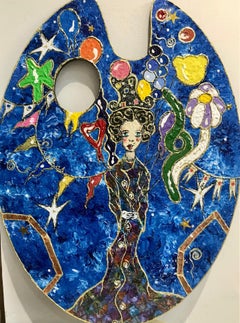
Original Unique Piece PINKHAS Naive Art School of Paris
Located in Tel Aviv - Jaffa, IL
Unique work combining acrylic, collage and varnish on a paint palette
Hand-signed
Perfect condition
Dated and titled at the back
Theme : Ballon seller
Category
2010s French School Figurative Paintings
Materials
Varnish, Acrylic
$480 Sale Price
20% Off
Martin Saldaña “Lovely Gal” Oil on Board, Vibrant Mexican Folk Art, 20th Cent.
By Martin Saldana
Located in Denver, CO
“Lovely Gal” is a delightful oil on board painting by Martin Saldaña (1874–1965), a self-taught Mexican-American outsider artist celebrated for his vivid, whimsical depictions of childhood, rural life, and nature. This semi-abstract figurative work bursts with bold colors, featuring lively flowers and birds that reflect Saldaña’s deep connection to his Mexican heritage and love for the natural world.
The painting is presented in a custom frame, measuring 30 ¾ x 25 ⅜ x 1 ⅝ inches, with an image size of 24 ½ x 19 ⅛ inches. Its charming composition and vibrant palette exemplify Saldaña’s signature folk art style, offering a joyful, nostalgic glimpse into his personal memories and cultural roots.
About the Artist:
Born in Rancho Nuevo, Mexico, Martin Saldaña led a modest life and worked as a cook at Denver’s iconic Brown Palace Hotel. Remarkably, he began his artistic career at age 76, attending children’s art classes at the Denver Art Museum, which sparked a prolific creative period lasting 15 years.
Saldaña’s paintings are noted for their bold geometric forms, vivid colors, and naïve, folk art aesthetic, often reminiscent of traditional Mexican tapestries. Producing a new work nearly every three days, he captured landscapes, ranch life, animals, and childhood memories with heartfelt simplicity. Today, Saldaña’s enchanting artworks continue to captivate collectors, celebrating the rich visual culture and charm of Mexican-American folk art.
©David Cook Galleries...
Category
20th Century Folk Art Figurative Paintings
Materials
Oil
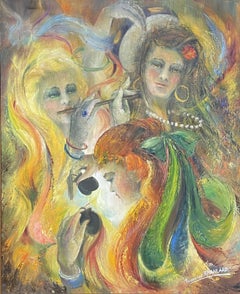
FRANCINE BRANIARD - HUGE FRENCH SURREALIST SIGNED OIL - FANTASY FIGURES
Located in Cirencester, Gloucestershire
Artist/ School: Francine Braniard (French contemporary), signed
Title: 'La Source', titled verso and to exhibition label
Medium: oil painting on c...
Category
21st Century and Contemporary Surrealist Landscape Paintings
Materials
Oil
$964 Sale Price
20% Off
FRANCINE BRANIARD - HUGE FRENCH MODERNIST SIGNED OIL
Located in Cirencester, Gloucestershire
Artist/ School: Francine Braniard (French contemporary), signed
Title: titled verso
Medium: oil painting on canvas, framed
Size: framed 37 x 29.5...
Category
21st Century and Contemporary Surrealist Landscape Paintings
Materials
Oil
$903 Sale Price
20% Off
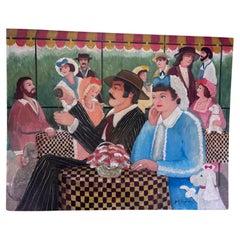
A Votre Sante Cafe Painting Outsider Folk Artist Gloria Laposka
Located in South Burlington, VT
A Votre Sante Cafe Gathering With Pet Dogs - Vibrant Colored Hand Painting
An oil painting on canvas panel by Self Taught Outsider Surrealist Folk Artist Gloria Antoinette Lapo...
Category
Late 20th Century American Folk Art Outsider and Self Taught Art
Materials
Canvas
$1,200 Sale Price
20% Off