Items Similar to "The Deer Herd" Pablita Velarde, Pueblo Native American, South-Western Art

Want more images or videos?
Request additional images or videos from the seller
1 of 12
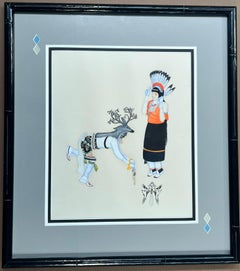
Pablita Velarde"The Deer Herd" Pablita Velarde, Pueblo Native American, South-Western Artcirca 1965
circa 1965
$9,000
£6,866.78
€7,817.28
CA$12,649.60
A$13,904.99
CHF 7,300.06
MX$165,340.35
NOK 93,749.29
SEK 85,395.47
DKK 58,407.66
About the Item
Pablita Velarde
The Deer Herd, circa 1965
Signed lower right
Earth pigments on sand board
9 3/4 x 19 1/2 inches
Provenance
Private Collection, New Mexico
Santa Fe Auction
Private Collection, Texas
Dancing Rabbit Gallery: American Indian Art, Santa Fe, New Mexico
Pablita Velarde, Tse Tsan, “Golden Dawn,” was one of the most prominent Native American painters in the Southwest. Her paintings document Pueblo life and culture, and have appeared in numerous exhibitions and museums throughout the United States.
Given the Tewa name Tse Tsan or Golden Dawn by her grandmother, Pablita was born in 1918, in the village of Santa Clara, a Pueblo community about twenty-five miles north of Santa Fe. Pablita’s mother, Marianita, died from tuberculosis when Pablita was a child, leaving four girls to be raised by their father, Herman. Recognizing the value of education, Herman sent three of his four young daughters to St. Catherine’s Indian School in Santa Fe. Pablita was six at the time. The girls spent summers with their father, his new wife, and their grandmother. After completing sixth grade at St. Catherine’s, Pablita transferred to Santa Fe Indian School.
At the Indian School, Pablita encountered two women who would play influential roles in her life. The first was Dorothy Dunn, an Anglo art teacher, who encouraged Pablita’s budding artistic talents. In 1932, Dunn established the “Studio” at the Indian school, a drawing and painting program that urged students to paint scenes from Pueblo life. Pablita was one of the first girls in Dunn’s class. Pablita’s early watercolors featured traditional women’s tasks at Santa Clara, unusual depictions in Dunn’s male dominated class.
While attending the Indian School, Pablita also befriended Tonita Peña, the first Pueblo woman easel painter. Originally from San Ildefonso, but living in Cochiti, Peña had been staying at the Indian School dormitories as part of the 1934 Public Works of Art Project, a New Deal program that employed Indian painters and craftspeople. Pablita spent evenings visiting with and watching Peña paint; both women spoke Tewa. Two of the first Pueblo women painters, they faced similar obstacles as they challenged conventional women’s roles.
- Creator:Pablita Velarde (1918 - 2006, American, Native American)
- Creation Year:circa 1965
- Dimensions:Height: 18.5 in (46.99 cm)Width: 28 in (71.12 cm)
- More Editions Sizes:Unique workPrice: $9,000
- Medium:
- Movement Style:
- Period:
- Condition:
- Gallery Location:New York, NY
- Reference Number:1stDibs: LU1841217009772
About the Seller
5.0
Platinum Seller
Premium sellers with a 4.7+ rating and 24-hour response times
Established in 2022
1stDibs seller since 2022
133 sales on 1stDibs
Typical response time: <1 hour
- ShippingRetrieving quote...Shipping from: New York, NY
- Return Policy
More From This Seller
View All"Two Pueblo Dancers, Santa Clara" Pablita Velarde, New Mexico Native American
Located in New York, NY
Pablita Velarde
Two Pueblo Dancers, Santa Clara, 1993
Signed and dated lower right
Casein on paper
7 1/2 x 7 1/4 inches
Provenance
Adobe Gallery, New Mexico
Private Collection, Texa...
Category
1990s American Modern Figurative Paintings
Materials
Paper, Casein
"Pueblo Indians, Taos, New Mexico" Georgina Klitgaard, Modernist Figures
By Georgina Klitgaard
Located in New York, NY
Georgina Klitgaard
Pueblo Indians, Taos, New Mexico
Signed lower right
Oil on canvas
18 x 24 inches
Georgina Klitgaard’s art has sometimes gotten lost in the critical propensity to...
Category
Mid-20th Century American Modern Landscape Paintings
Materials
Canvas, Oil

"Pueblo Indians, Taos, New Mexico, " Georgia Klitgaard, Southwest Landscape
By Georgina Klitgaard
Located in New York, NY
Georgina Klitgaard
Pueblo Indians, Taos, New Mexico
Signed lower right
Oil on canvas
18 x 24 inches
Georgina Berrian was born in Spuyten Duyvil, New York in 1893. She was educated a...
Category
Mid-20th Century Modern Landscape Paintings
Materials
Canvas, Oil
$5,200 Sale Price
20% Off
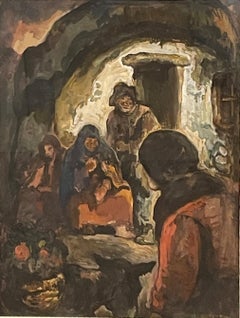
"In Foreign Parts" Eugene Higgins, Southwestern Pueblo, Modern Figurative
By Eugene Higgins
Located in New York, NY
Eugene Higgins
In Foreign Parts, circa 1913
Signed lower right
Watercolor on paper
Sight 17 x 13 inches
Born William Victor Higgins in 1884 to a Shelbyville, Indiana farm family where the only art Victor was aware of as a child was his father's love of flowers. "He loved their forms and their colors, and he tended his garden as a painter might work a canvas." At the age of nine, Victor met a young artist who traveled the Indiana countryside painting advertisements on the sides of barns. He purchased paints and brushes so the young Higgins could practice his own artwork on the inside of his father's barn. He also taught Victor about art museums and especially about the new Chicago Art Institute. This information never left the young artist, and he saved his allowance until his father allowed him at the age of fifteen to attend Chicago Art Institute. He worked a variety of jobs to finance his studies both there and at the Academy of Fine Arts.
Victor Higgins traveled to New York in 1908, where he met Robert Henri, who became a significant influence by depicting every-day scenes and stressing the importance of the spirit and sense of place as important factors in painting. Higgins was also greatly affected by the New York Armory Modernism Show of Marsden Hartley in 1913.
While Victor Higgins was in Chicago he met former mayor and avid collector Carter H. Harrison who was to prove instrumental in the growth of Higgins career for several years. Harrison agreed to support Higgins for four years to go to Paris and Munich and paint and study in the great museums in Europe. While at the Academie de la Grande Chaumier in Paris (1910-1914) he met Walter Ufer, who was another Chicago artist being sponsored by Carter Harrison. This meeting was not only a life-long friendship, but the beginning of a great change in the way Higgins looked at "American" art. He decided that America needed it's own authentic style rather than the 19th Century classic style he was taught in Europe. Very soon after returning to Chicago in 1914, Harrison sent him and Walter Ufer on a painting trip to Taos, New Mexico for a year in exchange for paintings. Higgins made other similar agreements and was able to support himself with his painting. This trip was a life-changing experience and introduced Higgins to the authentic America he had been looking for.
In 1914 Taos was an isolated village about twelve hours from Santa Fe on an impossible dirt road. But the colorful life of the pueblo people and the natural beauty drew a collection of artists who became the Taos art colony, from which the Taos Society of Artists was founded in 1915. Victor Higgins became a permanent resident within a year of his arrival and a member of the society in 1917, exhibiting with Jane Peterson in 1925 and with Wayman Adams and Janet Scudder in 1927. The members would travel around the country introducing the Southwest scenes with great success. He remained a member until the Society's dissolution in 1927. Higgins was the youngest member of the group of seven. Other members were Joseph Henry Sharp, Bert Phillips...
Category
1910s American Modern Figurative Drawings and Watercolors
Materials
Paper, Watercolor
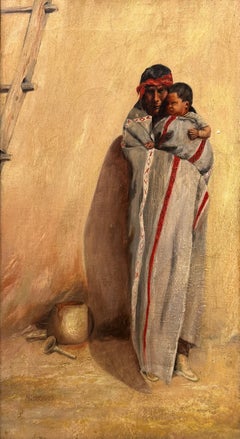
"A Tesuque Indian and Baby, New Mexico" Alice Coutts, Native American Southwest
Located in New York, NY
Alice Coutts
A Tesuque Indian and Baby, New Mexico, circa 1910
Signed lower left
Oil on canvas
20 1/4 x 12 1/4 inches
Provenance
Scott Tevis, Santa Barbara, California
A native of...
Category
1910s Academic Figurative Paintings
Materials
Canvas, Oil
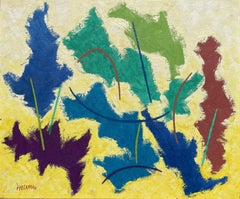
"Untitled" Albert Heckman, Mid-Century American Modernist Abstract Composition
By Albert Heckman
Located in New York, NY
Albert Heckman
Untitled
Signed lower left
Oil on canvas
20 x 24 inches
Albert Heckman was born in Meadville, Western Pennsylvania, 1893. He went to New York City to try his hand at...
Category
1950s Modern Abstract Paintings
Materials
Canvas, Oil
You May Also Like
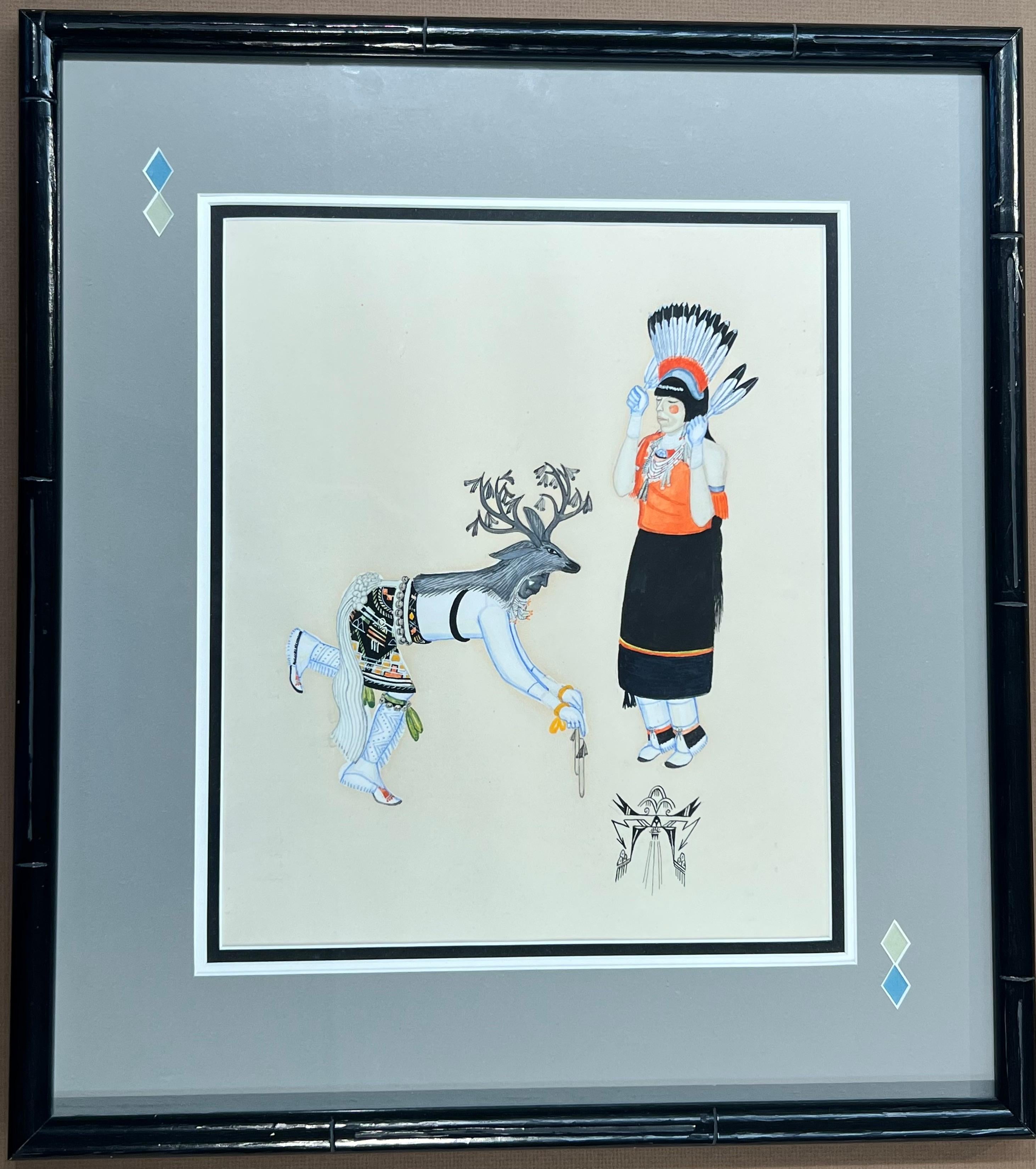
Deer Dance, painting by Tonita Pena, Santa Fe, Cochiti, Pueblo, male, female
Located in Santa Fe, NM
Deer Dance, painting by Tonita Pena, Santa Fe, Cochiti, Pueblo, male, female
Tonita Peña (born 1893 in San Ildefonso, died 1949 in Kewa Pueblo, New Mexico) was born as Quah Ah (meaning white coral beads) but also used the name Tonita Vigil Peña and María Antonia Tonita Peña. Peña was a renowned Pueblo artist, specializing in pen and ink on paper embellished with watercolor. She was a well-known and influential Native American artist and art teacher of the early 1920s and 1930s.
Tonita Peña was born on May 10, 1893, at San Ildefonso Pueblo, to Ascensión Vigil Peña and Natividad Peña of San Ildefonso Pueblo, New Mexico. When she was 12, her mother and younger sister died, as a result of complications due to the flu. Her father was unable to care for her and she was taken to Cochití Pueblo and was brought up by her aunt Martina Vigil Montoya, a prominent Cochití Pueblo potter. Peña attended St. Catherine Indian School in Santa Fe.
Edgar Lee Hewett, an anthropologist involved in supervising the nearby Frijoles Canyon excavations (now Bandelier National Monument) was instrumental in developing the careers of several San Ildefonso “self-taught” artists including Tonita Peña. Hewett purchased Peña's paintings for the Museum of New Mexico and supplied her with quality paint and paper. Peña began gaining more notoriety by the end of the 1910s selling an increasing amount of her work to collectors and the La Fonda Hotel. Much of this early work was done of Pueblo cultural subject matter, in a style inspired by historic Native American works, however, her use of an artist's easel and Western painting mediums gained her acceptance among her European-American contemporaries in the art world. At the age of 25, she exhibited her work at museums and galleries in the Santa Fe and Albuquerque area.
In the early 1920s, Tonita did not know how much her painting sold for at the Museum of New Mexico, so she wrote letters to the administrators because a local farmer was worried that she got paid too little.
In the 1930s Peña was an instructor at the Santa Fe Indian School and at the Albuquerque Indian School and the only woman painter of the San Ildefonso Self-Taught Group, which included such noted artists as Alfonso Roybal, Julian Martinez, Abel Sánchez (Oqwa Pi), Crecencio Martinez, and Encarnación Peña. As children, these artists attended San Ildefonso day school which was part of the institution of the Dawes Act of 1887, designed to indoctrinate and assimilate Native American children into mainstream American society.
In 1931, Tonita Peña exhibited at the Exposition of Indian Tribal Arts which was presented at the Grand Central Art Galleries in New York City. Works from this exhibition were shown at the 1932 Venice Biennial. That year is the only time Native American artists have shown in the official United States pavilion at that biennial, and Tonita Peña's paintings were part of that exhibition.[1 Her painting Basket Dance, that had shown in the Venice Biennial was acquired by the Whitney Museum of American Art in New York for $225. This was the highest price paid up to this time for a Pueblo painting...
Category
1940s Tribal Figurative Drawings and Watercolors
Materials
Paint, Paper
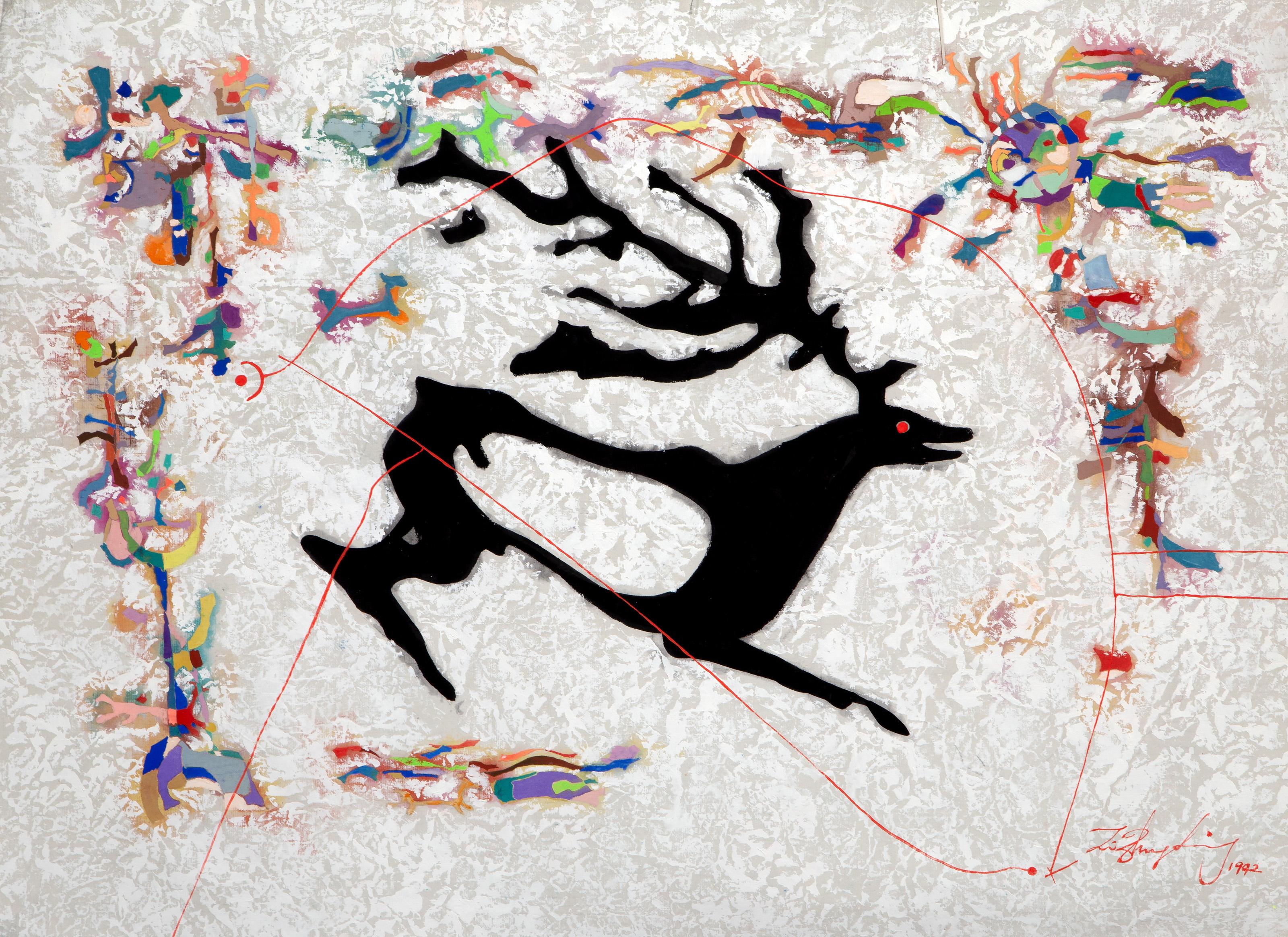
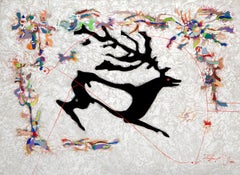
Deer, Folk art Acrylic and Watercolor Painting by Li Zhong-Liang
Located in Long Island City, NY
Li Zhong-Liang, Chinese (1944 - ) - Deer, Year: 1992, Medium: Acrylic, Watercolor on Laid Paper, signed and dated lower right, Size: 28.5 x 39 in. (72.39 x 99.06 cm)
Category
1990s Folk Art Animal Prints
Materials
Acrylic, Watercolor
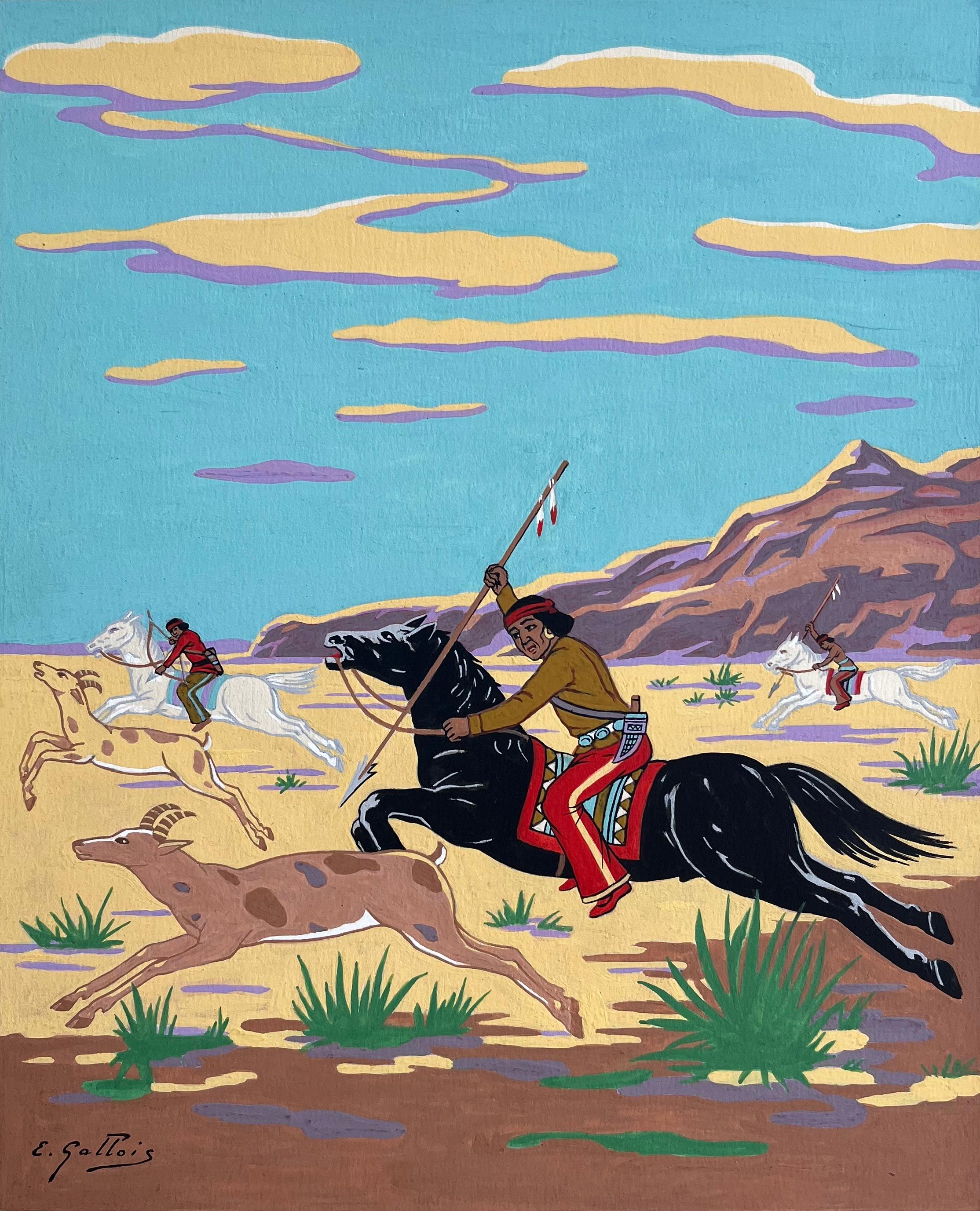
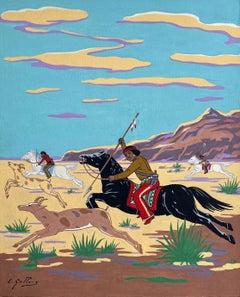
French Gouache Painting of Native American Antelope Hunt in Utah
Located in Cirencester, Gloucestershire
Title: French Gouache Painting of Native American Antelope Hunt in Utah
by Emile GALLOIS (1882-1965, French)
Signed: Yes
Medium: Original gouache painting on thick unframed paper,
Si...
Category
Mid-20th Century American Modern Figurative Drawings and Watercolors
Materials
Gouache
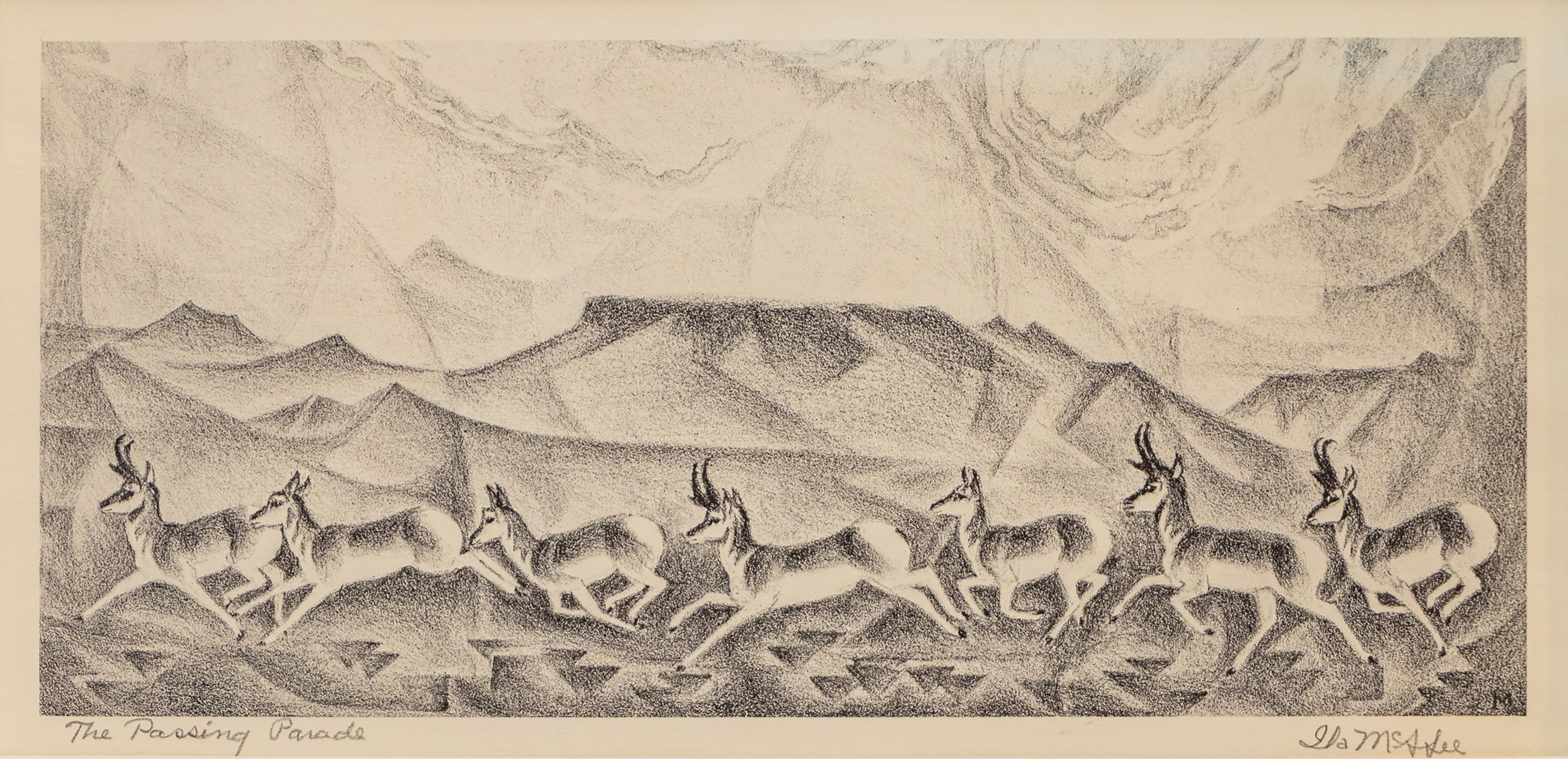
The Passing Parade, 20th Century Lithograph, Southwestern Desert with Antelope
By Ila Mae McAfee
Located in Denver, CO
This stunning original lithograph, titled The Passing Parade, is a signed piece by renowned American artist Ila Mae McAfee (1897-1995). Created in the 20th century, the artwork depic...
Category
20th Century American Modern Animal Prints
Materials
Lithograph
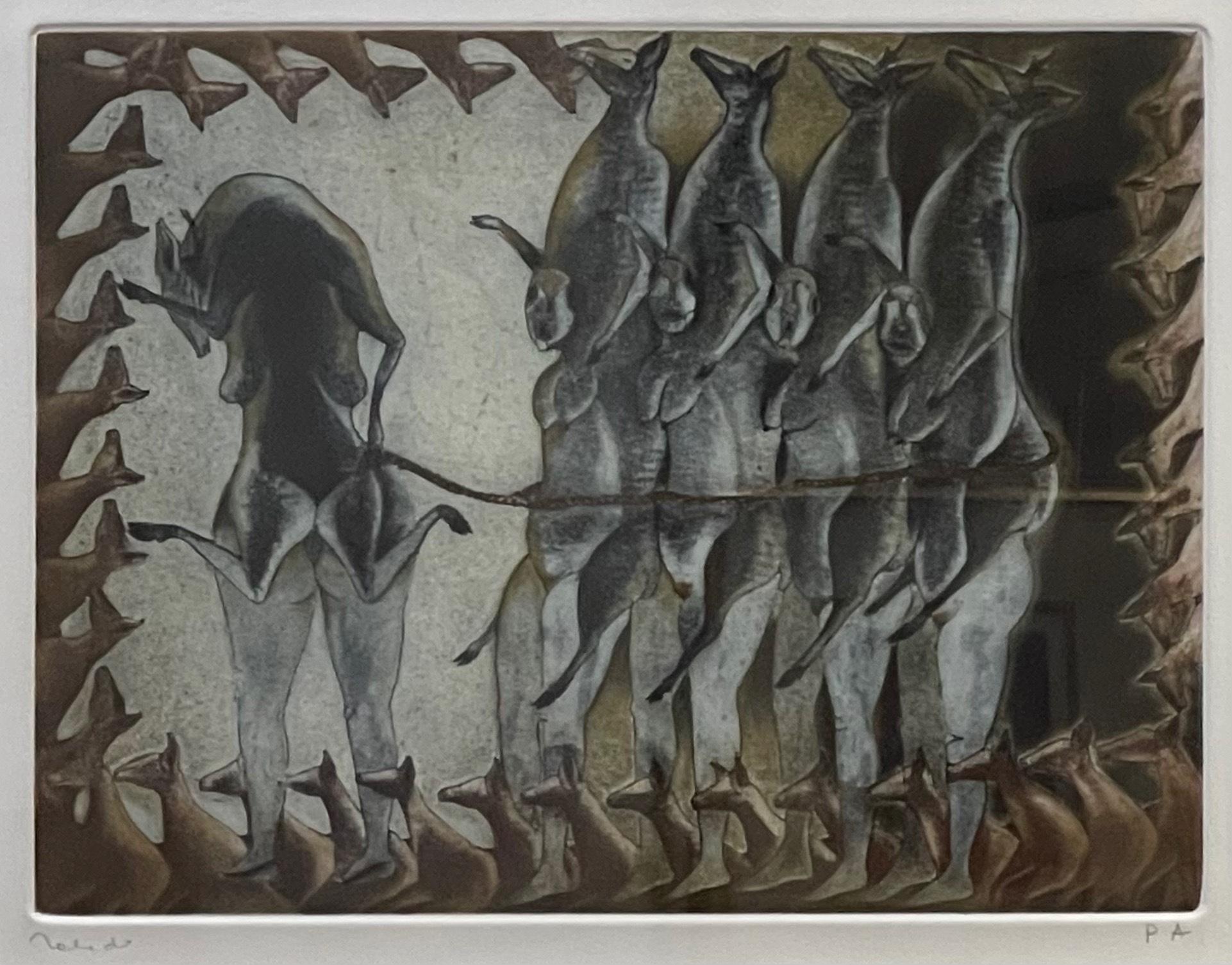
Venados (Deer), circa 1975-1985, (A/P)
By Francisco Toledo
Located in San Francisco, CA
Francisco Toledo
Venados (Deer), circa 1975-1985
Color etching and aquatint
Plate: 8 13/16 x 11 11/16 inches
Sheet: 15 x 20 7/16 inches
Edition A/P (Artist Proof)
This limited editi...
Category
Late 20th Century Contemporary Animal Prints
Materials
Etching, Aquatint
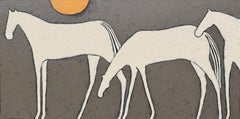
Sunset Herd, Original Painting
By Jaime Ellsworth
Located in San Francisco, CA
Artist Comments
Three horses gather as the sun begins to set, their white forms outlined in confident black lines. The soft grey backdrop creates a calming atmosphere, allowing...
Category
21st Century and Contemporary Contemporary Animal Paintings
Materials
Acrylic