Items Similar to Portrait Dante Alighieri Cristofano Papi Dell
altissimo Paint 16/17th Century
Video Loading
Want more images or videos?
Request additional images or videos from the seller
1 of 11
Portrait Dante Alighieri Cristofano Papi Dell
altissimo Paint 16/17th Century1580-1620
1580-1620
$10,594.74
$13,243.4220% Off
£7,849.69
£9,812.1220% Off
€8,840
€11,05020% Off
CA$14,610.08
CA$18,262.6020% Off
A$15,468.26
A$19,335.3320% Off
CHF 8,370.99
CHF 10,463.7320% Off
MX$184,874.20
MX$231,092.7520% Off
NOK 104,343.26
NOK 130,429.0820% Off
SEK 95,418.21
SEK 119,272.7620% Off
DKK 67,343.92
DKK 84,179.8920% Off
About the Item
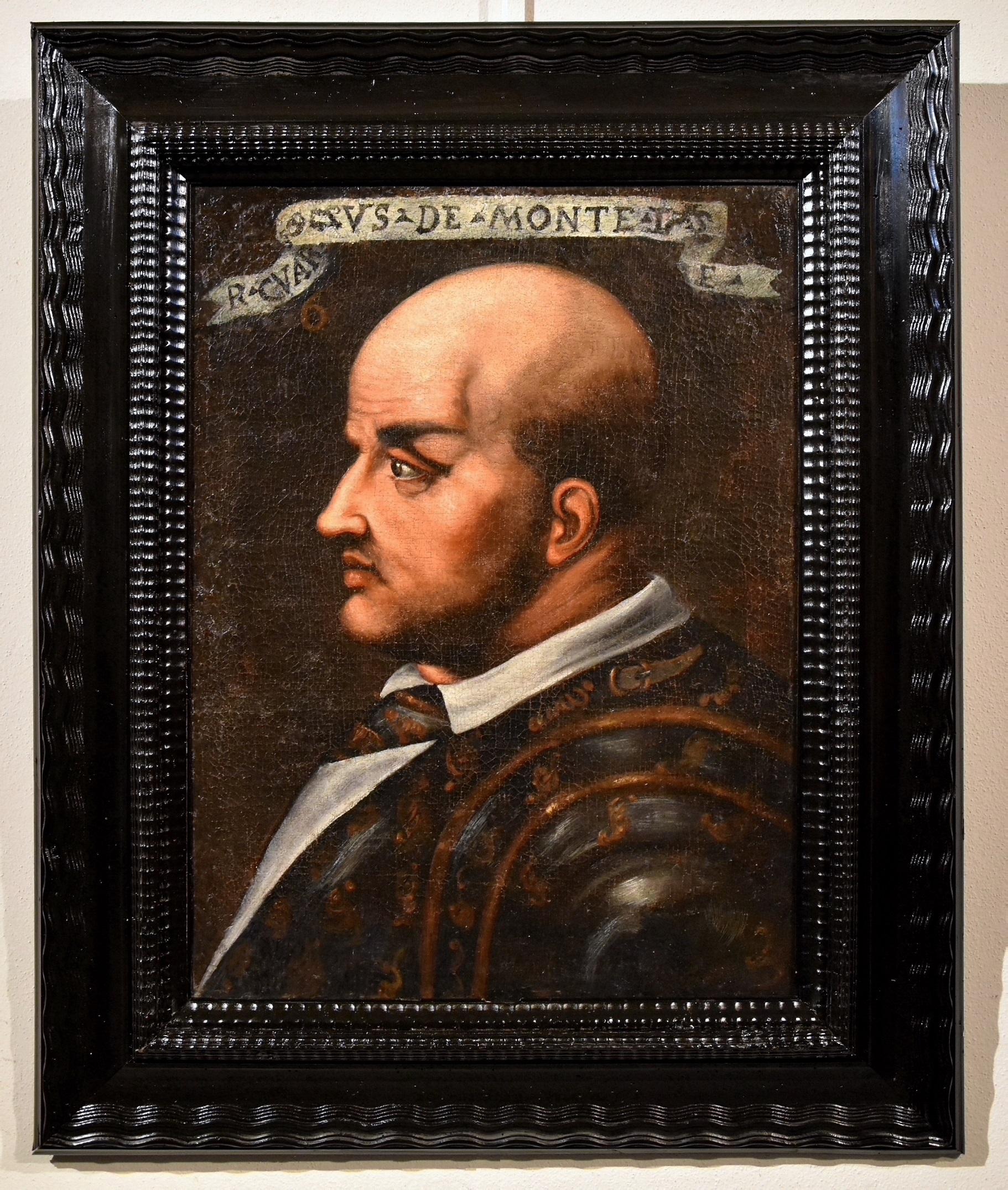
Florentine school of the sixteenth century
Cristofano di Papi dell'Altissimo (Florence 1525 – 1605) workshop
Portrait of Dante Alighieri (Florence 1265 - Ravenna 1321)
Oil on panel, 58 x 45 cm. In frame 84 x 70 cm.
We present this valuable painting, one of the rare portraits of Dante Alighieri (Florence 1265 – Ravenna 1321) of excellent quality, to be included in the series of posthumous portraits that the major Renaissance artists dedicated to the Supreme Poet, attesting to his acclaimed and immortal fame.
Among the earliest representations of Dante, we can mention Giotto's fresco of Paradise from 1332-1337 (Cappella del Podestà Palazzo Bargello, Florence), the portrait of Dante with the Divine Comedy in Domenico di Michelino's fresco from 1465 (Santa Maria del Fiore, Florence), and Sandro Botticelli's portrait of the poet in profile from around 1495 (private collection), now one of the most famous and widespread depictions of the poet.
Returning to our work, we can fully include it in the traditional iconography of his profile, which has contributed to his recognisability to this day: the poet is immortalised with his characteristic red cloak and cap, usually worn by Florentine diplomats, his elongated, angular face with a hooked nose and a laurel wreath, the so-called “poet's crown”.
From a stylistic point of view, in particular, we are inclined to attribute its creation to an artist active in Florence around 1550, trained or active in the prolific workshop of Cristofano di Papi dell'Altissimo (1530-1605), a pupil of Bronzino and then Pontormo, from whom he inherited his passion for portraiture and stylistic approach.
The painter worked for the Medici family and, in particular, created a collection of about 500 portraits of illustrious men for Cosimo I, known as the “Serie gioviana” (Uffizi Gallery, now in the upper part of the Corridoio di levante), which, among others, also included that of our poet.
His fame as a portraitist grew to such an extent that his workshop often produced versions of the same subject, with countless variations. In our beautiful work, for example, Dante is depicted in half-length, with his face and gaze turned to the left, his expression serious but intense, and his facial features immediately reminiscent of early Florentine Mannerist portraiture.
ADDITIONAL INFORMATION:
The work sold is completed by a pleasant wooden frame and comes with a certificate of authenticity and guarantee.
We take care of and organise the transport of purchased works, both in Italy and abroad, through professional and insured carriers.
It is also possible to view the painting in the gallery in Riva del Garda, where we will be happy to welcome you and show you our collection of works.
Please contact us, without obligation, for any additional information.
- Creation Year:1580-1620
- Dimensions:Height: 33.08 in (84 cm)Width: 27.56 in (70 cm)
- Medium:
- Movement Style:
- Circle Of:Cristofano Di Papi Dell altissimo (1525-1605)
- Period:
- Condition:
- Gallery Location:Riva del Garda, IT
- Reference Number:1stDibs: LU988116981452
About the Seller
4.9
Platinum Seller
Premium sellers with a 4.7+ rating and 24-hour response times
Established in 2017
1stDibs seller since 2018
273 sales on 1stDibs
Typical response time: <1 hour
- ShippingRetrieving quote...Shipping from: Riva del Garda, Italy
- Return Policy
More From This Seller
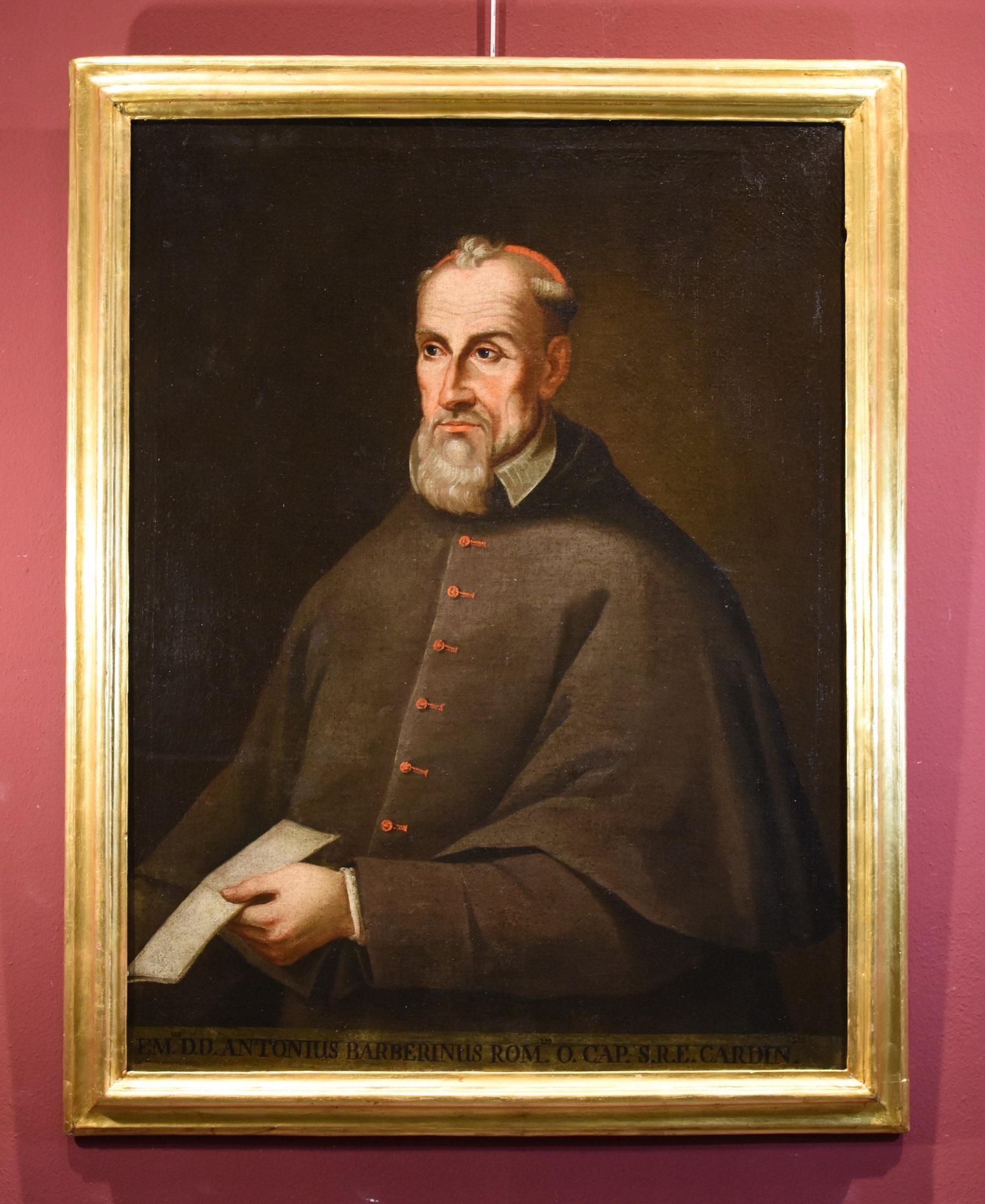
View AllPortrait Cardinal Barberini Alberti Paint Oil on canvas 17th Century Old master
Located in Riva del Garda, IT
Antonio Alberti (1603 - 1649)
Portrait of Cardinal Antonio Marcello Barberini (Florence 1569 – Rome 1646)
Inscription on the bottom: F.M D.D ANTONIUS BARBERINUS ROM. O. CAP. S.R.E. ...
Category
17th Century Old Masters Paintings
Materials
Oil
$7,353 Sale Price
20% Off
Portrait Paint Oil on canvas Old master 16/17th Century Italian Raffaello Art
Located in Riva del Garda, IT
Tuscan painter active towards the end of the 16th century
Portrait of Captain Niccolò Orsini (Pitigliano, 1442 - Lonigo, 1510), count of Pitigliano and Nola.
Tuscany, end of the 16th century
Oil on canvas, 64 x 47 cm., Framed 89 x 73 cm.
The portrait we present to you shows the effigy of a vigorous high-ranking male figure in armor, in the most typical Renaissance pose, half-length and taken in profile, with his face and gaze turned to the side; the serious and intense expression and the facial features evoke at first glance the portraiture of early Florentine mannerism.
He is Niccolò III Orsini (Pitigliano, 1442 - Lonigo, 1510), count of Pitigliano and Nola and son of Aldobrandino Orsini, famous leader and captain (or capitano di ventura) who lived between the fifteenth and sixteenth centuries, who served for the state Pontifical in Naples and Florence and above all for the Republic of Venice.
Portraiture with these characters, which derives from ancient coinage, was used in the sixteenth century in the sequences of Portraits of Illustrious Men, both in painting and in sculpture. The profile portrait was in fact a genre reserved, according to the Renaissance tradition, for celebrations, presenting those characteristics of imperturbability typical of the military role covered.
Our painting is a work created by an author active in Tuscany towards the end of the sixteenth century, adhering to those pictorial styles made famous by the portraitist Cristofano di Papi dell'Altissimo (1530-1605), a pupil of Bronzino and then of Pontormo, known for having created a collection of about 500 portraits of illustrious men, known as the 'Gioviana Series' (now in the Uffizi Gallery); and among these it is possible to identify one dedicated to Niccolò Orsini.
Our painting is inspired, in particular, by a print taken from the collection of prints...
Category
16th Century Old Masters Paintings
Materials
Oil
Portrait Noble Man Ceresa Paint Oil on canvas Old master 17th Century Italy Art
Located in Riva del Garda, IT
Carlo Ceresa (San Giovanni Bianco 1609 - Bergamo 1679) attributable
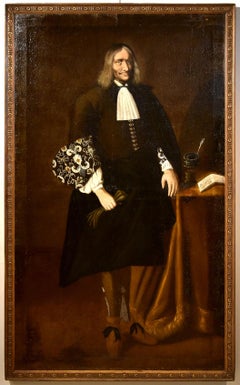
Full-length portrait of Giacomo Pesenti
Oil on canvas (206 x 121 cm - in frame 212 x 133 cm.)
This fascinating portrait, portraying a full-length gentleman and datable to the 17th century, illustrates the stylistic and compositional details typical of the pictorial production of the Lombardy area, Bergamo in particular. This reference is reflected in elements such as the natural light, the sober and austere setting and, above all, the subtle psychological characterisation of the face.
We are inclined to identify the hand of portrait painter Carlo Ceresa, one of the most illustrious Bergamasque figure painters of the 17th century, capable of developing a style of intense realism and acute psychological investigation. In his works, and our portrait perfectly reflects his canons, an extraordinary naturalistic imprint, great realism and remarkable essentiality are evident.
Those traits of severity, moral rigour and austerity typical of his portraiture find a perfect balance here: never courtly or rhetorical, his portraits are profoundly linked to the concept of counter-reform. Immortalising the main personalities of the time, he established himself as a point of reference for the Bergamasque aristocracy, from the Vertova to the Pesenti to the Secco Suardo.
The subject of the portrait is Giacomo Pesenti, here immortalised life-size in a rigorous black suit, his left hand resting on a table, on which is placed the necessities for writing and a manuscript, and his right hand, with a sealed ring on his little finger, abandoned along his side while he holds his gloves.
He wears a suit of incredible rigour, dressed as befits a man of his high social standing, while the sharp light focuses on his face, with an intensity that seems to be accentuated by the reflection of the white collar, with its sharp profile.
For Ceresa, it is not the richness of the garment that gives value to the person portrayed, it is the need to give feeling and bring out the character of the person, and this he succeeds in marvellously, aided by his ability to capture the essence of the person and return it to us in painting through the face and light used as a strong expressive element.
In fact, the image highlights that 'counter-reformed' composure typical of the portraiture of painters active in this area and era, adhering to a verism...
Category
17th Century Old Masters Paintings
Materials
Oil
$12,211 Sale Price
20% Off
Ecce Homo Christ Paint Oil on canvas 17th Century Old master Leonardo Italian
Located in Riva del Garda, IT
Lombard painter of the seventeenth century
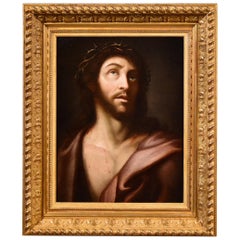
Ecce Homo
Oil painting on canvas
56 x 43 cm. , framed 75 x 63 cm.
Provenance: Florence, Pandolfini, 5.10.2021, lot 209
The proposed canv...
Category
17th Century Old Masters Paintings
Materials
Oil
$5,982 Sale Price
20% Off
King Portrait Clementi Paint Oil on canvas Old master 18th Century Italian
Located in Riva del Garda, IT
Maria Giovanna Battista Clementi known as La Clementina (Turin, 1692 - Turin, 1761), Attributable to
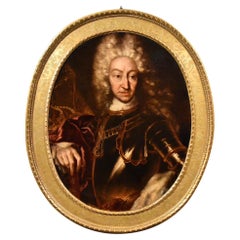
Portrait of Victor Amadeus II of Savoy (Turin 1666 - Moncalieri 1732) king of Sardinia, duke of Savoy, marquis of Saluzzo and duke of Monferrato, prince of Piedmont and count of Aosta, Moriana and Nizza from 1675 to 1720.
Oil on oval canvas,
79 x 62 cm., Framed 98 x 82 cm.
The portrayed in this fascinating virile portrait is King Vittorio Amedeo II of Savoy, portrayed in ceremonial armor and red cloak according to the traditional courtly iconography, represented half-length, slightly three-quarter-length, with the towering "courtly" wig, according to the dictates of fashion of the first decades of the century, of French inspiration.
In order to represent the power embodied in our austere portrayal, the sovereign is immortalized with the symbolic attributes of the power of the family, identifiable in the ancient crown of the Kingdom of Sardinia, in the scepter with the Mauritian cross and in the necklace of the Supreme Order of the Most Holy Annunziata, established in 1364 by Amedeo VI, as the highest honor of the House of Savoy...
Category
18th Century Old Masters Paintings
Materials
Oil
$11,140 Sale Price
35% Off
Portrait King Solomon Desubleo Paint Oil on canvas Old master 17th Century Art
Located in Riva del Garda, IT
Michele Desubleo (Maubeuge, 1602 - Parma, 1676) - attributable
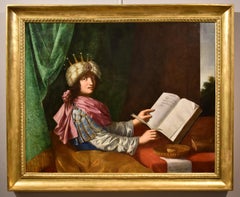
Portrait of gentleman like Solomon, the wise king
Oil painting on canvas
120 x 141 cm., By gilded wooden frame cm. 134 x 162 cm.
The beautiful painting shows us an image of the famous Solomon king, legendary biblical figure who became the personification of the good reigning over the centuries, and proverbially recognized as one of the wisest politicians in history. The features of the off are presumably those of the client of the work, who wanted to emphasize his image by impersonating a character with legendary fame.
The reigning, with an elegant coron head of Corona of Eastern Foggia, is dressed in a sumptuous silk clothes...
Category
17th Century Old Masters Paintings
Materials
Oil
$18,073 Sale Price
20% Off
You May Also Like
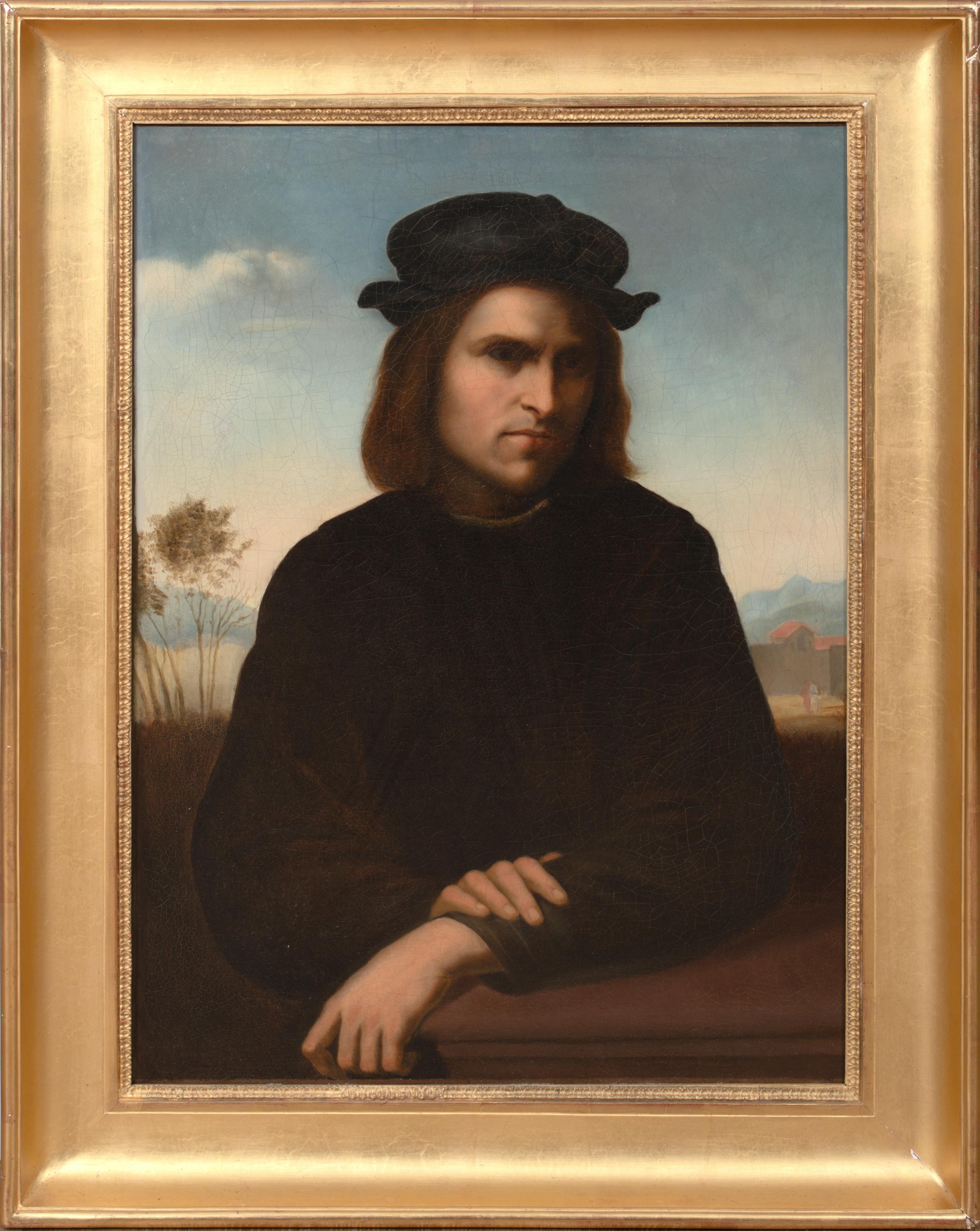
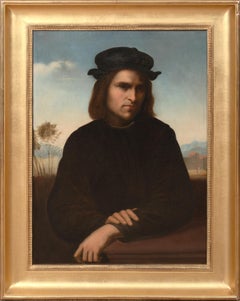
Portrait Of A Man, 17th/18th Century after Franciabigio (1482-1525)
Located in Blackwater, GB
Portrait Of A Man, 17th/18th Century
after Franciabigio (1482-1525)
Large 17th/18th Century Italian renaissance portrait of a Florentine Man, oil on canvas. Excellent quality and c...
Category
18th Century Portrait Paintings
Materials
Canvas, Oil
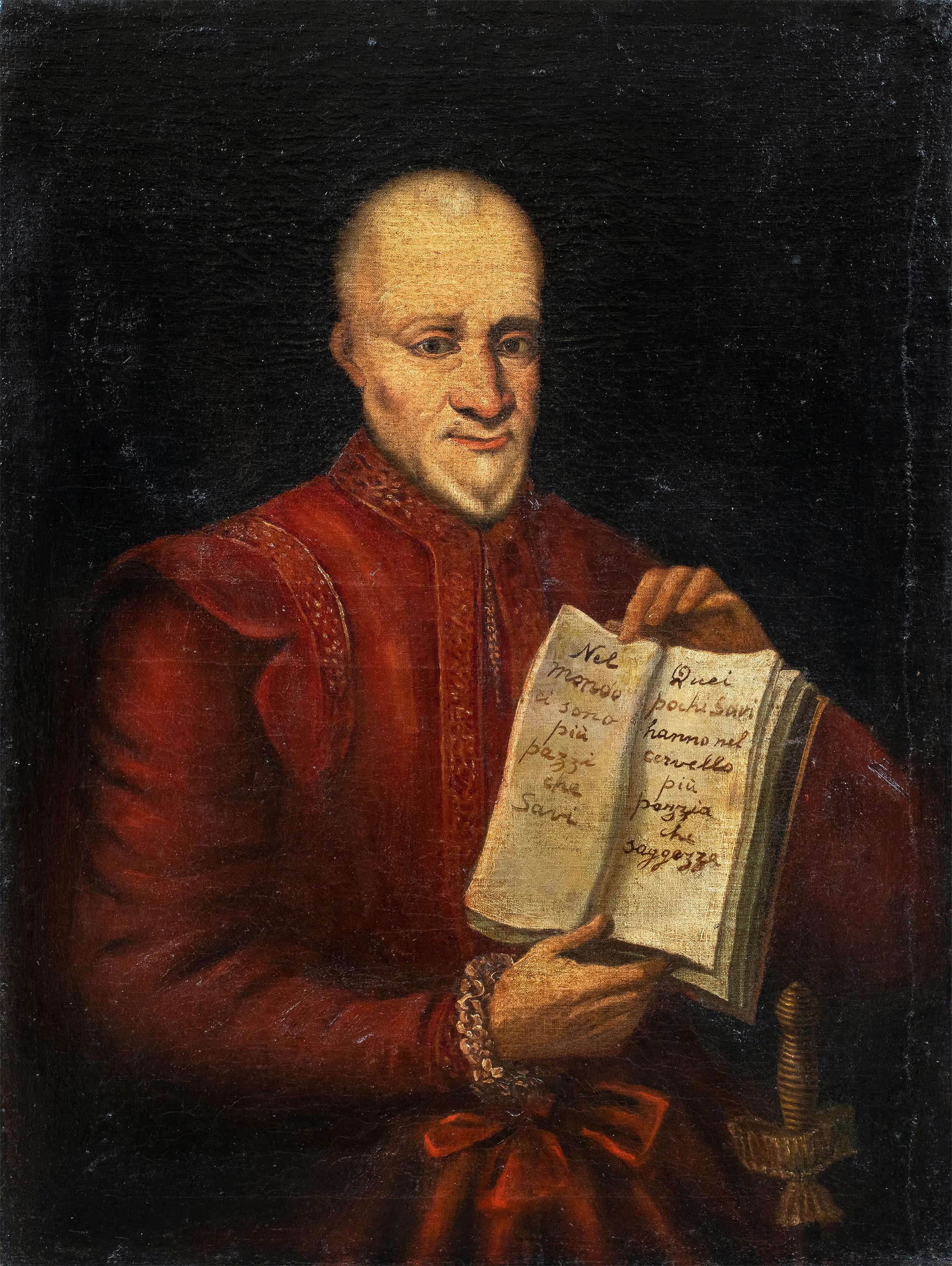
Enlightenment Italian painter - 18th century figure painting Chamfort
Located in Varmo, IT
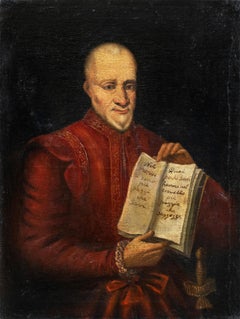
Italian painter (Second half of the 18th century) - Portrait with aphorism by Nicolas Chamfort.
92 x 68 cm.
Oil on canvas, unframed (not signed).
- Inscription: "There are more fo...
Category
Late 18th Century Rococo Figurative Paintings
Materials
Canvas, Oil
$1,797 Sale Price
25% Off
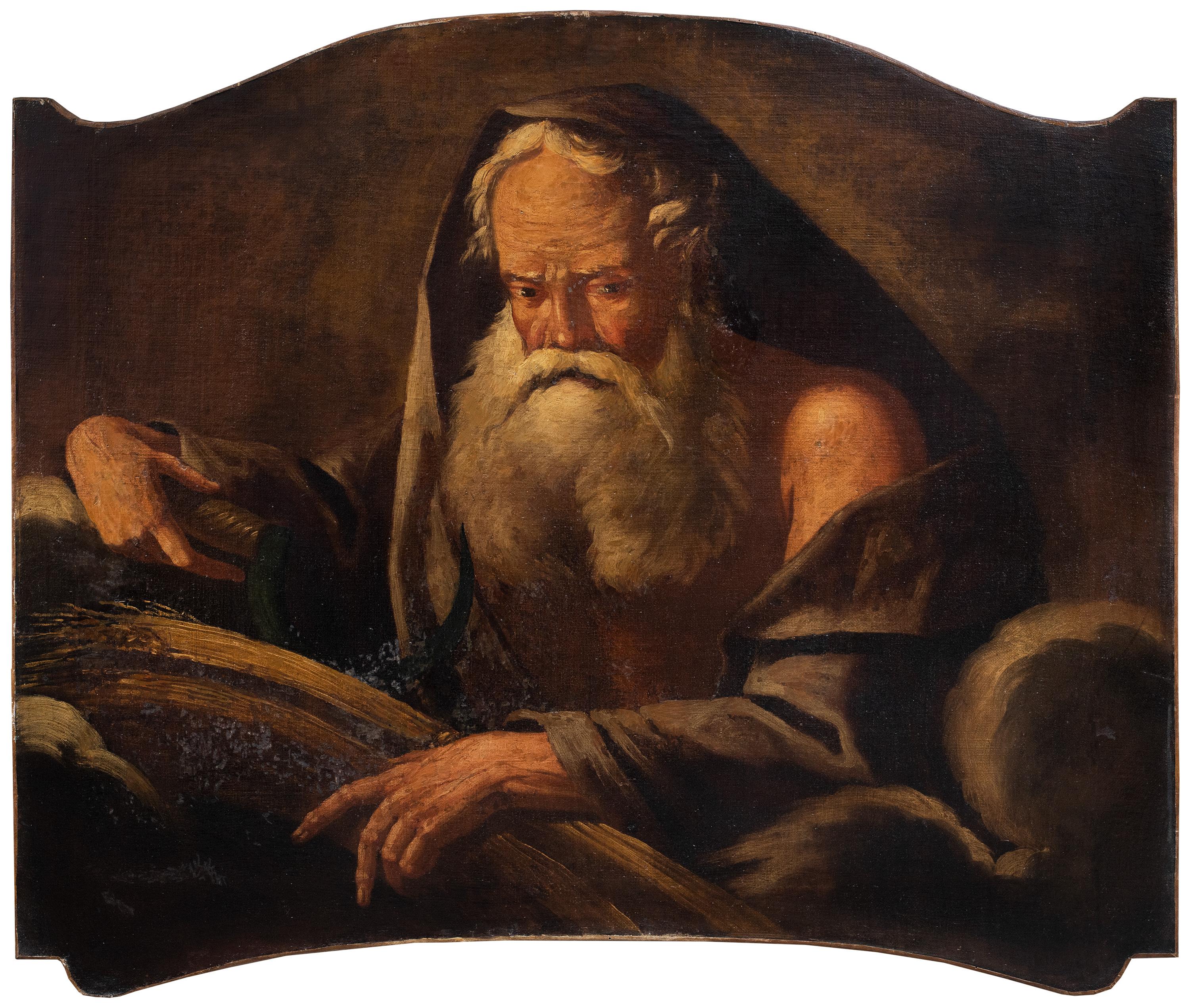
Antique Italian painter - 18th century figure painting
Located in Varmo, IT
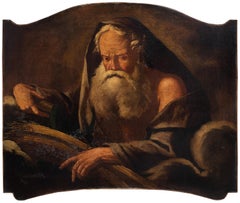
Italian painter (18th century) - Chrono.
90.5 x 106 cm.
Antique oil painting on canvas, without frame (not signed).
Condition report: Lined canvas. Good state of conservation of t...
Category
Early 18th Century Old Masters Figurative Paintings
Materials
Canvas, Oil
$4,794 Sale Price
20% Off
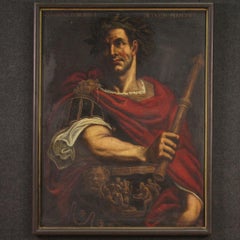
17th Century Oil on Canvas Italian Antique Portrait Painting Julius Caesar, 1630
Located in Vicoforte, IT
Great Italian painting from the first half of the 17th century. Oil on canvas artwork, first canvas, depicting a splendid portrait of Julius Caesar. The painting in question seems to...
Category
1630s Portrait Paintings
Materials
Canvas, Oil
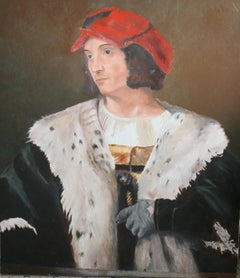
Italian Renaissance Nobleman Portrait, Oil on Canvas, 1960s
Located in Douglas Manor, NY
4069 Italian nobleman oil painting
unframed
Category
1960s Portrait Paintings
Materials
Oil
$525 Sale Price
32% Off
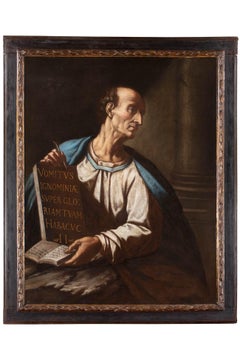
17th Century by Circle of Girolamo Troppa The Prophet Habakkuk Oil on Canvas
By Girolamo Troppa
Located in Milano, Lombardia
Circle of Girolamo Troppa (Torri in Sabina, Italy, 1636 - Terni, Italy, 1711)
Title: The prophet Habakkuk
Medium: oil on canvas
Dimensions: without frame 90 x 114 cm - with frame 132...
Category
Late 17th Century Old Masters Portrait Paintings
Materials
Canvas, Cotton Canvas, Oil
$10,786 Sale Price
28% Off