Items Similar to Rare Polish American 1930s Oil Painting Painting WPA Russian Babushka Jewish Art
Want more images or videos?
Request additional images or videos from the seller
1 of 12
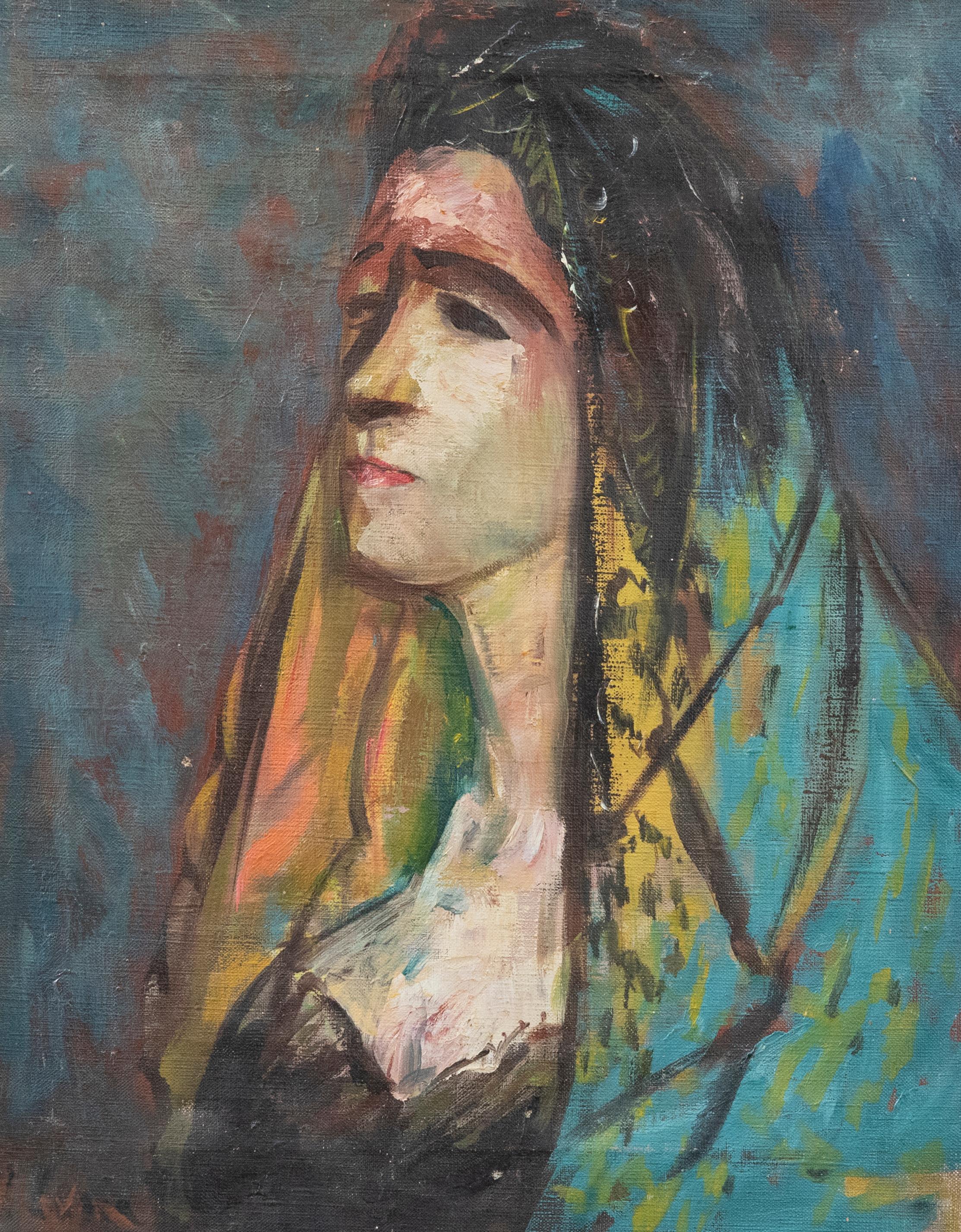
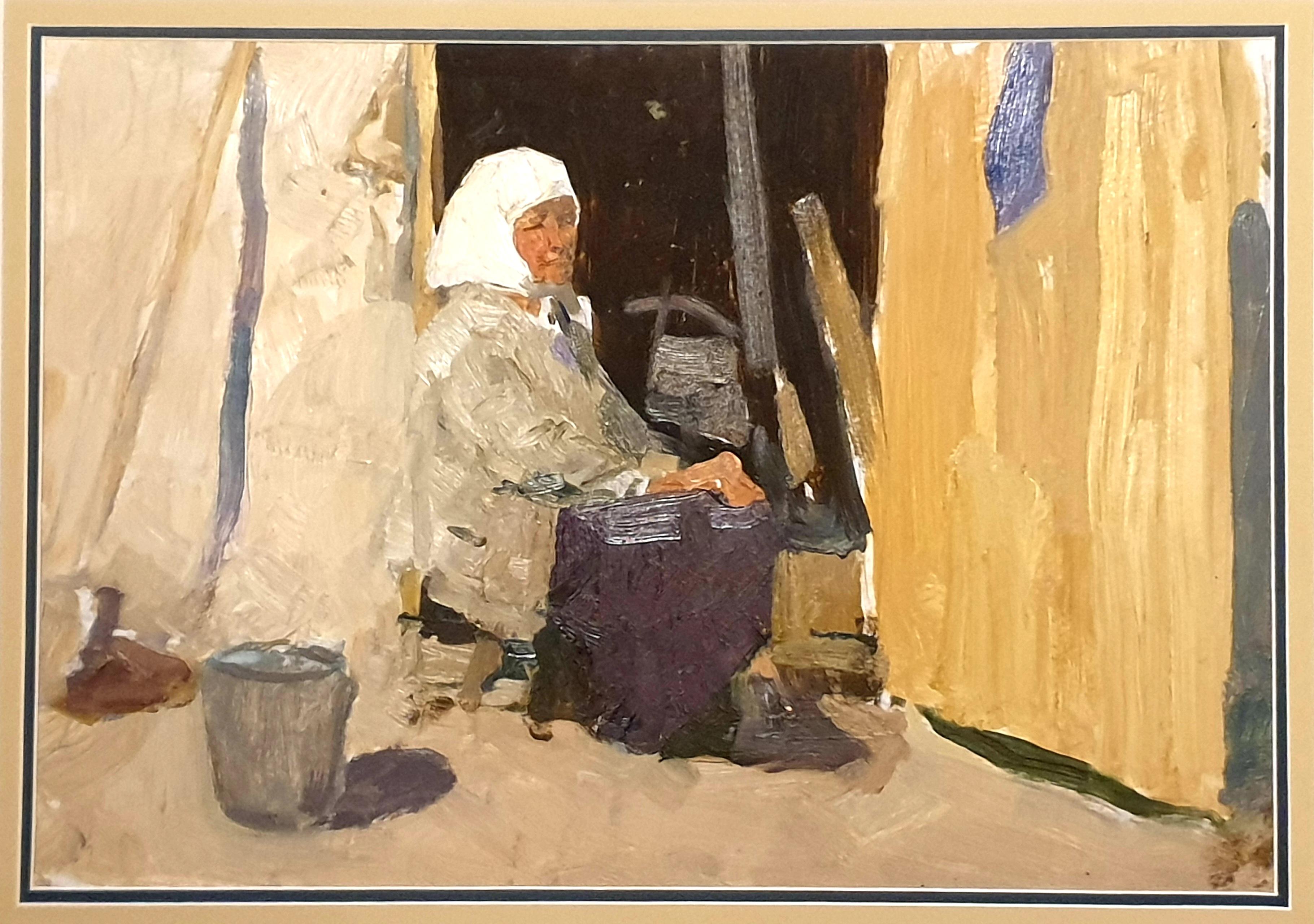
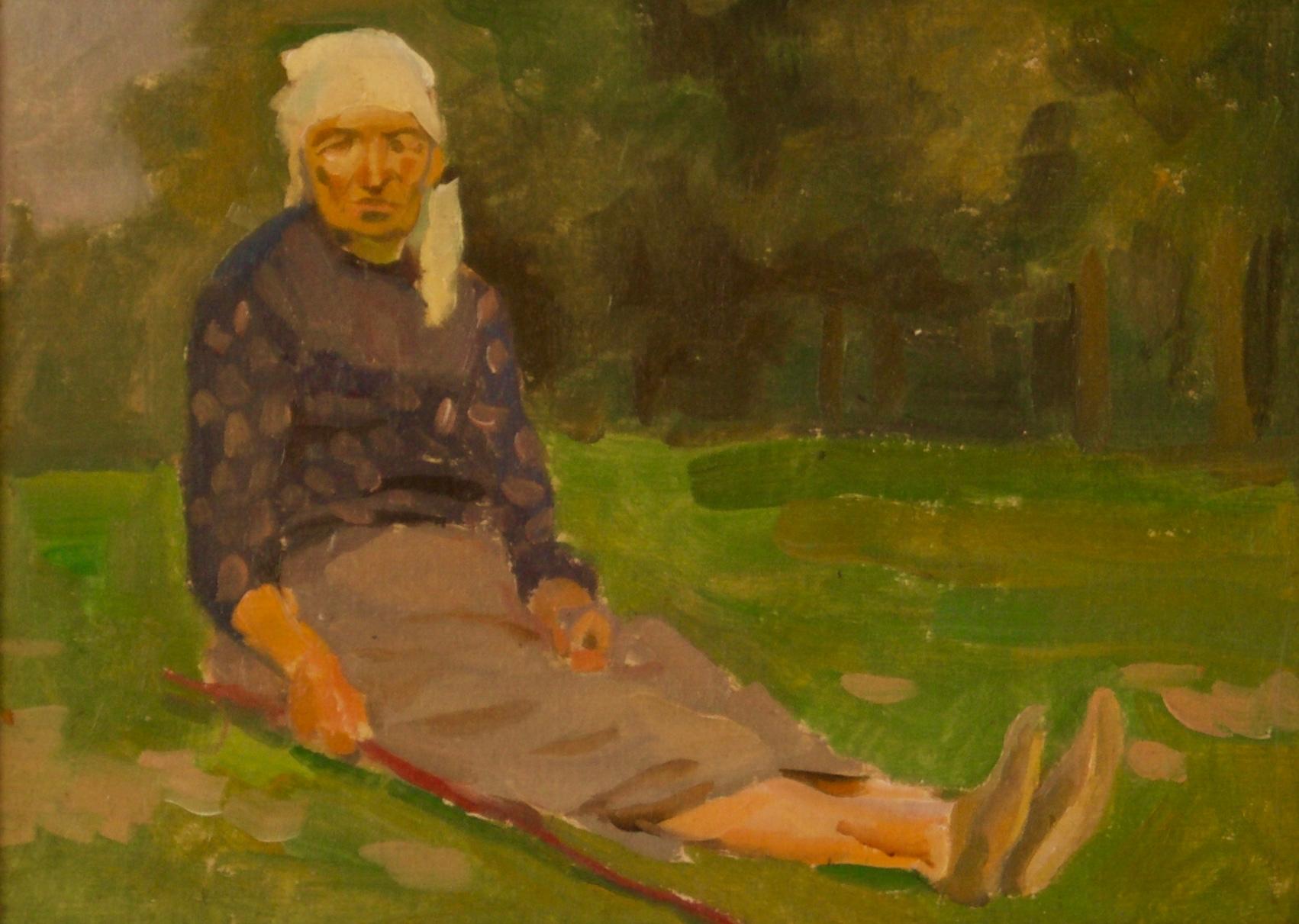
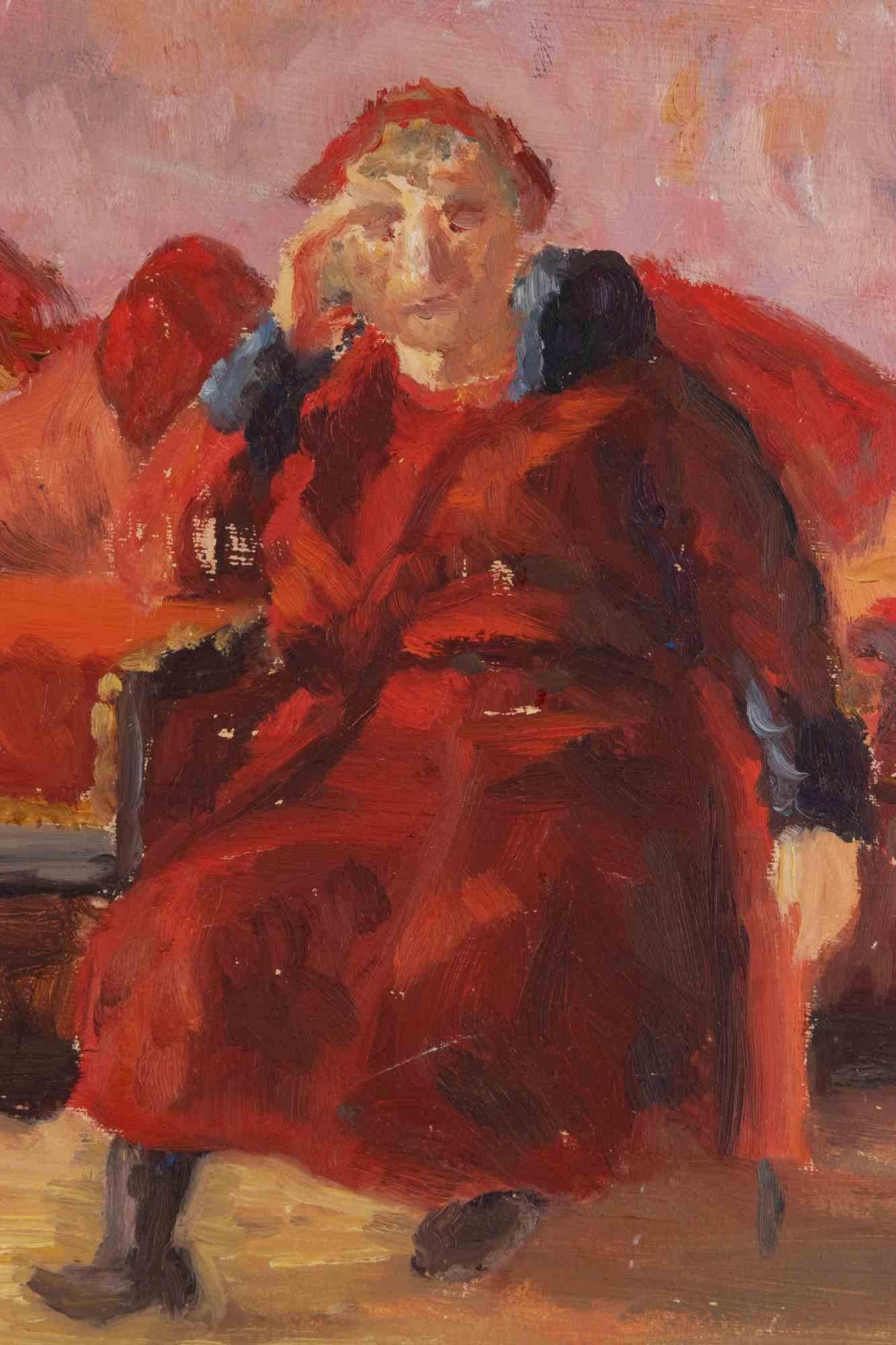
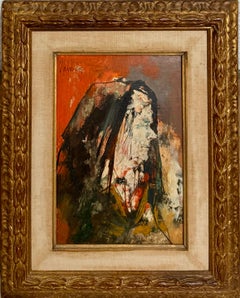
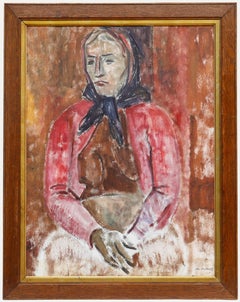
Abram TromkaRare Polish American 1930s Oil Painting Painting WPA Russian Babushka Jewish Art
$1,600
£1,215.60
€1,396.99
CA$2,247.40
A$2,446.23
CHF 1,296.17
MX$29,419.67
NOK 16,480.50
SEK 15,102.55
DKK 10,435.40
About the Item
Abram Tromka was born May 1, 1896 in Poland. At the age of seven he immigrated with his family to the United States, settling in New York City. It was on the boat coming to New York where Tromka first became interested in art. Fascinated by a woman who was painting, he decided that he wanted to become an artist. Upon arrival at immigration headquarters, Tromka’s family adopted the surname “Phillips,” which he kept until 1930. Hence the artist’s early works bear the signature — ‘Phillips.’
Having a rough childhood, Tromka left home at 15 and spent the remainder of his teenage years living at the Henry Street Settlement. Lilian D. Wald, founder and head of the settlement, was so impressed by young Tromka’s talent for art that the settlement began offering art classes. In 1915, she used his drawings and etchings to illustrate her book, The House on Henry Street. That same year, Tromka began his schooling at the Ferrer School, where he studied under Ashcan artists Robert Henri (1865-1929) and George Bellows (1882-1925) until 1922. Tromka was very impressed by the Ashcan style, and Henri and Bellows especially influenced his artistic development.
In 1927, Tromka befriended the curator of painting at the Brooklyn Museum, Herbert Tschudy who organized Tromka’s first solo exhibition at the museum in 1932. As a resident of Brooklyn, Tromka contributed to the New York arts throughout the rest of his artistic career, participating in many shows and exhibitions in galleries and museums, including the Metropolitan Museum of Art. Tromka’s work was most frequently shown at the ACA Gallery in New York City beginning in 1933. Following the success of his first Brooklyn Museum exhibition, his art was also shown throughout the country, and a traveling exhibition of serigraphs including his work was shown in the U.S.S.R.
His work is contemporary to David Burliuk and Nicolai Cikovsky, Ben Shahn and the Moses and Isaac Soyer.
As a member of the New York branch of the American Artists Congress, Tromka participated in membership exhibitions and served on the exhibition committee. He also participated in the Federal Art Project throughout its entire duration from 1935 to 1943. Rather than joining out of necessity, Tromka was invited to the WPA program to offer prestige to the Depression-era program. The industrial subject matter and style of his art during the Art Project continued to resonate with that of Henri’s and Bellows’ realist approach.
Tromka’s artistic style developed fully under the instruction of Robert Henri and George Bellows during his years as a student at the Ferrer School. Henri and Bellows recognized his artistic talent and remained close with Tromka throughout his early years as an artist. Tromka’s broad, sweeping brushstrokes depicting urban subject matter reminisce the realist style of the Ashcan movement of which both Henri and Bellows were involved.
Tromka’s unique, bold style gained him his first solo exhibition at the Brooklyn Museum during the summer of 1932. Its success led to many subsequent showings of his work during the 1930’s and 1940’s including a 1938 exhibition of his silkscreen prints in the U.S.S.R. In 1935 he was invited to participate in the WPA Federal Art Project at its inception.
1896 Born on May 1 in Poland
1907 Emigrates to the U.S with this family and adopts the American name “Phillips”
1911 Leaves his family and moves into the Henry Street Settlement
1912 Learns to do etching from Nora Hamilton, art teacher at the Henry Street Settlement
1915 Illustrates Lillian D. Wald’s book The House on Henry Street
1915-22 Studies at the Ferrer School under Robert Henri and George Bellows
1923 Moves into a studio at 92 Fourth Avenue N.Y.C.
1927 Meets Herbert Tschudy, curator of painting at the Brooklyn Museum
1930 Changes his surname from Phillips back to Tromka
1932 First solo exhibition at the Brooklyn Museum
1935-43 Participates in the WPA Federal Art Project
1938, 1939 Exhibits with the American Artists Congress
1943 Exhibits at the Metropolitan Museum of Art
1946, 1952 Award, Brooklyn Museum
1948 Award, Butler Art Institute
1948 Award, Long Island Arts Festival
1954 Died at the age of 58 in New York City
COLLECTIONS
BiroBidjan Museum, USSR
Boston Public Library, MA
Brandeis University, MA
Brooklyn Museum, NY
Butler Art Institute, Youngstown, OH
Carnegie Institute
Corcoran Museum, Washington D.C.
Federal Arts Project, WPA
Library of Congress
Metropolitan Museum of Art, NY
Montclair Art Museum, NJ
Newark Public Library, NJ
Norfolk Museum, VA
Smithsonian Institute, Washington D.C.
Syracuse University Museum, NY
Tel Aviv and Ein Harod Museums, Israel
EXHIBITIONS
1932 Pennsylvania Academy of Fine Arts
1932 Brooklyn Museum (solo)
1933, 1935, 1937, 1942, 1950 Brooklyn Museum
1935, 1942 Art Institute of Chicago
1938, 1948 Whitney Museum of American Art
1941, 1944 American Water Color Society
1941, 1944, 1945 Carnegie Institute, PA
1942 A. Albright Gallery
1942 Traveling Exhibition of Serigraphs, USSR
1943 Metropolitan Museum of Art
1943 De Young Memorial Museum, CA
American Artists Congress (New York branch)
Artists Equity Association
Brooklyn Society of Artists
Federal Arts Project
New York Journal-American – Staff artist
Salons of America
Society of Independent Artists
- Creator:Abram Tromka (1890-1954, American)
- Dimensions:Height: 15.25 in (38.74 cm)Width: 33 in (83.82 cm)
- Medium:
- Movement Style:
- Period:
- Condition:minor wear particularly to edges where it was under frame. please photos. should mat out and frame nicely.
- Gallery Location:Surfside, FL
- Reference Number:1stDibs: LU38215550432
About the Seller
4.9
Platinum Seller
Premium sellers with a 4.7+ rating and 24-hour response times
Established in 1995
1stDibs seller since 2014
1,855 sales on 1stDibs
Typical response time: <1 hour
- ShippingRetrieving quote...Shipping from: Surfside, FL
- Return Policy
More From This Seller
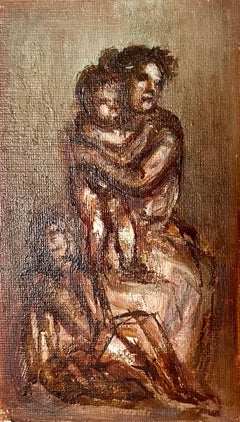
View AllSimka Simkhovitch WPA Artist Oil Painting Family Mother, Kids American Modernist
By Simka Simkhovitch
Located in Surfside, FL
Simka Simkhovitch (Russian/American 1893 - 1949)
This came with a small grouping from the artist's family, some were hand signed some were not.
These were studies for larger paintin...
Category
1930s American Modern Figurative Paintings
Materials
Oil, Board
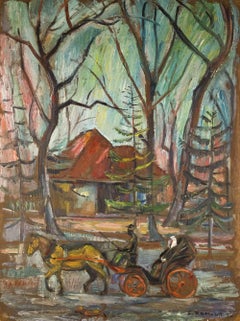
LAKEWOOD N.J., 1936 Modernist Oil Painting, Judaica
By Emanuel Glicenstein Romano
Located in Surfside, FL
Genre: Modern
Subject: Landscape
Medium: Oil
Surface: Board
Country: United States
Dimensions: 30" x 22"
EMANUEL ROMANO
Rome, Italy, b. 1897, d. 1984
Emanuel Glicenstein Romano was born in Rome, September 23, 1897.
His father Henryk Glicenstein was a sculptor and was living in Rome with his wife Helena (born Hirszenberg) when Emanuel was born. His father obtained Italian citizenship and adopted the name Enrico. Emanuel was brought up in Italy, Switzerland, Germany, England and Poland.
In 1926 Emanuel and his father sailed for New York. They briefly visited Chicago. Romano's sister, Beatrice, and mother only joined them in New York years later.
Romano changed his name on his arrival to America and some have erroneously speculated that this was to avoid antisemitic discrimination. In truth, as the son of a highly-regarded artist, Romano changed his name to ensure that any success or recognition he would later attain, would be the result of nothing other than his own merit as an artist, and not on account of his father's fame.
In 1936 Romano was worked for the Federal Art Project creating murals. During and immediately after World War II, Romano created a series of allegorical works depicting graphic holocaust images that were held closely by the family until after his passing. One of these works is now on permanent display in the Florida Holocaust Museum in St. Petersburg Florida.
Emanuel's father died in 1942 in a car accident before they could realize their shared dream of visiting Israel.
In 1944 Romano, having completed his degree at the Pennsylvania Academy of Fine Arts and the Art Institute of Chicago, began teaching at the City College of New York.
Romano moved to Safed, Israel in 1953 and established an art museum in his father's memory, the Glicentein Museum.
COLLECTIONS
Indianapolis Museum of Art
Metropolitan Museum of Art
Boston Fine Arts Museum
Fogg Museum
Musée Nacional de France
Recently his work has been added to the Florida Holocaust Museum collection. His notable works include his holocaust themed allegorical paintings as well as portraits of Marianne Moore, his father and William Carlos...
Category
1930s American Modern Figurative Paintings
Materials
Oil, Board
Oil Painting Woman Portrait French Armenian Modernist Jean Jansem Ecole De Paris
By Jean Jansem
Located in Surfside, FL
Jean Jansem (Hovhannes Semerdjian) 1920-2013
Hand signed upper left corner
Dimensions: 14 X 9.5 Framed 21 X 16.75
Jean Jansem (Hovhannes Semerdjian) 1920-2013
Bursa, Ottoman Turki...
Category
Mid-20th Century Modern Figurative Paintings
Materials
Canvas, Oil
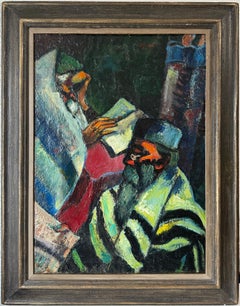
Rare Large Judaica Oil Painting Jewish 2 Rabbis Painting Abram Tromka WPA Artist
By Abram Tromka
Located in Surfside, FL
Abram Tromka ( Polish/ Russian American 1896-1954 )
Hand signed upper center right.
Bears label from Marbella Gallery, New York verso
"Two Men Praying" (Davening)
Dimensions: Sight- ...
Category
1930s American Modern Figurative Paintings
Materials
Oil, Board, Canvas
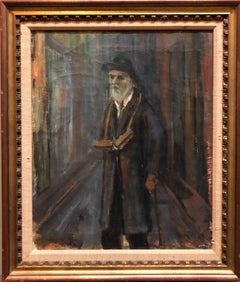
Judaica Oil Painting 1945 Palestine Old Jewish Man Polish Israeli Artist
By Ozer Shabat
Located in Surfside, FL
Ozer Shabat 1978-1901
Ozer Shabbat was an Israeli painter, a resident of Haifa. Belonged to the Palestine Expressionist group of the late 1920s and early 1930s.
Shabbat was born in Wolbrom, Poland. At the end of the First World War he went to Holland for agricultural training in the framework of the HeChalutz movement, prior to his immigration to Palestine. In 1920 he immigrated to Eretz Israel and joined the Hulda group. Later he joined the Merhavia group and there he began painting. Because of his desire to study drawing, he left the group and moved to Jerusalem. In 1921, he wrote articles in the newspaper "HaSadeh" on the subject of agriculture and Dutch cheese.
Ozer Shabath won the first prize in a competition for the design of the Dutch Consulate's Garden in Jerusalem, enabling him to travel to Paris in 1923 to study painting. Until 1925 he studied painting at the Grande Chaumiere Academy in Paris. This year he returned to Eretz Israel and settled in Haifa, where he lived until his death.
In 1928 he participated for the first time in an exhibition of Eretz Israel artists at the Tower of David. Since then he has participated in all the general exhibitions of Israeli artists. In 1934, together with painters Menachem Shemi, Avraham Mohar, Zvi Meirovitch and others, he founded the Haifa Artists' Group. In 1935-36 he toured Europe and visited Italy, France and England. During his visit, he maintained contacts with artists from the Jewish school of Paris.
He has exhibited in several solo exhibitions, represented Israel in exhibitions in Europe and participated in international exhibitions in New York, Johannesburg and Zurich. In 1958 he represented Israel in the Venice Biennale. In 1960, Shabat, together with Elchanan Halpern he represented the Israeli Painters Association at the International Congress of Plastic Arts held in Vienna, Austria . In the 40s and 50s he focused on landscape pictures. However, despite the focus on the Israeli landscape, the approach is universal in the framework of the post-Impressionist painting school. In the 1960s, his approach changed and he turned more to abstraction. The abstract direction gradually evolved. The point of departure of the abstract approach is the architectural landscape, but this view loses its real character and becomes only imaginary: the buildings lose their real character and turn into exclusive geometric areas that are usually set against a dark background. Over time, architecture captured the lion's share of his paintings. Cities like Safed, Jaffa and Jerusalem are the subject of many pictures.
He taught painting and art at the schools of the kibbutzim in Ramat Yochanan and Kfar Yehoshua, in high schools in Haifa and in the IDF and Gordon seminars.
His paintings were purchased and are in the permanent collection of the Bezalel National Museum (now the Israel Museum), Haifa Museum of Art, Haifa Maritime Museum, Acre Municipal Museum.
Select Solo exhibitions
1936 - Nadler Gallery, Haifa.
1943 - The Tel Aviv Museum of Art.
1952 - Artists House, Haifa.
1953 - Bezalel House, Jerusalem.
1955 - Gallery in Geneva, Switzerland.
1955 - The Writers' Club, Haifa.
1959 - Artists House, Haifa.
1960 - Museum of Modern Art, Haifa.
1962 - Museum of Modern Art, Haifa.
1963 - Gallery 220, Tel Aviv.
1968 - The Municipal Museum of Beit Emanuel, Ramat Gan.
1979 - Memorial exhibition marking the first anniversary...
Category
1940s Post-Impressionist Figurative Paintings
Materials
Canvas, Oil
Rare 1946 WWII Judaica Abstract Oil Painting Nahum Tschacbasov WPA Artist Rabbi
By Nahum Tschacbasov
Located in Surfside, FL
Nahum Tschacbasov
Russian American, 1899-1984
Portrait of a Jewish Man, Rabbi
Oil on canvas
Hand signed and dated upper right. Unframed
Canvas 44 x 26.75 in
Provenance: Stuttman Gall...
Category
1970s Abstract Abstract Paintings
Materials
Canvas, Oil

You May Also Like
Manner of Joseph Levin (1894-1979) - Russian School Oil, Portrait of a Women
Located in Corsham, GB
Vibrant colour and confident brushstrokes help depict this expressive portrait of a women. Painted in the manner of Russian artist Joseph Mikhailo...
Category
Mid-20th Century Portrait Paintings
Materials
Oil
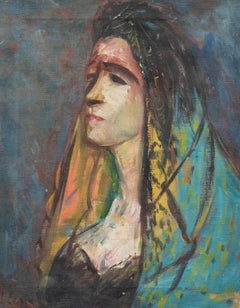
Realist Portrait, Mid-Century Oil On Card, The Babushka. Oil.
Located in Cotignac, FR
Mid-Century realist oil on card of a peasant woman, dated 1963 to the reverse. Artist unknown. Presented in gilt and painted wood frame under glass.
A charming, grounded painting of...
Category
Mid-20th Century Realist Figurative Paintings
Materials
Oil, Cardboard
$781 Sale Price
45% Off
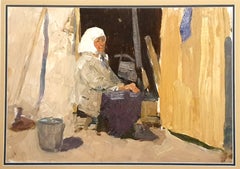
Polish Woman - Impressionist Mid 20th Century Oil Painting by Helena Krajewska
By Helena Malarewicz-Krajewska
Located in Watford, Hertfordshire
Helena Malarewicz-Krajewska (born 14 July 1910 in Biecz , died May 7, 1998 in Warsaw) is a Polish painter, active advocate of socialist realism.
Studied between 1928 and 1929 at the...
Category
1950s Impressionist Figurative Paintings
Materials
Oil, Board
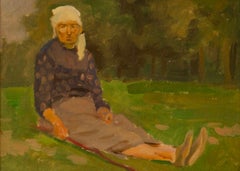
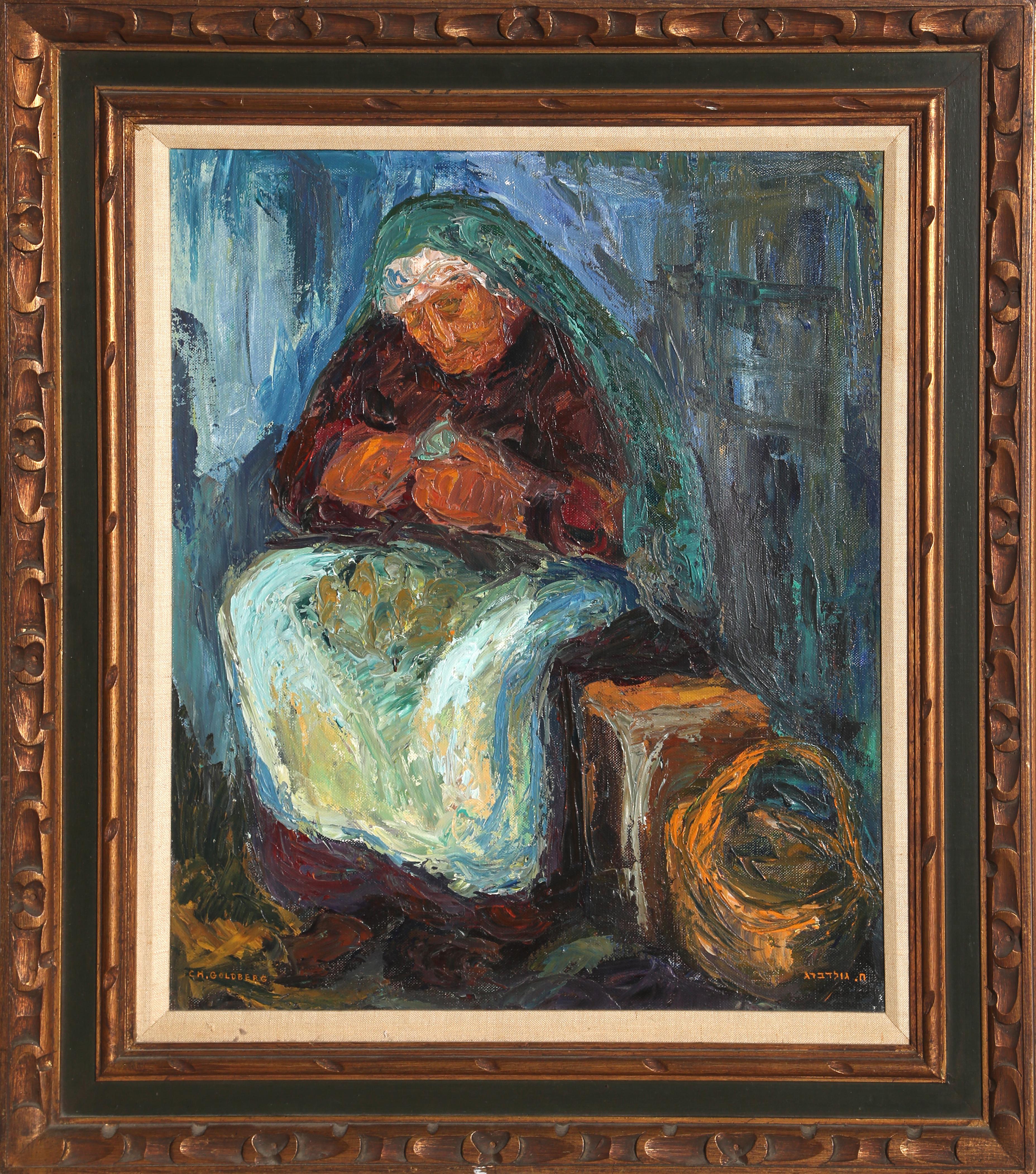
Mother, Oil Painting by Chaim Goldberg
Located in Long Island City, NY
Artist: Chaim Goldberg, Israeli (1917-2004)
Title: Mother
Medium: Oil on Canvas, signed in English lower left and Hebrew lower right
Size: 24 x 20 inche...
Category
1970s Expressionist Portrait Paintings
Materials
Oil, Canvas
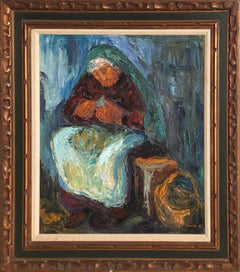
Old Woman - Painting by Francesco Settimj - mid-20th Century
Located in Roma, IT
Oil on wooden table realized by Francesco Settimj in the 1930s.
Painted on both sides, recto and verso.
Good condition.
Category
Mid-20th Century Modern Figurative Paintings
Materials
Oil
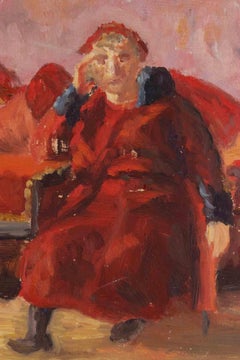
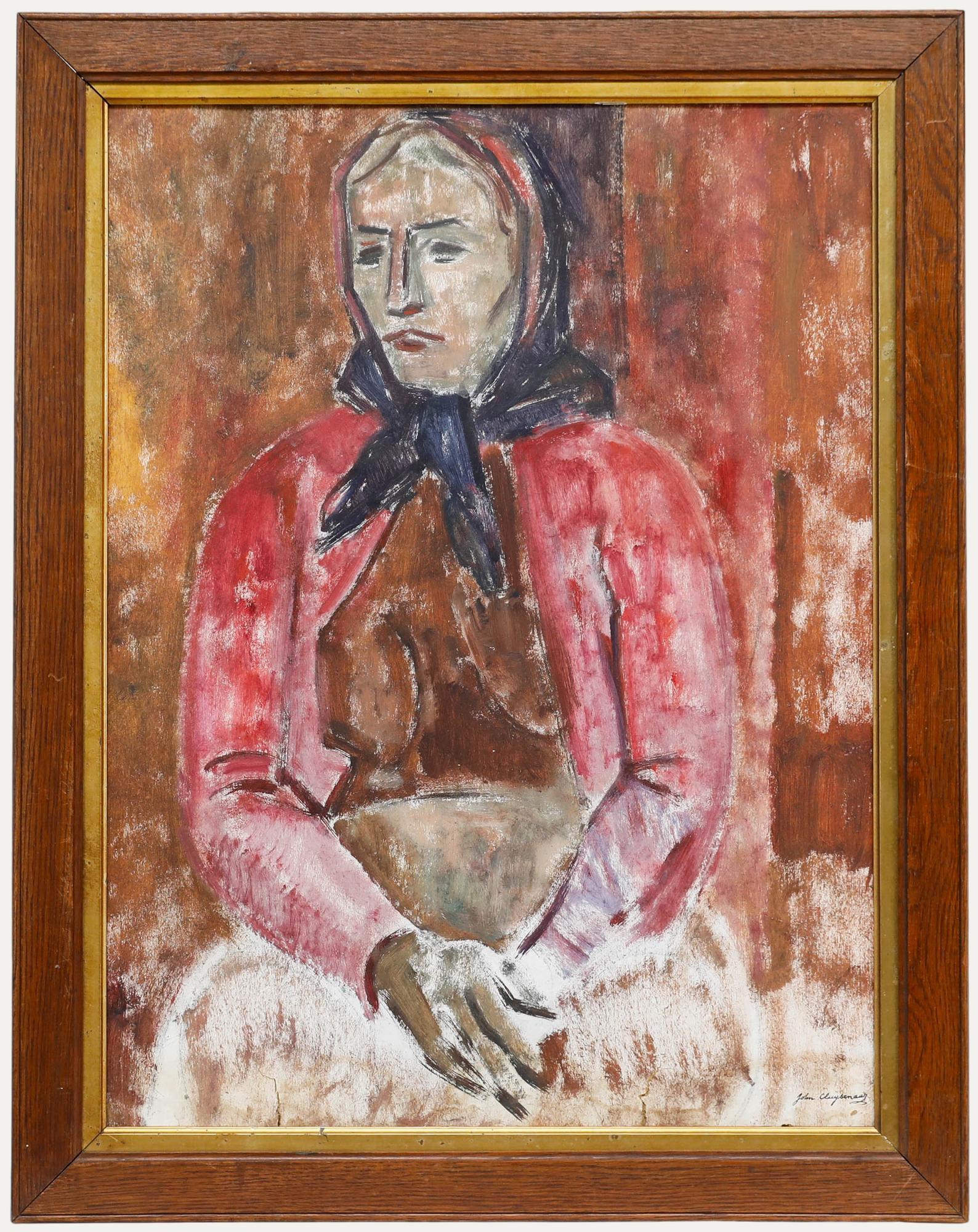
Attrib. John Cluysenaar (1899-1986) - Mid 20th Century Oil, Study of Sybil
Located in Corsham, GB
A sensitive oil study by the artist John Cluysenaar (1899-1986) depicting his wife Sybil Fitzgerald Hewat. Signed to the lower right. Well presented in a wooden frame with a gilt inn...
Category
20th Century Abstract Impressionist Portrait Paintings
Materials
Oil
More Ways To Browse
Soyer Moses
Isaac Soyer
Polish Jewish Art
Jewish Russian Painting
Painting Babushka
Boudoir Painting
Boxing Oil Painting
Bullfight Paintings
Chen Yiching
Christy Brown
Colorful Spanish Art
Couple Dancing Painting
Depression Era Art
Dolly Paintings
Emmanuel Ojebola
Eric Zenner
Football Oil Painting
Framed Tibetan Art