Items Similar to Flemish 17th c., Allegory of war and peace, circa 1630, by Adriaen van Stalbemt
Want more images or videos?
Request additional images or videos from the seller
1 of 13
Adriaen van StalbemtFlemish 17th c., Allegory of war and peace, circa 1630, by Adriaen van Stalbemt1630
1630
$25,935.41
£19,005.89
€21,500
CA$35,595.06
A$37,609.36
CHF 20,229.44
MX$450,311.40
NOK 253,451.23
SEK 232,124.54
DKK 163,756.20
About the Item
Adriaen van Stalbemt (Antwerp, 1580-1662)
Allegory of Peace and War, circa 1620-1630
Oil on oak panel: h. 49.5 cm, l. 73.2cm (19.29 x 28.74 in)
Giltwood frame with laurel leaves, Louis XIII period, 17th century
Framed dimensions: h. 64, l. 92cm (25.2 x 36.22 in)
Our painting has been examined by Dr Klaus Ertz, author of the catalog raisonné of the painter (Adriaen van Stalbemt (1580 - 1662) Oeuvrekatalog der Gemalde und Zeichnungen. Klaus Ertz, Christa Nitze-Ertz. Edited by Luca Verlag Lingen 2018).
The certificate of expertise by Dr Ertz will be handed over to the buyer.
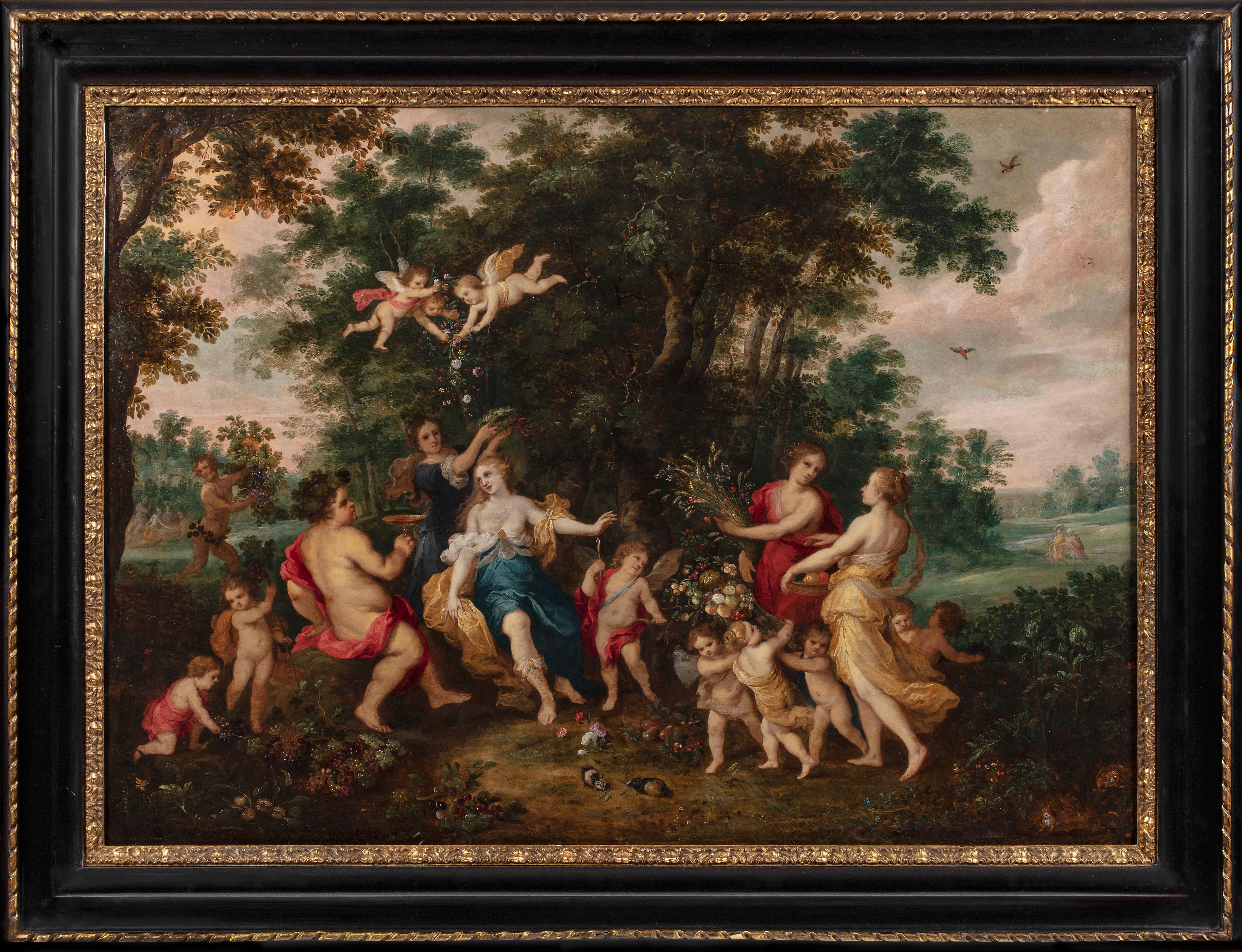
Setting up a complex composition, Adrien Van Stalbemt merges in our work mythological characters like Venus and Cupid, puttis with allegorical symbols associated with war and peace as well as a contemporary pastoral tragicomedy at the time of the painting "The Faithful Shepherd", composed by Giovani Battista Guarini (published 1602)
Thus our table with encrypted design was intended for initiated, erudite and cultivated customers, flattered to recognize the symbolism and decipher the intertwined subjects.
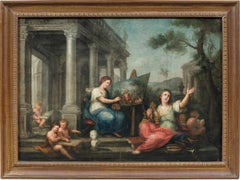
The presence of Venus and Cupid in the center of the painting and in the heart of the verdant landscape encourages us in the first place to approach the subject as purely mythological. However, the puttis who seem to be having fun on each side carry an allegorical message. The putto topped with many snakes, like the head of Medusa, the death mask, the flaming torch, the sword and the handcuffs evoke "war", while the putto holding a white dove announces "peace" . On the right side the puttis have fun blowing soap bubbles and personify the allegory of Vanity (vanity of earthly things, but also the transience of human life).
Finally, the characters of the tragicomedy "Faithful Pastor" also populate this lush landscape.
The couple near the goddess are the shepherd Myrthille and the nymph Amaryllis, Myrthille holds the flaming heart, symbol of their love and their impending marriage (their marriage serves to lift a spell cast by the gods of Arcadia in the poem).
A few scenes in the background, some barely sketched, like a comic book tell us the episodes of the story of the "Faithful Pastor".
The landscape revolves around the characters and serves as their background, but the artist's great skill in handling his brush and using all the shades of green in his palette embellishes our work with intense foliage.
Our work with its outstanding landscape and finely executed figures is a fine example of the art of Adrien Van Stalbemt.
Faithful to his reputation as one of the most accomplished Flemish landscape painters of his time, one of the best followers of Jan Brueghel the Elder, the painter impresses with his figurative virtuosity and the subtlety of his imagination.
Adriaen van Stalbemt
Adriaen van Stalbemt spent his youth in Middelburg before returning to his native Antwerp, where he became master of the Guild of Saint Luke around 1609-1610. His meticulous landscape art owes much to that of Jan Brueghel the Elder, with whom he collaborated regularly, creating the figures within the landscapes of the master. Adriaen Van Stalbemt is both a landscape painter as well as a painter of figures. the artist being one of the rare painters of his time to master several genres of painting. Like Jan Brueghel, Stalbemt's production is mainly made up of landscapes, plains or undergrowth sheltering religious or mythological episodes.
- Creator:Adriaen van Stalbemt (1580 - 1662)
- Creation Year:1630
- Dimensions:Height: 25.2 in (64.01 cm)Width: 36.22 in (92 cm)
- Medium:
- Movement Style:
- Period:Early 17th Century
- Condition:
- Gallery Location:PARIS, FR
- Reference Number:1stDibs: LU2433213540252
About the Seller
No Reviews Yet
Vetted Professional Seller
Every seller passes strict standards for authenticity and reliability
1stDibs seller since 2023
17 sales on 1stDibs
- ShippingRetrieving quote...Shipping from: PARIS, France
- Return Policy
More From This Seller
View AllAllegory of Summer, workshop of Hendrick Van Balen 17th c. Antwerp school
By Hendrick van Balen
Located in PARIS, FR
Allegory of summer, personified by Ceres
Workshop of Hendrick Van Balen
Antwerp School, early 17th century.
Oil on copper,
Dimensions: h. 52 cm, l. 40cm
Antic giltwood frame
Framed dimensions: h. 74 cm, l. 60cm
Very good condition
Our delicately painted work is part of the pictorial tradition that is both allegorical and mythological in vogue in Antwerp, whose leaders are Jan Brueghel the Younger and Hendrick Van Balen. Numerous works emerging from their workshops illustrate mythological subjects, the seasons, the elements, the senses or intertwining the lush landscapes, animals and gods of Olympus.
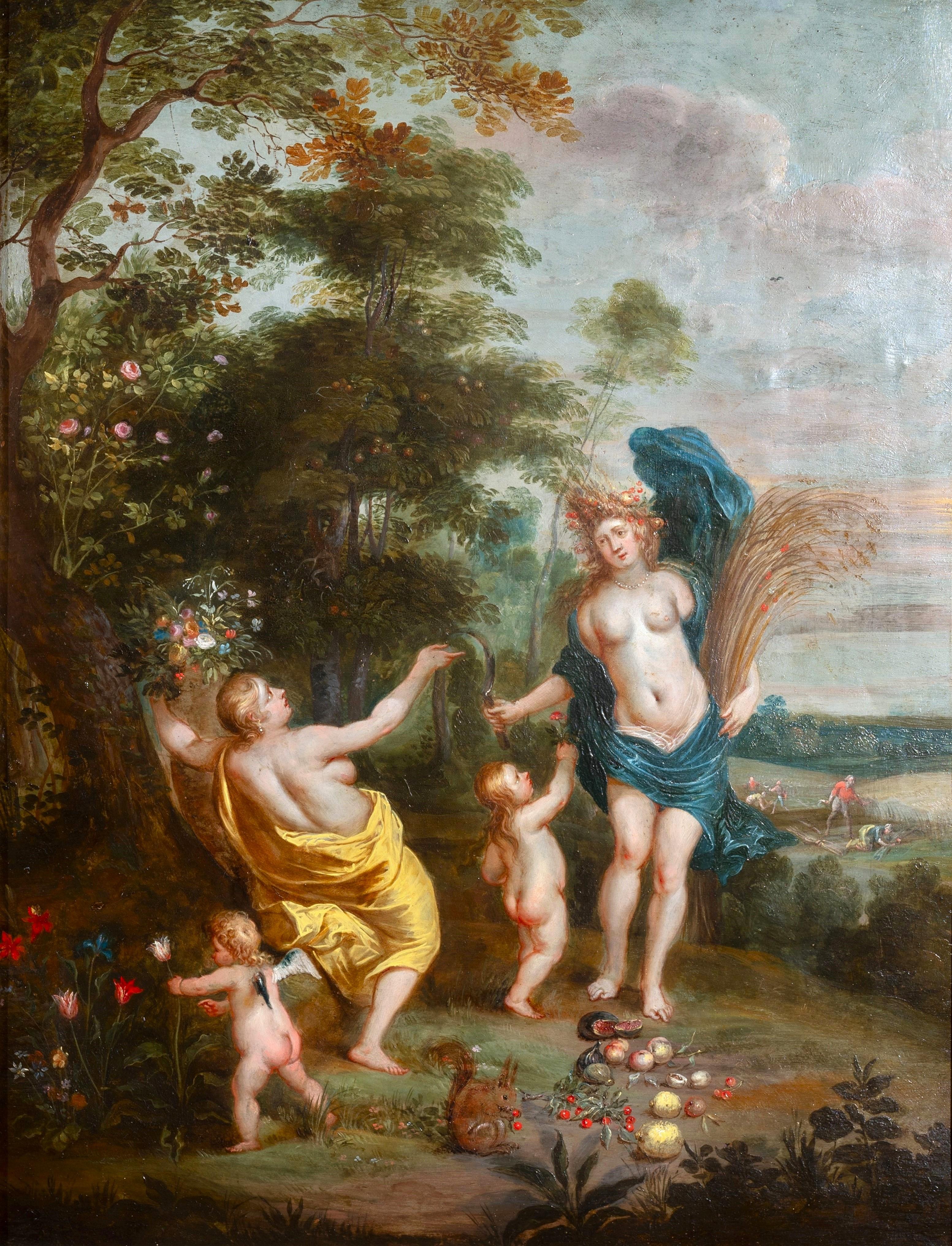
At the heart of a green landscape dominated in its center by a generous apple tree, the beautiful Ceres, partially dressed in a large blue drape, is wearing a crown of ears of wheat, her symbol of the goddess of the earth and harvests. She holds the sickle in her right hand and carries sheaves of wheat. To her right a nymph holds the cornucopia while puttis pick and offer flowers.
In the foreground are the summer fruits: figs, cherries, apples and lemons. A squirrel munching on cherries symbolizes toil and foresight, themes that are echoed in the work of the harvesters on the wheat fields in the background.
The background is composed of vegetation, on the right a wild rose bush with its branches erect against a tree trunk, in the center of the trees with silvery green foliage.
Our painter, a student of Hendrick Van Balen, finds his inspiration in the works of the master such as this nymph in yellow drapery seen from behind, one of the figures which accompanies many of the master's paintings. The elegant gestures, the flesh...The indisputable influence of Jan Brueghel the Younger is revealed in the treatment of trees and flowers, wild roses, tulips as well as in the still life with the squirrel in the foreground.
The craze for this type of virtuoso painting where the mythological figures are only a pretext to better illustrate the landscape and plant species surrounding them, then generated orders from all over Europe.
Hendrick Van Balen, Flemish painter, born and died in Antwerp (1575-1632). A student of Adam Van Noort, he entered the guild of Saint-Luc in 1593, later trained in Italy and was Van Dyck's first master. He often painted small characters taken from scenes from the Bible or classical mythology, on paintings in which Josse de Momper...
Category
Early 17th Century Old Masters Figurative Paintings
Materials
Copper

The Rape of Europa, signed Peter Sion (1624-1695), Antwerp, 17th century
Located in PARIS, FR
The Rape of Europa
By Peter Sion (Antwerp, 1624-1695)
Signed in the lower right corner P. Sion
17th century Antwerp School
Oil on copper, dim. h. 53 cm, w. 45 cm
Moulded and ebonized...
Category
17th Century Old Masters Figurative Paintings
Materials
Oak, Oil, Wood Panel
17th c. Antwerp studio of J. Brueghel
H. van Balen - The Virgin with Child
Located in PARIS, FR
Workshop of Jan Brueghel the Younger (1601-1678) & Hendrick van Balen (Antwerp, 1575 – 1632)
17th century Antwerp School
The Virgin and Child ...
Category
1630s Old Masters Figurative Paintings
Materials
Oil
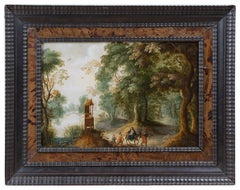
17th c. Flemish - Landscape with Flight to Egypt - Antwerp circa 1630
Located in PARIS, FR
LANDSCAPE WITH FLIGHT TO EGYPT,
JASPER VAN DER LANEN (ANTWERP, 1585 - 1634)
17TH CENTURY FLEMISH SCHOOL
ANTWERP CIRCA 1630
Oil on copper, dimensions: h. 10.23 in, w. 14.96 in
Flemish style frame in ebonized wood adorned with wavy moldings and wood veneer.
Framed dimensions: h. 17.32 in, w. 21.65 in
Provenance:
Philips auction...
Category
Early 17th Century Old Masters Figurative Paintings
Materials
Copper
$9,710 Sale Price
30% Off
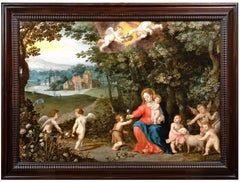
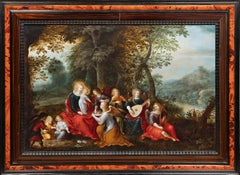
Madonna and Child with Angels, attributed to Louis de Caullery, Flemish, 17th c.
Located in PARIS, FR
Madonna and Child with Angels
Attributed to Louis de Caullery (1565 -1622) for figures & Abraham Govaerts (1589 - 1626) for landscape
Not signed
17th century Antwerp school, circa 16...
Category
Early 17th Century Old Masters Figurative Paintings
Materials
Copper
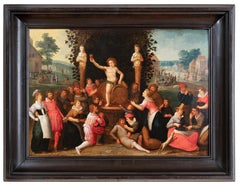
Allegory of Autumn with Bacchus, studio of Louis de Caullery, 17th c. Antwerp
Located in PARIS, FR
Allegory of Autumn with worship of Bacchus
Studio of Louis de Caullery (Caullery, vers 1580 - Anvers, 1621/22)
17th century Antwerp school
Not signed
Oil on oak panel
Dimensions : p...
Category
Early 17th Century Old Masters Figurative Paintings
Materials
Oil, Wood Panel
You May Also Like
Scène mythologique (entourage de) Hendrick van Balen (1575–1632)
Located in GOUVIEUX, FR
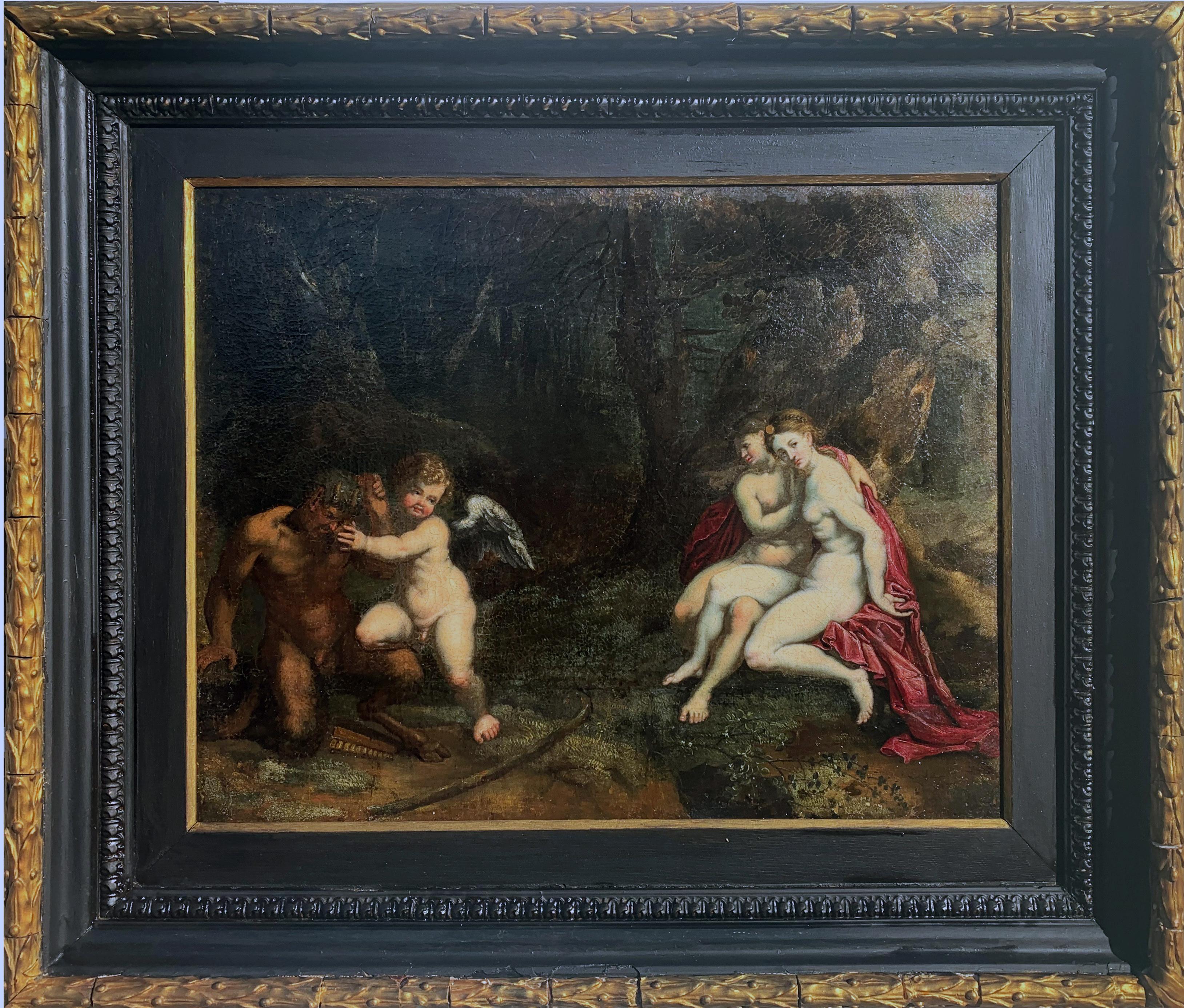
Circle of Hendrick van Balen (1575–1632) – Mythological Scene: Venus, Cupid, and a Satyr
Oil on canvas – Dimensions: 53 x 42 cm (without frame), 74 x 63 cm (with frame)
Unsigned
From...
Category
17th Century Flemish School Figurative Paintings
Materials
Oil
Allegory of Abundance
Located in New York, NY
Painted in collaboration with Hendrick van Balen (Antwerp, 1575 – 1632).
Provenance: Private Collection, Uruguay, since the 1930s.
The eldest son of Jan Br...
Category
17th Century Old Masters Paintings
Materials
Copper
17th Century Oil on Canvas Flemish Mythological Antique Painting, 1660
Located in Vicoforte, Piedmont
A splendid 17th century Flemish painting. Oil on canvas artwork depicting a mythological subject of great charm, Meleager offers the boar's head to Atalanta. The Fates had predicted ...
Category
Antique 1660s Dutch Paintings
Materials
Canvas
$8,685 Sale Price
20% Off
Fine 17th Century Dutch Golden Age Old Master Oil Figures in Classical Landscape
Located in Cirencester, Gloucestershire
Figures in Classical Landscape
Dutch School, 17th century
unsigned, as is typical of the period
oil on canvas, framed
inscribed verso to label
framed: 23 x 27 inches
canvas : 20 x 24...
Category
17th Century Old Masters Landscape Paintings
Materials
Oil
Rococò French Painter - 18th century figure painting - Allegory of the Arts
Located in Varmo, IT
French Master (18th century) - Allegory of the Arts.
53 x 72 cm unframed, 63 x 83 cm with frame.
Antique oil painting on canvas, in a gilded wooden frame (not signed).
Condition r...
Category
Late 18th Century Rococo Landscape Paintings
Materials
Canvas, Oil
$2,677 Sale Price
26% Off
Flemish 17th, Orpheus and Animals, Large Decorative Wall Old Master Painting
Located in Greven, DE
Flemish school, 17th century
Orpheus and the animals
Oil on canvas, 146,5 x 217 cm
Provenance: South German private collection.
On an impressive, room-filling format, this painting depicts "Orpheus and the Animals."
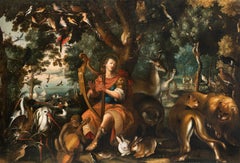
The harp-playing Orpheus sits centrally in front of a tree whose trunk bifurcates above his head. This central tree frames with its crown the scenery towards the horizon and at the same time offers through branches the possibility for many birds to find space. The left half of the picture is characterized by a seascape, at the edge of which the ruins of a castle can be seen deep in the background. This seascape, framed by mountains on the horizon, is the only area where sky can be seen. On this side, waterfowl such as storks, swans and ducks can be seen. In the right half, the viewer looks into a deep European forest. On this right side, more land animals can be found, such as deer, rabbits and lions, among others. Orpheus wears opulent red and gold trimmed clothing, under his blue breastplate we see a white shirt. His feet are adorned by elaborate sandals. His head is surrounded by a radiant laurel wreath ("poeta laureatus"). The young man is clearly identifiable as the singer and poet of Greek mythology, Orpheus, by his harp, the laurel wreath and the animals surrounding him.
Orpheus was one of the Argonauts who, under Jason, was searching for the Golden Fleece. He sang so beautifully that he even conquered the angry sea and enemies by the magic of his lyre. During the journey, Orpheus is said to have drowned out even the sirens with his singing. It is said that he was the greatest of all poets and charmed people, animals, stones and trees with his singing.
In total, 51 birds and 37 different species are depicted in the painting. The animals are mostly depicted in great detail and, except for a few, can be identified. Mainly European species of animals are shown. Exceptions are the ostrich-like nandu peeking out from behind the deer, as well as the large parrot on the upper left, and the two lions. Similar is the case for the large animal directly behind Orpheus on the right. The shape of the head suggests an arctic fox from the polar regions, even though the body is much too large. The arctic fox was first described in 1555 by Olaus Magnus. However, it could also be a depiction of a brown or black bear.
An unusual detail is the animal, which is relatively isolated in the right background and looks to the left. It is not clearly identifiable, but it shows certain similarities with the Australian kangaroo. This was first described by Vespucci in 1500 and further by Francisco Pelsaert in 1629. If it is indeed a kangaroo, this would be one of the earliest surviving pictorial representations.
In this painting, Orpheus is accompanied by a small monkey playing a viola da gamba. This is an iconographic peculiarity. In general, this painting has some peculiarities compared to other paintings with "Orpheus and the animals". The central positioning of Orpheus is quite common, but he usually holds a lyre and is dressed in an antique style, but not as opulently. The choice of animals is also remarkable: European animals in particular are seen, hardly any exotic features, such as camels or elephants.
The two lions in the right foreground are a quotation from Peter Paul Rubens and his depiction of "Daniel in the Lion's Den", which was realized in an engraving.
The present painting can be classified as belonging to the Flemish School of the 17th century on the basis of its painterly and compositional conception. From the circle of Jan Brueghel the Younger are numerous representations of this Orpheus - theme, which take it as an opportunity to show as many exotic animals. There are also echoes of Spanish painters such as Juan de Arellano...
Category
17th Century Baroque Landscape Paintings
Materials
Canvas, Oil