Items Similar to The Virgin and Child with the Infant Baptist
Want more images or videos?
Request additional images or videos from the seller
1 of 13
The Virgin and Child with the Infant BaptistMid-16th century
Mid-16th century
$11,670.01
$21,967.0846% Off
£8,500
£16,00046% Off
€9,991.17
€18,806.9146% Off
CA$16,180.99
CA$30,458.3446% Off
A$17,401.30
A$32,755.3946% Off
CHF 9,304.51
CHF 17,514.3746% Off
MX$209,854.76
MX$395,020.7346% Off
NOK 117,661.90
NOK 221,481.2246% Off
SEK 107,205.14
SEK 201,797.9146% Off
DKK 74,656.21
DKK 140,529.3446% Off
About the Item
Florentine, mid-16th century
Circle of Tomaso D’Antonio Manzuoli, known as Maso da San Friano (1536-1571)
The Virgin and Child with the Infant Baptist
After Andrea del Sarto (1486-1531)
Oil on poplar panel
In a 19th century Dutch Metal frame of composite Renaissance design
78.4 x 60 cm.; (within frame) 104.1 x 87.4 cm.
Provenance:
By tradition the Convento di San Francesco a Montecarlo, San Giovanni Valdarno;
Acquired by Jeremy Peyton-Jones (d. 1930), of 78 Park Street, Grosvenor Square, London, c. 1920;
Thence by descent until 2024;
Private collection, United Kingdom.
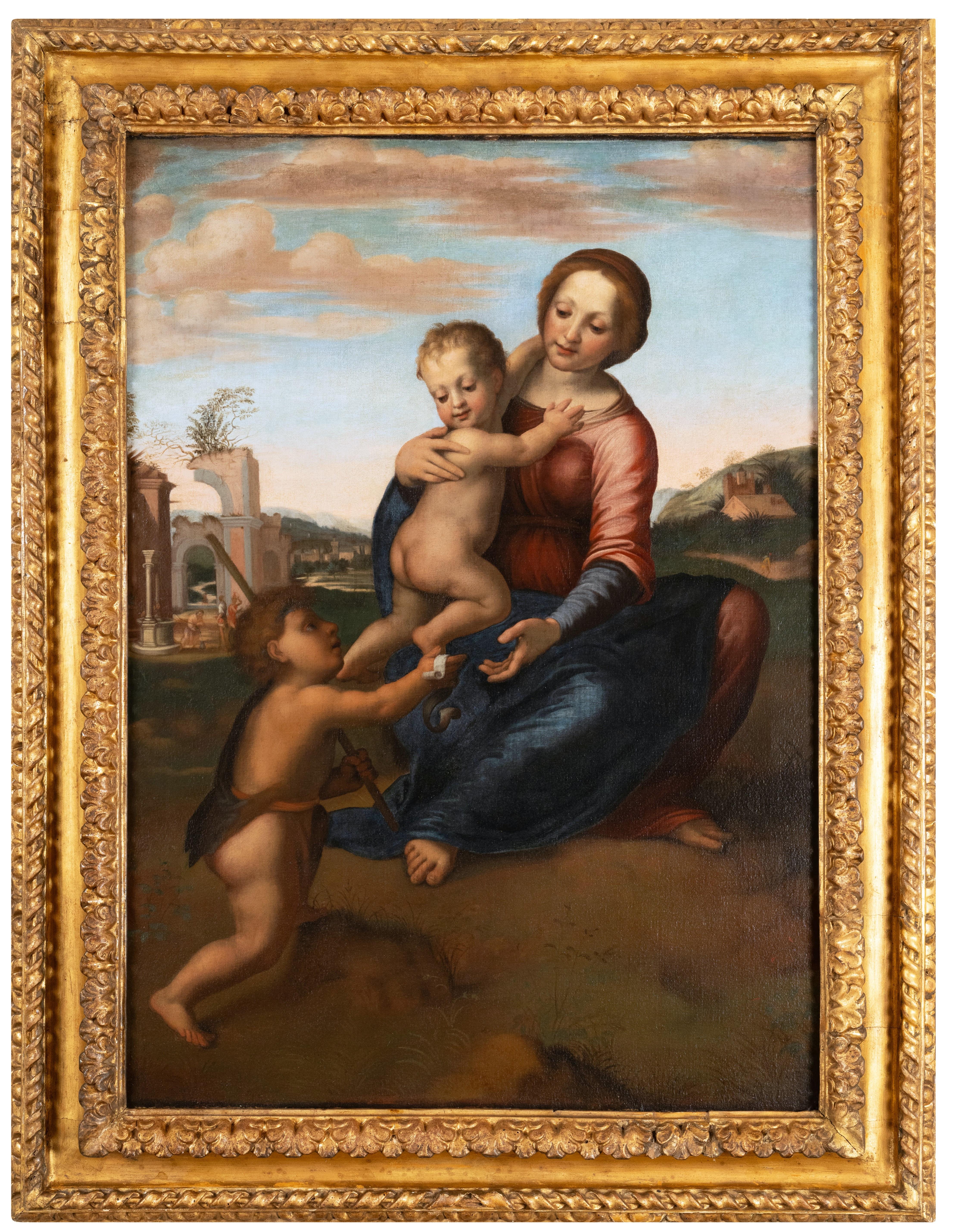
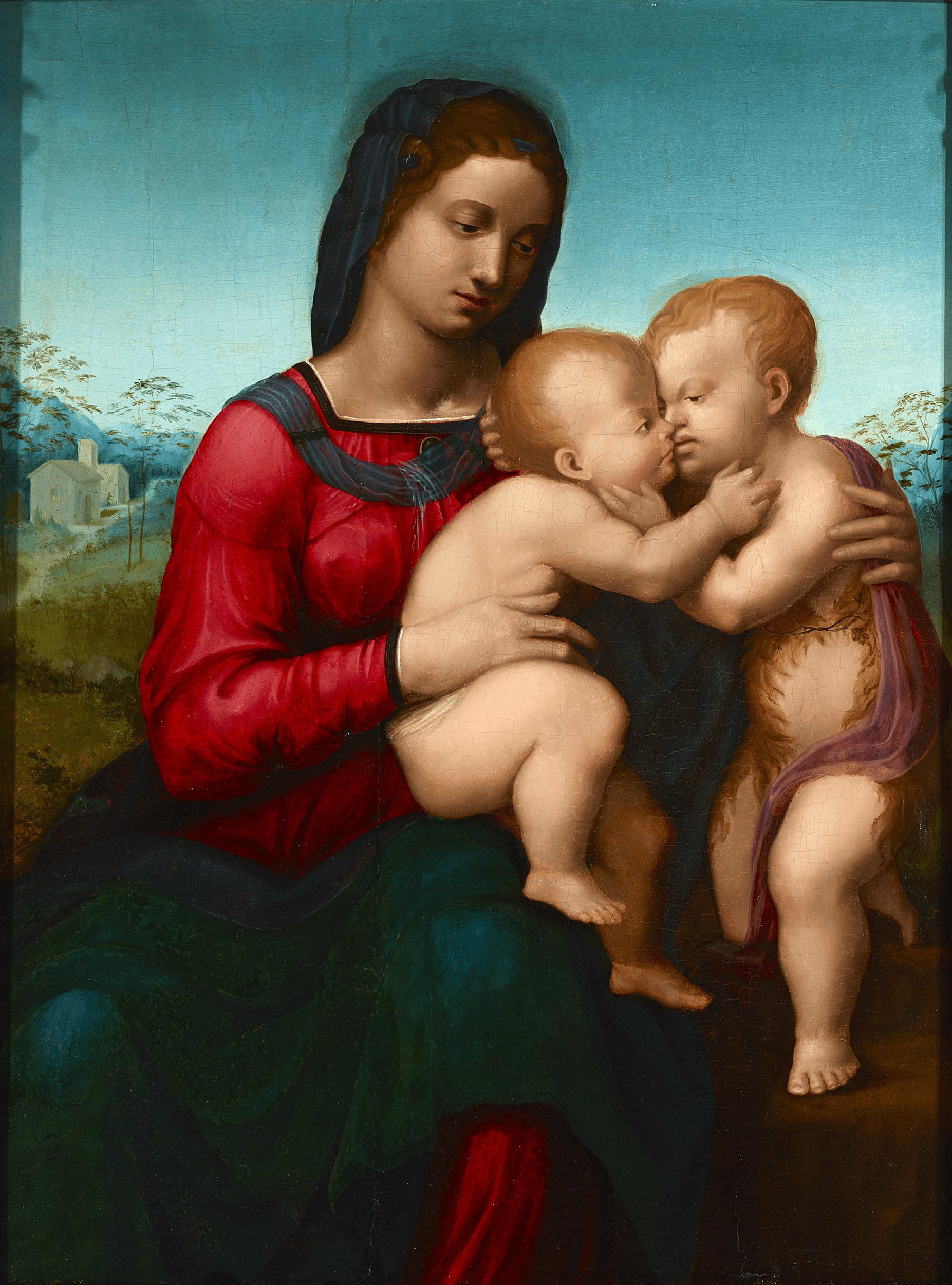
Resting at the base of a tree, the robed Virgin supports the naked Christ Child, who standing with his left hand raised blesses the infant John The Baptist as two attending angels look on. The Virgin appears as a Madonna of Humility, kneeling on one leg and bearing a foot from the folds of her robes. The infant Baptist is clad in a garment of camel tied around the waist with a leather girdle, an attire worn by the adult Baptist in the desert (Matthew 3:4). He holds a cane crucifix in his right hand, raised in acknowledgement of the Virgin. The golden outer rims of two translucent haloes crown the infant Christ and Baptist. The upper right of the panel is populated by coloured vegetation, which expands to a rocky landscape beyond under a deep sky. The Christ Child is distinguished by a greater refinement of form, his torso and legs rendered sensitively with an attractive colouring and marvellous fluidity, extending into the robes of the Virgin underfoot. The robes of the Virgin appear somewhat translucent, and the thinner pigment reveals traces of the monochromatic imprimitura below.
The present work derives from a composition by Andrea del Sarto in the Wallace Collection, dating from c. 1517-19 (P9). The Wallace Madonna measures some 10 inches larger in scale, with a broader palette and the inclusion of a scene from the Fioretti di San Francesco, which shows St Francis kneeling before an angel who plays the viol upon a cloud. This variation on scenes of the infant Christ and Baptist proved particularly successful for del Sarto: ‘judging by the large number of copies or versions that were taken from it, this painting must have enjoyed exceptional success […] perhaps in virtue of the particularity of the subject which certainly underlies a coded sacred allegory’ (Natali, p. 72).
The present work is considerably earlier than later copies of the Wallace Madonna, many of which were made on canvas in the 19th century. The present work is on a typically Italianate support of thick poplar wood, with three tapered or ‘dovetailed’ strengthening bars driven alternately to the back within corresponding grooves. However, the work is distinguished from the Wallace Madonna by material and stylistic alterations, such as the inclusion of a modest cane crucifix in the hand of the Baptist. Semi-translucent against the Virgin’s robes, the addition emphasises the immediately recognisable iconography of the Saint, though may have been inserted by a later hand. Further alterations include the inclusion of a halo above the infant Baptist, and more conspicuously the conversion of the rocky mountainside behind the figures to that of a broad tree trunk. The scene from the Fioretti in del Sarto’s composition is omitted.
Del Sarto operated a productive Florentine workshop with a large number of pupils who studied by copying the master concurrently. His influence was outstanding, and he was for generations one of the most highly copied artists in Florence. Professor Antonio Natali, an author of authoritative studies on the artist, has suggested that the present version was produced by a Florentine painter working in the second half of the 16th century. It was likely completed by an artist belonging to the generation that succeeded del Sarto after his death in 1531, and commissioned by a patron who wished to have something of the master. Natali notes a similarity in hand to Tomaso D’Antonio Manzuoli, known as Maso da San Friano, whose characterful (even impish) treatment of putti is close to that of the attending angels seen here (see Fall of Icarus, Palazzo Vecchio, Florence). A similar stylisation is that of Carlo Portelli (d. 1574), San Friano’s teacher. The elegance of the Christ Child’s legs is perhaps more pleasing than the awkward musculature of del Sarto’s own composition, and suggests an artist of considerable competence. The less inspired rendering of the attending angels’ faces might indicate numerous hands at work, perhaps the product of studio collaboration.
The work was purportedly in the collection of the Convento di San Francesco a Montecarlo, San Giovanni Valdarno, constructed in the period 1428-1438 some 30 miles outside Florence. The convent once contained important works including Fra Angelico’s masterpiece Annunciation of San Giovanni Valdarno, and Neri di Bicci’s Coronation of the Virgin. A copy of the now-lost altarpiece by del Sarto, The Madonna of Sant’Ambrogio, is said to have hung in the Basilica di Santa Maria delle Grazie, 3 miles from the Convent (Shearman). That the town derives both its name and coat of arms from Saint John the Baptist, the significance of this association is not without bearing on the present work, which depicts the infant Saint.
The work was acquired more recently, perhaps in Scotland in c. 1920, by Jeremy Peyton-Jones, an art dealer specialising in early paintings. The Peyton-Jones family’s important collection included del Sarto’s autograph work The Virgin and Child. An advertisement printed in the September 1931 issue of The Burlington Magazine illustrates the painting alongside Peyton-Jones’ address of 78 Park Street, Grosvenor Square, London. Following the death of her husband, Margaret Peyton-Jones oversaw the acquisition of the masterpiece by the National Gallery of Canada, Ottawa, in 1938. The couple were related to the Grosvenor family through Margaret, a patrilineal great-granddaughter of the 1st Marquess of Westminster. The Grosvenor family owned numerous works by del Sarto and his workshop, and it is feasible that the present work might have a further historical relation to the Grosvenors.
A number of inscriptions and labels verso record the known provenance of the work. A label to the centre of the panel reads, ‘From the Convent of San Giovanni in Val D’Arno’, and another partial label of the same hand, to the lower left of the frame reads, ‘From the Convent of S. Giovanni / in Val […] / Purchased […]’. An old photographic reproduction of the Wallace Madonna is affixed above. A small label of a different hand is inscribed ‘Bowring’ to the bottom centre of the frame.
I am grateful to Professor Antonio Natali for his assistance in cataloguing the present work, and to Ian Tyers for his expertise in wood analysis.
Bibliography and further reading:
Brooks, Julian, Denise Allen, and Xavier F. Salomon, Andrea del Sarto: The Renaissance Workshop in Action (Los Angeles: The J. Paul Getty Museum, 2015)
Natali, Antonio, and Alessandro Cecchi, Andrea del Sarto: Catalogo Completo (Florence: Cantini, 1989)
Peyton-Jones, Jeremy, in The Burlington Magazine, September 1931, vol. 59, No. 342, p. 22
Shearman, John, ‘A Lost Altar-Piece by Andrea del Sarto “The Madonna of S. Ambrogio”’, in The Burlington Magazine, June 1961, vol. 103, no. 699, pp. 225-230
Shearman, John, Andrea del Sarto, 2 vols. (Oxford: Clarendon Press, 1965)
- Creation Year:Mid-16th century
- Dimensions:Height: 37.01 in (94 cm)Width: 34.41 in (87.4 cm)Depth: 5.91 in (15 cm)
- Medium:
- Movement Style:
- After:Andrea Del Sarto (1486 - 1530, Italian)
- Period:
- Condition:The work is in good and stable condition. Historic woodworm marks the panel throughout verso, with vertical bands of craquelure recto concentrated in the central section, where the panel has warped horizontally, commensurate of poplar of this age.
- Gallery Location:Henley-on-Thames, GB
- Reference Number:1stDibs: LU2820215758012
About the Seller
No Reviews Yet
Vetted Professional Seller
Every seller passes strict standards for authenticity and reliability
Established in 2024
1stDibs seller since 2024
- ShippingRetrieving quote...Shipping from: Henley-on-Thames, United Kingdom
- Return Policy
More From This Seller
View AllPortrait of an artistic Gentleman, c. 1720s
By John Vanderbank
Located in Henley-on-Thames, England
John Vanderbank (London 1694 - London 1739)
Portrait of an artistic Gentleman, c. 1720s
Three-quarter-length, wearing a turban
Oil on canvas
125.5 x 101.7 cm.; (within frame) 145.6...
Category
1720s Old Masters Portrait Paintings
Materials
Oil
Portrait of a girl, possibly Dorothy Bigg (née Wither) (1661-1717), c. 1674
By Gerard Soest
Located in Henley-on-Thames, England
Gerard Soest (c. 1600-1681)
Portrait of a girl, possibly Dorothy Bigg (née Wither) (1661-1717), c. 1674
Half-length, wearing natural pearl and gemstone jewellery
Oil on canvas
In...
Category
1670s Old Masters Portrait Paintings
Materials
Oil
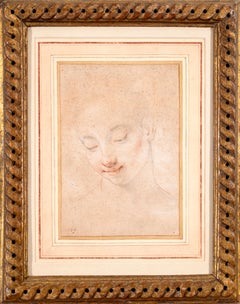
Portrait study of a female head, gazing downwards
Located in Henley-on-Thames, England
Giovanni Battista Vanni (1599-1660), c. 1629
Portrait study of a female head, gazing downwards
Black chalk and sanguine on laid paper, within partial red ink framing lines (inscribed...
Category
1620s Baroque Portrait Drawings and Watercolors
Materials
Chalk
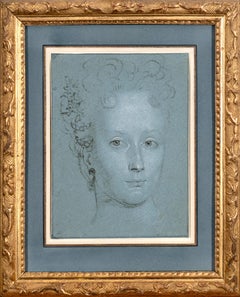
Portrait study of a Lady, wearing precious stones and pearls
Located in Henley-on-Thames, England
Adriaen van der Werff (1659-1722) (attrib.)
Portrait study of a Lady, wearing precious stones and pearls
Black and white chalk, heightened with white, on blue paper
Inscribed verso, ...
Category
17th Century Rococo Portrait Drawings and Watercolors
Materials
Chalk
Cinder
Located in Henley-on-Thames, England
Joel Tomlin (b. 1969)
Cinder, 2004
Oil on linen
Signed and titled verso
183 x 157 cm.
Provenance:
Joel Tomlin;
MW Projects, London, 2004;
Permanent Collection, Saatchi Gallery;
Chri...
Category
Early 2000s Contemporary Landscape Paintings
Materials
Oil

$3,569 Sale Price
60% Off
Portrait of an Arab, with pyramids beyond
Located in Henley-on-Thames, England
Central European School, second half 19th century
Portrait of an Arab, with pyramids beyond
Oil on canvas
66.3 x 55.2 cm.; (within frame) 86.9 x 69.9 cm.
Unsigned
Provenance:
Privat...
Category
Mid-19th Century Portrait Paintings
Materials
Oil

You May Also Like
17th century Italian school, The Virgin and Child with Saint John the Baptist
Located in PARIS, FR
17th century Italian School
The Virgin and Child with Saint John the Baptist
Oil on canvas
Dimensions: h. 106 cm, l. 77 cm
Important 17th century Italian carved giltwood frame
Fram...
Category
17th Century Old Masters Figurative Paintings
Materials
Canvas, Oil
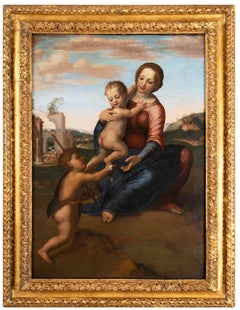
Madonna with Holy Child and St. John
Located in Fredericksburg, VA
Madonna with Holy Child and St. John is a masterful depiction of a tender religious scene, capturing the sacred relationship between the Virgin Mary, the infant Jesus, and St. John t...
Category
17th Century Old Masters Portrait Paintings
Materials
Wood, Oil
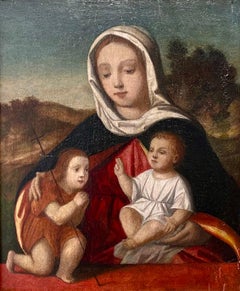
Madonna Child Del Sarto Paint Oil on table 16th Century Old master
Located in Riva del Garda, IT
Madonna and Child Workshop of Andrea del Sarto, pseudonym of Andrea d'Agnolo di Francesco (Florence 1486 - 1530)
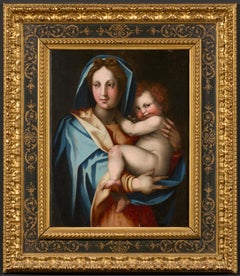
Attributable to Jacopo di Giovanni di Francesco, known as Jacone (...
Category
16th Century Old Masters Paintings
Materials
Oil
$24,161 Sale Price
20% Off
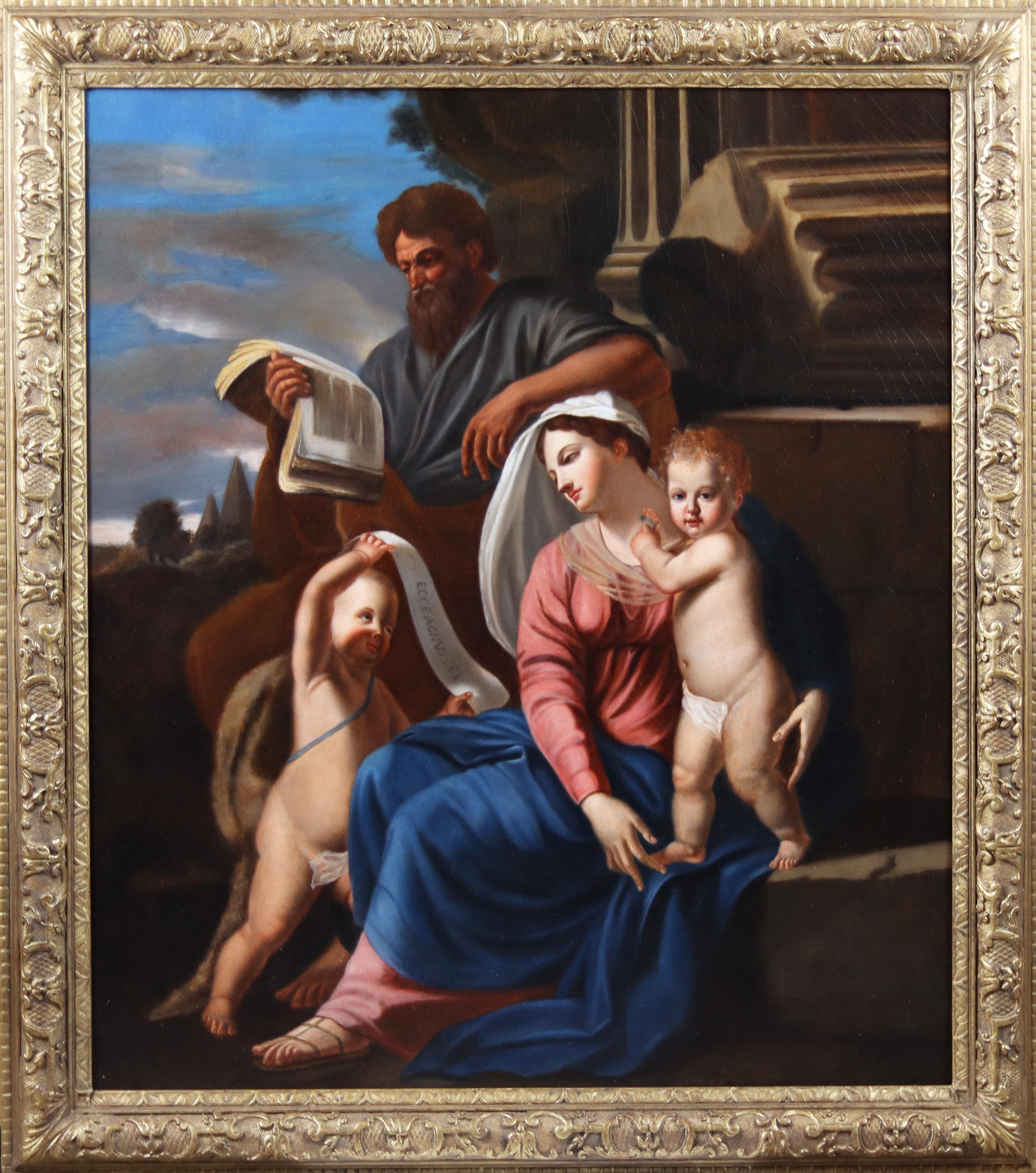
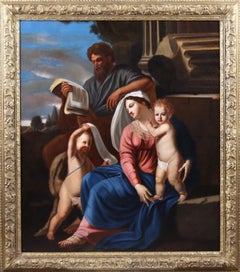
The Holy Family with the Infant Saint John the Baptist
Located in West Sussex, GB
Manner of Nicolas Poussin (1594-1665) French
The Holy Family with the Infant Saint John the Baptist
Oil on canvas: 32 x 27 ½ in. Frame: 37 x 33 in.
This fabulous and well execut...
Category
Mid-17th Century Baroque Figurative Paintings
Materials
Oil
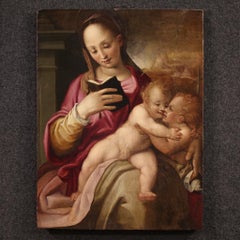
16th Century Oil on Panel Italian Painting Madonna and Child with Saint John
Located in Vicoforte, IT
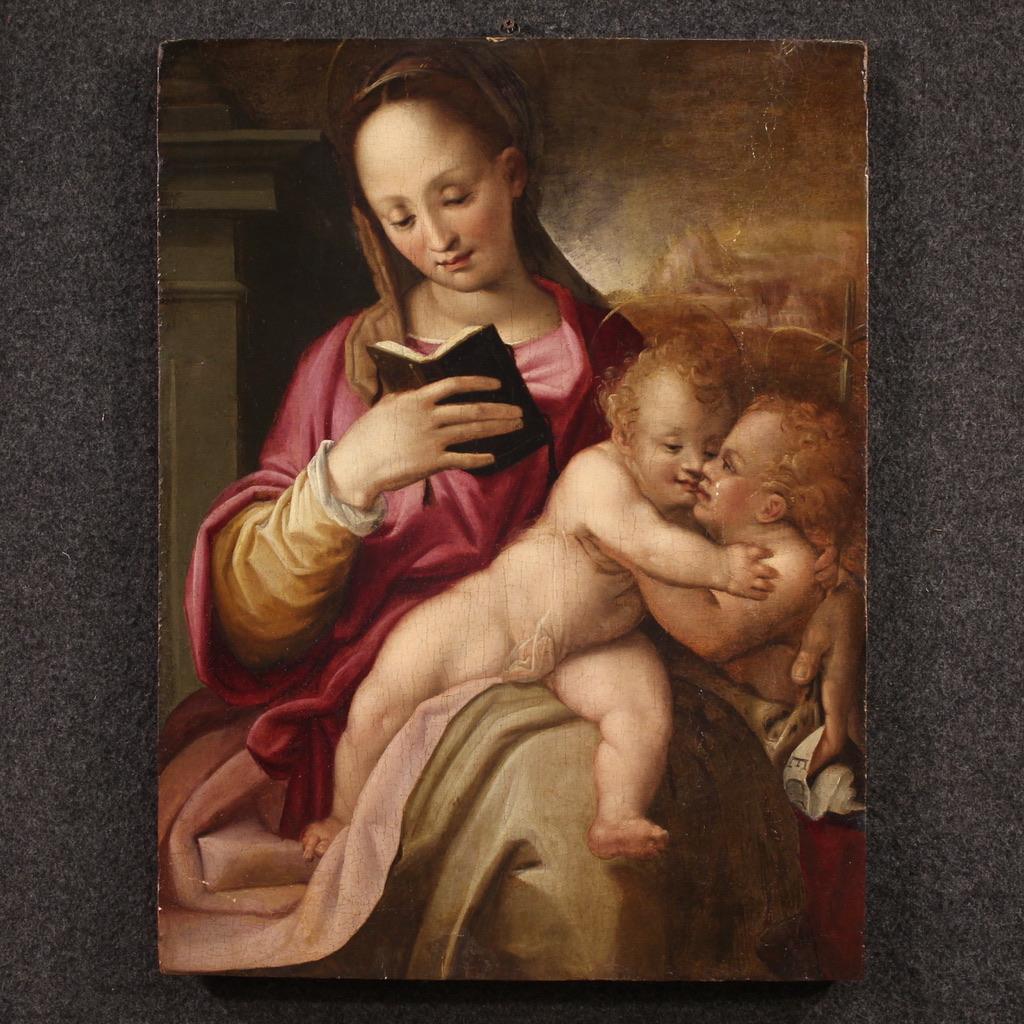
Antique 16th-century Italian painting. Oil on panel artwork depicting a Madonna and Child with the young Saint John, of extraordinary pictorial quality. The Virgin is intent on readi...
Category
16th Century Figurative Paintings
Materials
Wood, Oil
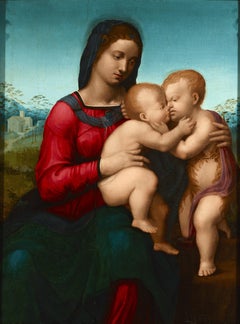
Virgin and Child with the Infant Saint John
By Domenico Puligo
Located in New Orleans, LA
A masterful example of Italian Mannerist painting, this exceptional panel was composed by the renowned Florentine painter Domenico Puligo. Alongside Jacopo Pontormo and Rosso Fiorentino, Puligo is remembered as one of the foremost figures of the Mannerist movement that rose to prominence during the 16th century in Florence. This panel of the Virgin Mary with the Christ child and Saint John the Baptist is a characteristic example of his celebrated devotional images, which grace museums such as the Metropolitan Museum of Art (New York), Museo del Prado (Madrid), Palazzo Borghese (Rome), and Palazzo Pitti (Florence), among many others.
Puligo’s skill with color is fully demonstrated in the beautifully preserved work. Considering its age, the vibrancy and the sheer range of color is remarkable. The Virgin Mary’s crimson dress...
Category
16th Century Mannerist Portrait Paintings
Materials
Oil, Panel
More Ways To Browse
Wallace Antique
John The Baptist
Virgin And Child
Antique Autographs
19th Century Paintings Of Angels
Large 16th Century Oil Paintings
Early Renaissance Art
19th Century Virgin Oil Paintings
Dutch Oil Painting 16th Century
Christ With Child
Virgin Child Painting
Naked Child
Virgin And Child Painting
15th Century Oil Painting
Nativity Painting
Nurse Painting
Old West Painting
Olga Painting Acrylic