Video Loading
Want more images or videos?
Request additional images or videos from the seller
1 of 13
Virgin with Child
St John, oil on marble, late 16th century Florentine school
$8,936.96List Price
About the Item
- Dimensions:Height: 20.87 in (53.01 cm)Width: 16.93 in (43.01 cm)
- Medium:
- Movement Style:
- After:Andrea Del Sarto (1486 - 1530, Italian)
- Period:
- Condition:
- Gallery Location:PARIS, FR
- Reference Number:1stDibs: LU2433216007942
About the Seller
No Reviews Yet
Vetted Professional Seller
Every seller passes strict standards for authenticity and reliability
1stDibs seller since 2023
17 sales on 1stDibs
Authenticity Guarantee
In the unlikely event there’s an issue with an item’s authenticity, contact us within 1 year for a full refund. DetailsMoney-Back Guarantee
If your item is not as described, is damaged in transit, or does not arrive, contact us within 7 days for a full refund. Details24-Hour Cancellation
You have a 24-hour grace period in which to reconsider your purchase, with no questions asked.Vetted Professional Sellers
Our world-class sellers must adhere to strict standards for service and quality, maintaining the integrity of our listings.Price-Match Guarantee
If you find that a seller listed the same item for a lower price elsewhere, we’ll match it.Trusted Global Delivery
Our best-in-class carrier network provides specialized shipping options worldwide, including custom delivery.You May Also Like
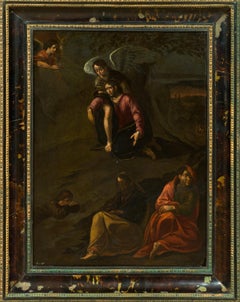
Christ Supported by an Angel in the Garden of Gethsemane, On Slate
Located in Stockholm, SE
This evocative Veronese School painting captures the moment in the Garden of Gethsemane when Christ, overwhelmed with sorrow, prays to God before his arrest and crucifixion. Supporte...
Category
Early 17th Century Old Masters Figurative Paintings
Materials
Slate
$8,222
H 20.48 in W 16.15 in
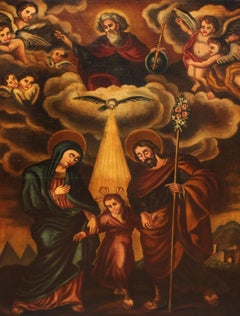
Escuela hispano-colonial (siglo xix) - Óleo sobre tela - La sagrada familia
Located in Sant Celoni, ES
Sin firmar, es de autor anónimo
Se presenta enmarcada la obra con un marco del siglo xviii (el marco presenta algunas leves faltas)
Medidas obra: 104 cm. de altura x 80 cm. de anch...
Category
Mid-19th Century Old Masters Figurative Paintings
Materials
Oil
$1,143 Sale Price
20% Off
H 44.1 in W 34.26 in D 1.19 in
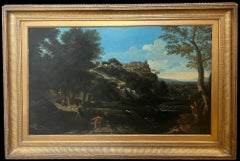
Fine 18th Century Italian Classical Huge Oil Painting Figures Animals Landscape
By Jan Frans van Bloemen (Orizzonte)
Located in Cirencester, Gloucestershire
Figures
Animals in Classical Landscape
circle of Jans Frans Van Bloemen (Orizzonte 1662 - 1749), unsigned
oil on canvas, framed
framed: 28.5 x 42.5 inches
canvas: 19 x 34 inch...
Category
18th Century Old Masters Landscape Paintings
Materials
Oil
$9,585
H 28.5 in W 42.5 in
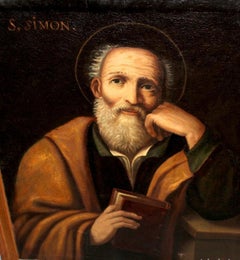
Escuela española (XVIII) - Óleo sobre tela - San Juan Bautista
Located in Sant Celoni, ES
Escuela Española siglo XVIII.
"San Simón".
Titulado a mano en la parte superior.
Óleo sobre tela.
Medidas: 82 cm. x 68 cm.; 86cm. x 72 xm. (marco).
Se trata de un óleo sobre tela rep...
Category
18th Century Old Masters Figurative Paintings
Materials
Oil
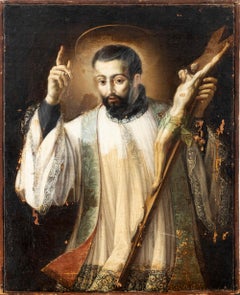
San Francisco Javier
Located in Miami, FL
Colonial School, Mexico, XVIII Century
"San Francisco Javier"
Oil on canvas
18 x 14 in.
Category
18th Century Old Masters Figurative Paintings
Materials
Canvas, Oil
Escuela Colonial - Óleo sobre cristal - Virgen con niño.
Located in Sant Celoni, ES
Muy interesante ÓLEO SOBRE CRISTAL, representando a una Virgen con Niño, de finales del siglo XVIII principios del XIX.
Escuela colonial, va con un fino marco de madera dorada al oro...
Category
Late 18th Century Old Masters Figurative Paintings
Materials
Oil
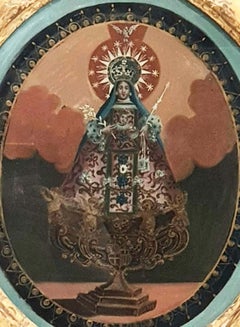
Virgen en miniatura - pintada sobre placa de hueso.
Located in Sant Celoni, ES
Muy interesante miniatura pintada sobre hueso o similar representando a una Virgen.
De finales del siglo XIX. Gran calidad.
La Virgen tiene una mirada muy mística.
La pintura va co...
Category
Mid-19th Century Old Masters Figurative Paintings
Materials
Oil
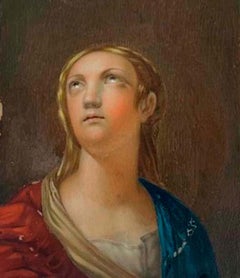
Escuela española - Virgen con niño - Óleo sobre tela
Located in Sant Celoni, ES
Siglo XVIII - Escuela española.
Como pueden apreciar, la obra no va firmada, es de autor anónimo
Se presenta enmarcada la obra con un marco bastante actual
El estado de la obra es ...
Category
18th Century Old Masters Figurative Paintings
Materials
Oil
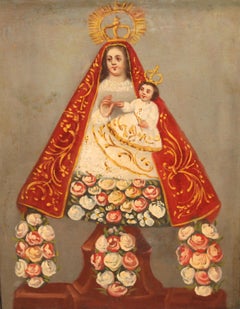
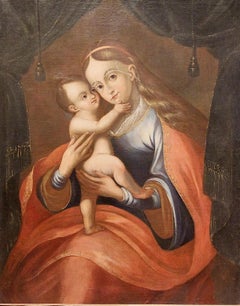
18th Century, Antique Oil Painting, Old Master. Portrait of Mother with child.
Located in Berlin, DE
18th century, antique painting, oil on canvas, old master. Mother with child.
Relined canvas.
Stretcher frame also renewed.
Artist unknown.
Category
18th Century Old Masters Figurative Paintings
Materials
Canvas, Oil
$5,719 Sale Price
20% Off
Free Shipping
H 43.31 in W 34.65 in
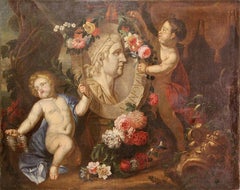
17th Century, Old Master, "King Basileus Alexander of Macedon Magnus, the Great"
Located in Berlin, DE
Very decorative, 17th century, old master painting, oil on canvas, King Alexander Magnus, the great.
Illustration of two children, putti, with wreaths of flowers on a board (or maus...
Category
17th Century Old Masters Figurative Paintings
Materials
Canvas, Oil
$26,691 Sale Price
20% Off
Free Shipping
H 41.93 in W 52.37 in
More From This Seller
View AllVirgin
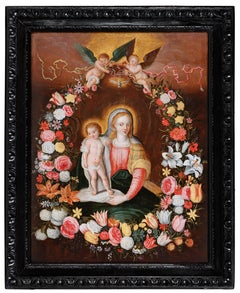
Child in a Flower Garland, Flemish, 17th century, studio of F. Francken
By Frans Francken II
Located in PARIS, FR
Virgin and Child in a Garland of Flowers
Studio of Frans Francken II (1581-1642)
This work is unsigned
17th century Antwerp School
Oil on oak panel
Dimensions: h. 63 cm, w. 48,5 cm (...
Category
Early 17th Century Old Masters Figurative Paintings
Materials
Oil, Wood Panel
17th c. Antwerp studio of J. Brueghel
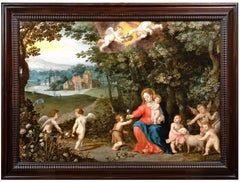
H. van Balen - The Virgin with Child
Located in PARIS, FR
Workshop of Jan Brueghel the Younger (1601-1678) & Hendrick van Balen (Antwerp, 1575 – 1632)
17th century Antwerp School
The Virgin and Child ...
Category
1630s Old Masters Figurative Paintings
Materials
Oil
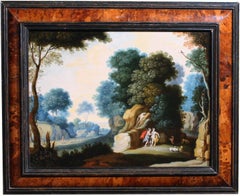
Landscape with figures, workshop of Paul Bril, Italian school 17th Century
By Paul Bril
Located in PARIS, FR
Idyllic landscape with myhological story of Cephalus and Procris
Early 17th century Italian school
Workshop Of Paul Bril (Antwerp, 1554 - Roma, 1626)
Oil on poplar panel: H. 28 cm (1...
Category
Early 17th Century Old Masters Landscape Paintings
Materials
Poplar, Oil
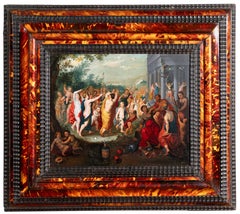
The Triumph of the Infant Bacchus, workshop of H. Van Balen, 16th c. Antwerp
By Hendrick van Balen
Located in PARIS, FR
The Triumph of the Infant Bacchus,
Workshop of Hendrick Van Balen (1575-1632)
Antwerp, c.1630
Oil on copper, h. 28 cm (11.02 in), w. 35 cm (13.78 in)
A large Roman 17th century golden painted frame
Framed: h. 52 cm (20.47 in.), w. 58 cm (22.83 in)
Our finely painted work depicts The Triumph of the Bacchus as a young boy and is one of the most popular mythological subjects in Antwerp at the beginning of the 17th century. Feasting, wine and fun are the themes that constantly appeal to the public.
Thus unfolds before our eyes on our painting the procession composed of nymphs, baccantes, fauns, satyrs and children, their bodies naked, partially covered with brightly coloured draperies that help to brighten up the parade. Playing various instruments, dancing and drinking, while carrying vases and poles adorned with grapevines, participants to the rhythm of a noisy brass band make their way to an ancient temple standing on the right. The exaggerated gestures convey to us the frenzy of the excited crowd.
The Child Bacchus follows the joyous procession, carried by satyrs and nymphs, crowned with ivy and joyfully raising a cup of wine. In the foreground, the drunken participants leave the procession, the children on the left and the group of bacchantes and satyrs on the right are resting among various objects scattered at their feet: cups, vases, ewers bear witness to the festivities in progress.
In the background, a hilly landscape stretches out on the horizon, a semblance of calm that contrasts with the bustle of the foreground.
The artist strives to multiply the many details, whether it be figures, costumes, flowers or vegetation, in order to demonstrate his know-how and the perfection of his execution.
The acidulous palette with fresh and varied colours is characteristic of Hendrick Van Balen's works.
There are several versions identical to ours with similar dimensions painted by Hendrick Van Balen and his workshop.
Related works:
• Koller Auction, Zurich, 21/09/2007, oil on copper, 28,5 x 37,4 cm.
• Staatliche Kunsthalle, Karlsruhe, Inv. N° 809 (oil on copper, 40 x 53,5 cm)
• Auktionshaus für Altertümer Glückselig, Vienne, 10/05/1932, ( oil on copper, 34 x 42 cm)
• Gemäldegalerie of Pommersfelden, Schloss Weissenstein, oil on panel, 47 x 64 cm
Hendrick Van Balen, Flemish painter, born and died in Antwerp (1575-1632). A pupil of Adam Van Noort, he entered the Guild of St. Luke in 1593, later trained in Italy and was Van Dyck's first teacher. He often painted small figures taken from scenes from the Bible or classical mythology, on paintings whose backgrounds and landscapes were painted by Josse de Momper...
Category
17th Century Old Masters Figurative Paintings
Materials
Copper
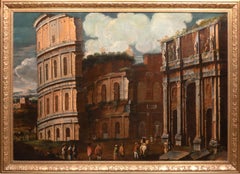
A 17th c. Italian school, Capriccio with the Colosseum, circle of V. Codazzi
Located in PARIS, FR
A capriccio with the Colosseum in Roma
17th century Italian school
Circle of Viviano Codazzi (1604-1670)
Oil on canvas
Dimensions: h. 35.43 in, w. 51.18 in
Modern 17th century style ...
Category
17th Century Old Masters Landscape Paintings
Materials
Canvas, Oil
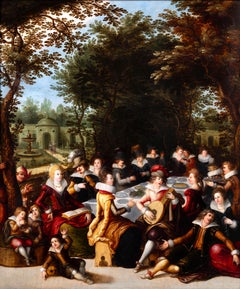
Feast in the Garden of Love, 17th century Antwerp, Louis de Caullery
Located in PARIS, FR
Louis de Caullery (1582-1621)
Antwerp School early 17th century
Oil on oak panel
Dimensions: h. 51 cm (20.08 in), w. 43 cm (16.93 in)
Ebonized wooden frame
Framed: h. 67 cm (26.38 in...
Category
Early 17th Century Old Masters Figurative Paintings
Materials
Oil, Wood Panel
Still Thinking About These?
All Recently ViewedMore Ways To Browse
16th Century Old Master Painting
John The Baptist
Holy Family
Carved Marble Figure Of Child
Virgin Child Painting
St John Oil Paintings
Christ Of Saint John Of The Cross
Zodiac Painting
Abstract Figurative Expressionism Paintings
Antique Paintings Peter Paul Rubens
Arlequin Painting
Bistro Painting
Carol Marine
Clementine Hunter
Daniel Graves
Gaga Art
Gloria Dudfield
Hermes Painting