Want more images or videos?
Request additional images or videos from the seller
1 of 7

Antonio Feltrinelli
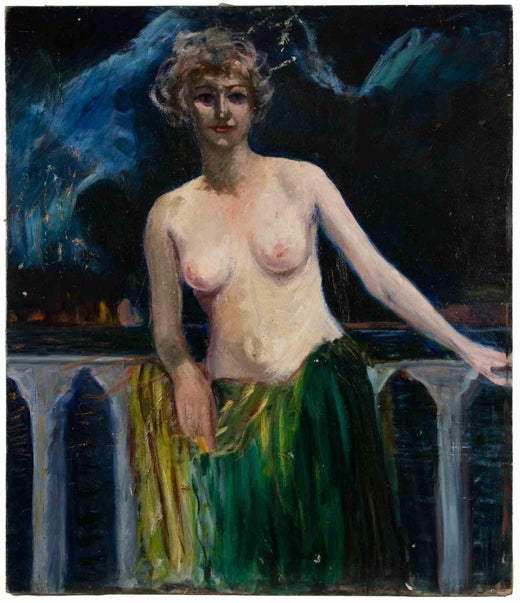
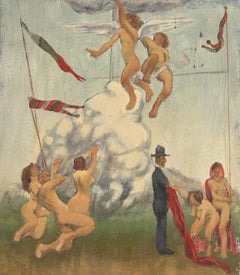
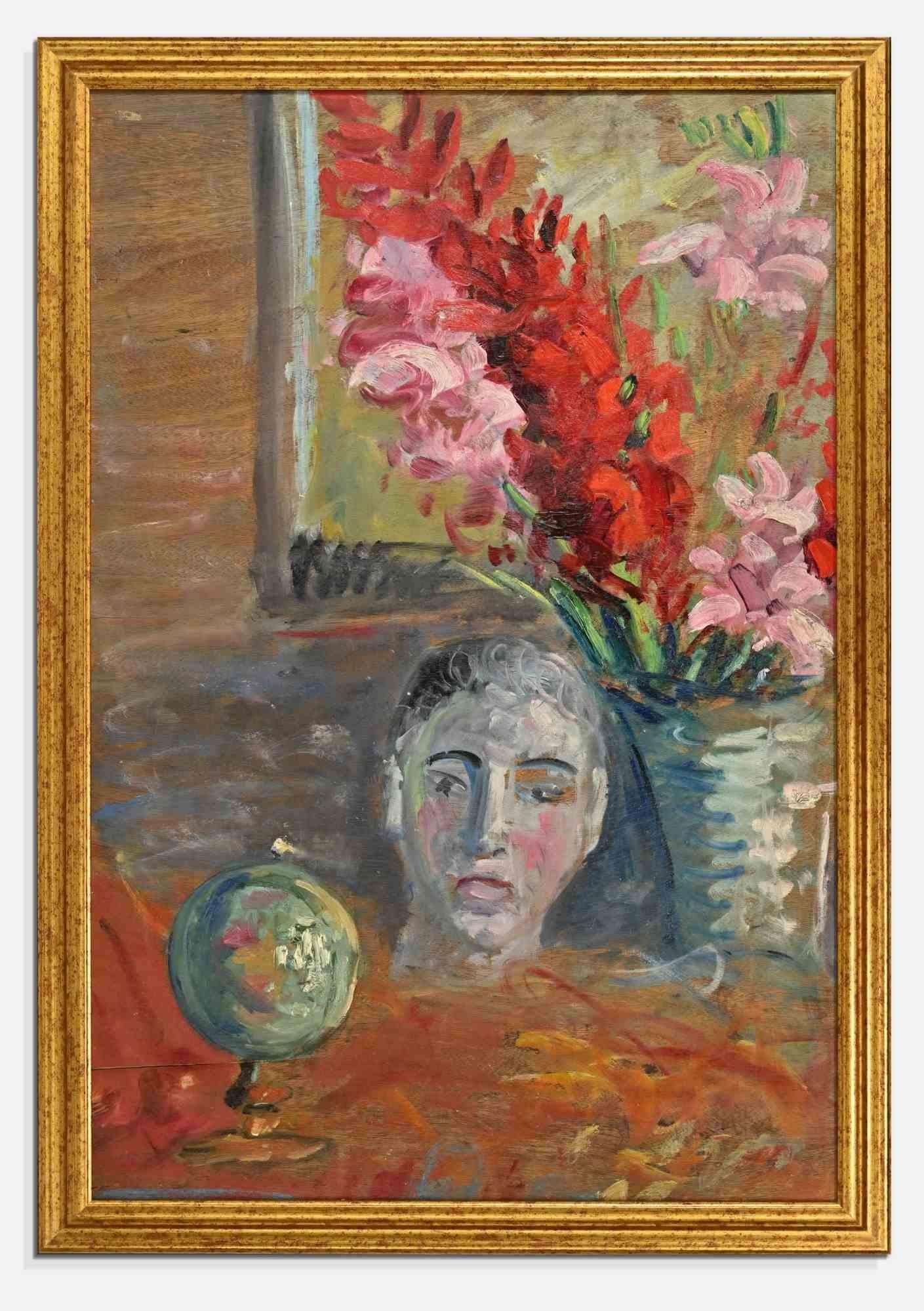
Allegory - Painting by Antonio Feltrinelli - 1930s

1930s

$5,692.78
£4,278.67
€4,800
CA$7,887.44
A$8,573.33
CHF 4,589.44
MX$103,631.74
NOK 57,835.93
SEK 53,339.75
DKK 36,565.30

About the Item

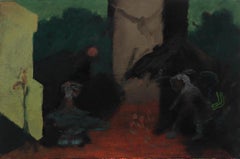
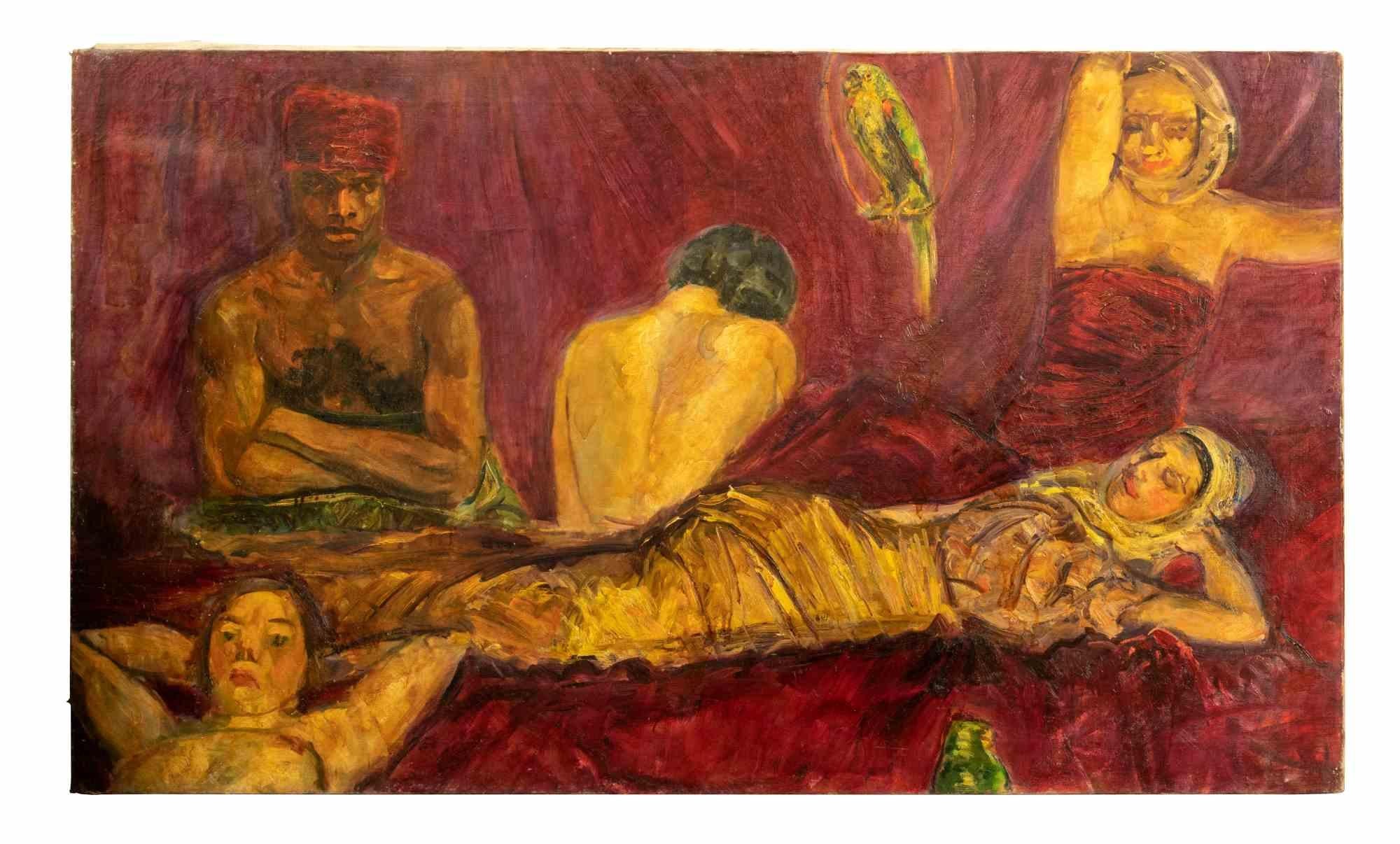
Allegory is an original artwork realized by the Italian artist Antonio Feltrinelli in the 1930s. Original oil on plywood. Beautiful and representative work of the artist with two allegoric scenes on both side of plywood. Not signed.
  • Creator:
    Antonio Feltrinelli (1887 - 1942, Italian)
  • Creation Year:
    1930s
  • Dimensions:
    Height: 23.63 in (60 cm)Width: 35.24 in (89.5 cm)Depth: 0.4 in (1 cm)
  • Medium:
  • Movement Style:
  • Period:
  • Condition:
    Insurance may be requested by customers as additional service, contact us for more information.
  • Gallery Location:
    Roma, IT
  • Reference Number:
    Seller: T-1289511stDibs: LU65039601932

More From This Seller

View All
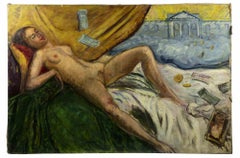
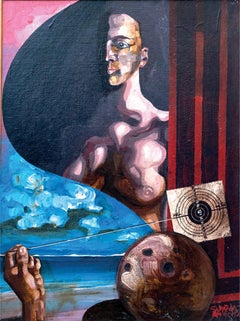
Universal - Painting by Antonio Feltrinelli - 1930s
By Antonio Feltrinelli
Located in Roma, IT
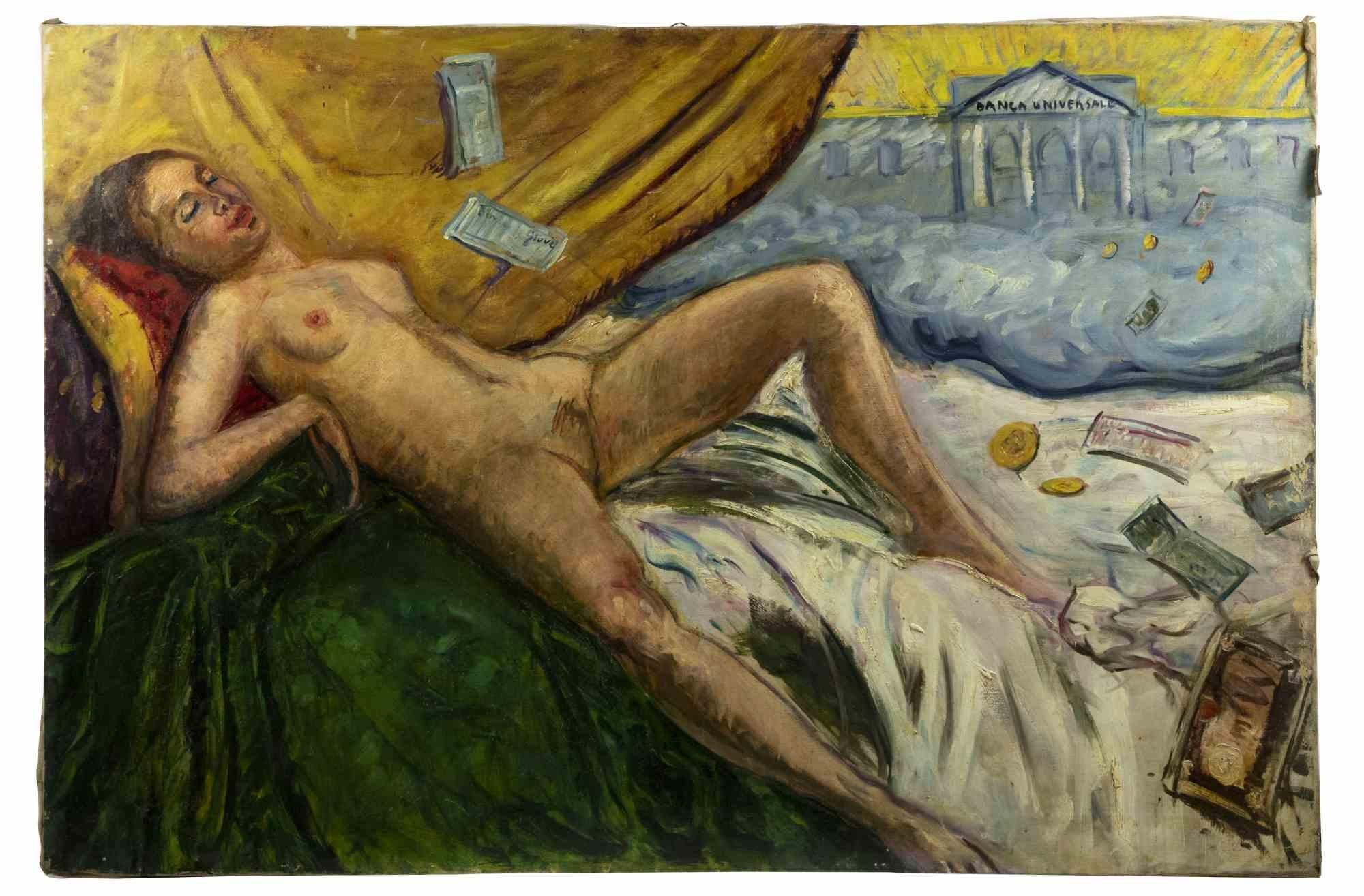
Universal bank is an original modern artwrok realized by Antonio Feltrinelli in the 1930s. Mixed colored oil painting on canvas. The artwork depi...
Category

1930s Modern Figurative Paintings

Materials

Paint, Oil

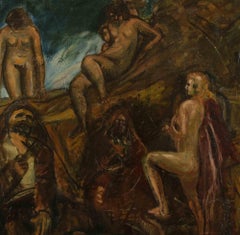
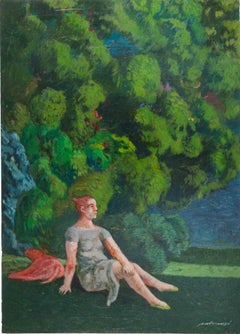
Terrestrial Paradise - Painting by Antonio Feltrinelli - 1930s
By Antonio Feltrinelli
Located in Roma, IT
Terrestrial Paradise is an original modern artwork realized by Antonio Feltrinelli in 1930s. Mixed colored oil painting on canvas. Good conditions Not signed. Antonio Feltrinelli...
Category

1930s Modern Figurative Paintings

Materials

Paint, Oil

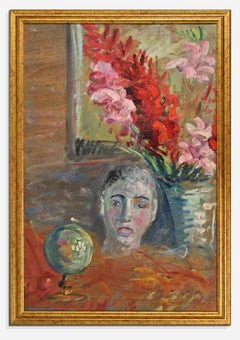
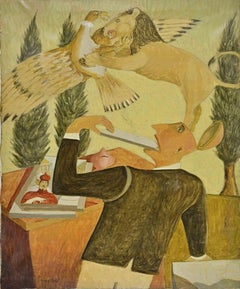
Composition - Oil Paint by Antonio Feltrinelli - 1930s
By Antonio Feltrinelli
Located in Roma, IT
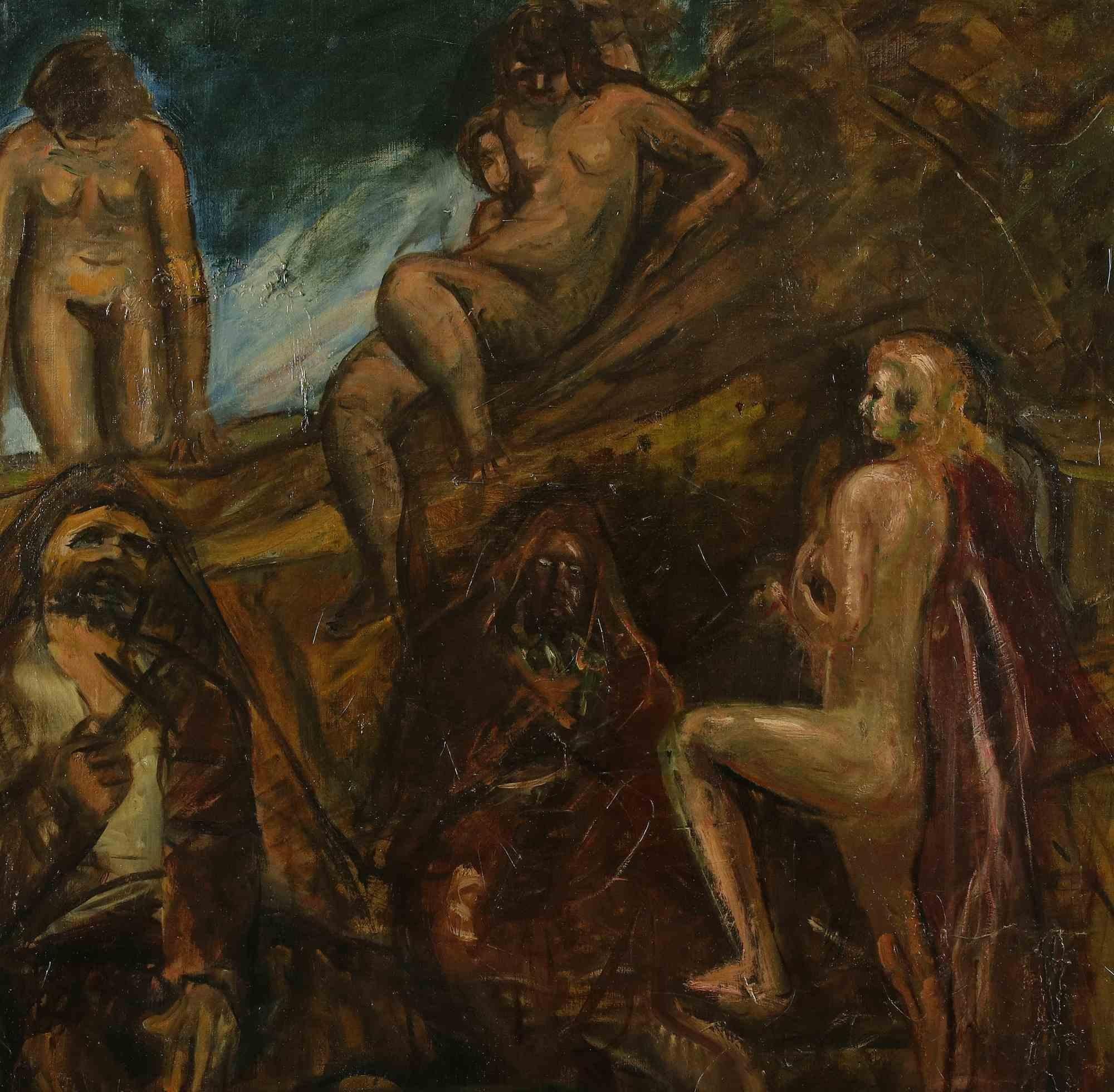
Composition is a modern artwork realized by Antonio Feltrinelli in the 1930s. Another painting of human figure on rear. Includes frame: 98 x 4 x 68 cm Mixed colored oil painting o...
Category

1930s Modern Figurative Paintings

Materials

Oil

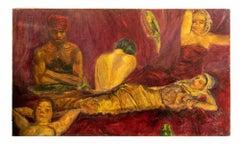
Odalisques - Oil Paint by Antonio Feltrinelli - 1930s
By Antonio Feltrinelli
Located in Roma, IT
Odalisques is a modern artwork realized by Antonio Feltrinelli in 1930s. Mixed colored oil painting on canvas, realized in 1930s. Antonio Feltrinelli (Milan, 1887 – Gargnano, 1942) He was born in Milan on June 1, 1887 to Giovanni Feltrinelli, the nephew of Giacomo, who was the founder of the Feltrinelli partnership. Feltrinelli was not only a prominent figure in the Italian economic and financial field, but he was also a painter, who was characterized as a strong, impetuous hot colorist, and preferred still lifes, portraits and landscapes. He started his career in 1930 at La Permanente (Milan), where he exhibited a portrait and a still life that won him the Fornara award. That same year, Feltrinelli exhibited his work at the Venice Biennial and at the Pesaro Gallery in Milan. Together with other prominent avant-garde artists, he participated in various foreign exhibitions on modern Italian painting...
Category

1930s Modern Figurative Paintings

Materials

Oil

Scenario of the Soul - Paint by Alessio Paternesi - 1990s
Located in Roma, IT
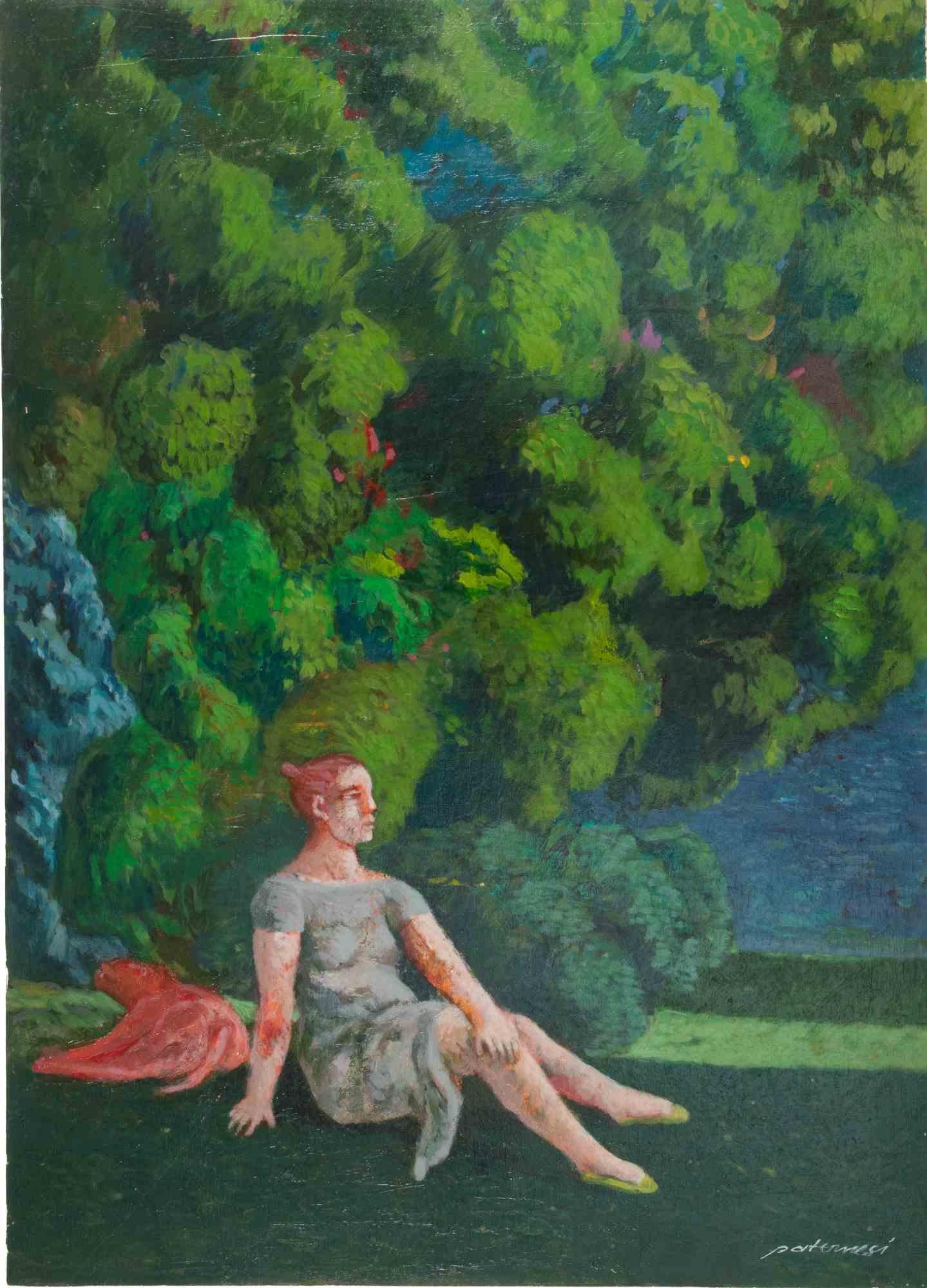
Oil on wooden panel realized by Alessio Paternesi (1937-2023). Hand signed. Very good condition.
Category

1990s Contemporary Figurative Paintings

Materials

Oil, Wood Panel

By Human Tendency - Paint by Alberto Gallerati - 1970s
Located in Roma, IT
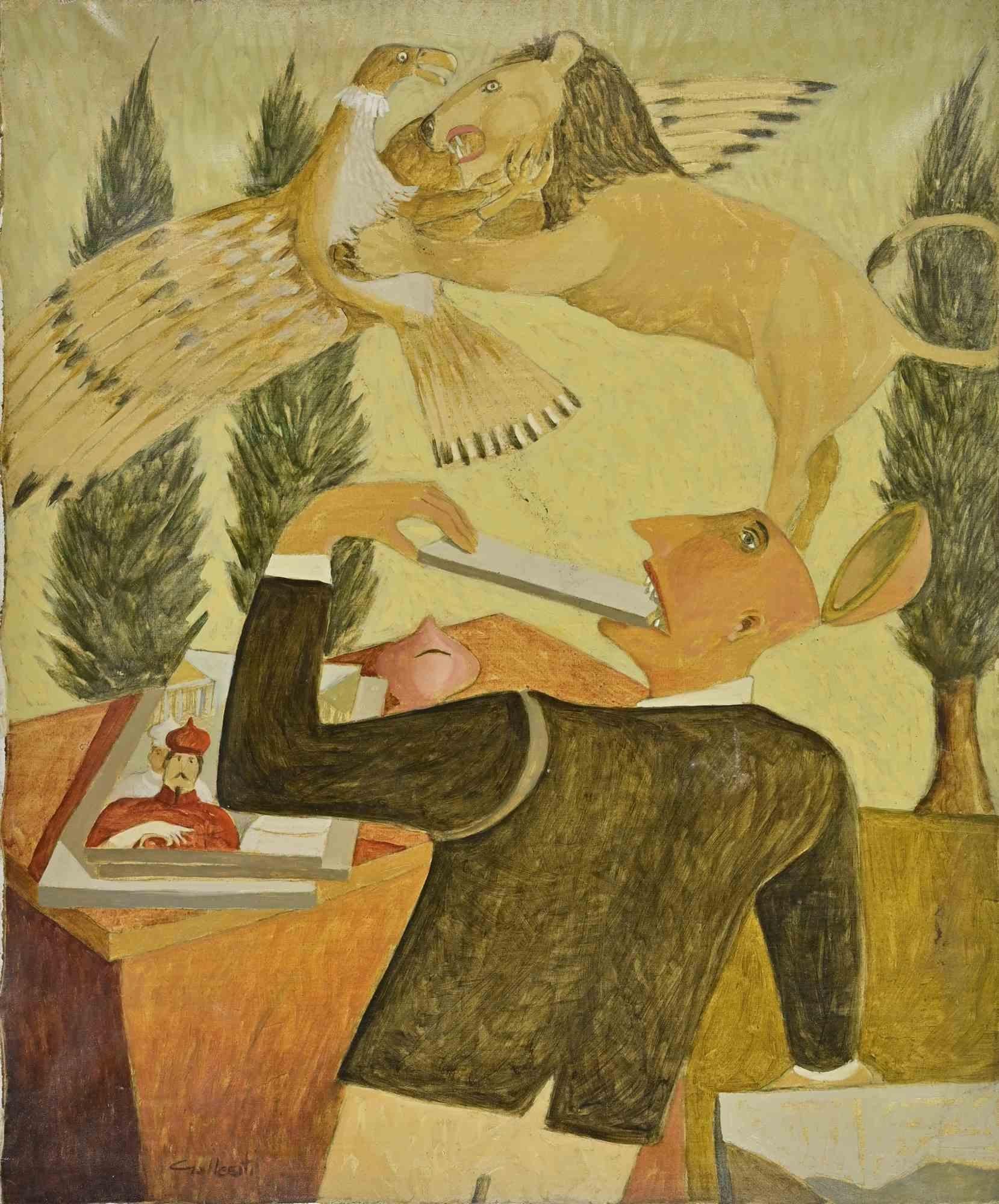
Oil on canvas realized by Alberto Gallerati (b. 1945) in 1970s. Hand signed. Very good condition.
Category

1970s Contemporary Figurative Paintings

Materials

Canvas, Oil

You May Also Like

"A violent centre" by Salvador Aulestia (Barcelona 1915-Milano 1994)
Located in Milano, MI
This is a perfect example of Salvador Aulestia's Apotist expression. The arrangement of the subjects on the surface gives them the meaning corresponding to their position by analogy ...
Category

1980s Modern Portrait Paintings

Materials

Acrylic

Period Italian Fausto Pirandello Signed Abstract Artwork
By Fausto Calogero Pirandello
Located in Roma, IT
Important work by one of the greatest artists of the Italian artistic avant-garde Fausto Pirandello It depicts one of his iconic subjects ‘Bathers’ with five characters depicted in ...
Category

Mid-20th Century Abstract Abstract Paintings

Materials

Paper, Pastel

Spieltrieb - Modern Figurative Oil Painting, Existentialism Art
By Piotr Kotlicki
Located in Salzburg, AT
Kotlicki is a constantly searching artist. Treading his own path, aiming at defining himself, giving his work a clear identity, he came across the avant-garde. He would back off the way, though, reckoning that a particular style imposes some limitations, and the real art is the liberation from the clichés and guidelines. Following this line of thinking, he managed to remain the independent artist, creating plainly under the influence of his own feelings experienced in a certain moment, the influence of certain occurrences. Kotlicki’s works are texturally rich to great extent. Along with chiaroscuro, the author plays with contrasts, setting flat colour patches with a thick, uneven layer of paint, round shapes with angular ones, oil paint with pastel, realism with non-descriptive painting. In terms of colours, he rather remains dedicated to monochromatism. The different colour appearing at times is to strengthen the effect of the domineering colour scheme. Similarly like in the case of chiaroscuro - it is not a compulsory action, the author remains open for his creative train of thought. Born 1972 in Poland. Graduated from the Academy of Fine Arts in Łódź, Poland in 2000, painting diploma by Prof. Ryszard Hunger. Currently works as assistant at the National Film School in Łódź at The Film and Television Directing Department (PWSFTViT). In line with his background, his creative work is multimedia-oriented with an emphasis on painting. They have been displayed at: Ningbo Museum of Art (China), the National Gallery of Art in Warsaw, the Audio-visual & new media arts festival Madatac in Madrid (Spain), the MS Dockville Festival in Hamburg (Germany), the International Video Festival in Novi Sad...
Category

2010s Contemporary Figurative Paintings

Materials

Canvas, Oil

"Senza titolo" by Salvador Aulestia (Barcelona 1915-Milano 1994)
Located in Milano, MI
Exhibited in Almach Art Gallery Milano during 2023 Hand-signed by artist, Certificate of authenticity Included (issued by authorized authenticating body) Image rights Luca Temolo ...
Category

1980s Modern Portrait Paintings

Materials

Acrylic

Untitiled. 1975. Canvas, tempura. 41.5x36.5cm
By Vladimir Glushenkov
Located in Riga, LV
Vladimir Glushenkov (1948-2009) (May 21, 1948, Riga - December 26, 2009, Riga) - painter, graphic artist, poet, translator. Vladimir Glushkenkov was born in family with Russian-Poli...
Category

1970s Expressionist Figurative Paintings

Materials

Canvas, Tempera

Toujours la Vie Recommence
By Edouard Goerg
Located in Saint Amans des cots, FR
Oil on canvas by Edouard Goerg (1893-1969), France, 1958. Life is always the same. Acquired in 2017 from the personal collection of Edouard Goerg. Measurements : with frame : 62.5x53.4 cm - 24.6x21 inches, without frame : 55x46 cm - 21.7x18.1 inches, format 10F. Signed "E.Goerg" (see photo). Preserved by the painter, then by his family since his death in 1969, this painting appeared in 2017. Entitled "Always life begins again", it is a crepuscular work. Testamentary one could say, so much the statement which is made there is definitive. The fact that he kept it until his death tends to consolidate this vision. Far from the empty looks and death faces of the rebellious era of sarcastic expressionism, the terrifying and compassionate testimony of the Spanish war, and the post-WWII flower women, we are dealing here with a a form of reasonable abdication, but honest. This idea that although everything changes, nothing changes. Changed times, actors, ideas, the same comedy occupies the society. Having given up the idea of ​​changing the latter, Goerg accepts the fact that the only alternative is to stay there or get lost. But stay afloat with his values, completely independent, whatever the cost is. This work is similar to La Vie Recommence of 1935, reproduced on page 54 of Gaston Diehl's book devoted to the painter (Éditions de Clermont, 1947). On the latter, the artist depicts his vision of life, from birth to death, made of hope, fear, cruelty, resignation and fatality. 23 years later, Toujours La Vie Recommence shows us the road traveled by the painter. It is no longer a matter of denunciation, but ultimately of acceptance of reality and the difficulty of staying there yourself. The admirer of Hieronymus Bosch gives us an inspired composition. The hand of God, the only expression of physical beauty in this work, comes down from heaven to give life. Symbolically, it holds an egg that dispenses the element from which the human protagonists find their birth, and in which they move and tangle more than they impose. Beautiful allegory of society. Four characters, two women and two men evolve in this societal marigot. The man in the foreground, ruddy face, evolves with ease. His body is supple, flexible, adaptable. The woman on the left observes him with admiration. Obviously, this man is in his place and causes rapture. The right man with massive shoulders and wrapped, shows a physical maladjustment to the activity he is doing. He struggles to stay afloat, his face expresses effort, even exhaustion. But he assumes. He does with what he has, with what he is. The other woman shows him the greatest indifference. What is not the case of the demonic archangel (recurrent in the works of Bosch) with the stunted body, who leads the dance and holds this character, we understand the painter, under his control as to have fun. As this character cannot change bodies, Goerg cannot change values. He does it with. Had he not said to the critic Roger Brielle: "Independents, sensitive and just men, that's what we must strive to stay in this world in disarray". Goerg will have come to narrative expressionism to give us a balance sheet allegory of his deep self and his condition. Édouard Goerg is one of the major artists of his generation. Coming from a Champagne family, he was born in Sidney, Australia, in 1893, during a professional stay of his father. After passing through London, he arrives in Paris at the age of seven. At twenty, between 1913 and 1914, he studieds painting at the Académie Ranson with Maurice Denis and Paul Sérusier. He travels to Italy and India. Mobilized in 1914, he is sent to Artois, then to Argonne. From 1920, he exhibits at the Salon des Independants, then at the Salon d'Automne where he joins with Laboureur. At Berthe Weil, in 1924, he participates in the exhibitions of the Gromaire group, a prelude to a series of exhibitions in Paris (Berthe Weill, Bernheim Jeune), as in Brussels (Le Centaure). Goerg illustrates books including Table of the beyond by F.Boutet. In 1928, he meets Paul Guillaume who exhibits his works in Boston and the Art Institute of Chicago. He continues to show his works, satires of the bourgeois manners, at Bernheim Jeune, then at Lucie Krogh. In 1934, he travels to Belgium and Holland where he paints surrealist paintings that will be exhibited at Jeanne Castel. In 1935-1936, he meets Aragon, who opened the doors of the houses of the cultures created by the Association of Writers and Revolutionary Artists. The Spanish war and the Second World War mark it deeply. He must protect his daughter and his Jewish women...
Category

1950s Expressionist Figurative Paintings

Materials

Canvas, Oil