Video Loading
Want more images or videos?
Request additional images or videos from the seller
1 of 12
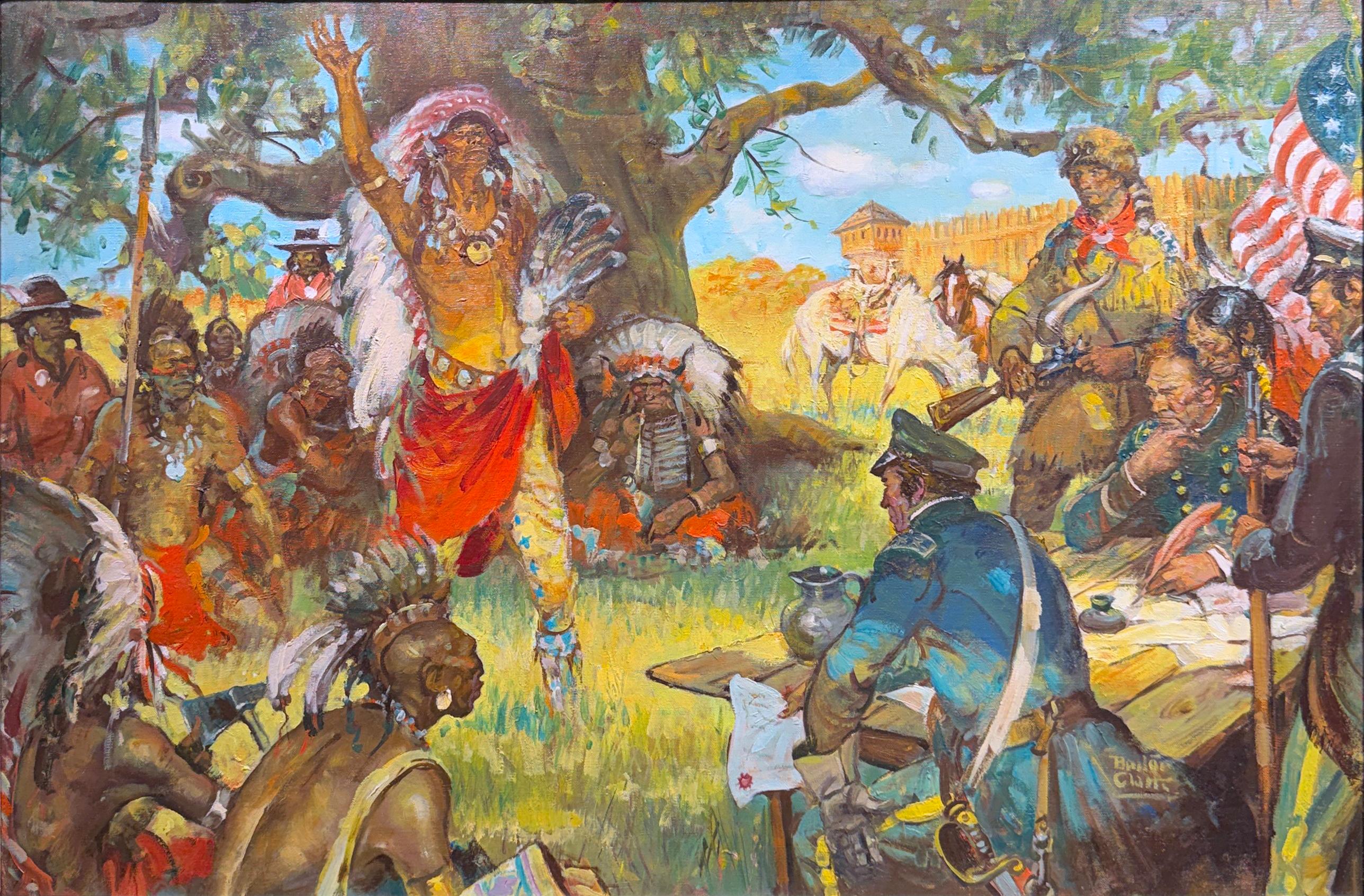
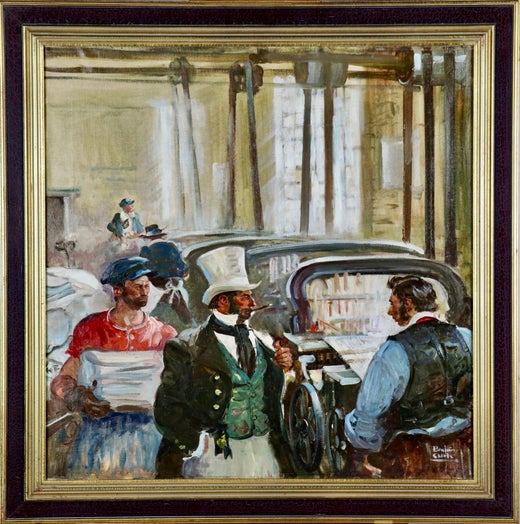
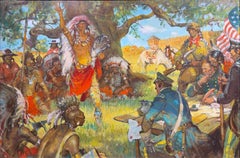
Benton ClarkDavy Crockett at the Alamoc. 1920
c. 1920
$25,000
£18,905.98
€21,655.72
CA$35,031.01
A$38,242.07
CHF 20,134.93
MX$458,095.59
NOK 257,518.30
SEK 235,118.49
DKK 161,773.28
About the Item
Canvas Only Size: 24 x 36 inches
Provenance: Kennedy Galleries, New York c. 1960
Illustrated: Treasures of the American West
SELECTIONS FROM THE COLLECTION OF Harrison Eiteljorg
Born in Coshocton, Ohio, Benton Clark became an eastern illustrator of the West in the dramatic tradition of Frederic Remington and especially loved painting horses. He also did murals that are in Chicago and Columbus, Ohio.
Growing up in Coshocton, he had a picturesque rural setting of woods and valleys near the old Ohio Canal. A group of artists were working there, and one of them, Arthur Woelfle, gave Clark his first lessons and encouraged him to seek further training. Later Woelfle said that of all his students Clark was the most talented.
In 1913, he went to New York City to study at the National Academy of Design and in 1915 to Chicago at the Art Institute. He sold magazine cover and calendar illustrations and in 1925, began illustration work for "Liberty" and "Outer's Recreation" magazines. He also illustrated for "Saturday Evening Post" and had a period of working for Metro Goldwyn Mayer's art department in Culver City, California.
Major influences on him were Harvey Dunn, Frank Hoffman, and Frederic Remington, and in 1932, he became a member of the Society of Illustrators. In 1932, he returned to New York City and did western illustrations for leading magazines such as "Saturday Evening Post," "Mc Call's" and "Good Housekeeping,", a job that took him West for subject matter.
He shared a studio with his brother, Matt Clark, also a noted illustrator. He died in his hometown of Coshocton, preparing to do an historic mural for his high school.
Source:
Walt Reed, "The Illustrator in America"
Peggy and Harold Samuels, "Encyclopedia of Artists of the American West"
- Creator:Benton Clark (1895 - 1964, American)
- Creation Year:c. 1920
- Dimensions:Height: 31 in (78.74 cm)Width: 43 in (109.22 cm)
- Medium:
- Movement Style:
- Period:
- Condition:
- Gallery Location:Missouri, MO
- Reference Number:1stDibs: LU747317386172
Benton Clark
Born in Coshocton, Ohio, Benton Clark became an eastern illustrator of the West in the dramatic tradition of Frederic Remington and especially loved painting horses. He also did murals that are in Chicago and Columbus, Ohio. Growing up in Coshocton, he had a picturesque rural setting of woods and valleys near the old Ohio Canal. A group of artists were working there, and one of them, Arthur Woelfle, gave Clark his first lessons and encouraged him to seek further training. Later Woelfle said that of all his students Clark was the most talented. In 1913, he went to New York City to study at the National Academy of Design and in 1915 to Chicago at the Art Institute. He sold magazine cover and calendar illustrations and in 1925, began illustration work for "Liberty" and "Outer's Recreation" magazines. He also illustrated for "Saturday Evening Post" and had a period of working for Metro Goldwyn Mayer's art department in Culver City, California. Major influences on him were Harvey Dunn, Frank Hoffman, and Frederic Remington, and in 1932, he became a member of the Society of Illustrators. In 1932, he returned to New York City and did western illustrations for leading magazines such as "Saturday Evening Post," "Mc Call's" and "Good Housekeeping,", a job that took him West for subject matter. He shared a studio with his brother, Matt Clark, also a noted illustrator. He died in his hometown of Coshocton, preparing to do an historic mural for his high school.
About the Seller
5.0
Vetted Professional Seller
Every seller passes strict standards for authenticity and reliability
Established in 1970
1stDibs seller since 2017
157 sales on 1stDibs
Typical response time: 1 to 2 days
- ShippingRetrieving quote...Shipping from: Missouri, MO
- Return Policy
More From This Seller
View AllWinfield Scott Treaty
By Benton Clark
Located in Missouri, MO
Canvas Only Size: 24 x 36 inches
Provenance: Kennedy Galleries, New York c. 1960
Illustrated: Treasures of the American West
SELECTIONS FROM THE COLLECTION OF Harrison Eiteljorg
B...
Category
1920s American Modern Figurative Paintings
Materials
Canvas, Oil
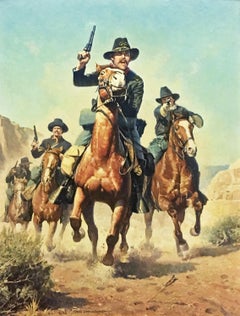
In Close Pursuit
Located in Missouri, MO
Site Size: 20 x 15 inches
Framed Size: 28.5 x 24 inches
Donald Spaulding's artistic talents were recognized early. Encouraged by his high school teachers to pursue formal art traini...
Category
1990s American Realist Figurative Paintings
Materials
Oil, Illustration Board
Price Upon Request
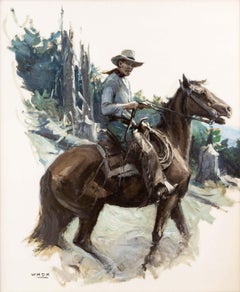
Heading Up Trail
By William Henry Dethlef Koerner
Located in Missouri, MO
Heading Up Trail
William Henry Dethlef Koerner (German, American, 1878-1938)
Oil on Canvas Board
Signed Lower Left
26 x 30 inches
35.25 x 30.75 inches with frame
William Henry Dethl...
Category
Early 20th Century Other Art Style Figurative Paintings
Materials
Canvas, Oil, Board
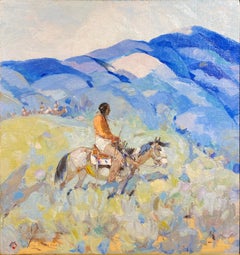
The Deer Hunters
Located in Missouri, MO
Laverne Nelson Black (American, 1887-1938)
"The Deer Hunters"
Signed Lower Left
Canvas: 24 x 22 inches
Framed: 30.5 x 28.5 inches
Born in Viola,...
Category
Early 20th Century American Impressionist Landscape Paintings
Materials
Canvas, Oil
Price Upon Request
Preparing to Ride
Located in Missouri, MO
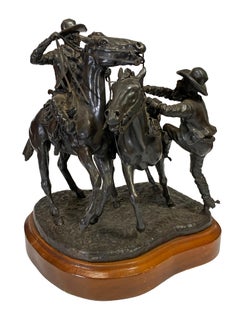
Preparing to Ride
By. George B. Marks (American, 1923-1983)
Signed and Dated
Throughout his artistic career, George Marks’s work was always guided by the...
Category
1970s American Realist Figurative Sculptures
Materials
Bronze
Price Upon Request
Going into Battle
By Carl Kauba
Located in Missouri, MO
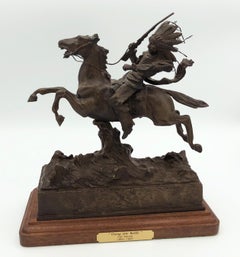
Carl Kauba
"Going into Battle" c. 1920s
Bronze with Brown Patina
Signed
approx 10 x 10 x 4 (including wooden base)
This Austrian sculptor was born in Vienna in 1865. His teachers were Karl Waschmann (1848-1905), known for his ivory sculptures and portrait plaquettes of contemporary celebrities, and Stefan Schwartz (1851-1924), who exhibited in Paris, including the Exposition Universelle of 1900 where he won a gold medal. Kauba's intricate bronzes, imported to the United States between 1895 and 1912, were cast at the Roman Bronze Works. Kauba was part of the nineteenth-century tradition of polychrome bronze sculpture. There were several types of patinas on a single statue: he could render the color of buckskin, variously tinted shirts, blankets, feathers, as well as beaded moccasins. Reportedly, Kauba came to America around 1886. Inspired by the Western tales of German author Karl May, he traveled to the West and made sketches and models. Critics, however, pointed out inaccuracies of costume and other details. For instance, the guns that his "mid-nineteenth-century" figures use are models produced after 1898. Apparently he did all of his works back in Vienna.
Besides the variety of color, Kauba's bronzes show a great range of textures and his style is highly naturalistic. The sculptor loved ornament, some of which he rendered with coiled wire for reins, rope and feathers in headdresses. He successfully rendered figures in motion and often executed compositions with more than one figure. Berman (1974) illustrates non-Western subjects by Kaula, such as the pendants Where? and There (ca. 1910), a seated Scottish couple, impressive in the expressions and the details on patterned fabrics of both sitters. Another genre piece is Buster Brown...
Category
Early 20th Century Realist Figurative Sculptures
Materials
Bronze
Price Upon Request
You May Also Like
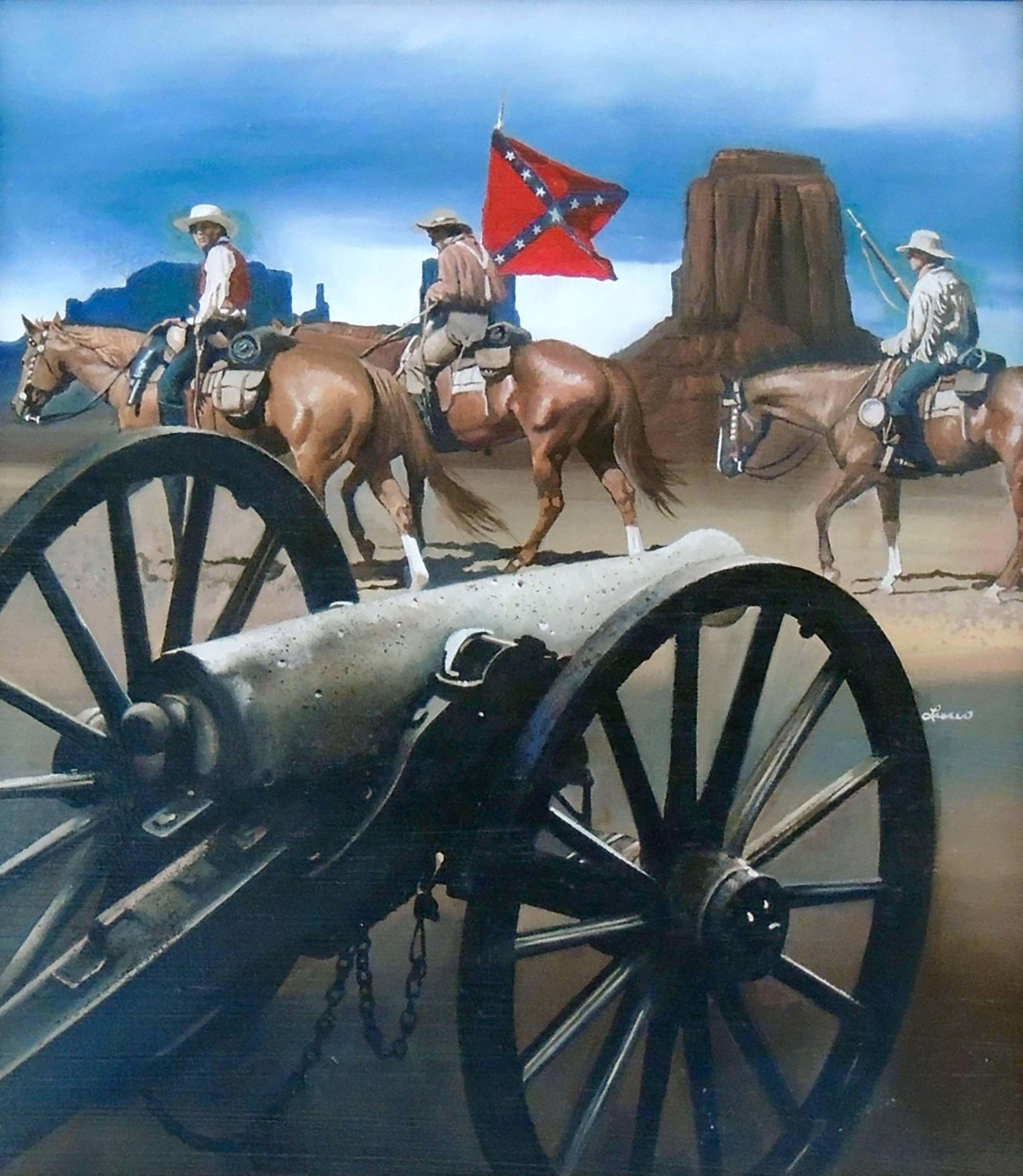
Texas Fury, Paperback Cover
By Ron Lesser
Located in Fort Washington, PA
Medium: Oil on Board
Dimensions: 14.50" x 12.50"
Signature: Signed Lower Right
J.T Edson, Dell Books
Category
20th Century Figurative Paintings
Materials
Oil, Board
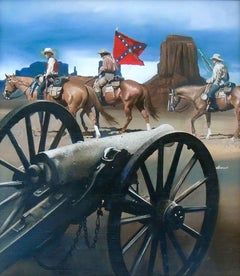
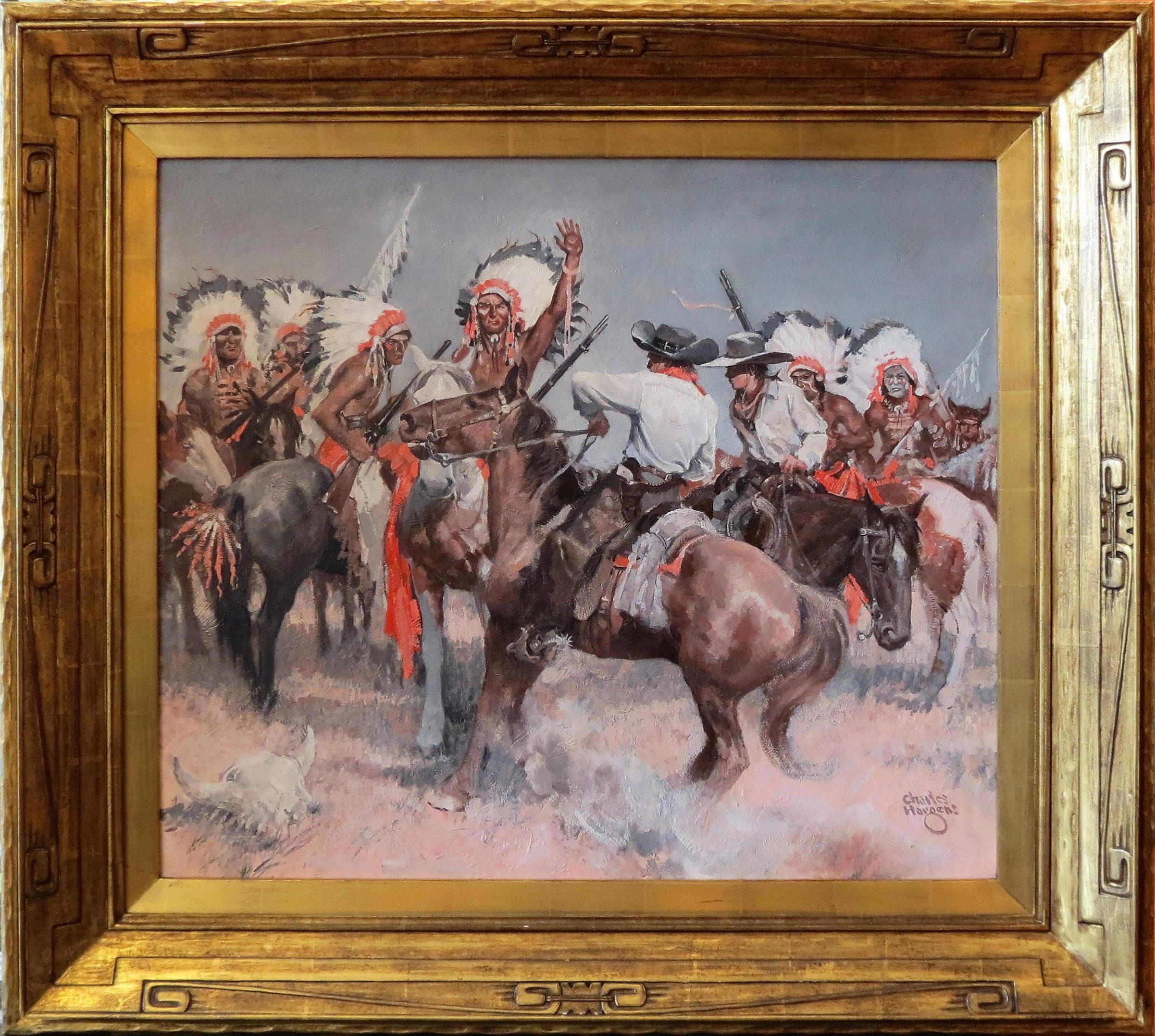
"Chisholm Trail"
By Charles Hargens
Located in Lambertville, NJ
Jim’s of Lambertville is proud to offer this artwork by:
Charles Hargens (1893 - 1997)
Carversville, Bucks County, Pennsylvania artist and illustrator Charles was born in Hot Springs, South Dakota. As a young boy he loved to draw cowboys, Indians and ranch buildings. By age ten, he was “a commercial success” selling drawings of neighbors’ barns and houses for $25. When he grew older, his parents consented to enroll him at the Pennsylvania Academy (1913-20) where he studied with Daniel Garber, Hugh Breckenridge, Henry McCarter, and William Merritt Chase. At Garber’s invitation, Hargens occasionally came to visit his Lumberville studio to paint with him. A lifelong friendship resulted. In 1915, the Pennsylvania Academy awarded Hargens its Cresson Traveling Scholarship and he went to Paris to study at the Academie Julian and the Academie Colarossi.
Hargens was a fellow of the Pennsylvania Academy and a member of the Society of Illustrators, the National Cowboy Hall of Fame and the Philadelphia Sketch Club. He exhibited at the Art Institute of Chicago (1923 awards) and at the Pennsylvania Academy of Fine Arts (1915 prize, 1917 prize, 1918 award). By the early 1920s, he began to produce illustrations for book jackets, books, magazines and advertisements. His career took off and soon his illustrations of cowboys, Indians, Western life, Revolutionary War action and boy scout themes appeared in, or adorned the covers of The Saturday Evening Post, Collier’s, Liberty, McCall’s, Boy’s Life and Gentlemen’s Quarterly. His work also appeared on billboards and advertisements for Stetson hats and Coca-cola. It was conditioned by Hargens that all of his original art was returned to him after being published. His entire body work remained in his studio until his death in 1997; this is largely the reason his paintings have not yet commanded the high prices of his contemporary Saturday Evening Post illustrators (i.e. Rockwell, Leyendecker and N.C. Wyeth).
At first he and his wife worked from their studio in Philadelphia. In 1940, they purchased a property at the intersection of Aquetong and Sawmill roads in Carversville. They commuted to Philadelphia regularly and stayed in South Dakota every summer. Eventually, he set up a studio next to his Carversville home. After moving to Carversville, Hargens began a lifelong friendship with George Sotter. Hargens’ Carversville home was the subject of many of George Sotter’s paintings long before and during the time Hargens lived there. Hargens also studied with Henry Rand...
Category
1930s American Impressionist Landscape Paintings
Materials
Canvas, Oil
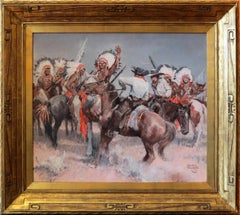
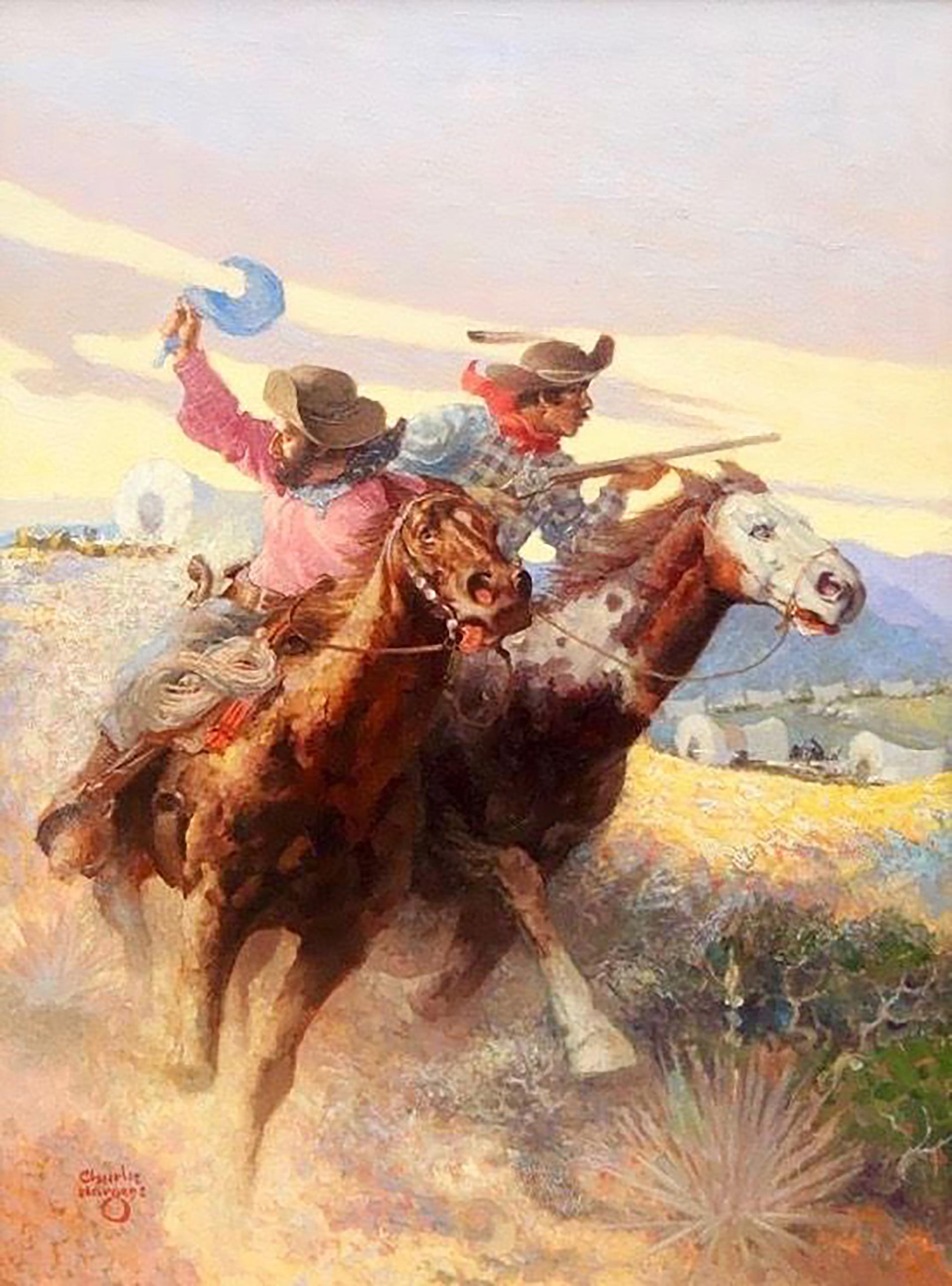
Two Cowboys
By Charles Hargens
Located in Fort Washington, PA
Signed Lower Left
Category
20th Century Figurative Paintings
Materials
Oil
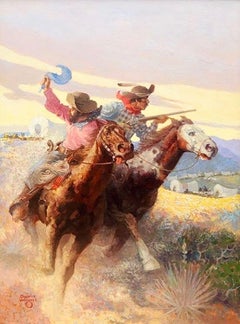
$49,000
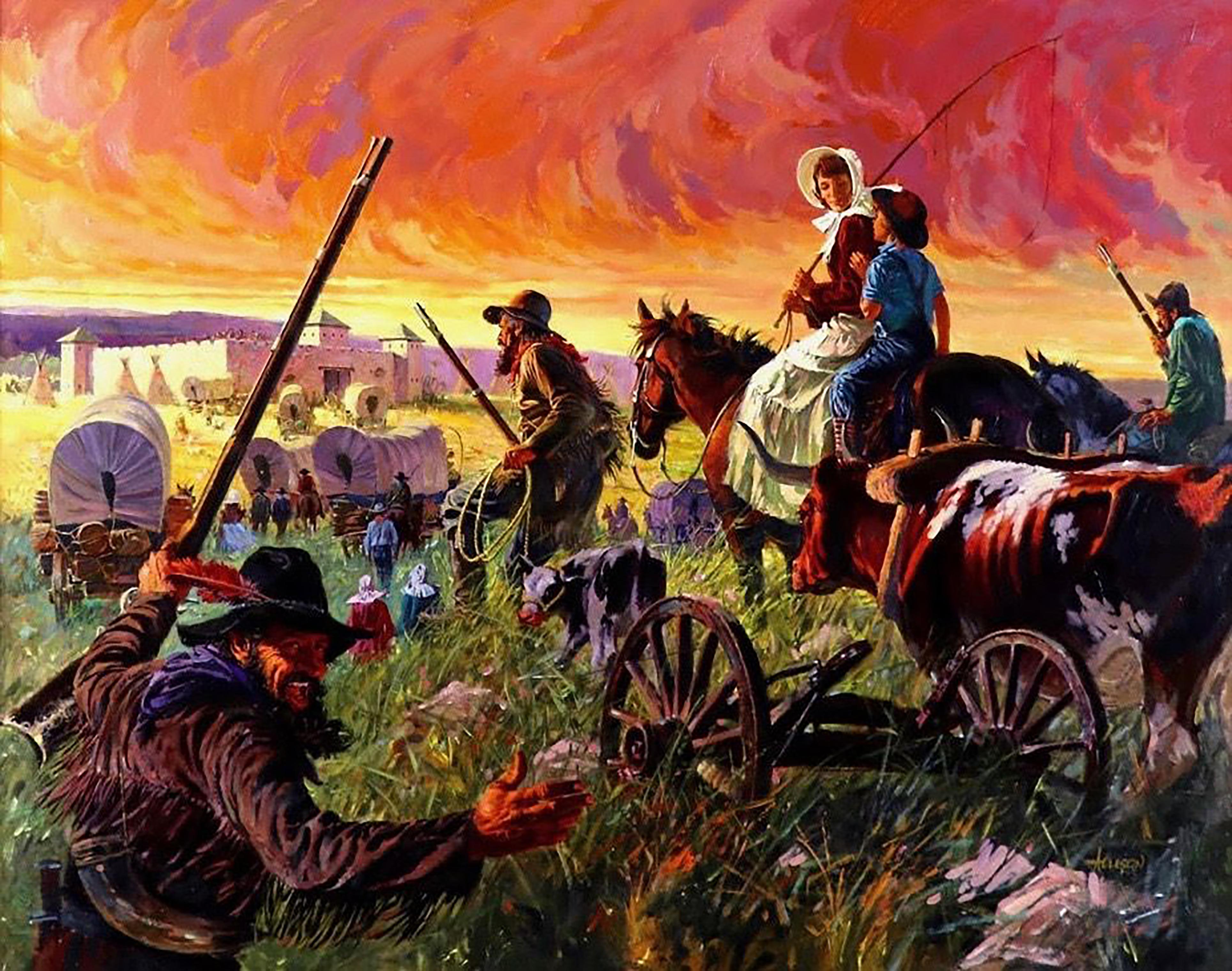
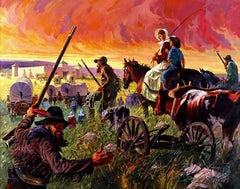
First Emigrant Train arrives at Fort Laramie
By Jerry Allison
Located in Fort Washington, PA
Calendar illustration commissioned by Exxon for their “Great Moments in American History” calendar series, published 1966.
This illustration depicting the first emigrant train’s arr...
Category
20th Century Landscape Paintings
Materials
Oil, Board
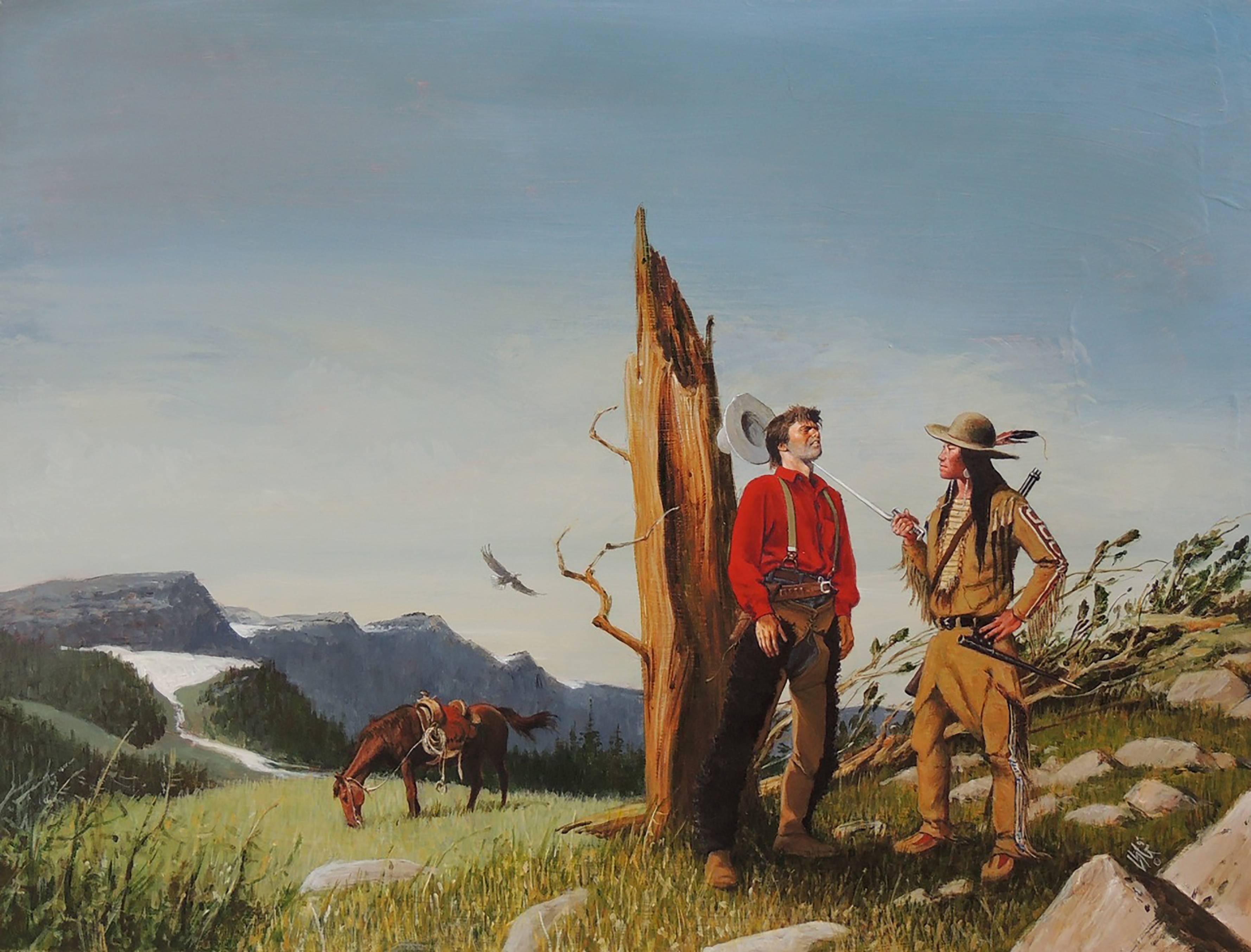
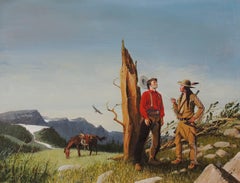
"Tackett and the Indian" Book Cover
By Louis S. Glanzman
Located in Fort Washington, PA
Medium: Acrylic on Board
Dimensions: 24.00" x 31.50"
Signature: Signed Lower Right
"Tackett and the Indian" Book Cover, by Lyn Nofziger
Category
Mid-20th Century Figurative Paintings
Materials
Acrylic, Board
Ole Devil At San Jacinto, Paperback Book Cover Illustration
By Ron Lesser
Located in Fort Washington, PA
Paperback book cover illustration for Ole Devil at San Jacinto, published by Dell, 1991
“For the Lone Star Freedom Fighters, rebellion became blood-simple revenge.” The Texans were...
Category
1990s Landscape Paintings
Materials
Board, Oil