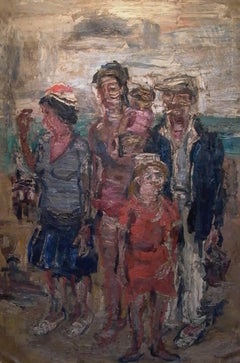
Items Similar to German Expressionist Oil Painting Bruno Krauskopf Cubist Cafe Scene
Want more images or videos?
Request additional images or videos from the seller
1 of 9
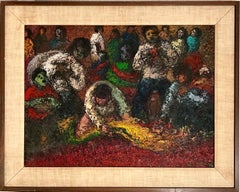
Bruno KrauskopfGerman Expressionist Oil Painting Bruno Krauskopf Cubist Cafe Scene
$9,500
£7,214.44
€8,288.03
CA$13,392.76
A$14,239.27
CHF 7,700.17
MX$169,380.47
NOK 96,455.55
SEK 88,092.61
DKK 61,914.45
About the Item
Bruno Krauskopf (Germany, 1892-1960)
Outdoor Restaurant Bar Cafe Scene
Oil on canvas
Dimensions: Frame: H 34 in W 44 in. Canvas: H 30-1/2 in. W 40 in.
Hand signed B Krauskopf lower right
Provenance: Gift of the artist to owners father. Sold in Modern and Contemporary Art: Including Property of the Estate of Vera G. List Sotheby's New York. Feb 12, 2004 lot 51.
Bruno Krauskopf (Born 1892 in Marienburg, West Prussia, Died in 1960 in West Berlin) was a German painter and graphic artist.
At the age of fourteen, Bruno Krauskopf began his apprenticeship as a chromolithograph printer in Berlin, which lasted until 1908. From 1910 to 1915, he studied at the Royal Museum of Decorative Arts in Berlin under Emil Doepler. As early as 1912, he had his first solo exhibition at the Casper Gallery in Berlin. From 1914 onward, he formed a studio partnership with Wilhelm Kohlhoff and Harry Deierling and exhibited his works at the Great Berlin Art Exhibition. Between 1913 and 1916, he created his graphic oeuvre, consisting of lithographs, woodcuts, and linocuts.
From 1914 to 1916, he served as a soldier in Alsace and Russia. He was an active artist in the Jazz era weimar republic. Krauskopf became a member of the Free (Berlin) Secession (a group that included leading modern artists like Max Liebermann, Käthe Kollwitz, Otto Mueller, Max Beckmann, and Karl Schmidt-Rottluff to champion Expressionism and other avant-garde styles against traditional art, fostering progressive exhibitions until the early 1920s. in 1916 and remained a member of the Berlin Secession from 1917 to 1933. There, he also served on the board and jury and participated in exhibitions. During this time, he created numerous illustrations for books by Tolstoy, Dostoevsky, Eulenberg, and Reisiger. From 1918 onward, he was also a member of the November Group. (a prominent group of German expressionist artists and architects.
The group was led by Max Pechstein and César Klein. The artists' group was joined by Italian Futurists, important DADA artists as well as important Bauhaus members. It bore elements of Cubism, Futurism and Expressionism. Members included artist Hannah Höch, Hilla Rebay, Otto Dix, George Grosz, Raoul Hausmann, John Heartfield, Rudolf Schlichter and Georg Scholz. Ludwig Mies van der Rohe took over the chairmanship of the association. In the early 1920s, his painting style shifted from Expressionism to Impressionism. The colors became fresher and more vibrant. Between 1923 and 1933, Krauskopf undertook several study trips to France, Poland, Italy, and Switzerland. In addition to his paintings, Krauskopf illustrated various books, designed film sets for UFA, and created costume and stage designs for film and theater.
In 1933, his works were denounced as degenerate art, entartete kunst by the Nazi government, whereupon he emigrated to Norway that same year. In 1937, as part of the nationwide concerted action against "Degenerate Art" ten paintings by Krauskopf were confiscated from the city of Berlin, the National Gallery ( Crown Prince's Palace ) Berlin, the Kupferstichkabinett (Museum of Prints and Drawings ) Berlin, the Anhaltische Gemäldegalerie (Anhalt Art Gallery) Dessau, the Städel Art Institute and Städtische Galerie (Municipal Gallery) Frankfurt/Main, and the Kaiser Wilhelm Museum Krefeld. Krauskopf settled in Stavanger. After 1940, when Norway was occupied by Germany, he lived underground. On May 12, 1945, he was accused by the Norwegian police of spying for Germany, imprisoned for ten weeks, and had all his assets confiscated. After being declared an undesirable alien in 1948 and having all his property seized by the Norwegian state, he emigrated to New York with his second wife. With the support of George Grosz, he made his first contacts with the New York art scene. In 1957, he returned to Berlin for a time, and in 1959 he closed his New York studio and moved to West Berlin.
Awards
1919 and 1920 Prize of the Berlin Secession
Wertheim Prize, Berlin
Prize of the City of Bordeaux
Günter Wagner Prize, German Artists' Association , awarded by the Hanover Art Association
1923 Great Prussian Art Prize
1930 Albrecht Dürer Prize of the City of Nuremberg
1934 Museum Prize of the City of Stavanger
Select Exhibitions
Between 1919 and 1933, exhibitions at the Kestner Society , Hanover; Academy of Arts , Berlin; Exhibition at the International Building, Berlin
1932 Exhibition at the Hartberg Gallery, Berlin
1933 Exhibition at the Flechtheim Gallery, Berlin
1933 Hanover, Künstlerhaus (“101st Great Spring Exhibition” of the Hanover Art Association)
1934 Exhibition at the Stavanger Art Association
1935 Exhibition at the Blomquist Gallery, Oslo
Exhibitions in Stavanger, Oslo, Bergen, Haugesund and Kristiansand from 1936 to 1940
After 1945, a significant number of exhibitions took place in the USA, the Federal Republic of Germany, West Berlin, the Soviet occupation zone, and the GDR: including Galerie Weyhe, New York; Galerie Feigl, New York; Whitney Museum, New York; Carnegie International Exhibition Center, Pennsylvania Academy of Fine Arts, Pittsburgh; Richmond and Art Center Des Moines, Iowa; Städtisches Museum Mönchengladbach; Galerie Hella Nebelung, Düsseldorf.
1957 Exhibitions at the Kunsthalle Bremen, the Kunstamt Berlin-Wilmersdorf and the Kunstverein Karlsruhe.
Posthumous Exhibitions
1972 Memorial exhibition in the Berlin-Charlottenburg town hall
1981 Exhibition at the Michael Haas Gallery, Berlin
1985 Exhibition Kunstforening Stavanger
1991 Exhibition at the Galerie Norbert Blaeser
In 1992, traveling exhibitions in Norway on the occasion of his 100th birthday, an exhibition in the Kunsthalle Darmstadt under the motto: I am still alive and continue to paint , and in the Galerie Abercron, Munich.
1999 Exhibition: Four Artists of the Lost Generation at the Blaeser Gallery
2002 Stations of a painter from West Prussia in the West Prussian State Museum Münster
2005 Norbert Blaeser Gallery with works from the estate of Krauskopf
Literature
Hans Sahl : Bruno Krauskopf. In: Die Kunst und das schöne Heim.
Margareta Friesen: Bruno Krauskopf (1892–1960) “I still paint and live on”. Galerie Margareta Friesen Dresden 1992,
Jutta Fethke: Bruno Krauskopf (1892–1960) Marienburg-Berlin-Stavanger-New York. Stations of a painter from West Prussia. Exhibition at the West Prussian State Museum, Münster 2003
Rainer Zimmermann : Expressive Realism: Painting of the Lost Generation . Hirmer, Berlin 1994
- Creator:Bruno Krauskopf (1892 - 1960)
- Dimensions:Height: 34 in (86.36 cm)Width: 44 in (111.76 cm)
- Medium:
- Movement Style:
- Period:
- Condition:
- Gallery Location:Surfside, FL
- Reference Number:1stDibs: LU38217519082
About the Seller
4.9
Platinum Seller
Premium sellers with a 4.7+ rating and 24-hour response times
Established in 1995
1stDibs seller since 2014
1,864 sales on 1stDibs
Typical response time: <1 hour
- ShippingRetrieving quote...Shipping from: Miami, FL
- Return Policy
More From This Seller
View AllFrench Jewish Post Holocaust Abstract Painting Manner of Hundertwasser Art Brut
By Jichak Pressburger
Located in Surfside, FL
Jichak Pressburger, Painter. b. 1933, Bratislava, Czechoslovakia. A concentration camp survivior. Came to Israel aboard the ship, "The Exodus". 1964 Went to Paris. In 1979 Returned as new immigrant.
Education Tel Aviv University, B.A. in art, with Marcel Janco and Isidor Ascheim at Avni art school.
Beaux Arts, Paris with Professor Coutaud.
Itzchak Pressburger
Stays in Paris from 1963 – 1979, Resident of the “Cité des Arts” 1969-1972. Lives and works in Jerusalem since 1979.
One-Man Exhibitions
1963 Gallery Dugit, Tel-Aviv
1968 Cultural Center Enkhuizen, Netherlands
1968 Gallery Zunini, Paris (chosen by the art critic of « Opus : Jean-Jacques Lévèque)
1970 Gallery Zunini, Paris
1973 Gallery Maitre Albert, Paris. Cultural Center Verfeil sur Seye, France
1974 Gallery Maitre Albert, Paris
1976 Gallery Mundo, Barcelone
1980 Artists’ House, Jerusalem
1981 Gallery Alain Gerard, Paris
Group Exhibitions
1966 Rathaus Charlottenburg, Berlin. (The first show of Israeli painters in Germany
Artists Center of Silvarouvres, Nantes, Ffance
XXXth Salon of Finances at “l’Hotel des Monnaies”, Paris
1969 Maison de Culture, Le Havre, France
1968 Gallery Zunini, Paris (chosen by the art critic of « Opus : Jean-Jacques Lévèque)
Salon « Grands et Jeunes d’Aujourd’hui », Paris
Museum of Fine Arts, Nantes, France
Cultural Center Vitry, France
Gallery Il Giorno, Milan
Cité des Arts, Paris
1972 Salon “Grands et Jeunes d’Aujourd’hui”, Paris
Salon de Mai, Paris
1973 Städtische Galerie, Siegen, Germany
1974 Jewish Cultural Center, Paris
Publicis, Paris
1975 Réalitiés Nouvelles, Paris
1976 Salon de Mai, Paris
1977 “Perspectives Israeliennes”, Grand Palais, Paris
1981 Salon Alain Gerard, Paris
1984 Artists’ House, Jerusalem
Publication
1990 Haggadah Yom Kippour (Hebrew/French) Abraham Bliah (private edition), Paris
Acquisitions
1968 The City of Paris
1972 The State of France
The Yitzchak Pressburger artist was born in Bratislava – known for centuries by its German name of Pressburg – but the outbreak of World War II found him and his family in Prague. His father realized they had to escape from the Nazi occupiers and tried to get the family across the border into Hungary. However, they were caught near the crossing point, arrested and incarcerated overnight at the nearby railway station. The Czechs put them on a train to Hungary early the next morning. That was their first miracle in their quest for survival.
They survived with relative ease until late 1943, when the father was taken away to a forced labor camp. He subsequently died in a death march. Things became even more precarious in early 1944, when the Holocaust made its full-blown presence felt in Hungary.
“It wasn’t the Germans, it was the Hungarian Nazis who did the dirty work,” Pressburger points out. The family lived in so-called “safe houses” that were protected by Switzerland, Finland and Sweden. The havens were dismantled in late 1944, and the Pressburgers moved into one of the two Jewish ghettos in Budapest. The Nazis had found two houses with Jews, including the one where we had been, and took them all out and shot them next to the Danube. Today there is a monument by the river [called Shoes on the Danube Bank]. We should have been with the Jews who were killed by the river,” he says.
After the war, Pressburger and his siblings were farmed out to various orphanages run by the Jewish Agency, and things took a decidedly better turn.
“We finally had food to eat,” he recalls. “After a while we were put on trains that were protected by the Jewish Brigade [of the British Army], and we were sent to Austria, and then to Germany.”
“My uncle was a famous artist, and I learned a lot from him,” he says. While in Germany, Pressburger also took some lessons with a local artist.
His mother managed to get him and two of his siblings berths on the Exodus, which set sail from Marseilles for Palestine in July 1947. Pressburger was 13 at the time and clearly recalls the aborted attempt to get to the Promised Land.
“It was so crowded on the boat. This was a ship that was made to ply rivers in the United States, with a few hundred people on board, and we had over 4,500 passengers crammed in.”
As we know, the British prevented the Exodus from docking in Palestine, and the passengers were shipped – in three far more seaworthy vessels – back to France. After the French government refused to cooperate with the British, Pressburger and the others found themselves back in Germany. The teenager eventually made it here in 1948, just one month before the Declaration of Independence.
After a short furlough in Tel Aviv, during the first lull in the fighting in the War of Independence, he moved to Kibbutz Kfar Ruppin, where he worked in the cowshed. All the while he continued feverishly drawing and honing his artistic skills, which he says came in handy when he joined the IDF.
After completing his military service, which included a spell as one of the founding members of the Flotilla 13 naval commando unit, he worked in Sdom for a while at the Dead Sea Works before starting his formal arts training in earnest.
I was in the first group of students at the Avni Institute [in Tel Aviv],” he says. “There was quite a famous bunch of students and teachers like Moshe Mokadi and Isidore Ascheim and Aaron Giladi.”
In such illustrious company, one might have thought Pressburger was set to unleash his burgeoning talents on art connoisseurs across the globe, but it was a while before that happened.
Pressburger arrived in the French capital in 1964 and spent close to 15 years there, with a short interlude in Germany, before returning to Israel. His time in Paris was a professionally rewarding period of his life, and he also found love.
“[Avni Institute teacher] Yochanan Simon gave me the name and address of a French-Israeli family in Paris, but when I got to the house, a young woman opened the door and told me the family was on vacation in Israel,” he explains. Despite missing his expected hosts’ welcome, he and the German-born young lady who greeted him soon fell for each other, and romance quickly led to wedding bells. By all accounts, Pressburger did well in Europe. He secured a rare three-year berth at Cité Internationale des Arts, where artists are normally provided with accommodation and studio space for between two months and a year. He was also accepted to the prestigious Beaux Arts academy of fine arts, mounted solo exhibitions, and took part in group shows all over Europe.
One of these last was a group exhibition at Rathaus Charlottenburg in Berlin in 1966 – the first exhibition of Israeli artists in Germany after the Holocaust. When he arrived in Berlin, the lineup for the Israeli show was already signed and sealed, but somehow his work came to the attention of the German culture minister, who arranged for him to join. The Pressburgers’ year-long sojourn came to an abrupt end following an encounter he had one day while walking through the crowded Berlin streets...
Category
1960s Expressionist Abstract Paintings
Materials
Canvas, Oil
Peruvian Expressionist Oil Painting Miguel Aybar Modernist Latin American Art
Located in Surfside, FL
Dimensions: (Frame) H 28.5" x W 35.5" (Painting) H 22" x W 30"
Miguel Ángel Aybar Llauca, an artist specializing in expressionist painting, was born in Huancavelica and lives in the city of Ica where he began drawing from a very young age, drawing from its beautiful valleys and customs. In 1970 he began his studies in Drawing, Painting and Sculpture at the Regional School of Ica. He is a graduate of the National Superior Autonomous School of Fine Arts of Peru (1971-1976) with honorable mention, forming the promotion "Juan Manuel Ugarte Eléspuru".
"Iqueño Expressionism" is the title of the exhibition that will be available to the public from May 25 to June 13 in the "Paracas" Room of the "Adolfo Bermúdez Jenkins" Regional Museum of Ica. Av. Ayabaca block 8°.
Miguel Angel Aybar is a painter who characterizes expressionism in Ica without a doubt. His songs speak of longing, and secret friendships with the hurango, the palm tree of Huacachina or the silent and still sand of Ica. His work is primarily characterized by color. The contrasts between the intense dark contrasted with the radiance of reds, oranges, yellows or greens, achieve a positive effect on the observer. Its warm tones reach high levels like an Ica sun at noon. However, among those quasi Servulian colors , Andean prints maintain their presence. Hats, ponchos or skirts hidden from a root bound by blood or memories.
The perfect textures of his works give him the seal, the personality that characterizes a curdled and experienced Aybar who no longer needs to dialogue with the brush; they just flow, hand and brush. When entering the exhibition hall, you do not need to read the signature, he is an Aybar. There is no room for confusion. Although there are not a few artists from Ica who use these boiling tones, and I translate it as a tribute to that Sérvulo that touches you in the depths of your being, if you are an artist and you live in Ica, you want to be possessed by the ghost of the disturbing Sérvulo Gutiérrez turned legend. Servulus still catches the spectator being absorbed, as if observing a volcano, fearing that it might erupt, but with an inexplicable delight that he stops you next to him and captures you.
However, Aybar no longer needs Servulo's shadow, he has gained an important space in the artistic world of Ica. He is an artist and a close friend of poets and musicians. Painter recognized by the Ica society and deserving of all the medals and recognitions by the different institutions. He not only paints with mastery, as Alberto Dávila predicted, when he said that his maturity would give him the position that corresponds to him. He now sings in public to the delight of his closest friends. Ica recognizes him as a son and has given him the place that corresponds to this remarkable painter whom I congratulate.
DATA ABOUT THE ARTIST
Miguel Angel Aybar Yauca, was born in 1952 in Huancavelica. He has lived in Ica since he was very young; he began his art studies at the Ica Regional School of Fine Arts. He later moved to Lima to study at the National Autonomous School of Fine Arts of Peru from where he graduated in 1976.
His teacher Alberto Dávila described him as: a restless, imaginative young man with a sober and dramatic color. His forms acquire poise and great eloquence . Aybar also had the painter Carlos Aitor Castillo...
Category
20th Century Expressionist Figurative Paintings
Materials
Canvas, Oil
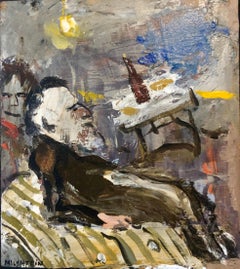
French Israeli Surrealist Judaica Jewish Oil Painting Rabbi at Table, Bottle
By Zvi Milshtein
Located in Surfside, FL
This is a small oil painting on on panel. A Rabbi at a Farbrengen
15.5 X 14.5 with frame.
6.5 X 5.5 painting alone
Zwy Milshtein (Zvi Tzvi Milstein) BIOGRAPHY 1934 Born in Kishinev...
Category
20th Century Expressionist Figurative Paintings
Materials
Oil, Panel
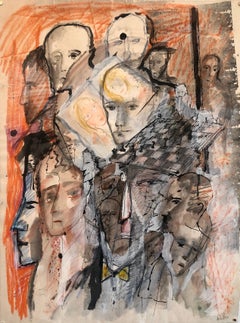
Chess Game Set French Israeli Surrealist Watercolor Gouache Painting
By Zvi Milshtein
Located in Surfside, FL
This is a large hand signed mixed media paiting on Arches French paper. A chess game encounter. Figurative Abstract Expressionist painting.
Zwy Milshtein (Zvi Tzvi Milstein) BIOGRA...
Category
20th Century Expressionist Figurative Paintings
Materials
Mixed Media, Watercolor, Gouache
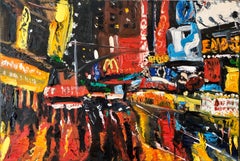
Vibrant New York City Times Square, Figural Abstract Expressionist Oil Painting
By Simon Gaon
Located in Surfside, FL
Simon Gaon (born 1943) is an American painter, Expressionist, and action painter.
This is a thick impasto oil painting. with a lot of texture and color. Times Square with 42nd st in...
Category
Early 2000s Abstract Expressionist Figurative Paintings
Materials
Canvas, Oil
Israeli Surrealist Judaica Abstract Oil Painting Naftali Bezem Bezalel School
By Naftali Bezem
Located in Surfside, FL
Shabbat Evening
Large Israeli masterpiece painting. Hand signed lower right
Provenance: Sara Kishon Gallery
Naftali Bezem (Hebrew: נפתלי בזם; born November 27, 1924) is an Israel...
Category
20th Century Modern Abstract Paintings
Materials
Canvas, Oil
You May Also Like
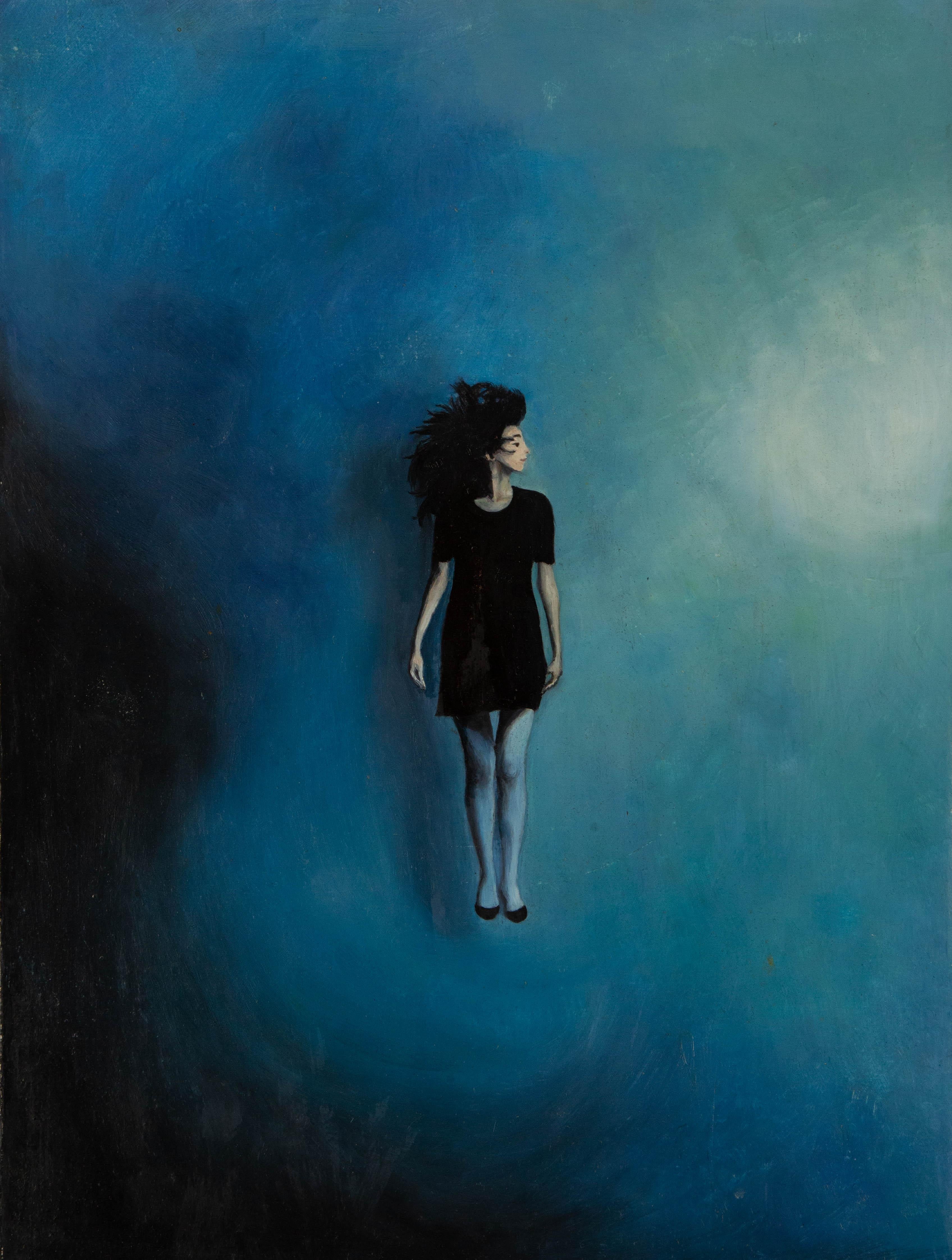
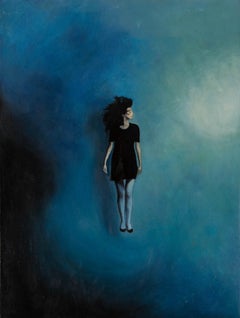
Guoqiang Ning Portrait Original Oil Painting "Blue Fantasy"
Located in New York, NY
Title: Blue Fantasy
Medium: Oil on canvas
Size: 15 x 12 inches
Frame: Framing options available!
Condition: The painting appears to be in excellent condition.
Note: This painting is ...
Category
21st Century and Contemporary Expressionist Abstract Paintings
Materials
Canvas, Oil
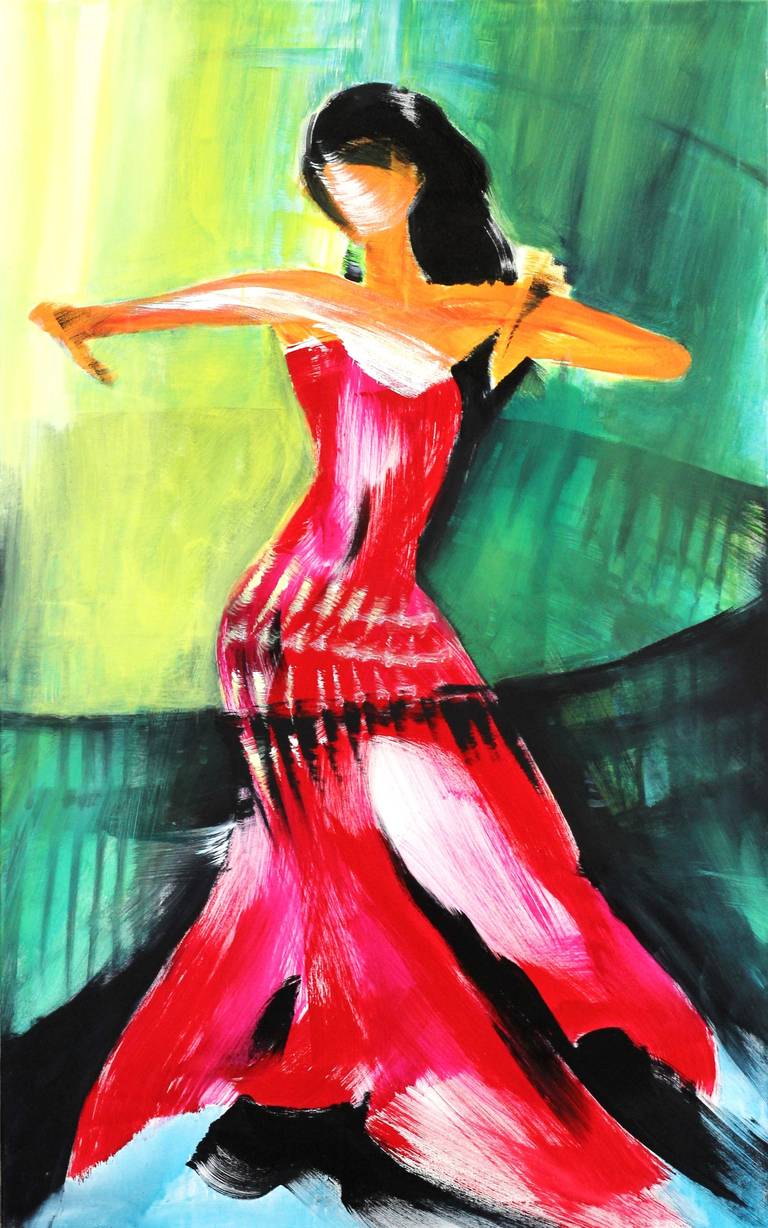
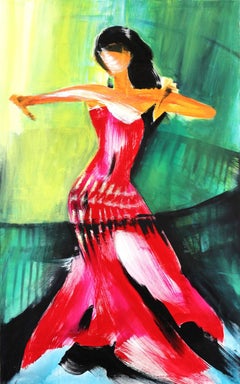
Dancer in Red - Large Colorful Expressive Figurative Oil Painting on Canvas
By Bettina Mauel
Located in Los Angeles, CA
Bettina Mauel expresses vitality and sensuality in her abstract and figurative paintings. “I paint what I experience,” she articulates. “This includes landscapes, dancers, and peop...
Category
21st Century and Contemporary Expressionist Abstract Paintings
Materials
Canvas, Oil
$1,680 Sale Price
40% Off
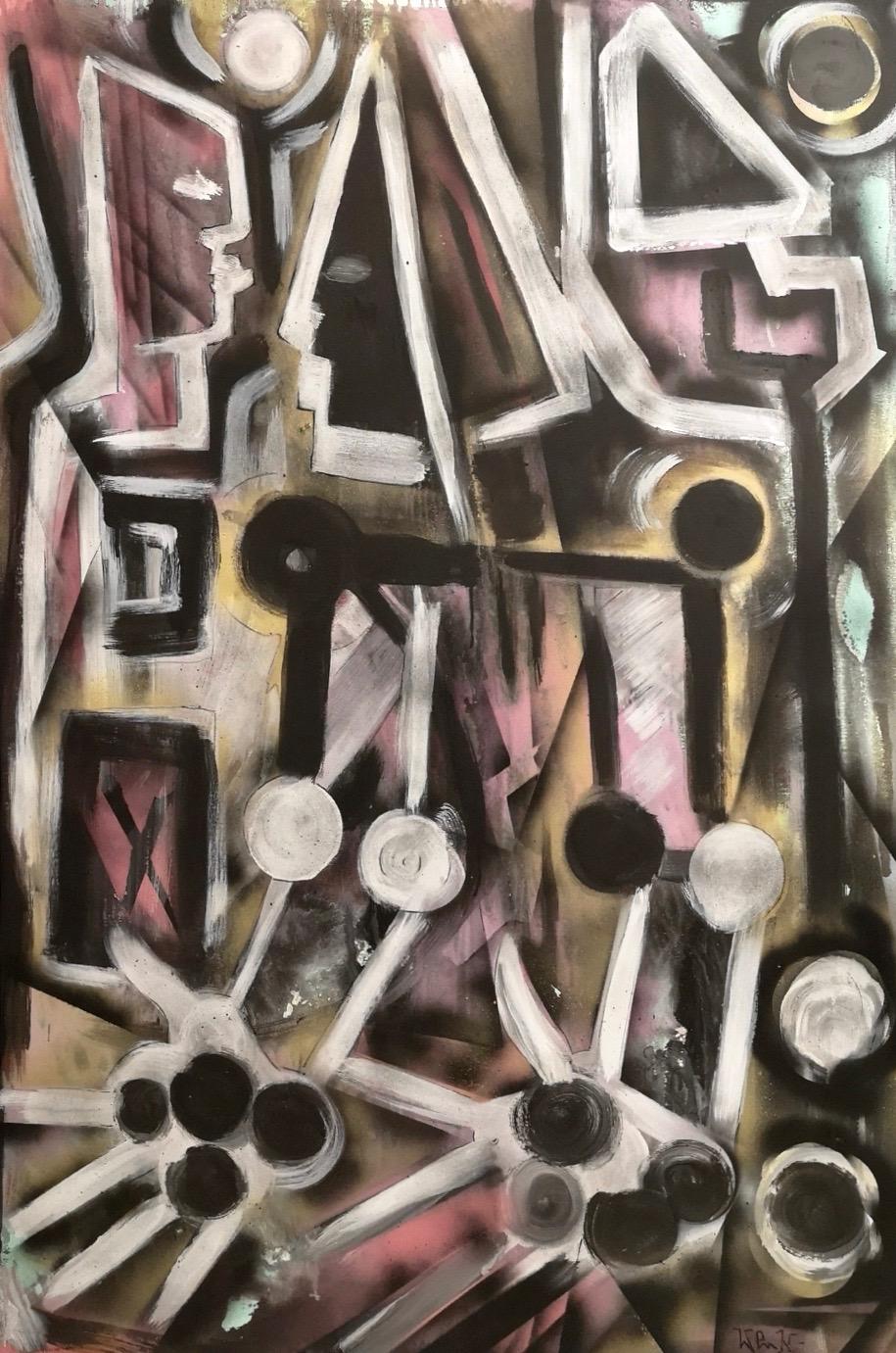
Untitled by Enzio Wenk, 2019 - Acrylic and Oil Paint on Canvas, Expressionism
By Enzio Wenk
Located in Bresso, IT
Acrylic paint and enamel on canvas.
Category
2010s Expressionist Figurative Paintings
Materials
Canvas, Acrylic, Oil
"Siamo in ogni cosa" by Enzio Wenk, 2010 - Oil Paint on Canvas, Expressionism
By Enzio Wenk
Located in Bresso, IT
Translated title: "We are in everything"
Oil paint on canvas.
It features a wooden frame and it can't be hung, since it is meant to lean against the wall.
Category
2010s Expressionist Figurative Paintings
Materials
Canvas, Oil, Wood
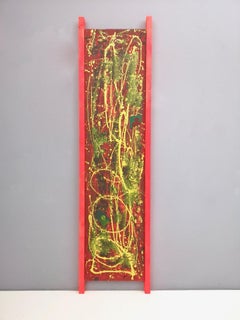
"Uomo alla finestra (sbarre)" by Enzio Wenk, 2018-Acrylic, Oil, Expressionism
By Enzio Wenk
Located in Bresso, IT
Translated title: "Man at the window (barriers)".
Acrylic paint and oil paint on canvas.
The artist sells the handmade, original and one-of-a-kind piece, but he reserves the right...
Category
2010s Expressionist Figurative Paintings
Materials
Canvas, Acrylic, Oil
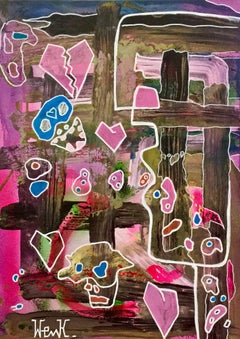
PAUL MAAS Les Vacances 1958 Family at the Beach Large Expressionist Oil Painting
By Paul Maas
Located in Rancho Santa Fe, CA
Provenance:
Collection of the Artist
Collection of Mr. & Mrs. Robert Warner, Washington, Connecticut
Collection of the Washington Art Association, Inc.
Private Collection, California...
Category
1950s Expressionist Figurative Paintings
Materials
Canvas, Oil