Items Similar to Rocky Cove, Mid-20th Century Landscape/Seascape by Cleveland School artist
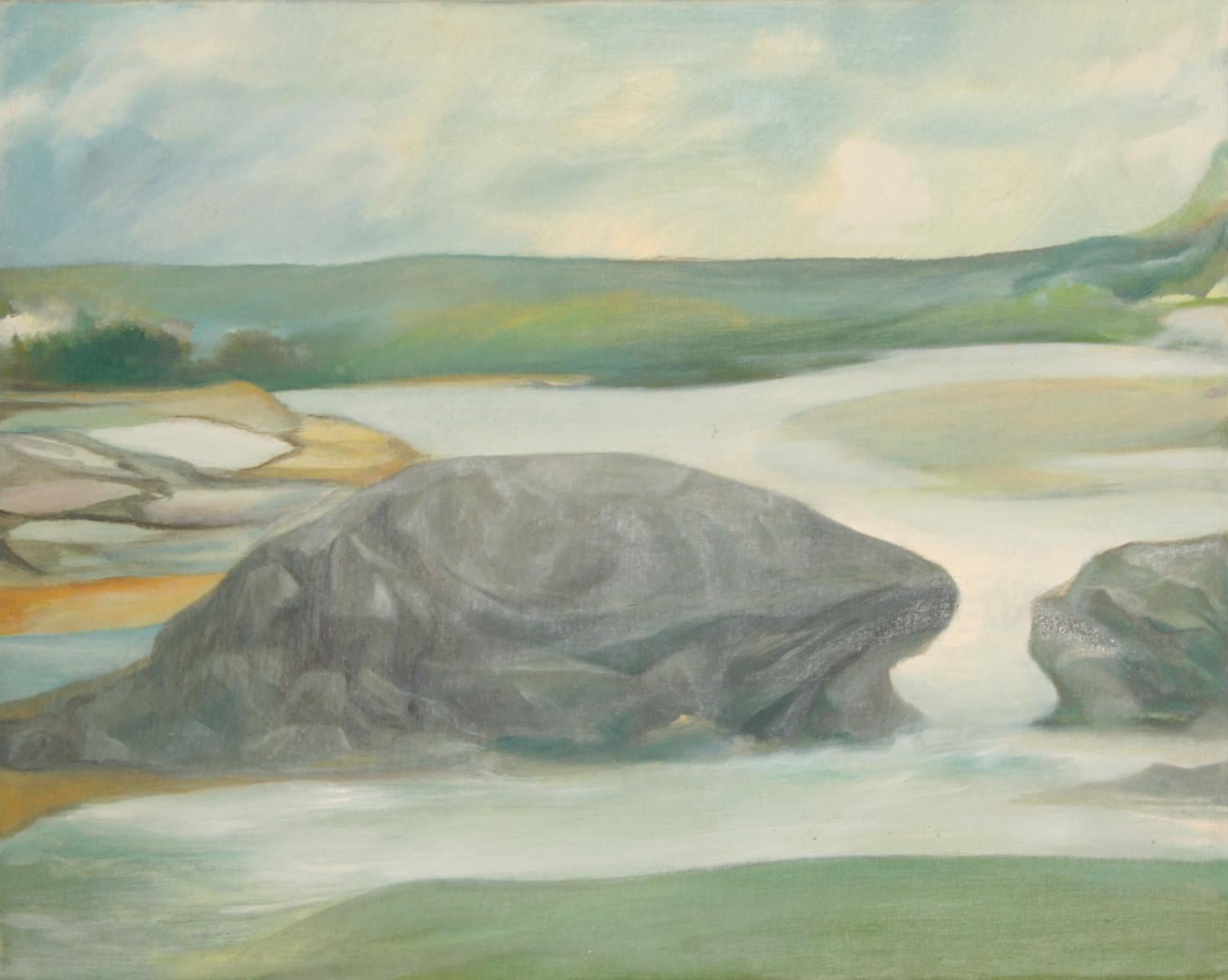
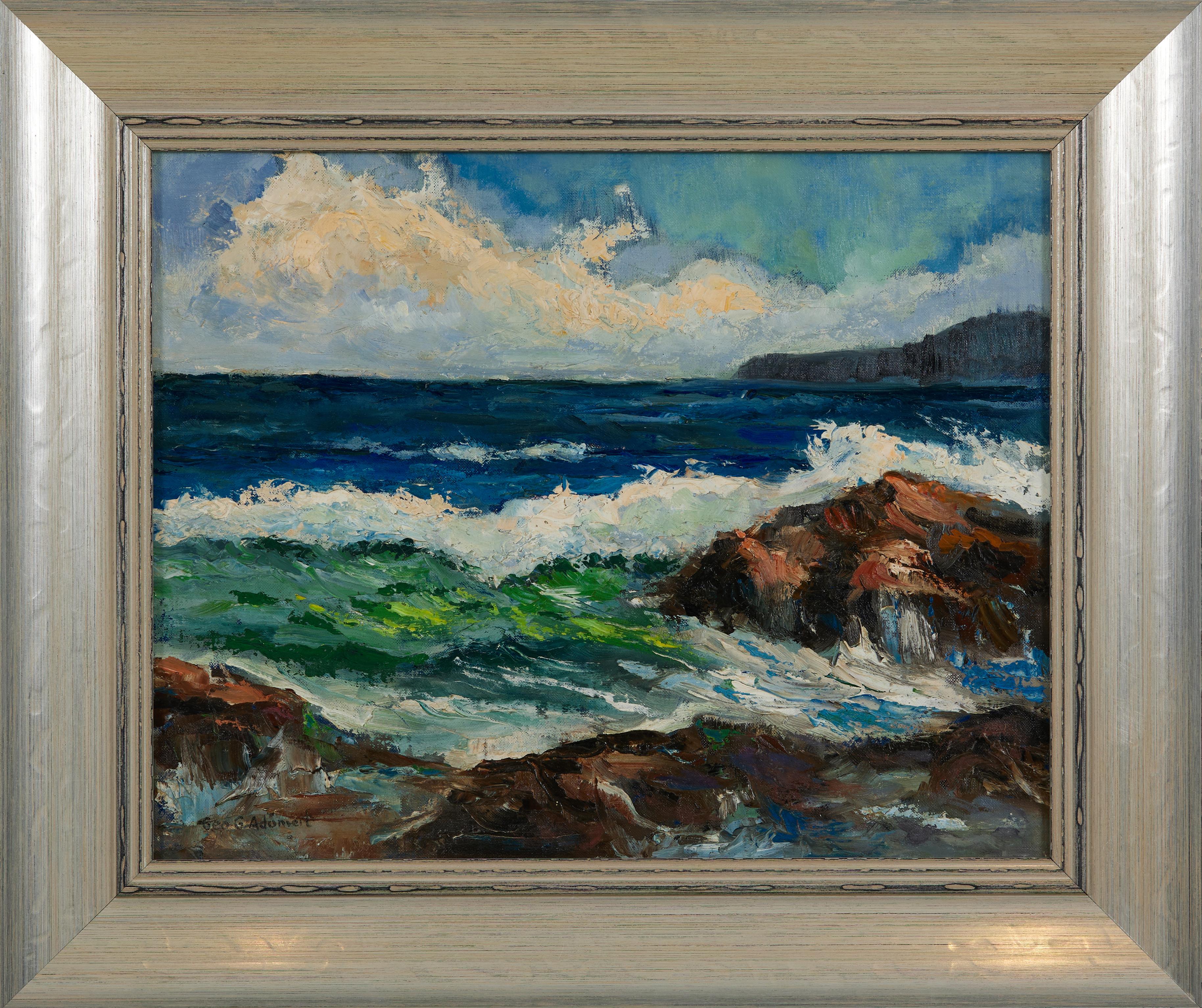
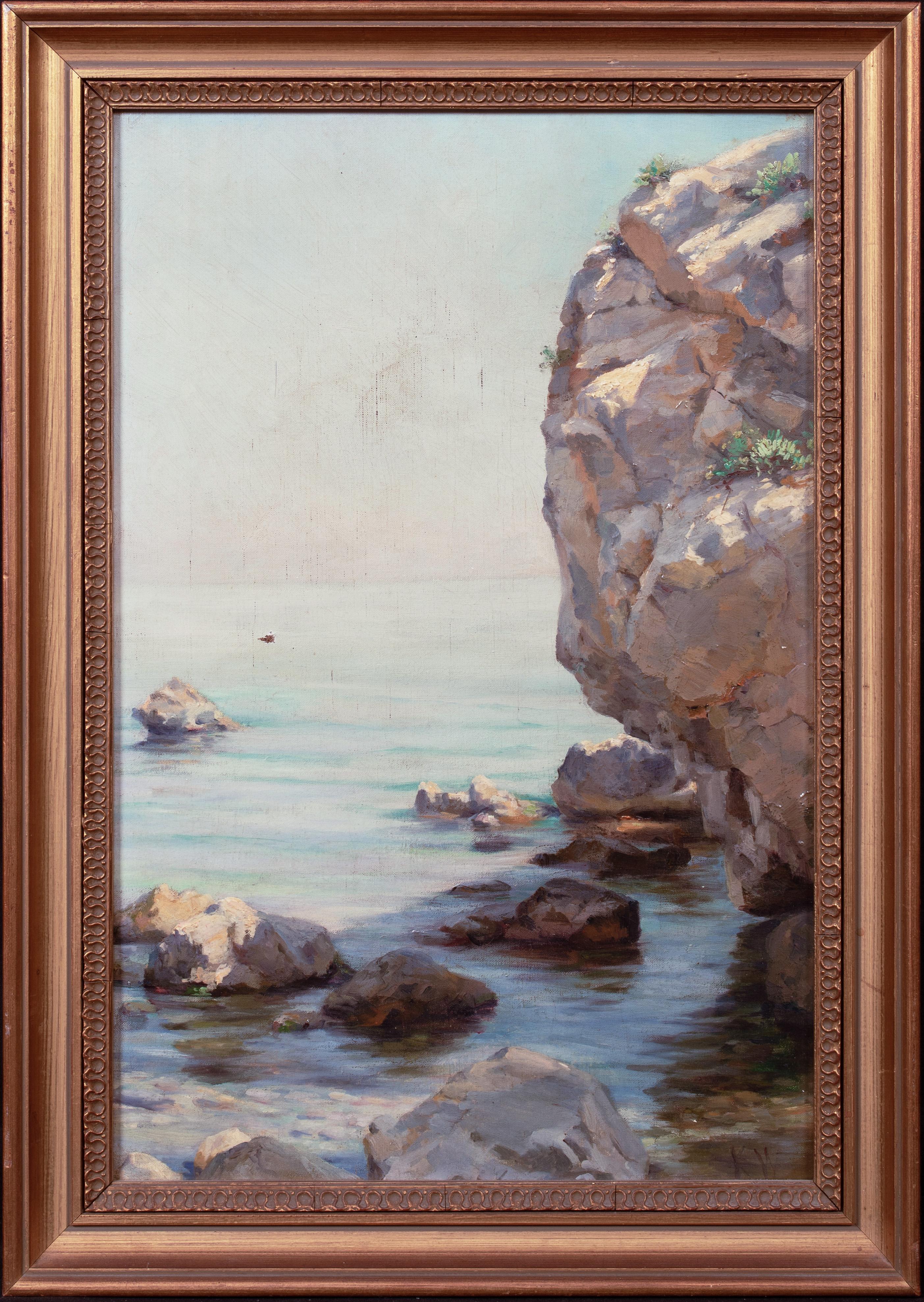
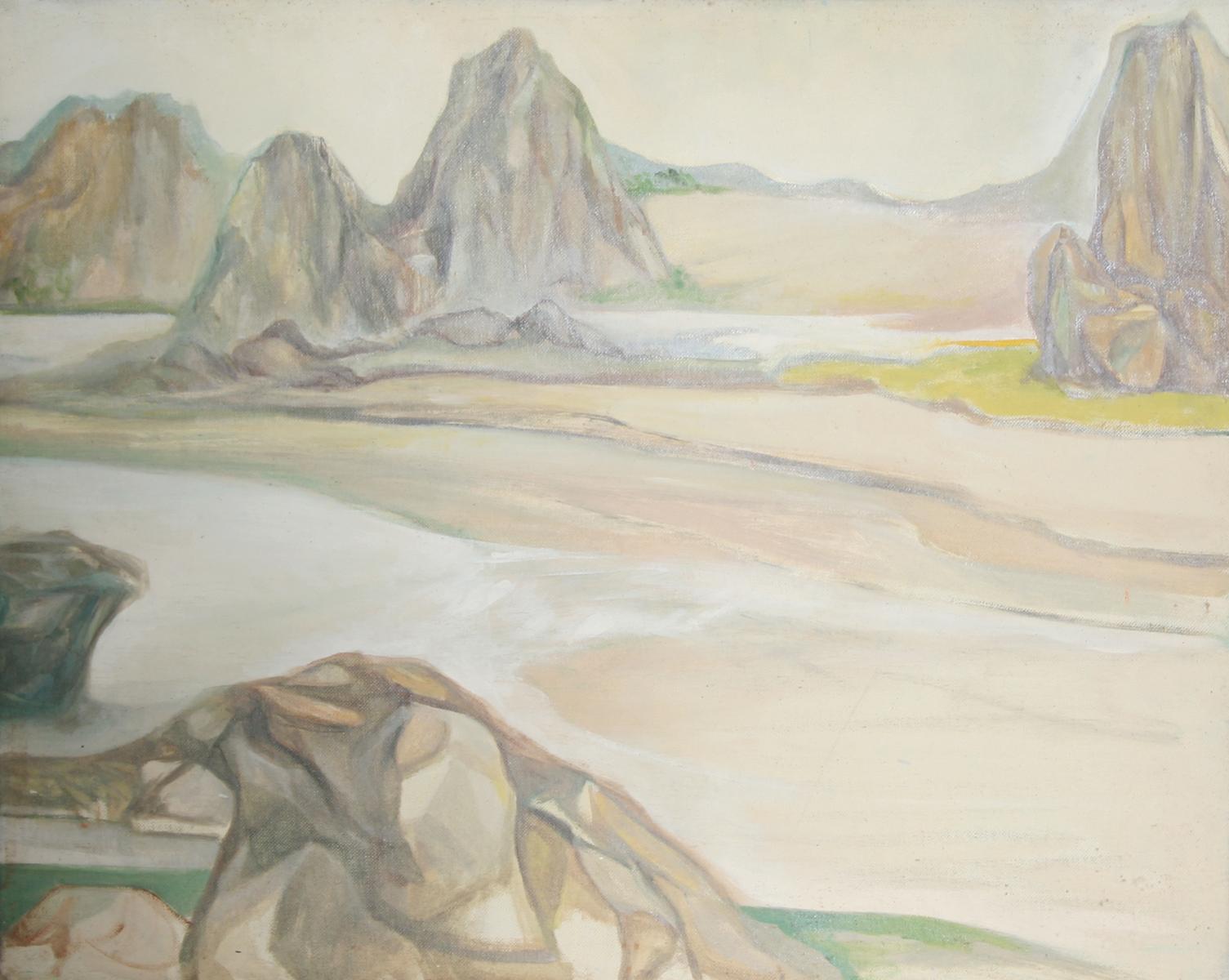
Video Loading
Want more images or videos?
Request additional images or videos from the seller
1 of 17
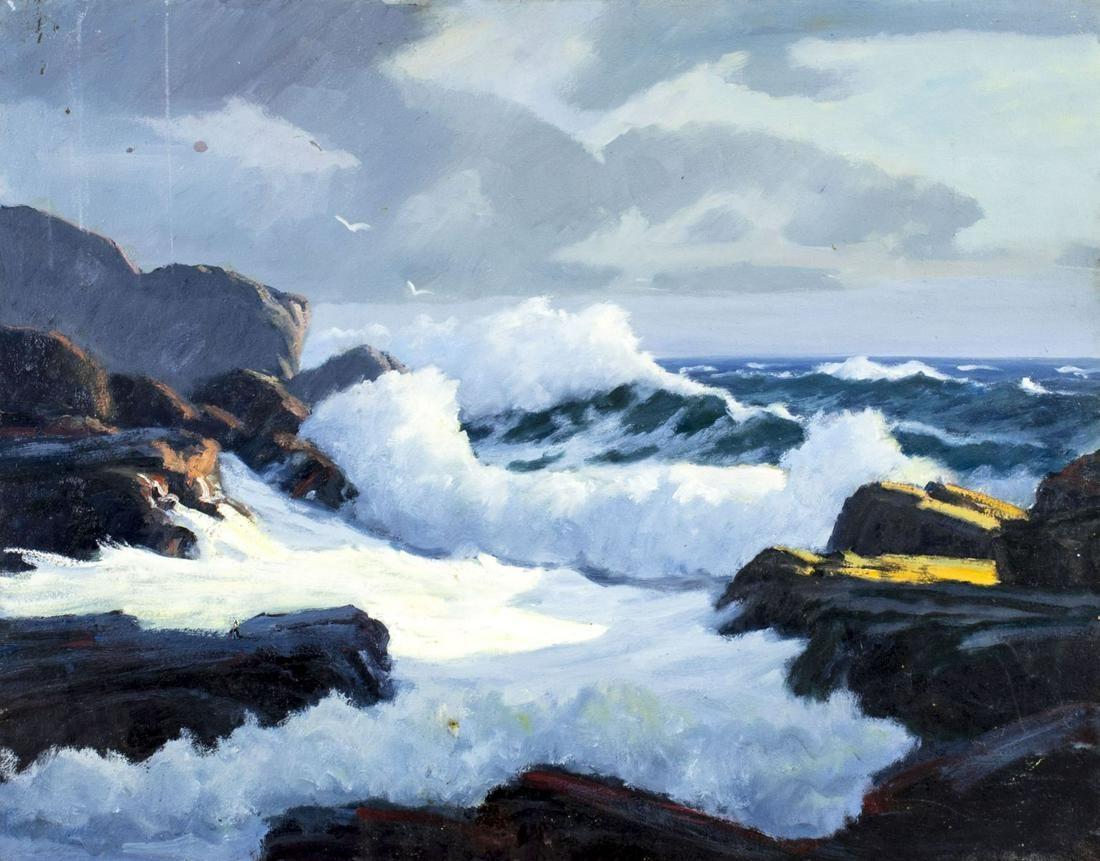
Carl Frederick GaertnerRocky Cove, Mid-20th Century Landscape/Seascape by Cleveland School artist1947
1947
$4,200
£3,181.11
€3,653.40
CA$5,885.57
A$6,398.81
CHF 3,392.65
MX$76,705.45
NOK 43,118.89
SEK 39,502.76
DKK 27,304.50
About the Item
Carl Frederick Gaertner (American, 1898-1952)
Rocky Cove, 1947
Oil on canvas
Signed lower left
24 x 30 inches
31 x 37 inches, framed
Carl Gaertner was one of the greatest painters to emerge from the Cleveland School. Born in Cleveland on April 18, 1898, he graduated from East Technical high school in 1918 and attended Western Reserve College. From 1920 to 1923 he studied at the Cleveland School of Art (now the Cleveland Institute of Art) with Henry Keller. In 1922, he entered his first May Show at the Cleveland Museum of Art and was awarded a prize for an industrial oil painting. From 1925 until 1952, he was known as a pillar of the Cleveland School and one of their most prestigious painting instructors.
Gaertner’s subject matter was always drawn from the world around him. Early in his career, he focused on Cleveland and its environs. This interest never left him, but as he matured, his choice of subjects broadened. He painted watercolors and oils of Bermuda in the mid 1920s and began making frequent trips to Provincetown beginning in the 1920’s. Like other Cleveland artists, he culled inspiration from travels within the United States, notably trips through Pittsburgh’s dramatic industrial landscapes and Cambridge Springs in Pennsylvania, to the mountains of West Virginia, and to Cape Cod. From the mid 1940s until his death, he also produced paintings based on sketches made during train rides to visit galleries in New York City.
At the time of his premature death in 1952, Carl Gaertner enjoyed a considerable reputation as a master of American Scene painting. By the 1940s, Gaertner was represented by the venerable Macbeth Gallery in New York City and his paintings were exhibited in shows throughout the United States. In 1944 and 1952, Gaertner received the National Academy of Design’s highest award for individual work in a group exhibition, and his work was exhibited in the Cleveland Museum of Art’s May Show for 27 years. Gaertner’s works are in the collections of many prestigious institutions, including the Cleveland Museum of Art, the Metropolitan Museum of Art, the Chicago Institute and the Whitney Museum of American Art.
The reflective eye of Gaertner chronicled three decades of Cleveland and the landscapes of the Midwest and its people. It is all there: the growing might of industrial Cleveland; the mass-produced promise of the assembly line, giving way to a dawning awareness of lost freedom and the surrender of individuality; the love affair of Americans with nature and the ideals of Thoreau and Whitman and Frost; and the conflict between that love affair and industrial promise.
Gaertner was just achieving national acclaim at the time of his early death at the age of 54. A resurgence of enthusiasm for Gaertner and his works began in the 1970’s and has steadily increased and incrementally boosted the value of his work, with a fine rare example, “The Popcorn Man” reaching $250,000 at auction.
- Creator:Carl Frederick Gaertner (1898 - 1898, American)
- Creation Year:1947
- Dimensions:Height: 31 in (78.74 cm)Width: 37 in (93.98 cm)
- Medium:
- Period:
- Condition:
- Gallery Location:Beachwood, OH
- Reference Number:1stDibs: LU1768215988162
Carl Frederick Gaertner
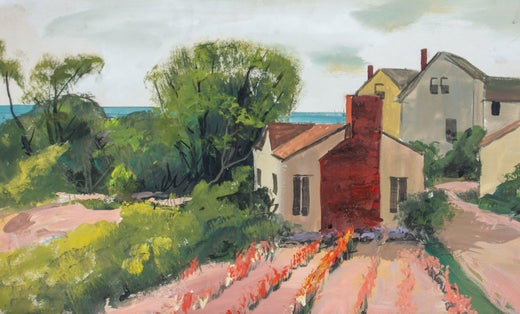
Carl Gaertner was one of the greatest painters to emerge from the Cleveland School. Born in Cleveland on April 18, 1898, he graduated from East Technical high school in 1918 and attended Western Reserve College. From 1920 to 1923 he studied at the Cleveland School of Art (now the Cleveland Institute of Art) with Henry Keller. In 1922, he entered his first May Show at the Cleveland Museum of Art and was awarded a prize for an industrial oil painting. From 1925 until 1952, he was known as a pillar of the Cleveland School and one of their most prestigious painting instructors. Gaertner’s subject matter was always drawn from the world around him. Early in his career, he focused on Cleveland and its environs. This interest never left him, but as he matured, his choice of subjects broadened. He painted watercolors and oils of Bermuda in the mid 1920s and began making frequent trips to Provincetown beginning in the 1920’s. Like other Cleveland artists, he culled inspiration from travels within the United States, notably trips through Pittsburgh’s dramatic industrial landscapes and Cambridge Springs in Pennsylvania, to the mountains of West Virginia, and to Cape Cod. From the mid 1940s until his death, he also produced paintings based on sketches made during train rides to visit galleries in New York City. At the time of his premature death in 1952, Carl Gaertner enjoyed a considerable reputation as a master of American Scene painting. By the 1940s, Gaertner was represented by the venerable Macbeth Gallery in New York City and his paintings were exhibited in shows throughout the United States. In 1944 and 1952, Gaertner received the National Academy of Design’s highest award for individual work in a group exhibition, and his work was exhibited in the Cleveland Museum of Art’s May Show for 27 years. Gaertner’s works are in the collections of many prestigious institutions, including the Cleveland Museum of Art, the Metropolitan Museum of Art, the Chicago Institute and the Whitney Museum of American Art. The reflective eye of Gaertner chronicled three decades of Cleveland and the landscapes of the Midwest and its people. It is all there: the growing might of industrial Cleveland; the mass-produced promise of the assembly line, giving way to a dawning awareness of lost freedom and the surrender of individuality; the love affair of Americans with nature and the ideals of Thoreau and Whitman and Frost; and the conflict between that love affair and industrial promise. Gaertner was just achieving national acclaim at the time of his early death at the age of 54. A resurgence of enthusiasm for Gaertner and his works began in the 1970’s and has steadily increased and incrementally boosted the value of his work, with a fine rare example, “The Popcorn Man” reaching $250,000 at auction.
About the Seller
5.0
Gold Seller
Premium sellers maintaining a 4.3+ rating and 24-hour response times
Established in 1975
1stDibs seller since 2022
44 sales on 1stDibs
Typical response time: 1 hour
- ShippingRetrieving quote...Shipping from: Beachwood, OH
- Return Policy
More From This Seller
View AllCoastal Scene, 20th Century Seascape, Cleveland School Artist
By George Adomeit
Located in Beachwood, OH
George Gustav Adomeit (American, 1879-1967)
Coastal Scene
Oil on canvas
Signed lower left
19 x 23 inches
21.5 x 25.5 inches, framed
A major painter of American scene subjects, Georg...
Category
20th Century American Modern Figurative Paintings
Materials
Oil
Crashing Waves on Atlantic Coast, Mid-century Seascape, Cleveland School Artist
By Frank Wilcox
Located in Beachwood, OH
Frank Nelson Wilcox (American, 1887-1964)
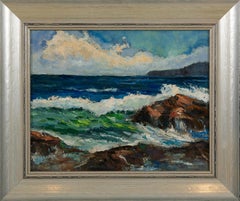
Crashing Waves on the Atlantic Coast, 1957
Watercolor and graphite on paper
Signed and dated lower right
22 x 29 inches
Frank Nelson Wilcox (October 3, 1887 – April 17, 1964) was a modernist American artist and a master of watercolor. Wilcox is described as the "Dean of Cleveland School painters," though some sources give this appellation to Henry Keller or Frederick Gottwald. Wilcox was born on October 3, 1887 to Frank Nelson Wilcox, Sr. and Jessie Fremont Snow Wilcox at 61 Linwood Street in Cleveland, Ohio. His father, a prominent lawyer, died at home in 1904 shortly before Wilcox' 17th birthday. His brother, lawyer and publisher Owen N. Wilcox, was president of the Gates Legal Publishing Company or The Gates Press. His sister Ruth Wilcox was a respected librarian.
In 1906 Wilcox enrolled from the Cleveland School of Art under the tutelage of Henry Keller, Louis Rorimer, and Frederick Gottwald. He also attended Keller's Berlin Heights summer school from 1909. After graduating in 1910, Wilcox traveled and studied in Europe, sometimes dropping by Académie Colarossi in the evening to sketch the model or the other students at their easels, where he was influenced by French impressionism. Wilcox was influenced by Keller's innovative watercolor techniques, and from 1910 to 1916 they experimented together with impressionism and post-impressionism. Wilcox soon developed his own signature style in the American Scene or Regionalist tradition of the early 20th century. He joined the Cleveland School of Art faculty in 1913. Among his students were Lawrence Edwin Blazey, Carl Gaertner, Paul Travis, and Charles E. Burchfield. Around this time Wilcox became associated with Cowan Pottery.
In 1916 Wilcox married fellow artist Florence Bard, and they spent most of their honeymoon painting in Berlin Heights with Keller. They had one daughter, Mary. In 1918 he joined the Cleveland Society of Artists, a conservative counter to the Bohemian Kokoon Arts Club, and would later serve as its president. He also began teaching night school at the John Huntington Polytechnic Institute at this time, and taught briefly at Baldwin-Wallace College.
Wilcox wrote and illustrated Ohio Indian Trails in 1933, which was favorably reviewed by the New York Times in 1934. This book was edited and reprinted in 1970 by William A. McGill. McGill also edited and reprinted Wilcox' Canals of the Old Northwest in 1969. Wilcox also wrote, illustrated, and published Weather Wisdom in 1949, a limited edition (50 copies) of twenty-four serigraphs (silk screen prints) accompanied by commentary "based upon familiar weather observations commonly made by people living in the country."
Wilcox displayed over 250 works at Cleveland's annual May Show. He received numerous awards, including the Penton Medal for as The Omnibus, Paris (1920), Fish Tug on Lake Erie (1921), Blacksmith Shop (1922), and The Gravel Pit (1922). Other paintings include The Trailing Fog (1929), Under the Big Top (1930), and Ohio Landscape...
Category
1950s American Modern Figurative Drawings and Watercolors
Materials
Watercolor, Graphite
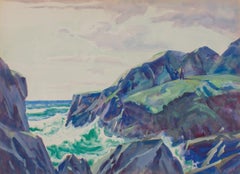
Cape Ann Coast, Seascape/Landscape Western Massachusetts, Cleveland School
By George Adomeit
Located in Beachwood, OH
George Gustav Adomeit (American, 1879-1967)
Cape Ann Coast, 1922
Oil on canvas
Signed lower left
20 x 24 inches
20.5 x 24.5 inches, framed
A major painter of American scene subjects...
Category
1920s Landscape Paintings
Materials
Oil
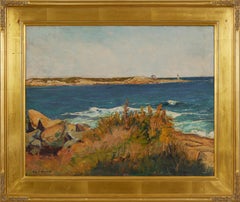
Cliffs at Paramé, France, 20th century seascape
landscape watercolor
By Frank Wilcox
Located in Beachwood, OH
Frank Nelson Wilcox (American, 1887-1964)
Cliffs at Paramé, France, c. 1926
Watercolor on paper
Signed lower right
14 x 17.5 inches
Frank Nelson Wilcox (October 3, 1887 – April 17...
Category
1920s American Modern Landscape Drawings and Watercolors
Materials
Watercolor
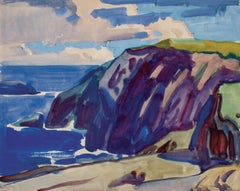
View Towards Christmas Cove, Maine, Early 20th Century East Coast Landscape
By Frank Wilcox
Located in Beachwood, OH
View Towards Christmas Cove, Maine, c. 1923
Watercolor on paper
Signed lower right
14 x 19.5 inches
Frank Nelson Wilcox (October 3, 1887 – April 17, 1...
Category
1920s American Modern Landscape Drawings and Watercolors
Materials
Watercolor
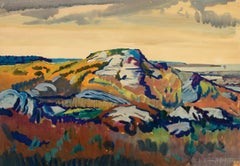
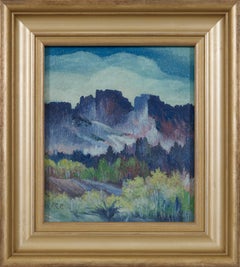
Western Mountainous Landscape, Slovenian-American Artist
By Harvey Gregory Prusheck
Located in Beachwood, OH
Harvey Gregory Prusheck (Slovenian/American, 1887-1940)
Western Landscape
Oil on board
Monogram lower left
9.5 x 8 inches
11.75 x 10.5 inches, framed
Harvey Gregory Prusheck was a S...
Category
Early 20th Century Landscape Paintings
Materials
Oil
You May Also Like
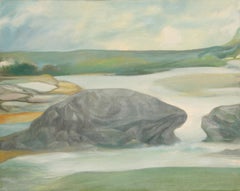
Rocky Seascape, Oil on Board Painting by American Artist John F. Leonard
Located in Long Island City, NY
Rocky Seascape (55)
John F. Leonard
American (1921–1987)
Date: circa 1965
Oil on Board, unsigned
Size: 16 in. x 20 in. (40.64 cm x 50.8 cm)
Category
1960s American Modern Landscape Paintings
Materials
Oil, Board
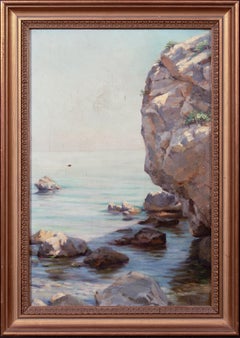
A Rocky Cornish Coast, early 20th Century
By Kathleen Walker
Located in Blackwater, GB
A Rocky Cornish Coast, early 20th Century
by Kathleen Walker (1893-1966)
early 20th Century study of a rocky Cornish coast by Kathleen Walker, oil on ...
Category
19th Century Portrait Paintings
Materials
Canvas, Oil
$2,472 Sale Price
25% Off
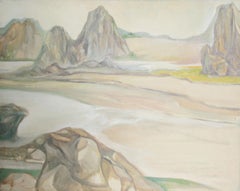
Sea Cliffs, Oil on Board Painting by American Artist John F. Leonard
Located in Long Island City, NY
Sea Cliffs (54)
John F. Leonard
American (1921–1987)
Date: circa 1965
Oil on Board, unsigned
Size: 16 in. x 20 in. (40.64 cm x 50.8 cm)
Category
1960s American Modern Landscape Paintings
Materials
Oil, Board
Rocky Seashore (Landscape Oil Painting)
Located in New Orleans, LA
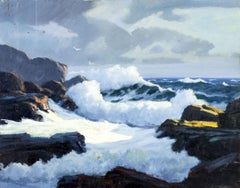
A dynamic oil-on-panel by New Jersey landscape painter George Holloway. A very convincing depiction of big waves smashing against a rocky shore, with l...
Category
Mid-20th Century Landscape Paintings
Materials
Oil
Rocky Coast
Located in Fredericksburg, VA
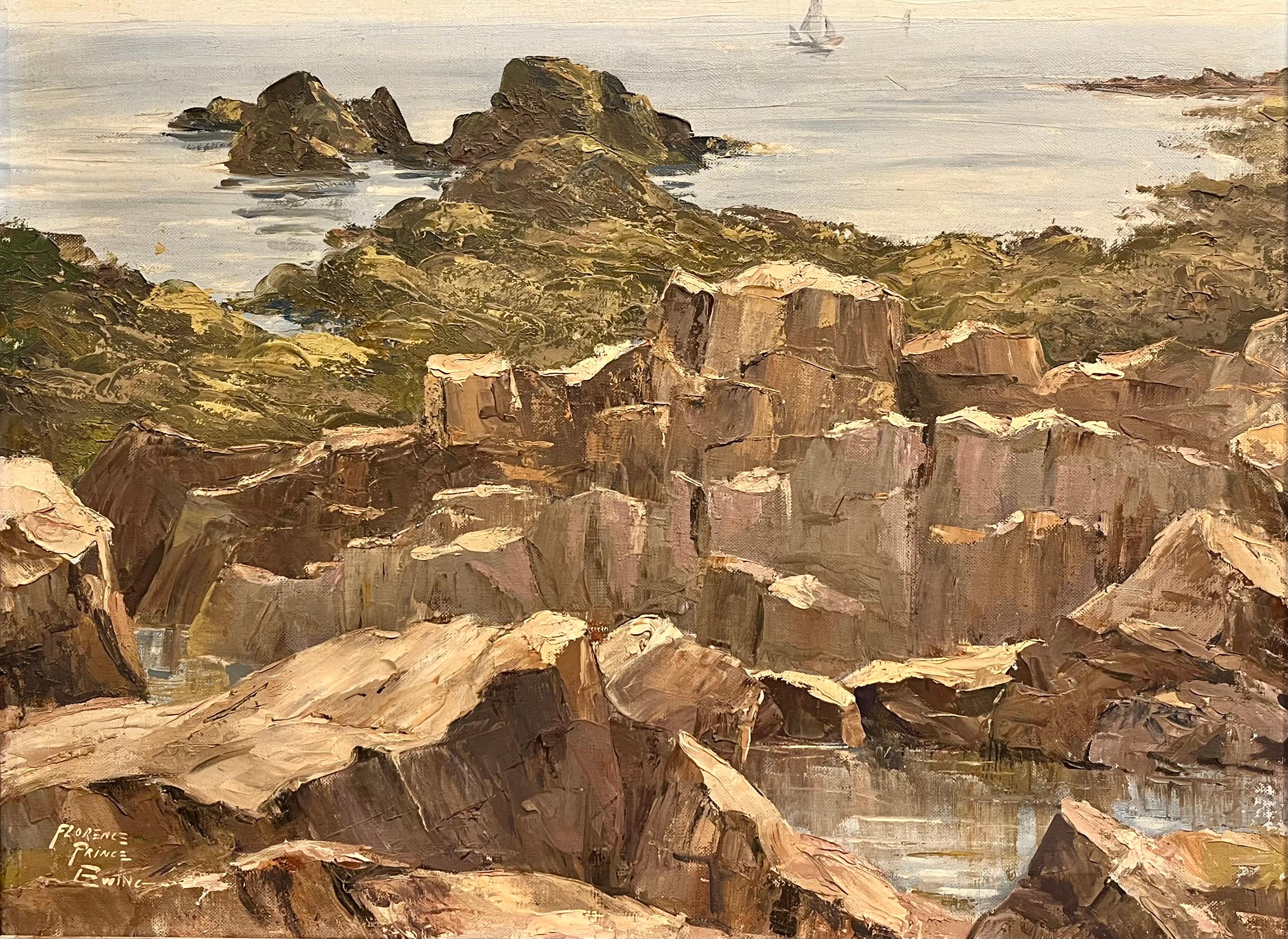
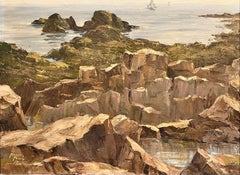
This striking seascape by Florence Prince Ewing captures the rugged beauty of a rocky coastline with remarkable texture and vitality. The foreground is filled with angular formations...
Category
Mid-20th Century Impressionist Landscape Paintings
Materials
Canvas, Oil
Rocky Coast 1874
By John Appleton Brown
Located in North Clarendon, VT
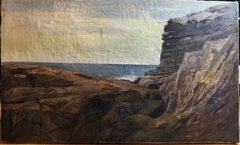
Wonderful J. Appleton Brown oil on canvas painting of a rocky New England coastline. 12" x 20", signed and dated lower right. Canvas has been relined and there have been some minor r...
Category
1870s American Impressionist Landscape Paintings
Materials
Oil
$980 Sale Price
56% Off
More Ways To Browse
Midwest Landscape
Oil Paintings 1952
Scheiber Hugo
Simons Marcel
Solimena Francesco
Syrian Paintings
Teddy Bear Painting
The Flagellation
Vintage Flamenco Dancer Painting
William Boyer
Woman Painted Chair
Zodiac Painting
Abstract Figurative Expressionism Paintings
Antique Paintings Peter Paul Rubens
Arlequin Painting
Bistro Painting
Carol Marine
Clementine Hunter