Items Similar to Coney Island, Fourth of July
Want more images or videos?
Request additional images or videos from the seller
1 of 5
Charles E. WilletteConey Island, Fourth of Julyc. 1940s
c. 1940s
$4,500
£3,433.62
€3,906
CA$6,319.46
A$6,915.89
CHF 3,654.44
MX$82,545.67
NOK 46,635.19
SEK 42,651.68
DKK 29,175.81
About the Item
Coney Island, Fourth of July, c. 1940s, oil on canvas applied to Masonite, signed upper right, 26 x 21 1/2 inches, presented in its original frame
During the 1930s and 40s, Coney Island served as a vital escape from the hardships of life in Depression-Era New York City. For working-class families, it offered an affordable reprieve—sun, sand, and spectacle within reach of the subway. The boardwalk buzzed with energy, drawing millions each summer with attractions like Luna Park, Steeplechase, and Dreamland. In Coney Island, Fourth of July, Charles E. Willlette depicts the joy of holiday fireworks against the backdrop of some of the most iconic symbols of Coney Island’s enduring appeal, including the Parachute Jump, introduced at the 1939 New York World’s Fair and relocated to Coney Island in 1941. Originally designed as a military training device, it became a thrilling ride offering panoramic views of the ocean and city. Towering 250 feet high, it quickly earned the nickname “the Eiffel Tower of Brooklyn.” Its skeletal frame still stands today as a landmark, representing both the technological daring of its era and the joyous escapism Coney Island provided.
Charles E. Willette was an American painter and commercial artist. A native of Sandy Point, Maine, Willette studied at New York's Art Students League with Moses Soyer and Robert Brackman during the mid 1930s, as well as at the Brooklyn Museum. He completed murals for the Lincoln Hotel in New York City and the Hackett's Building in Bangor, Maine. Willette was a member of the Waldo (Maine) Country Artists. He had solo exhibitions at Ross AG (New Jersey), the Maine State House, and A. U. Newton Gallery (New York), all in 1949. Later in 1989, he had a solo show at Opus 71 Gallery (New Hampshire). In addition to his fine art practice, Willette served as the chief commercial artist for Whelan Drug Company in New York City. He is listed in Who Was Who in American Art and other standard references.
- Creator:Charles E. Willette (1899 - 1979, American)
- Creation Year:c. 1940s
- Dimensions:Height: 26 in (66.04 cm)Width: 21.5 in (54.61 cm)Depth: 2 in (5.08 cm)
- More Editions Sizes:26 x 21.5 inchesPrice: $4,500
- Medium:
- Movement Style:
- Period:
- Condition:
- Gallery Location:Los Angeles, CA
- Reference Number:1stDibs: LU1859216795452
About the Seller
5.0
Gold Seller
Premium sellers maintaining a 4.3+ rating and 24-hour response times
1stDibs seller since 2022
17 sales on 1stDibs
- ShippingRetrieving quote...Shipping from: Los Angeles, CA
- Return Policy
More From This Seller
View AllWorld War II Invades Central Park
By Cecil Crosley Bell
Located in Los Angeles, CA
World War II Invades Central Park, 1943, oil on canvas, signed lower right, 30 x 36 inches, literature: Barton, Phyllis, Cecil C. Bell, McGrew Color Graphics (Kansas City, MO, 1976),...
Category
1940s American Realist Landscape Paintings
Materials
Canvas, Oil
Indolent Interlude
Located in Los Angeles, CA
Indolent Interlude, 1936, oil on board, signed and dated lower middle, 12 x 16 inches, signed verso and inscribed with title and date, exhibited Uncommissioned Portrait Exhibition, A...
Category
1930s American Modern Figurative Paintings
Materials
Oil, Board
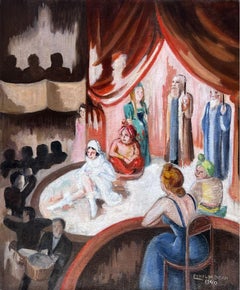
The Show is On
Located in Los Angeles, CA
The Show is On, 1940, oil on canvas, signed and dated lower right, 24 x 20 inches, exhibited: 30th Annual Exhibition of the Associated Artists of Pittsburgh, Carnegie Institute, Pitt...
Category
1940s American Modern Figurative Paintings
Materials
Canvas, Oil
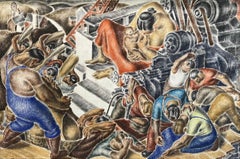
Farm Tragedy (Untitled)
Located in Los Angeles, CA
Farm Tragedy (Untitled), c. 1930s, mixed media on plaster on panel, unsigned, 22 1/8 x 32 inches; label verso reads: "New York Artists Equity Association, New York, NY," provenance i...
Category
1930s American Modern Figurative Paintings
Materials
Mixed Media
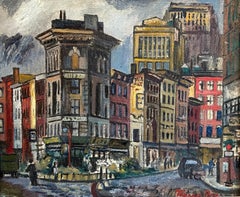
Downtown New York
Located in Los Angeles, CA
Downtown New York, c. 1930s, oil on canvas, signed lower right, 10 x 12 inches; label verso reads: "Harry Dix / Title Downtown New York / Medium Oil"
Harry Dix was a 20th-century p...
Category
1930s American Modern Landscape Paintings
Materials
Canvas, Oil
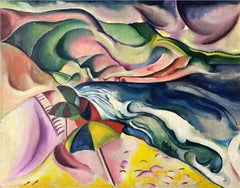
Sea and Land Abstraction
Located in Los Angeles, CA
Sea and Land Abstraction, 1936, oil on canvas board, 16 x 20 inches, signed and dated lower left, exhibited at the 18th Annual Paintings and Sculpture Exhibit at the Los Angeles Muse...
Category
1930s American Modern Abstract Paintings
Materials
Oil, Board
You May Also Like
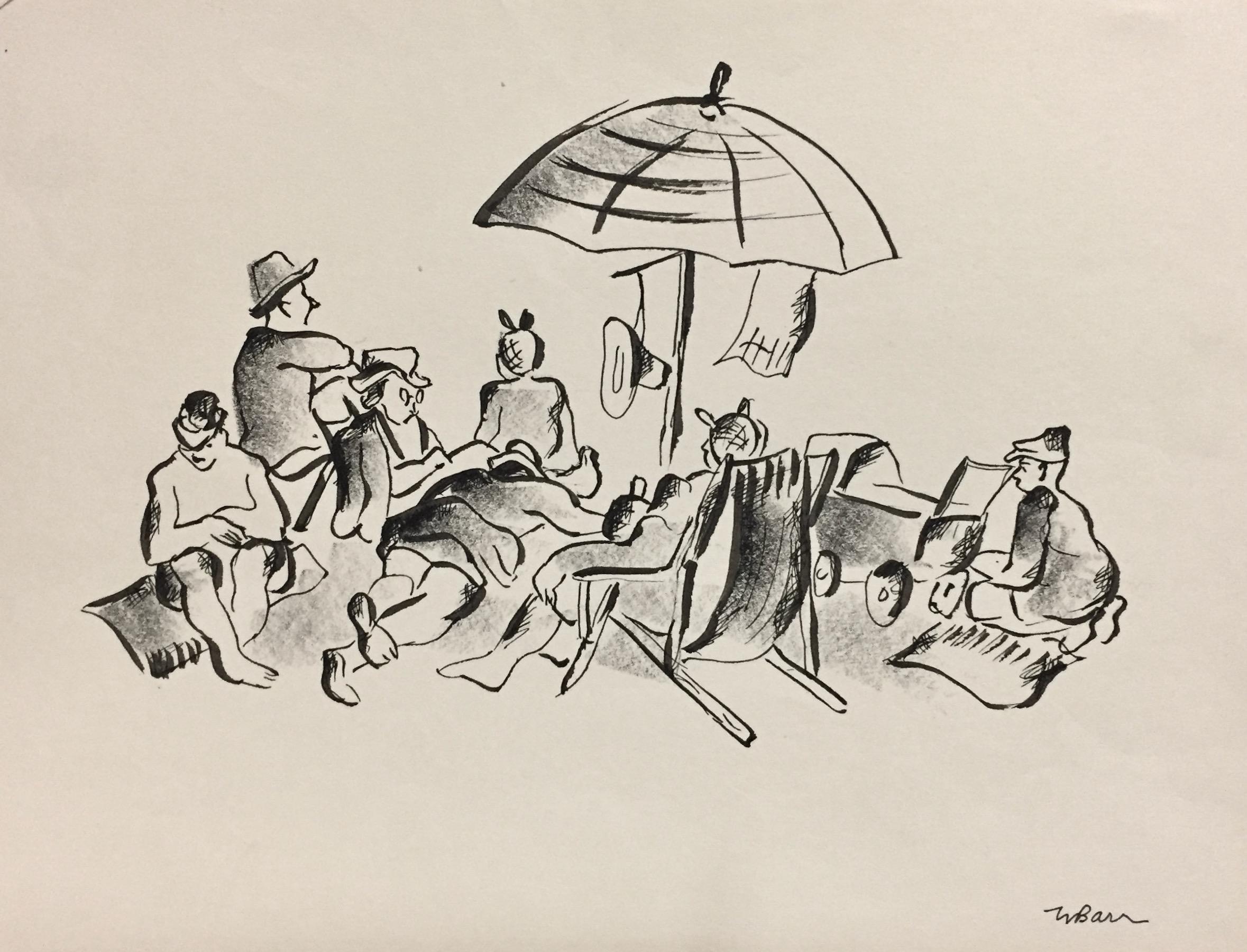
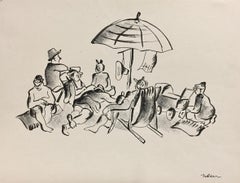
Norman Barr, Coney Island (New York City)
By Norman Barr
Located in New York, NY
An idyllic scene at New York City's favorite beach, Coney Island. Before the year was over Barr was in the Army.
It is ink and litho-crayon. Barr liked that medium because it didn't ...
Category
Mid-20th Century Ashcan School Figurative Drawings and Watercolors
Materials
Mixed Media
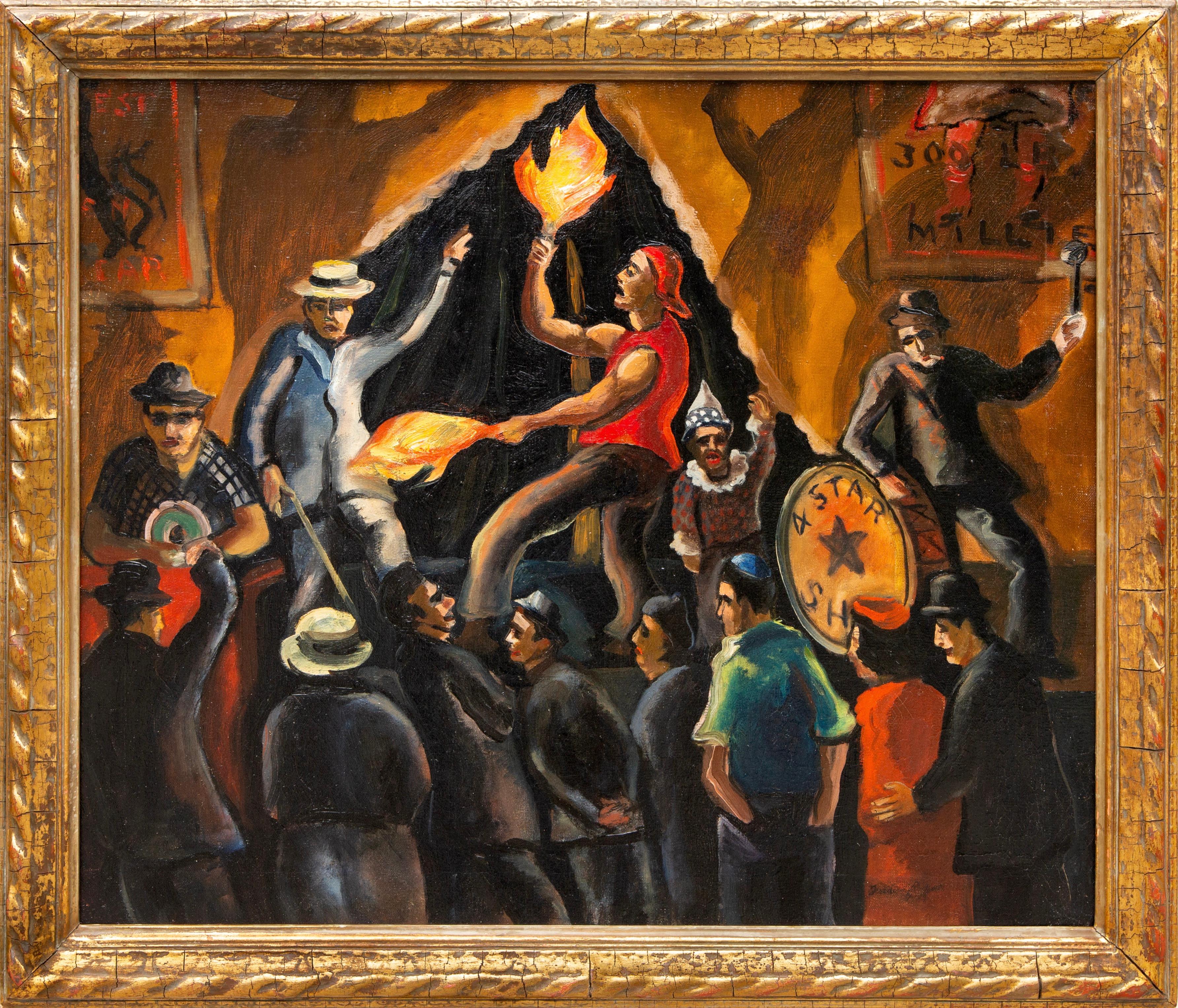
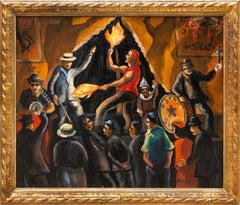
Coney Island Fire Eaters American Scene Modernism WPA Social Realism Mid-Century
Located in New York, NY
Coney Island Fire Eaters American Scene Modernism WPA Social Realism Mid-Century
Frederick "Fritz" Frey Rockwell (1917-1977)
Coney Island Fire Eaters
25 x 30 inches
Oil on Canvas
Si...
Category
1930s American Modern Figurative Paintings
Materials
Canvas, Oil
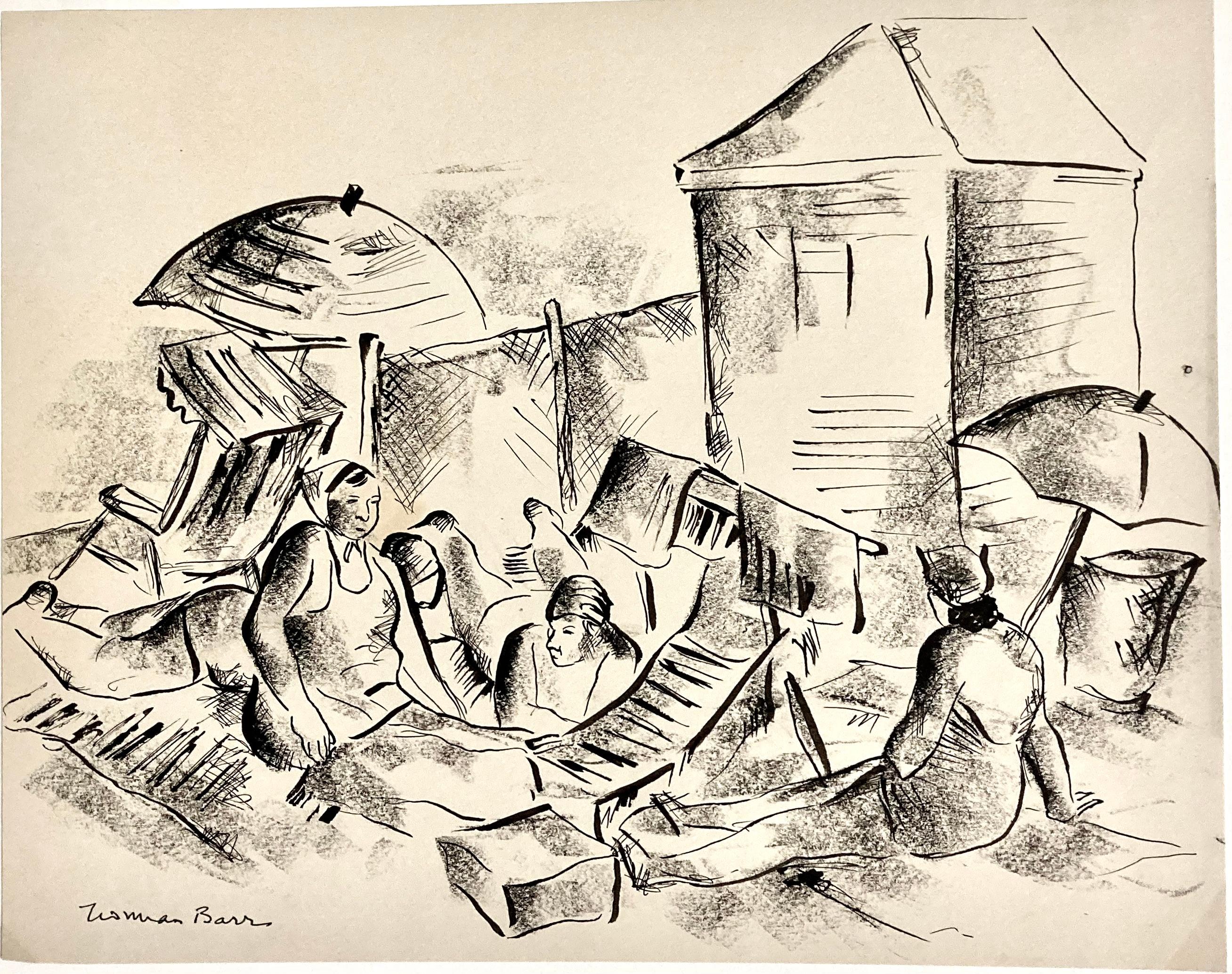
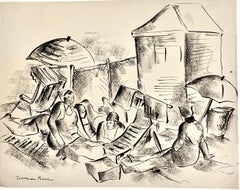
Norman Barr, Coney Island (large), 1940
By Norman Barr
Located in New York, NY
Norman Barr recorded his beloved New York City from the Bronx, to Coney Island, to the Fulton Fish Market.
In this period he was on the New Deal's Mural ...
Category
Mid-20th Century Ashcan School Figurative Drawings and Watercolors
Materials
Crayon, India Ink
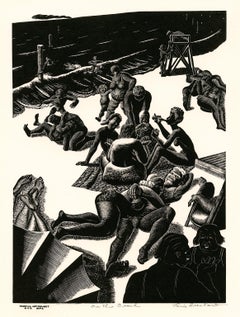
On the Beach (Coney Island, New York) — 1930s Graphic Modernism, WPA
By Lou Barlow
Located in Myrtle Beach, SC
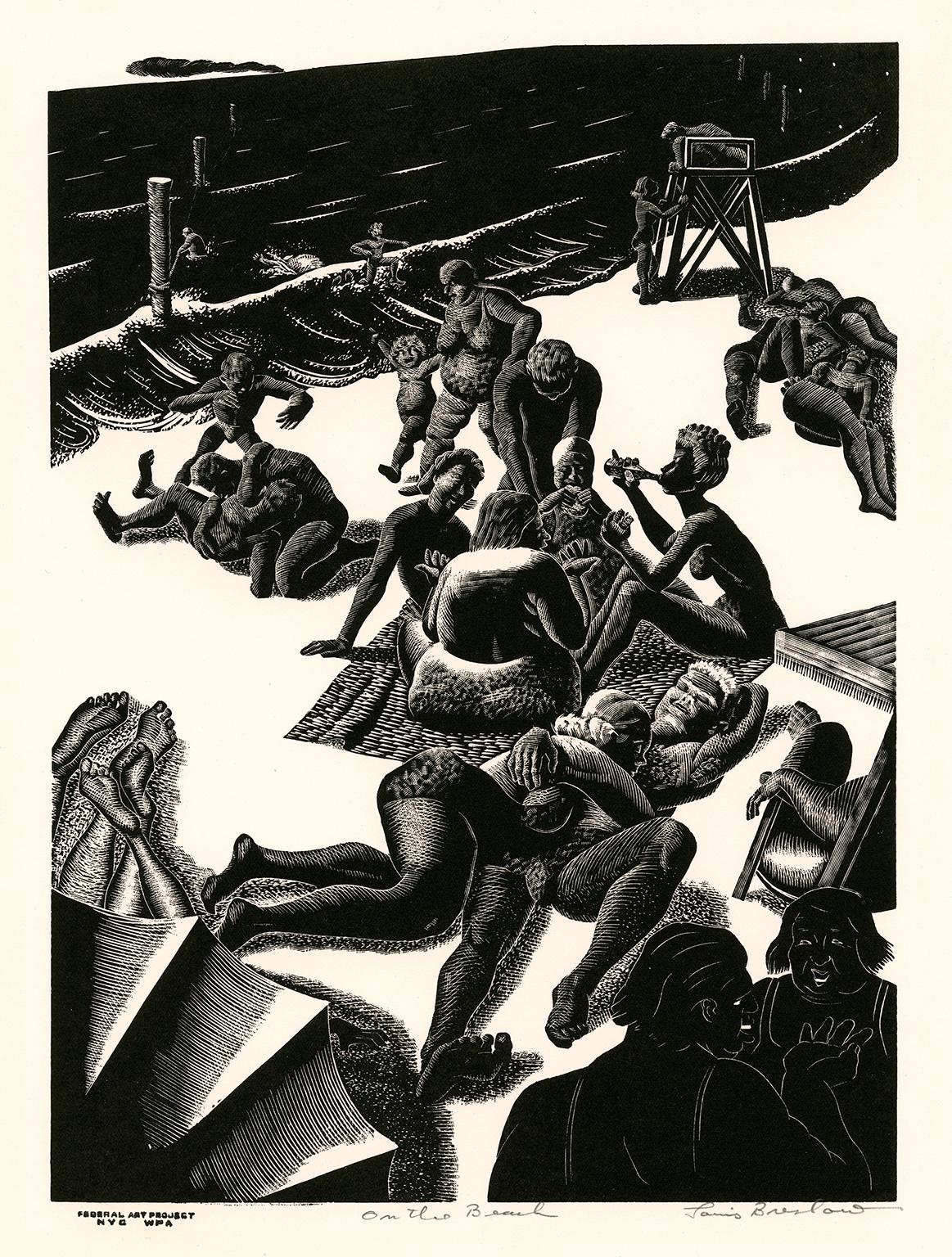
Lou Barlow (Louis Breslow), 'On the Beach' (Coney Island) wood engraving, c. 1937, edition c. 25. Signed and titled in pencil. Stamped 'FEDERAL ART PROJECT NYC WPA' in the bottom left margin. A fine, richly-inked impression, with all the fine lines printing clearly, on cream wove paper, with full margins (1 1/2 to 3 inches), in excellent condition. Matted to museum standards, unframed. Scarce.
Image size 11 x 8 1/8 inches; sheet size 16 x 11 3/8 inches.
Created during the Great Depression for the Works Progress Administration (WPA), Federal Art Project, New York City.
Impressions of this work are in the permanent collections of the Amon Carter Museum of Art, Illinois State Museum, and the New York Public Library.
ABOUT THE IMAGE
Due to Coney Island's proximity to Manhattan, Brooklyn, and other New York boroughs, it began attracting vacationers in the 1830s and 1840s. Most of the vacationers were wealthy and went by carriage roads and steamship services that reduced travel time from a formerly half-day journey to two hours. By the late 1870s, the development of Coney Island's amusement park attractions and hotels drew people from all social classes. When the Brooklyn Rapid Transit Company electrified the steam railroads and connected Brooklyn to Manhattan via the Brooklyn Bridge at the beginning of the 20th century, Coney Island turned rapidly from a resort to an accessible location for day-trippers seeking to escape the summer heat in New York City's tenements. In 1915, the Sea Beach Line was upgraded to a subway line, and the opening of the Stillwell Avenue station in 1919 ushered in Coney Island's busiest era. On the peak summer days, over a million people would travel to Coney Island. In 1937, New York City purchased a 400-foot-wide strip of land along the shoreline to allow the boardwalk to be moved 300 feet inland. At this point, Coney Island was so crowded on summer weekends that parks commissioner Robert Moses...
Category
1930s American Modern Figurative Prints
Materials
Woodcut
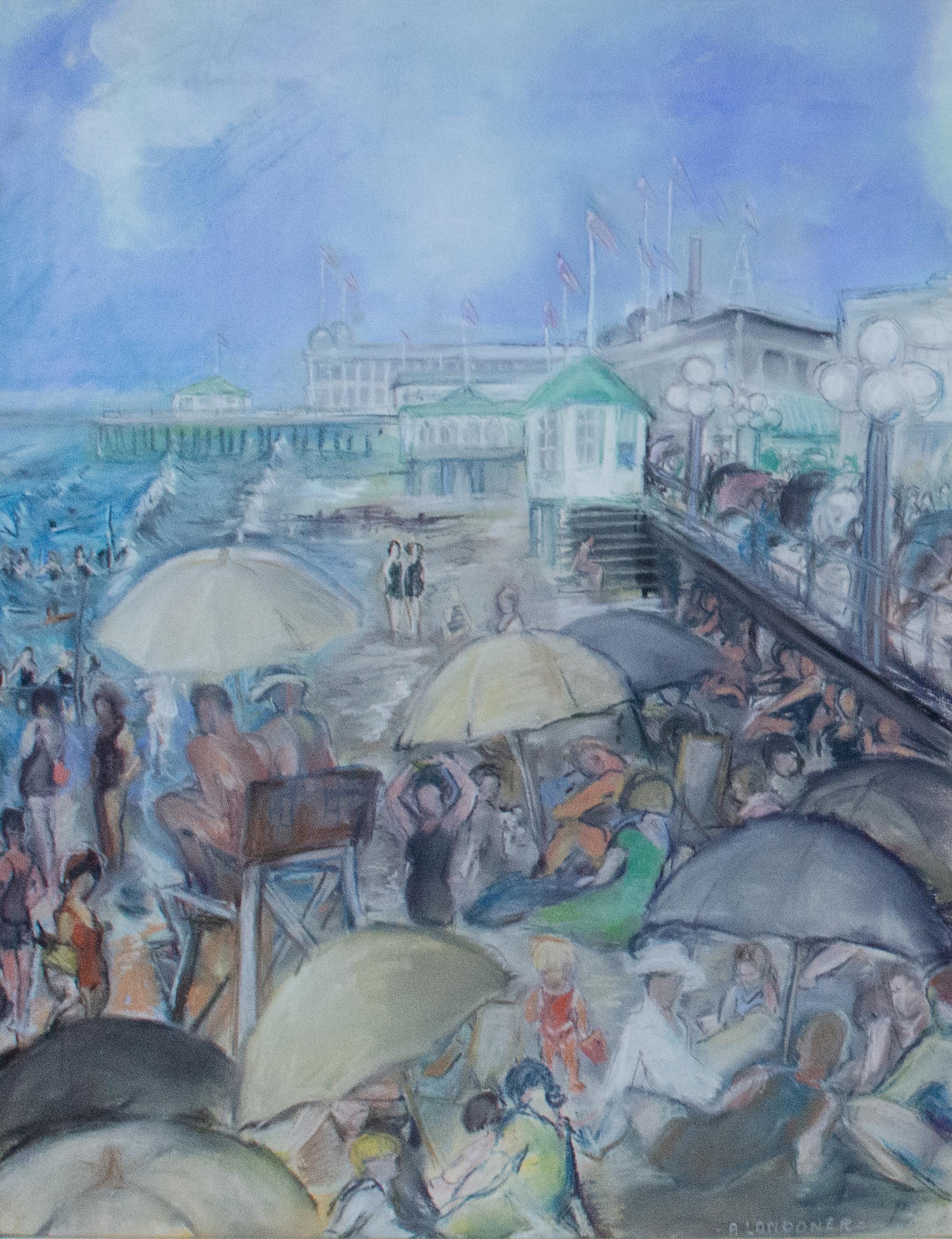
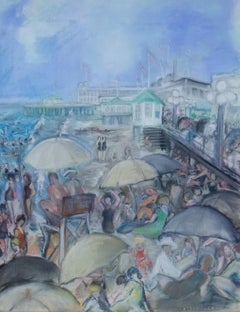
"Beach at Atlantic City, New Jersey" Amy Londoner, Ashcan School, Figurative
By Amy Londoner
Located in New York, NY
Amy Londoner
Beach at Atlantic City, circa 1922
Signed lower right
Pastel on paper
Sight 23 x 18 inches
Amy Londoner (April 12, 1875 – 1951) was an American painter who exhibited at the 1913 Armory Show. One of the first students of the Henri School of Art in 1909. Prior to the Armory Show of 1913, Amy Londoner and her classmates studied with "Ashcan" painter Robert Henri at the Henri School of Art in New York, N.Y. One notable oil painting, 'The Vase', was painted by both Henri and Londoner.
Londoner was born in Lexington, Missouri on April 12, 1875. Her parents were Moses and Rebecca Londoner, who moved to Leadville, Colorado, by 1880. In 1899, Amy took responsibility for her father who had come to Los Angeles from Leadville and had mental issues. By 1900, Amy was living with her parents and sister, Blanche, in the vicinity of Leadville, Denver, Colorado. While little was written about her early life, Denver City directories indicated that nineteenth-century members of the family were merchants, with family ties to New York, N.Y. The family had a male servant. Londoner traveled with her mother to England in 1907 then shortly later, both returned to New York in 1909. Londoner was 34 years old at the time, and, according to standards of the day, should have married and raised a family long before. Instead, she enrolled as one of the first students at the Henri School of Art in 1909.
At the Henri School, Londoner established friendships with Carl Sprinchorn (1887-1971), a young Swedish immigrant, and Edith Reynolds (1883-1964), daughter of wealthy industrialist family from Wilkes-Barre, PA. Londoner's correspondence, which often included references to Blanche, listed the sisters' primary address as the Hotel Endicott at 81st Street and Columbus Avenue, NYC. Other correspondence also reached Londoner in the city via Mrs. Theodore Bernstein at 252 West 74th Street; 102 West 73rd Street; and the Independent School of Art at 1947 Broadway. In 1911, Londoner vacationed at the Hotel Trexler in Atlantic City, NJ. As indicated by an undated photograph, Londoner also spent time with Edith Reynolds and Robert Henri at 'The Pines', the Reynolds family estate in Bear Creek, PA.
Through her connections with the Henri School, Londoner entered progressive social and professional circles. Henri's admonition, phrased in the vocabulary of his historical time period, that one must become a "man" first and an artist second, attracted both male and female students to classes where development of unique personal styles, tailored to convey individual insights and experiences, was prized above the mastery of standardized, technical skill. Far from being dilettantes, women students at the Henri School were daring individuals willing to challenge tradition. As noted by former student Helen Appleton Read, "it was a mark of defiance,to join the radical Henri group."
As Henri offered educational alternatives for women artists, he initiated exhibition opportunities for them as well. Troubled by the exclusion of work by younger artists from annual exhibitions at the National Academy of Design, Henri was instrumental in organizing the no-jury, no-prize Exhibition of Independent Artists in 1910. About half of the 103 artists included in the exhibition were or had been Henri students, while twenty of the twenty-six women exhibiting had studied with Henri. Among the exhibition's 631 pieces, nine were by Amy Londoner, including the notorious 'Lady with a Headache'. Similarly, fourteen of Henri's women students exhibited in the groundbreaking Armory Show of 1913, forming about eight percent of the American exhibitors and one-third of American women exhibitors. Of the nine documented works submitted by Londoner, five were rejected, while four pastels of Atlantic City beach scenes, including 'The Beach Umbrellas' now in the Remington Collection, were displayed.
Following Henri's example, Londoner served as an art instructor for younger students at the Modern School, whose only requirement was to genuinely draw what they pleased. The work of dancer Isadora Duncan, another artist devoted to the ideals of a liberal education, was also lauded by the Modern School. Henri, who long admired Duncan and invited members of her troupe to model for his classes, wrote an appreciation of her for the Modern School journal in 1915. She was also the subject of Londoner's pastel Isadora Duncan and the Children: Praise Ye the Lord with Dance. In 1914, Londoner traveled to France to spend summer abroad, living at 99 rue Notre Dames des Champs, Paris, France. As the tenets of European modernism spread throughout the United States, Londoner showed regularly at venues which a new generation of artists considered increasingly passe, including the annual Society of Independent Artists' exhibitions between 1918 and 1934, and the Salons of America exhibition in 1922. Londoner also exhibited at the Morton Gallery, Opportunity Gallery, Leonard Clayton Gallery and Brownell-Lambertson Galleries in NYC. Her painting of a 'Blond Girl' was one of two works included in the College Art Associations Traveling Exhibition of 1929, which toured colleges across the country to broad acclaim.
Londoner later in life suffered from illnesses then suffered a stroke which resulted in medical bills significantly mounting over the years that her old friends from the Henri School, including Carl Sprinchorn, Florence Dreyfous, Florence Barley, and Josephine Nivison Hopper, scrambled to raise funds and find suitable long-term care facilities for Londoner. Londoner later joined Reynolds in Bear Creek, PA. Always known for her keen wit, Londoner retained her humor and concern for her works even during her illness, noting that "if anything happens to the Endicott, I guess they will just throw them out." Sprinchorn and Reynolds, however, did not allow this to happen. In 1960, Londoner's paintings 'Amsterdam Avenue at 74th Street' and 'The Builders' were loaned by Reynolds to a show commemorating the Fiftieth Anniversary of the Exhibition of Independent Artists in 1910, presented at the Delaware Art Center, Wilmington, DE. In the late 80's, Francis William Remington, 'Bill Remington', of Bear Creek Village PA, along with his neighbor and artist Frances Anstett Brennan, both had profound admiration for Amy Londoner's art work and accomplishments as a woman who played a significant role in the Ashcan movement. Remington acquired a significant number of Londoner's artwork along with Frances Anstett Brenan that later was part of an exhibition of Londoner's artwork in April 15 of 2007, at the Hope Horn...
Category
1920s Ashcan School Figurative Paintings
Materials
Paper, Pastel
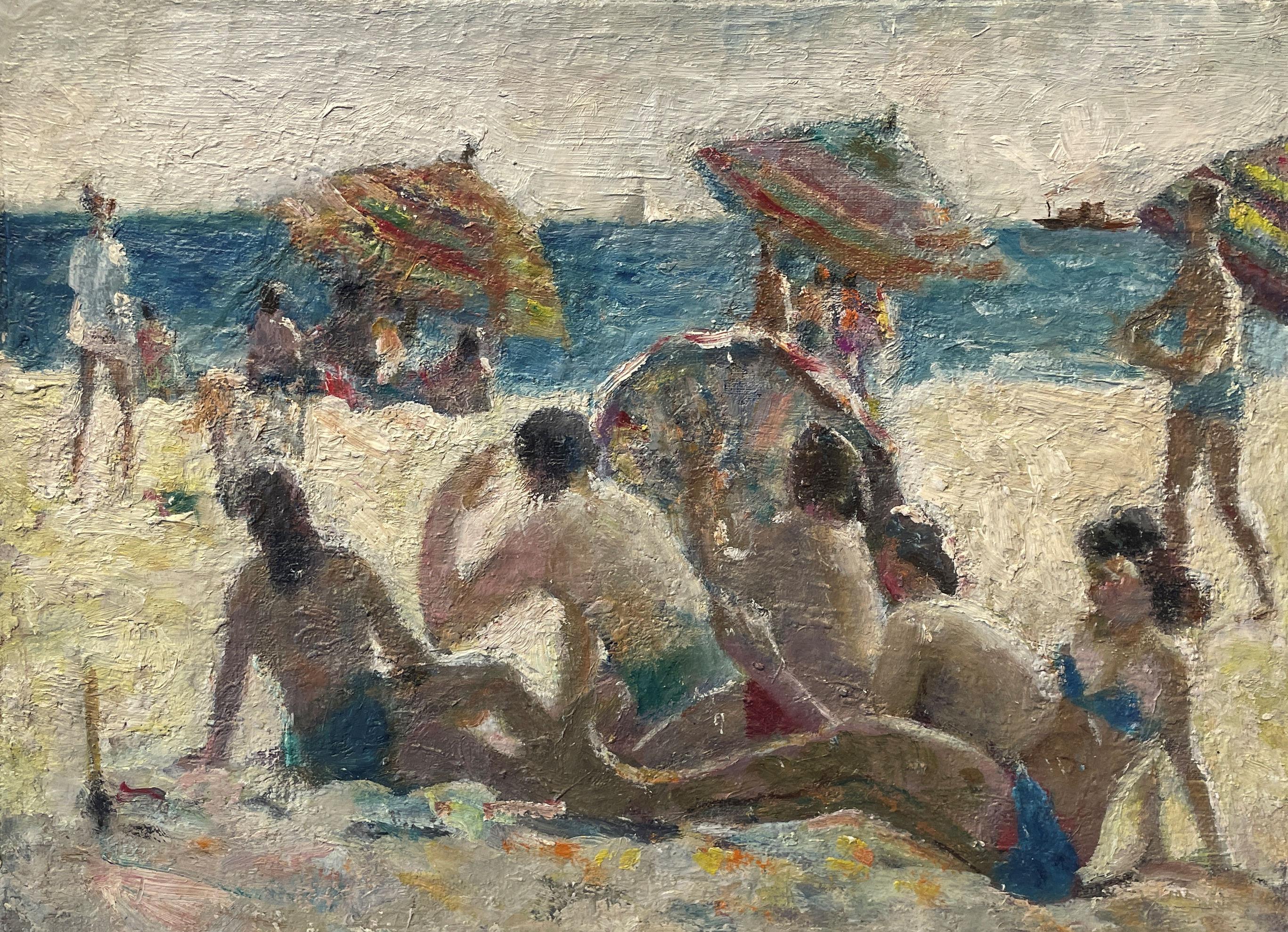
"The Beach" Nathan Hoffman, Brooklyn, New York, Sunny Day Landscape
Located in New York, NY
Nathan Hoffman
The Beach
Estate stamped on the reverse
Oil on artist's board
10 1/4 x 14 inches
Provenance:
Estate of the artist
Born in Russia, the s...
Category
1940s American Impressionist Landscape Paintings
Materials
Oil, Board
