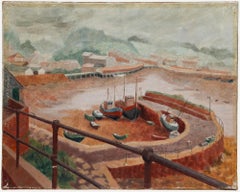
Items Similar to Tenby, Coast of Wales Shoreline, View of Ocean
Village
Want more images or videos?
Request additional images or videos from the seller
1 of 10
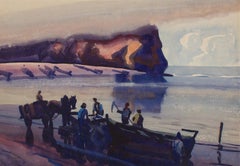
Clarence Holbrook CarterTenby, Coast of Wales Shoreline, View of Ocean
Village1960
1960
$6,200
£4,724.51
€5,448.67
CA$8,805.85
A$9,461.40
CHF 5,076.02
MX$111,466.19
About the Item
Clarence Holbrook Carter (American, 1904-2000)
Tenby, Coast of Wales, 1960
Acrylic on scintilla paper
Signed and dated lower right
18 x 28.5 inches
26 x 36 inches, framed
Clarence Holbrook Carter achieved a level of national artistic success that was nearly unprecedented among Cleveland School artists of his day, with representation by major New York dealers, scores of awards and solo exhibits, and streams of praise flowing from pens of the top art critics. Over the course of his 60+ year career Carter evolved from an exceptionally fine American Scene painter capable of evoking deep reservoirs of mood, into an abstractionist with a strongly surrealist bent.
While his two bodies of work seem at first to be worlds apart, owing to their different formal vocabularies, they, in fact, explore virtually the same subject: the nexus between life and death and the transition from earth to spirit. The early work finds its expressive power through specific people, events, and landscapes—most of which are drawn from his experiences growing up in the river town of Portsmouth, Ohio—while the later work from the 1960s on evokes potent states of being through pure flat shape, color and form that read as universals. As his primary form he adopted the ovoid or egg shape, endowing it with varying degrees of transparency. Alone or in multiples, the egg moves through Carter’s landscapes and architectural settings like a sentient spirit on a restless quest.
Born and raised in southern Ohio along the banks of the mercurial Ohio River and its treacherous floods, Carter developed a love of drawing as a child, and was encouraged by both his parents. He was self-directed, found inspiration all around him, and was strongly encouraged by the fact that his teenage work consistently captured art prizes in county and state fairs. Although money was tight after his father (who was a postal worker) died suddenly of a stroke, Carter’s mother supported his desire to study at the Cleveland School of Art from 1923-27, where he trained under painters Henry Keller, Frank Wilcox and Paul Travis.
In the summer of 1927, Carter studied in Capri with the modernist Hans Hofmann, where he carried out compositional exercises in charcoal and paint, recording the lucid spatial order of stairs, walls, roofs, arches and other elements of the island’s compressed architecture. Returning to Cleveland in 1929, Carter had his first solo show, and through Milliken taught studio classes at the Cleveland Museum of Art from 1930-37. In 1934, he worked under the auspices of the Public Works of Art Project and won a commission to paint two murals in Cleveland’s Public Auditorium. In 1936, he painted a post office mural in Ravenna, Ohio, as well as one for the post office in his hometown of Portsmouth, where his father had worked. He then headed the Northeast Ohio division of the painting projects arm of the Works Progress Administration, a subsequent government art program. In 1938, he moved to Pittsburgh to teach at the Carnegie Institute of Technology until 1944. Carter’s American Scene paintings of the ’30s and ’40s, which launched his artistic star, are the works for which the artist remains best known.
During and immediately after World War II, Clarence Carter realized his attraction to bold pattern, dramatic perspective and eye-catching hard-edged design was a poor fit with the prevailing style of Abstract Expressionism. Fortunately, these same hallmarks of his style were prized within the realm of commercial art. Thus, from 1944-1959, Carter became a veritable “Mad Man [Madison Avenue Man],” designing ambitious series of advertisements for major corporations such as Alcoa and The National City Bank of New York (Citibank) which appeared on the back covers of Fortune magazine, and on inside pages of Time, Newsweek, Business Week, and US News
World Report. Carter described this period of his life as one of incredible inventiveness and imagination. It freed him up to be far more experimental in his approach to image-making.
Around 1964 Carter acknowledged a need to break from the confines of representational painting. Once Carter had found a potent symbol in the egg, he used it to create an astounding body of imagery for the rest of his life. Among the most ambitious of all his later paintings were his Transections, a theological term meaning to cross, specifically between life and death.
- Creator:Clarence Holbrook Carter (1904-2000, American)
- Creation Year:1960
- Dimensions:Height: 26 in (66.04 cm)Width: 36 in (91.44 cm)
- Medium:
- Movement Style:
- Period:
- Condition:
- Gallery Location:Beachwood, OH
- Reference Number:1stDibs: LU1768217259232
Clarence Holbrook Carter
Clarence Holbrook Carter achieved a level of national artistic success that was nearly unprecedented among Cleveland School artists of his day, with representation by major New York dealers, scores of awards and solo exhibits, and streams of praise flowing from pens of the top art critics. Over the course of his 60+ year career Carter evolved from an exceptionally fine American Scene painter capable of evoking deep reservoirs of mood, into an abstractionist with a strongly surrealist bent. While his two bodies of work seem at first to be worlds apart, owing to their different formal vocabularies, they, in fact, explore virtually the same subject: the nexus between life and death and the transition from earth to spirit. The early work finds its expressive power through specific people, events, and landscapes—most of which are drawn from his experiences growing up in the river town of Portsmouth, Ohio—while the later work from the 1960s on evokes potent states of being through pure flat shape, color and form that read as universals. As his primary form he adopted the ovoid or egg shape, endowing it with varying degrees of transparency. Alone or in multiples, the egg moves through Carter’s landscapes and architectural settings like a sentient spirit on a restless quest. Born and raised in southern Ohio along the banks of the mercurial Ohio River and its treacherous floods, Carter developed a love of drawing as a child, and was encouraged by both his parents. He was self-directed, found inspiration all around him, and was strongly encouraged by the fact that his teenage work consistently captured art prizes in county and state fairs. Carter studied at the Cleveland School of Art from 1923-27, where he trained under painters Henry Keller, Frank Wilcox and Paul Travis. Returning to Cleveland in 1929, Carter had his first solo show, and through Milliken taught studio classes at the Cleveland Museum of Art from 1930-37. In 1938, he moved to Pittsburgh to teach at the Carnegie Institute of Technology until 1944. Carter’s American Scene paintings of the ’30s and ’40s, which launched his artistic star, are the works for which the artist remains best known. During and immediately after World War II, Clarence Carter realized his attraction to bold pattern, dramatic perspective and eye-catching hard-edged design was a poor fit with the prevailing style of Abstract Expressionism. Fortunately, these same hallmarks of his style were prized within the realm of commercial art. Around 1964 Carter acknowledged a need to break from the confines of representational painting. Once Carter had found a potent symbol in the egg, he used it to create an astounding body of imagery for the rest of his life. Among the most ambitious of all his later paintings were his Transections, a theological term meaning to cross, specifically between life and death.
About the Seller
5.0
Gold Seller
Premium sellers maintaining a 4.3+ rating and 24-hour response times
Established in 1975
1stDibs seller since 2022
46 sales on 1stDibs
Typical response time: 1 hour
- ShippingRetrieving quote...Shipping from: Beachwood, OH
- Return Policy
More From This Seller
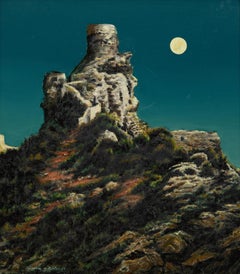
View AllTorre di Tiberio, Tower of Tiberius, Capri, Italy Landscape, Cleveland School
By Clarence Holbrook Carter
Located in Beachwood, OH
Clarence Holbrook Carter (American, 1904-2000)
Torre di Tiberio, 1951
Oil on canvas
Signed and dated lower left
21 x 18 inches
28.5 x 26.5 inches, framed
Clarence Holbrook Carter ac...
Category
1950s American Modern Figurative Paintings
Materials
Oil
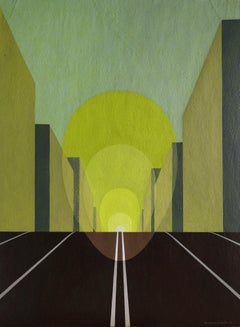
City Scape, Ovoid Geometrical Abstract Green
Brown Structures
By Clarence Holbrook Carter
Located in Beachwood, OH
Clarence Holbrook Carter (American, 1904-2000)
City Scape, 1978
Acrylic on scintilla
Signed and dated lower right
30 x 22 inches
A surrealist mid-century figural abstract painting....
Category
1970s American Modern Figurative Paintings
Materials
Acrylic
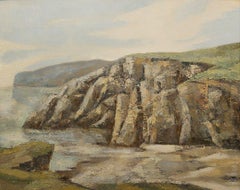
Rocky Cove, Mid-20th Century Landscape/Seascape by Cleveland School artist
By Carl Frederick Gaertner
Located in Beachwood, OH
Carl Frederick Gaertner (American, 1898-1952)
Rocky Cove, 1947
Oil on canvas
Signed lower left
24 x 30 inches
31 x 37 inches, framed
Carl Gaer...
Category
1940s Figurative Paintings
Materials
Oil
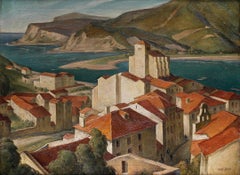
20th Century Spanish Seaside Village (Cadaques Catalonia), Cleveland School
By Rolf Stoll
Located in Beachwood, OH
Rolf Stoll (American, 1892-1978)
Spanish Seaside Village (Cadaques Catalonia)
Oil on canvas
Signed lower right
28 x 38 inches
Exhibited: The 11th Annual May Show, Cleveland Museum of Art, 1929
Rolf Stoll, a painter of figure subjects, landscapes and floral still lifes, was an important member of the Cleveland art scene during the second quarter of the century. He was also an influential teacher, as well as one of Ohio’s foremost portrait painters.
Rolf Stoll was born in Heidelberg, Germany, in 1892. As a boy, he attended a military academy, during which time he developed an interest in art. He received his early formal training at the Academy of Fine Arts in Karlsruhe and at the Academy of Fine Arts in Stuttgart. He emigrated to the United States in 1912, settling in New York City. A decade later, after studying at the school of the National Academy of Design and supporting himself by working as a commercial artist, Stoll decided to leave New York. Upon the recommendation of Warren Pryor, one of his teachers, he decided to move to Cleveland, Ohio. After arriving in Cleveland, Rolf Stoll continued to work as a commercial artist. However, in 1926, he joined the faculty of the Cleveland School of Art, where he taught drawing. Two years later Stoll was appointed head of the school’s portrait painting department. A talented portraitist, Stoll’s sitters included industrialists, community leaders and many prominent members of Cleveland and Ohio society, as well as over twenty faculty members from Case Western Reserve University. Stoll also gave portrait classes at the John Huntington Polytechnic Institute from 1926 to 1953. In his male portraits especially, he was admired for his ability to convey the dignity of his sitter’s professional position without sacrificing individuality. As noted by one contemporary reviewer, Stoll was a “master of rich color, a searching student of human types, a forceful portrayer of all that the face reveals of the mind and the soul.” In addition to his activity as a portraitist, Rolf Stoll painted figure subjects and floral still lifes. He was also known for his views of the Ohio countryside and Canada. Stoll also painted views of Spain and depictions of Spanish peasants, inspired by an extended trip to that country (1926), during which time he was entertained by the famous Spanish portrait painter, Ignacio Zuloaga. Moving easily between oil and watercolor, Stoll worked in an direct realist style, combining his characteristic firm draftsmanship with the use of simplified forms and decorative color.
Rolph Stoll was a member of the Cleveland Society of Artists, the Cleveland Print Club...
Category
1920s Landscape Paintings
Materials
Oil
Fog over North Beach, Percé Rock, Gaspé, Canada, Early 20th Century, Cleveland
By Frank Wilcox
Located in Beachwood, OH
Frank Nelson Wilcox (American, 1887-1964)
Fog over North Beach, Percé Rock, Gaspé, Canada, c. 1929
Watercolor on paper
Signed lower left
13.75 x 20 inches
Frank Nelson Wilcox (October 3, 1887 – April 17, 1964) was a modernist American artist and a master of watercolor. Wilcox is described as the "Dean of Cleveland School painters," though some sources give this appellation to Henry Keller or Frederick Gottwald. Wilcox was born on October 3, 1887 to Frank Nelson Wilcox, Sr. and Jessie Fremont Snow Wilcox at 61 Linwood Street in Cleveland, Ohio. His father, a prominent lawyer, died at home in 1904 shortly before Wilcox' 17th birthday. His brother, lawyer and publisher Owen N. Wilcox, was president of the Gates Legal Publishing Company or The Gates Press. His sister Ruth Wilcox was a respected librarian.
In 1906 Wilcox enrolled from the Cleveland School of Art under the tutelage of Henry Keller, Louis Rorimer...
Category
1920s American Modern Landscape Drawings and Watercolors
Materials
Watercolor
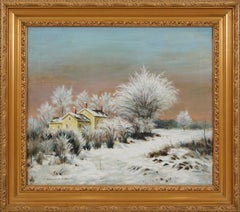
Winter Landscape w/ House
Field, Mid-20th Century Cleveland School Artist
By Clarence Holbrook Carter
Located in Beachwood, OH
Clarence Holbrook Carter (American, 1904-2000)
Winter Landscape, 1947
Oil on canvas
Signed and dated lower left
19 x 22.5 inches
25 x 28.25 inches, framed
Clarence Holbrook Carter a...
Category
1940s Landscape Paintings
Materials
Oil
You May Also Like
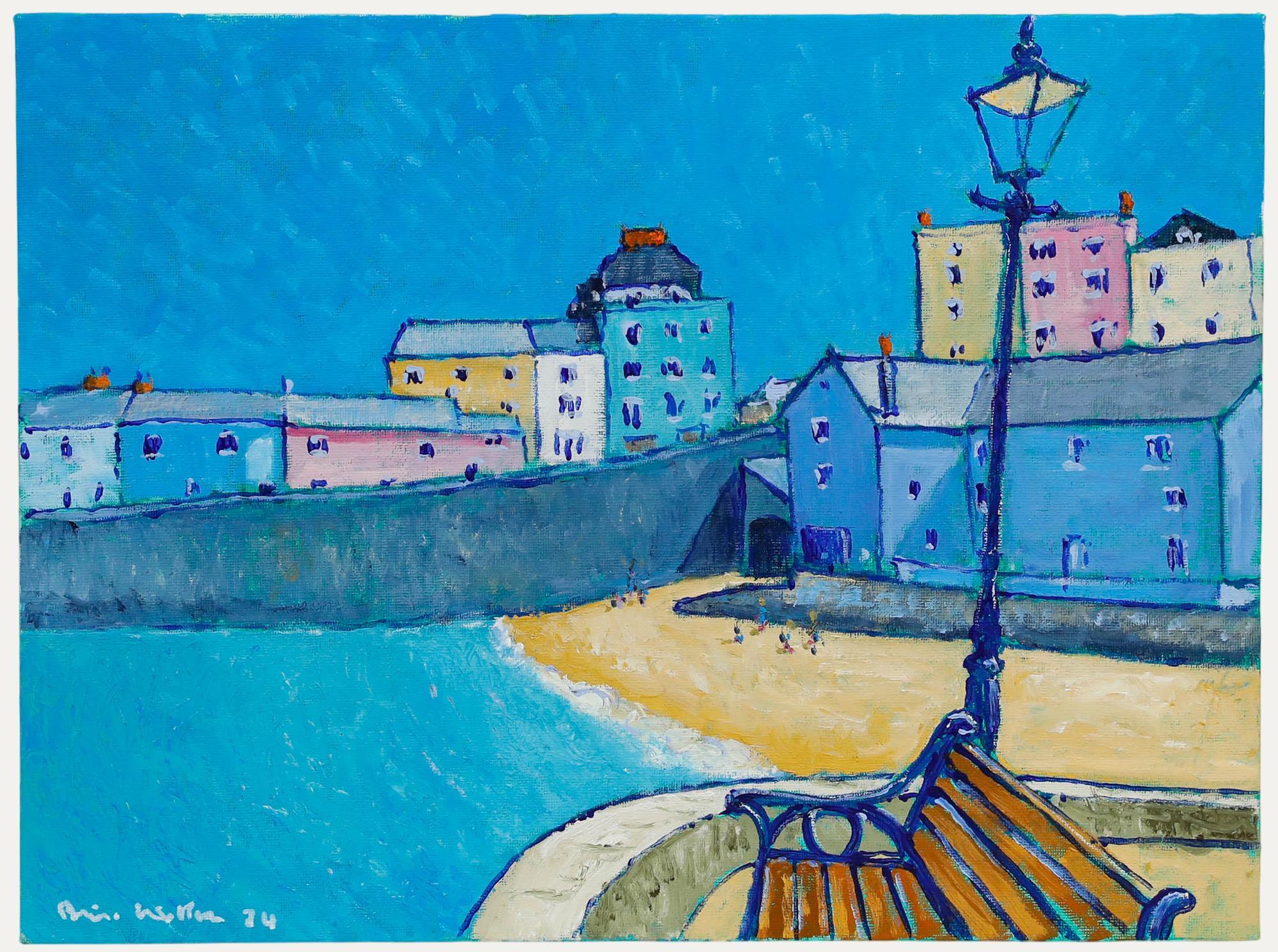
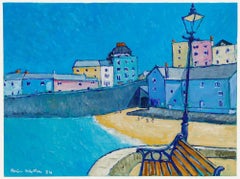
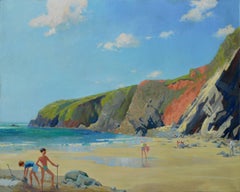
Brian William - Contemporary Oil, Tenby Harbour Beach
Located in Corsham, GB
Contemporary Seascape, oil on canvas. Signed and dated '24.
Category
21st Century and Contemporary Figurative Paintings
Materials
Oil
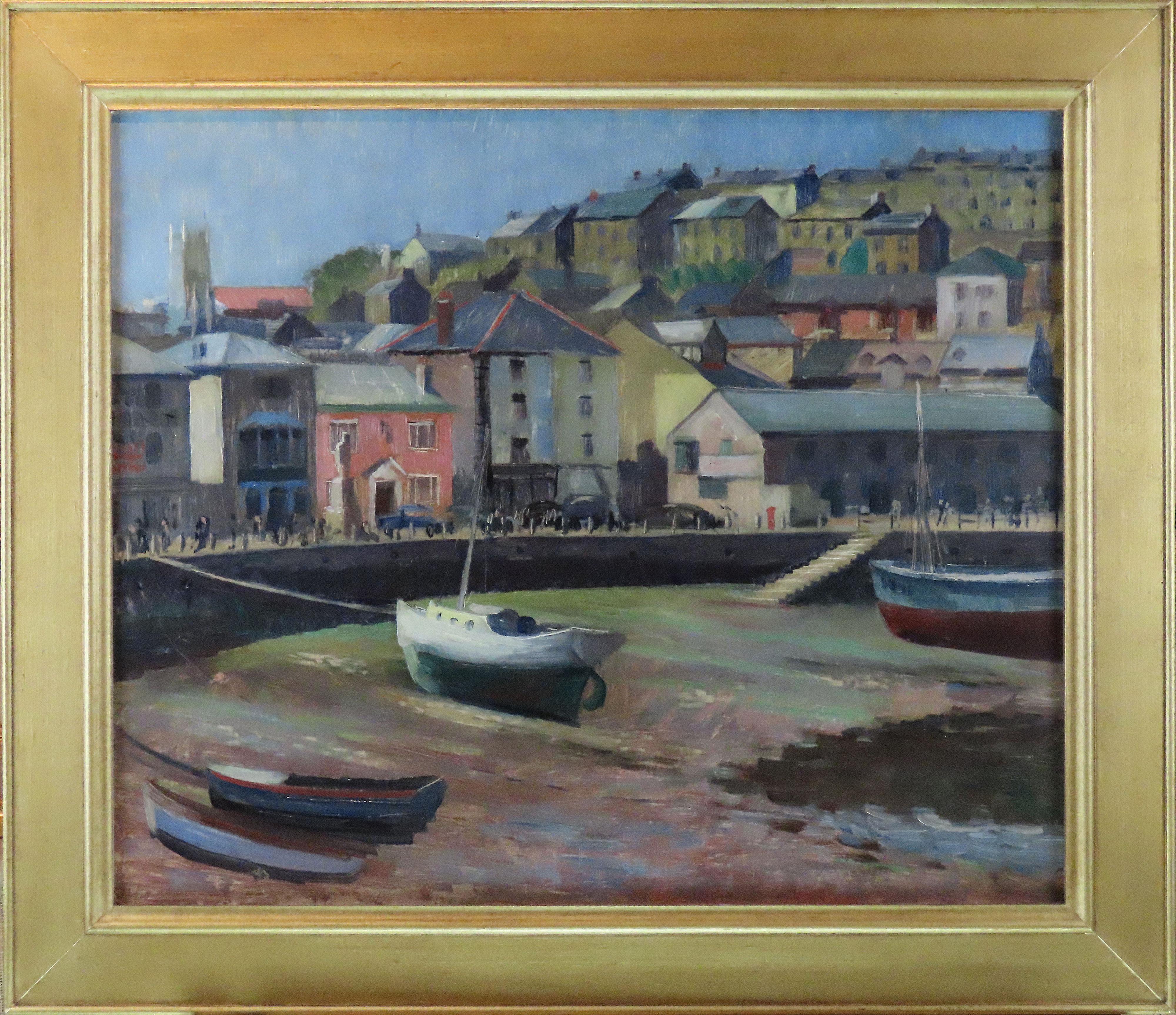
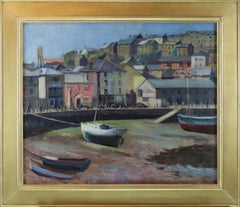
Original Oil on Canvas, Leslie Hall Woollatt. "A Cornish Habour"
Located in Mere, GB
Leslie Hall Woollatt, 1905 - 1974.
A painter and sculptor who studied at the Nottingham School of Artists. He exhibited at the Royal Academy, Royal Institute and Nottingham Society o...
Category
Mid-20th Century Landscape Paintings
Materials
Oil
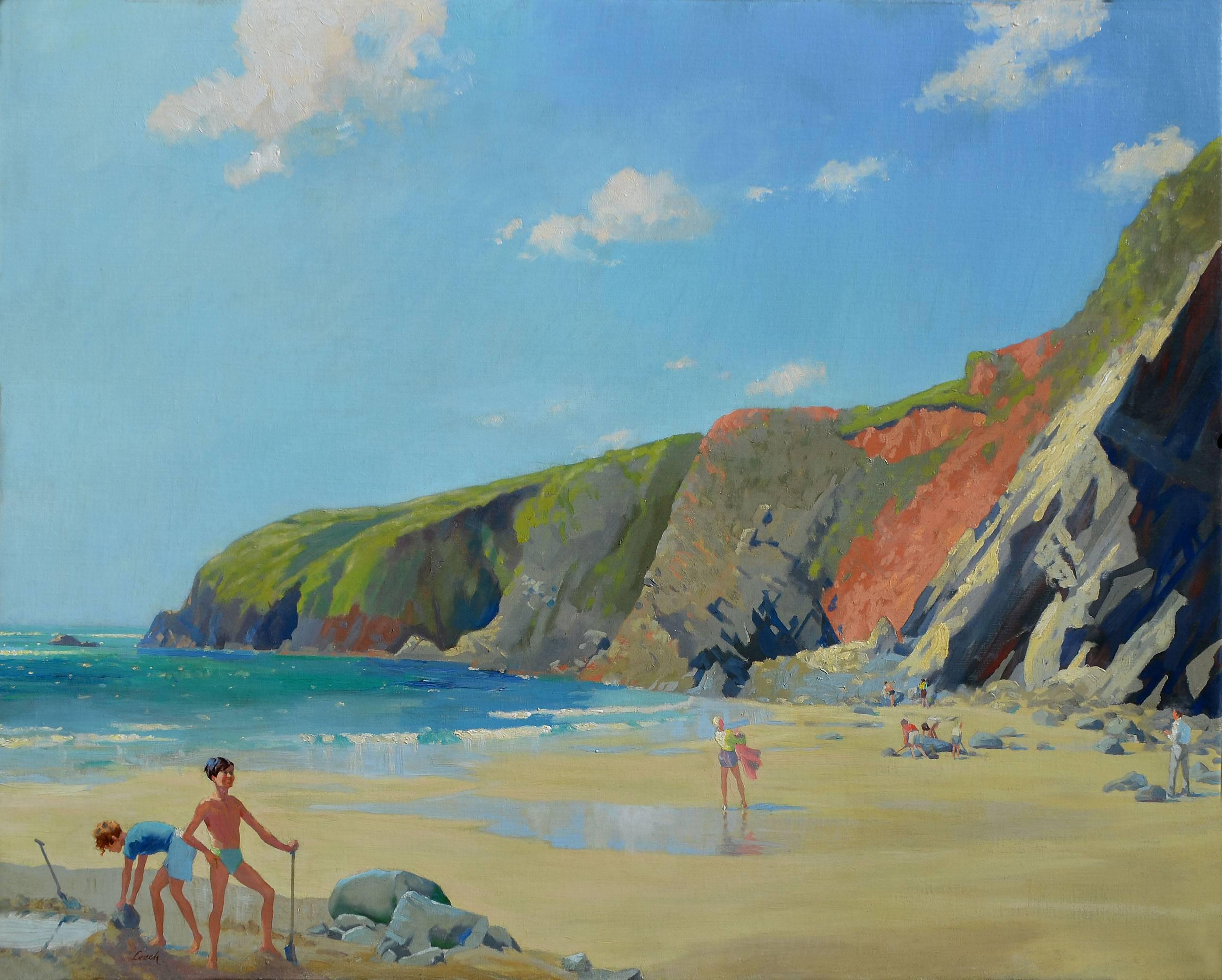
Pembrokeshire Coast, Mid 20th Century Oil (Artwork for British Railways Poster)
By George Leech
Located in London, GB
George Leech
1894-1966
Pembrokeshire Coast
Oil on canvas , signed
Image Size: 39 x 49 inches
This is an original artwork for the British Railways Western Region poster.
The arti...
Category
Mid-20th Century Landscape Paintings
Materials
Canvas, Oil
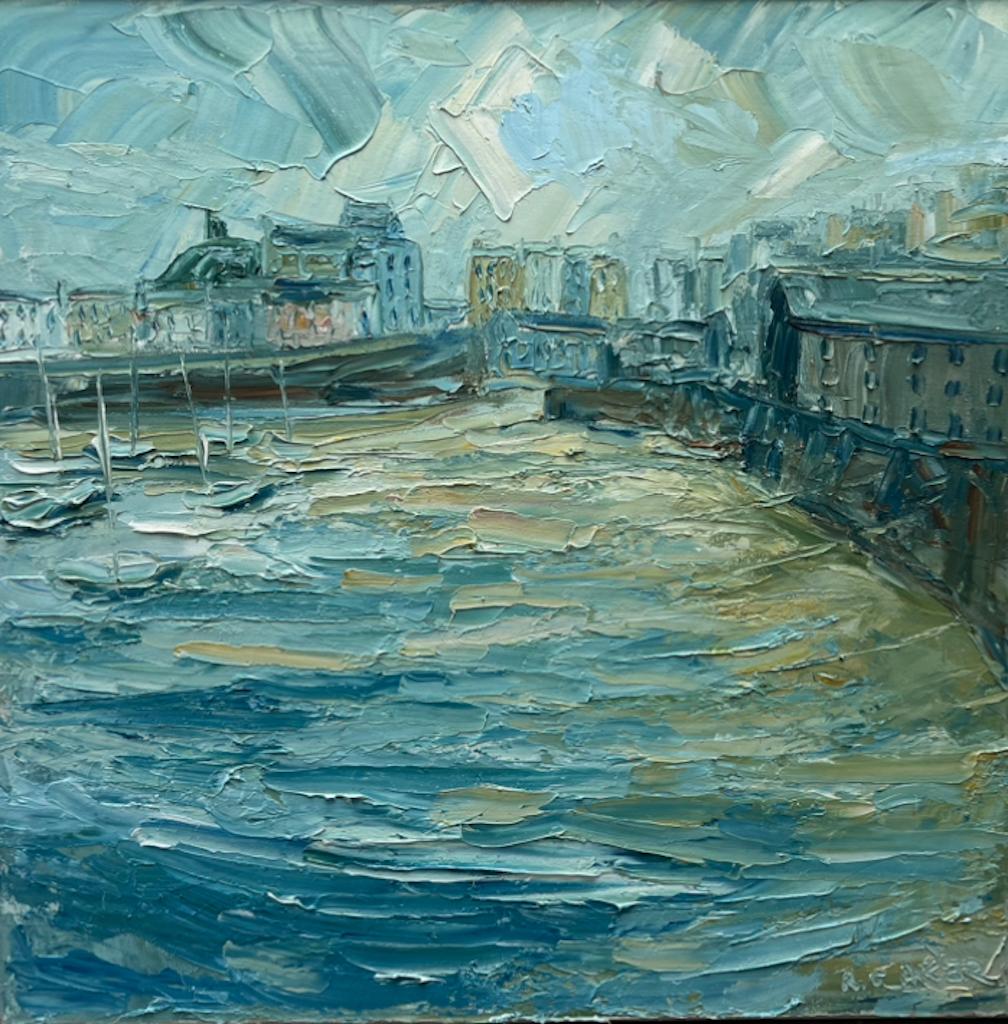
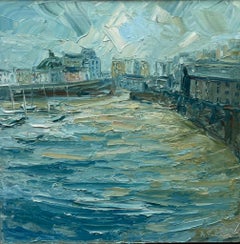
Tenby Harbour, Original painting, Malvern Hills, Landscape art
By Rupert Aker
Located in Deddington, GB
Loose impasto painting of Tenby Harbour with palette knife and oil.
ADDITIONAL INFORMATION:
Oil Paint on Canvas
55 H x 55 W x 3 D cm (21.65 x 21.65 x 1.18 in)
Sold framed
Image s...
Category
2010s Contemporary Landscape Paintings
Materials
Canvas, Oil
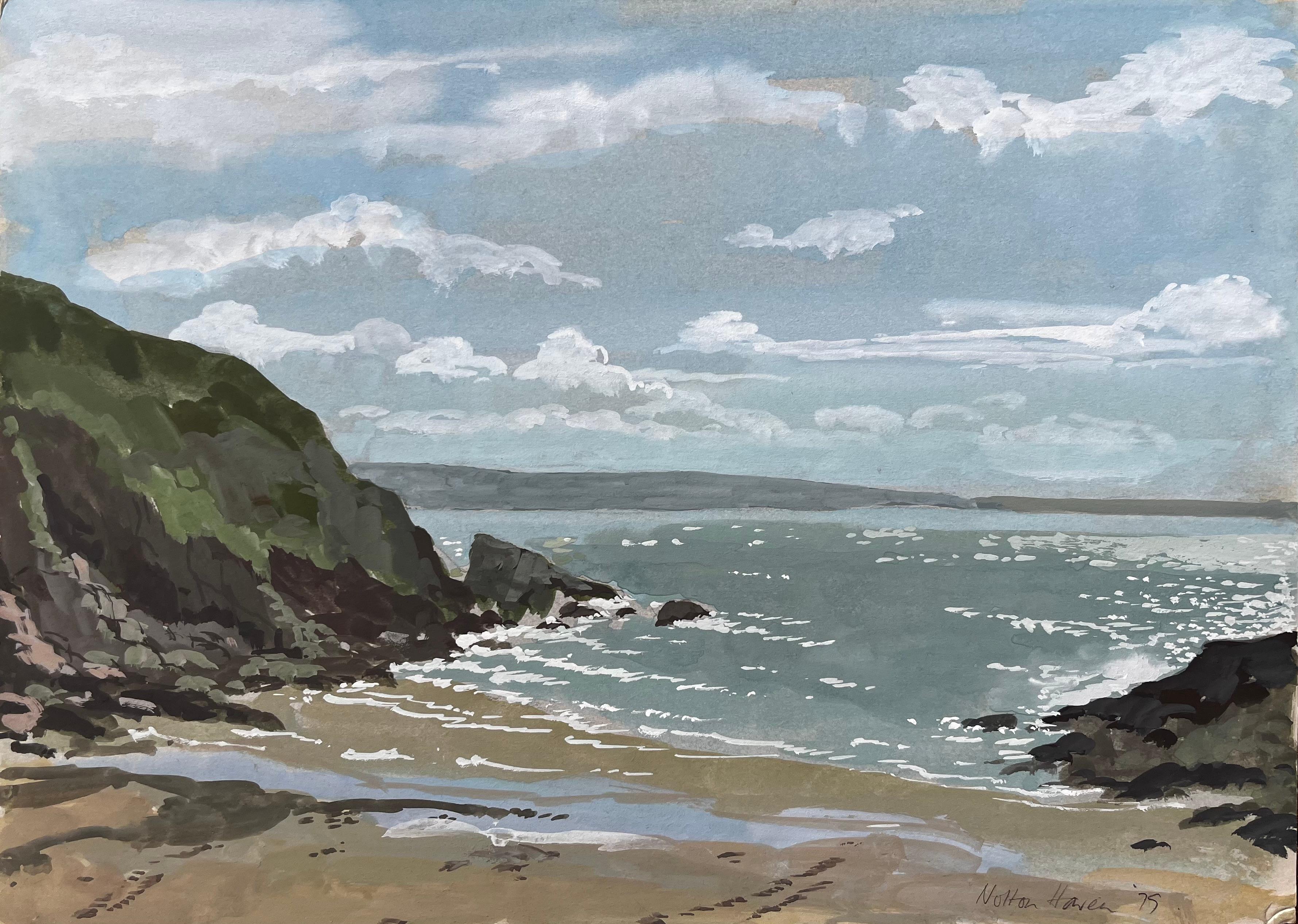
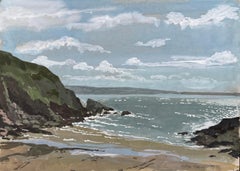
Coastal View with Cliffs and Waves Nolton Haven Pembrokeshire Wales 1979
Located in Cirencester, Gloucestershire
Title: Coastal View with Cliffs and Waves Nolton Haven Pembrokeshire Wales 1979
By Tony Herbert (1927-2024)
Medium: Watercolor on board, unframed
Size: 10 inches (height) x 14 inches...
Category
20th Century Impressionist Landscape Paintings
Materials
Watercolor
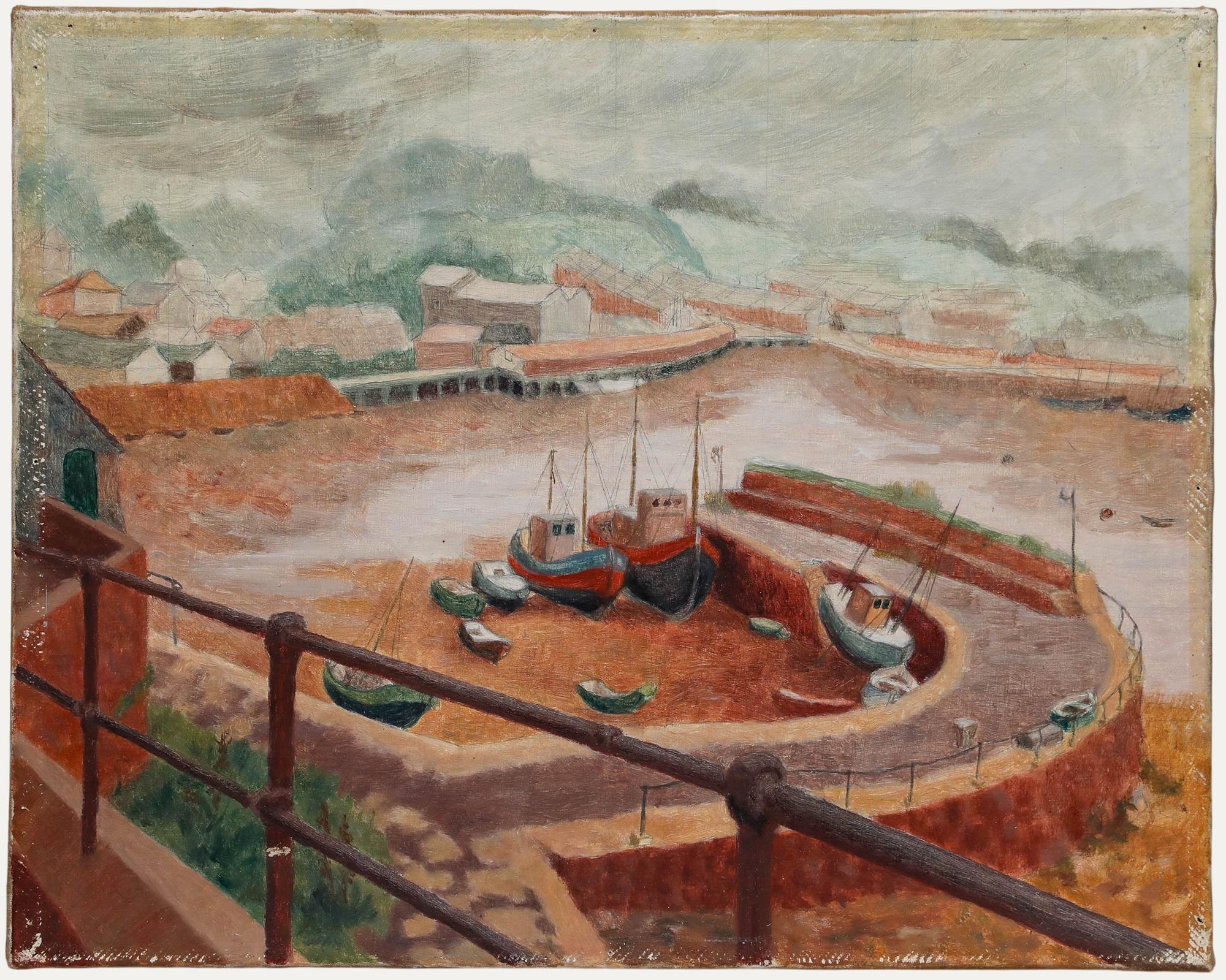
Pauline Plummer (b.1933) - Mid 20th Century Oil, Cornish Harbour at Low Tide
Located in Corsham, GB
This evocative coastal painting captures a gently curving harbour scene, likely inspired by the rugged coastal charm of Cornwall. Viewed from an elevated vantage point, the compositi...
Category
20th Century Figurative Paintings
Materials
Oil