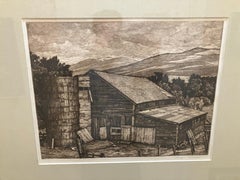
Items Similar to "Ringling Brothers Barns" Cordray Simmons, Wisconsin Circus Scene, Red Barn
Want more images or videos?
Request additional images or videos from the seller
1 of 8
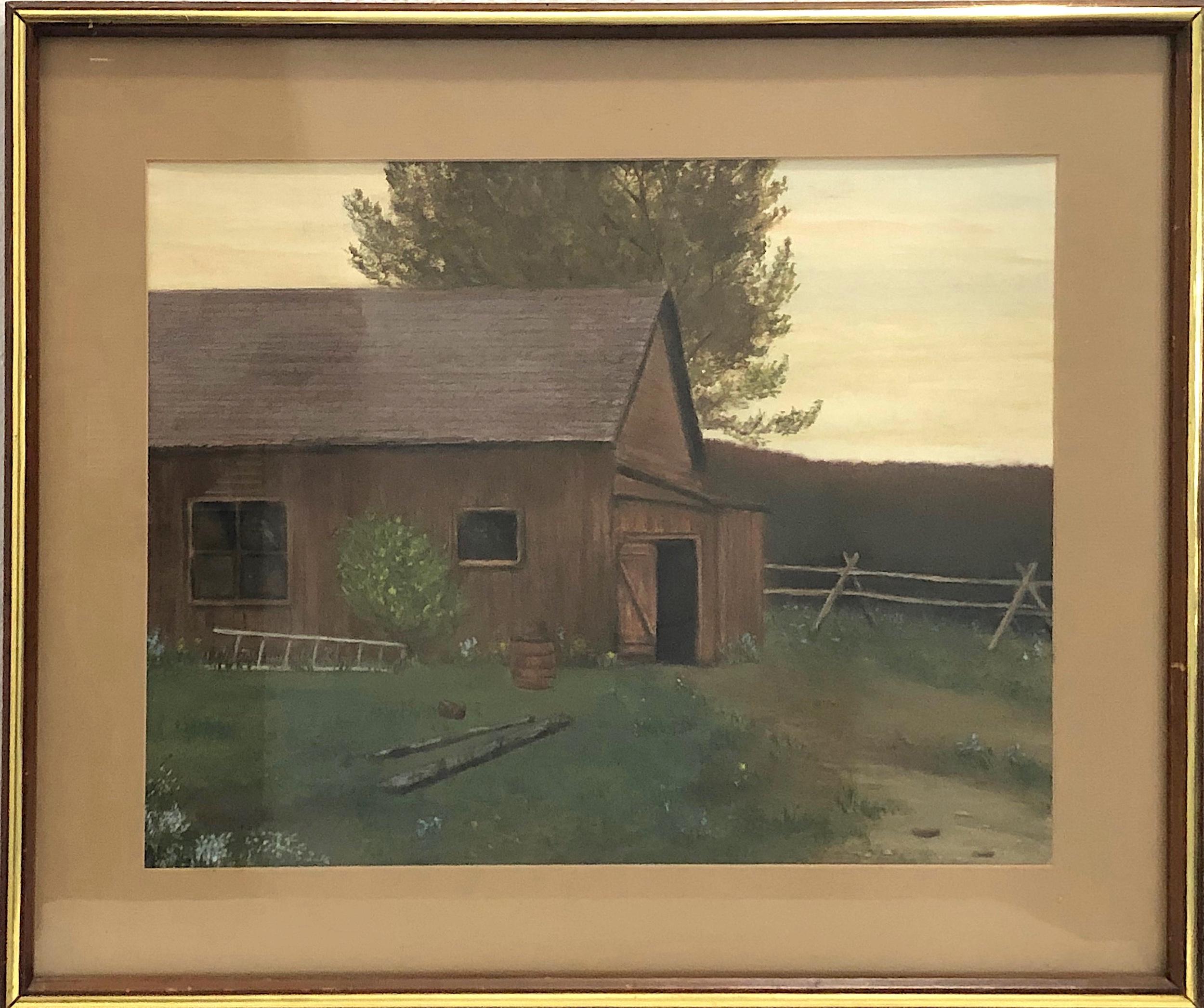
Cordray Simmons"Ringling Brothers Barns" Cordray Simmons, Wisconsin Circus Scene, Red Barn
$7,000
£5,313.36
€6,093.09
CA$9,880.46
A$10,605.75
CHF 5,647.02
MX$125,613.21
NOK 71,362.88
SEK 65,174.21
DKK 45,518.15
About the Item
Cordray Simmons
Ringling Brothers Barns, circa 1930
Signed lower right
Oil on Masonite
24 x 30 inches
Cordray Simmons was born July 10, 1888 in Jersey City, New Jersey. Christened William Cordray Simmons, he was known to his friends and family as Bill. Before 1930, he signed his works Bill Simmons, Will Simmons , William Simmons, or W. C. Simmons; but, after 1930, he signed only Cordray Simmons. Cordray was the son of professional dancer Alice Martin and mural and scenic painter Edward Simmons. (Edward Simmons is most noted for a mural in the Library of Congress.) Cordray probably learned to paint from his father, but his formal artistic training did not begin until he enrolled in classes at the Evening Technical High School, Jersey City, New Jersey, in 1903. There, he studied sculpture under the sculptor Daniel H. Webster. Cordray must have been an exceptional student, for, when Webster left in 1905, Cordray was asked to replace him as an instructor in clay modelling at the school.
Simmons attended the summer school of the Art Students League in New York, where he studied under William Merritt Chase, F. Luis Mora, George Bellows and Robert Henri. League, Cordray won the general school scholarship and
was monitor of the first Bellows class. At the League, Cordray perfected his skill as a painter and demonstrated a remarkable sense of realism. Sometime in either 1924 or 1925, Cordray moved to New York, supporting himself through the art supply store in Greenwich Village. His earliest known exhibition took place in 1925 at the Macy Galleries in New York. He left in 1926 to study and paint in Europe, returning for his first one-man show, entitled, "Drawings from Cornwall by William Simmons," in 1927 at Ferargil Galleries in New York. His second one-man show was also in 1927 at the Utica Art Society, New York.
Displaying versatile artistic talent, Cordray exhibited etchings in a show at Kennedy and Co., New York. He probably learned the printing technique during his students
days at the Art Students League. At any rate, he was proficient enough to be invited back in 1929 to the Kennedy exhibition "A Comprehensive Exhibition of the Work of Living American Print Makers," which included works by Arthur Fuller, Childe Hassam, Edward Hopper and John Sloan. Cordray married Lue and, upon their return from Europe was hired as a "Repairer" at the Metropolitan Museum of Art.
Conservation was an up-and-coming field and Simmons became one of the museum's first restorers. Notes from the estate collection indicate he was a highly respected member of the staff. Cordray continued painting and printing in addition
to his museum job. He also advertised his services as a carver of frames. It seems that he was never without something to do. He exhibited in 1930 at the Brooklyn Museum and the Art Institute of Chicago, and, in 1931, had his third one-man show at Morton Galleries, New York. Grant Galleries, New York, hosted Cordray's fourth one-man show in 1934. Here, he exhibited several paintings of historical landmarks in New York- one of which was " The Smoking-Bean Tree." The Metropolitan Museum, recognizing Cordray's talent, wanted to acquire a Cordray Simmons painting for its American Art collection and finally decided on purchasing "The Smoking-Bean Tree" in 1935. Cordray's reputation was increasing. Though he was not working in the style of most of his contemporaries, he was invited to exhibit with them. The year 1935 was memorable as he exhibited at the Corcoran Gallery of Art; the Pennsylvania Academy of the Fine Arts, Philadelphia Pa.; the Metropolitan Museum of Art; the Art Insitute of Chicago, Chicago, Illinois; and with the Chicago Society of Etchers at Roullier Art Gallery, Chicago, Illinois. The following year he was included in Who' s Who in American Art and was mentioned every year thereafter until 1962. In some cases, Cordray was as much an historian as a painter. Several of his works recorded places and landmarks that either had: some historical significance or no longer exist today.
He also captured such historically important scenes as that of the Cloisters, the docks of Cornwall, England, and Sunny-side, Washington Irving's home.
About the Seller
5.0
Platinum Seller
Premium sellers with a 4.7+ rating and 24-hour response times
Established in 2022
1stDibs seller since 2022
137 sales on 1stDibs
Typical response time: <1 hour
- ShippingRetrieving quote...Shipping from: New York, NY
- Return Policy
More From This Seller
View All"The Red Silo" Winold Reiss, Modernist Landscape, Vibrant American Red Barn
By Winold Reiss
Located in New York, NY
Winold Reiss
The Red Silo
Signed lower left
Watercolor on paper
20 x 29 inches
Winold Reiss (1886-1953) was an artist and designer who emigrated to the United States from Germany i...
Category
1930s Modern Figurative Drawings and Watercolors
Materials
Paper, Watercolor
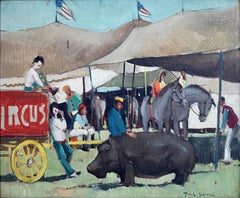
"Hippo" Paul Sample, Regionalist, Atmospheric Circus Performers and Animal Scene
By Paul Sample
Located in New York, NY
Paul Sample
Hippo
Signed lower right
Oil on canvas
16 x 20 inches
Provenance
Chidsey Collection
Private Collection (acquired from the above in 1980)
Sample's attempt to impose a T...
Category
1930s Realist Figurative Paintings
Materials
Canvas, Oil
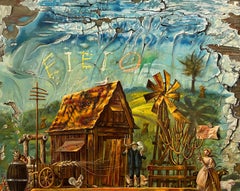
"Old McDonald
s Farm" Aaron Bohrod, Pun Humor, Magic Realism, Midwestern Rural
By Aaron Bohrod
Located in New York, NY
Aaron Bohrod
Old McDonald's Farm, 1989
Signed lower right
Oil on gesso board
14 x 18 inches
Aaron Bohrod's work has not been limited to one style or medium. Initially recognized as ...
Category
1980s Realist Animal Paintings
Materials
Oil, Board
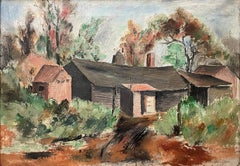
"Shanties in the Bronx, New York" Bumpei Usui, Japanase-American City Landscape
Located in New York, NY
Bumpei Usui
Shanties in the Bronx, 1933
Signed lower right
Oil on canvas
14 x 20 inches
Provenance:
The artist's estate
Salander O'Reilly Galleries, New Y...
Category
1930s American Realist Landscape Paintings
Materials
Canvas, Oil
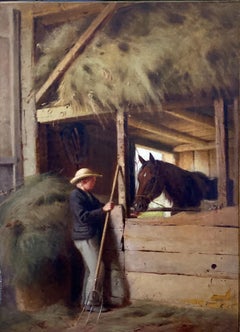
"Interior of a Stable" William Hart, Hudson River School Antique, Boy and Horse
By William Hart
Located in New York, NY
William M. Hart (1823 - 1894)
Interior of a Stable
Oil on canvas
17 x 12 inches
Provenance
William Macbeth Gallery, New York
Mrs. Mabel Brady Garvan Collection
Christie's New York, Sporting Art, November 28, 1995, Lot 116
Ann Carter Stonesifer, Maryland
Estate of above
Brunk Auctions, Asheville, North Carolina, January 27 2018, Lot 777
Exhibited
New York, The Metropolitan Museum of Art, Life in America, April 24 - October 29, 1939, no. 123, illustrated.
New York, Macbeth Gallery, 1892: Sixtieth Anniversary Exhibition, April 1952, p. 5, no. 18.
Literature
Turner Reuter Jr, Animal and Sporting Artists in America, Middleburg, Virginia, 2008, p. 306.
Gary Stiles, William Hart: Catalogue Raisonné and Artistic Biography, no. 1126, illustrated.
It should be noted that the Francis Patrick Garvan and Mrs. Mabel Brady Garvan collection, of which this painting was a part of, was one of the foremost American Art collections and now makes up a large part of the Smithsonian American Art Museum and the Yale University Art Gallery collections.
Born in 1823 in Paisley, Scotland, William Hart emigrated with his parents to the United States at the age of nine and settled in Albany, New York. It was here that Hart first began his artistic training when he was placed under the tutelage of Messrs, Eaton & Gilbert, the prestigious coach-makers from Troy, New York. During this time, Hart learned how to decorate coach panels, covering them with either landscapes or figurative compositions. At the age of seventeen, he was eagerly contemplating an artist’s profession. Consequently, he left the mechanical trade of coach-making and began expanding his artistic pursuits to more refined endeavors.
Hart followed coach-making with decorating window shades and later developed an interest in portraiture. Around 1840, he established his first formal studio in his father’s woodshed in Troy. There, he created many likenesses of individuals, affording him a nominal income. Once, he remarked that he felt prouder over his first fee of five dollars for painting a head then for the larger sums he would command later in his career. Nevertheless, his wages from portraits during this early period proved insufficient. Thus, he expanded into landscape painting, allowing him to barter his works or sell them for modest prices.
In 1842, Hart moved to Michigan in an attempt to further his success; portraiture remained his primary means of support. Unfortunately, his experiences in the West were disappointing. Hart spent three years living a rough existence until he finally returned to Albany in 1845. Upon his return, he fully devoted himself to the art of landscape painting. Despite his failing health, he worked diligently to perfect his skill until 1849 when he traveled abroad to his native land of Scotland. This trip was made possible through the generosity of his patron and advisor, Dr. Ormsby of Albany. For three years, he studied in the open-air, creating brilliant sketches of the Scottish Highlands and the surrounding British Isles.
Returning to Albany once more in 1852, Hart enjoyed improved health and was reinvigorated with purpose. The following year, he moved to New York and opened a studio, promoting himself as a specialist in landscape painting. Hart became a regular contributor to the National Academy of Design. His works received a great deal of attention from artists and connoisseurs alike, all of whom praised him for his fresh, self-taught style. In 1855, he was designated as an associate of the National Academy of Design; three years later he was elected to Academician. In 1865, he was unanimously chosen to be the first president of the Brooklyn Academy of Design. It was during his tenure there that he delivered his famous lecture The Field and Easel, which emphasized the distinguishing principles of landscape art in America. Hart argued that landscape painters should express the “look of the place” being depicted.Critics during the 1870s noted his sensitive balance between capturing a strict “real” interpretation of nature and that of a more “ideal” sentimental tone. For instance, in 1869, Putnam Magazine noted that Hart brought back “exquisite studies” of the surrounding Tappan...
Category
19th Century Hudson River School Animal Paintings
Materials
Canvas, Oil
$60,000 Sale Price
20% Off
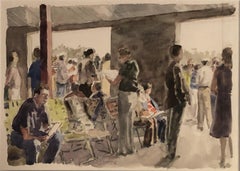
Out of the Sun (Under the Racetrack Grandstand), Saratoga Springs, Anne Diggory
By Anne Diggory
Located in New York, NY
Anne Diggory (b. 1951)
Out of the Sun (Under the Racetrack Grandstand), 1978
Watercolor on paper
7 x 10 inches
Signed and dated lower left
Provenance:
Ac...
Category
1970s Contemporary Landscape Drawings and Watercolors
Materials
Paper, Watercolor, Pencil
You May Also Like
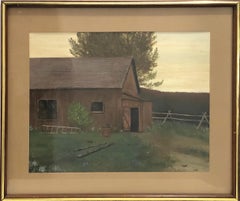
A Barn in the Country, by Katherine Baeth
Located in San Francisco, CA
Yet to be determined is whether this peaceful country scene done in 1983 is an early work by hip-hop photographer Katherine Baeth—given the unusual spelling of her last name. Today, ...
Category
1980s American Impressionist Landscape Paintings
Materials
Paint
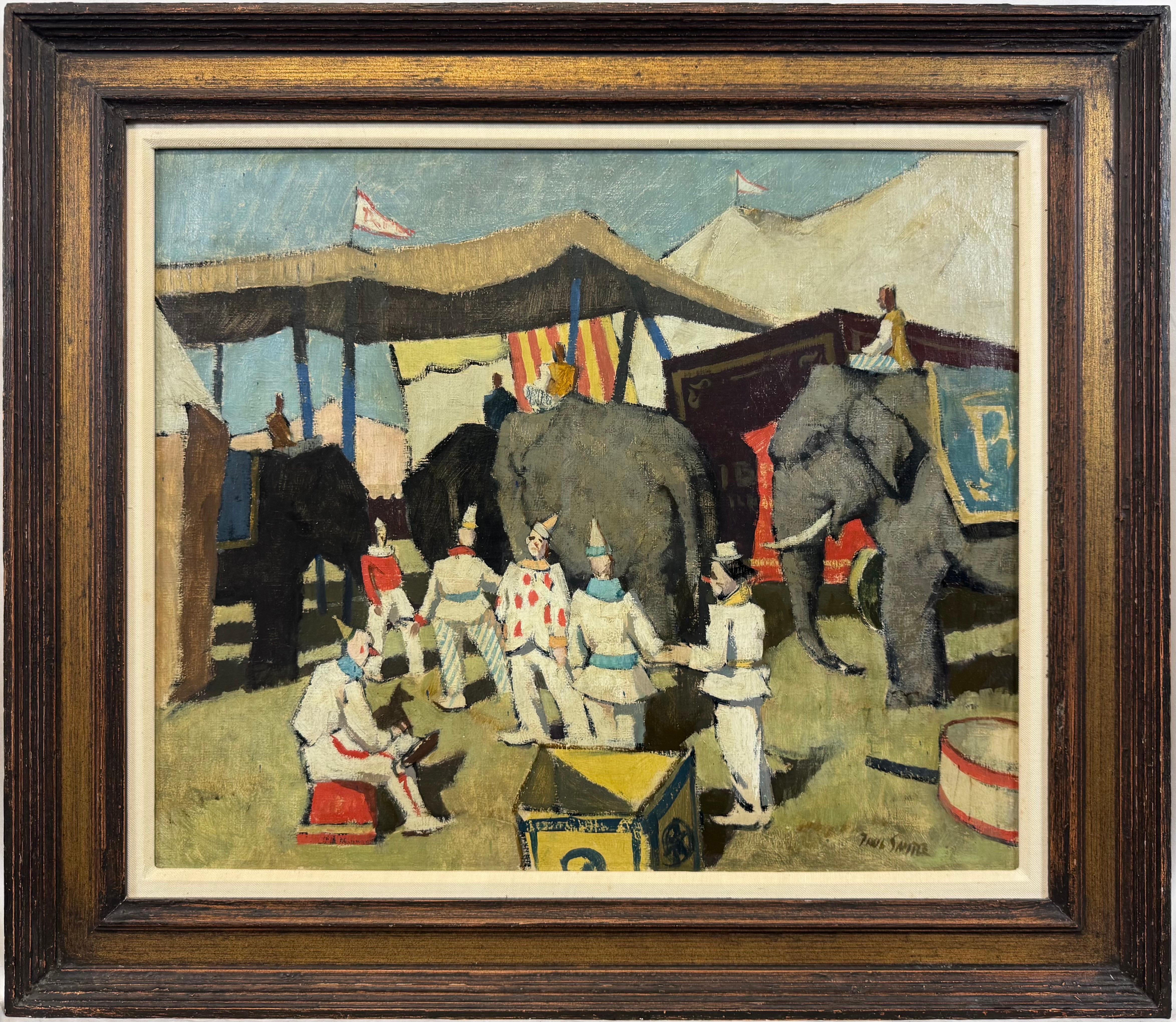
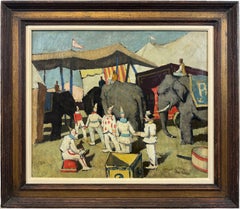
“Circus Yard” American Regionalist, Elephants, Tents, Performers, Clowns, Oil
By Paul Sample
Located in Yardley, PA
“Circus Yard” by Paul Starrett Sample (American, 1896-1974).
A vibrant circus scene by the noted American regionalist, Paul Starrett Sample. This work captures the lively bustle beh...
Category
Mid-20th Century American Realist Animal Paintings
Materials
Canvas, Oil
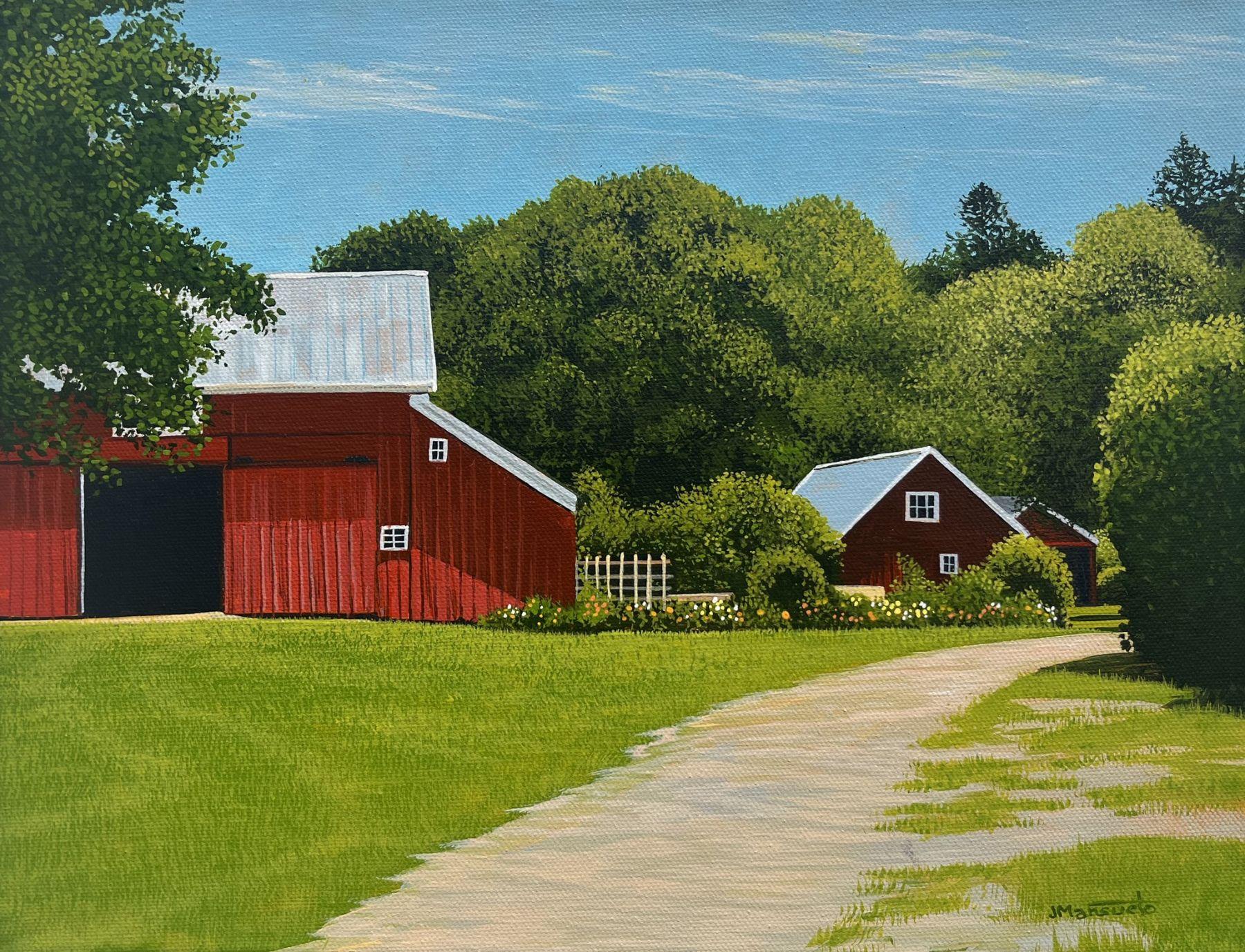
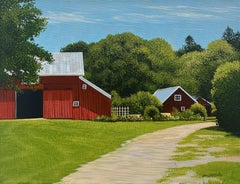
John Mansueto, "Northshore Barnyard" 11x14, Rural Red Barn Original Oil Painting
Located in Saratoga Springs, NY
This piece "Northshore Barnyard" is a 11x14 original painting by the artist John Mansueto. Depicted is a sunny rural landscape full of vibrant blues and greens. Sitting along the hor...
Category
2010s American Realist Landscape Paintings
Materials
Oil, Acrylic
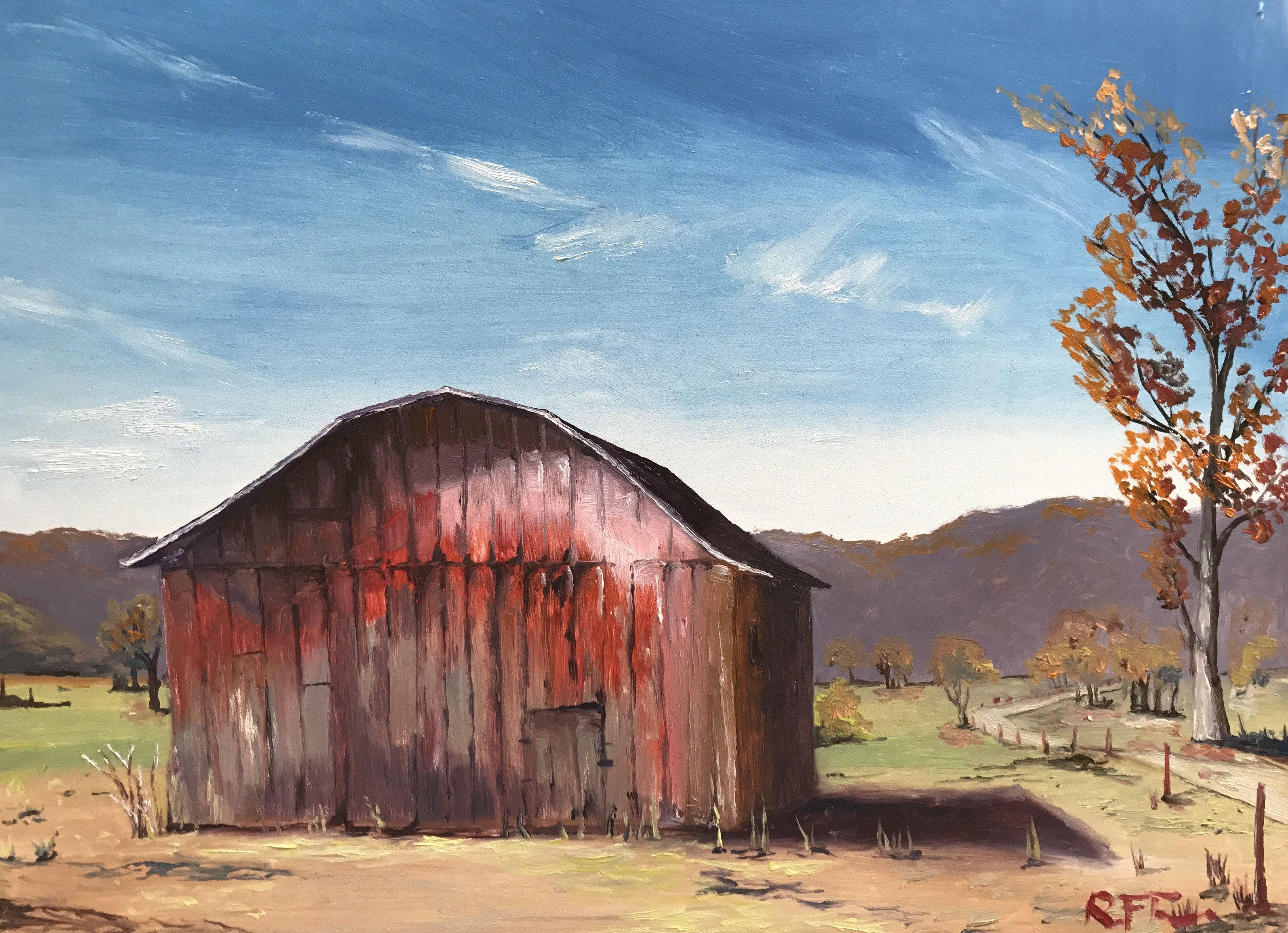
A Barn Along the Pig Trail in Ozark National Fores, Painting, Oil on MDF Panel
By Rachael Florence
Located in Yardley, PA
I painted this piece on site near along the Pig Trail in the Ozark National Forest in Arkansas. I was taken by the beautiful red chipping paint on the barn. The piece attempts to cap...
Category
2010s Realist Paintings
Materials
Oil
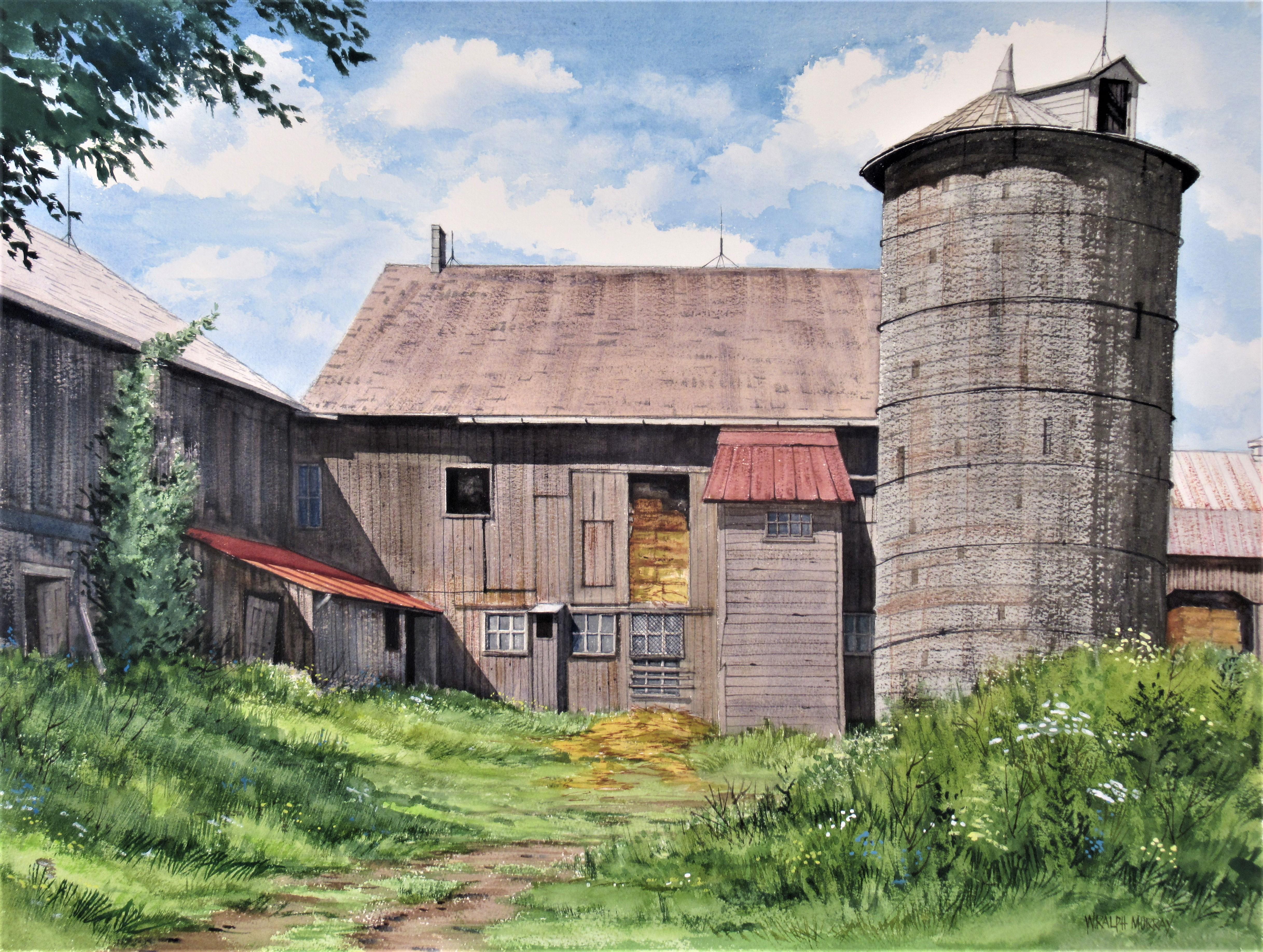
Earl Scwaiger
s Barn
Located in San Francisco, CA
This artwork titled "Earl Scwaiger's Barn" c.1980 is a watercolor on paper by American artist W. Ralph Murray, 1932-2009. It is signed at the lower righ...
Category
Late 20th Century American Impressionist Landscape Drawings and Watercolors
Materials
Watercolor
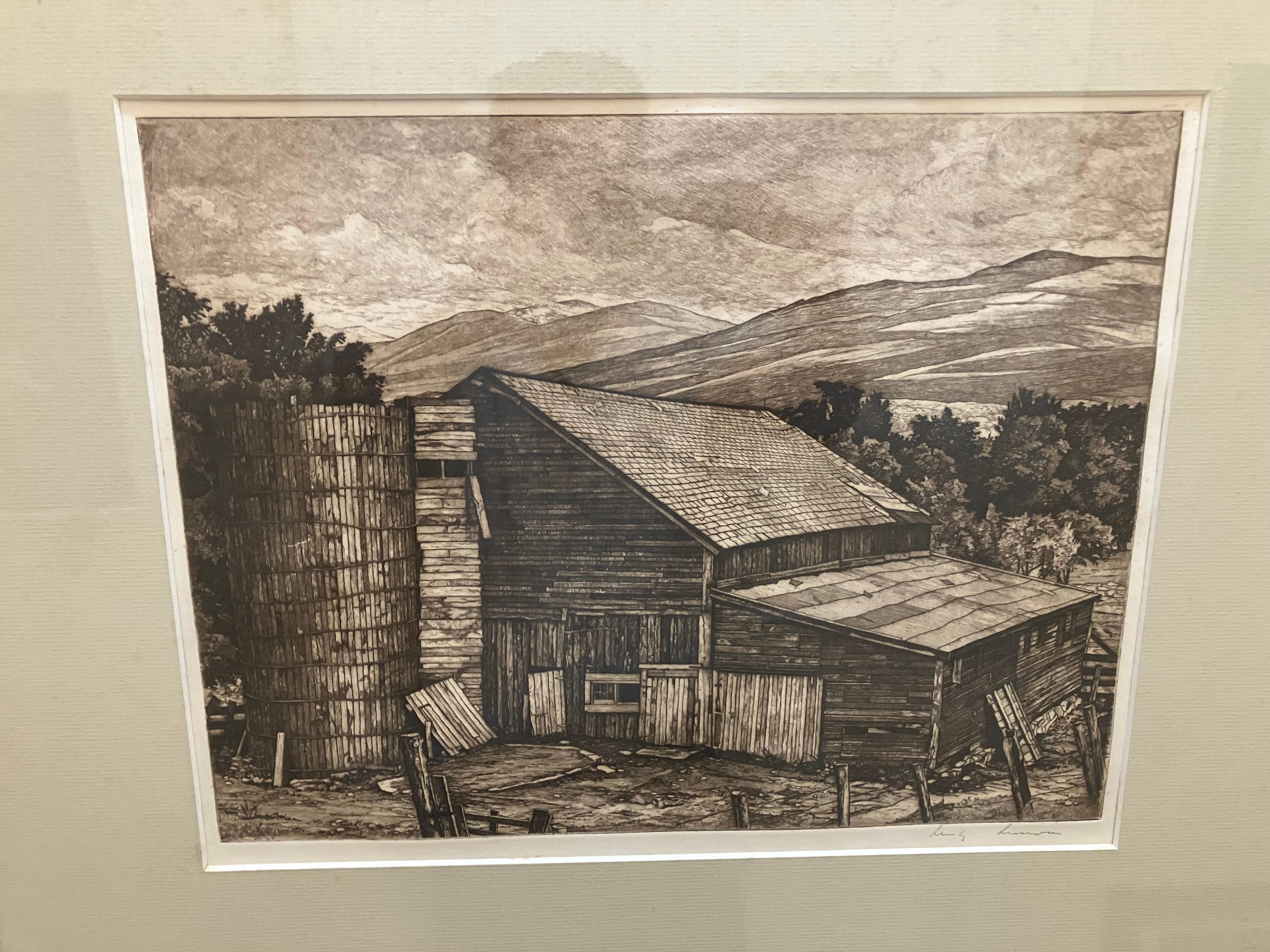
Luigi Lucioni Vermont Barn
By Luigi Lucioni
Located in San Francisco, CA
Luigi Lucioni: 1900-1988. Very well listed American Painter and etcher. He has Auction results as high as $4600 for an etching. This adding is most likely a barn in Vermont.. It meas...
Category
1950s American Realist Landscape Prints
Materials
Etching