Want more images or videos?
Request additional images or videos from the seller
1 of 9

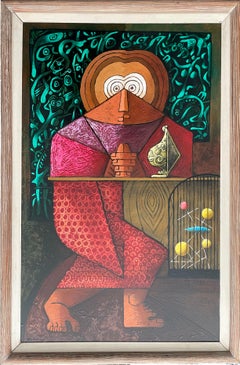
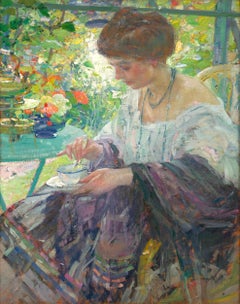
Diego Rivera
Delfina y Dimas by Diego Rivera

1935

$1,850,000List Price

You May Also Like

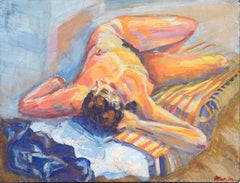
Modernist Reclining Female Nude Figurative
Located in Soquel, CA
Modernist reclining female nude figurative painting by an unknown artist (American, 20th Century). This vivid late 20th-century figural piece featur...
Category

20th Century American Modern Nude Paintings

Materials

Masonite, Tempera

Modernist Reclining Female Nude Figurative
$760 Sale Price
20% Off
H 17.75 in W 24 in D 0.25 in
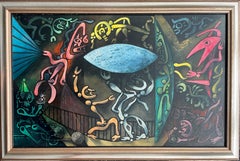
Inevitable Day – Birth of the Atom oil and tempera painting by Julio De Diego
By Julio de Diego
Located in Hudson, NY
Julio De Diego’s Atomic Series paintings made an extraordinary statement regarding the shock and fear that accompanied the dawn of the nuclear age. In the artist’s own words, “Scientists were working secretly to develop formidable powers taken from the mysterious depths of the earth - with the power to make the earth useless! Then, the EXPLOSION! . . . we entered the Atomic Age, and from there the neo-Atomic war begins. Explosions fell everywhere and man kept on fighting, discovering he could fight without flesh.” To execute these works, De Diego developed a technique of using tempera underpainting before applying layer upon layer of pigmented oil glazes. The result is paintings with surfaces which were described as “bonelike” in quality. The forms seem to float freely, creating a three-dimensional visual effect. In the 1954 book The Modern Renaissance in American Art, author Ralph Pearson summarizes the series as “a fantastic interpretation of a weighty theme. Perhaps it is well to let fantasy and irony appear to lighten the devastating impact. By inverse action, they may in fact increase its weight.” Bibliography Art in America, April 1951, p.78 About this artists: Julio De Diego crafted a formidable persona within the artistic developments and political struggles of his time. The artist characterized his own work as “lyrical,” explaining, “through the years, the surrealists, the social-conscious painters and the others tried to adopt me, but I went my own way, good, bad or indifferent.” [1] His independence manifested early in life when de Diego left his parent’s home in Madrid, Spain, in adolescence following his father’s attempts to curtail his artistic aspirations. At the age of fifteen he held his first exhibition, set up within a gambling casino. He managed to acquire an apprenticeship in a studio producing scenery for Madrid’s operas, but moved from behind the curtains to the stage, trying his hand at acting and performing as an extra in the Ballet Russes’ Petrouchka with Nijinsky. He spent several years in the Spanish army, including a six-month stretch in the Rif War of 1920 in Northern Africa. His artistic career pushed ahead as he set off for Paris and became familiar with modernism’s forays into abstraction, surrealism, and cubism. The artist arrived in the U.S. in 1924 and settled in Chicago two years later. He established himself with a commission for the decoration of two chapels in St. Gregory’s Church. He also worked in fashion illustration, designed magazine covers and developed a popular laundry bag for the Hotel Sherman. De Diego began exhibiting through the Art Institute of Chicago in 1929, and participated in the annual Chicago Artists Exhibitions, Annual American Exhibitions, and International Water Color Exhibitions. He held a solo exhibition at the Art Institute of Chicago in the summer of 1935. Though the artist’s career was advancing, his family life had deteriorated. In 1932 his first marriage dissolved, and the couple’s young daughter Kiriki was sent to live with friend Paul Hoffman. De Diego continued to develop his artistic vocabulary with a growing interest in Mexican art. He traveled throughout the country acquainting himself with the works of muralists such as Carlos Merida, and also began a collection of small native artifacts...
Category

1940s American Modern Abstract Paintings

Materials

Masonite, Oil, Tempera

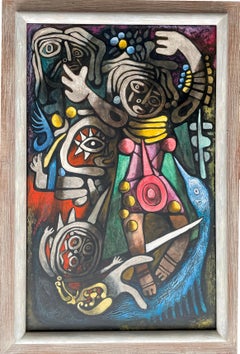
Ceremonial Dancers oil and tempera painting by Julio De Diego
By Julio de Diego
Located in Hudson, NY
Artwork measures 48" x 30" and framed 56 ¼" x 38 ¼" x 3" Provenance: John Heller Gallery, NYC, circa 1975 (label verso) The artist's daughter Corbino Galleries, Sarasota, FL (1990)...
Category

1940s Modern Abstract Paintings

Materials

Masonite, Oil, Tempera

The Magician oil and tempera painting by Julio de Diego
By Julio de Diego
Located in Hudson, NY
Julio De Diego’s Atomic Series paintings made an extraordinary statement regarding the shock and fear that accompanied the dawn of the nuclear age. In the artist’s own words, “Scientists were working secretly to develop formidable powers taken from the mysterious depths of the earth - with the power to make the earth useless! Then, the EXPLOSION! . . . we entered the Atomic Age, and from there the neo-Atomic war begins. Explosions fell everywhere and man kept on fighting, discovering he could fight without flesh.” To execute these works, De Diego developed a technique of using tempera underpainting before applying layer upon layer of pigmented oil glazes. The result is paintings with surfaces which were described as “bonelike” in quality. The forms seem to float freely, creating a three-dimensional visual effect. In the 1954 book The Modern Renaissance in American Art, author Ralph Pearson summarizes the series as “a fantastic interpretation of a weighty theme. Perhaps it is well to let fantasy and irony appear to lighten the devastating impact. By inverse action, they may in fact increase its weight.” Exhibited 1964 Marion Koogler McNay Art Institute, San Antonio, Texas This work retains its original frame which measures 54" x 42" x 2" About this artist: Julio De Diego crafted a formidable persona within the artistic developments and political struggles of his time. The artist characterized his own work as “lyrical,” explaining, “through the years, the surrealists, the social-conscious painters and the others tried to adopt me, but I went my own way, good, bad or indifferent.” [1] His independence manifested early in life when de Diego left his parent’s home in Madrid, Spain, in adolescence following his father’s attempts to curtail his artistic aspirations. At the age of fifteen he held his first exhibition, set up within a gambling casino. He managed to acquire an apprenticeship in a studio producing scenery for Madrid’s operas, but moved from behind the curtains to the stage, trying his hand at acting and performing as an extra in the Ballet Russes’ Petrouchka with Nijinsky. He spent several years in the Spanish army, including a six-month stretch in the Rif War of 1920 in Northern Africa. His artistic career pushed ahead as he set off for Paris and became familiar with modernism’s forays into abstraction, surrealism, and cubism. The artist arrived in the U.S. in 1924 and settled in Chicago two years later. He established himself with a commission for the decoration of two chapels in St. Gregory’s Church. He also worked in fashion illustration, designed magazine covers and developed a popular laundry bag for the Hotel Sherman. De Diego began exhibiting through the Art Institute of Chicago in 1929, and participated in the annual Chicago Artists Exhibitions, Annual American Exhibitions, and International Water Color Exhibitions. He held a solo exhibition at the Art Institute of Chicago in the summer of 1935. Though the artist’s career was advancing, his family life had deteriorated. In 1932 his first marriage dissolved, and the couple’s young daughter Kiriki was sent to live with friend Paul Hoffman. De Diego continued to develop his artistic vocabulary with a growing interest in Mexican art. He traveled throughout the country acquainting himself with the works of muralists such as Carlos Merida, and also began a collection of small native artifacts...
Category

1940s American Modern Abstract Paintings

Materials

Masonite, Oil, Tempera

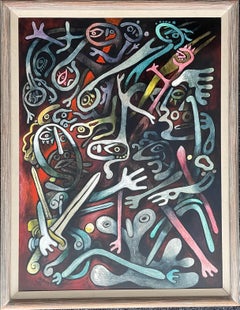
St. Atomic oil and tempera painting by Julio de Diego
By Julio de Diego
Located in Hudson, NY
Julio De Diego’s Atomic Series paintings made an extraordinary statement regarding the shock and fear that accompanied the dawn of the nuclear age. In the artist’s own words, “Scientists were working secretly to develop formidable powers taken from the mysterious depths of the earth - with the power to make the earth useless! Then, the EXPLOSION! . . . we entered the Atomic Age, and from there the neo-Atomic war begins. Explosions fell everywhere and man kept on fighting, discovering he could fight without flesh.” To execute these works, De Diego developed a technique of using tempera underpainting before applying layer upon layer of pigmented oil glazes. The result is paintings with surfaces which were described as “bonelike” in quality. The forms seem to float freely, creating a three-dimensional visual effect. In the 1954 book The Modern Renaissance in American Art, author Ralph Pearson summarizes the series as “a fantastic interpretation of a weighty theme. Perhaps it is well to let fantasy and irony appear to lighten the devastating impact. By inverse action, they may in fact increase its weight.” Exhibited 1950 University of Illinois at Urbana "Contemporary American Painting" 1964 Marion Koogler McNay Art Institute, San Antonio, Texas This work retains its original frame which measures 54" x 36" x 2". About this artist: Julio De Diego crafted a formidable persona within the artistic developments and political struggles of his time. The artist characterized his own work as “lyrical,” explaining, “through the years, the surrealists, the social-conscious painters and the others tried to adopt me, but I went my own way, good, bad or indifferent.” [1] His independence manifested early in life when de Diego left his parent’s home in Madrid, Spain, in adolescence following his father’s attempts to curtail his artistic aspirations. At the age of fifteen he held his first exhibition, set up within a gambling casino. He managed to acquire an apprenticeship in a studio producing scenery for Madrid’s operas, but moved from behind the curtains to the stage, trying his hand at acting and performing as an extra in the Ballet Russes’ Petrouchka with Nijinsky. He spent several years in the Spanish army, including a six-month stretch in the Rif War of 1920 in Northern Africa. His artistic career pushed ahead as he set off for Paris and became familiar with modernism’s forays into abstraction, surrealism, and cubism. The artist arrived in the U.S. in 1924 and settled in Chicago two years later. He established himself with a commission for the decoration of two chapels in St. Gregory’s Church. He also worked in fashion illustration, designed magazine covers and developed a popular laundry bag for the Hotel Sherman. De Diego began exhibiting through the Art Institute of Chicago in 1929, and participated in the annual Chicago Artists Exhibitions, Annual American Exhibitions, and International Water Color Exhibitions. He held a solo exhibition at the Art Institute of Chicago in the summer of 1935. Though the artist’s career was advancing, his family life had deteriorated. In 1932 his first marriage dissolved, and the couple’s young daughter Kiriki was sent to live with friend Paul Hoffman. De Diego continued to develop his artistic vocabulary with a growing interest in Mexican art. He traveled throughout the country acquainting himself with the works of muralists such as Carlos Merida, and also began a collection of small native artifacts...
Category

1940s American Modern Abstract Paintings

Materials

Masonite, Oil, Tempera

“Central Park in Winter, 1949” Manhattan New York City Snow Day Sleds Children
Located in Yardley, PA
With a studied hand, Sloan captures the human theater of a snow-covered Central Park filled with bundled-up New Yorkers, sledding, walking, chatting, and caring for children. The exp...
Category

1940s American Modern Landscape Paintings

Materials

Tempera, Oil, Masonite

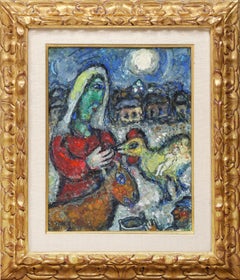
Paysanne Au Visage Vert, Original Modern Tempera Painting by Marc Chagall
By Marc Chagall
Located in Long Island City, NY
The Modern Russian artist Marc Chagall often took a very literal approach to naming his art. The title of this unique tempera and gouache painting on masonite translates very simply ...
Category

1970s Modern Figurative Paintings

Materials

Masonite, Tempera, Gouache

Nature Walk Magic Realism in Dreamlike Setting
By Hazel Janicki
Located in Miami, FL
A soulful young man is captured in a deep, contemplative state, detached from current external concerns, as he gazes beyond the picture plane. He is realistically rendered, but the s...
Category

1960s Surrealist Figurative Paintings

Materials

Masonite, Tempera

Icing the Cake, Cover of The Saturday Evening Post
By Stevan Dohanos
Located in Fort Washington, PA
Medium: Gouache and Tempera on Masonite Sight Size 14.50" x 11.25", Framed 20.50" x 17.25" Signature: Signed Lower Right Cover of The Saturday Evening Post, June 16, 1945
Category

1940s Figurative Paintings

Materials

Masonite, Tempera, Gouache

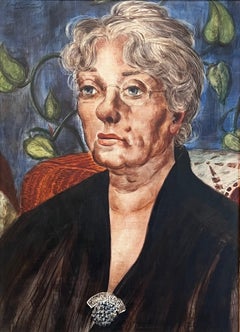
Mother Elizabeth
Located in Los Angeles, CA
Mother Elizabeth, c. 1930 - 40s, tempera on Masonite, signed and titled upper left, 22 5/8 x 16 inches, artist's name inscribed verso of original frame Ernest W. Scanes was a Mich...
Category

Mid-20th Century American Realist Portrait Paintings

Materials

Masonite, Tempera

Mother Elizabeth
$2,250
H 22.63 in W 16 in D 2 in

More From This Seller

View All
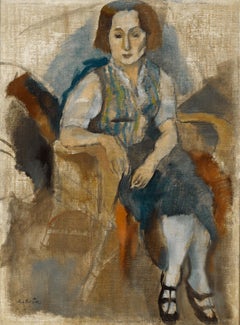
Femme aux Souliers Noir (Woman in Black Shoes)
By Jules Pascin
Located in New Orleans, LA
This intimate portrait was composed by the Bulgarian-born French Expressionist painter Jules Pascin. Known as the "Prince of Montparnasse," Pascin made a name for himself throughout ...
Category

Early 20th Century Modern Portrait Paintings

Materials

Canvas, Oil

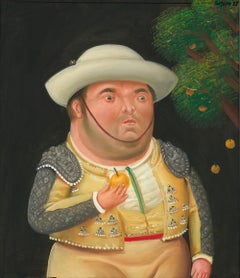
Juan Rodriguez Conejo by Fernando Botero
By Fernando Botero
Located in New Orleans, LA
Fernando Botero 1932-2023 Colombian Juan Rodriguez Conejo Signed "Botero 88" (upper right) Oil on canvas Exemplifying Fernando Botero's distinctive visual language and mastery of...
Category

20th Century Modern Figurative Paintings

Materials

Canvas, Oil

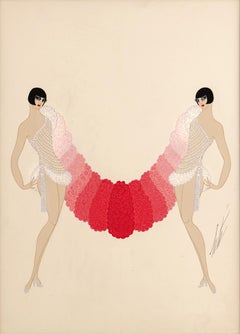
Les sisters by Erté
By Erte - Romain de Tirtoff
Located in New Orleans, LA
Erté (Romain de Tirtoff) 1892-1990 Russian-French Les sisters Signed “Erté” (lower right) Gouache on paper Designed for a performance of Moi, J’aime le Music-Hall, Erté’s Les sis...
Category

20th Century Art Deco Figurative Paintings

Materials

Paper, Gouache

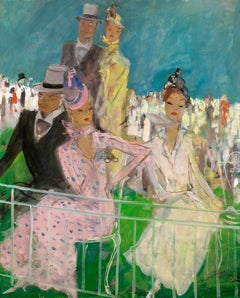
At the Races by Jean-Gabriel Domergue
By Jean-Gabriel Domergue
Located in New Orleans, LA
Jean-Gabriel Domergue 1889-1962 French Aux Courses (At the Races) Signed "Jean Gabriel Domergue" (lower right) Oil on canvas This exceptional oil by French artist Jean-Gabriel Do...
Category

20th Century Post-Impressionist Figurative Paintings

Materials

Canvas, Oil

Portrait of Benjamin Franklin attributed to Mason Chamberlin
By Mason Chamberlin
Located in New Orleans, LA
Attributed to Mason Chamberlin 1729-1787 British Portrait of Benjamin Franklin No visible signature Oil on canvas This exceptional portrait of Benjamin Franklin represents one of ...
Category

18th Century Academic Figurative Paintings

Materials

Canvas, Oil

Young Woman in Interior by Richard E. Miller
By Richard Edward Miller
Located in New Orleans, LA
Richard E. Miller 1875-1943 American Young Woman in Interior Signed "Miller" (lower right) Oil on canvas Richard E. Miller's Young Woman in Interior exemplifies the artist's exce...
Category

20th Century Impressionist Figurative Paintings

Materials

Canvas, Oil

Still Thinking About These?

All Recently Viewed