Items Similar to "The Equestrian" Gene Pressler, Countryside Setting, American Society Portrait

Want more images or videos?
Request additional images or videos from the seller
1 of 11
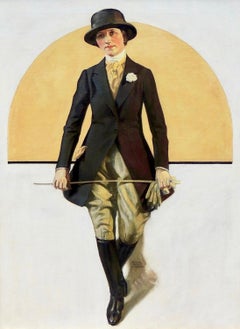
Gene Pressler"The Equestrian" Gene Pressler, Countryside Setting, American Society Portraitcirca 1925
circa 1925
$8,000
£6,097.74
€7,033.10
CA$11,362.39
A$12,210.09
CHF 6,551.42
MX$143,827.34
NOK 82,376.83
SEK 75,250.70
DKK 52,562.64
About the Item
Gene Pressler
The Equestrian, circa 1925
Signed lower left
Pastel on canvas
32 x 24 inches
Gene Pressler was born in Jersey City, New Jersey, in 1893 or 1894, and lived in New Jersey throughout most of his career. Pressler studied under F. Louis Mora and Edward Dufner at the Art Student's League, but made an early start in his career as a commercial artist. The earliest known magazine
cover by Pressler appeared on the July, 1913 issue of McCall’s, when he was only about twenty years old.
Like several of his other early covers, it featured children. Pressler soon found his first forte, however — producing images of women that found a ready market with magazine art editors. Over the next five years, he produced at
least 74 magazine cover images, averaging more than one cover a month over that period.
Much of this magazine work is superb, but has remained largely unknown because it was created for magazines that are seldom seen today (such as the pulp magazines Romance, Saucy Stories, and Snappy Stories). There is no doubt that additional Pressler covers remain to be discovered.
Pressler also did advertising work for several companies, most notably Pompeian Beauty Products, for which he produced a long series of magazine ad images, as well as five of the annual, “yardlong” Pompeian Beauty Panels. Pressler illustrations can also be found on a wide variety of other items, including sheet music, trade cards, book frontispieces and covers, blotters, playing cards, candy boxes, jigsaw puzzles, painting kits, catalogs, and fans.
It was the calendar market, however, that occupied most of Pressler’s attention after about 1920. Pastels on canvas were his preferred medium, allowing him to achieve the golden lighting effects that often characterize his work and make it instantly recognizable. These images found a perfect outlet in the emerging market for advertising calendars, and remain his most sought-after legacy today.
About the Seller
5.0
Platinum Seller
Premium sellers with a 4.7+ rating and 24-hour response times
Established in 2022
1stDibs seller since 2022
136 sales on 1stDibs
Typical response time: <1 hour
- ShippingRetrieving quote...Shipping from: New York, NY
- Return Policy
More From This Seller
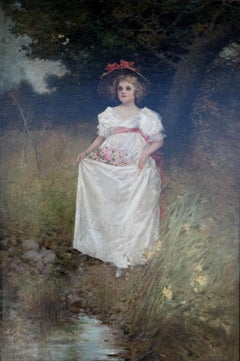
View All"Portrait of a Woman" Edward Percy Moran, Early American Portrait, Bucolic
By Edward Percy Moran
Located in New York, NY
Edward Percy Moran
Portrait of a Woman
Signed lower right
Oil on canvas
30 x 20 inches
Provenance:
The Madison Gallery, Atlanta
Percy Moran was the son of marine painter Edward Mo...
Category
1890s Academic Figurative Paintings
Materials
Canvas, Oil
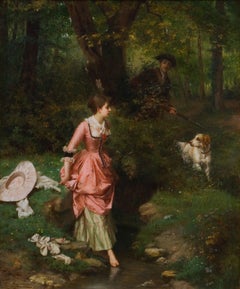
"Young Beauty Crossing Brook with Hunter, " Emile Pierre Metzmacher French Salon
Located in New York, NY
Émile-Pierre Metzmacher (French, 1815 - 1890)
A Young Beauty Crossing a Brook, A Hunter Beyond
Oil on panel
24 x 19 1/2 inches
Signed lower left
Provenance:
Christie's New York, Oct...
Category
Mid-19th Century Figurative Paintings
Materials
Oil, Wood Panel
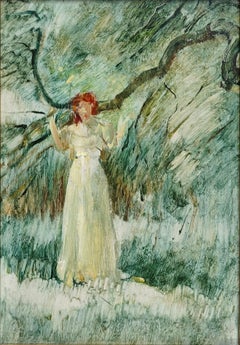
"Into the Woods" Henry Prellwitz, Lyrical Woman In Wooded Landscape Painting
By Henry Prellwitz
Located in New York, NY
Henry Prellwitz
Into the Woods
Oil on board
11 1/2 x 8 3/4 inches
Henry Prellwitz studied art at the Art Students League of New York, where his chief mentor was Thomas Wilmer Dewing; he later became its director.[3] He also studied at the Académie Julian in Paris.
In 1892, he set up his studio in the Holbein Studios building on West 55th Street in Manhattan, where his future wife, the artist Edith Mitchill, also had a studio. They married in 1894 and had a son, Edwin.
By the mid 1890s, he was teaching portrait painting at the Pratt Institute, where one of his students was the Cubist artist Max Weber.
In 1899, Henry and Edith moved to the north shore of Peconic Bay on Long Island, where their artist friends Irving Ramsay Wiles and Edward August Bell were already established. They painted plein air paintings and also worked in adjoining studios at High House, their Peconic Bay home.
Prellwitz painted Impressionist and Tonalist waterscapes of Peconic Bay and allegorical figure paintings such as the 1904 Lotus and Laurel. He exhibited mainly on the east coast and at expositions like the St. Louis World's Fair, where he won a silver medal. He won the Third Hallgarten Prize from the National Academy of Design (NAD) in 1893 for The Prodigal Son, and his Venus won the Thomas B. Clarke Prize at the 1907 NAD exhibition for the best figure composition by an American citizen painted in the United States.
Both Prellwitzes disappeared into obscurity for several decades after their deaths in the early 1940s. Rediscovered in the 1980s, they have been called one of the best-kept secrets in art...
Category
Early 20th Century Modern Figurative Paintings
Materials
Oil, Board
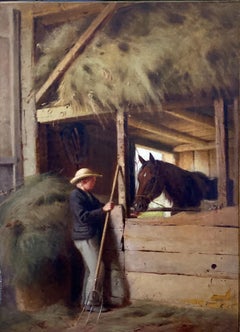
"Interior of a Stable" William Hart, Hudson River School Antique, Boy and Horse
By William Hart
Located in New York, NY
William M. Hart (1823 - 1894)
Interior of a Stable
Oil on canvas
17 x 12 inches
Provenance
William Macbeth Gallery, New York
Mrs. Mabel Brady Garvan Collection
Christie's New York, Sporting Art, November 28, 1995, Lot 116
Ann Carter Stonesifer, Maryland
Estate of above
Brunk Auctions, Asheville, North Carolina, January 27 2018, Lot 777
Exhibited
New York, The Metropolitan Museum of Art, Life in America, April 24 - October 29, 1939, no. 123, illustrated.
New York, Macbeth Gallery, 1892: Sixtieth Anniversary Exhibition, April 1952, p. 5, no. 18.
Literature
Turner Reuter Jr, Animal and Sporting Artists in America, Middleburg, Virginia, 2008, p. 306.
Gary Stiles, William Hart: Catalogue Raisonné and Artistic Biography, no. 1126, illustrated.
It should be noted that the Francis Patrick Garvan and Mrs. Mabel Brady Garvan collection, of which this painting was a part of, was one of the foremost American Art collections and now makes up a large part of the Smithsonian American Art Museum and the Yale University Art Gallery collections.
Born in 1823 in Paisley, Scotland, William Hart emigrated with his parents to the United States at the age of nine and settled in Albany, New York. It was here that Hart first began his artistic training when he was placed under the tutelage of Messrs, Eaton & Gilbert, the prestigious coach-makers from Troy, New York. During this time, Hart learned how to decorate coach panels, covering them with either landscapes or figurative compositions. At the age of seventeen, he was eagerly contemplating an artist’s profession. Consequently, he left the mechanical trade of coach-making and began expanding his artistic pursuits to more refined endeavors.
Hart followed coach-making with decorating window shades and later developed an interest in portraiture. Around 1840, he established his first formal studio in his father’s woodshed in Troy. There, he created many likenesses of individuals, affording him a nominal income. Once, he remarked that he felt prouder over his first fee of five dollars for painting a head then for the larger sums he would command later in his career. Nevertheless, his wages from portraits during this early period proved insufficient. Thus, he expanded into landscape painting, allowing him to barter his works or sell them for modest prices.
In 1842, Hart moved to Michigan in an attempt to further his success; portraiture remained his primary means of support. Unfortunately, his experiences in the West were disappointing. Hart spent three years living a rough existence until he finally returned to Albany in 1845. Upon his return, he fully devoted himself to the art of landscape painting. Despite his failing health, he worked diligently to perfect his skill until 1849 when he traveled abroad to his native land of Scotland. This trip was made possible through the generosity of his patron and advisor, Dr. Ormsby of Albany. For three years, he studied in the open-air, creating brilliant sketches of the Scottish Highlands and the surrounding British Isles.
Returning to Albany once more in 1852, Hart enjoyed improved health and was reinvigorated with purpose. The following year, he moved to New York and opened a studio, promoting himself as a specialist in landscape painting. Hart became a regular contributor to the National Academy of Design. His works received a great deal of attention from artists and connoisseurs alike, all of whom praised him for his fresh, self-taught style. In 1855, he was designated as an associate of the National Academy of Design; three years later he was elected to Academician. In 1865, he was unanimously chosen to be the first president of the Brooklyn Academy of Design. It was during his tenure there that he delivered his famous lecture The Field and Easel, which emphasized the distinguishing principles of landscape art in America. Hart argued that landscape painters should express the “look of the place” being depicted.Critics during the 1870s noted his sensitive balance between capturing a strict “real” interpretation of nature and that of a more “ideal” sentimental tone. For instance, in 1869, Putnam Magazine noted that Hart brought back “exquisite studies” of the surrounding Tappan...
Category
19th Century Hudson River School Animal Paintings
Materials
Canvas, Oil
$60,000 Sale Price
20% Off
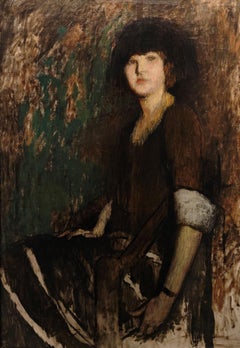
"Portrait of a Lady (Study for Harriet Blake)" Lilian Westcott Hale, Painting
By Lilian Westcott Hale
Located in New York, NY
Lilian Westcott Hale
Portrait of a Lady (Study for Harriet Blake)
Oil on canvas
40 ¼ x 30 ¼ inches
A leading American Impressionist working at t...
Category
1920s Impressionist Figurative Paintings
Materials
Canvas, Oil
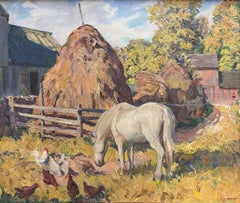
"White Horse" Frederick Lester Sexton, Bucolic Barn, Farm Scene, White Horse
By Frederick Lester Sexton
Located in New York, NY
Frederick Lester Sexton
White Horse
Signed lower right
Oil on canvas
25 x 30 inches
Provenance
Part of a Collection received from the Lyme Art Association.
Frederick Lester Sexton received a lot of reviews and exhibitions in the 1920s, 1930s, and 1940s, when he was at the height of his career. Because it captured the personal view of many people's wish to ignore national issues and simply live their lives in their homes, his work was favorably welcomed. The rise of modernist styles like Abstract Expressionism, which started to take over the American art scene in the 1950s, also contributed to Sexton's fall in popularity. As collectors and regular spectators discover once more that realism is a valid component of American art because it speaks directly and clearly to the beauty they perceive in their surroundings, many artists, like Sexton, are experiencing a renaissance.
Cheshire, Connecticut, was the birthplace of Frederick Sexton in 1889. His father, J. Frederick Sexton, was the Rector of St. Peter's Church in Cheshire and a well-known Episcopal clergyman. The mother, Mary Louise Lester, was an amateur painter and came from a pretty well-known Hartford family. Frederick was killed in an open-hearth fire when he was eighteen months old. His right hand was badly burned and was never to be opened again. The father kept the family together after his mother passed away when he was nineteen.
Sexton's mother taught him art, and he went to public schools in New Haven. He received the prestigious Winchester Prize for a year of study in Spain while attending the Yale School of Fine Art, where he studied under Augustus Tack...
Category
1930s American Impressionist Figurative Paintings
Materials
Canvas, Oil
You May Also Like
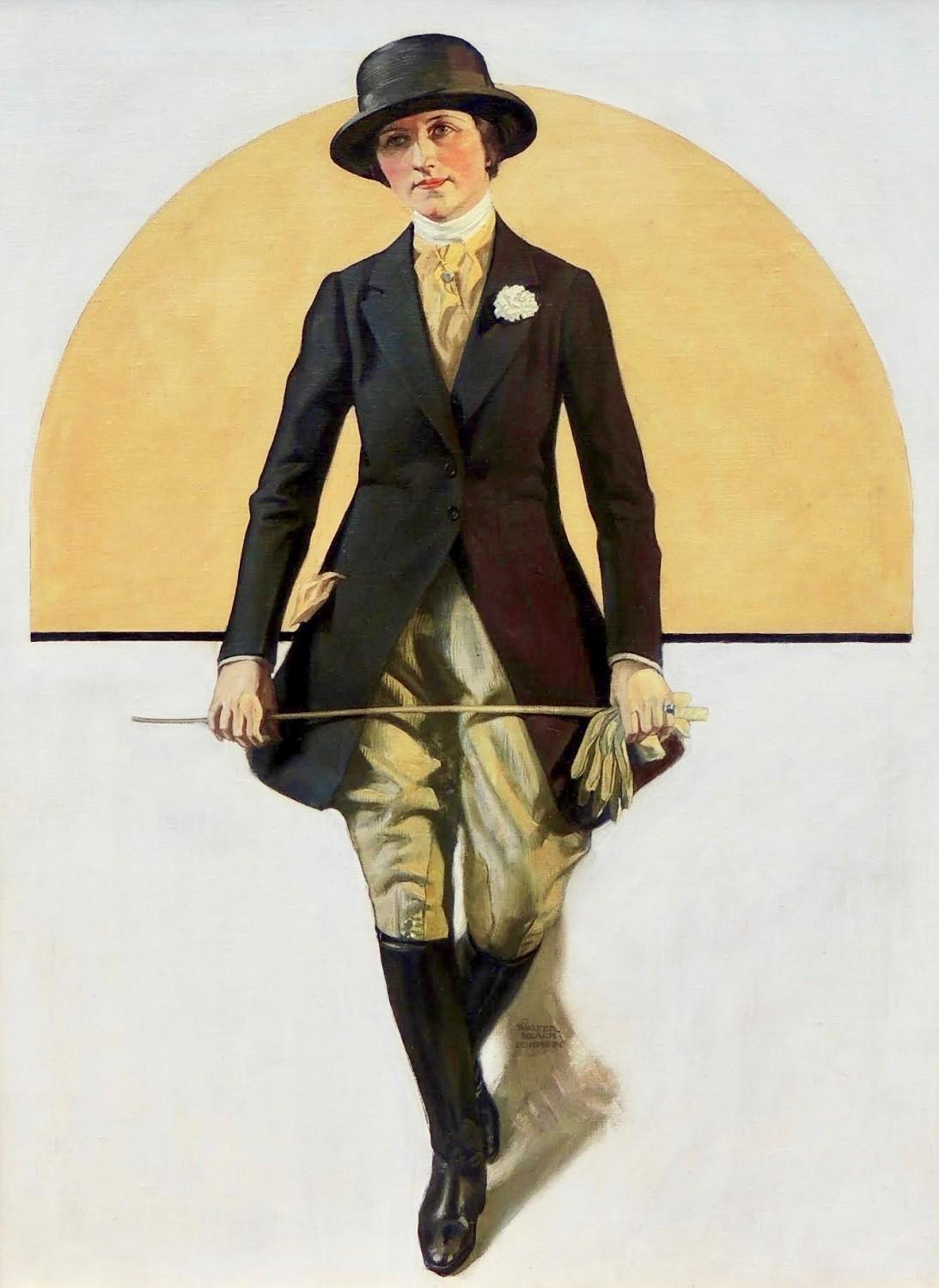
Woman in Equestrian Clothing
By Walter Beach Humphrey
Located in Fort Washington, PA
Medium: Oil on Canvas
Walter Beach Humphrey specialized in painting magazine covers and he eventually did work for almost all of them, beginning with small-circulation publica...
Category
1920s Other Art Style Portrait Paintings
Materials
Canvas, Oil
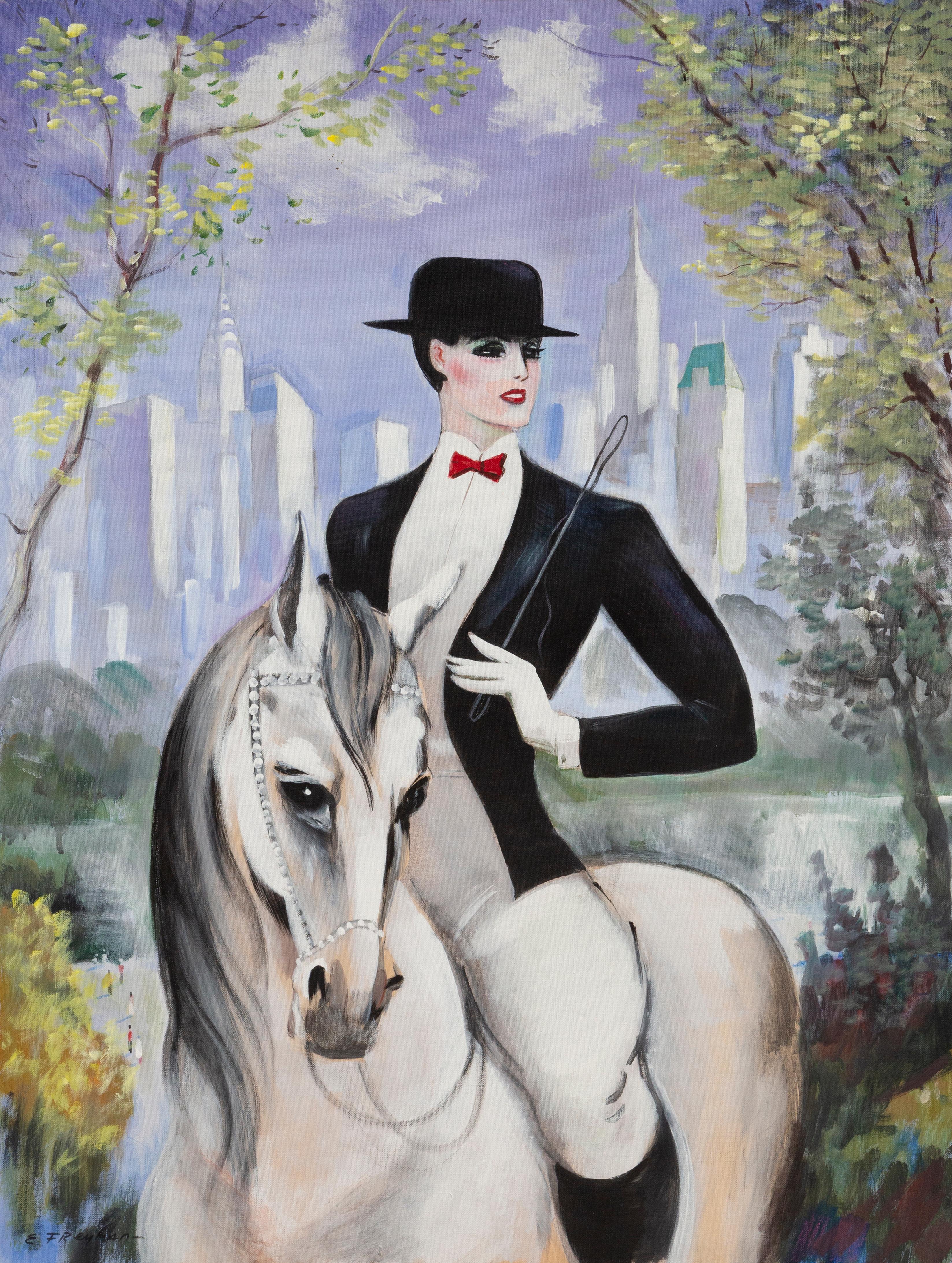
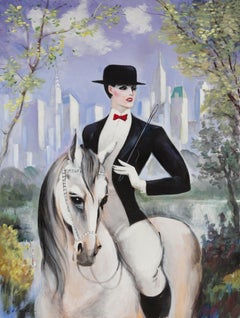
Equestrienne, Large Art Deco Painting by Erik Freyman
By Erik Freyman
Located in Long Island City, NY
"Equestrienne" is an original painting on canvas measuring 40 x 30 inches by Erik Freyman. The artist is best known for his 80's style which draws heavily on Art Deco and Cubism.
...
Category
1980s Art Deco Figurative Paintings
Materials
Canvas, Acrylic
$5,200 Sale Price
20% Off
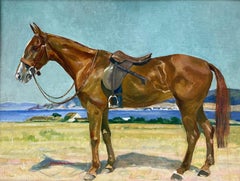
English 1950
s Sporting Art Oil Painting Portrait of Horse in Landscape
Located in Cirencester, Gloucestershire
Portrait of a Horse in a Landscape
English artist, mid 20th century
indistinctly signed oil on board,
framed: 14.5 x 18.5 inches
board: 12 x 16 inches
provenance: private collection...
Category
Mid-20th Century English School Animal Paintings
Materials
Oil
$1,337 Sale Price
20% Off
1950
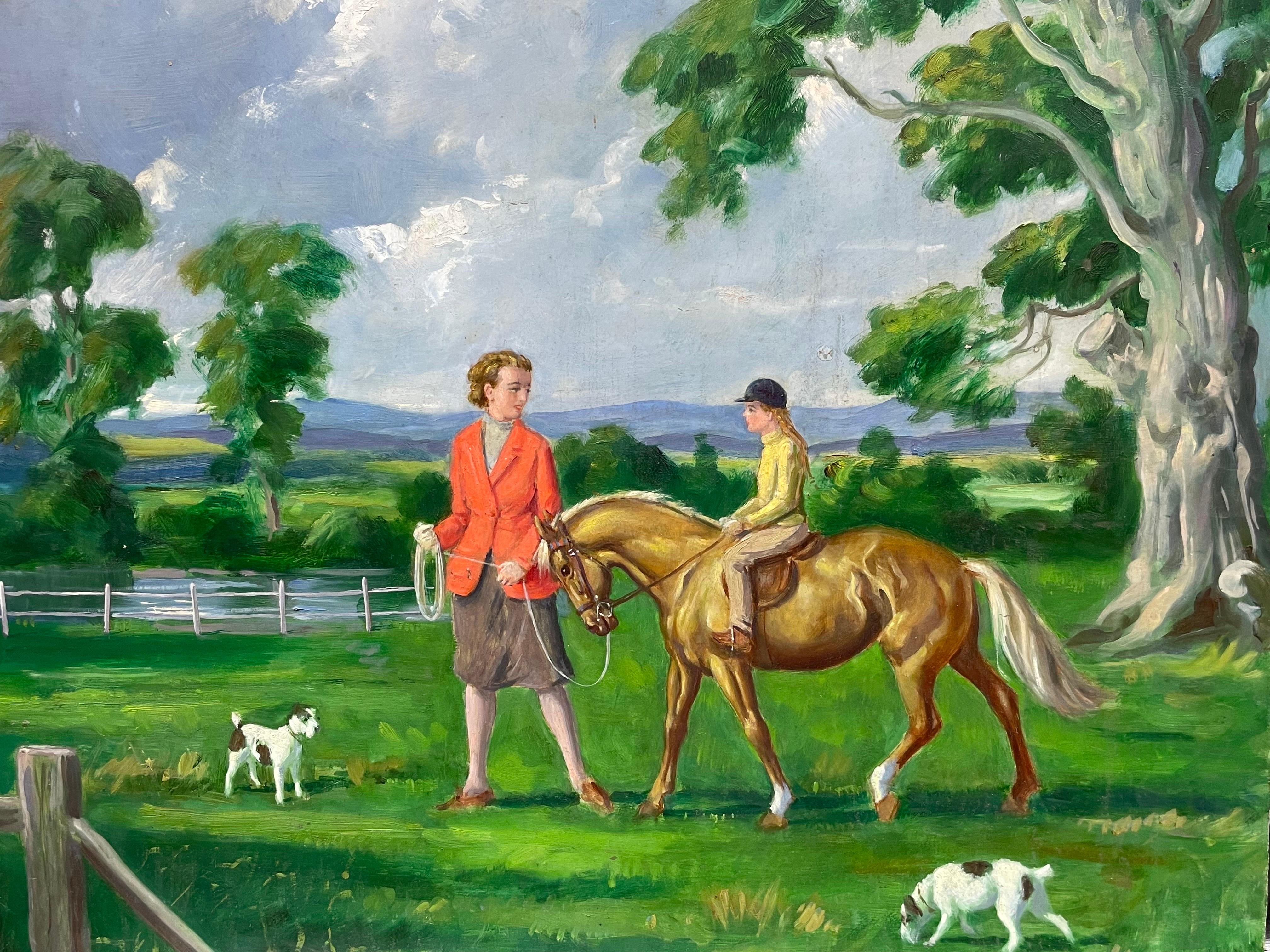
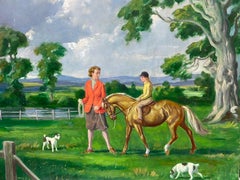
s English Oil Mother
Daughter Horse Riding Lesson
Two Jack Russel Dogs
Located in Cirencester, Gloucestershire
English School, circa 1950's
The Riding Lesson
oil on board, unframed
17 x 20 inches
private collection, England
The painting is in overall very good and sound condition. There is a...
Category
Mid-20th Century Victorian Animal Paintings
Materials
Oil
The Valley of the Moon
Cosmopolitan Magazine Illustration
By Howard Chandler Christy
Located in Fort Washington, PA
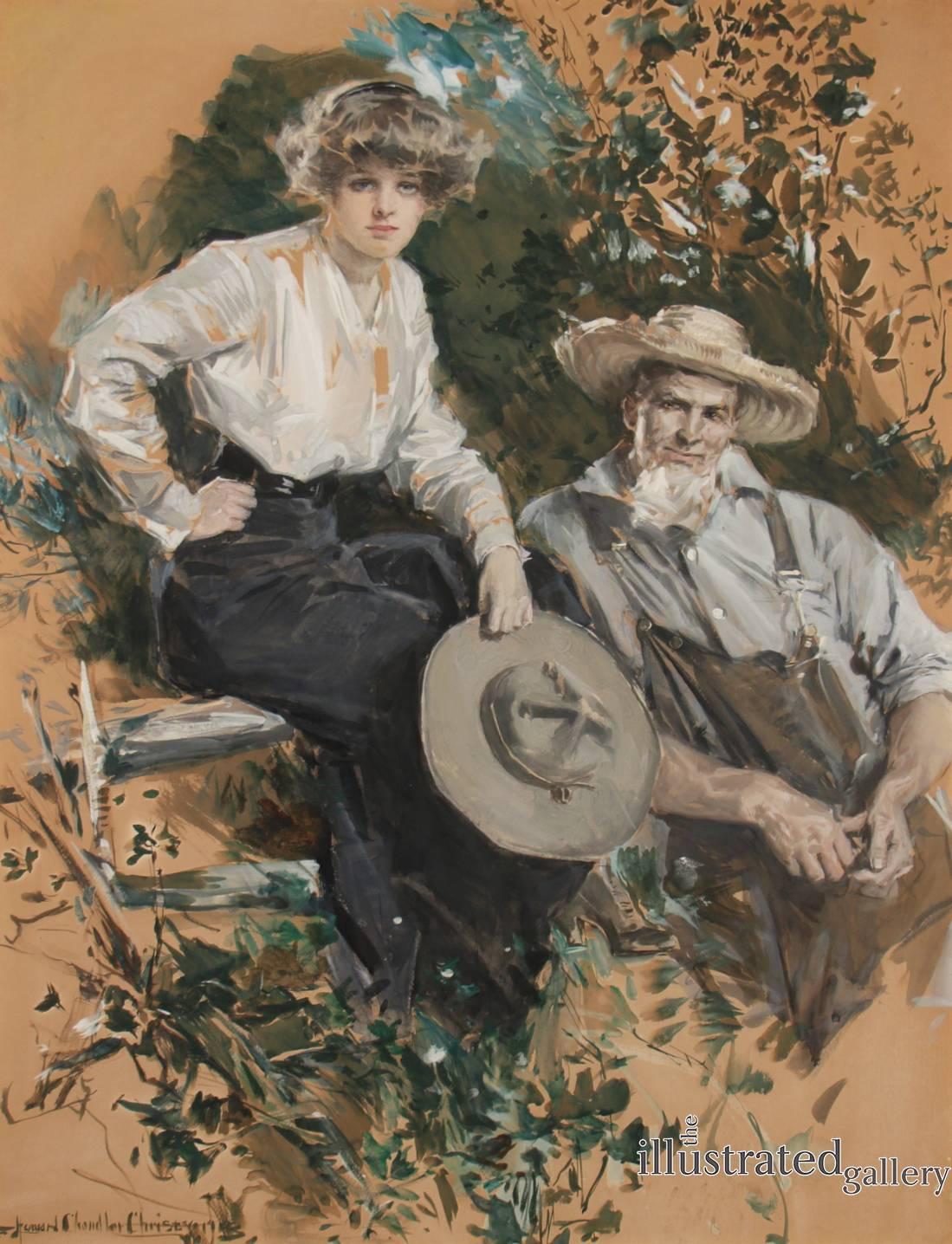
Illustration of a couple.
"The farmer crossed the plowed strip to Saxon, and joined her on the rail." Ink, watercolor, and gouache on board. 991x749 mm; 39x29 1/2 inches. Signed in full, lower left. Illustration for the first appearance of Jack London's novel "The Valley of the Moon," Cosmopolitan Magazine...
Category
1910s Other Art Style Portrait Paintings
Materials
Board, Gouache, Watercolor
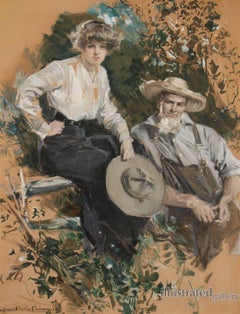
Gentleman Caller Southern Belle
Located in Wilton Manors, FL
Beautiful illustration art painting depicts a gentleman calling on a Southern belle. Oil on canvas measures 16 x 20 inches; 18 x 22 inches framed. Signed lower left.
Category
Mid-20th Century Realist Figurative Paintings
Materials
Oil
$450 Sale Price
25% Off