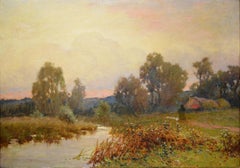
Items Similar to "Farmland Meadows" George Henry Smillie, Hudson River School, Sunset Landscape
Want more images or videos?
Request additional images or videos from the seller
1 of 11
George Henry Smillie"Farmland Meadows" George Henry Smillie, Hudson River School, Sunset Landscape1865
1865
$14,000
£10,603.70
€12,177.98
CA$19,618.58
A$21,329.35
CHF 11,308.85
MX$255,684.83
NOK 143,729.63
SEK 131,675.88
DKK 91,015.01
About the Item
George Henry Smillie
Farmland Meadows, 1865
Signed and dated lower left
Oil on canvas
10 1/2 x 18 inches
Provenance
Private Collection, Langley, Washington
The career of George Smillie (1840-1921) followed the arc of nineteenth-century U.S. landscape painting. Trained in the Hudson River School tradition, Smillie successfully adapted to changing U.S. tastes and growing interest in European trends. In the late 1800s, he moved to tonalist paintings full of brushwork and influenced by French Barbizon painting. By the end of his career, he had lightened his palette to produce works similar to those of the U.S. impressionists. Yet in all styles, he was never less than competent, and his tonalist work is among the best produced in the United States.
Like many nineteenth-century painters, George Smillie’s artistic training began with the study of printing. His father, James Smillie, was a noted printmaker who engraved Hudson River landscapes. George studied briefly with James McDougal Hart and then opened a studio of his own in New York City. A critic in 1870 said that his realistic landscapes exhibited “a certain refinement” that “enhances the charm of his more quiet scenes.”
Smillie spent most of his career in New York City but sketched for several summers in New Hampshire, upstate New York, and Florida. In the early 1870s, George Smillie and his older brother (James David Smillie, also an artist) ventured to the western United States to sketch. The trip inspired several paintings of the Rocky Mountains as well as some with Native American scenes observed from real life.
On the same trip, the Smillie brothers visited the Yosemite Valley in California. Access was difficult until the national park was established in 1890, and the brothers visited before the area’s features were well-known to European Americans. An oil painting by George Smillie of Half Dome in Yosemite sold for $42,000 in 2006.
George Smillie painted both in oils and in watercolor. He embraced a wide range of landscape subjects from quiet Connecticut meadows to rocky Massachusetts coastlines. He particularly liked painting the area around the shores of Long Island. In 1881 he married Helen ‘Nellie’ Sheldon Jacobs (1854-1926), a genre painter and former pupil of his older brother.
After a tour of Europe, however, George Smillie began painting moody tonalist landscapes with muted colors. He became fascinated with the changeability of the seasons and times of the day. In these works, Smillie often chose a dramatic viewpoint and mysterious lighting to add theatrical excitement to the scene.
During the 1890s, Smillie lived in southern Connecticut where he met the major U.S. impressionists. He soon changed his style again, now choosing a lighter palette and even looser brushwork. In 1906, the 66-year-old painter moved for the final time to Pondville Road in Bronxville, NY. He said of the area, “For the landscape painter there is enough to keep him busy here without going far afield for his subjects, and there is always inspiration among our beautiful trees and back lanes and old pastures.”
George Smillie began painting landscapes before the Civil War and ended after World War I. In this long period, he was an artistic follower and not a trend-setter. His work, however, remains evocative of the time and uniformly pleasing to the eye.
- Creator:George Henry Smillie (1840 - 1921, American)
- Creation Year:1865
- Dimensions:Height: 20 in (50.8 cm)Width: 27 in (68.58 cm)
- More Editions Sizes:Unique workPrice: $14,000
- Medium:
- Movement Style:
- Period:
- Condition:
- Gallery Location:New York, NY
- Reference Number:1stDibs: LU1841216217762
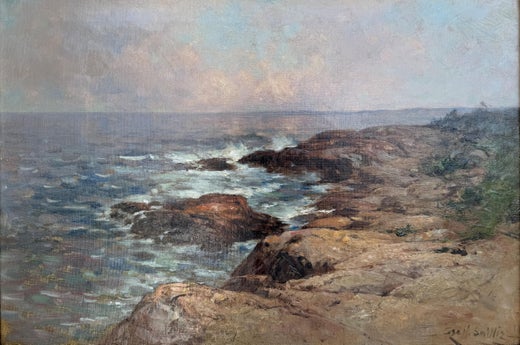
George Henry Smillie
The career of George Smillie followed the arc of nineteenth-century U.S. landscape painting. Trained in the Hudson River School tradition, Smillie successfully adapted to changing U.S. tastes and growing interest in European trends. In the late 1800s, he moved to tonalist paintings full of brushwork and influenced by French Barbizon painting. By the end of his career, he had lightened his palette to produce works similar to those of the U.S. impressionists. Yet in all styles, he was never less than competent, and his tonalist work is among the best produced in the United States. Like many nineteenth-century painters, George Smillie’s artistic training began with the study of printing. His father, James Smillie, was a noted printmaker who engraved Hudson River landscapes. George studied briefly with James McDougal Hart and then opened a studio of his own in New York City. A critic in 1870 said that his realistic landscapes exhibited “a certain refinement” that “enhances the charm of his more quiet scenes.” Smillie spent most of his career in New York City but sketched for several summers in New Hampshire, upstate New York, and Florida. In the early 1870s, George Smillie and his older brother (James Smillie, also an artist) ventured to the western United States to sketch. The trip inspired several paintings of the Rocky Mountains as well as some with Native American scenes observed from real life. On the same trip, the Smillie brothers visited the Yosemite Valley in California. Access was difficult until the national park was established in 1890, and the brothers visited before the area’s features were well-known to European Americans. An oil painting by George Smillie of Half Dome in Yosemite sold for $42,000 in 2006. George Smillie painted both in oils and in watercolor. He embraced a wide range of landscape subjects from quiet Connecticut meadows to rocky Massachusetts coastlines. He particularly liked painting the area around the shores of Long Island. After a tour of Europe, however, George Smillie began painting moody tonalist landscapes with muted colors. He became fascinated with the changeability of the seasons and times of the day. In these works, Smillie often chose a dramatic viewpoint and mysterious lighting to add theatrical excitement to the scene. During the 1890s, Smillie lived in southern Connecticut where he met the major U.S. impressionists. He soon changed his style again, now choosing a lighter palette and even looser brushwork. In 1906, the 66-year-old painter moved for the final time to Pondville Road in Bronxville, NY. He said of the area, “For the landscape painter there is enough to keep him busy here without going far afield for his subjects, and there is always inspiration among our beautiful trees and back lanes and old pastures.”
About the Seller
5.0
Platinum Seller
Premium sellers with a 4.7+ rating and 24-hour response times
Established in 2022
1stDibs seller since 2022
135 sales on 1stDibs
Typical response time: <1 hour
- ShippingRetrieving quote...Shipping from: New York, NY
- Return Policy
More From This Seller
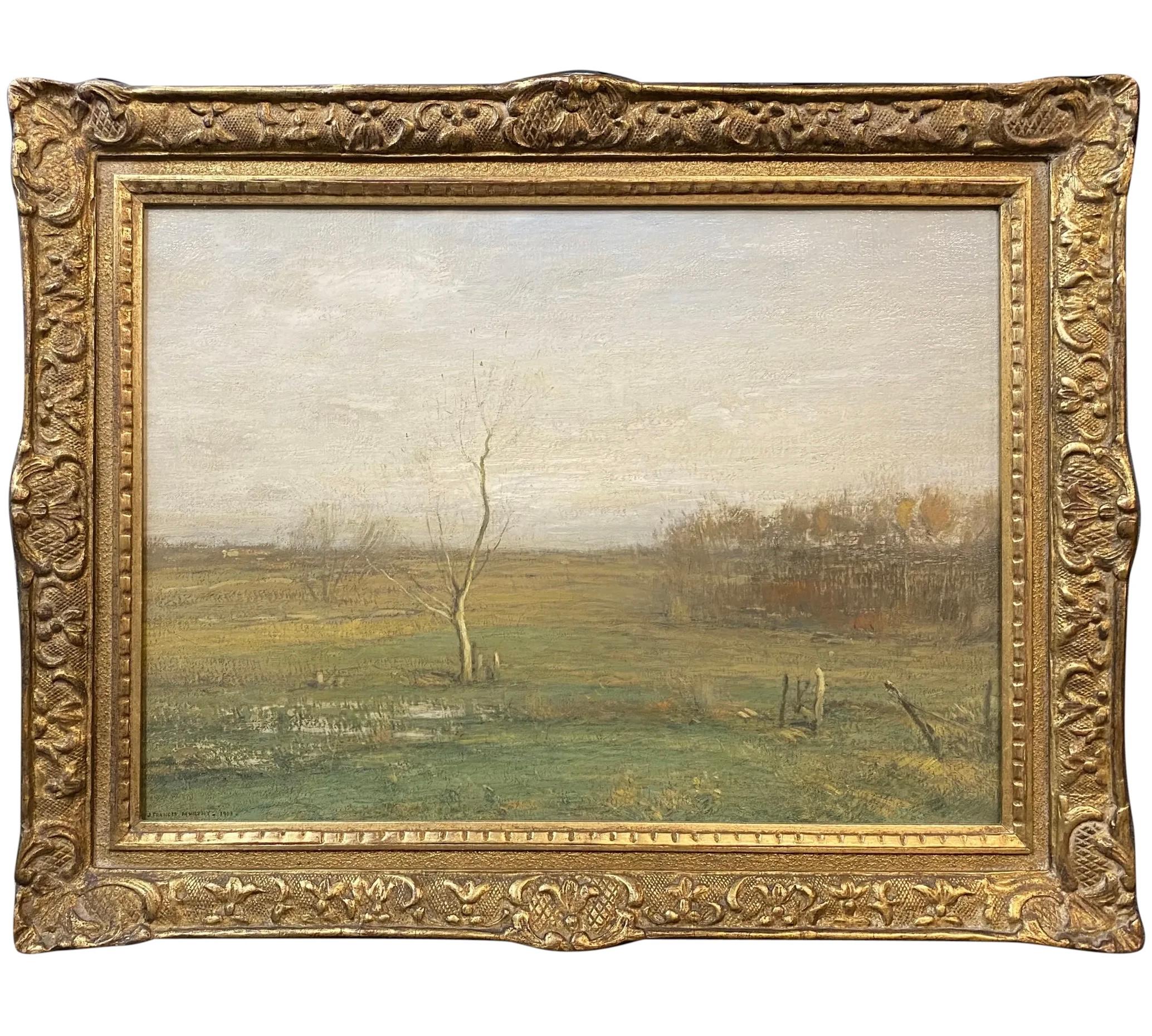
View All"Late Afternoon, " J. Francis Murphy Tonalist Summer / Autumn Landscape
By John Francis Murphy
Located in New York, NY
John Francis Murphy (American, 1853 - 1921)
Late Afternoon, 1895
Oil on canvas
14 x 19 inches
Signed and dated lower right
Housed in a reproduction fluted cove frame.
Provenance:
Kenneth Lux Gallery, Inc., New York
BNY Mellon, New York
Christie's New York, Living with Art, October 14, 2016, Lot 352
In his lifetime, John Francis Murphy (1853-1921) was known as “the American Corot.” He was renowned for his small, intimate views of nature, especially barren fields and farms, bare trees, and lonely marshland. More than a century later, the power of Murphy’s landscapes has not waned. One contemporary critic wrote, “It was Murphy’s unique accomplishment to achieve an absolute realism without a loss of that mystic, indefinable quality which transfigures realism.”
John Francis Murphy was born at Oswego, NY in 1853 but his family moved to Chicago in 1868 where he worked painting theater sets. Murphy was basically a self-taught artist; his only formal training was a few weeks of instruction at the Chicago Academy of Design.
In 1875, Murphy moved from Chicago to New York, eventually rooming with the painters Dennis Bunker...
Category
1890s Tonalist Landscape Paintings
Materials
Canvas, Oil
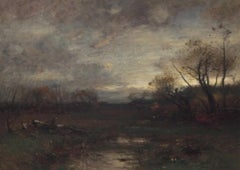
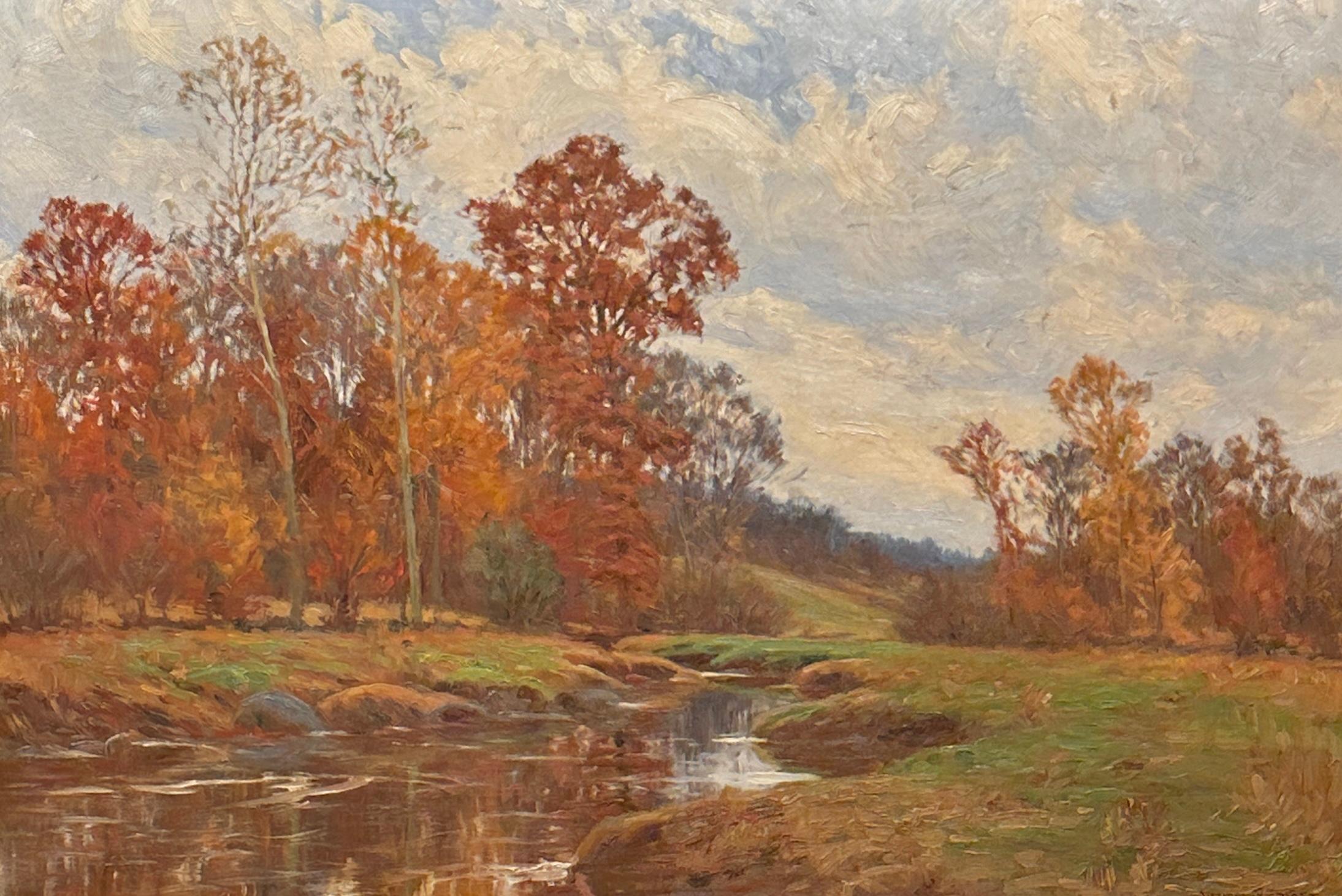
"Autumn, New England" Charles Warren Eaton, Tonalist Gloaming Sunset in Woods
By Charles Warren Eaton
Located in New York, NY
Charles Warren Eaton
Autumn, New England
Signed lower right
Oil on canvas
30 x 36 inches
Provenance
Private Collection, Connecticut
A contemporary critic wrote that the paintings o...
Category
Early 1900s Tonalist Figurative Paintings
Materials
Canvas, Oil
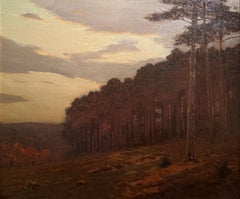
"Autumn Landscape, " Bruce Crane, Tonalist American Impressionist Fall Scene
By Bruce Crane
Located in New York, NY
Bruce Crane (1857 - 1937)
Autumn Landscape
Oil on canvas
25 x 30 inches
Signed lower right
Robert Bruce Crane was an American painter. He joined the Lyme Art Colony in the early 190...
Category
Early 20th Century Tonalist Landscape Paintings
Materials
Canvas, Oil
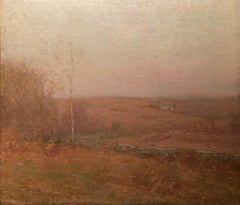
"November" Bruce Crane, Tonalism Landscape Autumn Scene, American Impressionism
By Bruce Crane
Located in New York, NY
Bruce Crane (1857 - 1937)
November
Oil on canvas
25 x 30 inches
Signed lower right
Robert Bruce Crane was an American painter. He joined the Lyme Art Colony in the early 1900s. His ...
Category
Early 20th Century Tonalist Landscape Paintings
Materials
Canvas, Oil
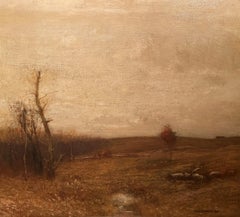
"Stone Wall, Autumn, " George Smillie, Tonalist Fall Landscape View
By George Henry Smillie
Located in New York, NY
George Henry Smillie (1840 - 1921)
Stone Wall, Autumn, 1879
Oil on canvas
9 1/2 x 15 inches
Signed and dated lower right
Provenance:
Skinner, Boston, September 19, 2014, Lot 389
The career of George Smillie (1840-1921) followed the arc of nineteenth-century U.S. landscape painting. Trained in the Hudson River School tradition, Smillie successfully adapted to changing U.S. tastes and growing interest in European trends. In the late 1800s, he moved to tonalist paintings full of brushwork and influenced by French Barbizon painting. By the end of his career, he had lightened his palette to produce works similar to those of the U.S. impressionists. Yet in all styles, he was never less than competent, and his tonalist work is among the best produced in the United States.
Like many nineteenth-century painters, George Smillie’s artistic training began with the study of printing. His father, James Smillie...
Category
1870s Tonalist Landscape Paintings
Materials
Canvas, Oil
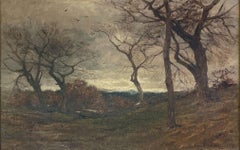
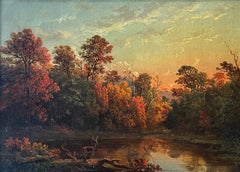
"Sunset, Indian Summer" DeWitt Clinton Boutelle, Hudson River School Landscape
Located in New York, NY
DeWitt Clinton Boutelle
Sunset, Indian Summer, 1848-49
Signed and dated lower left
Oil on canvas
12 x 16 inches
DeWitt Clinton Boutelle was b...
Category
1840s Hudson River School Figurative Paintings
Materials
Canvas, Oil
You May Also Like
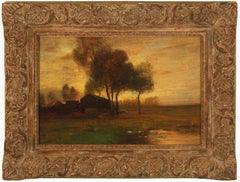
"Landscape with Farm"
By John Francis Murphy
Located in Lambertville, NJ
Jim’s of Lambertville is proud to offer this artwork by:
John Francis Murphy (1853 - 1921)
John Francis Murphy is increasingly recognized today as one of the leading American Tona...
Category
1890s Tonalist Landscape Paintings
Materials
Canvas, Oil
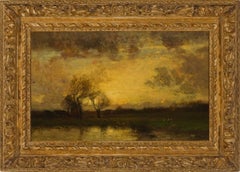
"Landscape with Trees and Pond"
By John Francis Murphy
Located in Lambertville, NJ
Jim’s of Lambertville is proud to offer this artwork.
Signed and Dated Lower Left
John Francis Murphy (1853 - 1921)
John Francis Murphy is increasingly recognized today as one o...
Category
1890s Tonalist Landscape Paintings
Materials
Canvas, Oil
Tonalist Landscape
Located in Milford, NH
A fine tonalist landscape by American artist J. Francis Murphy (1853-1921). Murphy was born in Oswego, New York, he moved to Chicago in 1868, where his father was employed in the shipping industry. In Chicago, Murphy began working as a scene painter in a local theatre and was quickly promoted to lead his co-workers. Largely self-taught, his only training consisted of a few classes at the Chicago Academy of Design. There he became friends with Emil Carlsen and Theodore Robinson, and in 1873, Academy members elected him an Associate; a few weeks later, he became an Academician. His work was first exhibited at the National Academy of Design in 1876, where he was inducted eleven years later.He won numerous prizes, medals and honors for his landscape paintings, which are said to rank with those of George Inness, Alexander Wyant, and Homer Martin. Although his world was a limited one, his landscapes captured the forms of nature and the subtle nuances of the scene. Murphy was referred to as the "American Corot" because of his similarity to the painting style of Camille Corot (1796-1875), one of the original Barbizon...
Category
Early 1900s Tonalist Landscape Paintings
Materials
Canvas, Oil
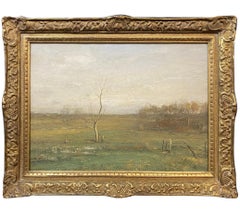
William Merritt Post, Listed American Artist, New England Landscape
By William Merritt Post
Located in Rockport, MA
William Merritt Post (1856–1935) was an American tonalist and landscape painter celebrated for his atmospheric depictions of rural New England. Working in a tonal style, Post used mu...
Category
20th Century American Impressionist Landscape Paintings
Materials
Oil
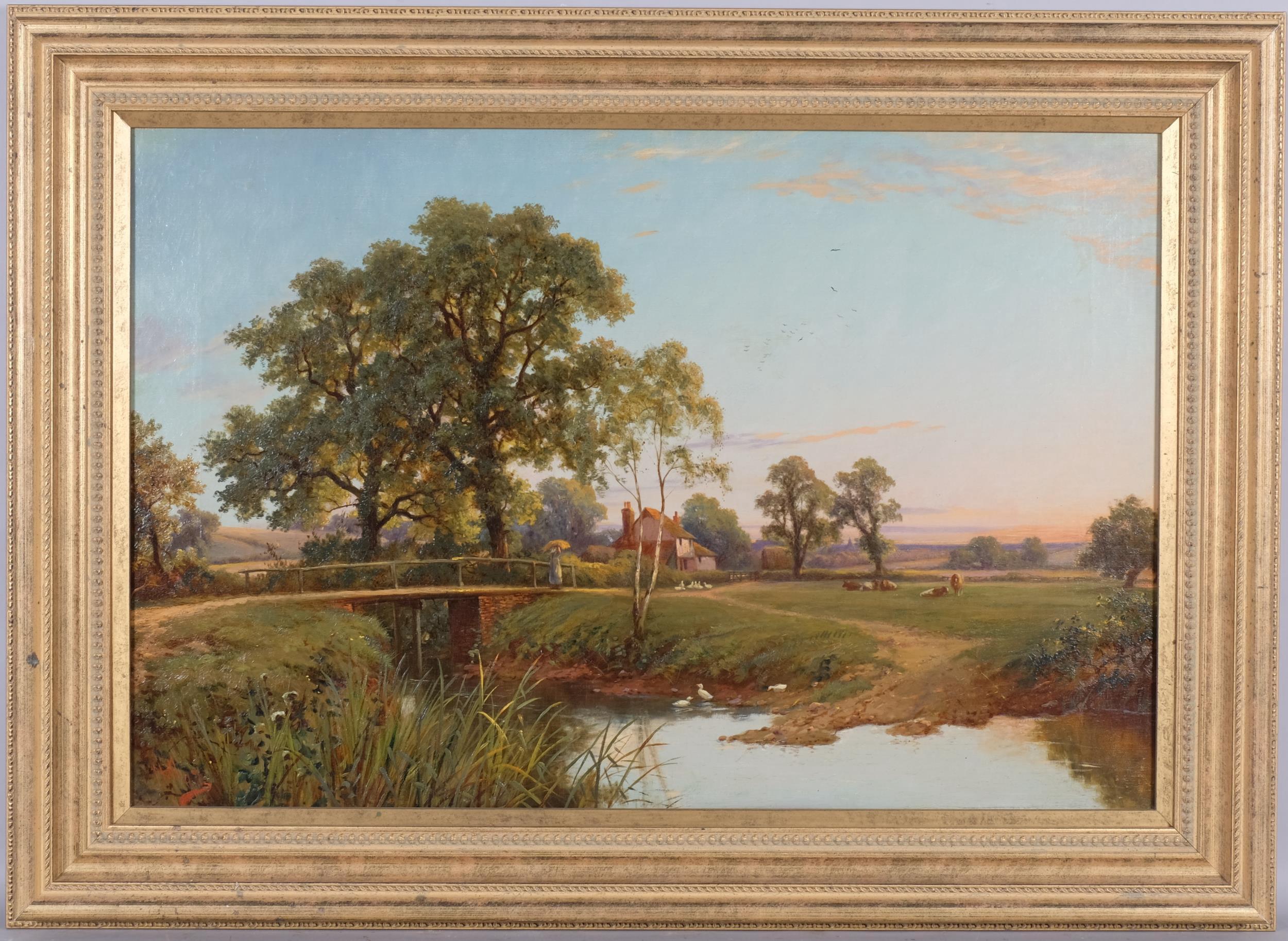
19th Century Victorian English cottage River landscape during a setting Sun
Located in Woodbury, CT
An outstanding example of the work by Henry Maidment
Maidment was an English landscape painter form the latter part of the 19th century. He mostly painted English cottage landscapes often with ducks, sheep, and young people. He used a ward palette of color and this gave his paintings a very desirable warm glow.
Henry Maidment was his real name and Robert Fenson...
Category
Early 1900s Victorian Landscape Paintings
Materials
Canvas, Oil
$2,765 Sale Price
30% Off
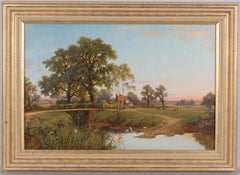
Antique Victorian Countryside Oil Landscape Sunset on River Scene 1890s Signed
Located in Stockholm, SE
This charming British oil painting by David Charles Jenkins (1867-1916) captures a serene countryside landscape bathed in the gentle glow of sunset. The composition leads the eye alo...
Category
Late 19th Century Realist Landscape Paintings
Materials
Canvas, Wood, Oil