Items Similar to Period Italian Giovanni Francesco Romanelli Follower Painting
Want more images or videos?
Request additional images or videos from the seller
1 of 10
Period Italian Giovanni Francesco Romanelli Follower Painting1650 ca.
1650 ca.
$1,542.52
£1,151.57
€1,300
CA$2,143.03
A$2,305.14
CHF 1,231.93
MX$27,171
NOK 15,531.78
SEK 14,198.99
DKK 9,907.46
About the Item
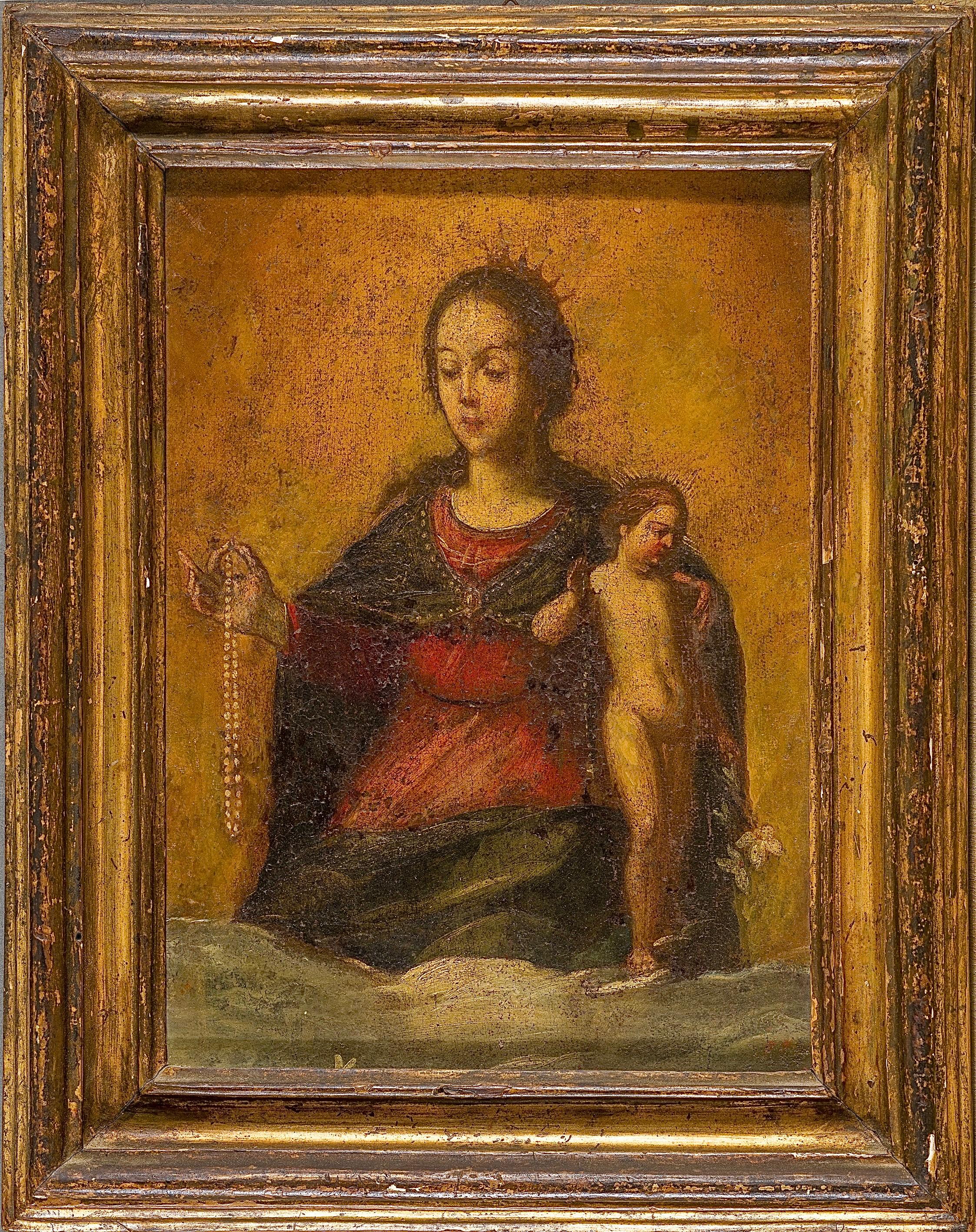
This not signed very interesting oil painting on canvas dates back to the mid-17th century.
It depicts the Virgin Mary kneeling and reading the Book of Hours.
It is the work of an artist from central Italy, probably from the circle of Giovanni Francesco Romanelli, known as Il Viterbese or Il Raffaellino.
The painting is accompanied by a beautiful contemporary Salvator Rosa-model frame in pure gold-plated wood.
Giovanni Francesco Romanelli (Viterbo, 1610– Viterbo, 9 November 1662) was a major Italian painter of the Baroque period, celebrated for his use of bright, vivid colors and also for his clarity of detail. Many of his works are on display in the Louvre.
Every item of our Gallery, upon request, is accompanied by a certificate of authenticity issued by Sabrina Egidi official Expert in Italian furniture for the Chamber of Commerce of Rome and for the Rome Civil Courts.
Our company has been present on this platform for many years, with numerous sales made and just as many excellent reviews received that you can under our Furniture account.
Born in Viterbo to Laura de Angelis and Bartolomeo Romanelli, he went to Rome at age 14 to study to become an artist, and within a few years became part of the household of Cardinal Francesco Barberini. He was a pupil in the painting studio of Pietro da Cortona, the leading painter of his day, but the two eventually quarreled and so Romanelli left. Romanelli is first recorded in 1631, assisting Cortona on the decoration of the Palazzo Barberini, Rome, which he continued to do during most of that decade, notably on the great ceiling fresco of Divine Providence (1632–9). He also contributed to Cortona’s Quarant’Ore decorations for San Lorenzo in Damaso, Rome, for 1632–3. In his easel pictures of the 1630s, such as the Rape of Helen (Rome, Capitoline Museums), Romanelli is close to the most classical of Cortona’s works.
Romanelli's first known independent commission was for the Barberini pope Urban VIII: a fresco for an overdoor in St. Peter’s, St. Peter Healing the Sick (1636–7; Rome, Vatican, Museo del tesoro di San Pietro). In 1637 Romanelli began a series of cartoons of decorative putti for tapestries in the Apostolic Palace, apparently intended as a direct imitation of those designed by the Raphael school for Leo X in 1520. Also in 1637 payments began for his fresco cycle (possibly begun earlier) of 1520. Also in 1637 payments began for his fresco cycle (possibly begun earlier) of scenes from the Life of Matilda of Tuscany, in the Sala della Contessa Matilda in the Vatican (1637–42), a work that reveals a certain weakness in large-scale composition. More successful were his ceiling fresco of Feed my Sheep and altarpiece of the Nativity in the Vatican Gallery of Maps (both 1638).
This period of Vatican commissions closed with his first major altarpiece, the Presentation in the Temple (1638–42; Rome, Santa Maria degli Angeli e dei Martiri), painted for the Cappella della Colonna in St. Peter’s, which shows him retreating from Cortona’s Venetian colourism to the safety of Bolognese disegno; like most of the altarpieces destined for St. Peter’s at this time, it was replaced by a mosaic copy. This extensive Barberini patronage evidently made Romanelli quite a distinguished figure in Rome.
From 1637 he featured regularly in the records of the prestigious Accademia di San Luca.
In 1639 he was elected director of the Accademia.
He contributed a ceiling fresco of Arion to the series of decorations by notable artists in the Palazzo Costaguti, Rome, and frescoed mythological scenes in friezes in the Palazzo Altemps.
He was also employed by the most distinguished artistic figure in the city, Bernini, to execute some of the latter’s designs for chapel decorations, notably those (1642–6) for the Cappella Raimondi in San Pietro in Montorio, Rome, in which he painted small scenes on the vault.
In 1648 Romanelli was back in Rome.
It was probably at this period that he painted his finest altarpiece, the Virgin of the Rosary (Rome, Santi Domenico e Sisto), in which the grace and charm of the figures are superbly controlled by his compositional facility.
A different kind of facility, however, informs his fresco decorations in the Palazzo Lante, Rome (1653); the ceiling painting of Mars, Venus and Mercury and six lunettes featuring episodes of Roman history have a noticeably mechanical air.
In 1655, Romanelli was recalled to Paris.
He was commissioned to decorate the summer apartment of the Queen in the Louvre Palace, four rooms – the Salles des Saisons, de la Paix, de Sévère and des Antonins – for which he produced elaborate arrangements of panels as ceiling decoration (1655–7).
The opportunity to combine a wider range of subjects than usual, not only mythologies and histories but also allegorical and religious scenes, did not stimulate him artistically, and the results give a somewhat limp, faded impression.
The gold and white stuccos, however, executed by Michel Anguier after Romanelli’s designs, are of great elegance.
In 1658 Romanelli returned to Viterbo, where he provided a fine St. Lawrence for the high altar of the cathedral.
Soon afterwards he was back in Rome. For the convent of Sant'Agostino he painted the Charity of St. Thomas of Villanueva; its dignified and graceful composition was imitated by Melchiorre Cafà in his marble group of the same subject in the adjacent church ( 1661; Rome, S Agostino), thus emphasizing Romanelli’s position as a precursor of the Late Baroque.
In 1660 Romanelli found himself back where he had started 30 years earlier, painting sumptuous, decorative frescoes for the Barberini family (Rome, Palazzo Barberini). He died in Viterbo on 9 November 1662. Romanelli’s pupils included his son Urbano Romanelli and the painter from Visone, Giovanni Monevi.
Under existing legislation, any artwork created over 70 years ago by an artist who has died can requires a license for export regardless of the work’s market price. The shipping may require additional handling days to require the license according to the destination of the artwork.
Dimensions are frame included
- Creation Year:1650 ca.
- Dimensions:Height: 18.9 in (48 cm)Width: 17.33 in (44 cm)Depth: 3.94 in (10 cm)
- Medium:
- Movement Style:
- Circle Of:Giovanni Francesco Romanelli (1610 - 1662)
- Period:Mid-17th Century
- Condition:There are many defects, as shown in the photos, but not in the most important parts of the painting.
- Gallery Location:Roma, IT
- Reference Number:1stDibs: LU2883217435142
About the Seller
No Reviews Yet
Vetted Professional Seller
Every seller passes strict standards for authenticity and reliability
Established in 1990
1stDibs seller since 2025
8 sales on 1stDibs
Typical response time: <1 hour
- ShippingRetrieving quote...Shipping from: Roma, Italy
- Return Policy
More From This Seller
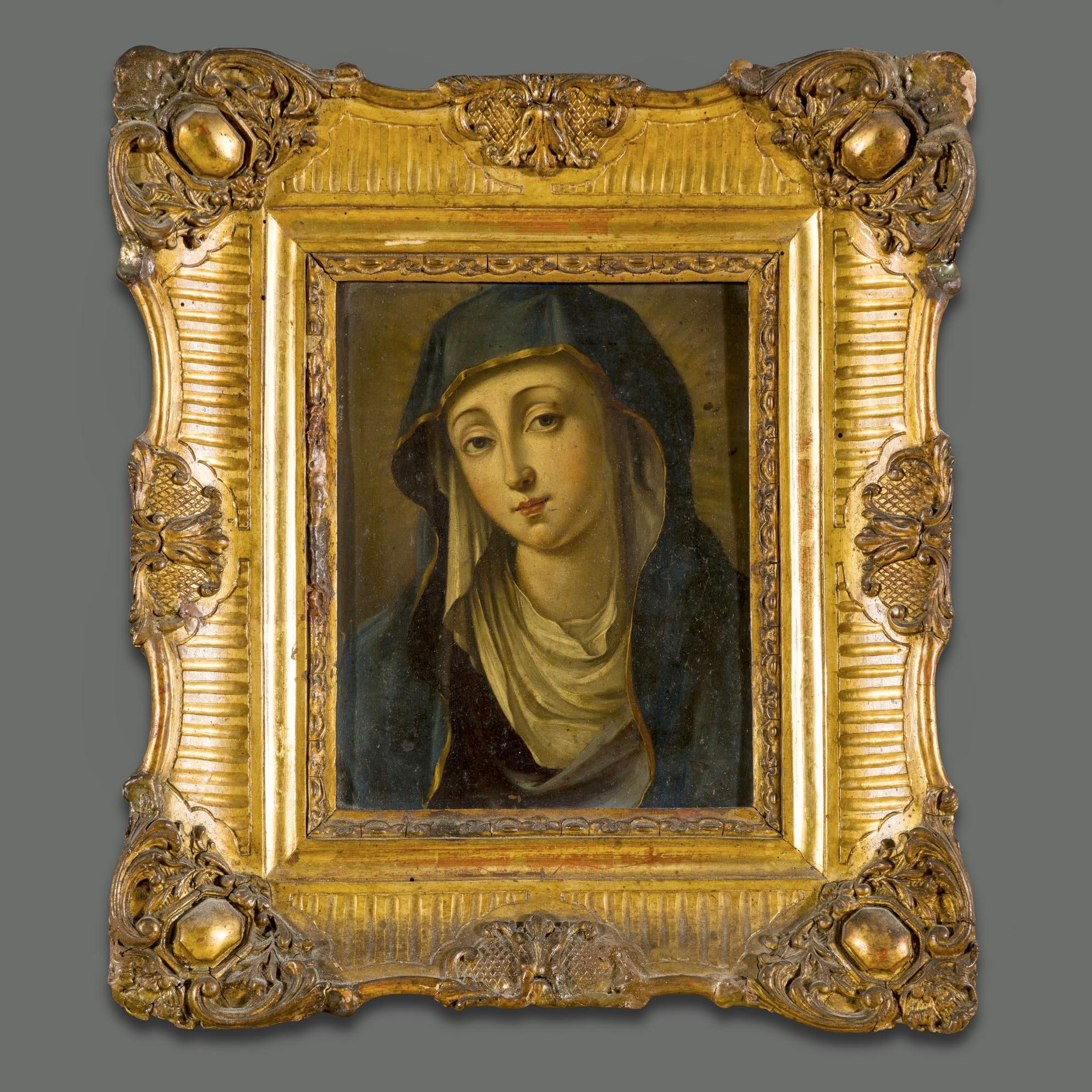
View All17th Century Italian Religious Painting Credited to Giovanni Battista Salvi
By Giovanni Battista Salvi da Sassoferrato
Located in Roma, IT
17th Century Italian Religious Painting Credited to Giovanni Battista Salvi
Virgin Mary
Period: second half of the 17th century
Technique: oil on copper
A beautiful, important pain...
Category
Late 17th Century Baroque Figurative Paintings
Materials
Copper
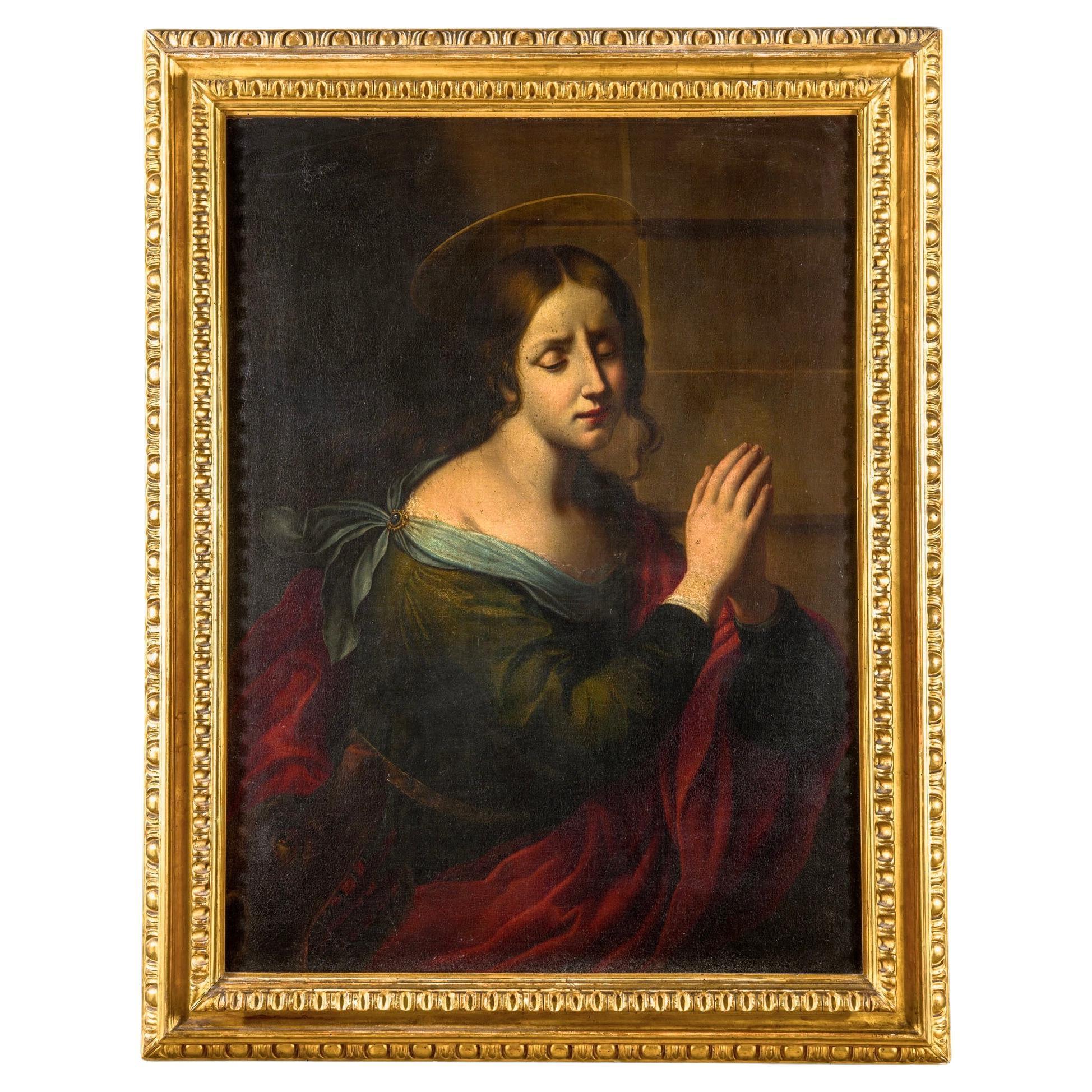
17th Century Onorio Marinari Italian Religious Painting
By Onorio Marinari
Located in Roma, IT
A very important painting by the great artist of the Florentine school, Onorio Marinari.
Dr. Silvia Benassai has confirmed Marinari’s authorship of the Saint Margaret of Antioch; ava...
Category
Mid-17th Century Baroque Portrait Paintings
Materials
Canvas, Oil
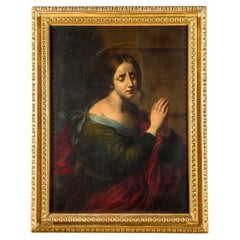
17th Century Italian Religious Painting Credited to Luciano Borzone
Located in Roma, IT
This important oil painting on canvas, although it is not signed as is almost always the case with this artist's paintings, is attributed to the great Genoese painter Luciano Borzone...
Category
Mid-17th Century Baroque Figurative Paintings
Materials
Canvas, Oil
18th Century Italian Portrait Credited to Maria Giovanna Battista Clementi
Located in Roma, IT
18th Century Italian Portrait Credited to Maria Giovanna Battista Clementi
The painting probably depicts a young nobleman of Savoy court ...
Category
Mid-18th Century Old Masters Portrait Paintings
Materials
Oil, Canvas
17th Century Italian Religious Painting on Glass
By Leandro da Ponte known as Leandro Bassano (Bassano, 1557 - Venice, 1622), attributed to
Located in Roma, IT
17th Century Italian Religious Painting on Glass
Beautiful and important oil painting on glass based on an engraving, not signed, dated 1655 at the bottom centre, follower of Leandr...
Category
Mid-17th Century Baroque Figurative Paintings
Materials
Glass, Oil
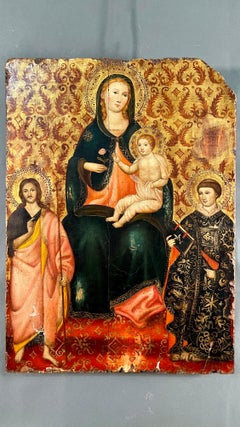
Expertised Italian 14th Century Gold Ground on Panel Painting
Located in Roma, IT
Museum-quality gold ground painting from the Renaissance period by Smeraldo di Giovanni.
It depicts the “Virgin of the Roses” seated on a throne h...
Category
15th Century and Earlier Renaissance Figurative Paintings
Materials
Tempera, Wood Panel
You May Also Like
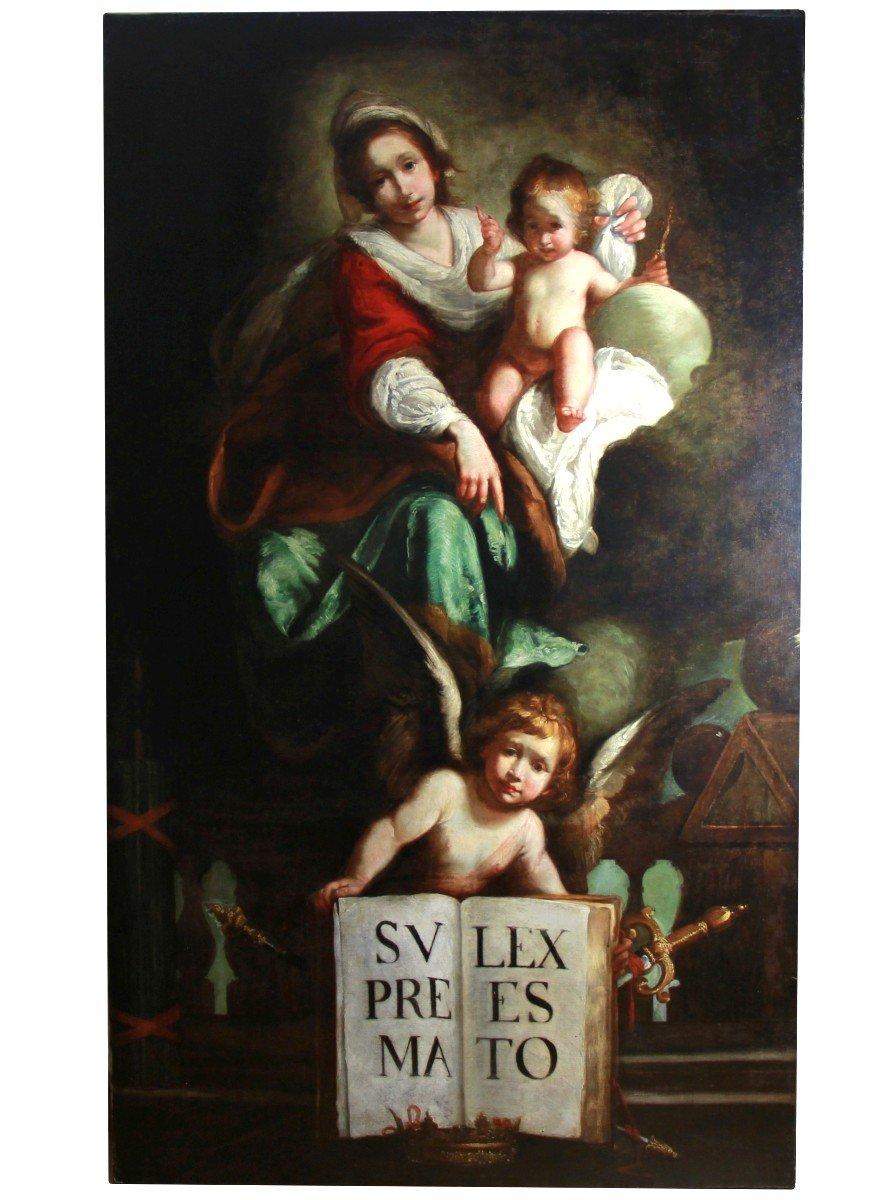
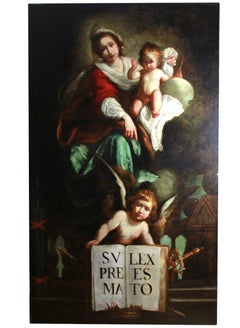
Oil On Canvas Early 19th century Italian School
Located in Gavere, BE
"the Madonna Of Justice" Oil On Canvas Work From The Early 19th Italian School"
the history:
No doubt painted for the ducal palace of Genoa Genoa, ducal palace, Sala dei Sindacatori...
Category
1880s Baroque Figurative Paintings
Materials
Canvas, Oil
$28,002 Sale Price
20% Off
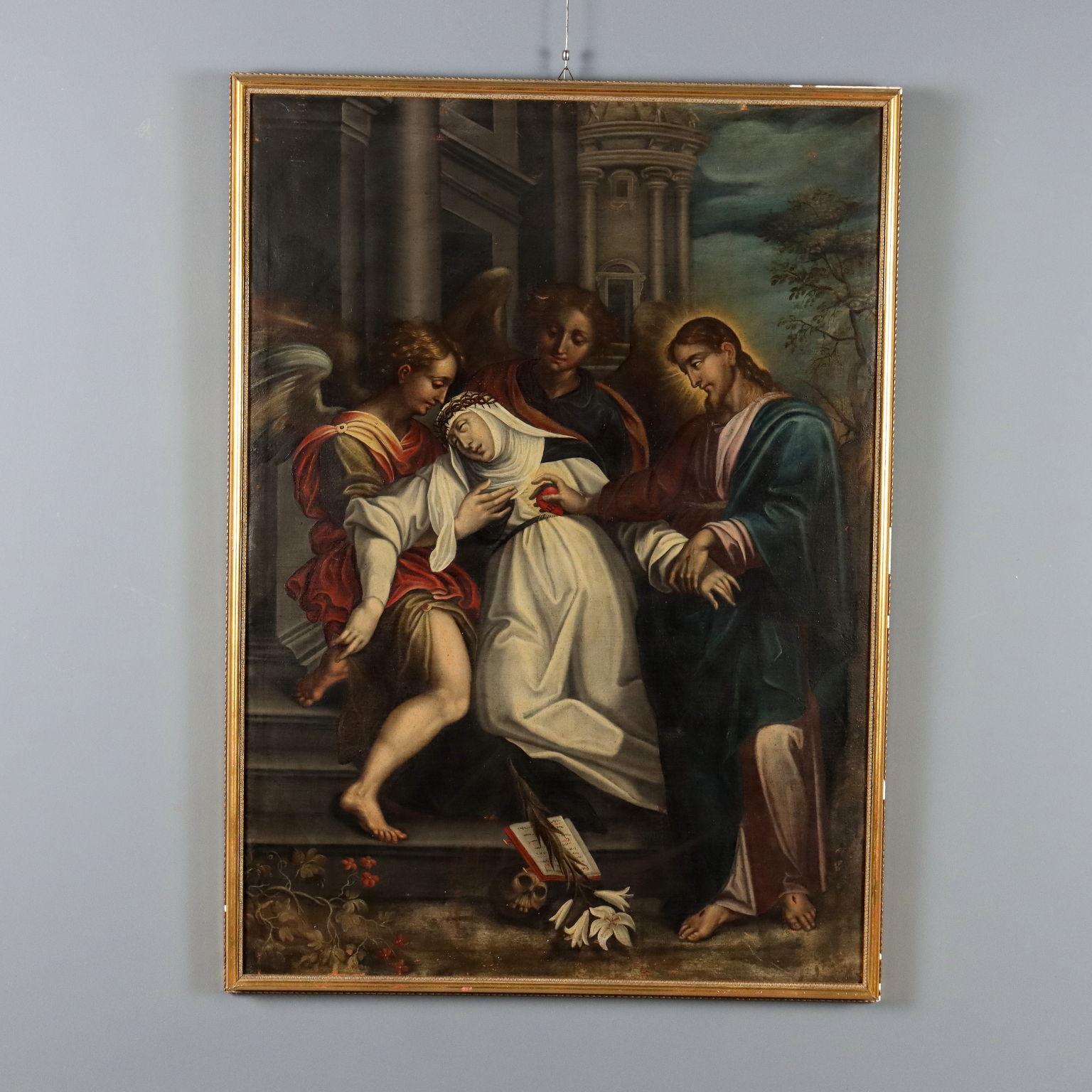
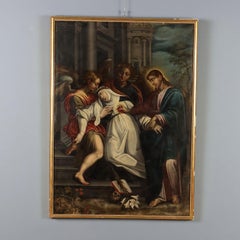
Painting Ecstasy of St. Catherine of Siena 17th century
Located in Milan, IT
Oil on Canvas. Tuscan school of the seventeenth century.
The saint is traditionally dressed in the Dominican habit, with the crown of thorns on her head and, at her feet, a lily, a s...
Category
17th Century Other Art Style Figurative Paintings
Materials
Oil
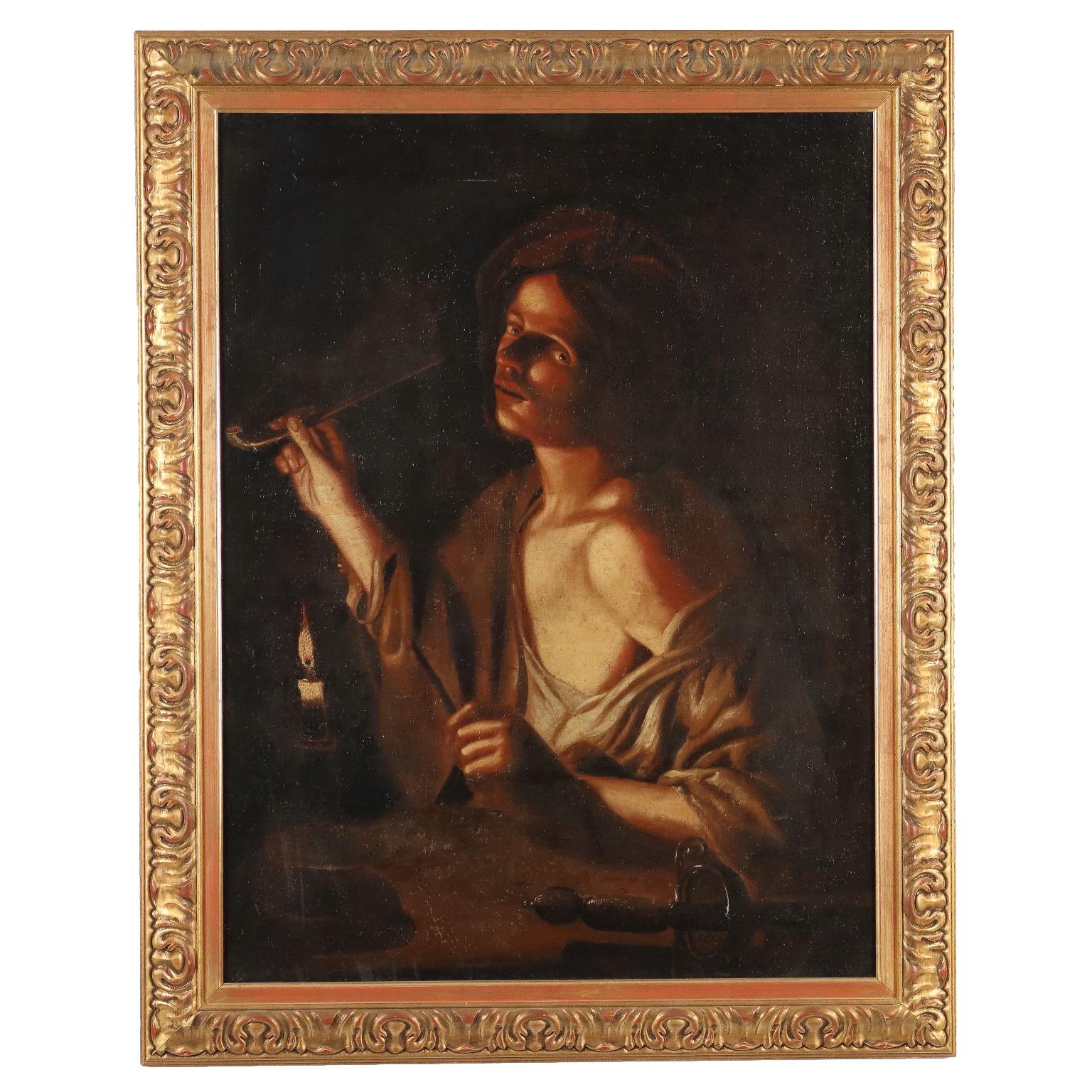
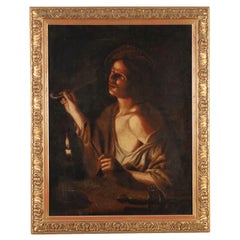
Painting Young man lighting a pipe 18th century
Located in Milan, IT
Oil on Canvas.
The painting offers a half-length portrait of a young man in deshabillé who is lighting his pipe by drawing fire with a stick from the candle placed in front of him o...
Category
18th Century Other Art Style Figurative Paintings
Materials
Oil
Painting David with the Head of Goliath 17th century
Located in Milan, IT
Oil on Canvas. Central Italian school of the 17th century.
The painting recalls in pictorial style the production of Angelo Caroselli (1585-1652), a Roman Baroque artist who was a pa...
Category
17th Century Other Art Style Figurative Paintings
Materials
Oil
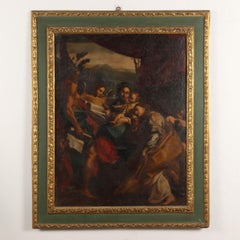
Painting Our Lady of St. Jerome, 17th-18th century
Located in Milan, IT
Oil on Canvas. Emilian school of the 17th-18th centuries.
This is an early copy of Correggio's famous panel painting entitled La Madonna di San Girolamo or Il Giorno (Our Lady of St....
Category
18th Century and Earlier Other Art Style Figurative Paintings
Materials
Oil
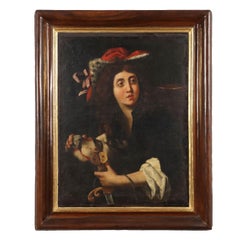
17th Century Oil on Canvas Italian Antique Portrait Painting, 1670
Located in Vicoforte, Piedmont
Antique 17th-century Italian painting. Oil on canvas artwork depicting the portrait of a young scholar/artist with excellent painting skills. The painting is adorned with a richly ca...
Category
Antique 1670s Italian Paintings
Materials
Canvas