Items Similar to 17th Century by Giacomo Sementi and Pier Francesco Cittadini Danae Oil on Canvas
Want more images or videos?
Request additional images or videos from the seller
1 of 11
Giovanni Giacomo Sementi (Bologna 1580 - Rome 1636) - Pier Francesco Cittadini (Milan 1616 - Bologna 1681)17th Century by Giacomo Sementi and Pier Francesco Cittadini Danae Oil on Canvas17th Century
17th Century
$148,329.67
$185,412.0820% Off
£110,484.24
£138,105.3020% Off
€124,480
€155,60020% Off
CA$204,261.96
CA$255,327.4520% Off
A$222,334
A$277,917.5120% Off
CHF 117,806.83
CHF 147,258.5420% Off
MX$2,673,902.83
MX$3,342,378.5320% Off
NOK 1,497,883.83
NOK 1,872,354.7920% Off
SEK 1,372,644.80
SEK 1,715,80620% Off
DKK 948,455.18
DKK 1,185,568.9820% Off
About the Item
Giovanni Giacomo Sementi (Bologna, Italy, 1580 - Rome, Italy, 1636) - Pier Francesco Cittadini (Milan, Italy, 1616 - Bologna, Italy, 1681)
Danae
Oil on canvas, without frame 119 x 179 cm, with frame 140 x 200 x 12 cm, weight 35 kg
Expertise by Professor Giancarlo Sestieri
Publications: Carne - la materia dello spirito, exhibition catalogue curated by Father Alessio Geretti, project of the scientific catalogue curated by Father Alessio Geretti, Nicole Pravisani and Giulia Toffoletti, (21 May - 22 October 2023), Illegio, Casa delle Esposizioni, pp. 56-59; Body, Love and Feelings - Works of Ancient Masters from the 16th to the 19th century. In the paintings of Giorgio Baratti private collection, Milan, exhibition catalogue curated by Alessandro Marchi, (27 July - 18 September 2011), San Marino - Historical Centre, pp. 38-39; Giorgio Baratti Collezione. Selezione di opere d’arte antica (Giorgio Baratti Collection. Selection of ancient works of art), curated by Professor Giancarlo Sestieri and with the participation of Professor Andrea Emiliani, Grafiche Veneziane, Venezia 2011, pp. 22-23.
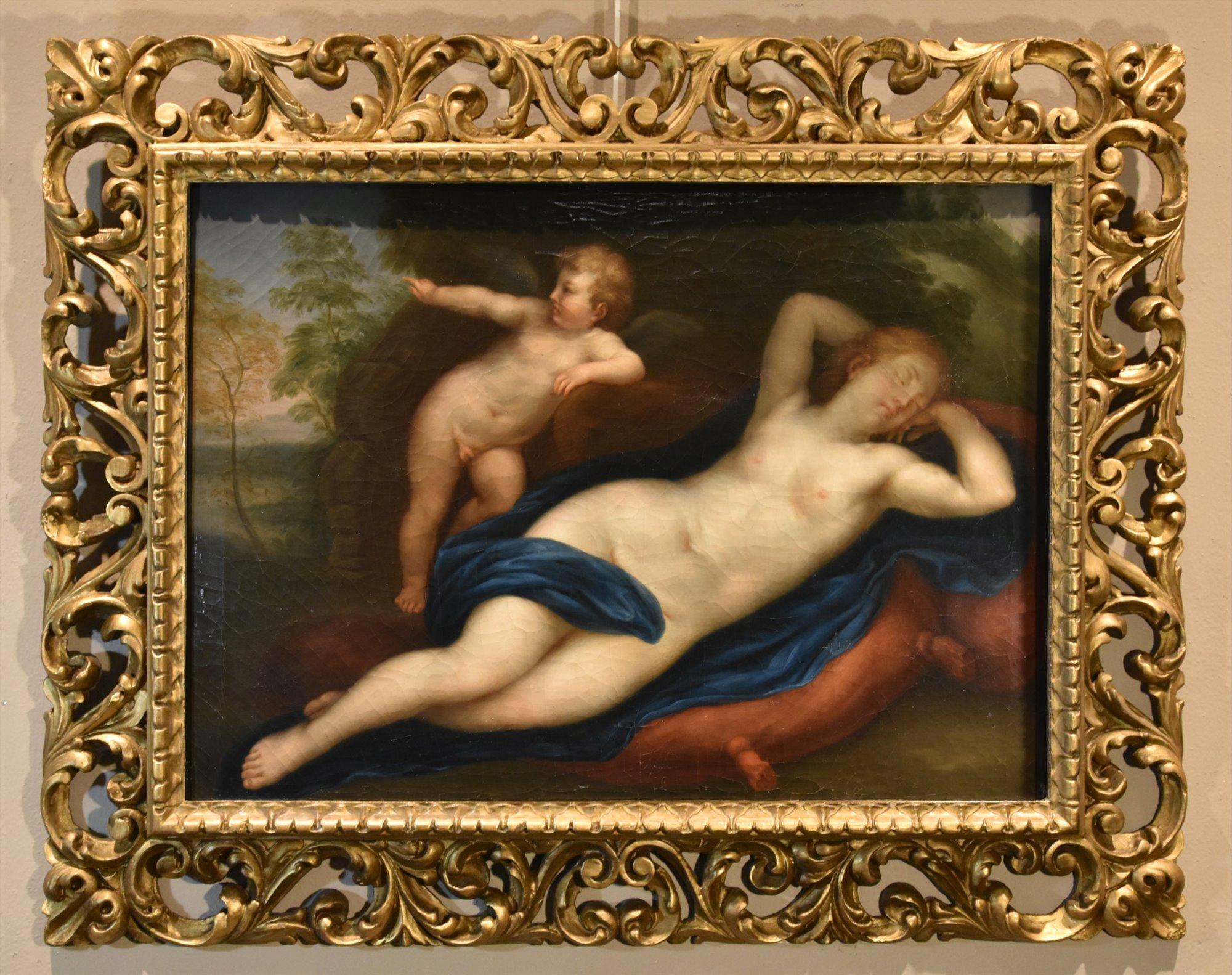
It is a gentle and graceful Danae the one portrayed by Giovanni Giacomo Sementi. A painting in which the Milanese painter Pier Francesco Cittadini also collaborated by painting the golden basin filled with flowers to the left of the scene. The work shows various pictorial influences; from the Bolognese Emilian style, to that of Ludovico Carracci (1555 - 1619) and Guido Reni (1575 - 1642), to the Baroque and Roman style. The work features an elegant red drapery which serves as the background to the entire scene, but the real protagonist is the young woman with long red hair who is lying on a bed covered by a white sheet. The girl is naked except for a lapis lazuli blue mantle covering her lower abdomen, an element that does not diminish the sensuality conveyed by the work. To the right of the scene is a sleeping Cupid. The work is inspired by the Venus of Urbino attributed to Titian, painted in 1538.
- Creator:Giovanni Giacomo Sementi (Bologna 1580 - Rome 1636) - Pier Francesco Cittadini (Milan 1616 - Bologna 1681) (Italian)
- Creation Year:17th Century
- Dimensions:Height: 46.86 in (119 cm)Width: 70.48 in (179 cm)Depth: 4.73 in (12 cm)
- More Editions Sizes:Without frame 119 x 179 cm, with frame 140 x 200 x 12 cm, weight 35 kgPrice: $185,412
- Medium:
- Movement Style:
- Period:
- Condition:
- Gallery Location:Milano, IT
- Reference Number:1stDibs: LU1701214680722
About the Seller
5.0
Vetted Professional Seller
Every seller passes strict standards for authenticity and reliability
Established in 1964
1stDibs seller since 2021
Typical response time: 22 hours
- ShippingRetrieving quote...Shipping from: Milano, Italy
- Return Policy
More From This Seller
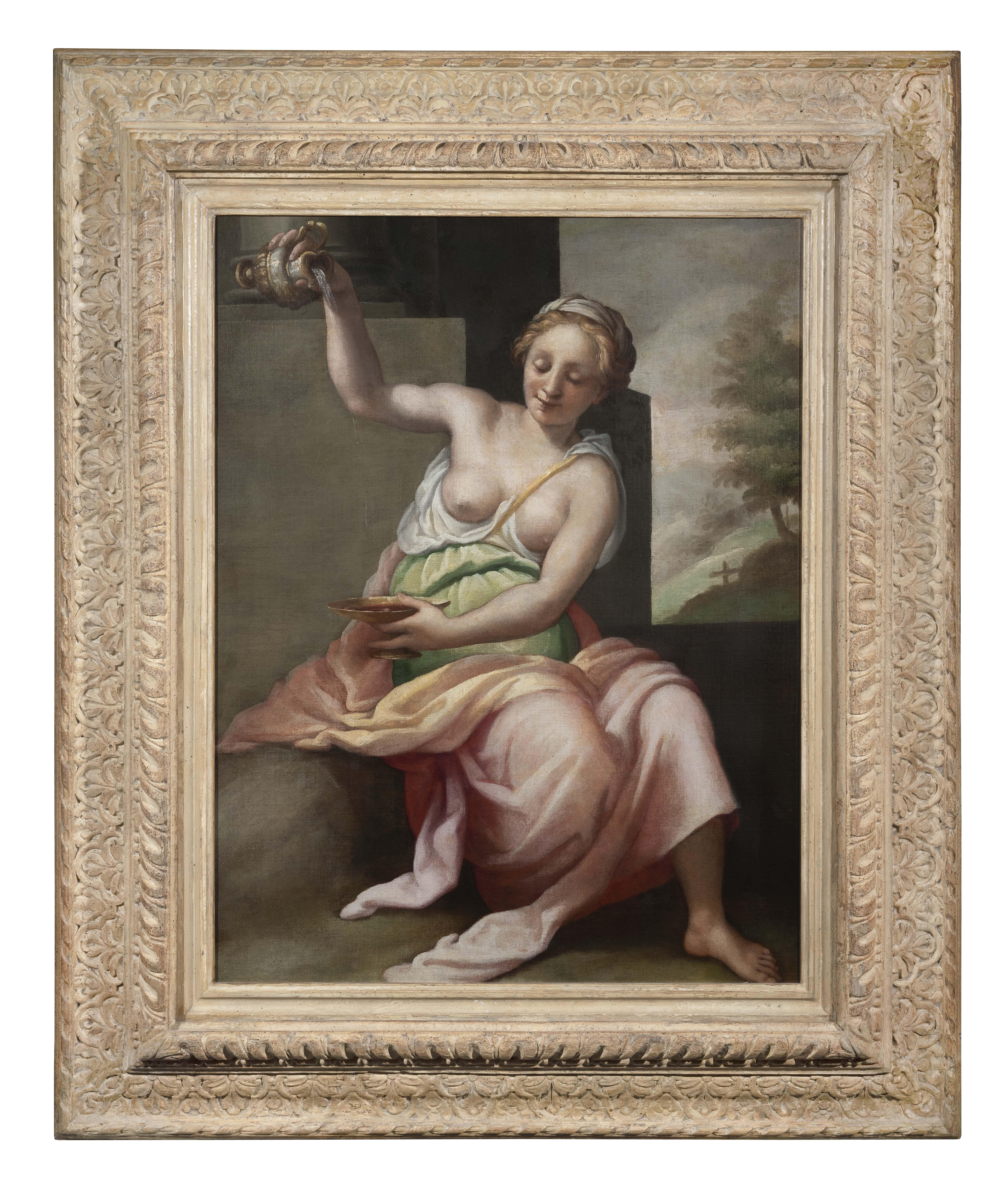
View AllLate 16th Century by Jacopo da Empoli Temperance Oil on canvas
Located in Milano, Lombardia
Jacopo da Empoli (Florence, Italy, 1551 – 1640)
Title: Temperance
Medium: Oil on canvas
Dimensions: without frame 101.5 x 75.7 cm – with frame 140 x 115.3 x 10.50 cm
Expertise by Al...
Category
16th Century Old Masters Figurative Paintings
Materials
Canvas, Oil
$79,503 Sale Price
20% Off
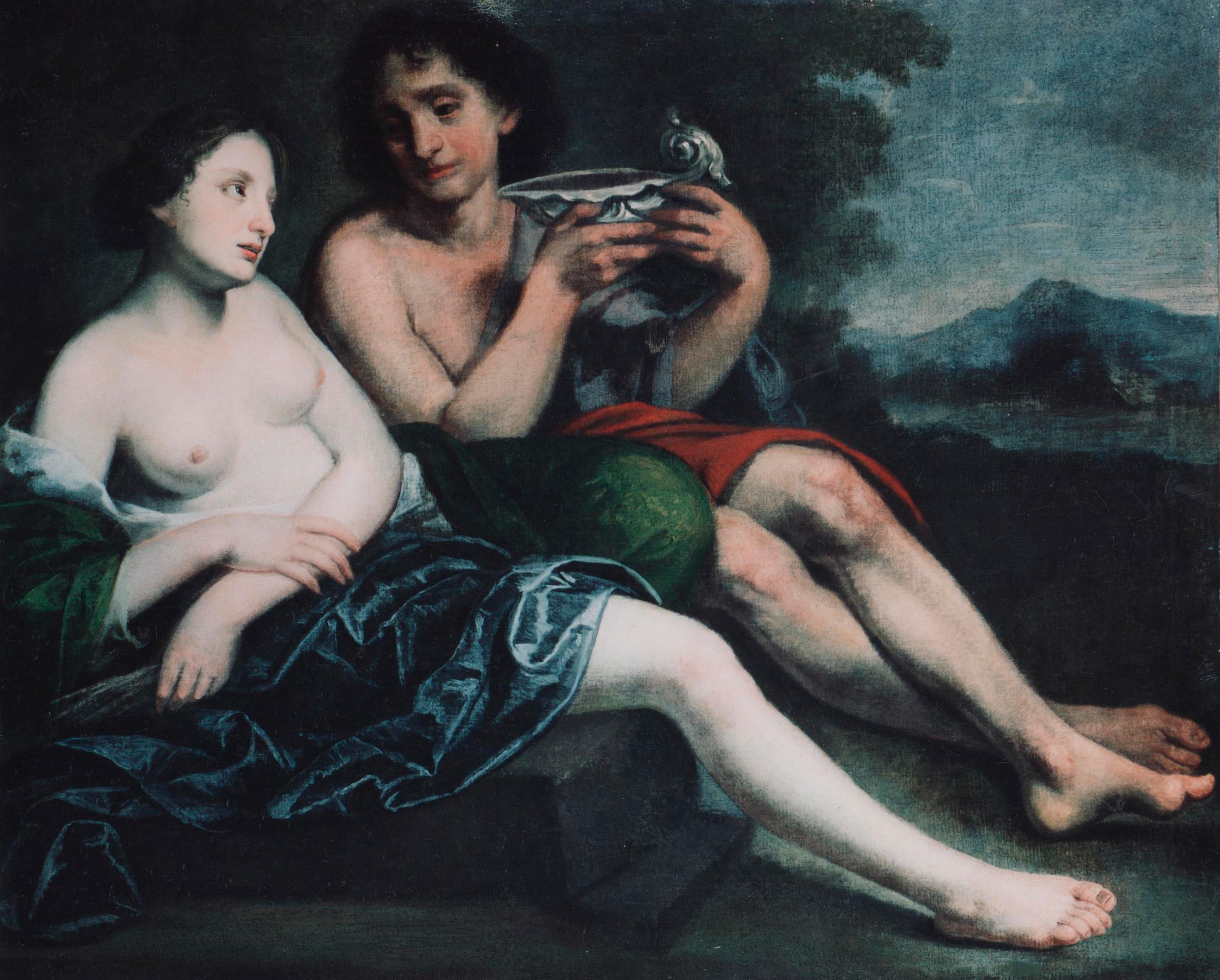
17th Century by Pietro della Vecchia Bacchus and Ceres Oil on canvas
Located in Milano, Lombardia
Pietro della Vecchia (Vicenza, Italy, 1603 – Venice, Italy, 1678)
Title: Bacchus and Ceres
Medium: Oil on canvas
Dimensions: without frame 109 x 130 cm – with frame 128 x 152 x 8 cm...
Category
17th Century Old Masters Figurative Paintings
Materials
Canvas, Oil
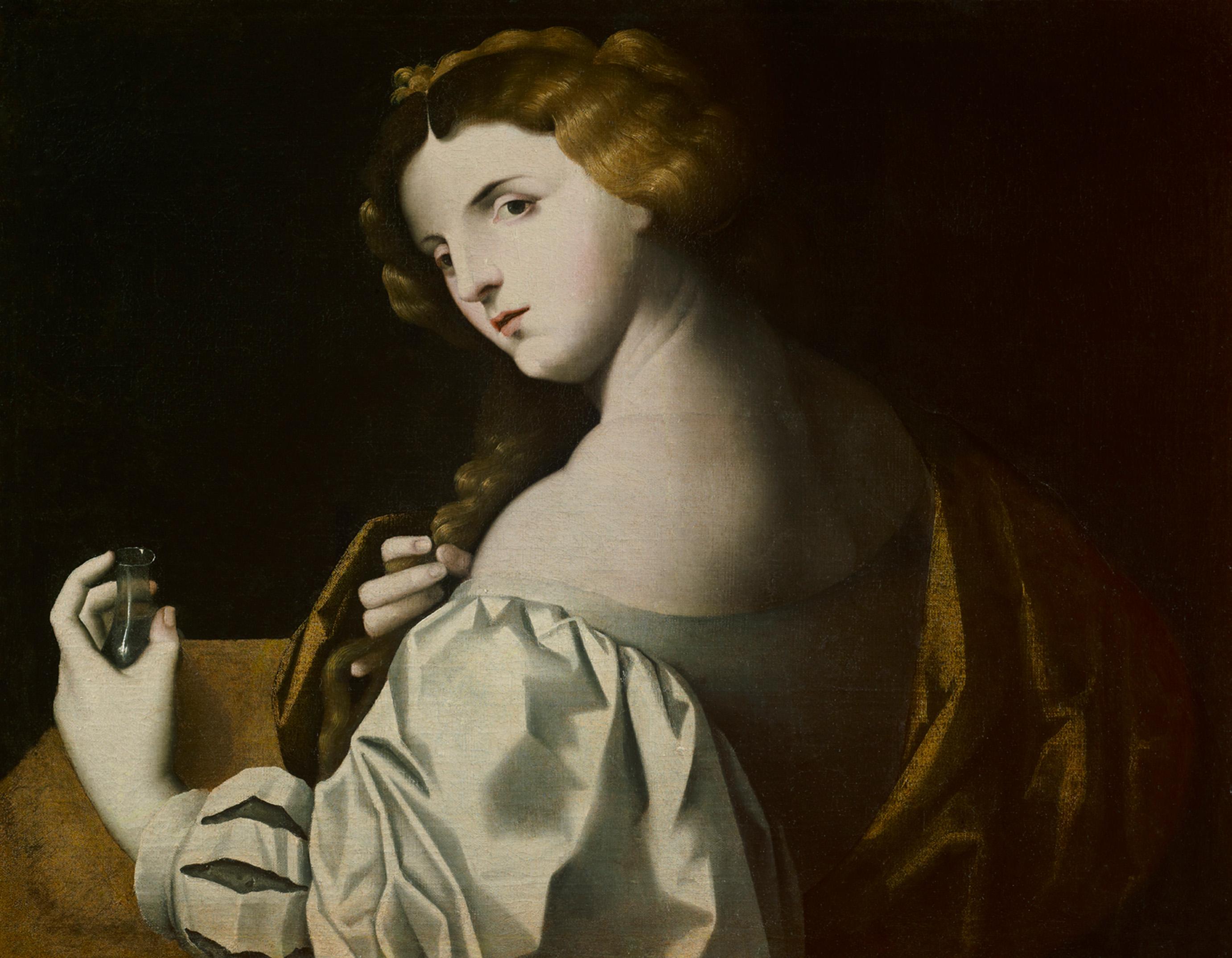
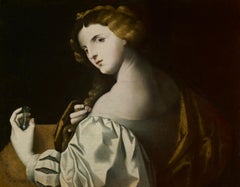
17th Century by Il Padovanino Mary Magdalene or Young Woman Oil on Canvas
Located in Milano, Lombardia
Alessandro Leone Varotari, known as Il Padovanino (Padua, Italy, 1588 – Venice, Italy, 1649)
Title: Mary Magdalene or Young Woman
Medium: Oil on canvas
Dimensions: Without frame 50.5...
Category
17th Century Old Masters Figurative Paintings
Materials
Canvas, Oil
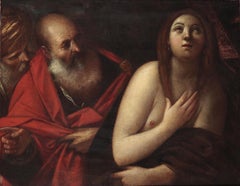
16th-17th Century By Giacomo Cavedone Susanna and the Elders Oil on Canvas
Located in Milano, Lombardia
Giacomo Cavedone (Sassuolo, Italy, 1577 - Bologna, Italy, 1660)
Title: Susanna and the Elders
Medium: Oil on canvas
Dimensions: without frame 97 × 75 cm - with frame 123.5 x 100 cm
G...
Category
17th Century Old Masters Figurative Paintings
Materials
Canvas, Oil
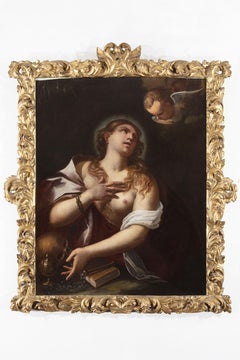
17th-18th Century By Giovanni Girolamo Bonesi Mary Magdalene Oil on Canvas
Located in Milano, Lombardia
Giovanni Girolamo Bonesi (Bologna, Italy, 1653 - 1725)
Title: Mary Magdalene
Medium: Oil on canvas
Dimensions: without frame 110 × 80 cm - with frame 140 x 117 cm
Beautiful original ...
Category
17th Century Old Masters Figurative Paintings
Materials
Canvas, Oil
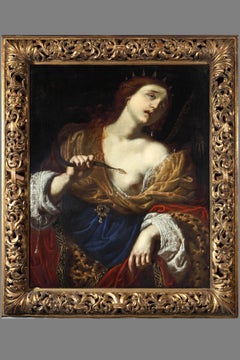
17th Century by Giovanni Domenico Ferrucci The Death of Cleopatra Oil on canvas
Located in Milano, Lombardia
Giovanni Domenico Ferrucci (Fiesole, Italy, 1619 – Lucca, Italy, post 1669)
Title: The Death of Cleopatra
Medium: Oil on canvas
Dimensions: without frame 85 x 70.7 cm – with frame 10...
Category
17th Century Old Masters Figurative Paintings
Materials
Canvas, Oil
You May Also Like
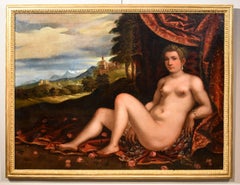
Venus Paolo Fiammingo Paint Oil on canvas Old master 16th Century Italian Art
Located in Riva del Garda, IT
Pauwels Franck, known as Paolo Fiammingo
(Antwerp, 1540 - Venice, 1596)
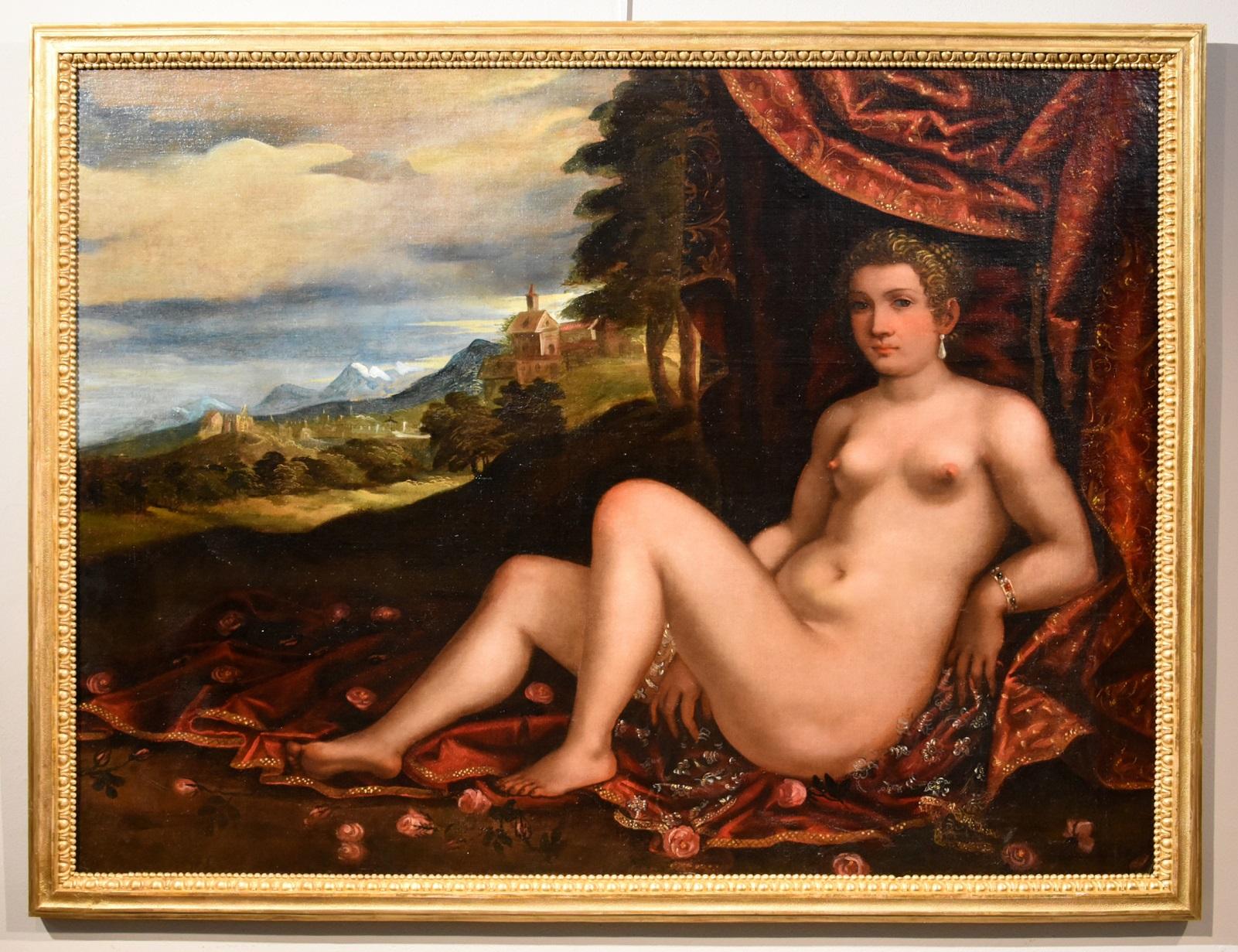
Venus lying in a landscape
Oil on canvas 116 x 150 cm.
In antique frame 136 x 170 cm.
The work is accompanied by a critical card by Dr. Federica Spadotto
The splendid painting proposed sees portrayed, bare and stretched out on a red brocade cloth in gold sprinkled with roses, a refined and sensual Venus, in a composition with a profound symbolic value, and arriving at the perfect representation of the Renaissance woman who, like Venus, becomes an allegory love, eros, beauty and fertility.
The canvas is part of the prestigious Venetian artistic and cultural environment of the second half of the sixteenth century, whose distinctive distinctive trait can be traced back to its cosmopolitan vocation. This characteristic, as Dr. Spadotto noted in her in-depth study, belongs to the same physiology of the Venetian capital, that is, being a distinctly commercial city located in a strategic point with respect to trade. Representing one of the liveliest ports in the Mediterranean also meant witnessing the continuous passage not only of goods, but of men, ideas, suggestions from distant countries, which influenced not only the taste of their people, but above all art.
This happened thanks to the circulation of prints, as well as pictorial specimens, to which are added the stays of great foreign artists and, above all, the permanence in the capital of a non-negligible number of Dutch, Flemish and German masters.
An emblematic case in this regard comes from Pauwels Franck (Antwerp, 1540 - Venice, 1596), better known as Paolo Fiammingo, who established himself in his native city at a young age - in 1561 a figure enrolled in the Guild of San Luca - and arrived in Venice in 1573. .
He resided in Venice from 1584 until his death, although the stylistic and formal references of some of his works have led critics to believe that in previous years he had undertaken a journey to central Italy, or to Florence and Rome, where he would have metabolized the lively cultural debate that permeated these cities and which, on the other hand, seemed completely absent in Venice.
Here Paolo will be fascinated by the sense of color and by the atmospheric component fixed on the canvas by Jacopo Tintoretto (Venice 1518 - 1594), of which he becomes a collaborator, to undergo, around 1590, the suggestion of Paolo Caliari...
Category
16th Century Old Masters Paintings
Materials
Oil
$30,361 Sale Price
30% Off
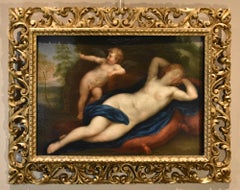
Venus Cupid Franceschini Paint 17/18th Century Oil on canvas Old master Italy
By Marcantonio Franceschini (Bologna 1648 - 1729)
Located in Riva del Garda, IT
Marcantonio Franceschini (Bologna 1648 - 1729) Workshop of
Sleeping Venus with Cupid
Oil on canvas 53 x 68 cm. In frame 71 x 91 cm.
Venus, the Roman goddess of love, is port...
Category
17th Century Old Masters Figurative Paintings
Materials
Oil
$6,072 Sale Price
20% Off
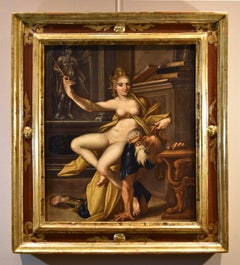
Aristotle Phyllis Spranger 16/17th Century Paint Oil on canvas Old master
Located in Riva del Garda, IT
Bartholomäus Spranger (Antwerp, 1546 – Prague, 1611) workshop
Aristotle and Phyllis
Oil on canvas 64 x 54 cm In frame 79 x 72 cm
The curious subject of this painting, quite...
Category
16th Century Old Masters Paintings
Materials
Oil
$9,666 Sale Price
20% Off
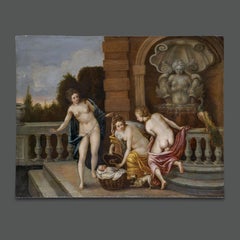
Francesco Albani Circle Italian Mythological Painting
Located in Roma, IT
Francesco Albani Circle Italian Mythological Painting
This important oil painting on wood depicts a subject that is very rare in the iconography of ancient mythological paintings: the birth of Erittonio. Erichthonius who succeeded Amphictyon becoming the fourth mythological king of Athens and married the naiad Praxithea who made him the father of Pandion.
The extremely high quality of this very rare painting suggests that it was painted by an artist who frequented Francesco Albani's studio.
The period, the mythological subject, the harmony of the colours and, above all, the sublime quality of the flesh tones all point in this direction.
This artwork, never before on the market, comes from an important Italian private collection
Every item of our Gallery, upon request, is accompanied by a certificate of authenticity issued by Sabrina Egidi official Expert in Italian furniture for the Chamber of Commerce of Rome and for the Rome Civil Courts.
ERYTHTONIOS (᾿Ερυχϑόνιος, Erychthonios)
Born of Hephaestus' love for Athena, from the breast of Ghe, who was impregnated by the god; welcomed by Athena, who placed him in a basket together with one or two snakes, entrusting him to the care of Cecrops' three daughters.
Against the goddess's wishes, they opened the chest, from which emerged, according to different versions of the myth, either the child wrapped in snakes or a snake, which, in some versions, killed the girls, while in others, they threw themselves from the Acropolis in fear. Erittonio, in the form of a snake, is welcomed by Athena into her temple and curls up under the goddess's shield. Alongside this myth, of Ionian origin, are others due to the doubling of the figures of E. and Erechtheus
The scene of the birth appears in figurative tradition: in a Melian terracotta relief from the early 5th century, Ghe, half-emerging, holds out the baby Erittonio. to Athena, who welcomes him in the presence of Cecrops; the same scene appears on various painted vases, such as a red-figure kölix by the Painter of Kodros, from Tarquinia, in the Berlin Museums, dating from around 440 BC, where Hephaestus also appears alongside Cecrops.
A modest red-figure vase from Camiro, in the British Museum, depicts the moment when the fleeing Cecropids discover the cista, from which the infant Erittonio. emerges between two snakes, greeting Athena.
The moment when the chest was opened was depicted by Phidias on the xiii and xiv S metopes of the Parthenon, where Cecrops and Pandrosus appear in the first and Erisichthon and Aglaurus with the chest uncovered in the second.
A kölix in the style of the Brygos Painter in Frankfurt, on the other hand, depicts the large snake E. chasing the fleeing Cecropids towards their father's palace.
Luciano (De dom., 27) recalls a painting depicting the scene of the birth and the representation of the myth in pantomime on the theatre (De salt., 39).
Bibliography: Engelmann, in Roscher, cc. 1303-1308, s. v. Erichthonios; P. Jacobstahl, Die Melischen Reliefs, Berlin 1931, pp. 96-98, plate 75 a; W. Züchner, in Jahrbuch, LXV-LXVI, 1950-51, p. 200 ff., figs. 34-35; J. D. Beazley, Red-fig., p. 720; G. Becatti, Problemi fidiaci, Florence 1951, p. 22.
Questo
Francesco Albani (Bologna, August 17, 1578 – Bologna, October 4, 1660) was an Italian painter.
Albani was born in Bologna, Papal States, in 1578.
His father was a silk merchant who intended his son to go into his own trade. By the age of twelve, however, he had become an apprentice to the competent mannerist painter Denis Calvaert, in whose studio he met Guido Reni. He soon followed Reni to the so-called "Academy" run by Annibale, Agostino, and Ludovico Carracci.
This studio fostered the careers of many painters of the Bolognese school, including Domenichino, Massari, Viola, Lanfranco, Giovanni Francesco Grimaldi...
Category
Late 17th Century Old Masters Figurative Paintings
Materials
Oil, Wood Panel
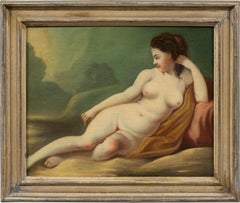
Rococò Italian painter - 18th/19th century figure painting - Nude female
Located in Varmo, IT
Italian painter (18th-19th century) - Female nude.
44 x 54 cm unframed, 54 x 64 cm with frame.
Ancient oil painting on canvas mounted on a panel, in a carved and gilded wooden fram...
Category
Late 18th Century Rococo Figurative Paintings
Materials
Canvas, Oil
$1,787 Sale Price
40% Off
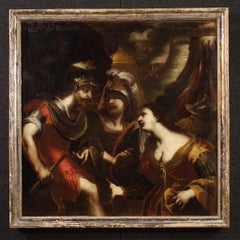
17th Century Oil on Canvas Antique Italian Mythological Painting, 1640
By Valerio Castello
Located in Vicoforte, IT
A magnificent 17th-century Italian painting. This artwork oil on canvas depicts a famous episode from the Iliad, the dispute between Agamemnon and Achilles over Briseis. During the T...
Category
1640s Figurative Paintings
Materials
Canvas, Oil
More Ways To Browse
16th Century Old Master Painting
Bed Sheets
Antique Bed Covers
Sleeping Cupid
Painting Of Milan
Coffee Cup Painting
Cream Of Wheat
Dutch Boy
Evgeniy Monahov
Impasto Portrait
Jewish Art Framed
Jewish Oil Canvas
Lawyer Art
Liu Xiaodong
Michael Propper
North African Art Paintings
Oil Paintings White Dress
Rodeo Painting