Items Similar to Les Trois Musiciens - Impressionist Figurartive Oil by Henry Caro Delvaille
Want more images or videos?
Request additional images or videos from the seller
1 of 14
Henry Caro-DelvailleLes Trois Musiciens - Impressionist Figurartive Oil by Henry Caro Delvaillec.1915
c.1915
$13,578.12
£9,945
€11,698.72
CA$18,906.85
A$20,314.36
CHF 10,898.61
MX$239,326.56
About the Item
Signed figures in interior oil on panel circa 1915 by French impressionist painter Henry Caro Delvaille. The work depicts three musicians - one man seated playing a piano, another standing beside it playing a violin and a third sat behind playing the cello. There is sheet music and a vase of red flowers on the piano. This work was likely painted in New York where the artist emigrated in 1913. In the period until his death he painted in a more art-deco style and favoured interiors and figural subjects.
Signature:
Signed lower right
Dimensions:
Framed: 22.5"x31"
Unframed: 17"x25.5"
Provenance:
David S. Ramus Fine Art - Atlanta, Georgia
Henry Caro-Delvaille was a French painter of Spanish origin and was an important painter of the social life at the beginning of the 20th century. His real name was Delvaille ("de la Vallée" in Spanish) but he signed Caro-Delvaille because his mother, with whom he had a close relationship, was named Caroline.
From his childhood, Henry Caro-Delvaille was curious about art, observed his surroundings and drew. His mother, a writer and poet, was his first guide.
After studying from 1895 to 1897 at the Bayonne School of Fine Arts, Henry Caro-Delvaille was a student of Léon Bonnat at the Paris School of Fine Arts. He exhibited for the first time at the Salon de la Société des artistes français in Paris in 1899. He became a member of the Société Nationale des Beaux-Arts in 1903 and its secretary in 1904. In 1905, he won the Gold Medal at the Munich International Exhibition.
The same year, his friend Edmond Rostand entrusted him with the decoration of his villa in Cambo. He then became known as a portrait painter and received numerous commissions. He was made a knight of the Legion of Honor in 1910.
Henri Caro-Delvaille emigrated to the United States in 1913 and settled in New York, moving towards a more Art Deco style. He was a central figure in artistic, literary and musical circles on both sides of the Atlantic, from Paris to New York.
- Creator:Henry Caro-Delvaille (1876 - 1928, French)
- Creation Year:c.1915
- Dimensions:Height: 22.5 in (57.15 cm)Width: 31 in (78.74 cm)
- Medium:
- Movement Style:
- Period:
- Condition:Very good condition.
- Gallery Location:Marlow, GB
- Reference Number:Seller: LFA05611stDibs: LU415317498302
About the Seller
5.0
Vetted Professional Seller
Every seller passes strict standards for authenticity and reliability
Established in 2001
1stDibs seller since 2016
713 sales on 1stDibs
Typical response time: 3 hours
- ShippingRetrieving quote...Shipping from: Marlow, United Kingdom
- Return Policy
More From This Seller
View AllLes Vacances - Post Impressionist Figures in Landscape Oil by Pierre Montezin
By Pierre Eugène Montezin
Located in Marlow, Buckinghamshire
Signed oil on canvas figures in riverscape circa 1910 by sought after French impressionist painter Pierre Eugene Montezin. The work depicts women dressed in summer dresses and sunhat...
Category
1910s Impressionist Figurative Paintings
Materials
Canvas, Oil
Deux vieillards aux chatons - Impressionist Figurative Oil by J F Raffaelli
By Jean-Francois Raffaelli
Located in Marlow, Buckinghamshire
Signed figures in interior oil on panel by French impressionist painter Jean-Francois Raffaelli. The piece depicts two old men seated in an interior. One is reading his paper as the other naps and there are several kittens on the floor. Painted in the artist's distinctive style.
Signature:
Signed lower left
Dimensions:
Framed: 9.5"x8"
Unframed: 5.5"x4"
Provenance:
Brame & Lorenceau have confirmed the authenticity of this work and it will be included in the digital catalogue raisonne of the painter which is under preparation
A certificate of authenticity fromBrame & Lorenceau accompanies this painting
Private collection - United States
Original artists label verso
Jean-François Raffaëlli's father was a failed Italian businessman and Raffaëlli himself was, among other things, a church chorister, actor and theatre singer. He then studied under Gérôme at the École des Beaux-Arts in Paris. He travelled to Italy, Spain and Algeria and on his return to France settled in Asnières.
In 1876, on a trip to Brittany, he first saw the potential of realist subject matter, if treated seriously. He became involved in meetings of artists at the Café Guerbois, where the Impressionist painters used to gather. As a result, Degas, contrary to the advice of the group, introduced Raffaëlli to the Impressionist exhibitions - according to one uncertain source as early as the very first exhibition, at the home of Nadar, and certainly to those of 1880 and 1881.
In 1904, Raffaëlli founded the Society for Original Colour Engraving. He first exhibited at the Salon de Paris in 1870 and continued to exhibit there until he joined the Salon des Artistes Français in 1881, where he earned a commendation in 1885, was made Chevalier of the Légion d'Honneur in 1889 and in the same year was awarded a gold medal at the Exposition Universelle. In 1906 he was made Officier of the Légion d'Honneur. He was also a member of the Société Nationale des Beaux-Arts. In 1884, a private exhibition of his work cemented his reputation.
He contributed to several newspapers such as The Black Cat (Le Chat Noir) in 1885 and The French Mail (Le Courrier Français) in 1886 and 1887. He published a collection entitled Parisian Characters, which captured his favourite themes of the street, the neighbourhood and local people going about their lives. In 1880 he participated, with Forain, on the illustration of Joris Karl Huysmans' Parisian Sketches (Croquis Parisiens). He also illustrated Huysman's Works. As well as working as an illustrator, he also made etchings and coloured dry-points.
His early attempts at painting were genre scenes, but once he was settled in Asnières he started to paint picturesque views of Parisian suburbs. From 1879 onwards, his subject matter drew on the lives of local people. These popular themes, which he treated with humanity and a social conscience, brought him to the attention of the social realist writers of the time such as Émile Zola. In addition to his realist style, Raffaëlli's dark palette, which ran contrary to the Impressionist aesthethic, helped to explain the opposition of those painters to his participation in their exhibitions. More concerned with drawing than colour, he used black and white for most of his paintings. Towards the end of his life, he lightened his palette, but without adopting any other principles of the Impressionist technique.
After painting several portraits, including Edmond de Goncourt and Georges Clémenceau, he returned to genre painting, particularly scenes of bourgeois life. Later in his career, he painted mainly Breton-inspired sailors and views of Venice. His views of the Paris slums and the fortifications, sites which have almost completely disappeared, went some way towards establishing a genre in themselves and perpetuated the memory of the area: The Slums, Rag-and-Bone Man, Vagabond, Sandpit, In St-Denis, Area of Fortifications. His realistic and witty portrayal of typical Parisian townscapes accounts for his enduring appeal.
Born in Paris, he was of Tuscan descent through his paternal grandparents. He showed an interest in music and theatre before becoming a painter in 1870. One of his landscape paintings was accepted for exhibition at the Salon in that same year. In October 1871 he began three months of study under Jean-Léon Gérôme at the École des Beaux-Arts in Paris; he had no other formal training.
Raffaëlli produced primarily costume pictures until 1876, when he began to depict the people of his time—particularly peasants, workers, and ragpickers seen in the suburbs of Paris—in a realistic style. His new work was championed by influential critics such as J.-K. Huysmans, as well as by Edgar Degas.
The ragpicker became for Raffaëlli a symbol of the alienation of the individual in modern society. Art historian Barbara S. Fields has written of Raffaëlli's interest in the positivist philosophy of Hippolyte-Adolphe Taine, which led him to articulate a theory of realism that he christened caractérisme. He hoped to set himself apart from those unthinking, so-called realist artists whose art provided the viewer with only a literal depiction of nature. His careful observation of man in his milieu paralleled the anti-aesthetic, anti-romantic approach of the literary Naturalists, such as Zola and Huysmans.
Degas invited Raffaëlli to participate in the Impressionist exhibitions of 1880 and 1881, an action that bitterly divided the group; not only was Raffaëlli not an Impressionist, but he threatened to dominate the 1880 exhibition with his outsized display of 37 works. Monet, resentful of Degas's insistence on expanding the Impressionist exhibitions by including several realists, chose not to exhibit, complaining, "The little chapel has become a commonplace school which opens its doors to the first dauber to come along."An example of Raffaëlli's work from this period is Les buveurs d'absinthe (1881, in the California Palace of Legion of Honor Art Museum in San Francisco). Originally titled Les déclassés, the painting was widely praised at the 1881 exhibit.
After winning the Légion d'honneur in 1889, Raffaëlli shifted his attention from the suburbs of Paris to city itself, and the street scenes that resulted were well received by the public and the critics. He made a number of sculptures, but these are known today only through photographs.[2] His work was also part of the painting event in the art competition at the 1912 Summer Olympics. In the later years of his life, he concentrated on color printmaking. Raffaëlli died in Paris on February 11, 1924
Museum and Gallery Holdings:
Béziers: Peasants Going to Town
Bordeaux: Bohemians at a Café
Boston: Notre-Dame; Return from the Market
Brussels: Chevet of Notre-Dame; pastel
Bucharest (Muz. National de Arta al României): Market at Antibes; Pied-à-terre
Copenhagen: Fishermen on the Beach
Douai: Return from the Market; Blacksmiths
Liège: Absinthe Drinker...
Category
1890s Impressionist Figurative Paintings
Materials
Oil, Panel
Les Moissonneurs - Post Impressionist Figures in Landscape Oil - Pierre Montezin
By Pierre Eugène Montezin
Located in Marlow, Buckinghamshire
Signed oil on canvas figures in landscape circa 1910 by sought after French impressionist painter Pierre Eugene Montezin. The piece is painted from the postition of behind the brush ...
Category
1910s Impressionist Figurative Paintings
Materials
Canvas, Oil

Arrangement de fleurs - Impressionist Still Life Painting Oil by Leon Detroy
By Leon Detroy
Located in Marlow, Buckinghamshire
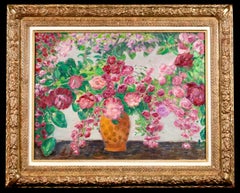
Signed still life oil on canvas circa 1930 by French impressionist painter Leon Detroy. The work depicts a vase filled with roses and peonies in deep reds and pinks.
Signature:
Sign...
Category
1930s Impressionist Still-life Paintings
Materials
Canvas, Oil
Le Pont Neuf - Impressionist Figures in Landscape Oil by Amedee Marcel-Clement
By Amedee Julien Marcel-Clement
Located in Marlow, Buckinghamshire
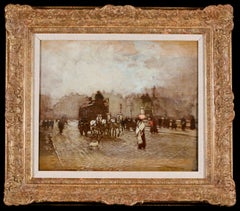
Signed and dated figures in cityscape oil on panel by French impressionist painter Amedee Marcel-Clement. The work depicts a view of the Pont Neuf bridge that runs over the River Sei...
Category
1910s Impressionist Figurative Paintings
Materials
Oil, Panel
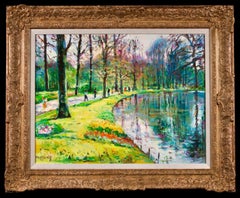
L
Etang - Post Impressionist Figures in Landscape Oil by Max Agostini
By Max Michel Agostini
Located in Marlow, Buckinghamshire
Signed post impressionist figures in landscape oil circa 1980 by French painter Max Michel Agostini. The work depicts park-goers on a path beside a lake on a sunny spring day. There ...
Category
1980s Post-Impressionist Landscape Paintings
Materials
Canvas, Oil
You May Also Like
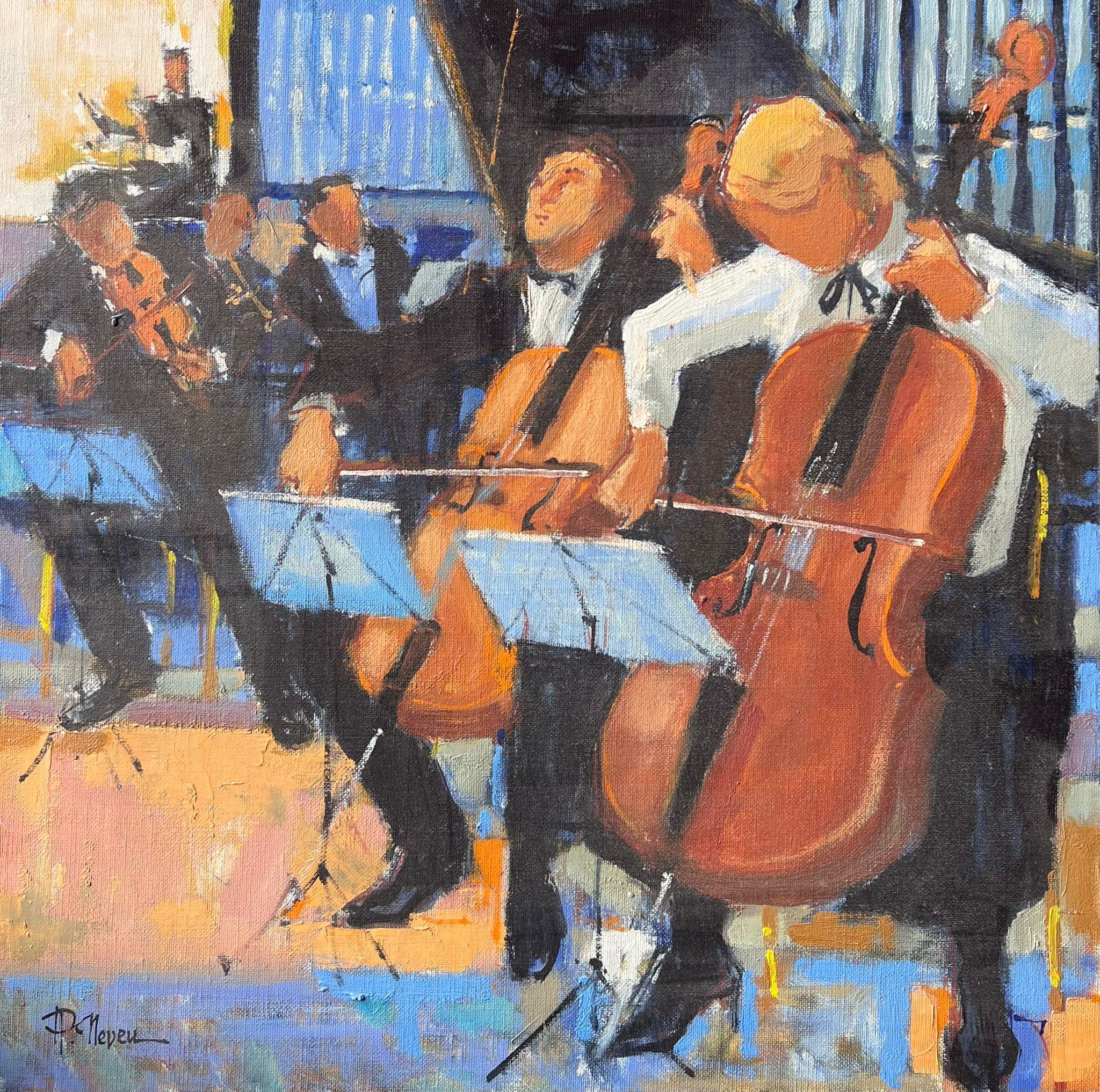
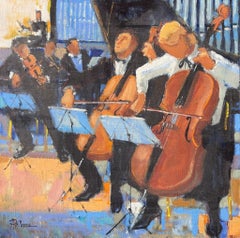
Orchestra Musicians Playing Cellos And Violins In Warm Concert Scene French Oil
By Pierre Neveu
Located in Cirencester, Gloucestershire
Orchestra Musicians
Artist: Pierre Neveu (French b.1929)
signed lower left
Medium: oil on canvas, unframed
Canvas: 15.75 x 15.75 inches
inscribed verso
Condition: Good and sound co...
Category
Mid-20th Century Post-Impressionist Figurative Paintings
Materials
Oil
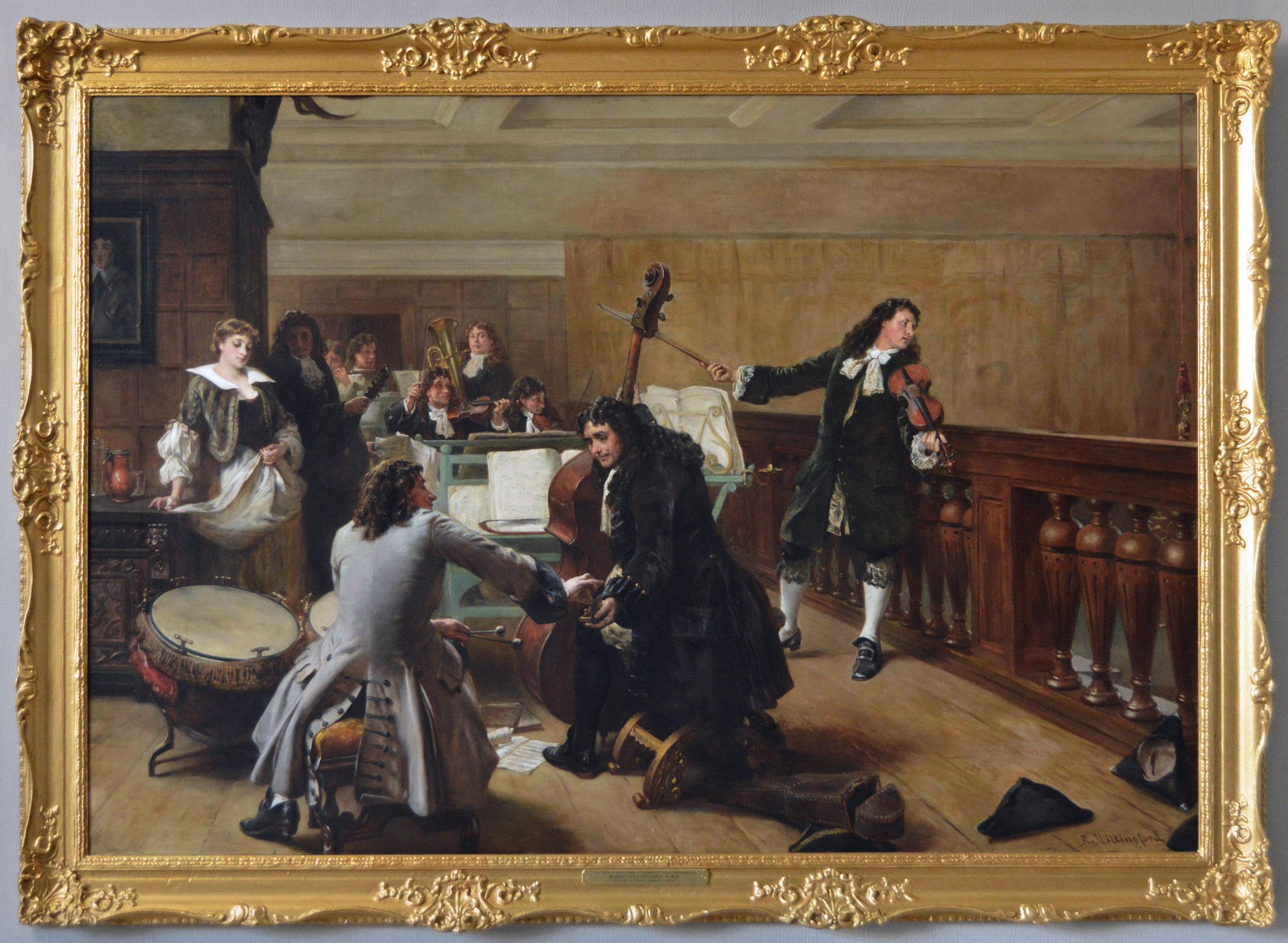
Large scale 19th Century historical genre oil painting of a group of musicians
By Robert Alexander Hillingford
Located in Nr Broadway, Worcestershire
Robert Alexander Hillingford
British, (1828-1904)
The Duke’s Musicians – A Reminiscence of Hardwick Hall, Derbyshire
Oil on canvas, signed
Image size: 40 inches x 59 inches
Size including frame: 47.5 inches x 66.5 inches
Exhibited at the Royal Academy in 1883, no. 844
Exhibited at the Yorkshire Institute
A large-scale Royal Academy painting...
Category
19th Century Victorian Figurative Paintings
Materials
Canvas, Oil
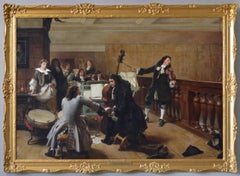
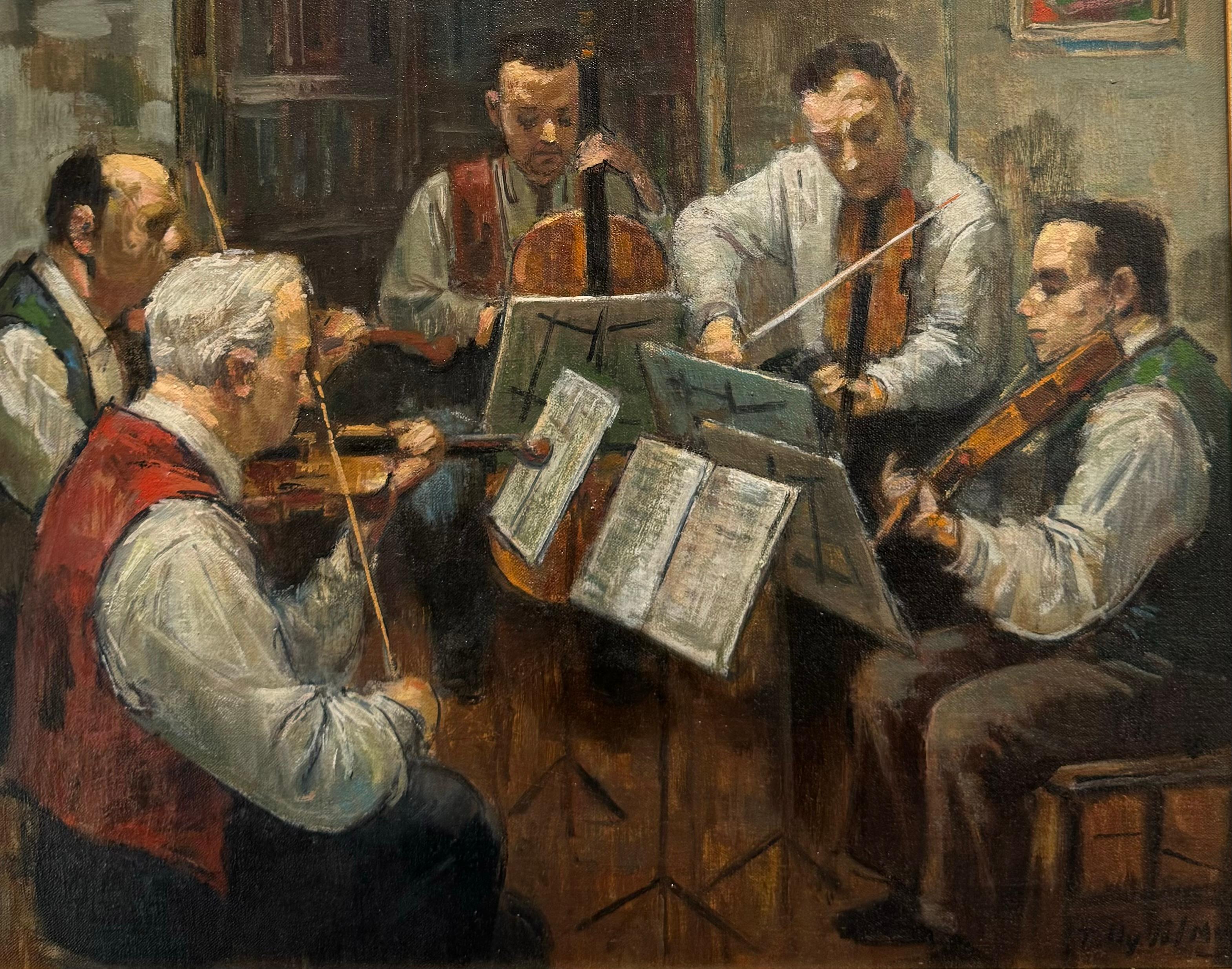
Jewish American Modernist Orchestra QUARTET New York oil Painting
By Tully Filmus
Located in New York, NY
This is for an original Oil Painting by the famous New York Jewish Artist Tully Filmus
Painting Depicts a orchestral Quartet of men
beautifully painted and Amazing Good Condition
...
Category
1970s American Modern Figurative Paintings
Materials
Oil

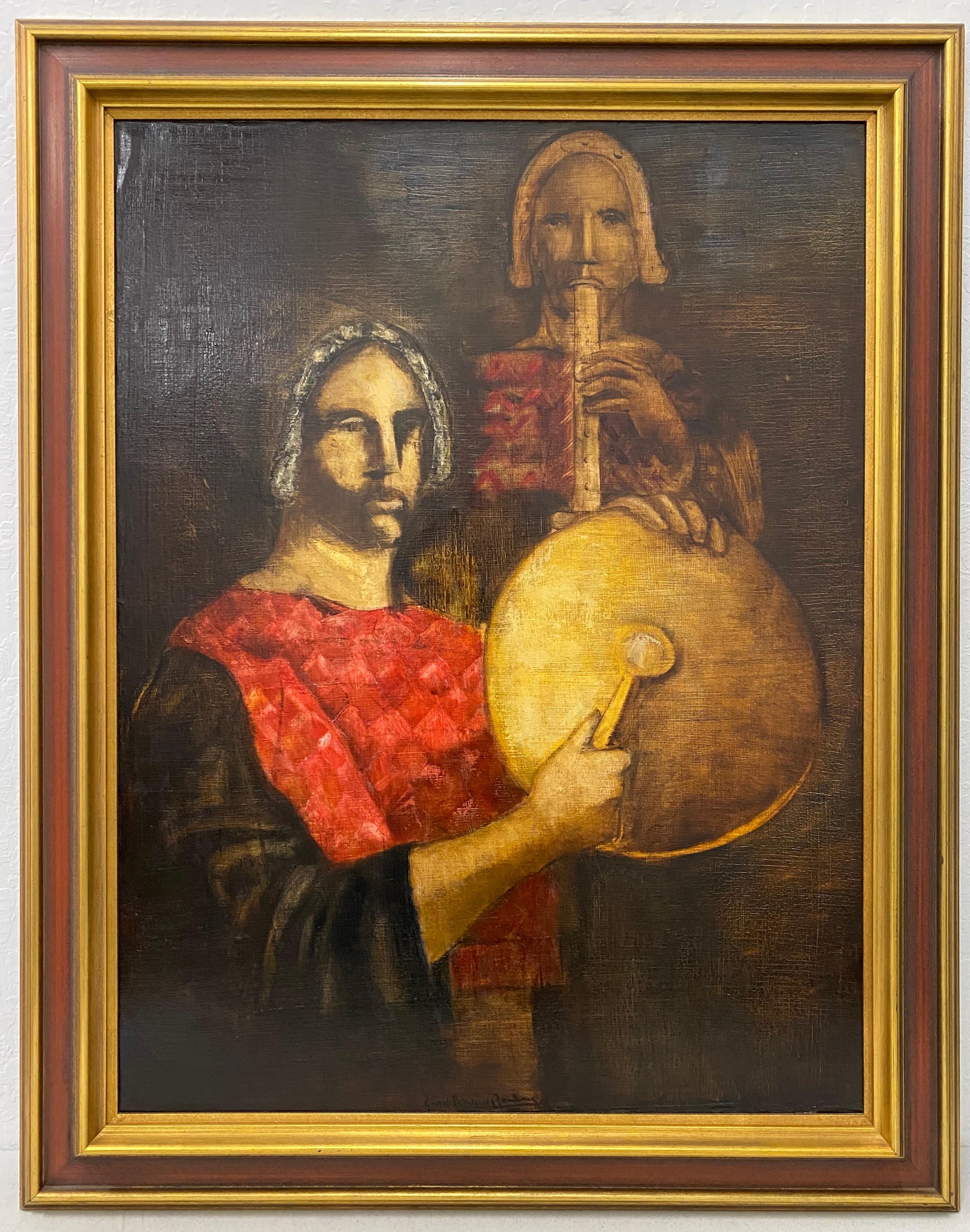
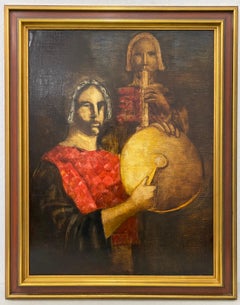
Mid 20th Century "Musicians" Original Oil Painting
Located in San Francisco, CA
Mid 20th Century "Musicians" Original Oil Painting
Fine oil portrait of two musicians
One flute player, one drummer
Original oil on linen over board
Dimensions 31" wide x 40.5" h...
Category
Mid-20th Century Impressionist Portrait Paintings
Materials
Oil
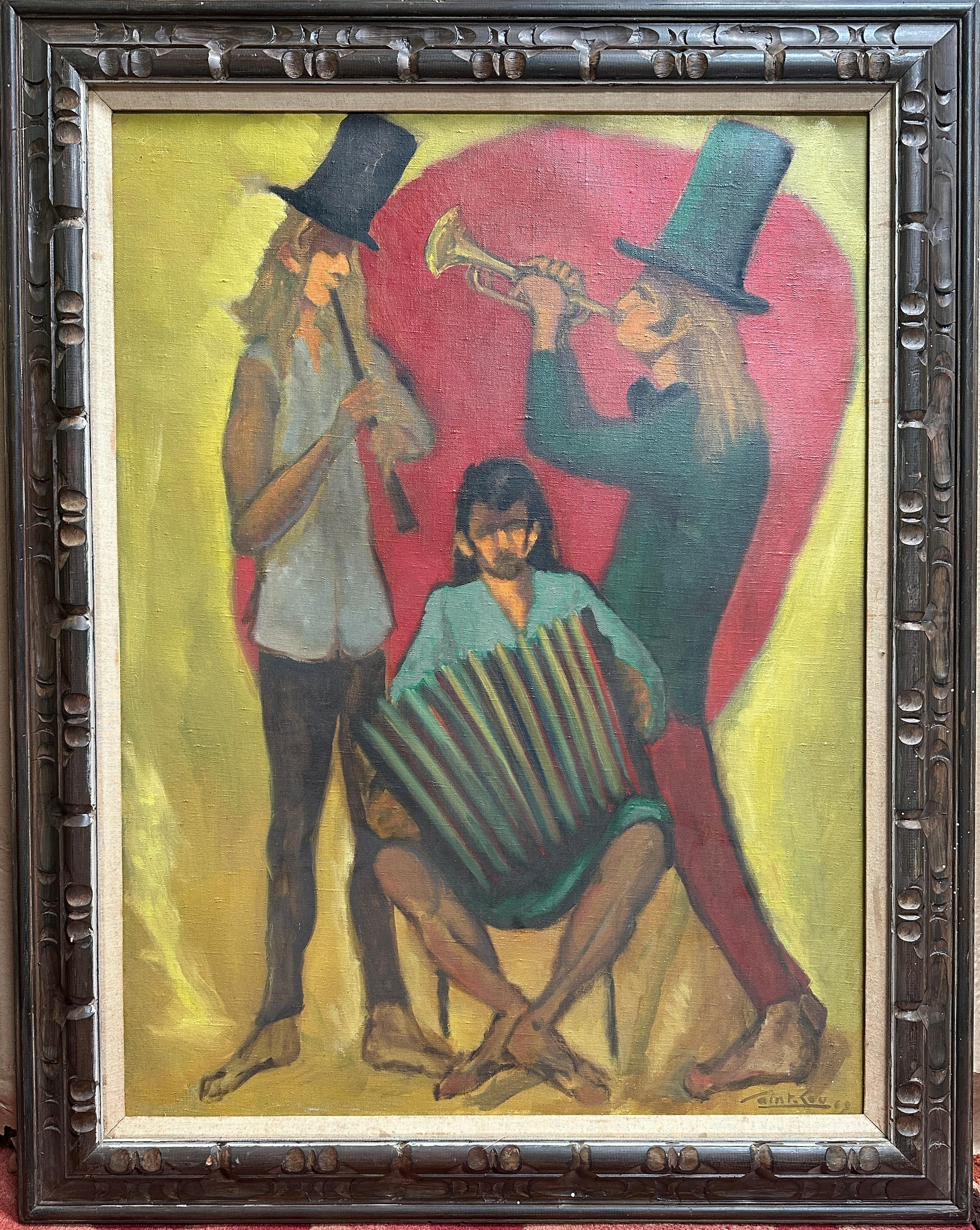
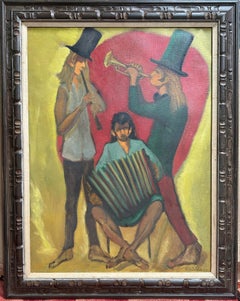
"Three Musicians" Midcentury Oil Painting by Maurice Saint-Lou
Located in Pasadena, CA
This painting is dated 1969 and signed by the artist Saint-Lou.
The painting depicts three musicians with flowing hair, playing the clarinet, trumpet, and accordion. The stylistic a...
Category
1660s Modern Figurative Paintings
Materials
Oil
$538 Sale Price
68% Off
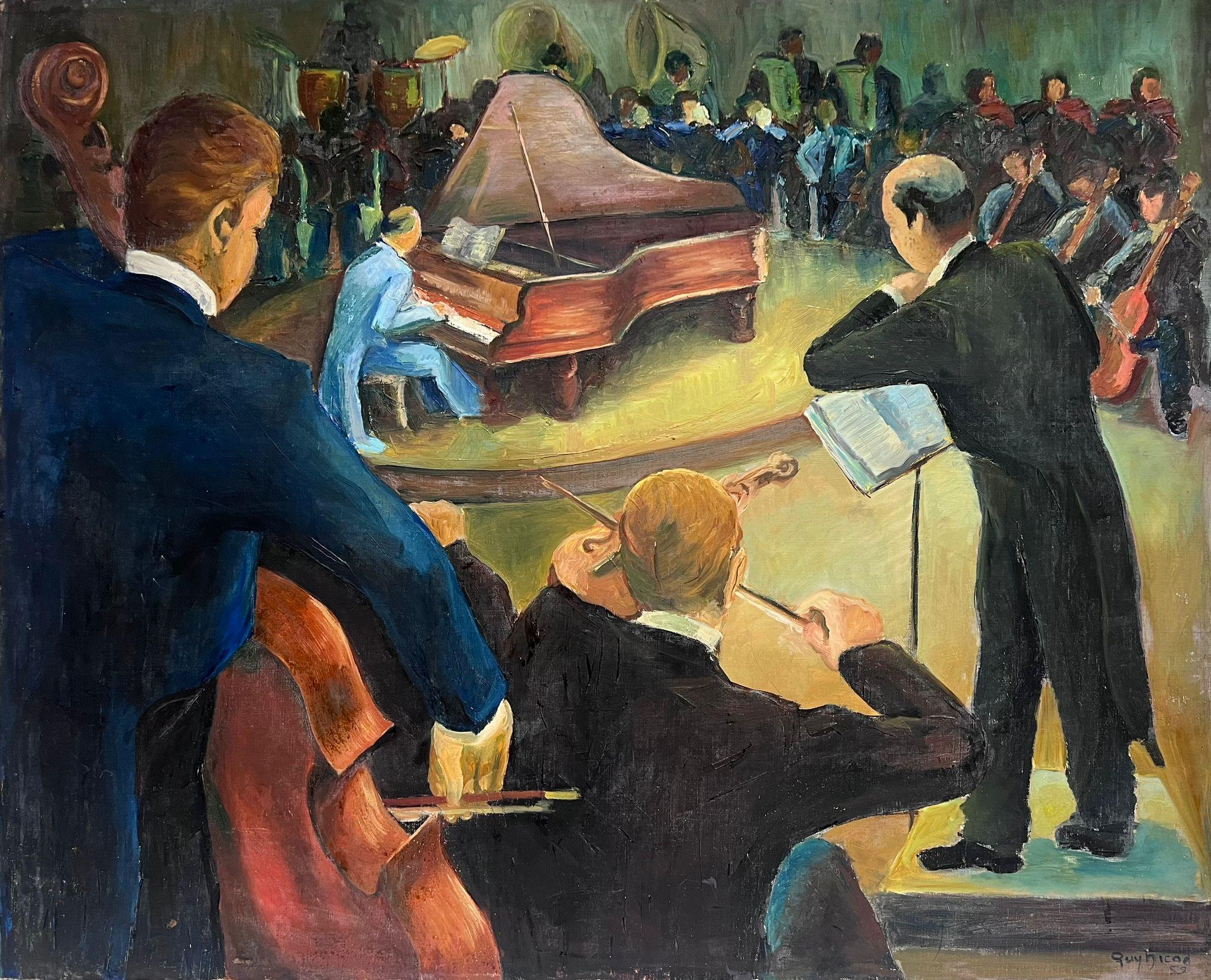
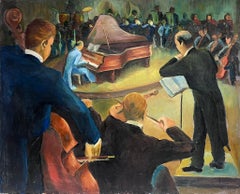
Huge 20th Century French Signed Oil Classical Music Orchestra Concert Scene
Located in Cirencester, Gloucestershire
The Orchestra
signed by Guy Nicod
(French 1923 - 2021)
oil on canvas, unframed
painting : 32 x 40 inches
provenance: artists estate, France
condition: very good and sound condition
Category
Mid-20th Century Modern Figurative Paintings
Materials
Canvas, Oil
$2,293 Sale Price
40% Off