Items Similar to Hieronymus FRANCKEN III - The Denial of Saint Peter, 17th c. Antwerp school
Video Loading
Want more images or videos?
Request additional images or videos from the seller
1 of 16
Hieronymus FRANCKEN III Hieronymus FRANCKEN III - The Denial of Saint Peter, 17th c. Antwerp school
$40,638.69
£30,242.01
€34,000
CA$56,236.55
A$60,364.67
CHF 32,141.10
MX$714,951.81
NOK 406,175.60
SEK 370,951.61
DKK 259,075.34
About the Item
Hieronymus FRANCKEN III (Antwerp 1611 - 1671)
17th century Antwerp School
The Denial of Saint Peter
Oil on panel, dim. h. 53 cm, l. 76 cm
Framed, h. 82 cm, l. 106 cm
Sold with the certificate of expertise by Dr. Ursula Harting, the specialist of the Francken dynasty and author of numerous reference works including Frans Francken der Jüngere, 1581-1642, editions Freren, 1989.
Ursula Harting was also curator of the exhibition Francken Dynasty at the Kassel Museum from 09/04/2021 to 01/02/2022 and co-author of the exhibition catalogue, Editions In Fine / Musée de Flandre, 2021
A true pictorial story with many picturesque details, our painting relates the episodes comprising the Passion of Christ by illustrating the Denial of Saint Peter on the sidelines of the main theme.
Thus the main subject is surrounded by five complementary subjects
1. Jesus in the Garden of Gethsemane
2. The Kiss of Judas
3. Jesus before the high priests Annas and Caiaphas
4. The Carrying of the Cross
5. The Crucifixion
Opportunity to tell a story on a large scale, associating details with emotions, this typically Nordic tendency to leave no empty space so that the eye can delight in discovering a new detail each time, thus allowing an infinite contemplation of the work in the imaginary pictorial space.
The scenes emerge from the depths of darkness, lit by candles, lanterns, torches, wood fires and lit braziers.
This highly contrasted night effect, of a striking power, makes the intense and deep colors of the fabrics of the figures shine brightly.
Like a theater director, the painter will organize the space and place his figures as if they were actors on stage, each having their role and function in understanding the whole. This positioning of the different scenes requires great skill in perspective and illustrative organization, in order to achieve harmony in the work.
His scenes populated with numerous figures are an opportunity for the painter to deploy the rich palette of multiple colors, to magnify the luminous pulpits, the bright costumes, the shimmering fabrics with delicate nuances, the sparkling armor and weapons.
Christ is recognizable in all the scenes thanks to his orb, dressed in a purple tunic and a red cloak, these colors are traditionally associated with him among the Francken
Pierre as for him is dressed in a blue tunic and a yellow cloak.
The preciousness of the figures with exaggerated gestures express astonishment and curiosity gives the painting a particular rhythm that is both lively and dramatic. The caricatured attitudes of the crowd with bright eyes and open mouths showing teeth contrast with the calm detachment of Jesus in each scene.
In this first episode at the top left, the Passion of Jesus begins with the prayer in the Garden of Gethsemane, the disciples fall asleep instead of watching with Jesus although he asked them to stay awake.
Directly below the second episode illustrates the arrest of Jesus and the kiss of Judas. Jesus appears there with his hands tied, surrounded by a crowd of soldiers, while Judas approaches to point him out, the purse full of silver coins in his left hand. Peter draws his sword and attacks one of the priest's servants with his sword.
The guards seize Jesus and take him before the Jewish authorities to be questioned by the high priests Annas and Caiaphas. This scene is illustrated in the architectural space of a palace open to the outside.
The high priest Caiaphas sits on his throne with winged sphinxes under the red canopy, at his side stands the high priest Annas.
Christ, surrounded by the crowd of mercenaries with hideous faces, is motionless in the middle of this scene of violence, his calm resignation before the verdict to fall dominates the hatred of those around him.
Simultaneously with this interrogation of Jesus, Peter, following Christ, finds himself, in the courtyard of the high priest, attacked by servants, one of whom is a young woman who recognizes him as the disciple of Jesus. This moment of the Denial is thus illustrated in the main central scene.
Peter is placed at the heart of the composition. His azure blue tunic and his face lit by candlelight immediately attract the attention of the viewer.
The servant who questions him is also propelled into the foreground in the light.
Her index finger raised upwards suggests a question that is confirmed by the open mouths and curiosity in the eyes of the soldiers who surround him. In response, Peter adopts an attitude that aims to exonerate him: his arms crossed at his chest, he points towards him with both index fingers (Me, a disciple of the Nazarene? No, you must be mistaken about the person!)
The ignoble features, the hideous masks of the figures surrounding him are treated by the painter to the point of caricature. The bloodthirsty mercenaries smile, showing their teeth, expressing human bestiality in their behavior.
The narration continues with a short scene of the Carrying of the Cross, illustrated at the top right through an architectural embrasure.
Jesus collapsing under the weight of the Cross is rescued by Peter who helps him lift it.
Finally, at the top right, we see the Crucifixion: Christ crucified with the two thieves.
Thus, this last episode accomplished in geometric symmetry completes the story that the painter, like the narrator, relates to us through his work.
The artist's undeniable pleasure in involving as many figures as possible in his scenes emerges, this dramatic tumult that he accentuates with the luminous segments that contrast with the darkness, creating an atmosphere of great psychological tension.
Related works:
- Koller auction, Zurich, 18/09/2015, lot 3058, Hyeronimus Francken III, oil on copper (55x72 cm), available in the RKD database under number 240401
- Hampel auction, Munich, 19/09/2013, lot 541, Frans Francken II, oil on panel (50.5 x 77 cm), signed, available in the RKD database under number 240403
- Creator:Hieronymus FRANCKEN III (1611 - 1671, Belgian)
- Dimensions:Height: 32.28 in (82 cm)Width: 42.52 in (108.01 cm)
- Medium:
- Movement Style:
- Period:Mid-17th Century
- Condition:
- Gallery Location:PARIS, FR
- Reference Number:1stDibs: LU2433215449402
About the Seller
No Reviews Yet
Vetted Professional Seller
Every seller passes strict standards for authenticity and reliability
1stDibs seller since 2023
17 sales on 1stDibs
- ShippingRetrieving quote...Shipping from: PARIS, France
- Return Policy
More From This Seller
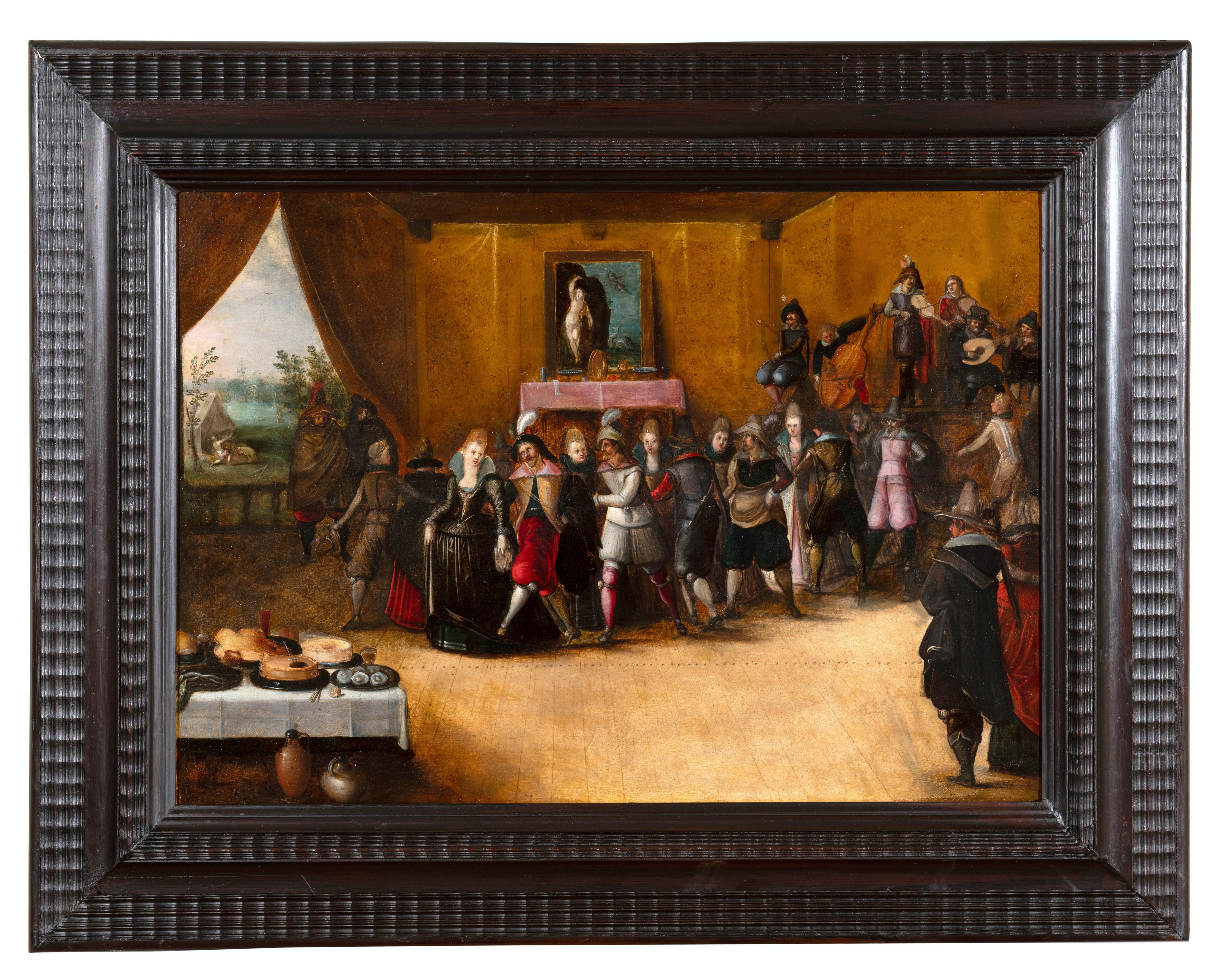
View AllAttributed à H. Francken II, 17th c. Anwerp - The prodigal son among courtesans
Located in PARIS, FR
The Prodigal Son Among Courtesans
Attributed to Hieronymus Francken II (Antwerp 1578-1623)
Early 17th century Antwerp school
Oil on oak panel,
Dimensions: H. 52.5 cm (20.67 in), W. 74 cm (29.14 in)
Flemish-style moulded wood frame
Frame: h. 78 cm (h. 30.70 in.), w. 100 cm (39.37 in.)
At first glance, this festive and joyful painting depicts a group of elegantly dressed people dancing to the sound of an orchestra in a richly decorated interior with a wide opening onto a rural exterior. However, the real theme is cleverly concealed by the painter and is only discernible through the artifice of a small scene in the background where we see a half-naked man, in the company of the pigs next to a makeshift shelter.
In fact, beyond the pleasant and apparently superficial character of the painting, it is a subject taken from the parable of the prodigal son in the Gospel. The illustrated episode is the prodigal son among courtesans.
Even if the viewer's attention is drawn to the central couple (prodigal son embracing a pretty courtesan) doing the dance steps, the artist takes care in a narrative approach of all the groups and ancillary scenes in order to create a rich and varied composition. Thus the musicians seated on a raised platform are depicted with great skill, their faces animated, their clothes abundantly varied.
The theme of music, which has always been associated with that of sensuality and physical love, helps to exacerbate licentious pleasures.
The merry company dances "Spanish pavane", a slow court dance from the sixteenth century, danced close to the ground by couples arranged in a procession, which was probably introduced to the south of the Netherlands around 1600 during the governance of Albrecht VII and the daughter of the King of Spain Isabella Clara Eugenia in Brussels.
The interior of the house is also carefully elaborated, the embossed leather dyes on the walls, the middle sideboard (typical in Francken interiors), where the rich gold and silver crockery is placed in front of the painting "Andromeda chained to the rock and Perseus arriving to rescue her". The inclusion of a contemporary and probably extant pictorial work is also one of the characteristics of the Francken family, among them Frans Francken the Younger...
Category
Early 17th Century Old Masters Interior Paintings
Materials
Oak, Oil
The Rape of Europa, signed Peter Sion (1624-1695), Antwerp, 17th century
Located in PARIS, FR
The Rape of Europa
By Peter Sion (Antwerp, 1624-1695)
Signed in the lower right corner P. Sion
17th century Antwerp School
Oil on copper, dim. h. 53 cm, w. 45 cm
Moulded and ebonized...
Category
17th Century Old Masters Figurative Paintings
Materials
Oak, Oil, Wood Panel
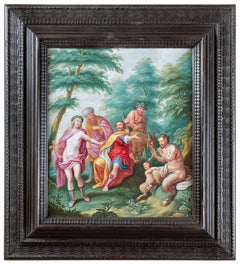
The Musical Contest between Apollo and Marsyas, signed P. Sion, Antwerp 17th c.
Located in PARIS, FR
The Musical Contest between Apollo and Marsyas,
by Peter Sion (Antwerp, 1624-1695)
Signed in the lower right corner P. Sion
17th century Antwerp School
Oil on copper, dim. h. 53 cm, ...
Category
17th Century Old Masters Figurative Paintings
Materials
Oak, Oil, Wood Panel
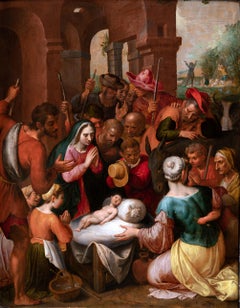
Cercle of Ambrosius Francken, Adoration of the shepherds, 17th century Antwerp
Located in PARIS, FR
Adoration of the shepherds,
Cercle of Ambrosius Francken,
Early 17th century Antwerp school
Oil on oak panel: h. 55 cm, w. 43 cm (21.65 in x 16.93 in)
17th c. ebonized and moulded f...
Category
Early 17th Century Old Masters Figurative Paintings
Materials
Oil, Wood Panel
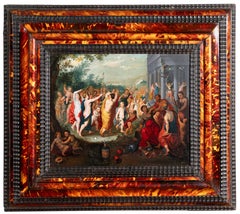
The Triumph of the Infant Bacchus, workshop of H. Van Balen, 16th c. Antwerp
By Hendrick van Balen
Located in PARIS, FR
The Triumph of the Infant Bacchus,
Workshop of Hendrick Van Balen (1575-1632)
Antwerp, c.1630
Oil on copper, h. 28 cm (11.02 in), w. 35 cm (13.78 in)
A large Roman 17th century golden painted frame
Framed: h. 52 cm (20.47 in.), w. 58 cm (22.83 in)
Our finely painted work depicts The Triumph of the Bacchus as a young boy and is one of the most popular mythological subjects in Antwerp at the beginning of the 17th century. Feasting, wine and fun are the themes that constantly appeal to the public.
Thus unfolds before our eyes on our painting the procession composed of nymphs, baccantes, fauns, satyrs and children, their bodies naked, partially covered with brightly coloured draperies that help to brighten up the parade. Playing various instruments, dancing and drinking, while carrying vases and poles adorned with grapevines, participants to the rhythm of a noisy brass band make their way to an ancient temple standing on the right. The exaggerated gestures convey to us the frenzy of the excited crowd.
The Child Bacchus follows the joyous procession, carried by satyrs and nymphs, crowned with ivy and joyfully raising a cup of wine. In the foreground, the drunken participants leave the procession, the children on the left and the group of bacchantes and satyrs on the right are resting among various objects scattered at their feet: cups, vases, ewers bear witness to the festivities in progress.
In the background, a hilly landscape stretches out on the horizon, a semblance of calm that contrasts with the bustle of the foreground.
The artist strives to multiply the many details, whether it be figures, costumes, flowers or vegetation, in order to demonstrate his know-how and the perfection of his execution.
The acidulous palette with fresh and varied colours is characteristic of Hendrick Van Balen's works.
There are several versions identical to ours with similar dimensions painted by Hendrick Van Balen and his workshop.
Related works:
• Koller Auction, Zurich, 21/09/2007, oil on copper, 28,5 x 37,4 cm.
• Staatliche Kunsthalle, Karlsruhe, Inv. N° 809 (oil on copper, 40 x 53,5 cm)
• Auktionshaus für Altertümer Glückselig, Vienne, 10/05/1932, ( oil on copper, 34 x 42 cm)
• Gemäldegalerie of Pommersfelden, Schloss Weissenstein, oil on panel, 47 x 64 cm
Hendrick Van Balen, Flemish painter, born and died in Antwerp (1575-1632). A pupil of Adam Van Noort, he entered the Guild of St. Luke in 1593, later trained in Italy and was Van Dyck's first teacher. He often painted small figures taken from scenes from the Bible or classical mythology, on paintings whose backgrounds and landscapes were painted by Josse de Momper...
Category
17th Century Old Masters Figurative Paintings
Materials
Copper
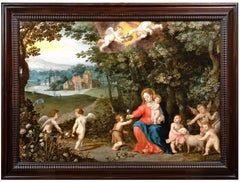
17th c. Antwerp studio of J. Brueghel
H. van Balen - The Virgin with Child
Located in PARIS, FR
Workshop of Jan Brueghel the Younger (1601-1678) & Hendrick van Balen (Antwerp, 1575 – 1632)
17th century Antwerp School
The Virgin and Child ...
Category
1630s Old Masters Figurative Paintings
Materials
Oil
You May Also Like
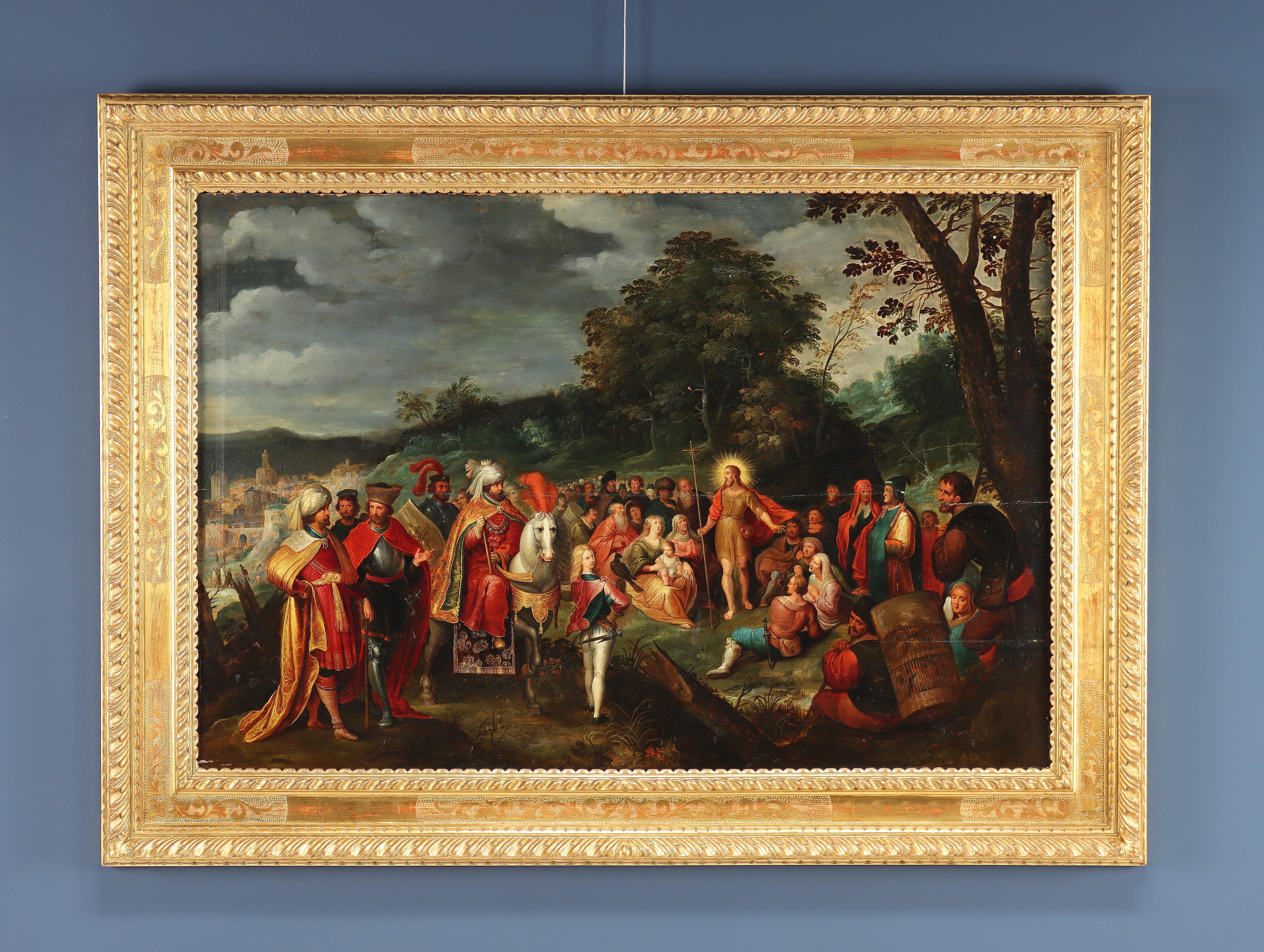
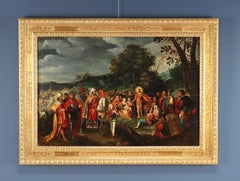
The Preaching of St. John the Baptist, Workshop of Fans Francken II, 1600s
Located in Milan, IT
The sermon of the Baptist is set in a large open space, with rich vegetation and wooded glimpses, and on the back, in the distance, you can see the buildings of a city.
The scene see...
Category
17th Century Other Art Style Figurative Paintings
Materials
Oil
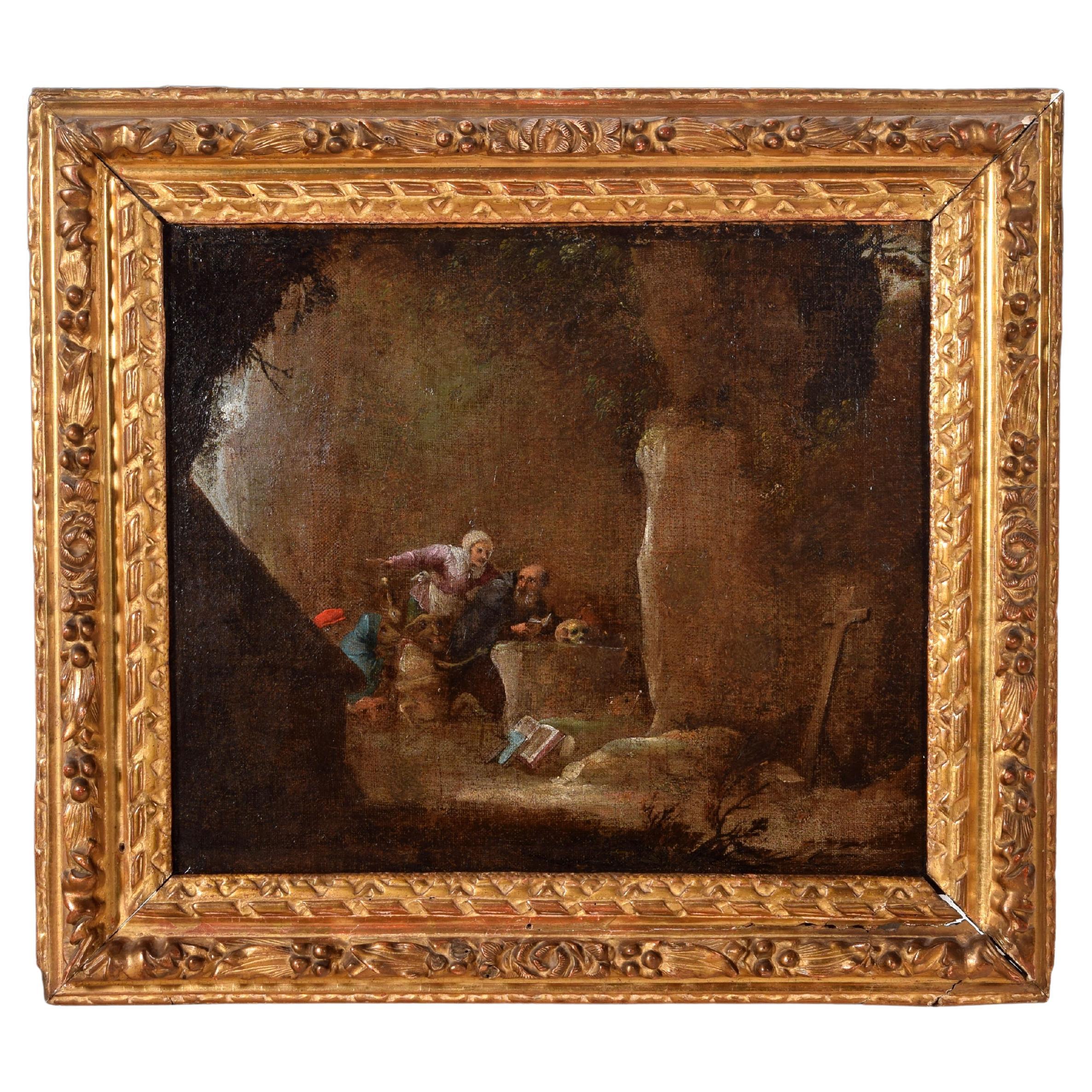
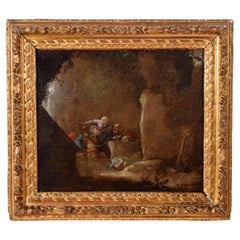
The temptation of St Anthony. Oil on canvas. 17th c., after David Teniers II
By David Teniers the Younger
Located in Madrid, ES
Temptations of San Antonio Abad. Oil on canvas. 17th century, following the model of David Teniers II (Antwerp, 1610-Brussels, 1690).
Oil on canvas showing a figurative scene located inside a cave. To the right, you can see a cross standing, supported; to the left, a hut; and in the center of the painting appears an elderly, bearded man, leaning on a table on which there is a ceramic jug and a skull, with an open book at the foot of it. The man looks towards a woman, who points to something outside, and appears accompanied by a large frog and a series of ghostly beings or monsters dressed in brightly colored cloth and clothing.
San Antonio Abad or Antonio Magno (251-356) was a Christian monk, considered the founder of the eremitical movement. He was tempted numerous times by the devil while he was in the desert, becoming a subject frequently represented in art (as can be seen in this oil painting). He is represented in a black habit because the Order of the Knights of the Hospital of San Antonio (Hospitals) was placed under his patronage, being the color of the habits of the members of this order (the tau or Egyptian cross was also the symbol chosen by they).
David Teniers II or El Joven was a prominent Flemish painter and engraver, son of David Teniers El Viejo or I and father of David Teniers III, much appreciated at the time for his scenes of villagers and common people, his paintings of monkey painters, etc. . He dealt with the theme of the Temptations of Saint Anthony...
Category
Antique 17th Century European Baroque Paintings
Materials
Other
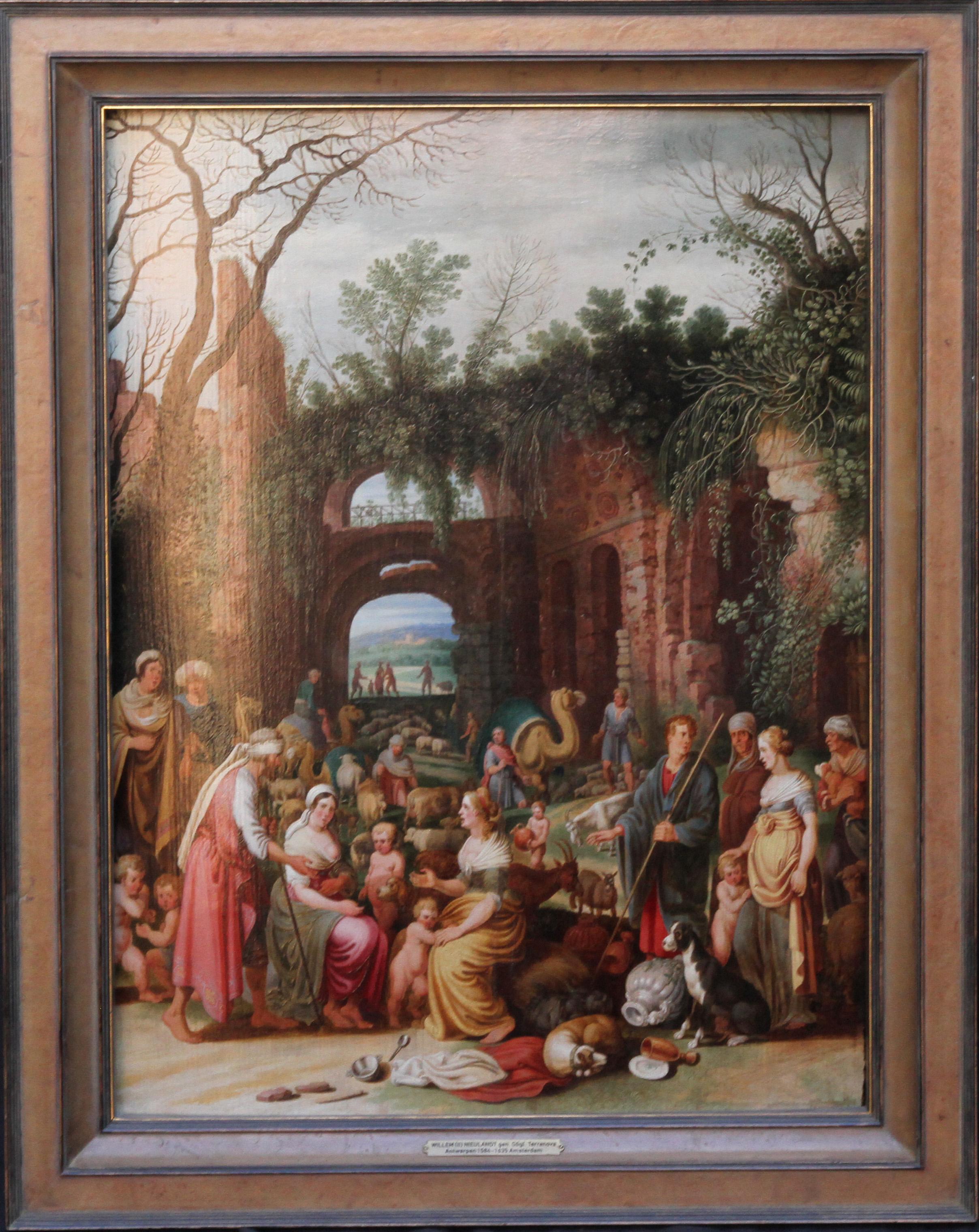
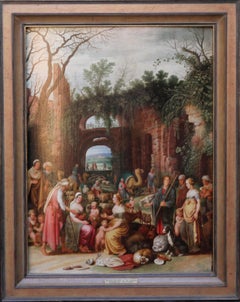
Laban Demanding the Return of the Teraphim from Rachel - Dutch Old Master art
By Willem van Nieulandt II
Located in Hagley, England
This very busy oil on panel is a Dutch Old Master painting dating to around 1620 by artist and poet Willem van Nieulandt. It is an incredibly detailed and colourful scene composed of...
Category
17th Century Old Masters Figurative Paintings
Materials
Oil
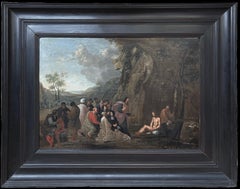
Large 17th Century Flemish Old Master Oil Painting Resurrection of Lazarus
Located in Cirencester, Gloucestershire
The Resurrection of Lazarus
Flemish Old Master, 17th century
(unsigned as is typical for the period)
oil on canvas, framed
framed: 30 x 38 inches
canvas: 19 x 27 inches
Provenance: ...
Category
17th Century Baroque Figurative Paintings
Materials
Oil
$13,925 Sale Price
20% Off
Frans Franken III 16th Century Oil on Wood, Adoration of the Magi, Painting
By Frans Franken the Younger
Located in IT
Frans Franken III and aid, Adoration of the Magi
Good condition
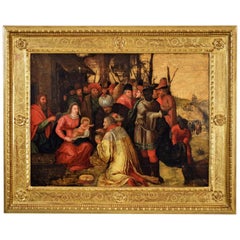
The oil painting on wood, with a gold background, depicts an Adoration of the Magi. The Magi are dressed in sumptuous silk and brocade dresses; they wear precious hats and jewelery. The richness of their garments is in contrast with the humility of the Holy Family and of the other characters who, around curious, observe the scene. The hut is simple, made of wood and straw: above it shines the Comet, symbol of the divine event. In the distance, a group of wayfarers walk along a path that is lost on the horizon, blending into the gold of the bottom.
The representation proposes a traditional iconography, in which the painter inserts some details that he lends himself to symbolic interpretations. Among these is the appearance of the Magi, who from the XIVth century differs iconographically: the wise astronomers represent the homage to Jesus of the then known parts of the world, namely Africa, Asia and Europe. To the right of the Magi, in the foreground, sits a monkey, considered a demonic creature and a symbol of lies and sin. It is depicted on the sidelines, as a defeat, next to a fragment of a classical column: ruin alludes to the end of paganism, of the old world that collapses with the advent of the new one, marked by the birth of Christ and liberation from the Original Sin. On the ruins he climbs the ivy, symbol of the immortality of the soul. The work is attributable to the workshop of the Flemish painter Frans Francken III...
Category
Antique 16th Century Belgian Renaissance Paintings
Materials
Paint
Dipinto Copia da Pierre Mignard Gesù sul Cammino del Calvario XVIII secolo
Located in Milan, IT
Olio su tela.
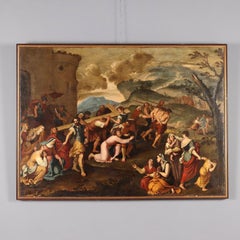
L' opera è una replica non firmata di quella eseguita da Pierre Mignard e donata a Luigi XIV, conservata oggi al museo del Louvre di Parigi.
La drammatica scena è ambie...
Category
18th Century Other Art Style Figurative Paintings
Materials
Oil
More Ways To Browse
The Servant
The Crucifixion
Antique Brazier
17th Century Saint Paintings
Antique Candle Lantern
Sword Guard
Frans Francken
Garden Of Gethsemane
Saint Peter Painting
Saint Peter Oil
Peter Sword
Venus Adonis
Vintage Bullfighter Painting
Yossi Stern
African Scene Painting
Alessandro Casetti
Andrea Del Sarto
Auction Oil Paintings