Want more images or videos?
Request additional images or videos from the seller
1 of 11
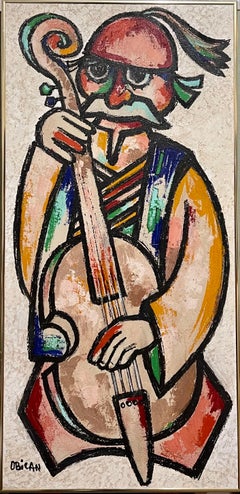
Jovan ObicanLarge Naive European Folk Art Oil Painting Jovan Obican Klezmer Jazz Musicianc.1960
s
c.1960 s
$1,800List Price
About the Item
- Creator:Jovan Obican (1918-1986, French)
- Creation Year:c.1960 s
- Dimensions:Height: 35.5 in (90.17 cm)Width: 17.25 in (43.82 cm)
- Medium:
- Movement Style:
- Period:
- Condition:
- Gallery Location:Surfside, FL
- Reference Number:1stDibs: LU38210129972
About the Seller
4.9
Platinum Seller
Premium sellers with a 4.7+ rating and 24-hour response times
Established in 1995
1stDibs seller since 2014
1,859 sales on 1stDibs
Authenticity Guarantee
In the unlikely event there’s an issue with an item’s authenticity, contact us within 1 year for a full refund. DetailsMoney-Back Guarantee
If your item is not as described, is damaged in transit, or does not arrive, contact us within 7 days for a full refund. Details24-Hour Cancellation
You have a 24-hour grace period in which to reconsider your purchase, with no questions asked.Vetted Professional Sellers
Our world-class sellers must adhere to strict standards for service and quality, maintaining the integrity of our listings.Price-Match Guarantee
If you find that a seller listed the same item for a lower price elsewhere, we’ll match it.Trusted Global Delivery
Our best-in-class carrier network provides specialized shipping options worldwide, including custom delivery.You May Also Like
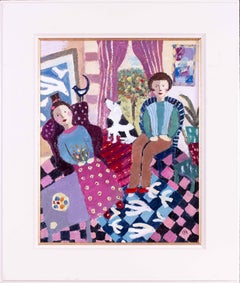
Scottish 20th Century naive oil painting of figures, dogs and birds in interior
Located in Petworth, West Sussex
Catriona Millar (Scottish, b. 1956)
Veva’s Guest
Oil on canvas
Signed with initials (lower left)
19.5/8 x 15.5/8 in. (50 x 39.7 cm.)
Catriona Millar (born 1956) is a Scottish figurative painter born in Milngavie, Glasgow. She studied at Grays School of Art, Aberdeen, where her tutors included Joyce Cairns RSA and Keith Grant...
Category
20th Century Folk Art Figurative Paintings
Materials
Canvas, Oil
$1,777
H 19.63 in W 15.63 in D 1 in
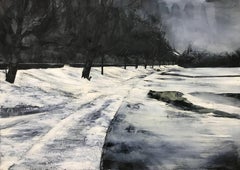
Contemporary Atmospheric Black
White Monochrome Landscape Wilderness Painting
By Mark Thompson
Located in Preston, GB
Contemporary Atmospheric Black & White Monochrome Landscape Wilderness Painting by 20th Century Artist. Mark Thompson is a seasoned professional pa...
Category
Early 2000s Outsider Art Landscape Paintings
Materials
Canvas, Paint, Cotton Canvas, Oil
$3,751 Sale Price
50% Off
H 33 in W 46 in D 2 in
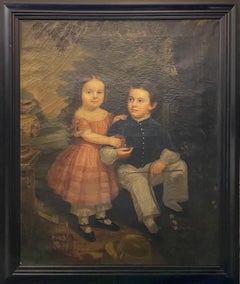
Portrait of Two Children
Located in Milford, NH
A wonderful early 19th century large oil on canvas naive portrait of two children, a boy and a girl, attributed to American artist Arthur Armstrong (1798-1851). Armstrong was born in...
Category
19th Century Folk Art Portrait Paintings
Materials
Canvas, Oil
Early Haitian Picasso-like Modernist Mother and Child oil painting Haiti
Located in Norwich, GB
Mother and child/maternité: a gorgeous, almost Picasso-like early oil on canvas by Petion Savain, dating from 1953. The painting is monogrammed and dated...
Category
Mid-20th Century Outsider Art Figurative Paintings
Materials
Canvas, Oil
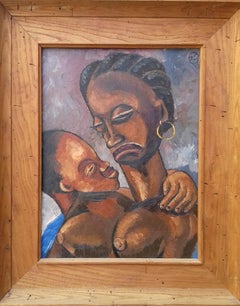
$2,400
H 21 in W 17 in D 1 in
Japan Japanese Garden by French naive outsider folk art primitive artist, 1975
Located in Norwich, GB
A perfect painting for lovers of Japan and those of primitive/naive outside art.
It is a work by an internatoanlly noted extraordinary artist with an extraordinary life.
Maurice LOIRAND (1922-2008) is born into a working class family in Brittany, near the Atlantic coast coast in France. He starts working as a skilled labourer in the shipyards aged 15.
Aged 20, when the Nazis start to occupy the country, he joins the Resistance movement, where he meets and befriends thinkers, painters and poets. He is thus introduced to an artistic and intellectual universe far removed from the world of his origins.
Loirand finds himself drawn to art, and soon dedicates all his free time to learn how to paint. Completely self taught, he soon begins to exhibit his pictures alongside high level artists. He moves to Paris in the 1950s, and - although still working as a technician - paints all night.
He finally becomes a full time artist in 1968. International travel and a multitude of exhibitions follow. He exhibits in Brazil, Argentina, and with Jean Tiroche Gallery in New York, among others. His work is now shown alongside works by Leger, Matisse and Picasso. The Collector's Guild New York Ltd commissions Maurice Loirand for several works of lithographic art.
Loirand discovers Japan in the early 1970s, and decides to stay for 18 years.
He marries Kazué SHIMOTORI, a Japanese poet...
Category
1970s Outsider Art Figurative Paintings
Materials
Canvas, Oil
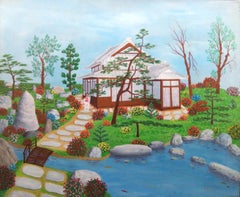
$683
H 23.63 in W 28.75 in D 0.4 in
Badami People, Oil on Canvas, White Purple Green Color "In Stock"
By JMS Mani
Located in Kolkata, West Bengal
JMS Mani - Badami People
Oil on Canvas - 16 x 12 inches each (unframed size)
20 x 18 inches ( Framed )
Inclusive of packing .
The simple, rustic folk of the Deccan Plateau in Sout...
Category
2010s Folk Art Figurative Paintings
Materials
Oil, Canvas
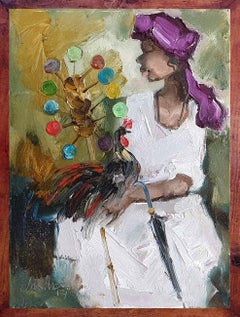
$2,149
H 22 in W 18 in D 1 in
19th century American Folk Art of a Seated Lady in her Sunday best clothes
Located in Woodbury, CT
Unknown Artist (American School, 19th century)
Portrait of a Lady in Blue, c. 1835–1850
Oil on canvas
This painting is unsigned
This quietly elegant portrait captures a mature woman...
Category
1850s Folk Art Portrait Paintings
Materials
Canvas, Oil
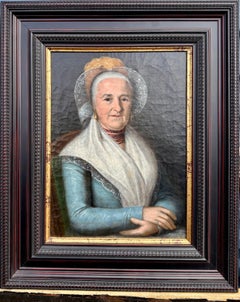
$3,450
Free Shipping
H 20 in W 16 in
The Gift Of The Two Lines Small Oil Painting
Located in Lake Worth Beach, FL
The Gift Of The Two Lines
Born on March 21, 1906, in Moscow, she arrived as an emigrant to Paris at the age of 15, bearing in her young experience, the weight of the most transformi...
Category
1960s Folk Art Landscape Paintings
Materials
Cotton Canvas, Oil
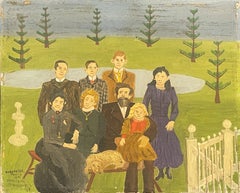
"Overholser Family, 1890, Sterling, Illinois" Streeter Blair, 1949 Painting
Located in New York, NY
Streeter Blair
Overholser Family, 1890, Sterling, Illinois, 1949
Signed, titled, and dated lower left
Oil on canvas
8 x 10 inches
Primitive painter St...
Category
1940s Outsider Art Figurative Paintings
Materials
Canvas, Oil
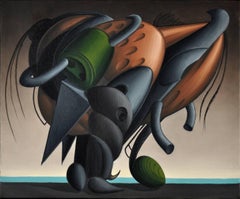
Satilite Dance
By Valton Tyler
Located in Dallas, TX
In The New York Times Arts in America column, Edward M. Gomez writes of Valton Tyler, "visionary seems the right word for describing his vivid, unusual and technically refined painti...
Category
20th Century Outsider Art Abstract Paintings
Materials
Canvas, Oil
More From This Seller
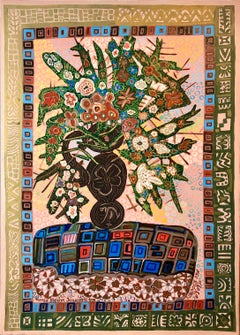
View AllIsraeli Folk Art Bright Colorful Naive Floral Painting, Mod Flowers in Vase
By Menia Litvak
Located in Surfside, FL
A fantastic vase of bold colorful flowers. signed and dated in Hebrew and English, Jerusalem 1989.
Litvak's life as an artist started in 1976 when he left Kishinev (Bessarabia) for Israel...
Category
20th Century Folk Art Figurative Paintings
Materials
Canvas, Oil, Acrylic
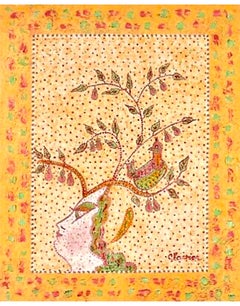
Whimsical French Folk Art, Naive, Oil Painting Madeline Marie Christine Clavier
By Madeline Christine Clavier
Located in Surfside, FL
MADELINE CHRISTINE CLAVIER (1913-2015)
Signature: Signed lower right & titled verso
Medium: Oil on canvas
Provenance: The collection of the artist's family
Marie Christine Clavier ...
Category
20th Century Folk Art Animal Paintings
Materials
Canvas, Oil
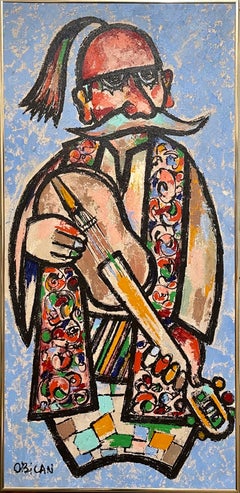
Large Naive European Folk Art Oil Painting Jovan Obican Klezmer Jazz Musician
By Jovan Obican
Located in Surfside, FL
Genre: Other
Subject: People
Medium: Oil
Surface: Canvas
Dimensions: 35" x 16.5
Dimensions w/Frame: 35.5" x 17.25
This depicts a Jazz or Klezmer musician. This one is a banjo or guitar player.
The last photo shows it in a group of three that I have available. This listing is for the one painting.
The artist Jovan Obican iconic style is child-like yet masterfully adult; a style that tells a story with sociological overtones. His funny little people are always colorful, full of spirit, living with music and birds to bring them happiness.
JOVAN OBICAN
Cannes, France, b. 1918, d. 1986
Jovan Obican (1918-1986) artist, painter, sculpture and mosaic ceramic artisan was born in Cannes, France, to his Yugoslavian parents. From childhood on, Jovan practically devoted himself to art, scratching designs into the dirt when paper was unavailable. He trained with many recognized teachers and with many styles. He finished his training, imbued with the spirit of his native country, the people, their legends, and their philosophy. It has been said that his work has a "timeless quality" and a naive, folk art, outsider art brut quality, child-like primitive style. Obican is identified with his style the world over, a style that is simple yet sophisticated; child-like yet masterfully adult; a style that tells a story with psychological, philosophical or sociological overtones. His funny little people are always colorful, full of spirit, living with music and birds to bring them happiness. Best known for his depictions of folklore and traditional costumes rendered in a playful, childlike style and for his happy Jewish wedding scenes. He often used bright colors and black outlines in his renderings of figures and animals, giving his work an illustration-like quality. Thematically, the artist’s work is similar to Marc Chagall and Jean Dubuffet for its dreamlike images and so-called naïve style of painting. Over the course of his career, the artist maintained a studio in Boca Raton, Florida and Dubrovnik, Croatia—part of former Yugoslavia— where he developed an interest in Eastern Europe’s Jewish culture. Many of his mature works depict Jewish traditions and ceremonies, including traditional Jewish weddings, the dancing of the Hora, and traditional music. There is a display of his works in his former Dubrovnik studio.
His style is a unique conglomerate of tradition, history, legends, heroes, old customs and folklore. It is a self-standing style, recognizable, cheerful, whimsical and a happy creation. Naïve art is any form of visual art that is created by a person who lacks the formal education and training that a professional artist undergoes (in anatomy, art history, technique, perspective, ways of seeing). Unlike folk art, naïve art does not necessarily evince a distinct cultural context or tradition. Naïve art is recognized, and often imitated, for its childlike simplicity and frankness. Paintings of this kind typically have a flat rendering style with a rudimentary expression of perspective.
One particularly influential painter of "naïve art" was Henri Rousseau (1844–1910), a French Post-Impressionist who was discovered by Pablo Picasso. Naïve art is often seen as outsider art that is by someone without formal (or little) training or degree. While this was true before the twentieth century, there are now academies for naïve art. Naïve art is now a fully recognized art genre, represented in art galleries worldwide.
Museums devoted to naïve art now exist in Kecskemét, Hungary; Riga, Latvia; Jaen, Spain; Rio de Janeiro, Brasil; Vicq France and Paris. "Primitive art" is another term often applied to art by those without formal training, but is historically more often applied to work from certain cultures that have been judged socially or technologically "primitive" by Western academia, such as Native American, sub saharan African or Pacific Island art (see Tribal art). This is distinguished from the self-conscious, "primitive" inspired movement primitivism. Another term related to (but not completely synonymous with) naïve art is folk art. There also exist the terms "naïvism" and "primitivism" which are usually applied to professional painters working in the style of naïve art (like Paul Gauguin, Mikhail Larionov, Paul Klee).
At all events, naive art can be regarded as having occupied an "official" position in the annals of twentieth-century art since - at the very latest - the publication of the Der Blaue Reiter, an almanac in 1912. Wassily Kandinsky and Franz Marc, who brought out the almanac, presented 6 reproductions of paintings by le Douanier' Rousseau (Henri Rousseau), comparing them with other pictorial examples. However, most experts agree that the year that naive art was "discovered" was 1885, when the painter Paul Signac became aware of the talents of Henri Rousseau and set about organizing exhibitions of his work in a number of prestigious galleries. The Earth Group (Grupa Zemlja) were Croatian artists, architects and intellectuals active in Zagreb from 1929 to 1935. The group included the painters Krsto Hegedušić, Edo Kovačević, Omer Mujadžić, Kamilo Ružička, Ivan Tabaković, and Oton Postružnik, the sculptors Antun Augustinčić, Frano Kršinić, and the architect Drago Ibler. A term applied to Yugoslav (Croatian) naive painters working in or around the village of Hlebine, near the Hungarian border, from about 1930. Some of the best known naive artists are Dragan Gaži, Ivan Generalić, Josip Generalić, Krsto Hegedušić, Mijo Kovačić, Ivan Lacković-Croata, Franjo Mraz, Ivan Večenaj and Mirko Virius. Camille Bombois (1883–1970) Ferdinand Cheval, known as 'le facteur Cheval' (1836–1924) Henry Darger (1892–1973) L. S. Lowry (1887–1976) Grandma Moses, Anna Mary Robertson...
Category
20th Century Folk Art Figurative Paintings
Materials
Canvas, Oil
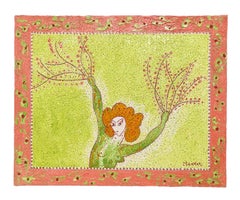
Whimsical French Folk Art, Naive, Oil Painting Madeline Marie Christine Clavier
By Madeline Christine Clavier
Located in Surfside, FL
MADELINE CHRISTINE CLAVIER (1913-2015)
Signature: Signed lower right & titled verso
Medium: Oil on canvas
Provenance: The collection of the artist's family
Marie Christine Clavier was born in Saigon, Vietnam in 1913 to French parents and lived there for her formative years. She returned to France as a teenager and began to study painting. Her work quickly developed into whimsical paintings of poetry and songs – harmonized in a unique and distinct painting technique. Her work has an impasto feel and a folk art, outsider artist sensibility to it. Similar in style to Maik and other fantasy realists who use animals, flowers and foliage in their artworks. Marie Clavier painted ro herself rather than for profit as she was quite independently wealthy. She exhibited extensively in the United States in the 1970s especially across Connecticut and New York, showing at various galleries and cultural centres. She had numerous solo exhibitions in the 1970’s- notably at the Maison Francaise in New York and New York University. She showed at Galerie Bernheim Jeune in Paris. She won many awards for her work including Gold Medals and Palme D’Or medals. In 1988 the prestigious art publisher Leopard D’Or produced catalogue book on her life and work – by this point she had virtually given up painting. She died in 2015 aged 102.
Bernheim-Jeune gallery is one of the oldest art galleries in Paris. Opened on Rue Laffitte in 1863 by Alexandre Bernheim (1839-1915), friend of Delacroix, Corot and Courbet, it changed location a few times before settling on Avenue Matignon. The gallery promoted realists, Barbizon school paintings and, in 1874, the first impressionist and later post-impressionist painters. It closed in 2019. In 1901, Alexandre Bernheim, with his sons, Josse (1870-1941), and Gaston (1870-1953), organized the first important exhibition of Vincent van Gogh paintings in Paris with the help of art critic Julien Leclercq. In 1906, Bernheim-Jeune frères started presenting works by Pierre Bonnard, Edouard Vuillard, Paul Cezanne, Henri-Edmond Cross, Kees van Dongen, Henri Matisse, Le Douanier Rousseau, Raoul Dufy, Maurice de Vlaminck, Amedeo Modigliani, Maurice Utrillo and Georges Dufrenoy. From 1906 to 1925, art critic Félix Fénéon was the director of the gallery and was instrumental in bringing in the art of Georges Seurat and Umberto Boccioni.
In 1922, an exhibition brought together works by Alice Halicka, Auguste Herbin, Pierre Hodé, Moise Kisling, Marie Laurencin, Henri Lebasque, Fernand Leger and Henri Matisse. The gallery now exhibits painters and sculptors in the tradition of the École de Paris and artists such as Jean Carzou, Shelomo Selinger or Pollès.
Her style is a recognizable, cheerful, whimsical and a happy creation. Naïve art is any form of visual art that is created by a person who lacks the formal education and training that a professional artist undergoes (in anatomy, art history, technique, perspective, ways of seeing). Unlike folk art, naïve art does not necessarily evince a distinct cultural context or tradition. Naïve art is recognized, and often imitated, for its childlike simplicity and frankness. Paintings of this kind typically have a flat rendering style with a rudimentary expression of perspective.
One particularly influential painter of "naïve art" was Henri Rousseau (1844–1910), a French Post-Impressionist who was discovered by Pablo Picasso. Naïve art is often seen as outsider art that is by someone without formal (or little) training or degree. While this was true before the twentieth century, there are now academies for naïve art. Naïve art is now a fully recognized art genre, represented in art galleries worldwide. Museums devoted to naïve art now exist in Kecskemét, Hungary; Riga, Latvia; Jaen, Spain; Rio de Janeiro, Brasil; Vicq France and Paris. Another term related to (but not completely synonymous with) naïve art is folk art. There also exist the terms "naïvism" and "primitivism" which are usually applied to professional painters working in the style of naïve art (like Paul Gauguin, Mikhail Larionov, Paul Klee). At all events, naive art can be regarded as having occupied an "official" position in the annals of twentieth-century art since - at the very latest - the publication of the Der Blaue Reiter, an almanac in 1912. Wassily Kandinsky and Franz Marc, who brought out the almanac, presented 6 reproductions of paintings by le Douanier' Rousseau (Henri Rousseau), comparing them with other pictorial examples. However, most experts agree that the year that naive art was "discovered" was 1885, when the painter Paul Signac became aware of the talents of Henri Rousseau and set about organizing exhibitions of his work in a number of prestigious galleries. The Earth Group (Grupa Zemlja) were Croatian artists, architects and intellectuals active in Zagreb from 1929 to 1935. The group included the painters Krsto Hegedušić, Edo Kovačević, Omer Mujadžić, Kamilo Ružička, Ivan Tabaković, and Oton Postružnik, the sculptors Antun Augustinčić, Frano Kršinić, and the architect Drago Ibler. A term applied to Yugoslav (Croatian) naive painters working in or around the village of Hlebine, near the Hungarian border, from about 1930. Some of the best known naive artists are Dragan Gaži, Ivan Generalić, Josip Generalić, Krsto Hegedušić, Mijo Kovačić, Ivan Lacković-Croata, Franjo Mraz, Ivan Večenaj and Mirko Virius. Camille Bombois (1883–1970) Ferdinand Cheval, known as 'le facteur Cheval' (1836–1924) Henry Darger (1892–1973) L. S. Lowry (1887–1976) Grandma Moses, Anna Mary Robertson...
Category
20th Century Folk Art Animal Paintings
Materials
Canvas, Oil
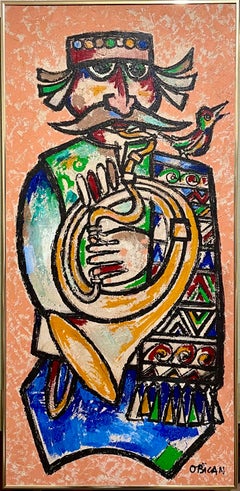
Large Naive European Folk Art Oil Painting Jovan Obican Klezmer Jazz Musician
By Jovan Obican
Located in Surfside, FL
Genre: Other
Subject: People
Medium: Oil
Surface: Canvas
Dimensions: 35" x 16.5
Dimensions w/Frame: 35.5" x 17.25
This depicts a Jazz or Klezmer musician. This one is a saxophone or trumpet horn player.
The last photo shows it in a group of three that I have available. This listing is for the one painting.
The artist Jovan Obican iconic style is child-like yet masterfully adult; a style that tells a story with sociological overtones. His funny little people are always colorful, full of spirit, living with music and birds to bring them happiness.
JOVAN OBICAN
Cannes, France, b. 1918, d. 1986
Jovan Obican (1918-1986) artist, painter, sculpture and mosaic ceramic artisan was born in Cannes, France, to his Yugoslavian parents. From childhood on, Jovan practically devoted himself to art, scratching designs into the dirt when paper was unavailable. He trained with many recognized teachers and with many styles. He finished his training, imbued with the spirit of his native country, the people, their legends, and their philosophy. It has been said that his work has a "timeless quality" and a naive, folk art, outsider art brut quality, child-like primitive style. Obican is identified with his style the world over, a style that is simple yet sophisticated; child-like yet masterfully adult; a style that tells a story with psychological, philosophical or sociological overtones. His funny little people are always colorful, full of spirit, living with music and birds to bring them happiness. Best known for his depictions of folklore and traditional costumes rendered in a playful, childlike style and for his happy Jewish wedding scenes. He often used bright colors and black outlines in his renderings of figures and animals, giving his work an illustration-like quality. Thematically, the artist’s work is similar to Marc Chagall and Jean Dubuffet for its dreamlike images and so-called naïve style of painting. Over the course of his career, the artist maintained a studio in Boca Raton, Florida and Dubrovnik, Croatia—part of former Yugoslavia— where he developed an interest in Eastern Europe’s Jewish culture. Many of his mature works depict Jewish traditions and ceremonies, including traditional Jewish weddings, the dancing of the Hora, and traditional music. There is a display of his works in his former Dubrovnik studio.
His style is a unique conglomerate of tradition, history, legends, heroes, old customs and folklore. It is a self-standing style, recognizable, cheerful, whimsical and a happy creation. Naïve art is any form of visual art that is created by a person who lacks the formal education and training that a professional artist undergoes (in anatomy, art history, technique, perspective, ways of seeing). Unlike folk art, naïve art does not necessarily evince a distinct cultural context or tradition. Naïve art is recognized, and often imitated, for its childlike simplicity and frankness. Paintings of this kind typically have a flat rendering style with a rudimentary expression of perspective.
One particularly influential painter of "naïve art" was Henri Rousseau (1844–1910), a French Post-Impressionist who was discovered by Pablo Picasso. Naïve art is often seen as outsider art that is by someone without formal (or little) training or degree. While this was true before the twentieth century, there are now academies for naïve art. Naïve art is now a fully recognized art genre, represented in art galleries worldwide.
Museums devoted to naïve art now exist in Kecskemét, Hungary; Riga, Latvia; Jaen, Spain; Rio de Janeiro, Brasil; Vicq France and Paris. "Primitive art" is another term often applied to art by those without formal training, but is historically more often applied to work from certain cultures that have been judged socially or technologically "primitive" by Western academia, such as Native American, sub saharan African or Pacific Island art (see Tribal art). This is distinguished from the self-conscious, "primitive" inspired movement primitivism. Another term related to (but not completely synonymous with) naïve art is folk art. There also exist the terms "naïvism" and "primitivism" which are usually applied to professional painters working in the style of naïve art (like Paul Gauguin, Mikhail Larionov, Paul Klee).
At all events, naive art can be regarded as having occupied an "official" position in the annals of twentieth-century art since - at the very latest - the publication of the Der Blaue Reiter, an almanac in 1912. Wassily Kandinsky and Franz Marc, who brought out the almanac, presented 6 reproductions of paintings by le Douanier' Rousseau (Henri Rousseau), comparing them with other pictorial examples. However, most experts agree that the year that naive art was "discovered" was 1885, when the painter Paul Signac became aware of the talents of Henri Rousseau and set about organizing exhibitions of his work in a number of prestigious galleries. The Earth Group (Grupa Zemlja) were Croatian artists, architects and intellectuals active in Zagreb from 1929 to 1935. The group included the painters Krsto Hegedušić, Edo Kovačević, Omer Mujadžić, Kamilo Ružička, Ivan Tabaković, and Oton Postružnik, the sculptors Antun Augustinčić, Frano Kršinić, and the architect Drago Ibler. A term applied to Yugoslav (Croatian) naive painters working in or around the village of Hlebine, near the Hungarian border, from about 1930. Some of the best known naive artists are Dragan Gaži, Ivan Generalić, Josip Generalić, Krsto Hegedušić, Mijo Kovačić, Ivan Lacković-Croata, Franjo Mraz, Ivan Večenaj and Mirko Virius. Camille Bombois (1883–1970) Ferdinand Cheval, known as 'le facteur Cheval' (1836–1924) Henry Darger (1892–1973) L. S. Lowry (1887–1976) Grandma Moses, Anna Mary Robertson...
Category
20th Century Folk Art Figurative Paintings
Materials
Canvas, Oil
Large Naive European Folk Art Oil Painting Jovan Obican Klezmer Jazz Musician
By Jovan Obican
Located in Surfside, FL
Genre: Other
Subject: People
Medium: Oil
Surface: Canvas
Dimensions: 35" x 16.5
Dimensions w/Frame: 35.5" x 17.25
This depicts a Jazz or Klezmer musician. This one is a bass player.
The last photo shows it in a group of three that I have available. This listing is for the one painting.
The artist Jovan Obican iconic style is child-like yet masterfully adult; a style that tells a story with sociological overtones. His funny little people are always colorful, full of spirit, living with music and birds to bring them happiness.
JOVAN OBICAN
Cannes, France, b. 1918, d. 1986
Jovan Obican (1918-1986) artist, painter, sculpture and mosaic ceramic artisan was born in Cannes, France, to his Yugoslavian parents. From childhood on, Jovan practically devoted himself to art, scratching designs into the dirt when paper was unavailable. He trained with many recognized teachers and with many styles. He finished his training, imbued with the spirit of his native country, the people, their legends, and their philosophy. It has been said that his work has a "timeless quality" and a naive, folk art, outsider art brut quality, child-like primitive style. Obican is identified with his style the world over, a style that is simple yet sophisticated; child-like yet masterfully adult; a style that tells a story with psychological, philosophical or sociological overtones. His funny little people are always colorful, full of spirit, living with music and birds to bring them happiness. Best known for his depictions of folklore and traditional costumes rendered in a playful, childlike style and for his happy Jewish wedding scenes. He often used bright colors and black outlines in his renderings of figures and animals, giving his work an illustration-like quality. Thematically, the artist’s work is similar to Marc Chagall and Jean Dubuffet for its dreamlike images and so-called naïve style of painting. Over the course of his career, the artist maintained a studio in Boca Raton, Florida and Dubrovnik, Croatia—part of former Yugoslavia— where he developed an interest in Eastern Europe’s Jewish culture. Many of his mature works depict Jewish traditions and ceremonies, including traditional Jewish weddings, the dancing of the Hora, and traditional music. There is a display of his works in his former Dubrovnik studio.
His style is a unique conglomerate of tradition, history, legends, heroes, old customs and folklore. It is a self-standing style, recognizable, cheerful, whimsical and a happy creation. Naïve art is any form of visual art that is created by a person who lacks the formal education and training that a professional artist undergoes (in anatomy, art history, technique, perspective, ways of seeing). Unlike folk art, naïve art does not necessarily evince a distinct cultural context or tradition. Naïve art is recognized, and often imitated, for its childlike simplicity and frankness. Paintings of this kind typically have a flat rendering style with a rudimentary expression of perspective.
One particularly influential painter of "naïve art" was Henri Rousseau (1844–1910), a French Post-Impressionist who was discovered by Pablo Picasso. Naïve art is often seen as outsider art that is by someone without formal (or little) training or degree. While this was true before the twentieth century, there are now academies for naïve art. Naïve art is now a fully recognized art genre, represented in art galleries worldwide.
Museums devoted to naïve art now exist in Kecskemét, Hungary; Riga, Latvia; Jaen, Spain; Rio de Janeiro, Brasil; Vicq France and Paris. "Primitive art" is another term often applied to art by those without formal training, but is historically more often applied to work from certain cultures that have been judged socially or technologically "primitive" by Western academia, such as Native American, sub saharan African or Pacific Island art (see Tribal art). This is distinguished from the self-conscious, "primitive" inspired movement primitivism. Another term related to (but not completely synonymous with) naïve art is folk art. There also exist the terms "naïvism" and "primitivism" which are usually applied to professional painters working in the style of naïve art (like Paul Gauguin, Mikhail Larionov, Paul Klee).
At all events, naive art can be regarded as having occupied an "official" position in the annals of twentieth-century art since - at the very latest - the publication of the Der Blaue Reiter, an almanac in 1912. Wassily Kandinsky and Franz Marc, who brought out the almanac, presented 6 reproductions of paintings by le Douanier' Rousseau (Henri Rousseau), comparing them with other pictorial examples. However, most experts agree that the year that naive art was "discovered" was 1885, when the painter Paul Signac became aware of the talents of Henri Rousseau and set about organizing exhibitions of his work in a number of prestigious galleries. The Earth Group (Grupa Zemlja) were Croatian artists, architects and intellectuals active in Zagreb from 1929 to 1935. The group included the painters Krsto Hegedušić, Edo Kovačević, Omer Mujadžić, Kamilo Ružička, Ivan Tabaković, and Oton Postružnik, the sculptors Antun Augustinčić, Frano Kršinić, and the architect Drago Ibler. A term applied to Yugoslav (Croatian) naive painters working in or around the village of Hlebine, near the Hungarian border, from about 1930. Some of the best known naive artists are Dragan Gaži, Ivan Generalić, Josip Generalić, Krsto Hegedušić, Mijo Kovačić, Ivan Lacković-Croata, Franjo Mraz, Ivan Večenaj and Mirko Virius. Camille Bombois (1883–1970) Ferdinand Cheval, known as 'le facteur Cheval' (1836–1924) Henry Darger (1892–1973) L. S. Lowry (1887–1976) Grandma Moses, Anna Mary Robertson...
Category
20th Century Folk Art Figurative Paintings
Materials
Canvas, Oil