Items Similar to Classical 19th century French Nude of a lady in the Barbizon Forest landscape.

Want more images or videos?
Request additional images or videos from the seller
1 of 13
Leon RichetClassical 19th century French Nude of a lady in the Barbizon Forest landscape.Circa 1870
Circa 1870
$6,500
$9,75033% Off
£4,912.71
£7,369.0733% Off
€5,630.82
€8,446.2333% Off
CA$9,067.39
CA$13,601.0833% Off
A$9,887.84
A$14,831.7533% Off
CHF 5,228.13
CHF 7,842.2033% Off
MX$118,941.46
MX$178,412.1933% Off
NOK 66,345.81
NOK 99,518.7233% Off
SEK 60,805.32
SEK 91,207.9833% Off
DKK 42,058.72
DKK 63,088.0833% Off
About the Item
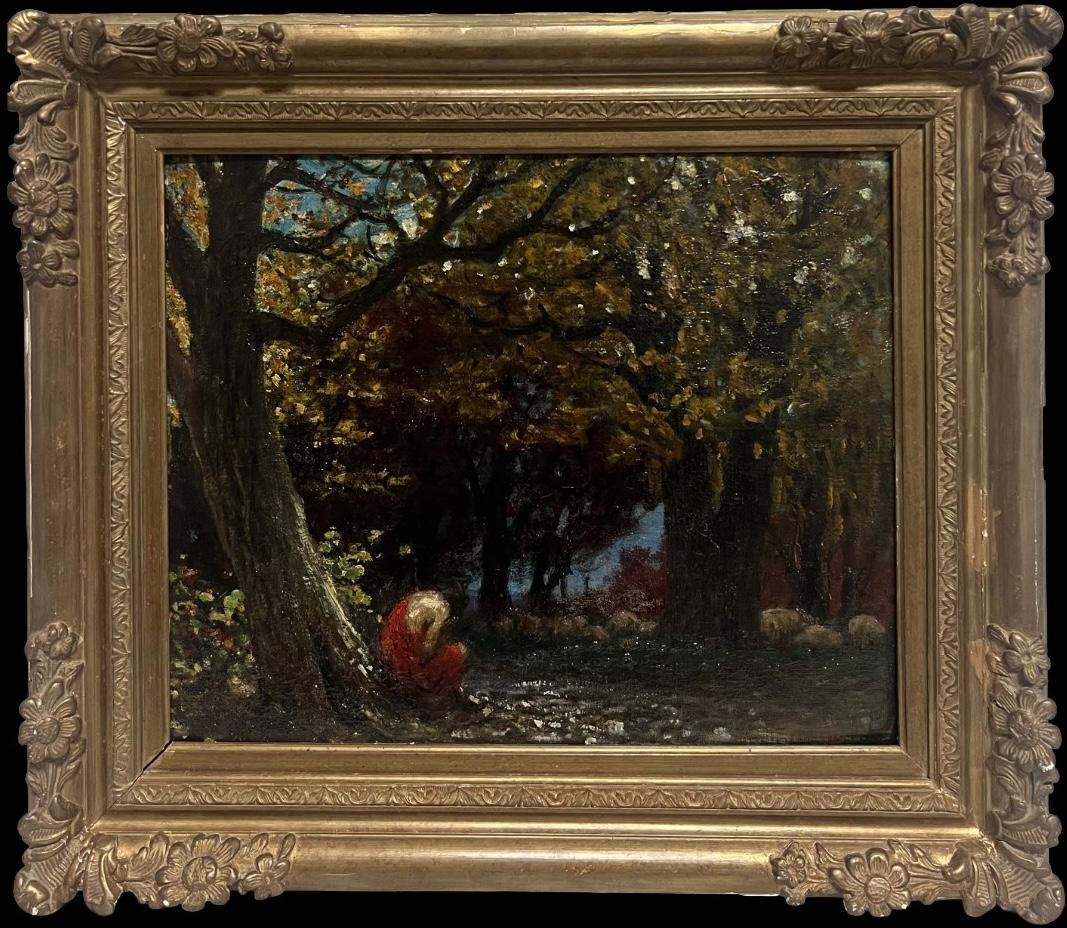
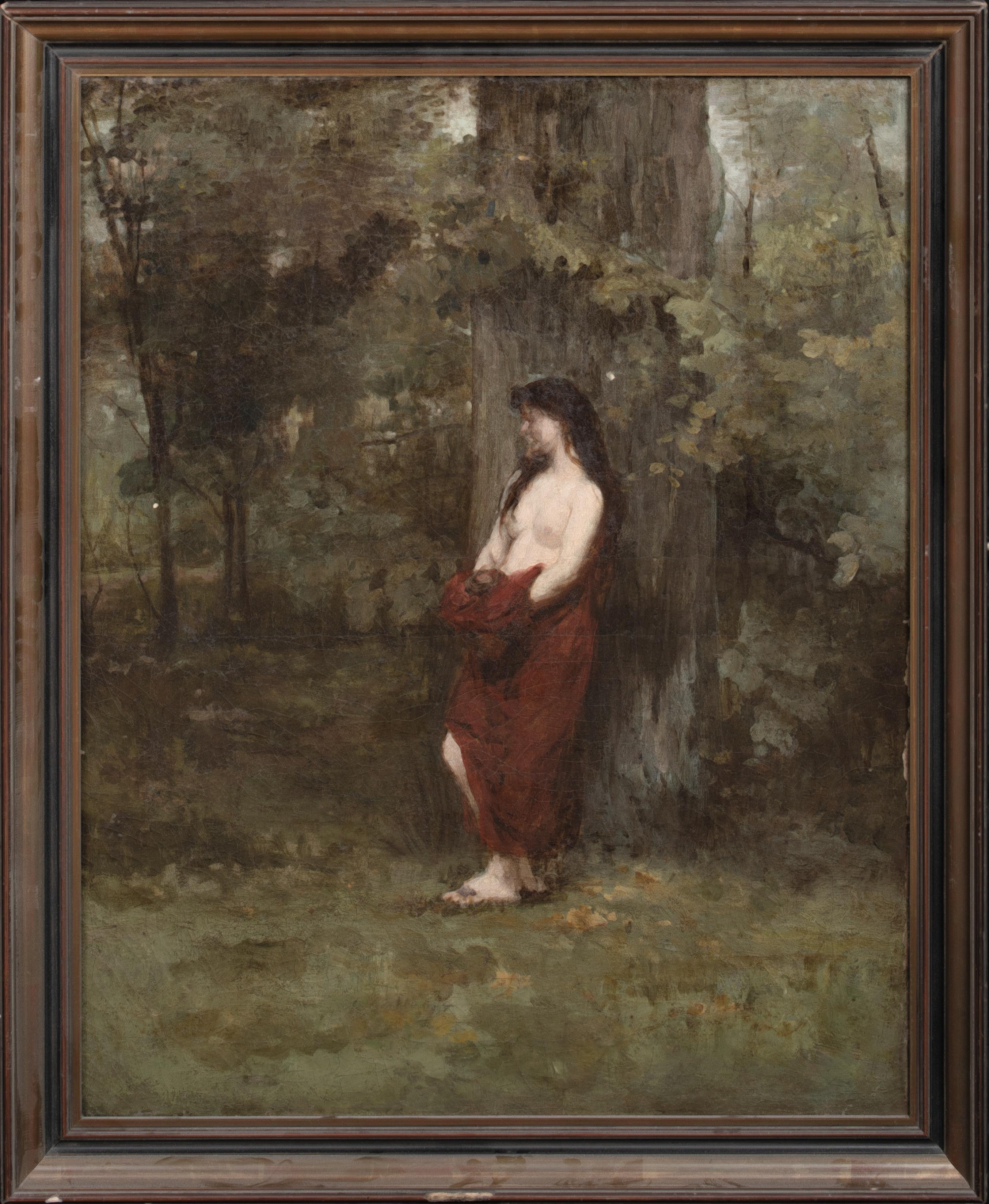
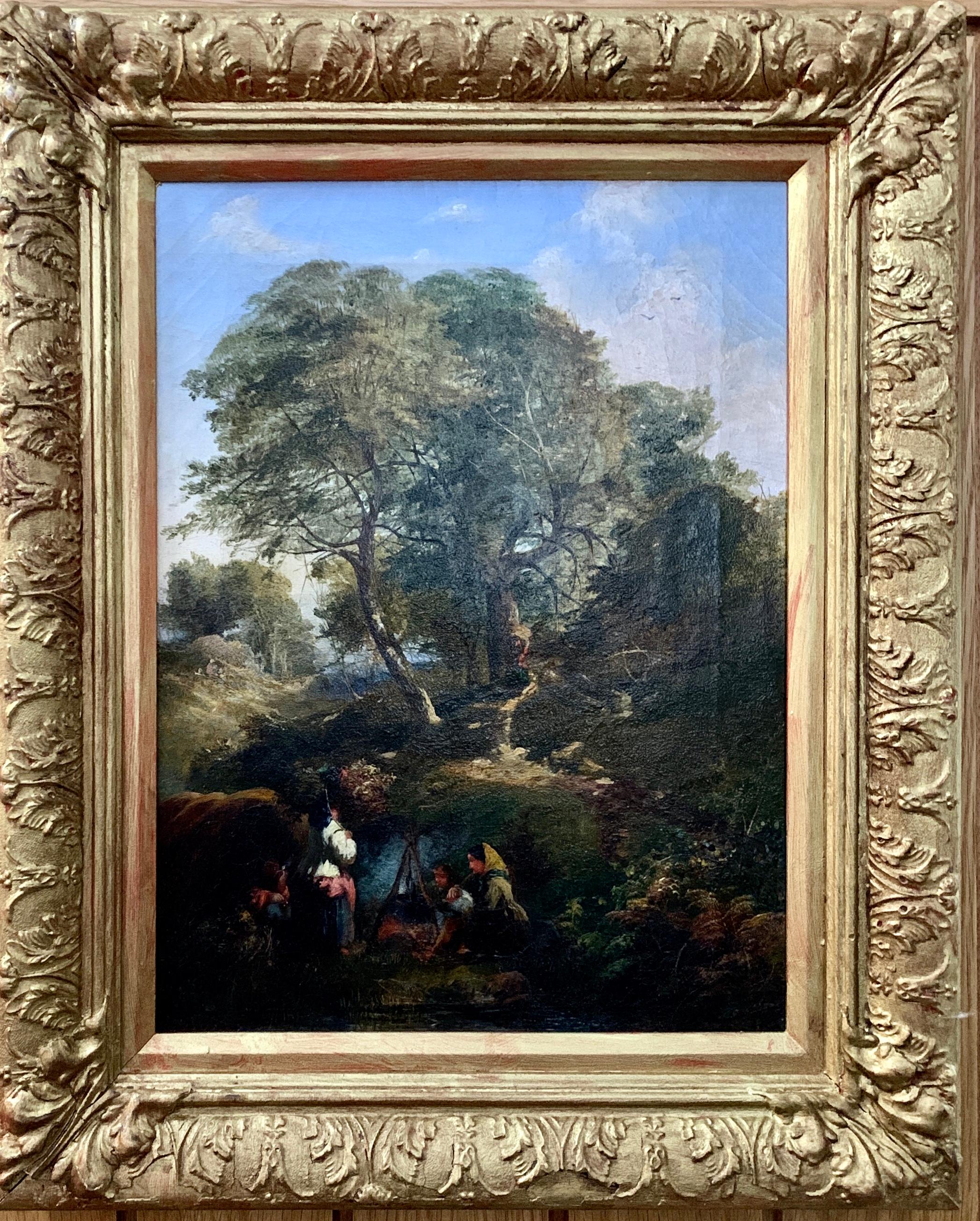
Classical 19th century French Nude of a lady in the Barbizon Forest landscape.
Richet spent much of his adult life in Paris. It was there that he met and became a student of Jules Lefebvre. He also became a disciple of Diaz la Pena. Both of these teachers were well-known proponents of the Barbizon School. The Barbizon school of painters was part of a movement towards Realism in art, which arose in the context of the dominant Romantic Movement of the time. The Barbizon school was active from roughly 1830 until 1870, was inspired originally by the work on John Constable, and included, most notably, Theodore Rousseau and Jean-Francois Millet. It takes its name from the village of Barbizon, France, near the Forest of Fontainebleau, where many of the artists gathered. Some of the most prominent features of this school are its tonal qualities, color, loose brushwork, and softness of form.
These Realist artists would shape Richet’s style and in turn his successful career as a landscape painter. The artist sometimes collaborated with Lefebvre; there are several paintings that bare both of their signatures. Lefebvre’s teaching is evident in paintings such as this L’étang Les Hautes herbes, in the delicate way in which Richet accurately depicted the effects of light and reflection on the water. His compositions, such as this one, are known for their lightness and openness. These qualities set Richet apart from his mentors and counterparts, such as Diaz and Corot; whose work often comprises enclosed and shadowy views of nature. This meant Richet enjoyed a successful and prolific career, and his work was widely exhibited during his own lifetime.
At the Salons of Paris, he obtained an honorable mention in 1885, medals in 1896 and 1900; and from then on was considered to be a leader in the Barbizon School, and later proposed for the cross of the Legion of Honor. Like many painters of the Barbizon School, Richet had a fondness for the Forest of Fontainebleau, and it provided the subjects for the majority of his paintings. A Road to the Forest of Fontainebleau was perhaps his most famous painting and drew public attention to his name at the time it was painted. Richet also loved the areas of Moret Sur Loing, Loiret, Normandy, and Burgundy as sources for his painterly inspiration, as well as views along the River Seine. He was a member of the Society of French Artists and exhibited with them from 1880 until his death in 1907. This is an unusual example of the artist's work as he painted very few figure subjects. Signed lower right.
- Creator:Leon Richet (1847 - 1907, French)
- Creation Year:Circa 1870
- Dimensions:Height: 16 in (40.64 cm)Width: 20 in (50.8 cm)
- Medium:
- Movement Style:
- Period:
- Condition:There is a small amount of restoration on the piece and the frame.
- Gallery Location:Woodbury, CT
- Reference Number:1stDibs: LU50736760972
Leon Richet
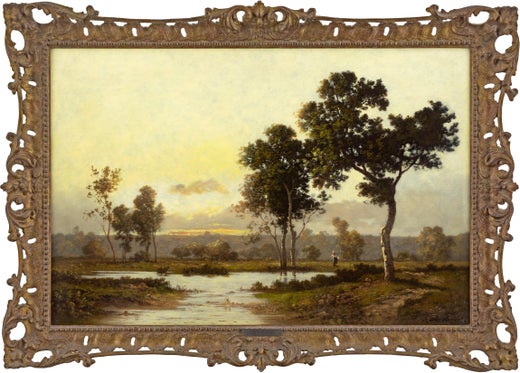
Richet spent much of his adult life in Paris. It was there that he met and became a student of Jules Lefebvre. He also became a disciple of Diaz la Pena. Both of these teachers were well-known proponents of the Barbizon School. The Barbizon school of painters was part of a movement towards Realism in art, which arose in the context of the dominant Romantic Movement of the time. The Barbizon school was active from roughly 1830 until 1870, was inspired originally by the work on John Constable, and included, most notably, Theodore Rousseau and Jean-Francois Millet. It takes its name from the village of Barbizon, France, near the Forest of Fontainebleau, where many of the artists gathered. Some of the most prominent features of this school are its tonal qualities, color, loose brushwork, and softness of form. These Realist artists would shape Richet’s style and in turn his successful career as a landscape painter. The artist sometimes collaborated with Lefebvre; there are several paintings that bare both of their signatures. Lefebvre’s teaching is evident in paintings such as this L’étang Les Hautes herbes, in the delicate way in which Richet accurately depicted the effects of light and reflection on the water. His compositions, such as this one, are known for their lightness and openness. These qualities set Richet apart from his mentors and counterparts, such as Diaz and Corot; whose work often comprises enclosed and shadowy views of nature. This meant Richet enjoyed a successful and prolific career, and his work was widely exhibited during his own lifetime. At the Salons of Paris, he obtained an honorable mention in 1885, medals in 1896 and 1900; and from then on was considered to be a leader in the Barbizon School, and later proposed for the cross of the Legion of Honor. Like many painters of the Barbizon School, Richet had a fondness for the Forest of Fontainebleau, and it provided the subjects for the majority of his paintings. A Road to the Forest of Fontainebleau was perhaps his most famous painting and drew public attention to his name at the time it was painted. Richet also loved the areas of Moret Sur Loing, Loiret, Normandy, and Burgundy as sources for his painterly inspiration, as well as views along the River Seine. He was a member of the Society of French Artists and exhibited with them from 1880 until his death in 1907.
About the Seller
5.0
Platinum Seller
Premium sellers with a 4.7+ rating and 24-hour response times
Established in 1983
1stDibs seller since 2016
533 sales on 1stDibs
Typical response time: <1 hour
- ShippingRetrieving quote...Shipping from: Woodbury, CT
- Return Policy
More From This Seller
View All19th century English forest landscape with figures by a fire side, mid afternoon
Located in Woodbury, CT
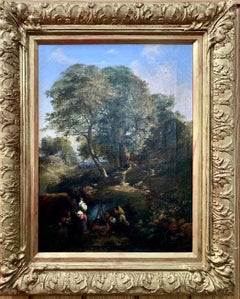
19th century English forest landscape with figures by a fireside, mid-afternoon.
A very well painted classic Victorian English landscape with figures. Wonderful observation by the p...
Category
1850s Victorian Figurative Paintings
Materials
Oil
$2,970 Sale Price
40% Off
Free Shipping
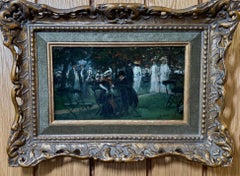
Early 20th century Impressionist Spanish figures resting in a ParkLand landscape
Located in Woodbury, CT
Outstanding Quality Spanish School
Early 20th Century (circa 1905–1915)
Figures at a Public Gathering, Northern Spain
Oil on paper, laid down
Not Signed
Possibly Basque or Catalan re...
Category
1910s Impressionist Landscape Paintings
Materials
Oil, Paper
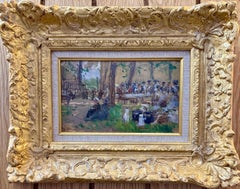
19th century Impressionist Elegant figures in a Paris or London Park landscape
Located in Woodbury, CT
Alberto Ludovici Jr.
Italian / Anglo-European School, late 19th century
Elegant Figures in a Parisian (or London) Park
Oil on panel
Signed lower right
Circa 1890
A refined and atmo...
Category
1890s Impressionist Figurative Paintings
Materials
Oil, Wood Panel
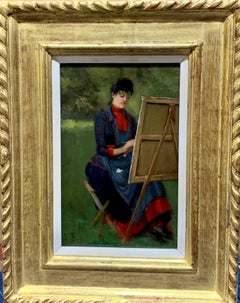
Study of a Woman artist painting by her easel in a landscape
Located in Woodbury, CT
Well painted and very decorative oil on panel
Painted on a mahogany panel and monogrammed L.B
Well framed in a new English handmade gold leaf frame.
The...
Category
Late 19th Century Victorian Figurative Paintings
Materials
Oil, Wood Panel
$1,960 Sale Price
20% Off
Free Shipping
Early 19th century French watercolor of figures in a wooded landscape
Located in Woodbury, CT
Well-drawn early 19th century French watercolor of a family in a wooded landscape.
Framed in an antique water gilded frame, which might be the original to the piece.
The quality o...
Category
Early 19th Century Victorian Landscape Drawings and Watercolors
Materials
Paper, Watercolor

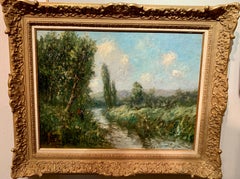
French impressionist landscape, Barbizon forest, Paris with river and cows
Located in Woodbury, CT
19th century English impressionist scene of the Barbizon forest, near Paris France, with a river, cows, and trees.
Boyle was a pioneering 19th-century British artist inspired by E...
Category
1890s Impressionist Landscape Paintings
Materials
Canvas, Oil
$3,960 Sale Price
20% Off
Free Shipping
You May Also Like
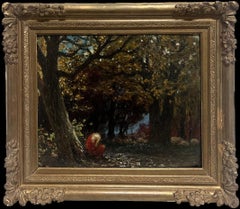
Mid 19th Century French Barbizon Woodland Oil Painting Semi Nude Figure
Located in Cirencester, Gloucestershire
Figure in Woodland
French, Barbizon School, 19th century, unsigned
oil on board, framed
framed: 20 x 23 inches
board: 16 x 19 inches
Provenance: private collection, France
Condition:...
Category
Mid-19th Century Barbizon School Figurative Paintings
Materials
Oil
1800
s French Rococo Oil Panel Painting Scantily Clad Woman in Wooded Landscape
Located in Cirencester, Gloucestershire
French School, early 1800's
circle of Jean-Honore Fragonard (1732-1806)
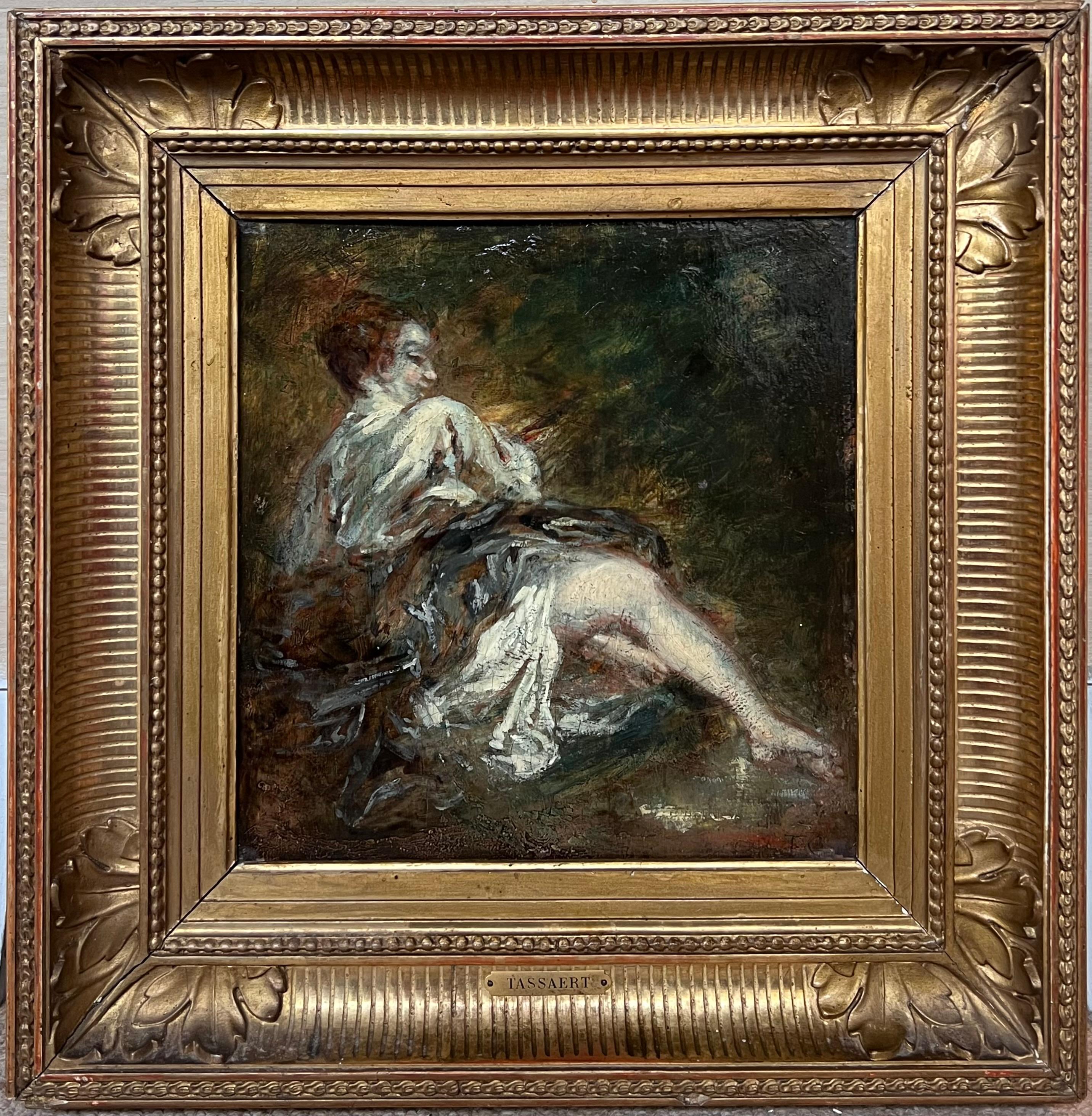
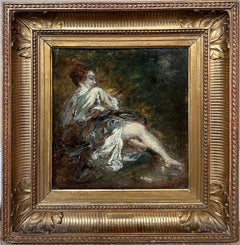
sketch of a scantly clad woman in a natural wooded landscape setting
oil painting on wood panel, framed in per...
Category
Early 19th Century Rococo Nude Paintings
Materials
Oil
$1,761 Sale Price
20% Off
Old Master Dutch Female Nude Arcadian Landscape - 19th century art oil painting
By (Attributed to) Isaac de Mucheron
Located in Hagley, England
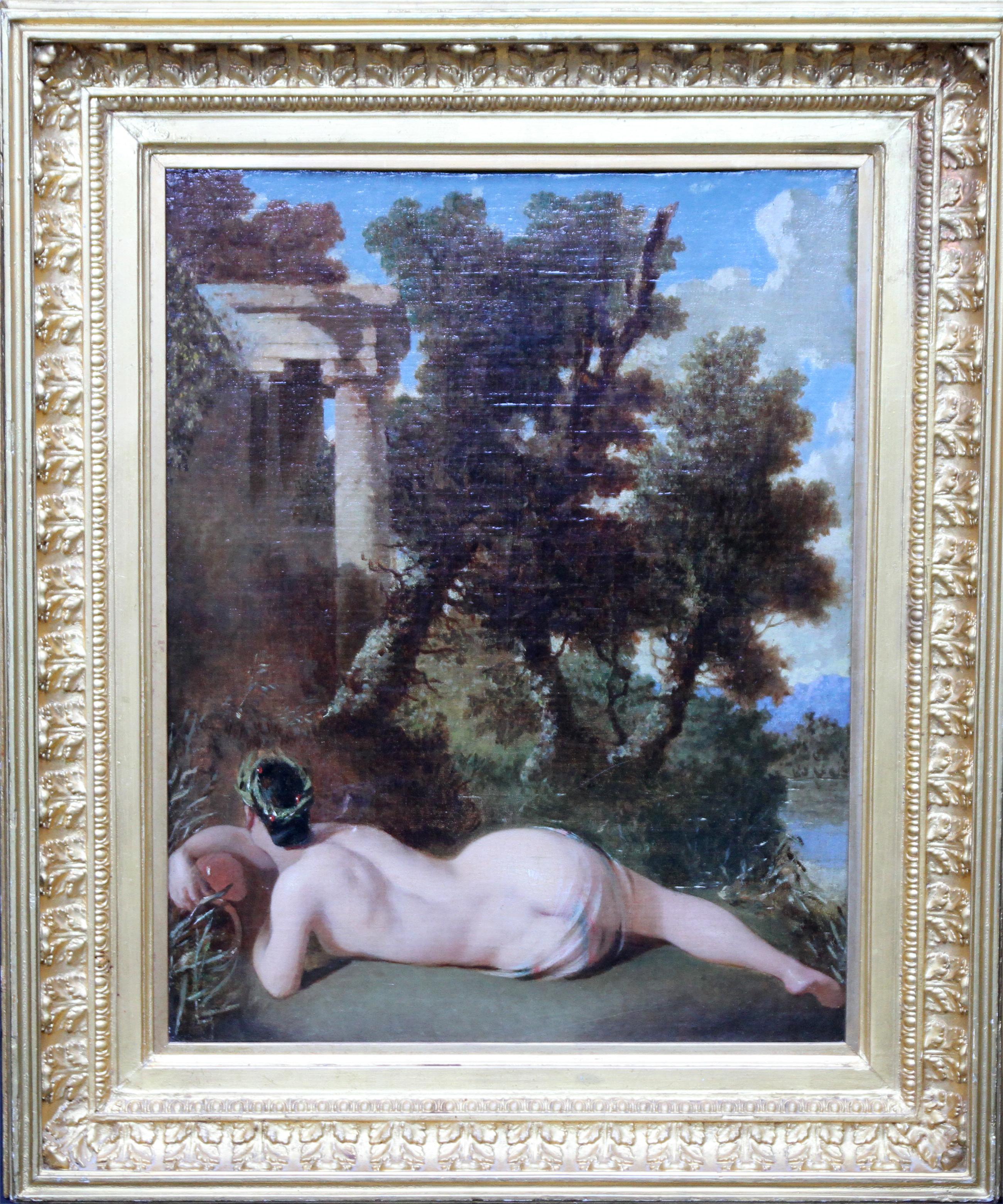
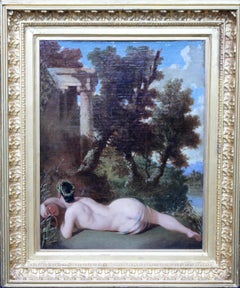
An original oil on canvas which is attributed verso to Isaac Mucheron with figure by Vandveldt. The scene depicts a nude in an Arcadia classical landscape with ruins. Fresh colour an...
Category
Early 19th Century Old Masters Landscape Paintings
Materials
Oil
La Source - Nude in Landscape - French Impressionist art Victorian oil painting
By Jean-Jacques Henner
Located in Hagley, England
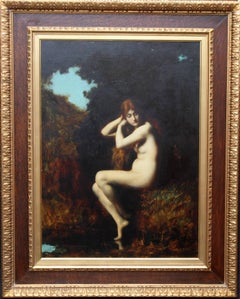
This superb French 19th century oil painting, La Source, location previously unknown according to the Jean Jacques Henner Catalogue Raisonee, is a fantastic art historical re-discovery. It is by noted artist Jean Jacques Henner, a French painter, Henner was noted for his use of sfumato and chiaroscuro in painting nudes, religious subjects, and portraits. La Source, or Spring, is a magnificent, very large French Romantic oil painting depicting a subject for which Henner became famous. Painted in 1881 it was exhibited at the Paris Salon that year. The sitter is Dorothy Tenant (1855-1926) or Dolly, an English art pupil of Henner’s and also his model. (See her biography below). La Source is a painting of a beautiful young woman, Dolly, unclothed, with long auburn hair sat on the edge of a pool in a landscape. Her serene face and body are almost glowing against the darker landscape, all enhanced by the sfumato and chiaroscuro technique. Beyond is a patch of startling blue sky, reflected in the pool at her feet. The rough brush work in the flora and fauna around her, a precursor to French Impressionism, contrasts with the smoothness of her skin. A really stunning painting with excellent provenance. This painting is in the Henner Musee National catalogue raisonne by Isabelle de Lannoy, noted as location unknown and exhibited at the Salon in 1881. Also noted in the catalogue raisonne are two studies for La Source identifying the sitter as Dolly Tennant. One of the images is also shown on the front cover.
Signed lower right.
Provenance. Exhibited Paris Salon 1881 entitled La Source.
Catalogue Raisonne, for National Museum of Jean Jacques Henner, France, p174. La Source, Salon 1881, location unknown. Plus study of Dolly Tennant for La Source and another study for La Source. .
The New York Market for French Art in the Gilded Age, 1867-1893 by Dr Leanne Zalewski, published by Bloomsbury Visual Arts, 2022, page 39, La Source image 3.3.
Formerly in the collection of Mary Jane Morgan (see below).
Aitken Dott - The Scottish Gallery ref R9101.
Sotheby sale 30th Dec 1985.
Thomas Agnews and Sons.
Condition. Oil on canvas, image size 35 inches by 27 inches and in good condition. Has been relined and had restoration during its life time.
Housed in a fine frame, 45 inches by 37 inches, in good condition.
Jean-Jacques Henner (15 March 1829 – 23 July 1905) was a French painter, noted for his use of painting nudes, religious subjects, and portraits. Henner was born at Bernwiller (Alsace). He began his studies in art as a pupil of Michel Martin Drolling and François-Édouard Picot. In 1848, he entered the École des Beaux Arts in Paris, and took the Prix de Rome with a painting of Adam and Eve finding the Body of Abel in 1858. In Rome, he was guided by Flandrin, and painted four pictures for the gallery at Colmar among other works. He first exhibited Bather Asleep at the Salon in 1863 and subsequently contributed Chaste Susanna (1865), now in the Musée d'Orsay. Other noted works include: Byblis turned into a Spring (1867); The Magdalene (1878); Portrait of M. Hayem (1878); Christ Entombed (1879); Saint Jerome (1881); Herodias (1887); A Study (1891); Christ in His Shroud and a Portrait of Carolus-Duran (1896); a Portrait of Mlle Fouquier (1897); and The Dream (1900).The Levite of the Tribe of Ephraim (1898) was awarded a first-class medal. Among other professional distinctions, Henner also took a Grand Prix for painting at the Paris Exposition Universelle of 1900. He was made Chevalier of the Legion of Honour in 1873, Officer in 1878, and Commander in 1889. In 1889, he succeeded Cabanel in the Institut de France. Henner's most widely known work is his 1885 portrait of Saint Fabiola. Although the original is now lost, it was copied by artists around the world for devotional purposes. Artist Francis Alÿs has collected over 500 copies of the portrait in a variety of media. The collection, known as the "Fabiola Project," is on exhibit at the Byzantine Fresco Chapel of the Menil Collection in Houston from May 21, 2016 - May 13, 2018. Henner had numerous pupils; among them were the American painter Mathilde Mueden Leisenring and the Romanian artist Dimitrie Serafim. From 1874 to 1889, organized with Carolus-Duran, what he called "the studio of the ladies" for women were not allowed entry to the École des Beaux-Arts. Some also served as his models. One of these was Dorothy Tennant who later married Henry Morton Stanley. Henner died at age 76 in Paris.
SITTER BIOGRAPHY
Dorothy Tennant (22 March 1855 – 5 October 1926) was an English painter of the Victorian era neoclassicism. She was married to the explorer Henry Morton Stanley. Tennant was born in Russell...
Category
19th Century Impressionist Nude Paintings
Materials
Oil
Nude Girl In A Forest 19th Century attributed to Jean-Jacques Henner (1829-1905)
Located in Blackwater, GB
Nude Girl In The Forest, 19th Century
attributed to Jean-Jacques Henner (1829-1905)
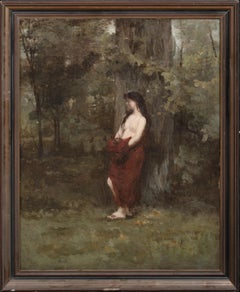
Large 19th French Impressionist Portrait of a nude girl in a forest, oil on canvas attributed to...
Category
19th Century Portrait Paintings
Materials
Canvas, Oil
18th Century French Oil Artist Painting Nude Model Classical Garden Scene
Located in Cirencester, Gloucestershire
The Artist and his Model
French School, 18th century
oil on canvas, framed
Framed: 14 x 17 inches
Board: 11 x 14 inches
Provenance: private collection, France
Condition: very good co...
Category
18th Century Rococo Figurative Paintings
Materials
Oil
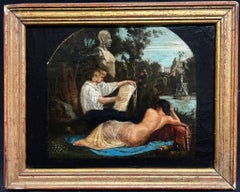
French School18th Century French Oil Artist Painting Nude Model Classical Garden Scene, 18th Century
$1,525 Sale Price
20% Off
More Ways To Browse
Antique Classical Painting
19th Century French Painting Lady
Classical Century Oil Painting
Nude Oil Painting 19th Century
French Victorian Painting
Oil Painting Of Victorian Lady
Theodore Millet
Classical Nude Paintings
Alexander Sharpe Ross
Alice Murphy
Alpay Efe
American Red Cross Posters Vintage
Andre Favory
Anna Kincaide
Antique Spanish Guitars
Aunt Jemima
Bessie Smith
Bethlehem Painting