Want more images or videos?
Request additional images or videos from the seller
1 of 8
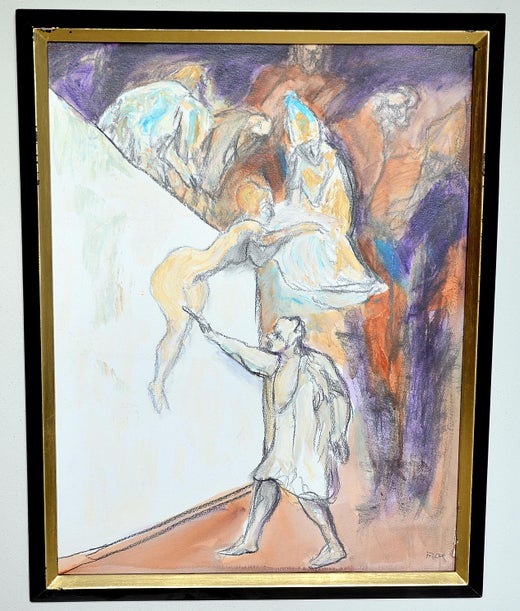
Luis Filcer"The Miner" - Vertical framed painting in black and ochre.2016
2016
$2,400List Price
About the Item
- Creator:Luis Filcer (1927 - 2018, Mexican, Ukrainian, Dutch)
- Creation Year:2016
- Dimensions:Height: 27.56 in (70.01 cm)Width: 19.69 in (50.02 cm)Depth: 1.18 in (3 cm)
- Medium:
- Movement Style:
- Period:
- Condition:
- Gallery Location:Miami, FL
- Reference Number:1stDibs: LU61438851222
Luis Filcer
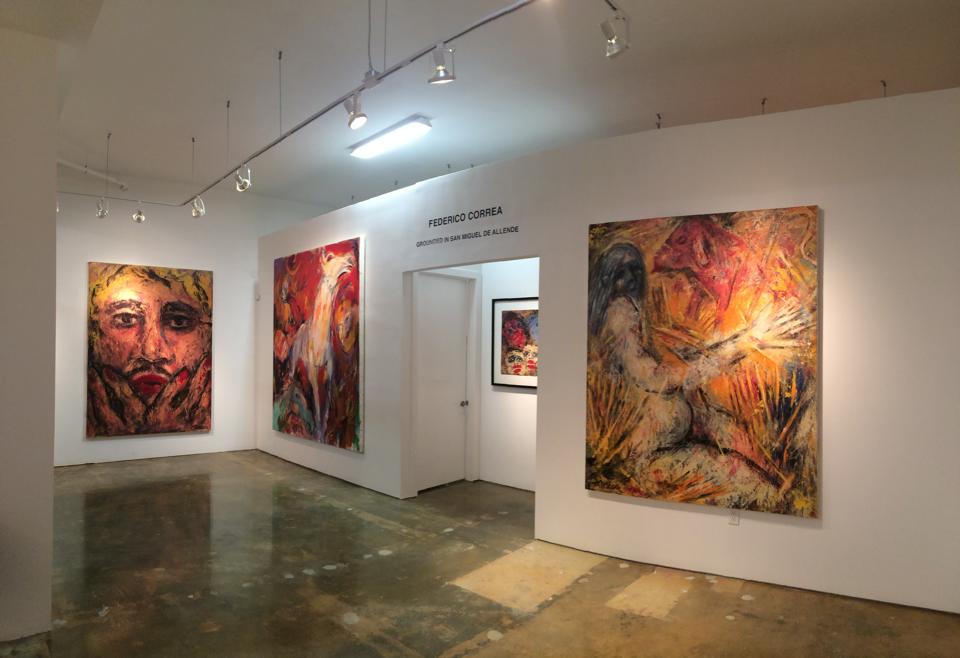
Luis Filcer (Zhytomyr, Ukraine, 1927 – 2018, San Miguel de Allende, Mexico) was a Mexican expressionist visual artist. Filcer started his career as an artist in Mexico, where in 1928, when he was only six months old, he had fled with his family because of the persecution of the Jewish population after the Russian Revolution. At the age of sixteen he started studying at the Academia de San Carlos in Mexico City. In the morning he took lessons and in the afternoon he worked on his paintings and drawings. In his artistic practice, Filcer was strongly influenced by the life of Vincent van Gogh and he dealt with themes such as injustice and struggle in everyday life. He was also an admirer of the artists Francisco Goya and José Clemente Orozco. Subjects portrayed by Filcer include the Tlatelolco Massacre of 1968, the casinos in Las Vegas, the Mexican Revolution of 1910, and the Mexico City Metro. Filcer's work shows no idealism, but examines right and wrong to provoke change. Filcer lived and worked in the Netherlands for more than twenty years, a large part of which in De Rijp (NH). His work has been exhibited more than 340 times in leading museums and galleries around the world.
About the Seller
5.0
Vetted Professional Seller
Every seller passes strict standards for authenticity and reliability
1stDibs seller since 2017
17 sales on 1stDibs
Typical response time: 1 hour
Authenticity Guarantee
In the unlikely event there’s an issue with an item’s authenticity, contact us within 1 year for a full refund. DetailsMoney-Back Guarantee
If your item is not as described, is damaged in transit, or does not arrive, contact us within 7 days for a full refund. Details24-Hour Cancellation
You have a 24-hour grace period in which to reconsider your purchase, with no questions asked.Vetted Professional Sellers
Our world-class sellers must adhere to strict standards for service and quality, maintaining the integrity of our listings.Price-Match Guarantee
If you find that a seller listed the same item for a lower price elsewhere, we’ll match it.Trusted Global Delivery
Our best-in-class carrier network provides specialized shipping options worldwide, including custom delivery.You May Also Like
You and I Duel
By Herbert Siebner
Located in Vancouver, CA
Herbert Siebner (1925-2004) was a German-born Canadian painter whose work is characterized by its expressive use of color and texture, and its exploration of themes of war, exile, an...
Category
1980s Expressionist Figurative Paintings
Materials
Masonite, Acrylic
Diminutive Mid Century Expressionist Clown Portrait #1
By Marjorie May Blake
Located in Soquel, CA
Small portrait of a clown with colorful, expressionist brushstrokes by Marjorie Blake (American, 1920-1994). Signed "M. Blake" in the lower right corner...
Category
1960s Expressionist Portrait Paintings
Materials
Masonite, Oil
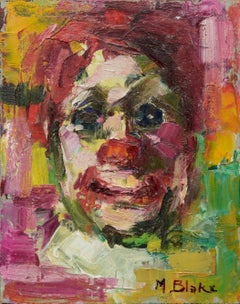
$520 Sale Price
20% Off
H 5.75 in W 4.38 in D 0.13 in
Devil: No Horns, Burning in Hell, African American Harlem Renaissance
Located in Miami, FL
In a 1971 interview with Ebony Magazine, Alvin Hollinsworth commented on his African Jesus Christ painting, "I have always felt that Christ was a Blac...
Category
1970s Expressionist Figurative Paintings
Materials
Masonite, Oil
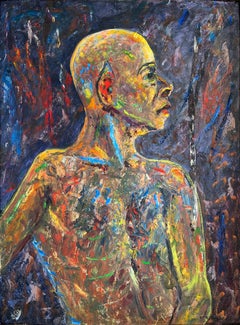
$30,000
H 24 in W 17.75 in
"Landscape Scene of Mexican Villagers" Expressionistic Oil Painting on Masonite
By Michael Baxte
Located in New York, NY
A strong modernist oil painting depicted in 1971 by Russian painter Michael Baxte. Mostly known for his abstracted figures on canvas or street scenes, this piece is a wonderful representation of his landscape paintings, with expressive use of color, shape, and form. Later in his career, Baxte explores Expressionism, infusing both European and North American stylistic trends. This piece is from later in his career, but we can feel this underlying style throughout.
Art measures 18 x 21.75 inches
Michael Posner Baxte was born in 1890 in the small town of Staroselje Belarus, Russia. For the first half of the 19th century it was a center of the Chabad movement of Hasidic Jews, but this group was gone by the middle of the 19th century. By the time the Baxte family immigrated to the United States at the beginning of the 20th century, the Jewish population numbered only on the hundreds. The native language of the Baxte family was Yiddish. It is likely that the death of Michael Baxte’s father triggered the family’s immigration. Three older brothers arrived in New York between 1903 and 1905. Michael and his mother, Rebecca, arrived in 1907. By 1910 Michael, his mother, and brother, Joseph, were living in New Orleans and may have spent some time on a Louisiana plantation. Around 1912, Michael Baxte returned to Europe to study the violin. In 1914 he, his mother, and Joseph moved to New York City.
Meanwhile, in Algeria, a talented young woman painter, Violette Mege, was making history. Since for the first time, a woman won the prestigious Beaux Art competition in Algeria. At first, the awards committee denied her the prize but, with French government intervention, Mege eventually prevailed. She won again 3 years later and, in 1916, used the scholarship to visit the United States of America. When Violette came to New York, she met Baxte, who was, by then, an accomplished violinist, teacher, and composer. Baxte’s compositions were performed at the Tokyo Imperial Theater, and in 1922 he was listed in the American Jewish Yearbook as one of the prominent members of the American Jewish community. As a music teacher he encouraged individual expression. Baxte stated, “No pupil should ever be forced into imitation of the teacher. Art is a personal experience, and the teacher’s truest aim must be to awaken this light of personality through the patient light of science.”
By 1920 Michael Baxte and Violette Mege were living together in Manhattan. Although they claimed to be living as husband and wife, it seems that their marriage did not become official until 1928. On their “unofficial” honeymoon around 1917, in Algiers, Baxte confided to her his ambition to paint. There and later in New Mexico where the wonderful steeped sunlight approximates the coloring of Algiers, she taught him his heart’s desire. He never had any other teacher. She never had any other pupil. For ten years she devoted all her time, energy, and ambition to teaching, encouraging, inspiring him. Then in 1928, their mutual strivings were rewarded, as his works were being chosen as one of the two winners in the Dudensing National Competition for American Painters. Out of 150 artists from across the country participated in the Dudensing, and Michael Posner Baxte and, Robert Fawcett, were the winners.
In his 1924 naturalization application, he indicated that he was sometimes known as “Michael Posner Baxte.” One of the witnesses to his application was Bernard Karfiol, a Jewish American artist. That’s when Michael may...
Category
1960s Expressionist Landscape Paintings
Materials
Oil, Masonite
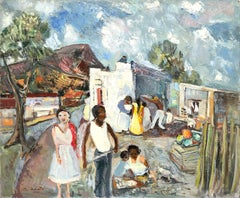
$2,000
H 18 in W 21.75 in D 0.25 in
"Landscape Scene of Fisherman by Lake" Expressionistic Oil Painting on Masonite
By Michael Baxte
Located in New York, NY
A strong modernist oil painting depicted in 1963 by Russian painter Michael Baxte. Mostly known for his abstracted figures on canvas or street scenes, this piece is a wonderful representation of his figures in water landscapes with expressive use of color, shape, and form. Later in his career, Baxte explores Expressionism, infusing both European and North American stylistic trends. This piece is from later in his career, but we can feel this underlying style throughout.
Art measures 18 x 21.75 inches
Michael Posner Baxte was born in 1890 in the small town of Staroselje Belarus, Russia. For the first half of the 19th century it was a center of the Chabad movement of Hasidic Jews, but this group was gone by the middle of the 19th century. By the time the Baxte family immigrated to the United States at the beginning of the 20th century, the Jewish population numbered only on the hundreds. The native language of the Baxte family was Yiddish. It is likely that the death of Michael Baxte’s father triggered the family’s immigration. Three older brothers arrived in New York between 1903 and 1905. Michael and his mother, Rebecca, arrived in 1907. By 1910 Michael, his mother, and brother, Joseph, were living in New Orleans and may have spent some time on a Louisiana plantation. Around 1912, Michael Baxte returned to Europe to study the violin. In 1914 he, his mother, and Joseph moved to New York City.
Meanwhile, in Algeria, a talented young woman painter, Violette Mege, was making history. Since for the first time, a woman won the prestigious Beaux Art competition in Algeria. At first, the awards committee denied her the prize but, with French government intervention, Mege eventually prevailed. She won again 3 years later and, in 1916, used the scholarship to visit the United States of America. When Violette came to New York, she met Baxte, who was, by then, an accomplished violinist, teacher, and composer. Baxte’s compositions were performed at the Tokyo Imperial Theater, and in 1922 he was listed in the American Jewish Yearbook as one of the prominent members of the American Jewish community. As a music teacher he encouraged individual expression. Baxte stated, “No pupil should ever be forced into imitation of the teacher. Art is a personal experience, and the teacher’s truest aim must be to awaken this light of personality through the patient light of science.”
By 1920 Michael Baxte and Violette Mege were living together in Manhattan. Although they claimed to be living as husband and wife, it seems that their marriage did not become official until 1928. On their “unofficial” honeymoon around 1917, in Algiers, Baxte confided to her his ambition to paint. There and later in New Mexico where the wonderful steeped sunlight approximates the coloring of Algiers, she taught him his heart’s desire. He never had any other teacher. She never had any other pupil. For ten years she devoted all her time, energy, and ambition to teaching, encouraging, inspiring him. Then in 1928, their mutual strivings were rewarded, as his works were being chosen as one of the two winners in the Dudensing National Competition for American Painters. Out of 150 artists from across the country participated in the Dudensing, and Michael Posner Baxte and, Robert Fawcett, were the winners.
In his 1924 naturalization application, he indicated that he was sometimes known as “Michael Posner Baxte.” One of the witnesses to his application was Bernard Karfiol, a Jewish American artist. That’s when Michael may...
Category
1960s Expressionist Landscape Paintings
Materials
Oil, Masonite
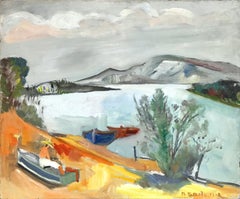
$2,000
H 18 in W 21.75 in D 0.25 in
"Mexican Interior Scene Scene with Figures and Fish" Expressionistic Style
By Michael Baxte
Located in New York, NY
A strong modernist oil painting depicted in the Mid Century by Russian painter Michael Baxte. Mostly known for his abstracted figures on canvas or street scenes, this piece is a wond...
Category
1950s Expressionist Portrait Paintings
Materials
Oil, Masonite
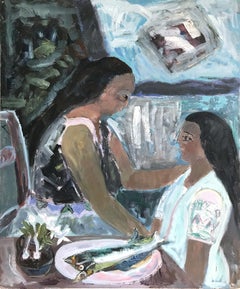
$1,800
H 25.5 in W 21.25 in D 0.25 in
"Interior Scene with Figure" Expressionistic Style Oil Painting on Masonite
By Michael Baxte
Located in New York, NY
A strong modernist oil painting depicted in 1969 by Russian painter Michael Baxte. Mostly known for his abstracted figures on canvas or street scenes, this piece is a wonderful representation of his bold still life paintings, with expressive use of color, shape, and form. Later in his career, Baxte explores Expressionism, infusing both European and North American stylistic trends. This piece is from later in his career, but we can feel this underlying style throughout.
Art measures 21.75 x 18 inches
Michael Posner Baxte was born in 1890 in the small town of Staroselje Belarus, Russia. For the first half of the 19th century it was a center of the Chabad movement of Hasidic Jews, but this group was gone by the middle of the 19th century. By the time the Baxte family immigrated to the United States at the beginning of the 20th century, the Jewish population numbered only on the hundreds. The native language of the Baxte family was Yiddish. It is likely that the death of Michael Baxte’s father triggered the family’s immigration. Three older brothers arrived in New York between 1903 and 1905. Michael and his mother, Rebecca, arrived in 1907. By 1910 Michael, his mother, and brother, Joseph, were living in New Orleans and may have spent some time on a Louisiana plantation. Around 1912, Michael Baxte returned to Europe to study the violin. In 1914 he, his mother, and Joseph moved to New York City.
Meanwhile, in Algeria, a talented young woman painter, Violette Mege, was making history. Since for the first time, a woman won the prestigious Beaux Art competition in Algeria. At first, the awards committee denied her the prize but, with French government intervention, Mege eventually prevailed. She won again 3 years later and, in 1916, used the scholarship to visit the United States of America. When Violette came to New York, she met Baxte, who was, by then, an accomplished violinist, teacher, and composer. Baxte’s compositions were performed at the Tokyo Imperial Theater, and in 1922 he was listed in the American Jewish Yearbook as one of the prominent members of the American Jewish community. As a music teacher he encouraged individual expression. Baxte stated, “No pupil should ever be forced into imitation of the teacher. Art is a personal experience, and the teacher’s truest aim must be to awaken this light of personality through the patient light of science.”
By 1920 Michael Baxte and Violette Mege were living together in Manhattan. Although they claimed to be living as husband and wife, it seems that their marriage did not become official until 1928. On their “unofficial” honeymoon around 1917, in Algiers, Baxte confided to her his ambition to paint. There and later in New Mexico where the wonderful steeped sunlight approximates the coloring of Algiers, she taught him his heart’s desire. He never had any other teacher. She never had any other pupil. For ten years she devoted all her time, energy, and ambition to teaching, encouraging, inspiring him. Then in 1928, their mutual strivings were rewarded, as his works were being chosen as one of the two winners in the Dudensing National Competition for American Painters. Out of 150 artists from across the country participated in the Dudensing, and Michael Posner Baxte and, Robert Fawcett...
Category
1960s Expressionist Interior Paintings
Materials
Oil, Masonite
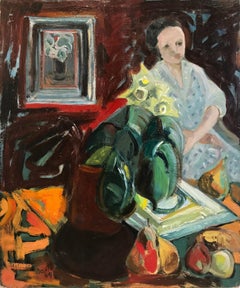
$2,000
H 21.75 in W 18 in D 0.25 in
"Mexican Landscape Scene of Mother with Children" Expressionistic Style Painting
By Michael Baxte
Located in New York, NY
A strong modernist oil painting depicted in 1962 by Russian painter Michael Baxte. Mostly known for his abstracted figures on canvas or street scenes, this piece is a wonderful representation of his portraits in countryside landscapes with expressive use of color, shape, and form. Later in his career, Baxte explores Expressionism, infusing both European and North American stylistic trends.
Art measures 21.25 x 25.5 inches
Michael Posner Baxte was born in 1890 in the small town of Staroselje Belarus, Russia. For the first half of the 19th century, it was a center of the Chabad movement of Hasidic Jews, but this group was gone by the middle of the 19th century. By the time the Baxte family immigrated to the United States at the beginning of the 20th century, the Jewish population numbered only on the hundreds. The native language of the Baxte family was Yiddish. It is likely that the death of Michael Baxte’s father triggered the family’s immigration. Three older brothers arrived in New York between 1903 and 1905. Michael and his mother, Rebecca, arrived in 1907. By 1910 Michael, his mother, and brother, Joseph, were living in New Orleans and may have spent some time on a Louisiana plantation. Around 1912, Michael Baxte returned to Europe to study the violin. In 1914 he, his mother, and Joseph moved to New York City.
Meanwhile, in Algeria, a talented young woman painter, Violette Mege, was making history. For the first time, a woman won the prestigious Beaux Art competition in Algeria. At first, the awards committee denied her the prize but, with French government intervention, Mege eventually prevailed. She won again 3 years later and, in 1916, used the scholarship to visit the United States of America. When Violette came to New York, she met Baxte, who was, by then, an accomplished violinist, teacher, and composer. Baxte’s compositions were performed at the Tokyo Imperial Theater, and in 1922 he was listed in the American Jewish Yearbook as one of the prominent members of the American Jewish community. As a music teacher, he encouraged individual expression. Baxte stated, “No pupil should ever be forced into the imitation of the teacher. Art is a personal experience, and the teacher’s truest aim must be to awaken this light of personality through the patient's light of science.”
By 1920 Michael Baxte and Violette Mege were living together in Manhattan. Although they claimed to be living as husband and wife, it seems that their marriage did not become official until 1928. On their “unofficial” honeymoon around 1917, in Algiers, Baxte confided to her his ambition to paint. There and later in New Mexico where the wonderful steeped sunlight approximates the coloring of Algiers, she taught him his heart’s desire. He never had any other teacher. She never had any other pupil. For ten years she devoted all her time, energy, and ambition to teaching, encouraging, inspiring him. Then in 1928, their mutual strivings were rewarded, as his works were being chosen as one of the two winners in the Dudensing National Competition for American Painters. Out of 150 artists from across the country participated in the Dudensing, and Michael Posner Baxte and, Robert Fawcett...
Category
1960s Expressionist Figurative Paintings
Materials
Oil, Masonite
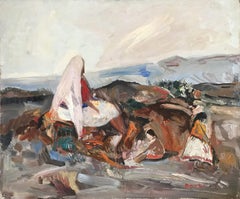
$1,800
H 21.25 in W 25.5 in D 0.25 in
"Mexican Villagers Scene with Man on a Horse" Expressionistic Style Oil Painting
By Michael Baxte
Located in New York, NY
A strong modernist oil painting depicted in the Mid Century by Russian painter Michael Baxte. Mostly known for his abstracted figures on canvas or street scenes, this piece is a wonderful representation of his portraits in village landscapes with expressive use of color, shape, and form. Later in his career, Baxte explores Expressionism, infusing both European and North American stylistic trends.
Art measures 25.5 x 21.25 inches
Michael Posner Baxte was born in 1890 in the small town of Staroselje Belarus, Russia. For the first half of the 19th century, it was a center of the Chabad movement of Hasidic Jews, but this group was gone by the middle of the 19th century. By the time the Baxte family immigrated to the United States at the beginning of the 20th century, the Jewish population numbered only on the hundreds. The native language of the Baxte family was Yiddish. It is likely that the death of Michael Baxte’s father triggered the family’s immigration. Three older brothers arrived in New York between 1903 and 1905. Michael and his mother, Rebecca, arrived in 1907. By 1910 Michael, his mother, and brother, Joseph, were living in New Orleans and may have spent some time on a Louisiana plantation. Around 1912, Michael Baxte returned to Europe to study the violin. In 1914 he, his mother, and Joseph moved to New York City.
Meanwhile, in Algeria, a talented young woman painter, Violette Mege, was making history. For the first time, a woman won the prestigious Beaux Art competition in Algeria. At first, the awards committee denied her the prize but, with French government intervention, Mege eventually prevailed. She won again 3 years later and, in 1916, used the scholarship to visit the United States of America. When Violette came to New York, she met Baxte, who was, by then, an accomplished violinist, teacher, and composer. Baxte’s compositions were performed at the Tokyo Imperial Theater, and in 1922 he was listed in the American Jewish Yearbook as one of the prominent members of the American Jewish community. As a music teacher, he encouraged individual expression. Baxte stated, “No pupil should ever be forced into the imitation of the teacher. Art is a personal experience, and the teacher’s truest aim must be to awaken this light of personality through the patient's light of science.”
By 1920 Michael Baxte and Violette Mege were living together in Manhattan. Although they claimed to be living as husband and wife, it seems that their marriage did not become official until 1928. On their “unofficial” honeymoon around 1917, in Algiers, Baxte confided to her his ambition to paint. There and later in New Mexico where the wonderful steeped sunlight approximates the coloring of Algiers, she taught him his heart’s desire. He never had any other teacher. She never had any other pupil. For ten years she devoted all her time, energy, and ambition to teaching, encouraging, inspiring him. Then in 1928, their mutual strivings were rewarded, as his works were being chosen as one of the two winners in the Dudensing National Competition for American Painters. Out of 150 artists from across the country participated in the Dudensing, and Michael Posner Baxte and, Robert Fawcett...
Category
Mid-20th Century Expressionist Figurative Paintings
Materials
Oil, Masonite

$1,800
H 25.5 in W 21.25 in D 0.25 in
John Begg Jr., Expressionist Oil Painting on Masonite by Joseph Solman
By Joseph Solman
Located in Long Island City, NY
In the mid-1960s Joseph Solman (American, 1909 - 2008) was commissioned to create portraits of the Begg family. This is a portrait of John Begg Jr., the son of the mid-century nuclear family...
Category
1960s Expressionist Portrait Paintings
Materials
Masonite, Oil
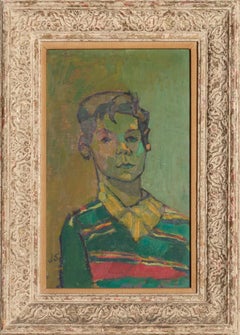
More From This Seller
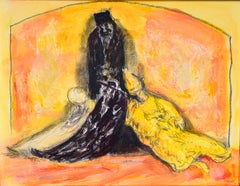
View All"Taking a break" - Horizontal figure painting in black and warm colors.
By Luis Filcer
Located in Miami, FL
"Taking a break" belongs to the series Waiting for God.
A unique interpretation of Filcer's series of different religious leaders looking for and waitin...
Category
2010s Expressionist Figurative Paintings
Materials
Masonite, Acrylic
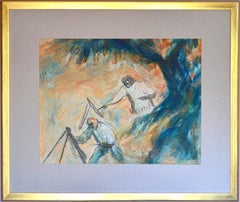
"Van Gogh and Gauguin painting together" - Figure painting in cool colors.
By Luis Filcer
Located in Miami, FL
Luis Filcer depicts the friendship between Van Gogh and Gauguin, this is part of the Homage to Van Gogh series. Important to add he did this series when he...
Category
2010s Expressionist Figurative Paintings
Materials
Masonite, Acrylic
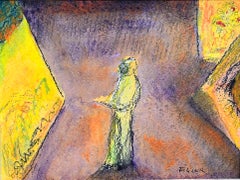
"Artist at his studio" - Horizontal indoor purple and yellow painting.
By Luis Filcer
Located in Miami, FL
The artist is creating inside his studio.
Category
Early 2000s Expressionist Figurative Paintings
Materials
Masonite, Acrylic
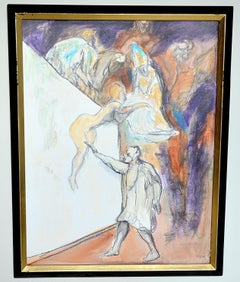
"Fantasy escapes the canvas" - Vertical expressionist painting in cool colors.
By Luis Filcer
Located in Miami, FL
A fantastic scene where the characters leave the canvas empty.
Category
2010s Expressionist Figurative Paintings
Materials
Masonite, Acrylic
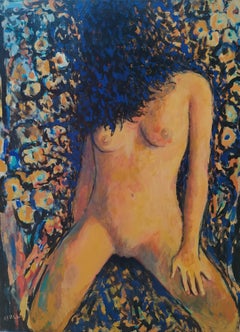
"Woman Seated" - Vertical expressionist female semi-nude in cool colors.
By E.C. Bell
Located in Miami, FL
Romantic and expressionist nude artwork on canvas.
Category
2010s Expressionist Nude Paintings
Materials
Canvas, Acrylic
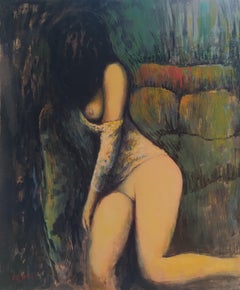
"Passion" - Vertical expressionist female kneeling nude with flowers in ochre.
By E.C. Bell
Located in Miami, FL
Romantic and expressionist nude artwork on canvas.
Category
2010s Expressionist Nude Paintings
Materials
Canvas, Acrylic