Items Similar to Portrait of Benjamin Franklin attributed to Mason Chamberlin
Want more images or videos?
Request additional images or videos from the seller
1 of 8
Portrait of Benjamin Franklin attributed to Mason ChamberlinCirca 1775
Circa 1775
$298,500
£226,532.68
€261,013.91
CA$421,732.97
A$451,880.06
CHF 242,401.96
MX$5,352,582.60
NOK 3,057,765.72
SEK 2,797,382.67
DKK 1,949,806.09
About the Item
Attributed to Mason Chamberlin
1729-1787 British
Portrait of Benjamin Franklin
No visible signature
Oil on canvas
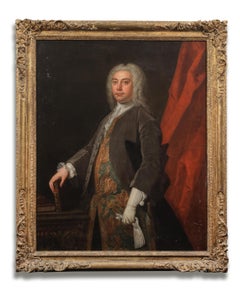
This exceptional portrait of Benjamin Franklin represents one of the most significant rediscoveries in American portraiture history, attributed to the renowned British artist Mason Chamberlin and dating to circa 1775. Among only 36 known oil portraits documenting Franklin's celebrated life, this work captures the statesman during his final diplomatic mission to London, depicting him in his characteristic brown suit and powdered wig before he abandoned such formal attire in 1776. The portrait's provenance and historical context make it an extraordinarily rare treasure from the founding era of American independence.
The composition presents Franklin seated at his study table in the identical setting Chamberlin employed for his acclaimed 1762 portrait, now housed in the Philadelphia Museum of Art. The artist masterfully captures the thirteen years that had elapsed between sittings, incorporating Franklin's additional wrinkles and the spectacles placed near an open book that reflect his matured wisdom as a diplomat. The brushwork demonstrates Chamberlin's characteristic refined technique, with the subject's contemplative expression conveying both intellectual gravitas and the weight of his diplomatic responsibilities during this pivotal moment in Anglo-American relations.
Mason Chamberlin established himself as one of London's most sought-after portraitists during the Georgian era, serving as a founding member of the Royal Academy of Arts in 1768. His 1762 portrait of Franklin, which depicted the polymath surrounded by his scientific instruments, became one of the most iconic representations of the American philosopher and was reproduced as woodcuts that Franklin himself distributed to friends. Chamberlin's ability to capture both physical likeness and psychological depth made him the preferred choice for prominent figures of his era, including members of the British aristocracy and distinguished visitors to London.
The painting's fascinating provenance includes more than a century in Italian collections, where it was mistakenly attributed to Pietro Longhi by art historian Giuseppe Fiocco in the early 20th century. However, the brushwork, canvas and painting technique are unmistakably 18th-century English, consistent with Chamberlin's documented methods. The historical timing supports the attribution, as Franklin arrived in London in 1774 for his final diplomatic mission and fled in 1775 to avoid arrest, which would explain why he never retrieved this completed portrait from the artist's studio.
Circa 1775
Canvas: 45 3/8" high x 39 1/8" wide (115.25 x 99.38 cm)
Frame: 54" high x 47 7/8" wide (137.16 x 121.60 cm)
Provenance:
Private collection, Italy
Collection of Don Ermanno Volta (1925-2016)
M.S. Rau, New Orleans
- Attributed to:Mason Chamberlin (1727 - 1787)
- Creation Year:Circa 1775
- Dimensions:Height: 54 in (137.16 cm)Width: 47.88 in (121.62 cm)Depth: 2.28 in (5.8 cm)
- Medium:
- Movement Style:
- Period:
- Condition:
- Gallery Location:New Orleans, LA
- Reference Number:Seller: 31-89711stDibs: LU18616443902
About the Seller
5.0
Vetted Professional Seller
Every seller passes strict standards for authenticity and reliability
Established in 1912
1stDibs seller since 2013
21 sales on 1stDibs
Typical response time: 8 hours
- ShippingRetrieving quote...Shipping from: New Orleans, LA
- Return Policy
More From This Seller
View AllHenry Bowles Howard, 12th Earl Of Suffolk And 5th Earl Of Berkshire
Located in New Orleans, LA
Sir Joshua Reynolds
1723-1792 British
Sir Henry Bowles Howard, 12th Earl of Suffolk and 5th Earl of Berkshire
Oil on canvas
Sir Joshua Reynolds is unequivocally considered the most important English portraitist of the 18th century who was instrumental in adapting the Grand Manner style in the portrait genre. In fact, when the Royal Academy was founded in 1768, Reynolds was elected its first President, setting the precedent of quality for which all other portraitists would strive.
Reynolds's portrait of Henry Bowles Howard, 12th Earl of Suffolk, showcases his genius in the genre and mastery over the medium. Reynolds’s portrait of the Earl expertly invokes classical values with strong lighting, rich colors and expert attention to detail to help underscore the prominence and revered echelon of the sitter. Howard was an esteemed British politician and Knight of the Garter. He served as Secretary of State for the Northern Department from 1771 to 1779, and he played a key role in utilizing mercenaries during the American Revolution and safeguarding Sweden's independence.
The portrait employs Reynolds's signature style to render Howard rightfully as a gentleman of distinction. Captured seated in a stately library, the Earl appears learned and austere as he places one hand upon a stack of important documents and looks wistfully into the distance. Reynolds makes these compositional choices decisively, as the seated position gives Howard a weighty appearance of importance and the semi-profile turn captures his countenance at an attractive angle that highlights his strong, masculine features. The work draws on the classical conventions of Greek and Roman art and the Italian Renaissance masters, anchoring the nobleman in a history of refinement. Everything from his strong yet welcoming expression to his pale face enlivened by a rush of blood to the cheeks presents the picture of a strong, vital and powerful leader.
As the first president of the Royal Academy in London, Reynolds’s commissions raised the status of an artist in Britain during the Romantic period and also established the portrait as an esteemed high art genre that garnered equal import to the history paintings that reigned supreme in decades prior. Today, Reynolds’s works grace the walls of the most important museums in the world, including the Louvre, the Metropolitan Museum of Art, and the National Gallery in London, among others.
Circa 1770
Canvas: 50 1/2" high x 40 1/4" wide
Framed: 61" high x 52 1/2" wide x 3 1/2" deep
Provenance:
Sir Henry Howard, 12th Earl of Suffolk and 5th Earl of Berkshire, 1739-1779
His mother, Lady Mary Howard, née Finch, Lady Andover, d. 1803
Acquired by descent to her daughter, Frances, and her husband Richard Bagot (later Howard)
Acquired by descent to their daughter, Mary (1784-1877), and her husband Col. Fulke Greville Upton (later Howard), d. 1846
Acquired by descent to Lieutenant Colonel H.R.G. Howard
Sale, Christie's, London, March 24, 1961, no. 29
Julius Weitzner, London and New York
Sale, Paris, Musée Galliéra, December 7, 1965, no. 165
Newhouse Galleries, New York, NY
Mr. and Mrs. F. Howard Walsh, Fort Worth, Texas, 1966
Walsh Family Art Trust
Private collection, Oregon
M.S. Rau, New Orleans
Exhibited:
British Institution, London, 1844, no. 130, loaned by the Hon. Fulke Greville Howard.
South Kensington, "Second special exhibition of National Portraits," 1867, no. 478, lent by the Hon. Mrs. Greville.
Agnew's, London, 1903, no. 17.
Literature:
Algernon Graves and W. V. Cronin, A History of the Works of Sir Joshua Reynolds, P.R.A., vol. 3 (London, 1899), p. 945.
David Mannings...
Category
18th Century Other Art Style Portrait Paintings
Materials
Oil, Canvas
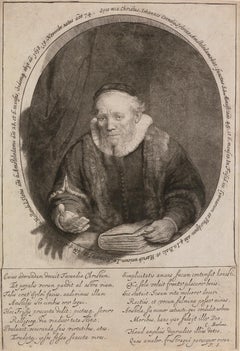
Jan Cornelis Sylvius, Preacher by Rembrandt Van Rijn
By Rembrandt van Rijn
Located in New Orleans, LA
Rembrandt van Rijn
1606–1669 Dutch
Jan Cornelis Sylvius, Preacher
New Hollstein Dutch and Flemish (Rembrandt) 235, state 2/2
Bartsch 280
Printed by Rembrandt
Signed and dated "Rem...
Category
17th Century Old Masters Portrait Drawings and Watercolors
Materials
Paper, Etching
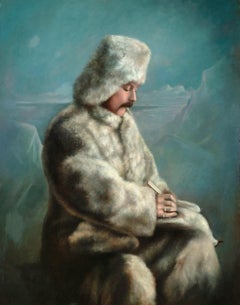
Portrait Of Dr. Frederick A. Cook By Albert Operti
Located in New Orleans, LA
Albert Ludwig Operti
1852-1927 Italian-American
Portrait of Dr. Frederick Albert Cook
Oil on canvas
This highly rare portrait of the important Polar explorer, Dr. Frederick Albert Cook, is the work of American artist Albert Ludwig Operti. Renowned in the late 19th and early 20th centuries for his paintings of exploration, namely Arctic scenes, Operti was the only artist to accompany Robert Peary...
Category
20th Century Realist Portrait Paintings
Materials
Canvas, Oil
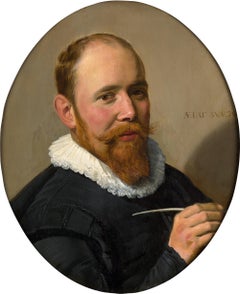
Portrait Of A Gentleman By Frans Hals
Located in New Orleans, LA
Frans Hals
1582-1666 Dutch
Portrait of a Gentleman
(possibly Theodore Blevet)
Oil on panel
“Frans Hals is a colourist among the colourists...Frans Hals must have had twenty-seven blacks...
Category
17th Century Old Masters Portrait Paintings
Materials
Oil, Panel
Price Upon Request
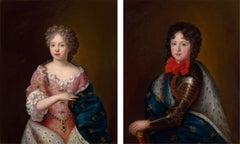
Pair of Royal Portraits of the Duke and Duchess of Burgundy
By Pierre Gobert
Located in New Orleans, LA
Follower of Pierre Gobert
18th century French
The Duke and Duchess of Burgundy
Oil on canvas
Refinement and intricacy characterize these royal portra...
Category
18th Century Portrait Paintings
Materials
Canvas, Oil
Tri-Directional Portrait Commemorating the Russo-Turkish War
Located in New Orleans, LA
Austrian School
18th Century
Tri-Directional Portrait Commemorating the Russo-Turkish War
Oil on wooden strips
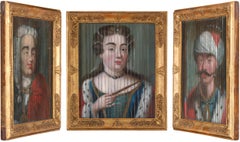
This extraordinary tri-directional portrait exemplifies the rare innovation known as a triscenorama, capturing a pivotal diplomatic moment through ingenious artistic technique. Employing triangularly cut wooden strips, this remarkable work simultaneously depicts three imperial figures central to the Russo-Turkish War of 1735-1739: Empress Anna Ivanovna Romanova of Russia when viewed directly, Holy Roman Emperor Charles VI from the left and Ottoman Sultan Mahmud I from the right, commemorating the Treaty of Nissa that concluded this significant European conflict.
The portrait utilizes an exceptionally rare optical technique that predates modern movable imaging technology. When observed from different angles, the painted triangular wooden strips create a transformative effect, revealing entirely different imperial portraits as the viewer shifts position. The precision required to execute such a work demonstrates remarkable technical mastery, as the artist had to conceptualize three distinct portraits as well as the meticulous arrangement of the panels. This sophisticated manipulation of perspective creates an interactive viewing experience considered revolutionary for its time.
Almost certainly created by an Austrian artist, this diplomatic artwork likely served as a commemorative piece marking the Treaty of Nissa, signed in September 1739. The treaty concluded Russia's ambitious campaign to secure access to the Black Sea while countering Ottoman raids in Ukraine and the Caucasus regions. Given its exceptional quality and historical significance, this portrait was possibly commissioned by Emperor Charles VI himself, potentially serving as a diplomatic gift to either Empress Anna or Sultan Mahmud I during the treaty negotiations.
Under Empress Anna's leadership, Russia sought to counter devastating raids from Ottoman allies, particularly the Crimean Tatars...
Category
18th Century Old Masters Portrait Paintings
Materials
Wood, Oil, Wood Panel
You May Also Like
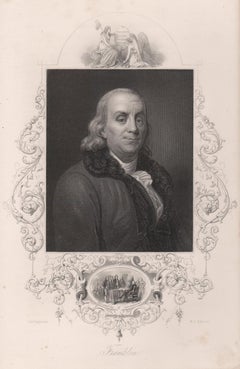
Benjamin Franklin, 19th century American political portrait engraving print
Located in Melbourne, Victoria
Benjamin Franklin
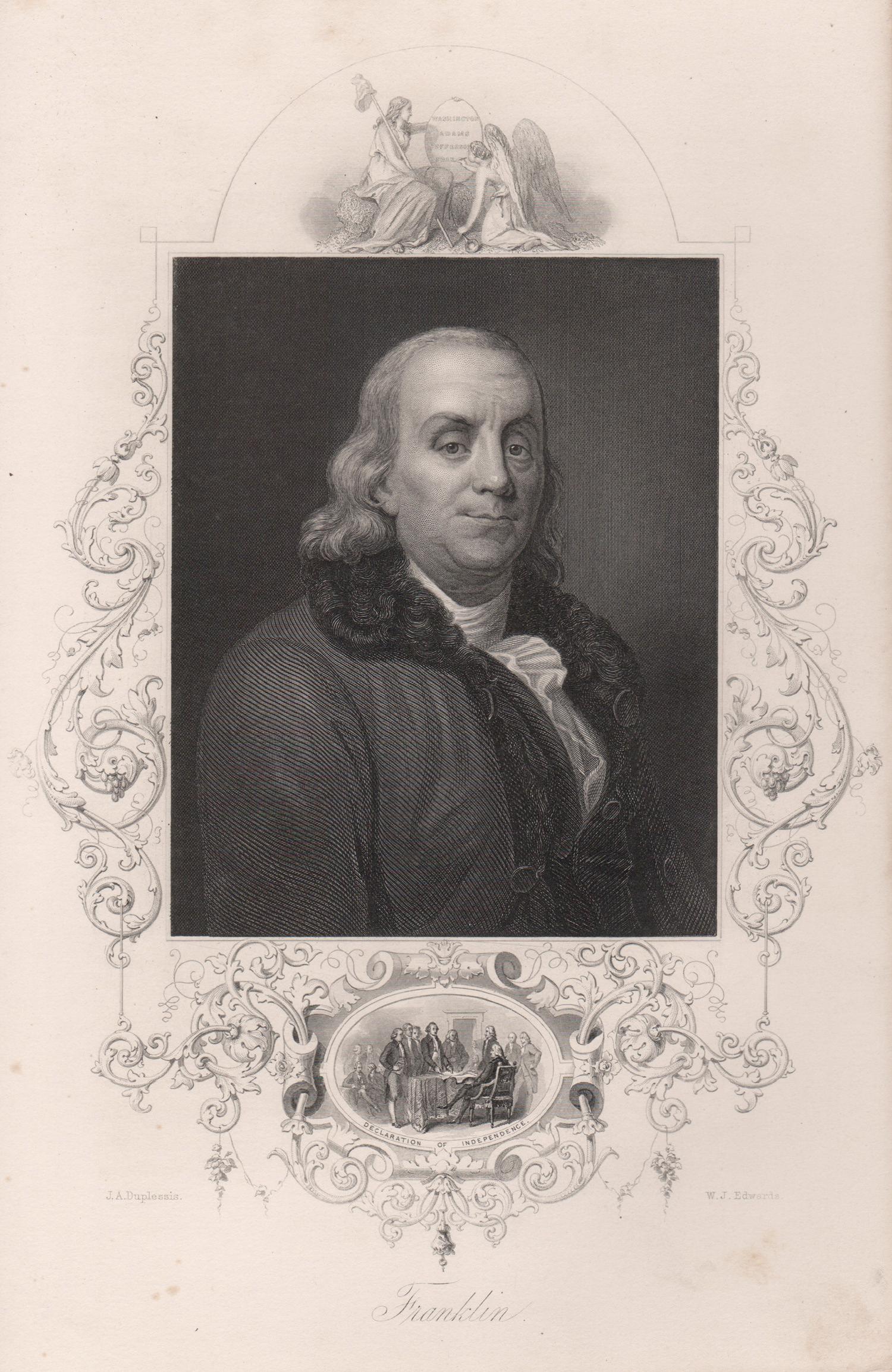
Steel-engraving by WJ Edwards after Joseph Siffred Duplessis. C1860. . Vignette below image titled 'Declaration of Independence'.
When Franklin arrived in France ...
Category
Mid-19th Century Naturalistic Portrait Prints
Materials
Engraving
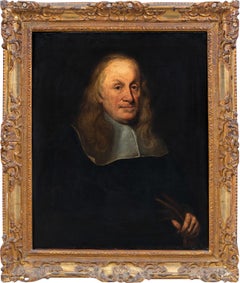
Nicolaes Maes workshop (Baroque Dutch)- 17th century figure painting - Gentleman
Located in Varmo, IT
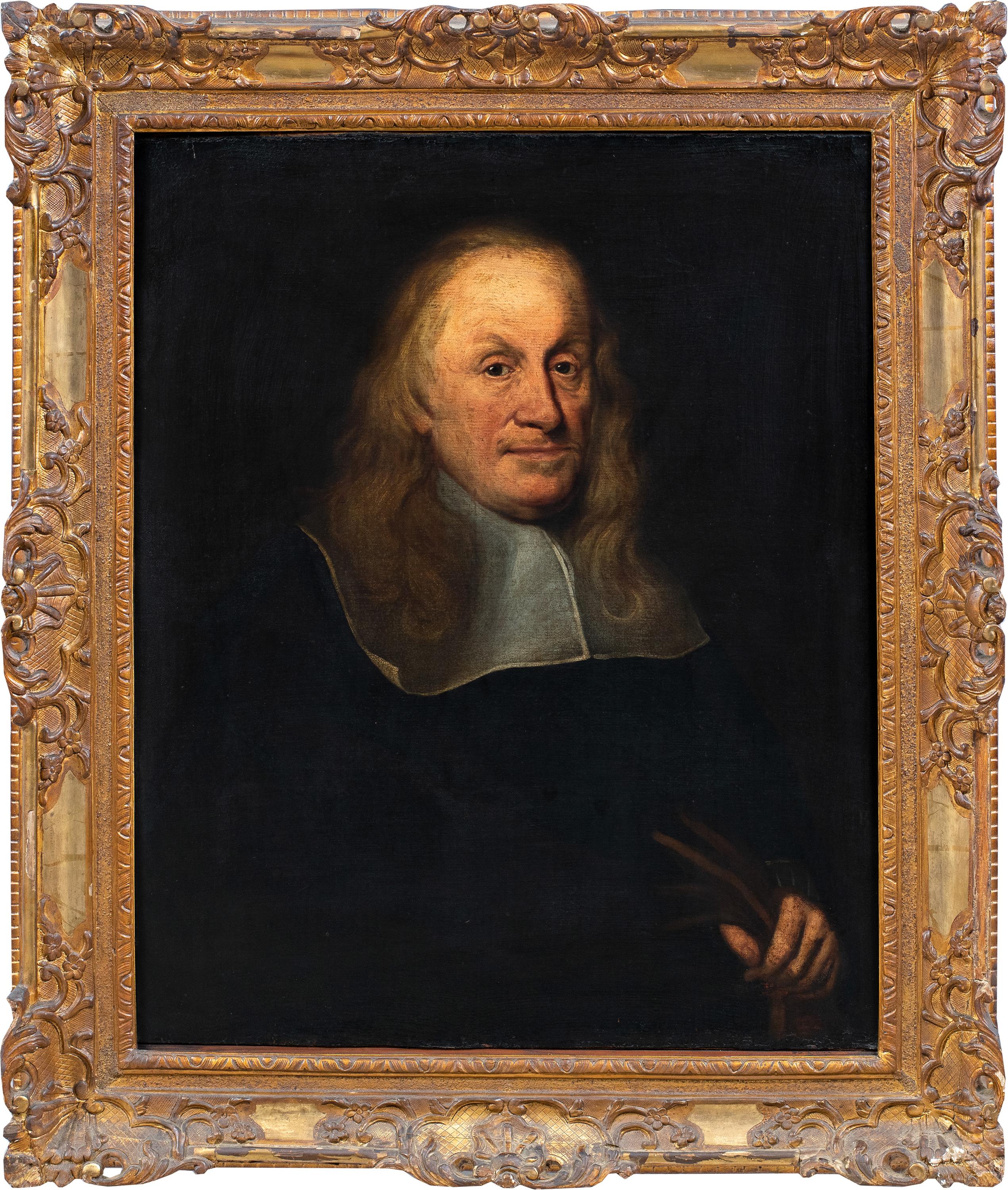
Nicolaes Maes (Dordrecht 1634 - Amsterdam 1693) circle of - Portrait of a Gentleman.
81 x 65 cm unframed, 100.5 x 83.5 cm with frame.
Antique oil painting on canvas, in a carved an...
Category
17th Century Old Masters Figurative Paintings
Materials
Canvas, Oil
$7,138 Sale Price
25% Off
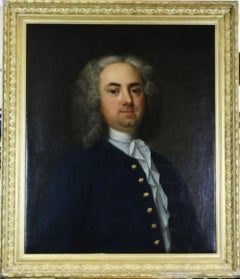
18th century antique portrait Edmund Hoyle Circle of James Latham, Edmund Hoyle
Located in York, GB
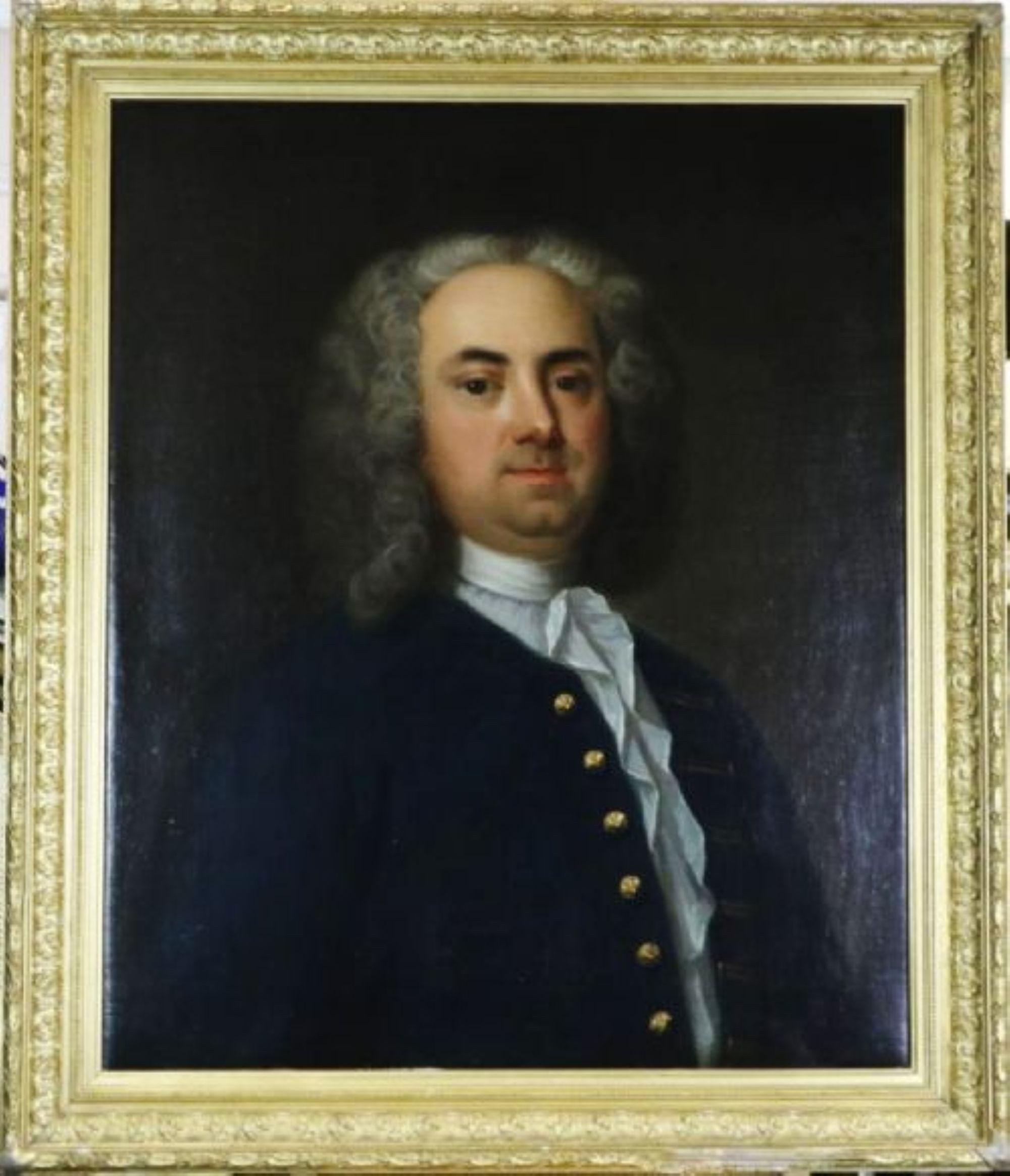
18th century Bust portrait of a gentleman in a blue coat with gold buttons (Said to be Edmund Hoyle, inventor of Whist) oil on canvas
circle of James Latham. Housed in a gilt frame the size overall is 71 x 84 cm (28 x 33 inches approx) whilst the painting is
56 x 69 cm ( 22 x 27 inches approx) unsigned
The overall condition is very good having had some restoration. The painting has been relined, cleaned and re varnished.
There has been some strengthening/overpainting. There is a Rectangular patch repair along lower edge, centre, reverse approximately 5 x 7cm with associated retouching to front,all essentially done sympathetically.
some fine stable craquelure throughout. Some minor self coloured losses to frame. None of the above detracting from
a very attractive portrait.
Edmond Hoyle
Edmond Hoyle
English card game authority, "the Father of whist"
Born 1672 England Died 29 August 1769 (aged 96–97)
London, England
Edmond Hoyle (1672 – 29 August 1769)[1] was a writer best known for his works on the rules and play of card games. The phrase "according to Hoyle" came into the language as a reflection of his generally perceived authority on the subject
James Latham
James Latham was born in Thurles, County Tipperary, Ireland and possibly related to the family of Lathams of Meldrum and Ballysheehan. After some practice of his art, Latham studied for an academic year in Antwerp (1724–25) where he became a Master of the Guild of St Luke. He returned to Dublin by 1725, and may have visited England in the 1740s, as the influence of Joseph Highmore, as well as Charles Jervas and William Hogarth, is evident in his work of this period. Anthony Pasquin memorably dubbed Latham "Ireland's Van Dyck". Latham died in Dublin on 26 January 1747.
Several of James Latham's portraits are in the National Gallery of Ireland collection in Dublin; one is of the famous MP Charles Tottenham (1694–1758) of New Ross, Co. Wexford, "Tottenham in his Boots" (Cat. No.411) and a second is a portrait of Bishop...
Category
Mid-18th Century Old Masters Portrait Paintings
Materials
Oil
$3,838 Sale Price
20% Off
Free Shipping
Portrait of President George Washington
Located in Fredericksburg, VA
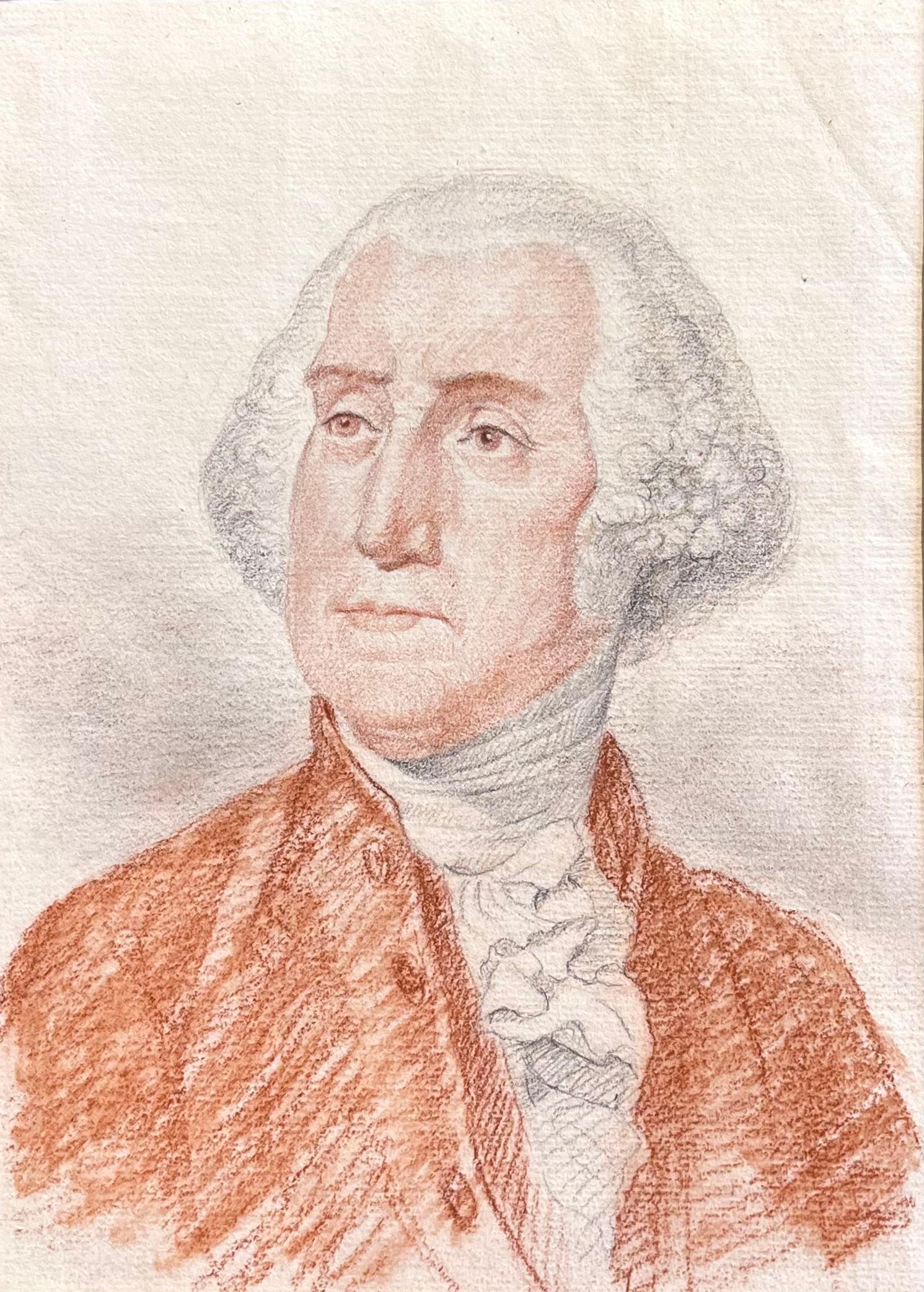
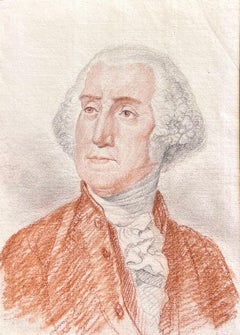
This early 19th-century French School portrait of President George Washington, rendered in pastel and graphite on paper, exemplifies the European admiration for the American leader. ...
Category
Early 19th Century Portrait Paintings
Materials
Paper, Oil Pastel, Graphite
Portrait of a Gentleman - British Old Master c1750 art oil painting
By Thomas Hudson
Located in Hagley, England
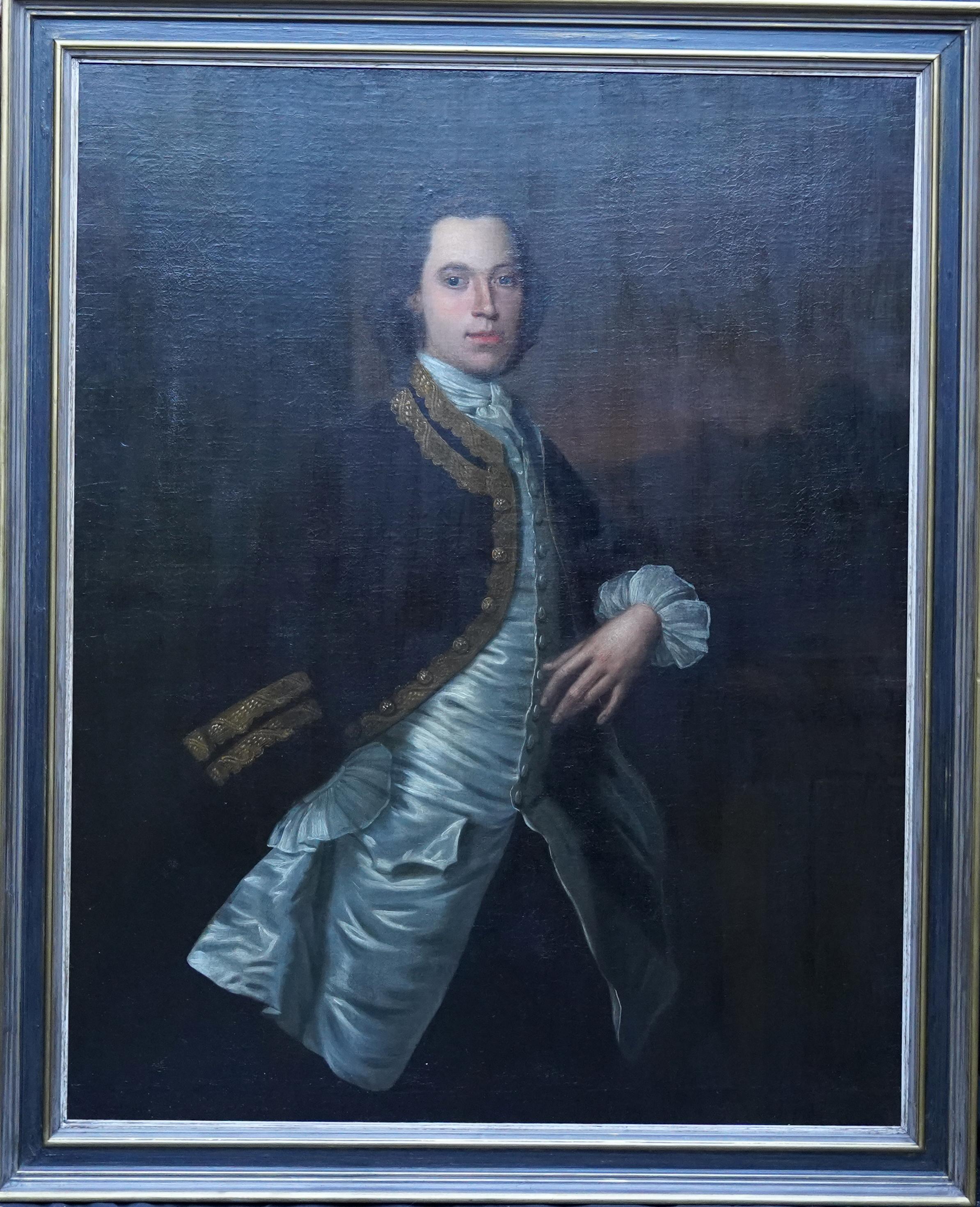
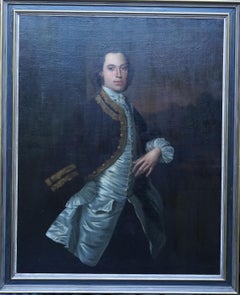
This superb British 18th century Old Master portrait oil painting is attributed to Thomas Hudson. Painted circa 1750 it is a three-quarter length standing portrait of a gentleman in ...
Category
1750s Old Masters Portrait Paintings
Materials
Oil
Portrait of Ralph William Grey
By Bartholomew Dandridge
Located in London, GB
Provenance
By descent through the sitter's family to
The Collection of R. W. Vivian-Neal of Poundisford Park, Somerset, from whom acquired by
With Lane Fine Art, UK, where purchased by the present owners in 1996
Literature
'Poundisford Park, Somerset' in Country Life, 22 December 1934, ill.
A.W. and C.M. Vivian-Neal, Poundisford Park, Somerset: A catalogue of pictures and furniture, Taunton 1939, cat. nos. 11 and 13
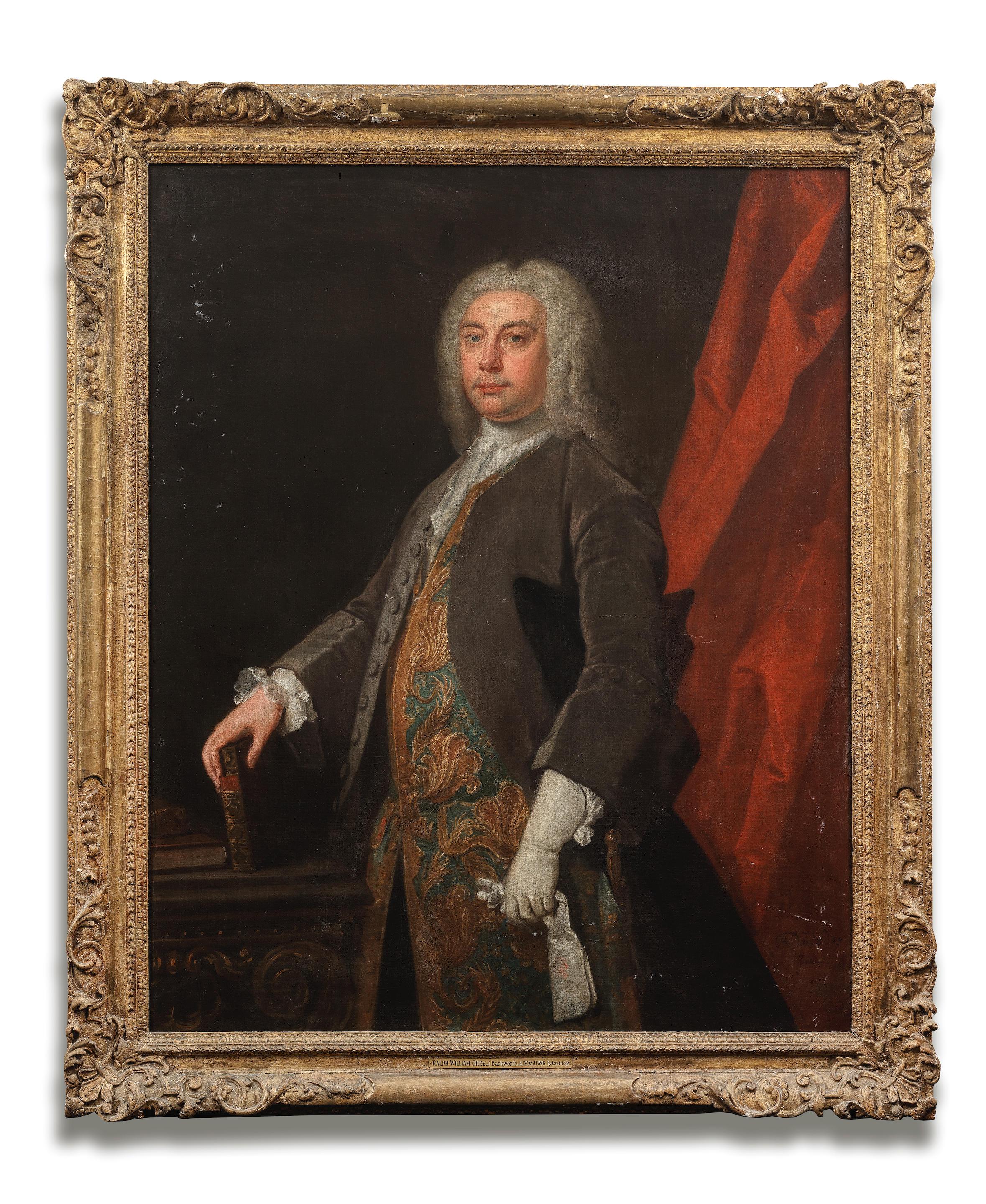
This is a three-quarter-length portrait of Ralph William Grey in a mole-coloured velvet coat and a long waistcoat of green satin, heavily embroidered in gold. Under his left right hand is a black chapeau bras. He has white doe-skin gauntlet gloves.
Son of William and Ann Grey of Backworth: born 19 December 1707. He married Mary the daughter of William Rawstorne of Newall in 1741 and died 5 November 1786. He was educated at Eaton and Trinity College, Oxford.
Within a year of his birth Mrs Grey died and, according to the Country Life article 'From that time forward all Mr Grey's faculties were concentrated on the well-being of his son. The possession of an heir gave zest to his efforts to build up the family fortune: he was successful in most of his ventures. Years later his interest in life was centred in the home of his daughter-in-law and grandchildren'.
Grey's right hand is depicted in the present portrait resting on Locke's Essays and the Country Life article also records that there are constant references to John Locke...
Category
Mid-18th Century English School Portrait Paintings
Materials
Oil