Want more images or videos?
Request additional images or videos from the seller
1 of 6

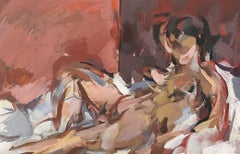
Mercedes Matter
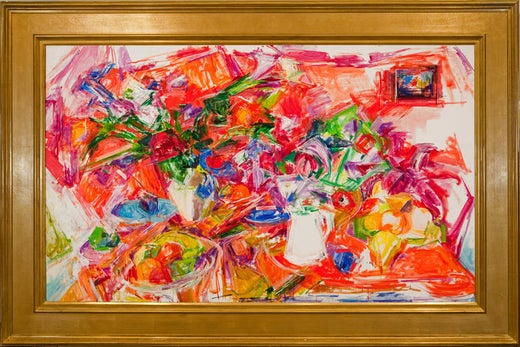
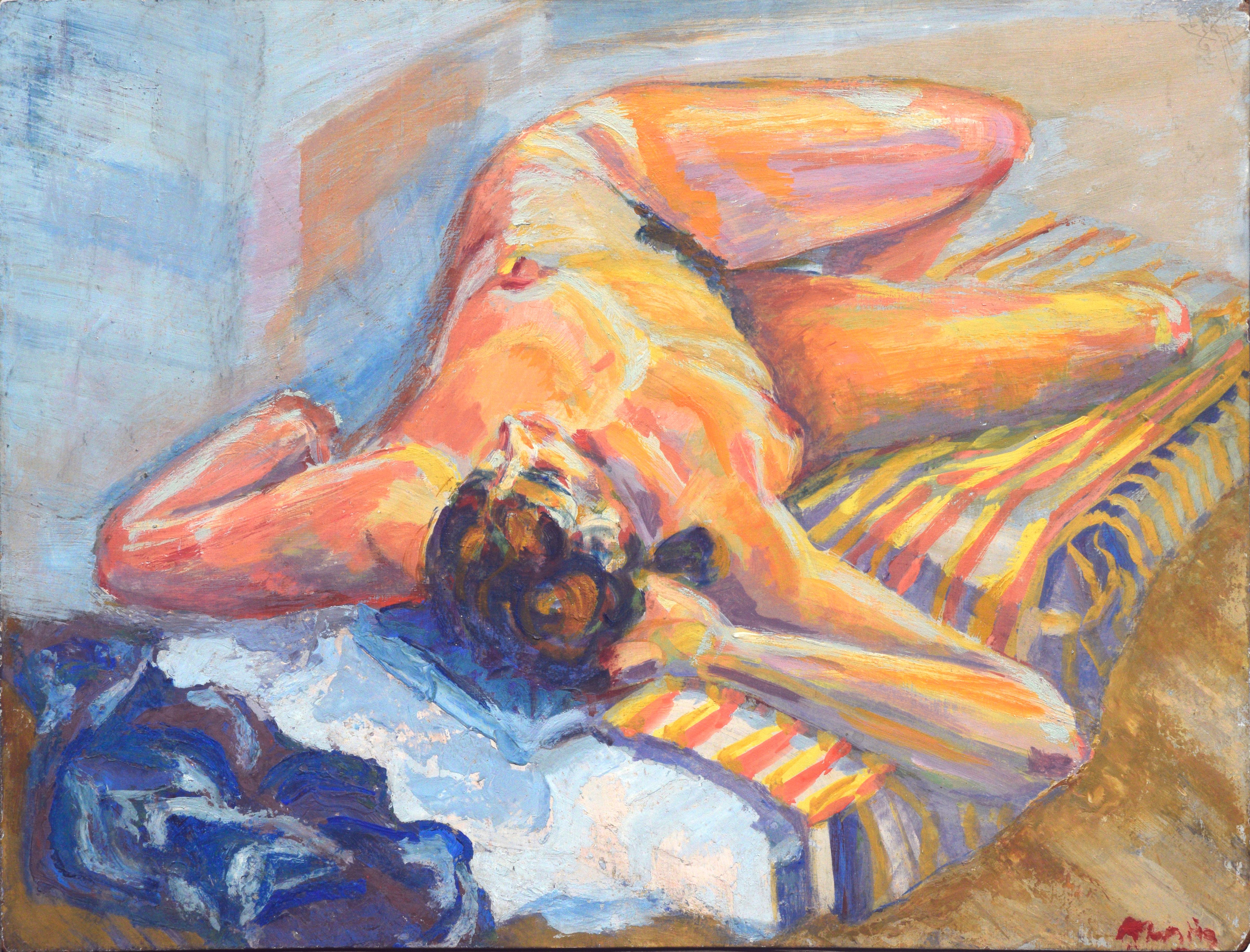
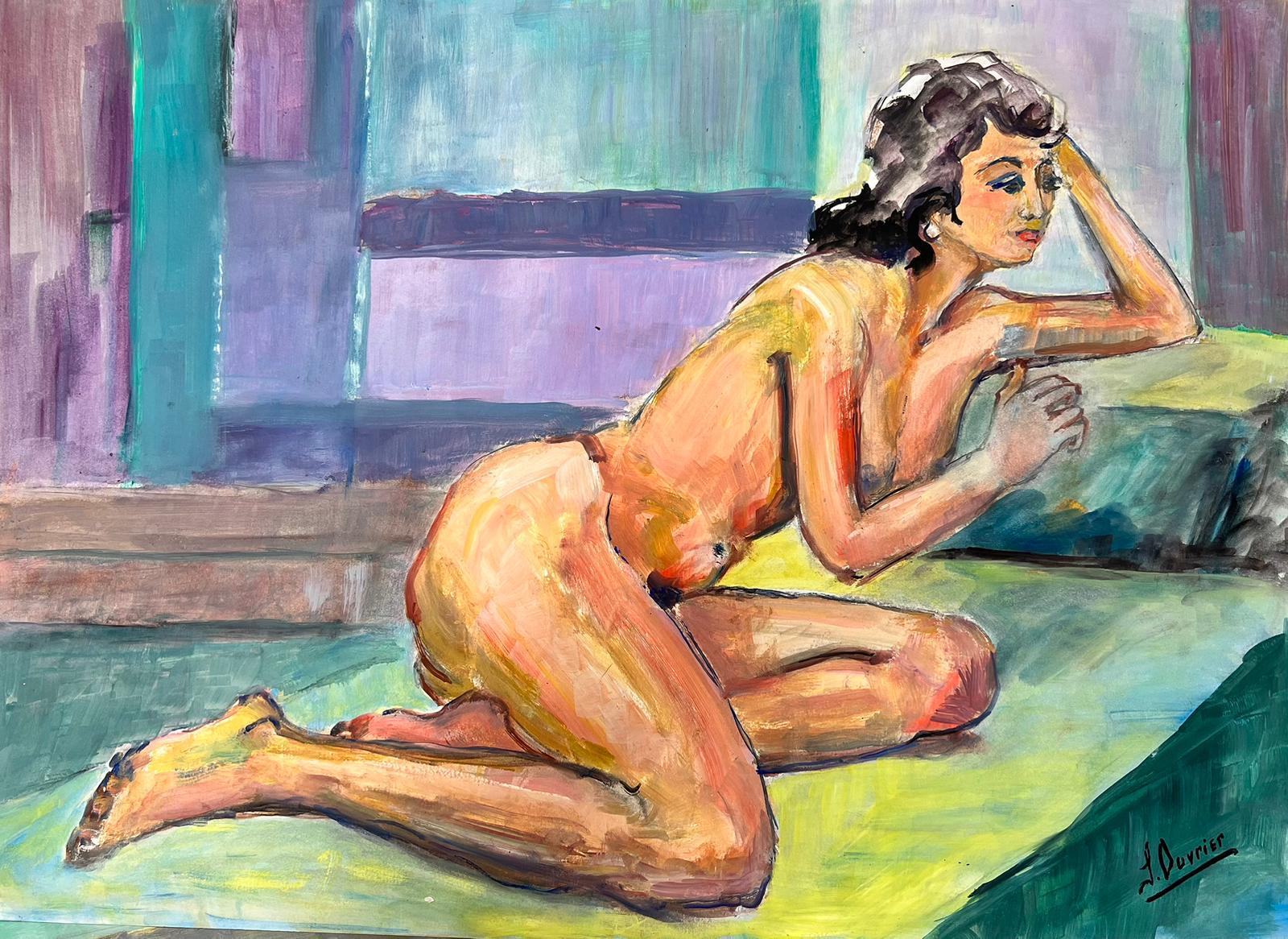
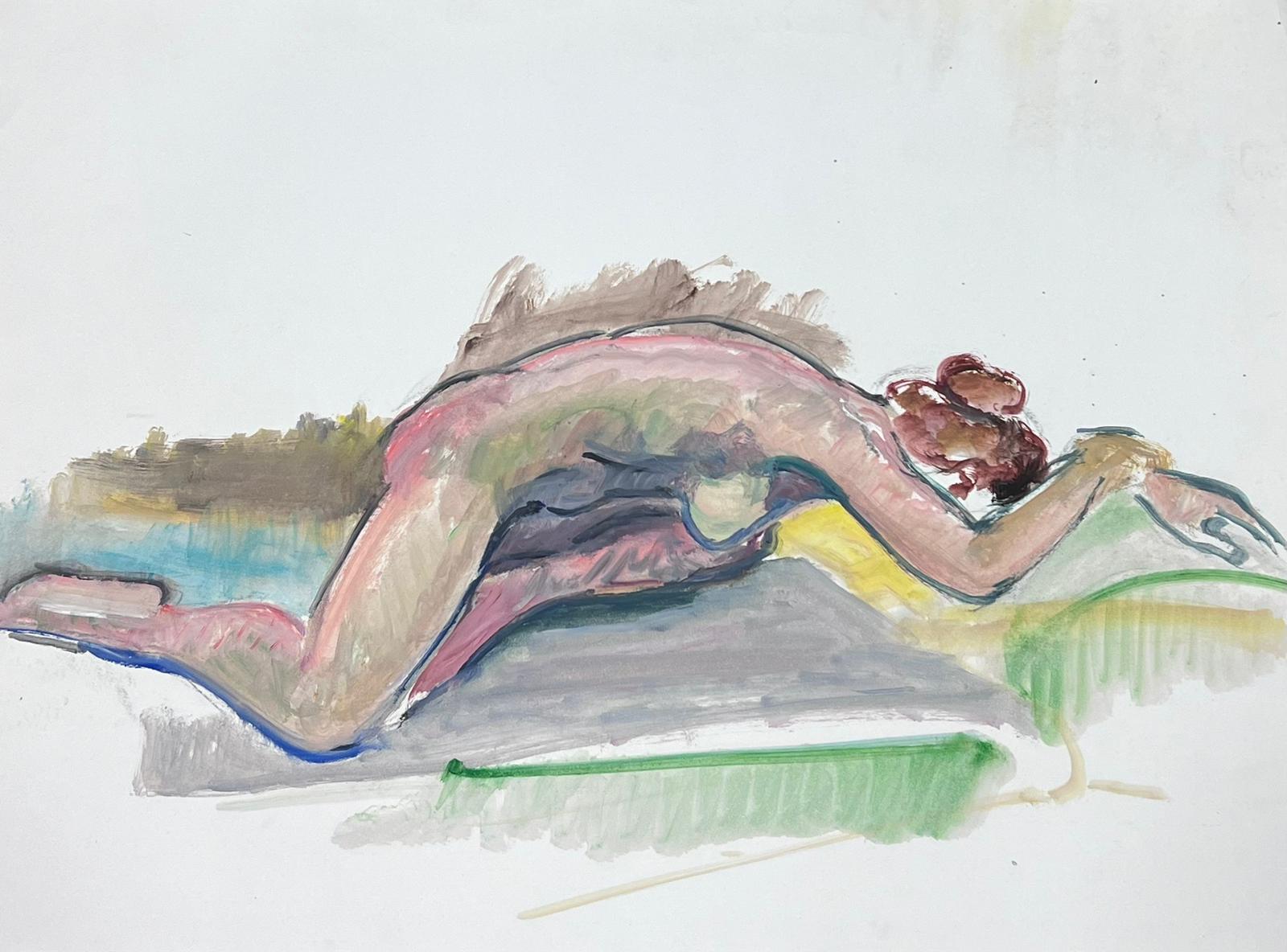
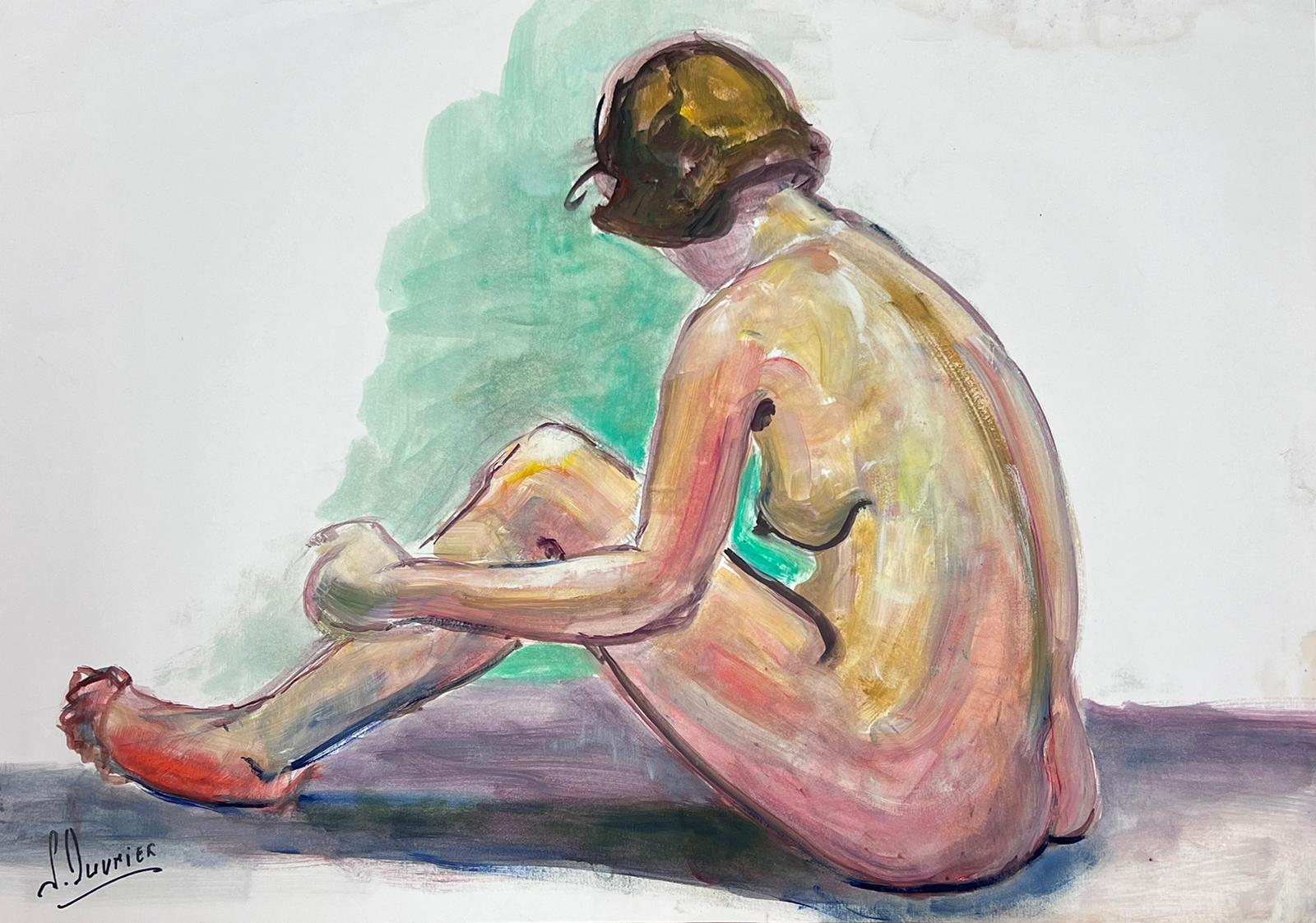
"Reclining Nude" Mercedes Matter, Abstracted Nude, Early American Modernism

circa 1920

$70,000
£53,182.72
€61,118.11
CA$98,323.58
A$107,022.75
CHF 56,707.52
MX$1,287,110.45
NOK 721,021.69
SEK 660,736.60
DKK 456,548.59

About the Item

Mercedes Matter Reclining Nude, circa 1920 Signed "Mercedes Matter" on the overlap Oil on canvas 32 x 51 inches Born in New York in 1913 to famed Philadelphia Modernist, Arthur B. Carles, Mercedes Matter grew up surrounded by art. Throughout her youth she traveled to France and Italy with her family, where she was especially struck by the works of Giovanni Bellini. She later went on to study sculpture with Lu Duble at Bennett Junior College in Milbrook, NY and with Maurice Sterne and Alexander Archipenko in New York City during her breaks from school. After finishing at Bennett Junior College, Matter began classes at the New York Art Student’s League with Hans Hofmann, who became a great mentor and friend to Matter. Hofmann’s painting classes brought the influence of the European avant-garde movements to Matter’s work. In the late 1930s, Matter became a founding member of the American Abstract Artists group and worked for the Works Progress Administration with French artist, Fernand Léger. Léger would later introduce Matter to her husband, Swiss photographer and designer, Herbert Matter. The Matters became significant figures in the mid-20th century New York art scene, along with Jackson Pollack, Lee Krasner, Alexander Calder, and the de Koonings. Matter was a member of the teaching faculty at the Philadelphia College of Art (now University of the Arts), the Pratt Institute, and New York University. In 1964, she founded her own school, the New York Studio School of Drawings, Paintings, and Sculpture, after she noticed a lack of studio classes available to students. Matter considered the studio a quintessential form of study in art education. The school is still in operation today. Matter has had solo exhibitions at Tanager Gallery, NY; Yale Norfolk, CT; Washington Art Association, CT; East Hampton Center for Contemporary Art, NY; the New York Studio School; and Salander-O’Reilly Galleries, NY. Her work can be found in the collections at the Corcoran Gallery, Washington, D.C.; Delaware Museum of Art; Parrish Museum, NY; and the Whitney Museum of American Art, NY. She has received the Distinguished Teaching Award from the College Art Association; the Gottlieb Foundation Grant; the Ingram Merril Grant; and the Tiffany Foundation Grant.
  • Creator:
    Mercedes Matter (1913-2001, American)
  • Creation Year:
    circa 1920
  • Dimensions:
    Height: 35.5 in (90.17 cm)Width: 53 in (134.62 cm)
  • More Editions Sizes:
    Unique workPrice: $70,000
  • Medium:
  • Movement Style:
  • Period:
  • Condition:
  • Gallery Location:
    New York, NY
  • Reference Number:
    1stDibs: LU1841216622102

More From This Seller

View All
"Cronus Asleep in the Cave" David Hare, Large Abstract Surrealist Composition
By David Hare
Located in New York, NY
David Hare Cronus Asleep in the Cave, 1971 Acrylic on linen 55 x 67 inches “Freedom is what we want,” David Hare boldly stated in 1965, but then he added the caveat, “and what we are most afraid of.” No one could accuse David Hare of possessing such fear. Blithely unconcerned with the critics’ judgments, Hare flitted through most of the major art developments of the mid-twentieth century in the United States. He changed mediums several times; just when his fame as a sculptor had reached its apogee about 1960, he switched over to painting. Yet he remained attached to surrealism long after it had fallen out of official favor. “I can’t change what I do in order to fit what would make me popular,” he said. “Not because of moral reasons, but just because I can’t do it; I’m not interested in it.” Hare was born in New York City in 1917; his family was both wealthy and familiar with the world of modern art. Meredith (1870-1932), his father, was a prominent corporate attorney. His mother, Elizabeth Sage Goodwin (1878-1948) was an art collector, a financial backer of the 1913 Armory Show, and a friend of artists such as Constantin Brancusi, Walt Kuhn, and Marcel Duchamp. In the 1920s, the entire family moved to Santa Fe, New Mexico and later to Colorado Springs, in the hope that the change in altitude and climate would help to heal Meredith’s tuberculosis. In Colorado Springs, Elizabeth founded the Fountain Valley School where David attended high school after his father died in 1932. In the western United States, Hare developed a fascination for kachina dolls and other aspects of Native American culture that would become a recurring source of inspiration in his career. After high school, Hare briefly attended Bard College (1936-37) in Annandale-on-Hudson. At a loss as to what to do next, he parlayed his mother’s contacts into opening a commercial photography studio and began dabbling in color photography, still a rarity at the time [Kodachrome was introduced in 1935]. At age 22, Hare had his first solo exhibition at Walker Gallery in New York City; his 30 color photographs included one of President Franklin Roosevelt. As a photographer, Hare experimented with an automatist technique called “heatage” (or “melted negatives”) in which he heated the negative in order to distort the image. Hare described them as “antagonisms of matter.” The final products were usually abstractions tending towards surrealism and similar to processes used by Man Ray, Raoul Ubac, and Wolfgang Paalen. In 1940, Hare moved to Roxbury, CT, where he fraternized with neighboring artists such as Alexander Calder and Arshile Gorky, as well as Yves Tanguy who was married to Hare’s cousin Kay Sage, and the art dealer Julian Levy. The same year, Hare received a commission from the American Museum of Natural History to document the Pueblo Indians. He traveled to Santa Fe and, for several months, he took portrait photographs of members of the Hopi, Navajo, and Zuni tribes that were published in book form in 1941. World War II turned Hare’s life upside down. He became a conduit in the exchange of artistic and intellectual ideas between U.S. artists and the surrealist émigrés fleeing Europe. In 1942, Hare befriended Andre Breton, the principal theorist of surrealism. When Breton wanted to publish a magazine to promote the movement in the United States, he could not serve as an editor because he was a foreign national. Instead, Breton selected Hare to edit the journal, entitled VVV [shorth for “Victory, Victory, Victory”], which ran for four issues (the second and third issues were printed as a single volume) from June 1942 to February 1944. Each edition of VVV focused on “poetry, plastic arts, anthropology, sociology, (and) psychology,” and was extensively illustrated by surrealist artists including Giorgio de Chirico, Roberto Matta, and Yves Tanguy; Max Ernst and Marcel Duchamp served as editorial advisors. At the suggestion of Jacqueline Lamba...
Category

1970s Abstract Paintings

Materials

Linen, Acrylic

"Cronus Asleep in the Cave" David Hare, Mythological Surrealist Composition
By David Hare
Located in New York, NY
David Hare Cronus Asleep in the Cave, 1971 Acrylic on board 27 1/2 x 38 1/4 inches “Freedom is what we want,” David Hare boldly stated in 1965, but then he added the caveat, “and what we are most afraid of.” No one could accuse David Hare of possessing such fear. Blithely unconcerned with the critics’ judgments, Hare flitted through most of the major art developments of the mid-twentieth century in the United States. He changed mediums several times; just when his fame as a sculptor had reached its apogee about 1960, he switched over to painting. Yet he remained attached to surrealism long after it had fallen out of official favor. “I can’t change what I do in order to fit what would make me popular,” he said. “Not because of moral reasons, but just because I can’t do it; I’m not interested in it.” Hare was born in New York City in 1917; his family was both wealthy and familiar with the world of modern art. Meredith (1870-1932), his father, was a prominent corporate attorney. His mother, Elizabeth Sage Goodwin (1878-1948) was an art collector, a financial backer of the 1913 Armory Show, and a friend of artists such as Constantin Brancusi, Walt Kuhn, and Marcel Duchamp. In the 1920s, the entire family moved to Santa Fe, New Mexico and later to Colorado Springs, in the hope that the change in altitude and climate would help to heal Meredith’s tuberculosis. In Colorado Springs, Elizabeth founded the Fountain Valley School where David attended high school after his father died in 1932. In the western United States, Hare developed a fascination for kachina dolls and other aspects of Native American culture that would become a recurring source of inspiration in his career. After high school, Hare briefly attended Bard College (1936-37) in Annandale-on-Hudson. At a loss as to what to do next, he parlayed his mother’s contacts into opening a commercial photography studio and began dabbling in color photography, still a rarity at the time [Kodachrome was introduced in 1935]. At age 22, Hare had his first solo exhibition at Walker Gallery in New York City; his 30 color photographs included one of President Franklin Roosevelt. As a photographer, Hare experimented with an automatist technique called “heatage” (or “melted negatives”) in which he heated the negative in order to distort the image. Hare described them as “antagonisms of matter.” The final products were usually abstractions tending towards surrealism and similar to processes used by Man Ray, Raoul Ubac, and Wolfgang Paalen. In 1940, Hare moved to Roxbury, CT, where he fraternized with neighboring artists such as Alexander Calder and Arshile Gorky, as well as Yves Tanguy who was married to Hare’s cousin Kay Sage, and the art dealer Julian Levy. The same year, Hare received a commission from the American Museum of Natural History to document the Pueblo Indians. He traveled to Santa Fe and, for several months, he took portrait photographs of members of the Hopi, Navajo, and Zuni tribes that were published in book form in 1941. World War II turned Hare’s life upside down. He became a conduit in the exchange of artistic and intellectual ideas between U.S. artists and the surrealist émigrés fleeing Europe. In 1942, Hare befriended Andre Breton, the principal theorist of surrealism. When Breton wanted to publish a magazine to promote the movement in the United States, he could not serve as an editor because he was a foreign national. Instead, Breton selected Hare to edit the journal, entitled VVV [shorth for “Victory, Victory, Victory”], which ran for four issues (the second and third issues were printed as a single volume) from June 1942 to February 1944. Each edition of VVV focused on “poetry, plastic arts, anthropology, sociology, (and) psychology,” and was extensively illustrated by surrealist artists including Giorgio de Chirico, Roberto Matta, and Yves Tanguy; Max Ernst and Marcel Duchamp served as editorial advisors. At the suggestion of Jacqueline Lamba...
Category

1970s Abstract Abstract Paintings

Materials

Acrylic

"Reclining Woman" Karl Bitter, Reclining Woman with Reddish Patina
Located in New York, NY
Karl Bitter Reclining Woman, 1897 Signed: Bitter 97 Stamped: GORHAM M F G CO. Bronze 10.25 x 10.25 x 4 inches Initially from Vienna, Karl Bitter first studied art at the city’s Kunstgewerbeschule and the Kunstakademie before being drafted into the Austrian army. He deserted his position in the military while on leave, and departed for New York City where he would discover considerable success. Early on, he won a competition for the Astor memorial bronze gates at Trinity Church, which awarded him enough capital to open his own studio. He went on to execute sculptures of Alexander Hamilton and Thomas Jefferson at the Cuyahoga Courthouse in Cleveland; he also created portraits of Jefferson for the state of Missouri and the University of Virginia. These commissions caught the attention of sculptor Richard Morris Hunt (who famously designed the façade of the Metropolitan Museum), earning Bitter the duty of producing the portrait medallions that now appear near the top of the museum’s grand face. Notably, he presented at Chicago’s 1893 World’s Columbian Exposition and directed the Pan-American Exposition in Buffalo in 1901. Over his career, his artwork became more flexible – his early academy training is easily identifiable within his work, but after moving to America, conventions of Modernism became more prevalent within his sculpture. In addition to many awards, Bitter presided over the National Sculpture Society in 1906-1907, and was a member of the National Institute of Arts and Sciences, the National Academy of Design, the American Academy of Arts and Letters, the Architectural League, and the Art Commission, New York. His public work can be found at the Biltmore Estate, Asheville, NC; Gettysburg National Military Park, Gettysburg, PA; Wisconsin State Capitol, Madison, WI; United States Naval Academy...
Category

1890s Realist Figurative Sculptures

Materials

Bronze

"Cronus Asleep in the Cave" David Hare, Surrealist Mythological Composition
By David Hare
Located in New York, NY
David Hare Cronus Asleep in the Cave, 1971 Acrylic, ink wash, graphite, paper collage on paper on board 26 x 35 inches “Freedom is what we want,” David Hare boldly stated in 1965, b...
Category

1970s Abstract Abstract Paintings

Materials

Acrylic, Paper, Ink, Graphite

"Untitled" Paul Resika, Modernist, Black and White, Abstracted Composition
By Paul Resika
Located in New York, NY
Paul Resika Untitled Signed lower right Etching on wove paper 10 1/2 x 6 inches Paul Resika (born 1928, New York, New York) is primarily recognized for his artwork featuring the di...
Category

1990s American Modern Figurative Prints

Materials

Paper, Etching

"Female Nude, " Edith Glackens Dimock, Ashcan School Figurative Painting
By Edith Glackens Dimock
Located in New York, NY
Edith (Glackens) Dimock (1876 - 1955) Untitled (Female Nude), circa 1915 Oil on canvas 34 1/2 x 28 1/4 inches Signed lower left Provenance: Private Colle...
Category

1910s Ashcan School Nude Paintings

Materials

Canvas, Oil

You May Also Like

Modernist Reclining Female Nude Figurative
Located in Soquel, CA
Modernist reclining female nude figurative painting by an unknown artist (American, 20th Century). This vivid late 20th-century figural piece featur...
Category

20th Century American Modern Nude Paintings

Materials

Masonite, Tempera

Reclining Nude Lady Model 1970 s French Modernist Painting Provence Collection
Located in Cirencester, Gloucestershire
The Artists Model Portrait of a Nude Lady reclining French School, circa 1970's indistinctly signed oil painting on card, unframed size: 25 x 18 inches condition: overall very good,...
Category

1970s Impressionist Nude Paintings

Materials

Oil

An Exceptional Mid-Century Modern Oil Painting of a Reclining Nude Female Model
Located in Chicago, IL
An Exceptional Mid-Century Modern Oil Painting of a Reclining Nude Female Model by Noted Chicago Artist, Rudolph T. Pen. This alluring studio scene, painted in the 1960s, exemplifi...
Category

Mid-20th Century American Modern Nude Paintings

Materials

Masonite, Oil

Reclining Nude Lady Model 1970 s French Modernist Painting Provence Collection
Located in Cirencester, Gloucestershire
The Artists Model Portrait of a Nude Lady reclining French School, circa 1970's indistinctly signed oil painting on card, unframed size: 18 x 26 inches condition: overall very good,...
Category

1970s Impressionist Nude Paintings

Materials

Oil

Reclining Nude Lady Model 1970 s French Modernist Painting Provence Collection
Located in Cirencester, Gloucestershire
The Artists Model Nude Lady Model French School, circa 1970's oil painting on card, unframed size: 19 x 25.5 inches condition: overall very good, a very few light markings to the s...
Category

1970s Impressionist Nude Paintings

Materials

Oil

Reclining Nude Lady Model 1970 s French Modernist Painting Provence Collection
Located in Cirencester, Gloucestershire
The Artists Model Nude Lady Model French School, circa 1970's signed oil painting on card, unframed size: 17.5 x 24.5 inches condition: overall very good, a very few light markings ...
Category

1970s Impressionist Nude Paintings

Materials

Oil