Items Similar to La Plage a Soulac-sur-mer - Post Impressionist Landscape Oil by Nikolai Tarkhoff
Want more images or videos?
Request additional images or videos from the seller
1 of 15
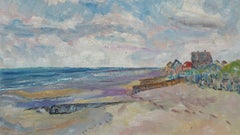
Nikolai Aleksandrovich TarkhoffLa Plage a Soulac-sur-mer - Post Impressionist Landscape Oil by Nikolai Tarkhoff1906
1906
$65,771.59
£47,775
€55,975.83
CA$90,698.63
A$96,026.19
CHF 51,966.66
MX$1,147,689.58
NOK 647,757.62
SEK 592,351.37
DKK 418,067.58
About the Item
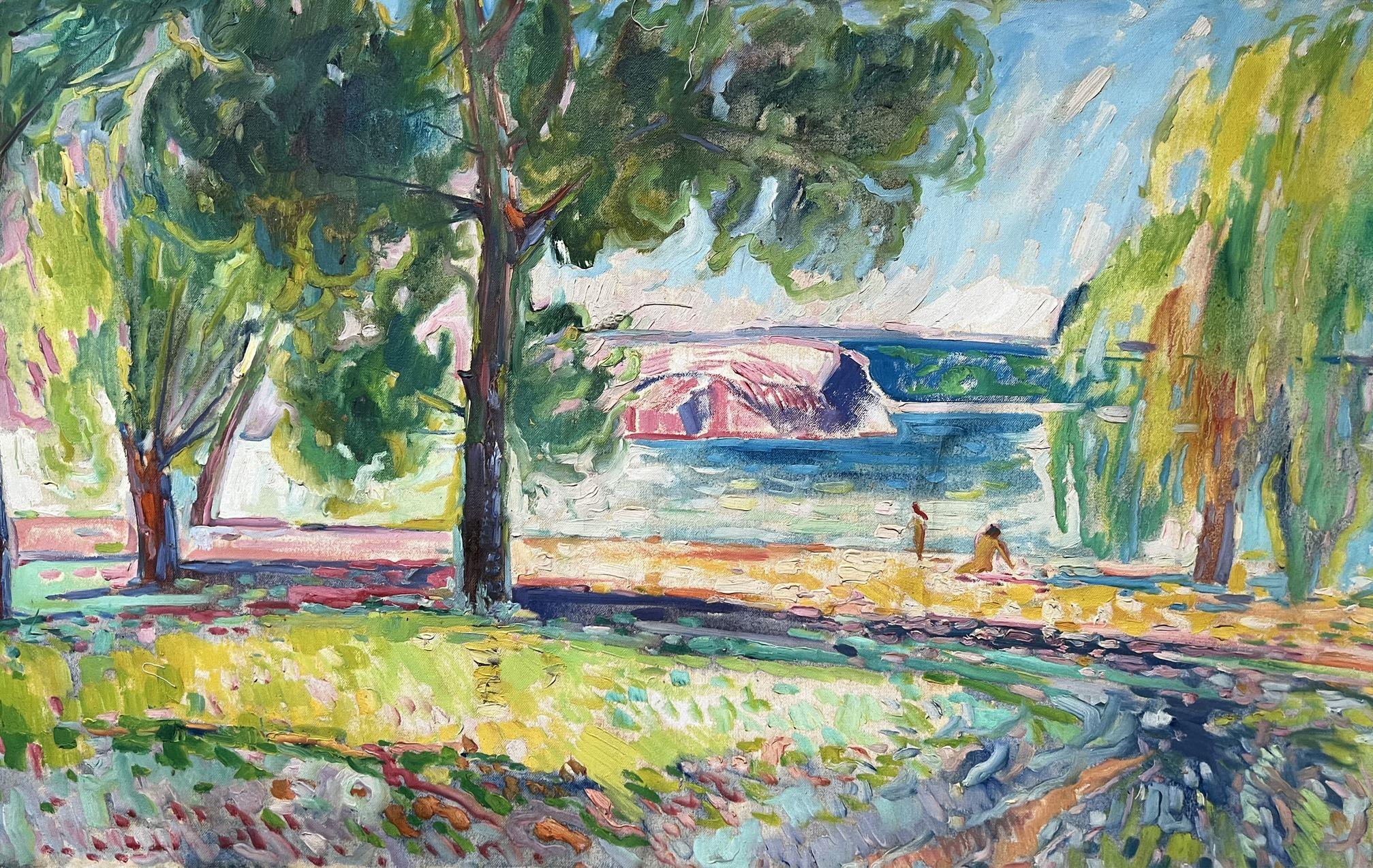
Signed divisionist style oil on canvas figures in landscape circa 1906 by Russian post impressionist painter Nikolai Aleksandrovich Tarkhoff. This stunning and brightly coloured work depicts bathers enjoying a summer's day at the beach at Soulac-sur-mer on the east coast of France. Many parasols and sun tents are erected on the golden sand and the children are playing beneath the clear blue sky.
Signature:
Signed lower left
Dimensions:
Framed: 35"x41"
Unframed: 26"x32"
Provenance:
Guy Abot, Director of the Nicolas Tarkhoff Committee, confirms the authenticity of this work which will be listed in the CatalogueRaisonné of the painted work in preparation.
A certificate of authenticity can be acquired from the Nicolas Tarkhoff Committee
Nicolas Alexandrovich Tarkhoff (Николай Александрович Тархов) or Tarkhov was born in Moscow on 2nd January 1871 into a family of wealthy merchants. He is three years old on the death of his mother Olga Feodorova and eight years on the death of his father Alexander Ivanov. He showed early artistic vocation, "having always had a fervent desire to be a painter (1)". Nevertheless, he enlisted in the provincial militia at the age of eighteen to fulfil his military service obligations and subsequently found employment at the Brest-Litovsk Railways, thus delaying his entry into the world of art.
In 1894, he took the admission test for the School of Painting, Sculpture and Architecture in Moscow, against the will of his family. The school jury, although less conservative than that of St. Petersburg, refused his admission because of his revolutionary temperament. In 1897, he joined the studio of the impressionist painter Konstantin Korovin Alexeivich (his elder by ten years) in Moscow. There he met Pavel Kuznetsov, Vasily Polenov and Valentin Serov.
The small group painted with ingenuity the nude models proposed by Korovin: "Everyone was supposed to paint with bold sweeping movements, using a wide brush before going into the details and nuances (2).”
1894-1898: MOSCOW. FIRST CRÉATIONS, FIRST SUCCESS.
The first works from Nicolas Tarkhoff’s studio were exhibited in 1897 at the 17th exhibition of the Society of Friends of Fine Arts in Moscow, alongside those of Levitan, Korovin and Serov, and were supported by the Muscovite public. Sergei Glagol, one of the great art critics of Moscow, wrote that his studies were painted with unusual manner: “One feels their original new charm and search for an original new way of looking at nature”. He also participated in the first exhibition of the World of Art (Мир искусства). Despite this early success, he decided to leave the Moscow art circle, and in 1898 took the train to Munich where a community of Russian artists lived. In November of the same year he settled permanently in Paris - the radiant centre of artistic creation - where he had previously stayed with his friend the painter Nicolas Millioti. He already spoke excellent French thanks to the French nanny of his childhood.
In December 1898, he joined the studio of Jean-Paul Laurens (Académie Julian) to improve his drawing technique, but he disagreed with the master and finally drew the way he wanted. He also worked with Luc-Olivier Merson. During his academic studies he also visited galleries and salons, and became very enthusiastic about the works of Van Gogh, Gauguin, Cézanne and Carrière, whose work, he claimed, "revealed his own hidden talents and showed him the way (3).”
1898-1910: THE PARIS YEARS. INTERNATIONAL RECOGNITION.
The capital offered Nicolas Tarkhoff the most exciting themes of Parisian life. He rendered the swirling flow of crowds on the boulevards, the magic of the fairgrounds and carnivals, the racing hansom cabs, the flow of the Seine and market scenes with assertive style and an instinctive force. He travelled to Brittany and returned with powerful seascapes. He went out of Paris regularly by train or bicycle to enjoy the beautiful and peaceful landscape of the Vallée de Chevreuse (south of Paris) where he set up his easel.
He shaped his art day after day and even created his own theory: "Reproduce to the utmost the life of forms by the richness of their colours (4)." These forms were organised on the canvas with spirited touches that started to yield to abstraction. This “impressionist of instinct (5)" with his independent and passionate character, invented or reinvented an entire artistic universe through his own pictoral language. His rapid and incisive strokes were impressionistic, divisive or synthetic; sometimes projected in an expressionist light that brought him closer to the "Fauves". Brushstrokes always guided by his ardour and his own personal perception of painting.
The works of Nicolas Tarkhoff quickly seduced art critics (Apollinaire, Forthuny, Ary-Leblond, Mercereau). He participated in the main Parisian and European collective events: the Salon of Independents, from 1901 the Salon of the Society of Fine Arts, the Salon d'Automne, of which he became an associate in 1907, and those of Brussels, Berlin, Venice, Rome, New York (Armory Show in 1913)... He joined the Union of Russian Artists (6) and exhibited regularly in Moscow and St. Petersburg.
In 1904, he met Yvonne Deltreil whom he married on 15 April 1905. This young woman, mother of a five year old boy, had accompanied him throughout his life and courageously supported his passion. In March 1905, Jean was born, followed in August of the next year by Boris. From this time on, his painting became more figurative, but expressed always in a "fragmented fashion, mobile, with drips of paint, all values entwined [...], always with the full magnificence of colour (7)." He abandoned the vast space of the street and the crowds in motion for the intimate atmosphere of his Parisian apartment. The "Portraits" and "Maternities", painted with tenderness, became the inexhaustible subjects of family happiness. He later said he preferred this theme to his other work.
In May 1906, Ambroise Vollard, who exhibited notably Cezanne, Renoir, Picasso, Matisse and Van Dongen, organised a major exhibition devoted to his work. It was a great success. The gallery even offered to buy all his production ... but at a price so low that Nicolas Tarkhoff angrily refused. The break up was brutal and the artist lost valuable support. However, other patrons, like Berthe Weill, Eugène Druet, Edouard Devambez, welcomed him to their Parisian galleries. So the success continued as did the purchases by enthusiasts.
In 1909 Nicolas Tarkhoff left the apartment-studio in rue Belloni with his family for a very comfortable one on Montparnasse (Paris). From the window of his apartment on Place du Maine, he painted the flamboyant colours of the locomotive steam in the intensity of a burning sun. He composed night scenes, in which horses and carriages came alive in lantern light... In the same year, his art critic friends Marius and Ary Leblond devoted several pages to his work in their book “Peintres de Race”, which included Gauguin and Van Gogh.
In 1910, a major exhibition was dedicated to him in the 7th Salon organised by the Apollo (Аполлон) Review (8) in St. Petersburg. His works, loaned to the exhibition by famous collectors (Druet, Frizeau, Frantz Jourdain, baron de Rothschild, Morozov, Albert Sarrault, Vollard, Zadoc Kahn…) and the French State bore witness to his success and international recognition in his home country. At the Salon d'Automne of 1911 in Paris, Guillaume Apollinaire noticed his paintings: Here are "[...] the colourful paintings of the Fauves, [...] here are more beautiful paintings by Tarkhoff (9)".
1911-1930 : ORSAY. FAR FROM THE CITY. THE “PEASANT PAINTER”.
Far from the sophisticated Parisian life, Nicolas TARKHOFF aspired to paint as close to nature as the Impressionists, side byt side with the peasants of the land (10). This environment favourable to creativity was a theme in harmony with his now appeased temperament. In 1911, he takes a major decision with serious consequences: he decided to leave Paris definitively with his wife and his children (11). They settled in Orsay, a small village in the Vallee de Chevreuse, in a house surrounded by trees, fields and animals; a place that he had painted before. There was a happy event in August 1912: the birth of his daughter Hortensia.
But this retreat gradually isolated him from the constantly changing artistic world. Only a few friends, like Chagall, Lhote and Luce, maintained occasional contact with him. Financial difficulties were beginning to develop. Then came the First World War causing a dramatic drop in sales. After the Bolshevik Revolution in 1917 - to which the couple adhered enthusiastically - he no longer exhibited in Russia. His financial situation had become increasingly worrying: "[...] because of the real estate crisis and reactionary ideas of the people, I have to fight every day to survive. Add to that the crisis in the art market and the difficulty in selling my paintings (12)." He participated in the Salons less and less. Derain helped him financially by buying some of his works. He even considered the possibility of returning to in Russia. The 1920s became more and more gruelling: he was exhausted by illnesses and hardships; Hortensia’s decision in 1929 to leave her family was a real tragedy for him.
He died on 3rd June 1930 in abject poverty. A retrospective of his work was organised the same year in the Salon d'Automne. This was the last spark of recognition before falling into oblivion. A Parisian gallery owner Madeleine Oury, the wife of his painter friend Marcel-Lenoir, helped Yvonne Deltreil by buying many of the studio’s works. These were rediscovered by passionate collectors around the 1960s. One of them, Oscar Ghez, devoted a whole section to him in his Museum of the Petit Palais in Geneva (Switzerland) and in 1981 organised several exhibitions in Russia, France, Spain and the United States. In 2014, the City of Orsay paid tribute to him. Today, a significant portion of his paintings is in Moscow, Russia: the country to which he had dreamed of returning.
Museum and Gallery Holdings
- France: MUDO-Musée de l’Oise, Musée d'Art et d'Industrie (Roubaix), Grenoble.
- Geneva (Petit Palais),
- Russia: Kirov (Museum of Fine Arts of Viatka), St Petersburg (State Russian Museum), Moscow (State Tretyakov Gallery), Moscow (Boris Mintz Museum)...
- Amsterdam (KattenKabinet)
- Ramat Gan (Israel)
- Musée Léon Dierx (La réunion)
- Spain (Alava Fine Arts Museum)
- Baltimore (The Baltimore Museum of Art)...
- Creator:Nikolai Aleksandrovich Tarkhoff (1871 - 1920, Russian)
- Creation Year:1906
- Dimensions:Height: 35 in (88.9 cm)Width: 41 in (104.14 cm)
- Medium:
- Movement Style:
- Period:
- Condition:Very good original condition.
- Gallery Location:Marlow, GB
- Reference Number:Seller: LFA02501stDibs: LU415317286502
About the Seller
5.0
Vetted Professional Seller
Every seller passes strict standards for authenticity and reliability
Established in 2001
1stDibs seller since 2016
713 sales on 1stDibs
Typical response time: 5 hours
- ShippingRetrieving quote...Shipping from: Marlow, United Kingdom
- Return Policy
More From This Seller
View AllPlage a Belle Ile - Post Impressionist Landscape Oil by Georges D
Espagnat
By Georges d
Espagnat
Located in Marlow, Buckinghamshire
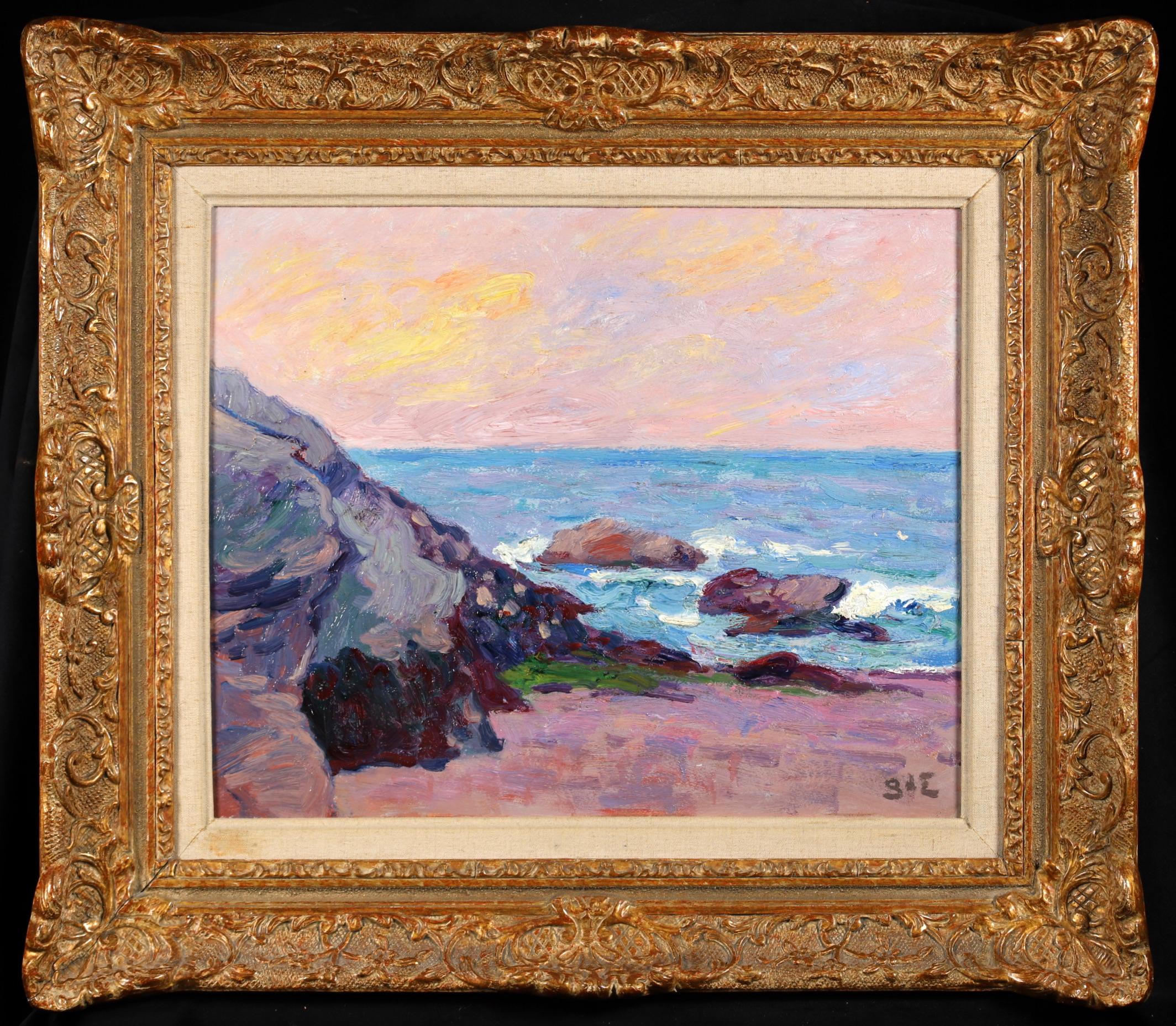
Signed post impressionist landscape oil on panel by popular French painter Georges D'Espagnat. The piece depicts the beach at Belle Ile, an island off the coast of Brittany in France, at sunset. An exceptional early painting by D'Espagnat which shows the precursor influence of Fauvism which was to dominate his paintings in the following few years.
Signature:
Signed lower right
Dimensions:
Framed: 23"x26"
Unframed: 15"x18"
Provenance:
Private French collection
A certificate of authenticity from Mr. Jean-Dominique Jacquemond is available upon request.
This work will be included in the catalogue raisonne of Georges D'Espagnat under preparation by Mr. Jacquemond
From the beginning of his career, it was a constant concern of Georges d'Espagnet to assert his originality. His studies at the École des Arts Décoratifs, Paris, did not last very long, for he wanted immediate independence and decided to follow courses in the private academies of Montparnasse. In about 1900, he became acquainted with Maurice Denis, Bonnard and Vuillard, and his collaboration with Denis led to a renewal of religious art in France.
In 1903, d'Espagnet was one of the founders of the Salon d'Automne, and was appointed professor in charge of studios at the École des Beaux-Arts, Paris, in 1934. He illustrated a number of books: Rémy de Gourmont's Evil Prayers ( Oraisons mauvaises) (1896), The Saints of Paradise ( Les Saintes du paradis) (1898), Simone (1907), Sistine ( Sixtine) (1922); Alphonse Daudet's The Immortal ( L'Immortel) (1930); André Gide's The Pastoral Symphony ( La Symphonie pastorale); Francis Jammes' Clearings in the Sky ( Chairières dans le ciel) (1948).
D'Espagnet belongs to the group of artists who made the Courrier Français so successful. The drawings of his which are published in it are strongly expressive and some bear comparison with the designs of the great Renaissance masters. He also contributed to L'Image. He often placed cheerful nudes in a landscape, reminding us that, though he moved away from the Fauves, he retained their freedom of colour and arabesque. He painted many portraits, including those of Albert André, André Barbier, Victor Boucher, Déodat de Séverac, Albert Marque, André Marty and Albert Roussel. He also painted mural decorations, including a wall for the Palais de la Découverte (1937), the ceiling of the Victor Hugo Room in the Palais du Luxembourg (1939), a decorative panel for the Palais de Justice, Toulouse (1941) and interior decorations for private houses. His landscapes are Impressionist in inspiration, and work for a certain sobriety, an intimacy, both in their composition - one, two or three sketched figures and large open spaces - and in the choice of colours and treatment with the special hazy brushstroke that marks his style.
D'Espagnet took part in a number of annual Parisian exhibitions, including the Salon des Indépendants, the Salon de la Société Nationale des Beaux-Arts, the Salon d'Automne (from 1903 to 1949, except in special circumstances), the Salon de la Libre Ésthétique, Brussels (1899, 1901), the Berlin Secessionists (1940). He also exhibited at the first Salon de la Société de la Gravure sur Bois. Among other exhibitions were 1912, A Century of French Art ( Centenaire de l'art français), St Petersburg; 1916, Kunstverein, Winterthur; 1918, 1926, Galerie M. Bertheim, Paris; 1930, Contemporary French Art...
Category
Early 1900s Post-Impressionist Landscape Paintings
Materials
Oil, Panel
La Plage a Deauville - Post Impressionistt Figures in Landscape by Lucien Adrion
By Lucien Adrion
Located in Marlow, Buckinghamshire
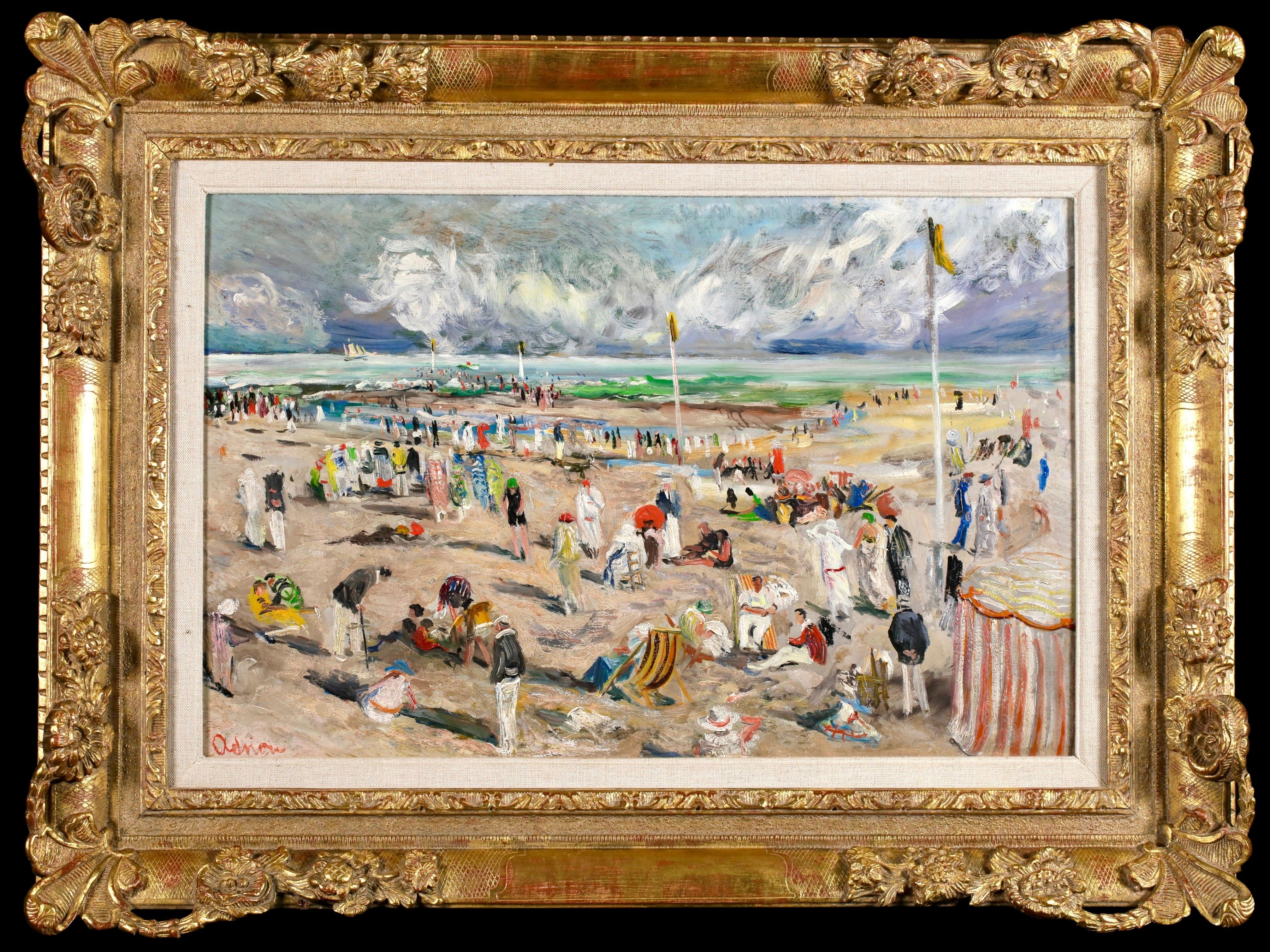
Signed oil on panel figures in landscape circa 1920 by French post impressionist painter Lucien Adrion. The painting depicts families enjoying a day at the beach in Deauville - some ...
Category
1920s Post-Impressionist Figurative Paintings
Materials
Oil, Panel
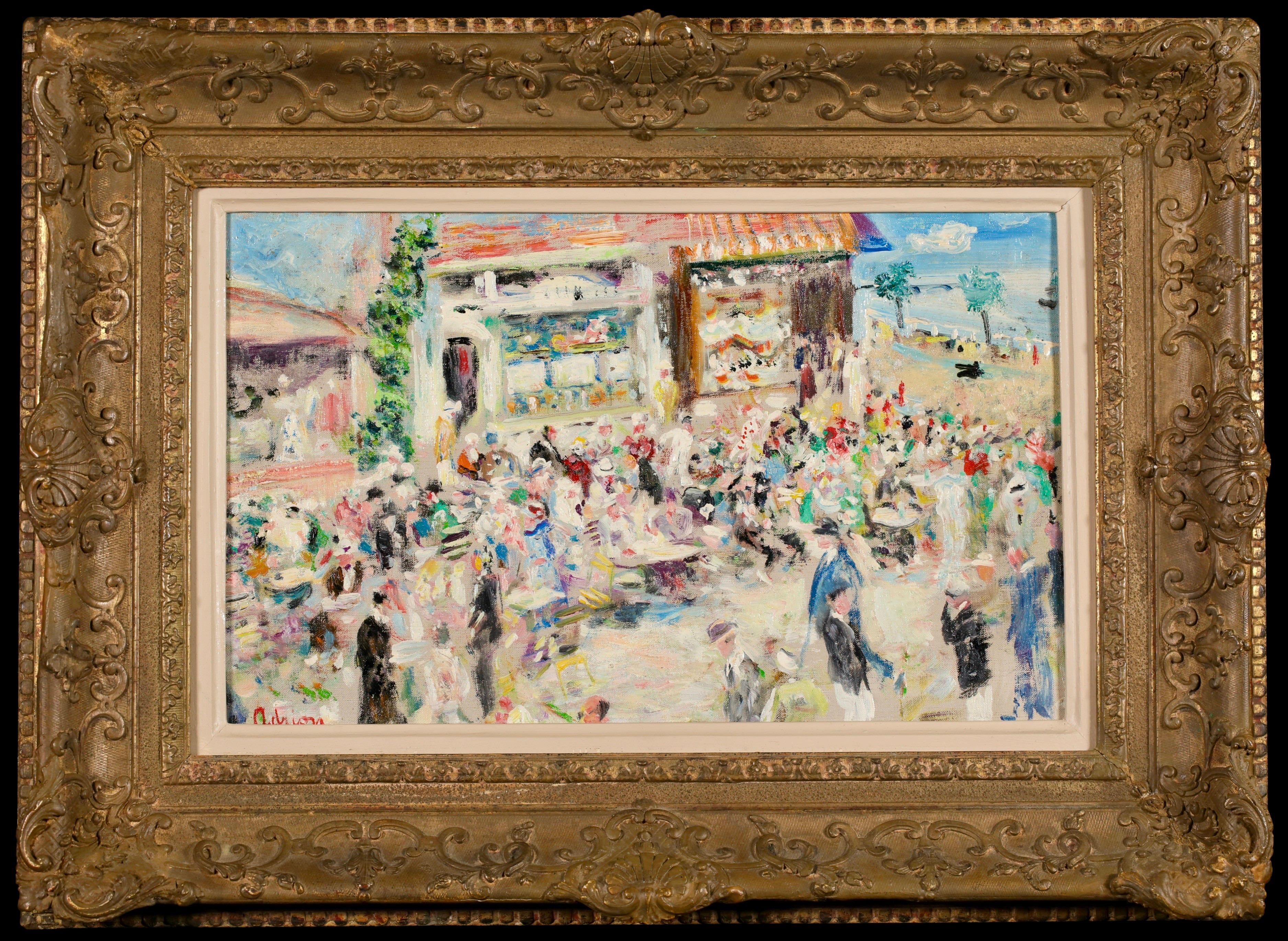
Cafe sur la Plage - Post Impressionist Figures in Landscape Oil by Lucien Adrion
By Lucien Adrion
Located in Marlow, Buckinghamshire
Signed oil on canvas figures in landscape circa 1930 by French post impressionist painter Lucien Adrion. The painting depicts families seated outside of a cafe at a beach in Deauvill...
Category
1930s Post-Impressionist Figurative Paintings
Materials
Oil, Canvas
Les Vacances - Post Impressionist Figures in Landscape Oil by Pierre Montezin
By Pierre Eugène Montezin
Located in Marlow, Buckinghamshire
Signed oil on canvas figures in riverscape circa 1910 by sought after French impressionist painter Pierre Eugene Montezin. The work depicts women dressed in summer dresses and sunhat...
Category
1910s Impressionist Figurative Paintings
Materials
Canvas, Oil
The Fairground at Benodet - Post Impressionist Figurative Oil - Victor Charreton
By Victor Charreton
Located in Marlow, Buckinghamshire
Signed oil on board figures in landscape by popular French post impressionist painter Victor Charreton. The work depicts a mother holding her small child's hand as they walk towards ...
Category
1920s Post-Impressionist Figurative Paintings
Materials
Oil, Board
Beauchamps Chaud a Trouville - Modern Landscape Oil Painting by André Hambourg
By André Hambourg
Located in Marlow, Buckinghamshire
Signed figures in a landscape oil on canvas circa 1980 by French modernist painter Andre Hambourg. This beautiful piece depicts families enjoying a day out at the seaside - bathers r...
Category
1980s Modern Figurative Paintings
Materials
Canvas, Oil
You May Also Like
Beach in Provence
By Claude Gardy
Located in San Francisco, CA
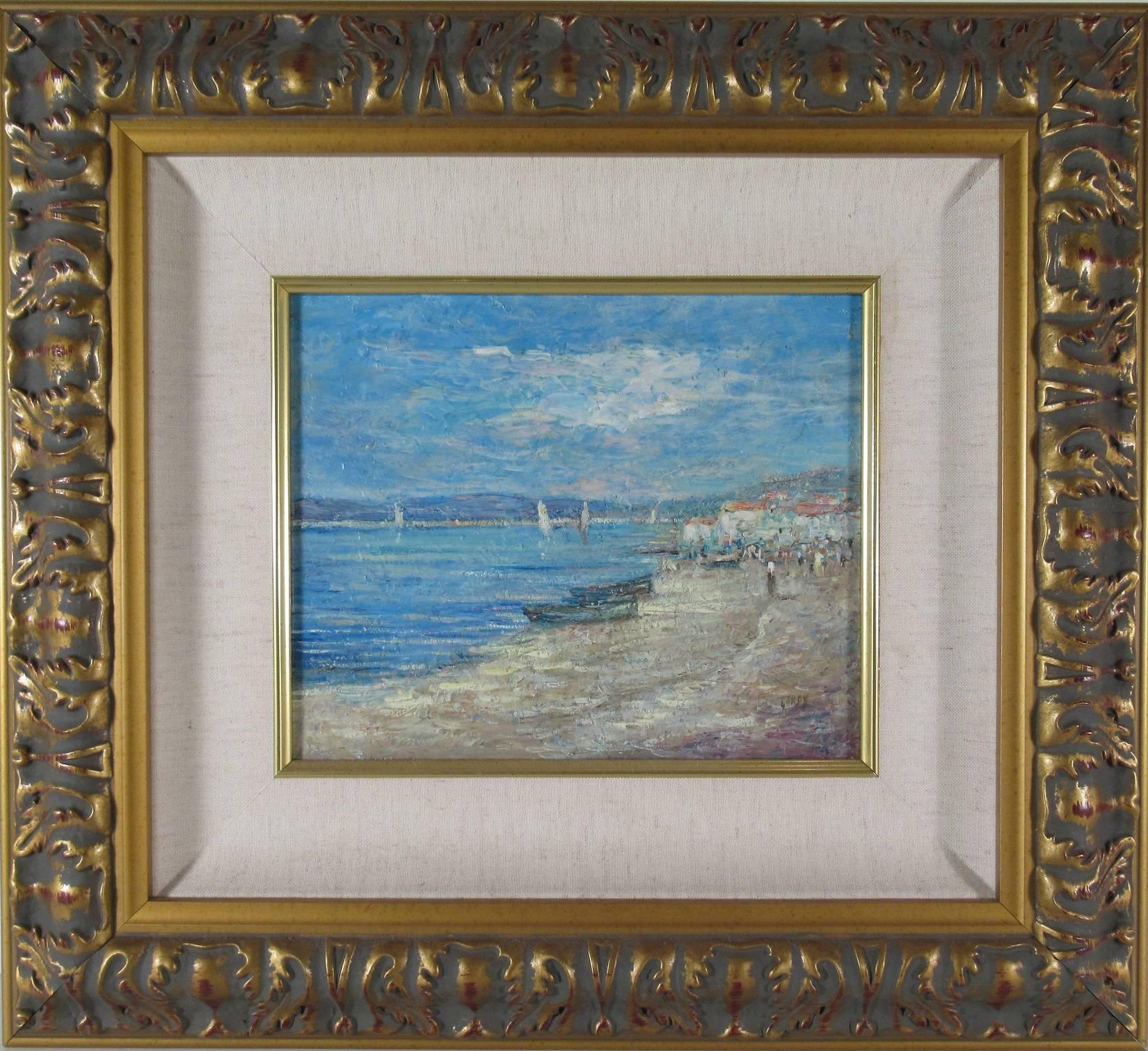
This artwork, entitled "Beach in Provence," is an original oil painting on canvas by French impressionist artist Claude Gardy (b. 1949). It is hand signed in the lower right corner by the artist. The canvas size is 8.75 in. x 10.65 in. and is framed in a custom wooden gold frame. The piece depicts a tranquil beach scene with provincial houses in the background. In excellent condition.
Claude Gardy was born in the city of Lille in north of France in 1949. He is a self taught artist that gained recognition for his colorful small impressionist paintings...
Category
Late 20th Century Impressionist Landscape Paintings
Materials
Oil
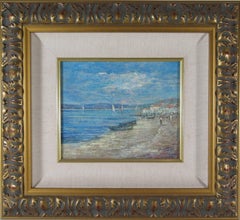
On the Beach, Impressionism, Original oil Painting, Ready to Hang
Located in Granada Hills, CA
Artist: Peter Tovpev
Work: Original oil painting, handmade artwork, one of a kind
Medium: Oil on Canvas
Year: 2020
Style: Post Impressionism
Title: On the Beach
Size: 18.5" x 28.5"...
Category
2010s Impressionist Landscape Paintings
Materials
Canvas, Oil
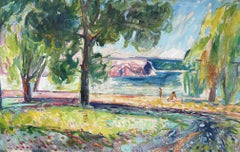
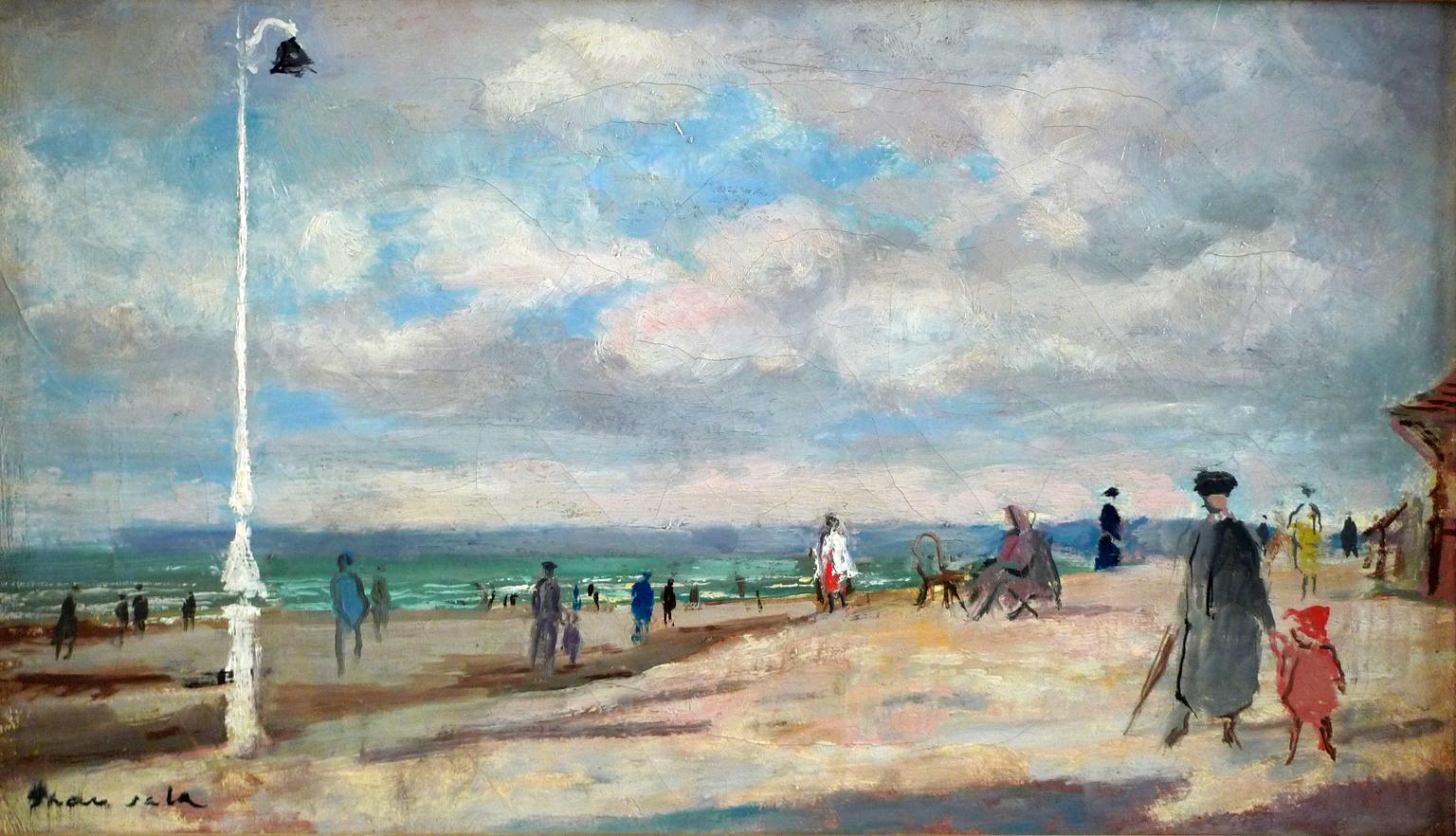
"Plage de Trouville" Sept. 1953, 20th Century oil on canvas by Emilio Grau Sala
By Emilio Grau Sala
Located in Madrid, ES
EMILIO GRAU SALA
Spanish, 1911 - 1975
TROUVILLE, SEPTEMBRE 1953
signed Grau Sala (lower left)
signed again, located & dated "Grau Sala, Trouville, Septembre 1953" on the reverse
oil...
Category
1950s Impressionist Landscape Paintings
Materials
Canvas, Oil

Maurice Mazeilie - French Oil Landscape - Figures Down By The Beach
By Maurice Mazeilie
Located in Cirencester, Gloucestershire
"Landscape"
by Maurice Mazeilie (French)
oil painting on artist paper, unframed
stamped verso
painting: 5 x 7 inches
A delightful original oil painting by the 20th century French I...
Category
20th Century Impressionist Landscape Paintings
Materials
Oil
$357 Sale Price
35% Off
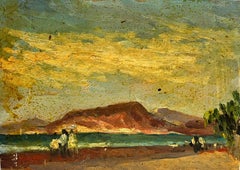
Figures on the Beach - Mid 20th Century French Impressionist Seaside Painting
Located in Sevenoaks, GB
A beautiful 1950's French impressionist oil on board depicting a busy coastal scene with figures on the beach and sailing boats on the sea.
The work is very well painted and atmosp...
Category
Mid-20th Century Impressionist Landscape Paintings
Materials
Oil, Board
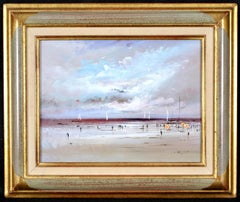
20th Century French Oil Painting Late Summer Beach
Located in Cirencester, Gloucestershire
Late Summer Beach
French School, mid-late 20th century
unsigned
oil painting on canvas textured paper (reverse side is smooth, the painted side looks and feels as canvas), unframed
o...
Category
Late 20th Century Impressionist Landscape Paintings
Materials
Canvas, Oil
$770 Sale Price
20% Off